
Review
Deck the Halls is built around a wonderfully petty idea. Two suburban fathers become so obsessed with recognition that Christmas decora...


Deck the Halls Unwrapped: A Festive Journey Through Chaos and Cheer
Deck the Halls is built around a wonderfully petty idea. Two suburban fathers become so obsessed with recognition that Christmas decorations turn into instruments of territorial warfare. One man wants to preserve his position as the neighborhood’s unofficial holiday authority. The other wants his house to shine brightly enough to be visible from space. Between them stands a street gradually buried beneath lights, animals, music, public humiliation, and increasingly irresponsible decisions.
I cannot describe the film as subtle. It announces every rivalry loudly, pushes most jokes beyond their natural endpoint, and treats moderation as an obstacle to entertainment. Yet beneath the frantic physical comedy is a recognizable observation about how easily holiday traditions become performances. Christmas is supposed to bring people together, but Steve Finch and Buddy Hall use it to establish status, defend identity, and demand attention.
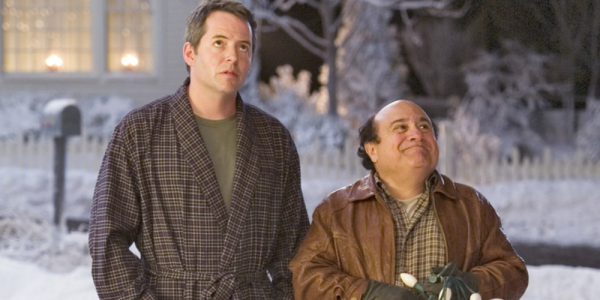
The film is funniest when it recognizes the absurdity of two adults treating seasonal decoration as a serious measure of personal worth. It becomes less successful whenever it abandons that social tension for generic slapstick. Even so, the opposing energies of Matthew Broderick and Danny DeVito give the rivalry enough personality to carry the uneven screenplay.
Steve Finch Has Turned Christmas Into a Personal Institution
Matthew Broderick plays Steve as a man who believes he has achieved the perfect balance of family responsibility, community involvement, and festive enthusiasm. He organizes local traditions, plans seasonal events, and expects the people around him to recognize his authority. Christmas is not merely a holiday he enjoys. It is the period during which his identity feels most secure.
Broderick’s controlled performance suits the character. Steve speaks with the careful confidence of someone accustomed to being considered reasonable. Even when jealousy begins determining his behavior, he continues presenting each decision as a defense of community values.
I found the character more interesting when the film allowed his insecurity to remain visible beneath that politeness. Steve is not initially threatened because Buddy is cruel or openly confrontational. He is threatened because Buddy attracts attention without following the established hierarchy. The newcomer does not ask permission before transforming the neighborhood, and Steve interprets that independence as a challenge.
His descent into obsession is therefore closely connected to pride. Every decoration Buddy adds appears to reduce Steve’s importance. Rather than admit that feeling, Steve invents practical objections involving safety, noise, taste, and neighborhood standards. Some of those concerns are legitimate, but his motivation becomes less defensible with each confrontation.
Broderick is particularly effective when Steve attempts to maintain dignity after public failure. His face remains composed for a moment longer than the situation allows, as though refusing embarrassment might prevent everyone else from noticing it.
Buddy Hall Wants to Be Seen From Every Possible Distance
Danny DeVito plays Buddy as a man with almost limitless enthusiasm and very little awareness of boundaries. He arrives in the neighborhood with his wife, daughters, and an immediate desire to create something unforgettable. When he discovers that his home cannot be seen in an online satellite image, he decides to decorate it until it becomes visible from space.
The ambition is ridiculous, but DeVito prevents Buddy from feeling entirely artificial. His need for attention comes from a deeper fear that he has moved through life without creating anything significant. The glowing house becomes evidence that he exists and that the world has finally noticed him.
DeVito brings warmth to Buddy’s recklessness. He is selfish, disruptive, and frequently inconsiderate, yet he rarely appears intentionally malicious. He behaves like a child who has received unlimited access to electrical equipment and adult financing.
The performance operates through contrast. Buddy’s physical size is repeatedly placed against enormous decorations, ambitious plans, and explosive confidence. DeVito makes him fill a scene through energy rather than stature.
I also appreciated the sadness that occasionally enters his expression after the excitement fades. The film does not explore Buddy’s dissatisfaction deeply, but DeVito suggests that the decorations are covering more than a roof. They are covering the possibility that ordinary family life does not feel impressive enough to him.
The Rivalry Works Because the Men Want Different Kinds of Approval
Steve wants respect. Buddy wants visibility.
That distinction gives their conflict more shape than a simple argument between neighbors. Steve has built social value through reliability, organization, and tradition. Buddy seeks immediate recognition through spectacle. One man believes importance should be earned gradually; the other believes importance can be created through sufficient brightness.
Their methods naturally provoke one another. Buddy’s display makes Steve’s careful traditions look modest. Steve’s criticism makes Buddy feel judged by someone protecting an exclusive social position.
Neither man understands that the other is responding to insecurity. They interpret every action as aggression, then produce a larger response. A decoration becomes a complaint. A complaint becomes sabotage. Sabotage becomes public competition.
I enjoyed the early stages of this escalation because each decision grows from personality. The screenplay becomes weaker when the rivalry transforms into a sequence of accidents that could happen to almost any characters in a broad comedy.
The Houses Reveal the Men Before They Speak Honestly
The production design makes the central conflict visible through architecture. Steve’s home represents controlled tradition. It is festive, organized, and designed according to a recognizable idea of tasteful suburban Christmas. Buddy’s house gradually becomes a glowing monument to excess.
The contrast is more than visual comedy. Each home expresses the owner’s preferred relationship with the community. Steve’s decorations invite approval through familiarity. Buddy’s display demands attention through scale.
As the story progresses, Buddy’s house becomes less like a residence and more like a public attraction. Lights cover the structure, crowds gather outside, music fills the street, and the family’s private space is transformed into entertainment for strangers.
The display is simultaneously impressive and oppressive. I could understand why people wanted to see it, but I could also understand why living beside it would become unbearable. The film is at its most balanced when it allows both reactions to remain reasonable.
Steve is correct that Buddy’s project creates practical problems. Buddy is correct that Steve’s objections are intensified by jealousy. The screenplay loses complexity whenever it treats one man as temporarily correct only to prepare him for another humiliating reversal.
Kelly and Tia Are More Patient Than Their Husbands Deserve
Kristin Davis and Kristin Chenoweth play Kelly Finch and Tia Hall, the wives expected to manage the emotional consequences of their husbands’ competition. Both performers bring warmth and comic intelligence to roles that could easily have become interchangeable voices of reason.
Davis gives Kelly a calmness that gradually develops visible strain. She knows Steve’s traditions are important to him, but she also recognizes when those traditions stop serving the family. Her disappointment becomes sharper because Steve continues insisting that his behavior is principled.
Chenoweth gives Tia a brighter, more performative energy that complements Buddy’s personality. She understands his attraction to spectacle and occasionally enjoys it herself, but she is less consumed by the need for outside approval.
The friendship between the women offers a more generous version of neighborhood life than the rivalry between the men. They can acknowledge differences without immediately interpreting them as competition.
I wanted the film to give both women greater influence over the central conflict. They repeatedly identify the problem, communicate sensible boundaries, and deal with the effect on the children. Yet the plot continues allowing Steve and Buddy to determine the direction of events until the damage becomes impossible to ignore.
The Families Become Supporting Cast in the Fathers’ Personal Drama
One of the film’s more effective ideas is that Steve and Buddy initially describe their behavior as something they are doing for their families. Steve wants to preserve meaningful Christmas traditions. Buddy wants to create an unforgettable holiday experience.
In practice, both men gradually stop listening to the people they claim to be serving.
Steve’s wife and children become inconveniences whenever they question his increasingly hostile behavior. Buddy’s family home becomes a public construction site organized around his personal ambition. The men demand participation while treating disagreement as insufficient enthusiasm.
This hypocrisy provides the story with its moral direction. The problem is not decoration, competition, or even the desire to create a memorable holiday. The problem is using family as justification for a project that primarily satisfies personal pride.
The screenplay communicates this point clearly, though not always gracefully. Family members frequently state the lesson directly after the men have already demonstrated it through their actions.
The Daughters Expose the Film’s Uneven Comic Taste
Madison and Ashley Hall are introduced through the perspective of Steve’s teenage son, Carter, whose immediate attraction to them produces several jokes. Their presence also creates tension between the neighboring families by making separation less convenient.
Some of this material reflects the broad comic style of mid-2000s studio productions more than the emotional needs of the story. The camera occasionally adopts Carter’s perspective too enthusiastically, turning the daughters into visual jokes rather than characters.
I found these sequences among the film’s more dated elements. They interrupt the family comedy without contributing much to the central theme. The rivalry already contains enough material without relying on extended adolescent reactions.
The young cast generally performs with the required energy, but the children are written primarily as witnesses to their fathers’ decline. Their disappointment matters because it confirms how far the adults have moved from their original intentions.
A stronger screenplay might have used the children’s developing friendship to challenge the rivalry more directly. They are capable of adapting to the new neighbors long before the fathers are willing to do so.
Christmas Decoration Becomes a Form of Public Performance
Buddy’s goal depends on being observed. A beautiful display enjoyed only by his family would not satisfy him. He needs crowds, media attention, online recognition, and finally the impossible confirmation that his house can be seen from space.
This gives Deck the Halls an unexpectedly modern theme. The film arrived before social media had completely transformed domestic presentation, yet Buddy’s behavior anticipates the pressure to turn private experiences into public content.
The value of his Christmas depends on scale and visibility. If more people see the house, the holiday feels more successful. The family’s actual experience becomes secondary to the image transmitted beyond them.
Steve is less technologically focused, but he also performs. His annual traditions depend on being recognized as the person who organizes them. He wants the neighborhood to confirm his identity as Mr. Christmas.
Both men therefore rely on an audience. Their disagreement concerns style, not the underlying need for approval.
The Film Is Stronger Before the Physical Comedy Takes Control
The early confrontations between Steve and Buddy contain a useful mixture of politeness and hostility. Each man smiles while testing the other’s limits. They exchange invitations and complaints that sound civil until the intention becomes clear.
These scenes give Broderick and DeVito room to establish contrasting rhythms. Broderick pauses, suppresses, and calculates. DeVito speaks quickly, redirects criticism, and converts every objection into another opportunity.
As the rivalry expands, the film increasingly relies on falls, damaged property, animal-related accidents, electrical disasters, and public embarrassment. Some of these sequences are efficiently staged, but they make the characters less specific.
I laughed more when Steve attempted to disguise jealousy as concern than when he became involved in another physically humiliating incident. Broderick’s controlled frustration and DeVito’s enthusiastic deflection are more distinctive than the slapstick surrounding them.
The film’s broadest comedy also weakens sympathy. Once the men begin deliberately sabotaging each other, their insecurity becomes less amusing and more destructive. The screenplay must then work harder to restore emotional warmth in the final act.
The Winter Festival Sequence Demonstrates the Film’s Excess
The local winter festival should represent the communal version of Christmas that Steve values. Instead, it becomes another stage for competition and disaster.
The sequence combines public performance, animals, decorations, family tension, and rapidly escalating physical comedy. Individual moments have energy, but the scene becomes so determined to create chaos that comic timing gives way to accumulation.
I could see the machinery of the screenplay. Every element introduced into the location seemed destined to malfunction, collide, or embarrass someone. Anticipation usually benefits comedy, but certainty reduces surprise.
The sequence still serves an important purpose by moving the rivalry from private hostility into public damage. Steve and Buddy can no longer pretend their behavior affects only each other.
What begins as a disagreement over lights has now disrupted the very community each man claims to value.
The Electrical Display Is Impressive Enough to Explain the Obsession
The film understands that Buddy’s house must genuinely impress the audience. If the display looked merely foolish, his growing popularity would be difficult to accept.
The completed decoration combines lights, synchronized music, moving figures, and an extraordinary density of visual detail. It is excessive, but the excess has undeniable appeal. I could imagine people traveling to see it.
This visual success complicates Steve’s position. His criticism is not entirely wrong, but the display brings excitement to the neighborhood. Residents who are not dealing with the noise, traffic, or electrical demands can enjoy it without consequence.
The film could have developed this tension further. Public attractions often create private inconvenience for the people living nearby. Buddy receives admiration from strangers, while Steve experiences the disruption directly.
Instead, the narrative usually treats Steve’s legitimate complaints as inseparable from jealousy. A more precise satire would have allowed him to be right about the practical problem while wrong about how he responded to it.
John Whitesell Directs the Stars More Effectively Than the Chaos
Director John Whitesell keeps the film visually bright and moves through the suburban locations with straightforward efficiency. The houses, streets, shopping areas, and public events are clearly established, allowing the rivalry to expand without confusing the geography.
His direction works best when Broderick and DeVito share a relatively quiet scene. Their physical contrast and different comic timing require little visual interference. A stable frame allows one performer’s reaction to complete the other’s line.
The larger comic sequences are less controlled. The camera and editing frequently emphasize movement, noise, and impact rather than constructing jokes through precise spatial relationships.
This creates energy, but not always rhythm. A well-designed farce allows the audience to understand where every character and object is located before the collision occurs. Several scenes in Deck the Halls communicate the collision more clearly than the buildup.
The film remains easy to follow, yet it rarely achieves the visual elegance of the best physical comedies.
The Christmas Atmosphere Is Bright but Not Especially Intimate
Deck the Halls contains nearly every visual signifier associated with a mainstream Christmas comedy. Snow covers the suburban streets, colored lights dominate the nighttime scenes, public events bring residents together, and the soundtrack repeatedly reinforces the season.
The film looks festive, though I rarely felt the domestic warmth associated with the most emotionally lasting holiday movies. The visual design is more concerned with decoration than intimacy, which is thematically appropriate but emotionally limiting.
Steve’s home should provide a contrast to Buddy’s public spectacle, yet the family scenes often become staging areas for the next argument. There are relatively few quiet moments in which tradition feels genuinely meaningful before the rivalry distorts it.
This weakens Steve’s claim that he is protecting something valuable. The screenplay tells me he cares about established family rituals, but it spends more time showing his obsession with neighborhood authority.
A few additional scenes of the Finches enjoying Christmas before Buddy’s arrival would have made Steve’s fear of change more understandable.
Alan Silvestri’s Score Carries More Emotion Than the Script Sometimes Provides
Alan Silvestri’s music supplies the film with the energetic warmth expected from a large studio Christmas comedy. The score moves easily between family sentiment, mischievous competition, and the increasing scale of Buddy’s decorations.
During quieter passages, the music encourages an emotional response that the screenplay has not always fully prepared. This is especially noticeable near the conclusion, when reconciliation must arrive quickly after prolonged hostility.
The familiar musical language makes the holiday setting immediately legible, but it rarely challenges the tone. The film wants reassurance even when the characters are behaving badly, and the score often preserves that sense of safety.
I did appreciate the way music becomes part of Buddy’s display. Synchronized sound and light transform the house from a collection of objects into a performance. This reflects his desire not merely to decorate but to direct the neighborhood’s attention.
The Film Temporarily Becomes Meaner Than Its Ending Can Support
As Steve and Buddy intensify their competition, both begin crossing boundaries that are difficult to dismiss as harmless rivalry. Property is damaged, family relationships deteriorate, and public safety becomes secondary to personal victory.
This creates a tonal problem. The film wants the audience to enjoy their escalating hostility while remaining emotionally prepared for a warm reconciliation. At a certain point, however, the men stop behaving like misguided neighbors and begin behaving like people who should not be trusted with another electrical cable.
Broad comedy can survive extreme behavior when the world itself is sufficiently exaggerated. Deck the Halls remains grounded enough that the consequences occasionally feel more serious than the direction acknowledges.
The wives and children repeatedly absorb those consequences, making the men’s self-involvement harder to overlook. Their eventual realization is necessary, but also predictable.
I found myself waiting for the characters to recognize the lesson long after the film had made it obvious.
The Satellite Goal Captures Buddy’s Entire Problem
Buddy’s desire to make his house visible from space is funny because it transforms a local tradition into a demand for cosmic recognition. Neighborhood approval is not sufficient. The entire planet must, in some sense, acknowledge his presence.
The goal is impossible enough to be comic but emotionally specific enough to reveal character. Buddy does not know what achievement would make his life meaningful, so he chooses a visual measurement nobody around him can ignore.
His house becoming visible on a satellite image would not improve his marriage, strengthen his relationship with his children, or resolve his insecurity. It would provide proof without connection.
The film eventually understands this, though it expresses the lesson through a familiar speech about family rather than allowing the emptiness of the achievement to speak for itself.
I would have preferred a moment in which Buddy actually sees the image and realizes that it does not produce the feeling he expected. The external success could then remain intact while the emotional failure becomes undeniable.
The Community’s Sudden Cooperation Is Pleasant but Convenient
After the rivalry causes its greatest damage, the neighborhood eventually comes together to help complete the display. The sequence restores the communal spirit that Steve and Buddy had undermined.
Visually, the cooperation is appealing. Residents who previously acted as spectators become participants, and decoration shifts from individual competition toward shared activity.
Thematically, this is the film’s ideal resolution. Christmas becomes meaningful when creation is collective rather than a method for one person to dominate everyone’s attention.
The transition, however, occurs quickly. The neighborhood has endured noise, traffic, conflict, and public disorder, yet most residents are ready to assist once the story needs a celebratory finale.
A more gradual reconciliation would have felt earned. Even one scene in which Steve and Buddy apologized directly to the people affected by their behavior could have strengthened the communal ending.
The Final Reconciliation Depends on the Actors’ Warmth
The screenplay resolves the conflict through recognition of shared insecurity. Steve and Buddy finally understand that neither man was truly fighting over decorations. They were fighting over the fear of becoming unimportant.
Broderick and DeVito bring enough warmth to make this realization emotionally acceptable, even though the dialogue states the lesson more clearly than necessary.
DeVito allows Buddy’s confidence to collapse without turning the moment into self-pity. Broderick lets Steve’s anger give way to embarrassment, revealing how much of the conflict he had justified through false principle.
Their reconciliation works because the performers have maintained traces of affection beneath the hostility. The men enjoy aspects of each other even while competing. Buddy admires Steve’s established place in the community, while Steve is attracted to Buddy’s freedom and popularity.
The friendship feels possible, though the film reaches it more quickly than their previous behavior would realistically allow.
What the Film Says About Holiday Perfection
Deck the Halls presents two competing versions of the perfect Christmas. Steve believes perfection comes from repeating meaningful traditions correctly. Buddy believes it comes from creating a spectacle nobody has seen before.
Both approaches fail when they become rigid. Tradition without flexibility becomes control. Creativity without restraint becomes disruption.
The film ultimately favors shared experience over individual authorship. A holiday cannot belong completely to the person organizing it or decorating most aggressively. Family members and neighbors need space to contribute their own expectations.
This message is sensible, though the screenplay reaches it through predictable conflict. What gives the idea interest is the suggestion that even apparently generous holiday effort can hide selfish motivation.
A person may decorate for the neighborhood while secretly demanding admiration. Another may preserve family traditions while refusing to let the family change them.
A Comedy Divided Between Good Satire and Routine Slapstick
The central idea of Deck the Halls remains stronger than many of its individual jokes. Christmas decoration as status competition offers a rich target, particularly when combined with suburban pride, family performance, and the need for public recognition.
Danny DeVito and Matthew Broderick understand the emotional weaknesses beneath their characters’ behavior. DeVito makes Buddy’s excess inviting before it becomes oppressive, while Broderick makes Steve’s politeness increasingly transparent.
Kristin Davis and Kristin Chenoweth provide warmth and clarity, though their characters deserve more influence over the story. The production design successfully turns Buddy’s house into both a festive attraction and a visual expression of insecurity.
The film loses precision when it relies on extended physical chaos, dated adolescent humor, and a final reconciliation that arrives more easily than the conflict warrants. Its emotional lessons are clear long before the characters accept them.
Still, I find the movie more interesting than its reputation as a disposable holiday comedy might suggest. It recognizes that Christmas can become a stage on which adults perform generosity, taste, success, and family happiness for one another.
Steve and Buddy spend most of the story trying to create the brightest Christmas on the street. Their mistake is believing brightness and warmth are the same thing.
Pros:
- Vibrant and immersive holiday aesthetic that captures the spirit of the season
- Humorous storyline with well-timed visual and verbal gags
- Strong ensemble cast that delivers both comedy and heartfelt moments
- Clever blend of slapstick humor and subtle social commentary
- Meticulous production design and detailed set pieces that enhance the festive mood
- Encourages community spirit and celebrates the joy of togetherness
Cons:
- The plot can feel predictable and formulaic at times
- Some humor may be overly exaggerated for viewers seeking subtlety
- The social commentary can come off as heavy-handed in moments









Movie Reviews

Minecraft

Grand Theft Auto V

Toca Boca World

Roblox

Leave a comment
Your comment is awaiting moderation. We save your draft here
0 Comments