Review
A Christmas Story feels less like one continuous holiday adventure and more like opening a box filled with childhood memories that have...
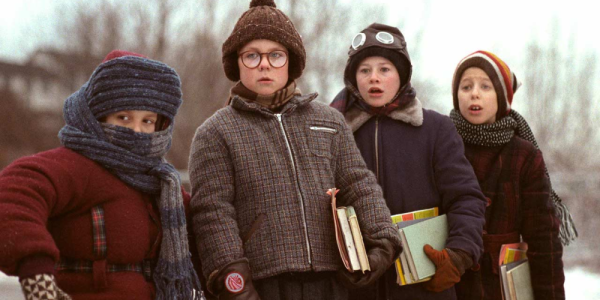
Rediscovering Childhood Wonder: The Timeless Charm of A Christmas Story
A Christmas Story feels less like one continuous holiday adventure and more like opening a box filled with childhood memories that have been preserved in slightly exaggerated detail. Ralphie Parker’s main objective is simple: he wants a Red Ryder BB gun for Christmas. Yet the film understands that childhood desire never stays simple. The toy becomes connected to courage, recognition, independence, imagination, and the hope that adults might finally understand something important without needing it explained repeatedly.
As a gamer, I watched Ralphie’s holiday season like a quest chain filled with optional objectives, environmental hazards, unreliable dialogue choices, and adults who keep repeating the same rejection line. The central reward remains visible throughout the story, but Ralphie must survive school, family routines, neighborhood conflicts, uncomfortable visits, and his own poor decisions before reaching Christmas morning.
What makes the film so easy for me to revisit is that it does not turn childhood into a perfectly warm memory. The Parker home is loving, but it is also loud, crowded, frustrating, and unpredictable. Christmas magic exists beside broken appliances, awkward relatives, disappointing meals, schoolyard pressure, and parents who do not always notice what their children are trying to communicate.
Objective Added: Obtain the Red Ryder BB Gun
Ralphie does not merely like the Red Ryder BB gun. He has built an entire heroic identity around owning it. In his imagination, the toy will transform him from an ordinary child into someone capable of protecting his family, defeating threats, and earning immediate admiration.
I understood why the adults’ refusal frustrated him. They see a dangerous toy and repeat a practical warning. Ralphie sees the central item in a much larger fantasy about becoming capable.
The repeated concern about injuring his eye becomes the film’s equivalent of a locked requirement message. No matter which adult he approaches, the same response appears. Ralphie therefore begins searching for alternate routes.
He tries direct requests, persuasive writing, subtle advertising, strategic placement, and eventually an appeal to Santa himself. Each attempt feels logical from his limited perspective, even when the adults can see exactly what he is doing.
Ralphie’s Imagination Was His Most Powerful Ability
The fantasy sequences reveal how differently Ralphie experiences ordinary life. A small disagreement can become a heroic confrontation. A school assignment can become the moment an adult finally recognizes his brilliance. A household threat can turn him into the only person capable of saving everyone.
I enjoyed these scenes because they do not feel disconnected from the main story. They explain why the BB gun matters so much. Ralphie is not imagining casual target practice. He is imagining an upgraded version of himself.
His fantasies also compensate for how little control he has in reality. Adults choose the schedule, teachers assign the work, parents make purchasing decisions, and older children control the schoolyard. Inside his imagination, Ralphie becomes the person who sets the rules.
From my perspective, these scenes function like temporary power modes. Ralphie gains perfect confidence, dramatic timing, and complete control over every opponent. Then reality loads again, and he returns to being a child in a winter coat.
The Parker House Worked Like a Busy Starting Hub
The Parker home is not visually luxurious, but it contains enough activity to feel alive in every scene. The kitchen, living room, staircase, basement, bathroom, and front yard all become associated with different family routines and disasters.
I liked how the house changes according to who controls the space. The mother creates warmth and stability in the kitchen. The father turns the living room into a stage for his prized lamp. Ralphie uses private corners for planning, decoding, and imagination. Randy transforms almost any room into a place where food, clothing, or emotion can become a problem.
The house also feels physically convincing. Winter clothing fills the entryway, furniture limits movement, and every object appears to have been used rather than selected only for decoration.
This environment gives the film much of its comfort. Even when the family argues, I understand the geography of their life together. The house becomes familiar enough that every disruption feels personal.
The Old Man Was a Boss Character With Random Behavior
Ralphie’s father is one of the film’s most entertaining figures because his mood can change quickly depending on the problem in front of him. A broken furnace, a difficult crossword clue, a damaged tire, or a mysterious prize can completely redirect his attention.
Darren McGavin gives him the dramatic intensity of someone who believes every household inconvenience has become a test of character. He battles machinery, celebrates small victories, and reacts to defeat as though the entire neighborhood has witnessed it.
From Ralphie’s perspective, his father is both intimidating and fascinating. He establishes rules, becomes angry, and often appears emotionally distant. At the same time, he has a playful side that Ralphie notices even when they do not communicate directly.
I liked that the film does not reduce him to a strict parent. His excitement over the BB gun eventually reveals that he understands Ralphie better than expected.
The Major Award Changed the Entire Neighborhood
The leg lamp is one of the film’s most memorable objects because it gives the father a visible symbol of achievement while giving everyone else a reason to question his taste.
He displays it in the front window with complete pride. The lamp becomes a public announcement that he has won something important, even if nobody fully understands the competition or the value of the reward.
I saw it as an unusual cosmetic item that the player equips immediately because it is rare. Whether it matches the room is irrelevant. Its value comes from being proof of victory.
The mother’s reaction creates the central conflict. She does not share his admiration, and the lamp begins occupying emotional space far beyond its physical size.
The eventual destruction of the lamp is funny because the father experiences it as a personal tragedy. The object was ridiculous, but his attachment to it was genuine.
Ralphie’s Mother Quietly Controlled the Real Campaign
Melinda Dillon’s performance gives the mother a gentler form of authority. She manages meals, clothing, school concerns, household tension, and the emotional state of the children without turning every action into a dramatic announcement.
Her strongest scenes are often the ones where she understands more than she says. When Ralphie becomes involved in a fight, she recognizes that public humiliation would make the situation worse. Instead of exposing him immediately, she creates a small space for honesty and protection.
I appreciated that her kindness does not make her passive. She has clear limits, reacts strongly when necessary, and knows when the father’s intensity needs to be redirected.
She also understands that children sometimes need reassurance before discipline. This makes her the emotional stabilizer of the Parker home.
Randy Was a Companion Character With No Survival Instincts
Randy creates chaos through ordinary childhood helplessness. He struggles with winter clothing, resists meals, becomes upset quickly, and depends on adults for problems that Ralphie considers beneath him.
The heavy snowsuit scene captures this perfectly. Randy is technically protected from the weather, but the protection is so excessive that he can barely move.
As a gamer, I saw him as a companion who has received maximum cold resistance at the cost of all mobility statistics.
His inability to lower his arms becomes a simple visual joke, yet it also reflects how childhood comfort can be designed according to adult logic rather than the child’s actual experience.
Randy’s presence makes Ralphie feel older and more capable, even though Ralphie remains dependent on the same adults.
The Schoolyard Had Its Own Social Ranking System
Outside the home, Ralphie enters an environment controlled by classmates, teachers, rumors, dares, and older children. School has rules, but those official rules do not prevent a separate hierarchy from forming among students.
Scut Farkus occupies the top position through intimidation. His presence changes how the younger children move, speak, and react. Ralphie and his friends understand that encountering him can turn a normal walk home into a dangerous event.
I liked how the film presents this fear from a child’s perspective. Scut is not given a complicated background or adult explanation. He is frightening because the children have already agreed that he is.
The schoolyard sections feel like areas where adult protection has limited range. Teachers exist, parents exist, but neither group can supervise every road and alley.
The Triple-Dog Dare Was a Terrible Group Decision
The frozen flagpole scene begins with a simple disagreement about whether a tongue would stick to cold metal. Instead of testing the claim carefully, the children create an escalating system of social pressure.
Each dare increases the cost of refusing. By the time the final challenge is spoken, Flick is no longer deciding whether the experiment is sensible. He is deciding whether his reputation can survive retreat.
This reminded me of multiplayer sessions where a harmless suggestion becomes a disastrous team decision because nobody wants to be the cautious player.
The result is predictable, but the film allows the situation to become painfully real. Flick is trapped, the other children panic, and the school eventually treats the incident as a problem requiring adult intervention.
The funniest detail is how quickly the group abandons him when the bell rings. Loyalty disappears the moment everyone risks being late.
The Teacher’s Feedback Was Ralphie’s Most Painful Failed Quest
Ralphie believes the school essay offers his best opportunity to explain why the BB gun is appropriate. He imagines that careful writing will impress his teacher and provide adult validation.
In his fantasy, the assignment becomes a masterpiece. The teacher recognizes his talent, praises his argument, and gives him the highest possible result.
Reality is much less generous. The grade is disappointing, and the teacher repeats the same eye-related concern Ralphie has already heard at home.
I felt his frustration because the failure extends beyond the mark. Ralphie believed he had found a new dialogue path, only to discover that the conversation still ends with the same locked response.
The sequence captures the specific disappointment of preparing an argument while never questioning whether the audience has already decided.
Little Orphan Annie Offered the Worst Reward
The decoder subplot shows Ralphie becoming invested in a radio program and the promise of receiving access to a secret message. He waits, collects the required item, and prepares to decode something meaningful.
The process itself is exciting. Ralphie enters the bathroom, protects his privacy, writes each letter carefully, and believes he is accessing information unavailable to ordinary listeners.
The final message turns out to be an advertisement.
From my perspective, this is the film’s clearest example of a disappointing unlock. Ralphie completes every step, enters the code correctly, and receives branded promotional text instead of a secret.
His disgust is funny because it marks an early moment when childhood entertainment reveals its commercial purpose too clearly.
The Tire-Changing Sequence Turned One Mistake Into a Disaster
When the family car develops a problem, Ralphie is given an opportunity to help his father. He approaches the task seriously because being included in adult work feels like recognition.
The situation changes when the small components scatter. Ralphie panics and uses language he knows is forbidden.
The following punishment is memorable because it treats language as contamination. The adults know children hear certain words, but they maintain the fiction that the vocabulary entered the home from somewhere else.
Ralphie redirects blame toward a friend, creating consequences outside his own household. One mistake therefore expands into dishonesty, punishment, and social damage.
The scene works because it combines physical frustration with the fear of disappointing a parent at the exact moment Ralphie wanted to appear capable.
The Soap Sequence Was a Psychological Endurance Challenge
The punishment involving soap is presented through Ralphie’s dramatic imagination. He envisions permanent physical consequences, medical concern, and overwhelming regret from his parents.
This fantasy allows him to transform punishment into future moral victory. He imagines the adults realizing too late that they have treated him unfairly.
I recognized the childhood logic immediately. When direct resistance is impossible, imagination creates a later scene in which everyone apologizes.
The sequence is funny, but it also shows how strongly Ralphie experiences adult discipline. The parents see a consequence for inappropriate language. Ralphie sees a potentially tragic injustice.
The Department Store Santa Was the Final Dialogue Attempt
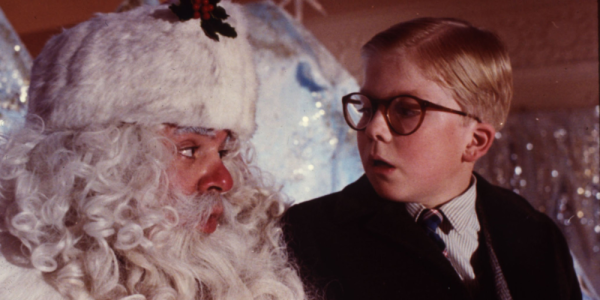
Ralphie’s visit to Santa should provide the strongest possible opportunity to request the BB gun. Santa represents Christmas authority, gift distribution, and access to items unavailable through normal parents.
The actual experience is overwhelming. The line is long, the environment is noisy, and the employees are trying to process children as quickly as possible.
When Ralphie finally reaches Santa, he forgets his prepared speech. The pressure of the moment removes the confidence he had built through fantasy.
He recovers at the last second and communicates the request, only to receive the same warning once again.
Santa then sends him down the slide, turning the supposed magical encounter into an efficient retail process.
I liked this scene because it exposes the difference between the Santa Ralphie imagined and the exhausted performer responsible for moving a crowded line.
The Chinese Restaurant Sequence Refused a Perfect Christmas Dinner
After the family’s planned meal is disrupted, the Parkers end up at a Chinese restaurant. The situation is unfamiliar, and the staff attempt to create a festive experience for them.
The sequence is broad and reflects the period in ways that can feel uncomfortable now. I view those elements as part of the film’s dated perspective rather than the reason the scene remains effective.
What works for me is the family’s acceptance that Christmas dinner no longer resembles the original plan. The restaurant staff, unusual meal, and improvised celebration create a memory precisely because everything went wrong.
The smiling duck becomes the final visual surprise, and the father’s reaction shifts the scene from discomfort into family laughter.
The meal demonstrates that a holiday tradition can survive even when its expected form collapses.
Christmas Morning Delivered the Reward Quietly
The opening of presents is chaotic, warm, and full of wrapping paper. Ralphie receives several gifts, but the BB gun does not appear among them.
His disappointment is restrained because he has already prepared himself for failure. The adults rejected the idea repeatedly, and Santa provided no alternative route.
Then his father directs him toward one final hidden present.
I appreciate that the BB gun is not introduced with an enormous public celebration. The father watches Ralphie discover it, enjoying the private knowledge that he has understood something important.
This moment changes how I view their relationship. The father may not communicate gently or consistently, but he remembers enough of his own childhood excitement to recognize Ralphie’s desire.
The BB Gun Immediately Proved the Adults Had a Point
Ralphie finally receives the object he has spent the entire film requesting. He takes it outside, prepares his target area, and begins testing the fantasy in reality.
Almost immediately, the experience becomes dangerous.
The ricochet damages his glasses and creates a panic that the repeated warning may have come true. Ralphie’s greatest reward becomes his greatest moment of fear.
I like that the film allows the adults to be practically correct without making Ralphie’s desire meaningless. The BB gun still gives him joy, responsibility, and a lasting memory. It also carries real risk.
His attempt to hide what happened leads to another improvised explanation, showing that receiving the item has not suddenly made him mature.
The Broken Glasses Created a Final Stealth Mission
After the shooting incident, Ralphie must recover from the mistake without revealing the complete truth. He searches for the glasses, invents a story, and tries to manage his expression before returning inside.
This is a small sequence, but it captures the entire film’s view of childhood. Ralphie experiences a private disaster that feels enormous while the adults remain unaware of how close he came to confirming their fears.
The lie is not especially convincing, yet the holiday atmosphere and surrounding chaos allow it to pass.
From my gamer’s perspective, Ralphie has obtained the legendary item, triggered its negative effect, damaged essential equipment, and completed a concealment objective before the adults detected the event.
The Narration Makes Every Memory Feel Larger
The adult Ralphie’s narration gives the film its distinctive rhythm. Events are described with a combination of affection, exaggeration, and awareness that the child experiencing them did not understand everything clearly.
This creates two perspectives at once. Young Ralphie treats each event as immediate and serious. Adult Ralphie understands the humor, social context, and emotional importance in retrospect.
I like that the narration does not mock the child. It remembers how large those fears and desires genuinely felt.
The language turns ordinary incidents into legends. A school bully becomes a frightening regional threat. A prize lamp becomes a major cultural event. A holiday toy becomes the central object of an entire season.
This is how childhood memory often works. Importance is not determined by objective scale. It is determined by how completely the moment occupied attention.
The Winter Setting Feels Beautiful and Inconvenient
Snow gives the neighborhood a classic holiday appearance, but the film never forgets that winter creates practical problems. Children struggle with clothing, streets become difficult, faces become cold, and every trip requires preparation.
The visual warmth comes from interior spaces, lamps, kitchen activity, and windows glowing against the darker exterior.
I enjoyed this contrast because Christmas does not exist in a permanent fantasy environment. It happens inside a real season with uncomfortable temperatures and daily responsibilities.
The snow makes Ralphie’s world look magical while also creating the flagpole incident, mobility problems, and constant battles with coats and gloves.
The Film’s Episodic Structure Feels Like Memory
A Christmas Story does not depend on one tightly escalating plot. It moves through school incidents, household events, fantasy sequences, shopping trips, punishments, and holiday preparations.
This structure resembles the way people remember childhood seasons. One event leads emotionally to another even when the connection is not part of a formal story.
I may remember the lamp, the decoder, the flagpole, the soap, the Santa visit, and the BB gun as separate chapters. Together, they create the full feeling of Ralphie’s Christmas.
The main objective provides continuity, but the side stories are what make the world believable.
The Adults Are Flawed Without Becoming Villains
Ralphie regularly feels misunderstood, yet the adults around him are not presented as cruel obstacles. They are busy, tired, practical, and limited by their own perspectives.
The teacher sees a dangerous toy. The mother sees a child who may become injured. The father sees both the danger and the excitement.
Their decisions sometimes frustrate Ralphie because he wants them to enter his imagination. They respond instead to the responsibility of caring for him.
I appreciate that the film allows love and frustration to coexist. The Parker parents can be wrong about one situation, correct about another, and emotionally inconsistent without losing the audience’s sympathy.
Why I Keep Returning to Ralphie’s Christmas
I revisit A Christmas Story because it understands that holiday memories are rarely built from flawless celebrations. They come from objects, arguments, embarrassing moments, repeated family jokes, unexpected meals, and one gift that seemed more important than anything else in the world.
From my perspective as a gamer, Ralphie spends the film pursuing a legendary item through a quest system controlled by adults. He attempts persuasion, schoolwork, advertising, direct requests, and an appeal to Santa. Every route fails until his father reveals a hidden reward outside the visible objective path.
The BB gun matters, but the father’s understanding matters more. Ralphie receives confirmation that one adult had listened even while appearing distracted.
The movie also avoids turning that moment into perfect sentiment. Ralphie immediately misuses the gift, damages his glasses, and invents a story to avoid consequences. Childhood continues after the reward screen.
That balance is why the film remains warm without becoming unrealistically sweet. The Parker family loves one another, but they still become irritated, frightened, jealous, disappointed, and exhausted.
The final image of the parents sitting together after the children have gone to sleep gives the holiday a quieter meaning. The household chaos has stopped temporarily. The gifts have been opened, the meal has been replaced, and another Christmas has become memory.
Ralphie will remember the BB gun because it represented his greatest childhood wish. I remember the film because it shows everything surrounding that wish: the people who misunderstood it, the person who quietly understood it, and the imperfect family life that made the gift matter.
Pros:
- Heartfelt portrayal of family traditions and childhood wonder
- Perfect blend of humor and emotion throughout the narrative
- Masterful storytelling with memorable and relatable characters
- Meticulous production design that authentically recreates a nostalgic era
- Universally appealing, making it a multi-generational holiday classic
- Wide accessibility on various digital platforms for easy viewing
Cons:
- The pacing may feel slow for viewers seeking fast-paced holiday action
- Some scenes may be overly sentimental for those preferring a more straightforward narrative
- The reliance on nostalgia might not resonate with audiences unfamiliar with the era




Movie Reviews

Minecraft

Grand Theft Auto V

Toca Boca World
Roblox

Leave a comment
Your comment is awaiting moderation. We save your draft here
0 Comments