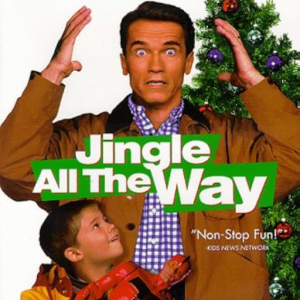
Review
Jingle All the Way plays like a holiday shopping mission designed by someone who keeps increasing the difficulty every time the player...



Holiday Hysteria: A Cinematic Journey Through Christmas Chaos
Jingle All the Way plays like a holiday shopping mission designed by someone who keeps increasing the difficulty every time the player gets close to the objective. Howard Langston begins with one simple task: find a Turbo Man action figure for his son. By the end of the day, he has crossed the city, argued with strangers, chased delivery trucks, entered a warehouse operation, confronted a criminal Santa network, and somehow ended up inside a live Christmas parade.
I enjoy the film because it turns an ordinary parental mistake into an absurd action-comedy campaign. Howard is not trying to save the world. He is trying to repair the damage caused by being distracted, unreliable, and far too confident that one last-minute purchase can solve a much larger family problem.
The toy gives the story a clear objective, but the real conflict is not about plastic, accessories, or holiday scarcity. Howard wants to prove that he still understands his son, even though most of his behavior suggests that he has not been paying enough attention.
Mission Brief: Acquire One Turbo Man
Howard treats buying the toy as a routine errand. He assumes he can enter a store, collect the item, pay, and return home before anyone notices how late he started.
That confidence disappears almost immediately. Turbo Man is not merely popular. It has become the object every parent in the city appears determined to obtain.
The film understands the specific panic created by a product that is technically ordinary but socially transformed into something essential. The toy has value because children want it, parents have promised it, stores have limited it, and everyone believes somebody else may reach the final unit first.
From my perspective as a gamer, Turbo Man functions like an event-exclusive item with terrible availability and an entire player base searching the same map.
Howard’s first error is assuming that effort begins when he enters the store. Every other parent began the mission days or weeks earlier.
Howard Had Already Failed Before Leaving the House
The shopping chaos is entertaining, but the emotional problem begins long before Howard starts looking for the toy. He has developed a habit of missing moments and offering explanations afterward.
His work is always urgent. Another client needs attention, another call requires a response, and another professional responsibility appears more immediate than the people waiting at home.
Howard does not think of himself as an uncaring father. That is what makes his failure believable. He loves Jamie, but he repeatedly behaves as though love can be stored safely while other priorities receive his time.
The Turbo Man promise matters because Jamie treats it as evidence that his father listened. Forgetting the toy therefore becomes more than a shopping mistake. It confirms a pattern.
I liked that the film never allows Howard to solve this entirely through good intentions. He may care deeply, but Jamie experiences the missed karate event, broken promises, late arrival, and distracted conversations.
Jamie Wanted the Hero Before the Toy
Jamie’s attachment to Turbo Man is easy to read as simple consumer excitement. He watches the show, knows the characters, repeats the catchphrases, and imagines the toy as the perfect Christmas gift.
However, Turbo Man also represents the kind of hero Jamie wants Howard to be. The fictional character arrives when needed, protects people, and never allows work to become an excuse.
Howard does not recognize that connection at first. He sees the toy as the object that will erase disappointment. Jamie sees it as proof that his father remembers what matters to him.
This gives the final parade sequence more emotional value than it would have as pure spectacle. Howard does not only deliver Turbo Man. He temporarily becomes the hero his son has been waiting to see.
Checkpoint One: The Toy Store Stampede
The first major store sequence establishes the rules of the day. Normal politeness has been suspended. Adults rush through entrances, compete for information, and treat retail employees as guardians of a hidden resource.
I enjoy how quickly the crowd loses its dignity. Everyone appears respectable until the possibility of finding Turbo Man is announced.
The film exaggerates the behavior, but the emotional logic is recognizable. Each parent has made a promise, delayed too long, and now views every competing shopper as a threat to family happiness.
Howard enters the crowd with physical confidence, yet strength is not enough. The store has no toy, the employees cannot create one, and pushing through other customers does not improve the inventory.
This is the first lesson of the mission: Howard cannot overpower a supply problem.
Myron Became the Rival Player I Could Not Ignore
Myron Larabee is the perfect rival because his objective is identical to Howard’s. He also needs a Turbo Man figure, has also delayed the purchase, and is also willing to become increasingly unreasonable.
Sinbad gives Myron a nervous intensity that makes him funny and slightly dangerous. He talks constantly, interprets setbacks as personal attacks, and carries years of workplace frustration into every new conflict.
I never viewed him as a traditional villain. He is another parent trapped in the same badly designed quest, except his stress is more visible.
Howard and Myron repeatedly meet because they follow the same limited information. Every rumor about available stock sends both men toward the same location.
They could cooperate, but scarcity turns them into competitors. The possibility that only one child will receive the toy makes empathy feel strategically disadvantageous.
The Radio Contest Was a Timed Event With Bad Rules
The radio station competition initially appears to offer a fair alternative. Instead of searching stores, Howard and Myron can answer a question and win the toy.
The problem is that both men hear the opportunity while driving and immediately treat it as the final route to success. Traffic laws, personal safety, and normal behavior become secondary.
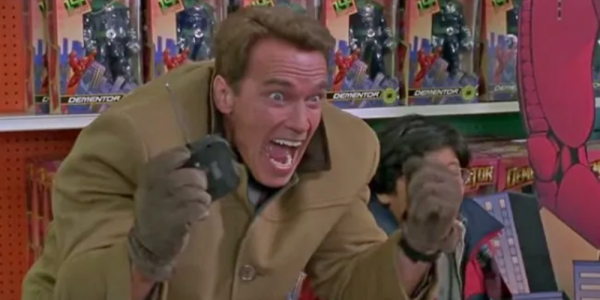
The sequence works because the prize sounds easy until thousands of listeners attempt the same solution. The radio host announces one objective, but the entire city becomes part of the competition.
Howard and Myron rush toward the station as though entering a limited-time boss encounter. Neither pauses to consider whether the contest may contain additional conditions.
When the prize turns out not to be the expected physical toy, their disappointment becomes explosive. They have reached the objective marker and discovered that the reward description was misleading.
The Mail Bomb Scene Crossed Into Holiday Madness
Myron’s package creates one of the film’s wildest tonal shifts. A frustrated postal worker, a suspicious parcel, a police response, and Howard’s presence combine into a sequence that belongs more naturally in an action comedy than a family Christmas story.
The absurdity works because the film has already shown both men abandoning rational judgment. Every setback makes their next decision more extreme.
I like how quickly authority figures misread the situation. Howard wants to explain, Myron wants to escape blame, and nobody has enough context to interpret their behavior calmly.
This scene makes clear that the Turbo Man search is no longer a shopping trip. Howard has entered a chain of consequences where each attempt to fix the problem creates a more serious one.
Ted Was the Neighbor Who Always Had Better Statistics
Ted Maltin represents Howard’s domestic insecurity. He is available, attentive, calm, helpful, and apparently excellent at every small task Howard has neglected.
He remembers Liz, helps around the house, interacts warmly with Jamie, and appears exactly when Howard is absent.
Phil Hartman plays Ted with a polished friendliness that never feels entirely harmless. He smiles, offers assistance, and maintains plausible innocence while clearly enjoying Howard’s failures.
From my gamer’s perspective, Ted is the rival character with high relationship scores because he completed every optional family side mission Howard ignored.
Howard reacts with jealousy instead of self-reflection. He sees Ted as an intruder, but Ted’s advantage exists because Howard left so much emotional space unoccupied.
The Reindeer Fight Was an Optional Encounter I Never Expected
The conflict with Ted leads Howard into one of the film’s strangest sequences: a physical struggle involving a reindeer inside a suburban home.
The scene has almost nothing to do with finding Turbo Man, yet it perfectly demonstrates how far Howard has drifted from the original task.
Instead of purchasing a toy, he is breaking into a neighbor’s house, reacting to jealousy, and attempting to escape an animal that has no reason to understand the situation.
I enjoy the scene because Arnold Schwarzenegger commits to the physical comedy completely. Howard approaches the encounter with action-star confidence and discovers that a reindeer is not impressed by it.
The moment also reminds me that Howard’s greatest obstacles are increasingly self-created. The stores failed him, but the neighbor’s house is a problem he entered voluntarily.
Checkpoint Two: The Santa Warehouse
The counterfeit Santa operation gives the movie a hidden underground economy. Howard follows a mall Santa expecting useful information and discovers an entire network selling unofficial holiday merchandise.
The location feels like a secret black-market shop area in a game. Costumed characters guard access, inventory is hidden from ordinary customers, and the prices exploit desperation.
Howard knows the situation looks suspicious, but the possibility of obtaining Turbo Man overrides caution.
The fake toy is especially painful because it offers the appearance of success without the promised quality. Howard has reached a point where he is willing to accept almost anything that can be wrapped and placed beneath the tree.
The warehouse also expands the film’s satire. Scarcity does not only create competition among parents. It creates a profitable market for people willing to sell imitation, damaged, or misleading products.
The Santa Fight Became a Holiday Beat-’Em-Up
When the warehouse deal collapses, Howard finds himself surrounded by criminal Santas, elves, and costumed workers. The visual contrast makes the action immediately funny.
These are characters normally associated with generosity and childhood joy, yet they attack like enemies in a themed arcade level.
The scene uses Schwarzenegger’s physical presence well. Howard is larger than many of the attackers, but the number of opponents and confined environment keep the fight chaotic.
Every costume creates a new visual joke. A punch lands differently when delivered by a Santa. An elf becomes more threatening when several others appear behind him.
I never take the violence literally because the presentation is so theatrical. The sequence operates through cartoon logic, allowing Howard to survive a battle that should have ended his shopping day permanently.
The Police Officer Became a Recurring Environmental Hazard
Officer Hummell repeatedly encounters Howard at the worst possible moments. Each meeting adds another piece of evidence that Howard is unstable, dishonest, or involved in criminal behavior.
The running joke works because Howard’s explanations become less believable as the day continues. Even when he tells the truth, the context makes him sound ridiculous.
The officer functions like a persistent non-player character whose suspicion level never resets. Every accidental encounter carries the history of the previous one.
Howard could avoid some of these problems by slowing down and explaining himself carefully. Instead, panic makes him look more guilty.
Howard Kept Selecting the Aggressive Dialogue Option
Throughout the film, Howard responds to pressure by increasing force. He runs faster, argues louder, drives more recklessly, and attempts another shortcut.
This behavior may help in an action role, but it repeatedly fails in a world governed by store inventory, family trust, and social consequences.
I often imagined a dialogue wheel where Howard had access to patient, honest, apologetic, and aggressive responses. He selected aggressive almost every time.
The comedy comes from watching someone with the physical appearance of an action hero face problems that cannot be solved through intimidation.
No amount of strength can create a sold-out toy. Howard needs planning, communication, and emotional responsibility—the exact skills he has neglected.
Liz Was Managing Christmas Without a Co-op Partner
While Howard searches for Turbo Man, Liz handles the practical work of Christmas. She prepares the home, cares for Jamie, manages social expectations, and responds to Howard’s increasingly strange updates.
Her frustration is justified because the toy is only one part of a larger pattern. Howard has left her to complete the family workload while he treats the final missing task as a heroic mission.
I appreciated that Liz is not impressed by dramatic promises. She wants Howard to be reliable in ordinary situations.
The film’s comedy often follows Howard, but the family story becomes clearer when I consider the day from her perspective. Her husband disappears to complete an errand he claimed was already handled, communicates poorly, damages relationships, and returns with increasingly unbelievable explanations.
The Parade Was the Final Level Nobody Planned
The holiday parade brings every storyline into one crowded public space. Jamie, Liz, Ted, Myron, the police, performers, and Howard all arrive for different reasons.
Howard does not enter the parade as part of a careful plan. He is mistaken for the performer playing Turbo Man and pushed into the role before he fully understands what is happening.
This is the film’s perfect final escalation. He has spent the day searching for the toy and now becomes the character.
The costume gives him temporary access to the exact heroic image Jamie admires. It also places Howard inside an unfamiliar performance filled with scripted cues, mechanical equipment, and thousands of spectators.
He has reached the objective through the least direct route imaginable.
The Turbo Man Suit Was an Overpowered Late-Game Unlock
The parade costume comes with technology that transforms Howard from exhausted parent into flying holiday superhero. The suit exaggerates everything Jamie believes Turbo Man can do.
Howard initially struggles with the controls, which makes sense because he has received a high-level equipment set without completing any training.
The jet system, gadgets, and physical design allow the movie to shift fully into comic-book action. Earlier sequences stretched reality. The parade abandons ordinary reality almost completely.
I enjoy this transition because it externalizes Howard’s emotional goal. He does not only want Jamie to forgive him. He wants to appear capable of extraordinary heroism.
The suit gives him that appearance before he has completed the personal work behind it.
Myron Became Dementor Because the Game Needed a Boss
Myron’s transformation into Dementor turns the rival shopper into a visible antagonist. He no longer competes only through store lines and rumors. He enters the parade costume and attempts to take the limited-edition Turbo Man figure directly.
The conflict is ridiculous, but emotionally consistent. Both men have spent the day believing that one object will determine whether they succeed as fathers.
Myron’s desperation becomes more tragic beneath the comedy. He is not stealing the toy for himself. He wants to avoid disappointing his child.
This does not justify placing Jamie in danger, but it keeps Myron from becoming an empty villain. He has followed the same logic as Howard to a more extreme conclusion.
The Rooftop Rescue Was Howard’s First Genuine Hero Moment
Howard spends most of the film trying to look like a good father. During the parade crisis, he finally acts like one.
When Jamie is in danger, the toy stops being the primary objective. Howard uses the suit to protect his son even though he does not fully control it.
This distinction matters. Earlier risks were taken to obtain a product and preserve Howard’s image. The final risk is taken for Jamie directly.
The rescue works as action spectacle, but it also completes Howard’s emotional progression. He becomes useful when he stops treating the gift as the solution and focuses on the child.
Jamie’s Final Choice Changed the Meaning of Turbo Man
After Howard reveals his identity, Jamie receives the Turbo Man figure he wanted throughout the film.
Instead of guarding it, he gives it to Myron for Myron’s son.
This is the most mature decision in the story, and it comes from the child everyone has been trying to impress.
Jamie understands that he no longer needs the toy to prove his father cares. He has seen Howard risk himself publicly and personally.
Myron’s child still needs the promised gift, so Jamie chooses generosity over possession.
The scene quietly exposes the adults’ behavior. Howard and Myron have spent the day treating scarcity as a reason to abandon empathy. Jamie resolves the conflict by sharing.
The Film Is a Satire of Parental Panic
Jingle All the Way exaggerates holiday shopping culture until normal adults become competitors, criminals, and action characters.
The toy industry creates desire through television, character branding, limited availability, and social pressure. Children request the product, but parents transform the request into a judgment of their own success.
Howard is not searching only because Jamie likes Turbo Man. He believes failure to obtain the toy will confirm that he is an inadequate father.
Myron feels the same pressure. Every sold-out store becomes evidence that the system is designed to humiliate parents who lack time, money, or preparation.
The movie makes the behavior absurd, but the anxiety underneath it remains recognizable.
Arnold Schwarzenegger Was Perfectly Miscast in the Best Way
Arnold Schwarzenegger’s action-star image gives the comedy additional value. Howard looks like someone capable of defeating an army, yet he is repeatedly defeated by retail workers, traffic, children’s products, police misunderstandings, and domestic responsibility.
His physical confidence makes every failure larger. When Howard runs through a store, he appears prepared for a chase scene. When he fights Santas, the film briefly gives him the kind of conflict his body seems designed to handle.
However, the emotional challenge remains outside his normal screen persona. He must apologize, listen, and admit that he has disappointed his family.
I enjoy the performance because Schwarzenegger never seems embarrassed by the material. He commits to the panic, physical comedy, shouting, and increasing humiliation.
Sinbad Gave the Rivalry Its Nervous Energy
Myron could have been a simple obstacle who appeared whenever Howard reached a possible toy. Sinbad makes him feel like a man whose frustration existed long before this particular Christmas Eve.
He talks about work, unfairness, social pressure, and the expectation that ordinary employees should somehow obtain impossible products after exhausting schedules.
His speeches are comic exaggerations, yet they give the character a recognizable source of anger.
Howard has professional status and resources but fails through neglect. Myron appears to have less control over his time and opportunities. The same toy crisis affects them differently.
Ted Was Funny Because He Was Almost Helpful
Ted’s behavior is inappropriate, but he performs many genuinely useful tasks. He helps with decorations, remembers details, brings food, and pays attention to Liz and Jamie.
This makes Howard’s jealousy more uncomfortable. Ted is clearly trying to move closer to Liz, yet Howard cannot dismiss him as completely useless.
Ted occupies the role Howard should have filled during the holiday preparations.
Phil Hartman’s delivery keeps the character amusing because every friendly sentence carries a second intention. Ted rarely needs to state what he wants. His confidence suggests that he expects Howard to remove himself through continued failure.
The Comedy Depends on Constant Escalation
The film rarely allows Howard to experience one manageable problem. Each solution reveals a larger obstacle.
A store is sold out, so he searches another store. A contest offers a toy, but the prize is misunderstood. A Santa offers access, but the operation is criminal. A neighbor has a toy, but stealing it creates another disaster.
This escalation gives the story a level-based rhythm. Howard reaches a location, receives temporary hope, encounters failure, and moves toward a more dangerous alternative.
The repetition works because the type of challenge changes. Retail panic becomes road comedy, criminal action, domestic farce, and finally superhero spectacle.
The Movie’s Reality Becomes Less Stable as Howard Panics
The opening family scenes take place in a recognizable suburban world. By the final act, Howard is flying above a parade in a functioning Turbo Man suit.
The transition is gradual enough that I accept it. Each earlier event stretches reality slightly further.
The store crowds behave like a stampede. The Santa warehouse resembles a themed criminal fortress. The radio station incident becomes an emergency response. By the time the suit works, the movie has already trained me not to expect realism.
This flexible tone allows the film to turn emotional pressure into physical spectacle. Howard’s panic becomes large enough to alter the genre.
The Christmas Setting Makes Every Failure More Urgent
Howard cannot postpone the mission. The deadline is Christmas morning, and the remaining shopping time disappears quickly.
Holiday traffic, crowded stores, public events, decorations, and family expectations make the city feel active but hostile to anyone who failed to prepare.
Christmas also raises the emotional stakes. Forgetting an ordinary birthday purchase would be disappointing. Missing the promised toy associated with the family’s most important holiday feels larger.
The setting creates a countdown without needing an on-screen timer.
The Final Joke Reminds Me Howard Has Not Fully Changed
After the parade, the family returns home with the immediate crisis resolved. Howard has proven his love, Jamie is happy, and the holiday appears saved.
Then Liz asks what Howard bought for her.
His expression reveals that he forgot.
I like this ending because it prevents the story from pretending one heroic act has permanently repaired every habit. Howard has learned something important, but he remains capable of making the same kind of mistake.
Personal growth has begun. It has not been completed.
Why I Still Enjoy the Search
I return to Jingle All the Way because it captures the strange way love, guilt, consumer pressure, and competition can become tangled during the holidays.
Howard believes a toy can compensate for lost time. Myron believes the same toy will protect his child from disappointment. Both men become so focused on the symbol that they lose sight of the relationship it is supposed to support.
From my perspective as a gamer, the movie is a badly planned fetch quest where the requested item has a low spawn rate, every vendor is empty, rival players are hostile, and the mission giver cares more about emotional reliability than the reward itself.
Howard completes the objective only after the objective changes. He stops trying to acquire Turbo Man and begins trying to protect Jamie.
The toy eventually reaches a child, but the film’s best reward is the moment Jamie recognizes his father beneath the costume.
Jingle All the Way remains funny because the escalation is enormous, the performances are committed, and the holiday world becomes increasingly ridiculous. It remains meaningful because the central mistake is ordinary.
Howard loves his family. He simply keeps behaving as though love can wait until after work, after the phone call, after the meeting, and after one more responsibility.
The Turbo Man disaster forces him to discover that being present cannot be purchased at the final store before closing.
Pros:
- The film's humor is both outrageous and heartfelt, creating a unique blend of chaotic energy and sentimentality.
- It delivers witty dialogue and sharp social commentary that resonates with modern audiences.
- The visual production design, with its festive colors and meticulously crafted set pieces, enhances the overall cinematic experience.
- Strong and memorable performances anchor the film, providing depth to both comedic and emotional scenes.
- The narrative cleverly mixes absurdity with moments of genuine reflection on modern consumer culture.
- Its availability on multiple streaming platforms, with flexible download options, makes it easily accessible for a wide audience.
Cons:
- The narrative occasionally leans too heavily on over-commercialized themes, which may detract from the emotional depth.
- Some comedic scenes might be perceived as over the top, potentially alienating viewers seeking subtle humor.
- The pacing can sometimes feel uneven, with abrupt shifts between frantic chase sequences and slower, reflective moments.






Movie Reviews

Minecraft
Grand Theft Auto V

Toca Boca World

Roblox

Leave a comment
Your comment is awaiting moderation. We save your draft here
0 Comments