
Review
The Christmas Chronicles begins with a familiar collection of holiday ingredients: a grieving family, two children drifting in differen...


The Christmas Chronicles: A Cinematic Ode to Holiday Magic
The Christmas Chronicles begins with a familiar collection of holiday ingredients: a grieving family, two children drifting in different emotional directions, a late-night attempt to catch Santa Claus on camera, and a magical accident that places Christmas itself in danger. None of these ideas is especially original. What gives the film its identity is the confidence with which it rearranges them around Kurt Russell’s unusually charismatic interpretation of Santa.
I expected a gentle family adventure built around warm decorations and predictable lessons about believing in Christmas. The film certainly delivers those elements, but it also moves with the energy of a road comedy. Santa is not confined to a workshop or presented as a distant symbol of childhood innocence. He is an active, slightly vain, highly capable traveler who reacts to disaster with irritation, improvisation, and the confidence of someone who has completed the same impossible delivery route for centuries.
The film does not achieve the emotional depth of the strongest Christmas classics, and its digital spectacle occasionally overwhelms the more intimate story beneath it. Still, its central performance, brisk pacing, and sincere treatment of family grief make it more memorable than its conventional premise initially suggests.
A Family Already Changed Before Christmas Eve
The Pierce family is introduced through home-video memories that immediately establish both affection and absence. Teddy and Kate once shared a happier family life with their parents, but the death of their father has altered the emotional structure of the household. Their mother, Claire, is working long hours, Teddy has become distant and rebellious, and Kate preserves her attachment to Christmas with a determination that sometimes looks like denial.
I appreciated that the screenplay does not treat the family conflict as a temporary disagreement created only to support the adventure. Teddy’s behavior comes from grief he cannot express comfortably. Kate’s belief in Santa is connected to her desire to preserve the emotional world that existed before her father died.
Their mother is not presented as neglectful. She is exhausted, financially pressured, and attempting to keep the family functioning. The children experience her absence as another loss, while the film allows the audience to recognize that she is carrying responsibilities they do not fully understand.
This foundation gives the Christmas Eve adventure emotional purpose. Teddy and Kate are not simply trying to save a holiday. They are learning how differently each of them has responded to the same absence.
Darby Camp Gives Kate the Film Its Emotional Momentum
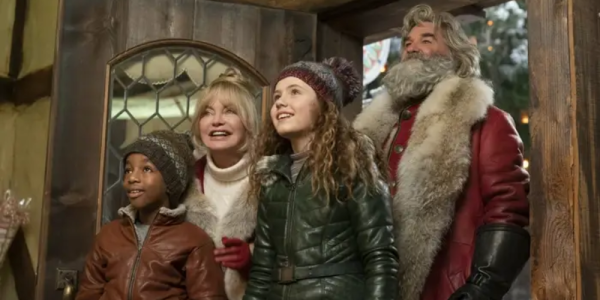
Darby Camp plays Kate with the kind of direct enthusiasm that family films often risk turning into sweetness without personality. Kate is optimistic, but she is also persistent, curious, and capable of manipulating her older brother when she believes the situation requires it.
Her decision to record Santa begins as a child’s wish for evidence, yet it quickly becomes an attempt to create a shared experience with Teddy. She wants him to participate in something that once connected the family. Her excitement therefore carries a quiet emotional urgency.
Camp handles the magical material naturally. Kate is astonished by the sleigh, reindeer, elves, and Santa’s bag, but her reactions do not feel detached from her character. She moves quickly from wonder to practical concern because saving Christmas becomes inseparable from repairing her relationship with Teddy.
The performance is especially effective in quieter moments when Kate recognizes how far her brother has withdrawn. Her optimism becomes less naïve and more courageous. She understands that believing in something does not prevent loss, but it can offer a reason to continue reaching toward another person.
Teddy’s Rebellion Is Less Simple Than It Appears
Judah Lewis gives Teddy a familiar teenage exterior: sarcasm, secrecy, frustration, and an immediate desire to distance himself from anything childish. The screenplay initially positions him as the irresponsible sibling whose behavior creates tension inside the family.
As the story develops, his rebellion becomes more understandable. Teddy has not stopped caring about his father. He has become trapped by the belief that he should respond to the loss with emotional toughness. His increasingly reckless behavior allows him to avoid discussing the guilt, anger, and helplessness beneath it.
The relationship between Teddy and Kate is therefore more important than the magical plot. She remembers the brother who once participated in family traditions, while he sees her belief as an uncomfortable reminder of the person he used to be.
Lewis is strongest when Teddy’s defensive confidence begins to disappear. The adventure forces him into situations where sarcasm cannot solve the problem, and his attachment to Kate becomes visible through instinctive decisions rather than speeches.
The Arrival of Santa Changes the Film’s Temperature
Kurt Russell enters The Christmas Chronicles with such immediate authority that the film seems to reorganize itself around him. His Santa is warm without being soft, humorous without becoming foolish, and aware of his own legendary status without treating it as sacred.
Russell gives the character the relaxed confidence of an experienced performer who knows that everyone in the room is waiting for him. He dislikes inaccurate representations of his appearance, responds sharply when people question his identity, and carries himself with the physical ease of someone far younger than traditional images of Santa suggest.
This interpretation works because Russell does not play Santa as an ordinary man wearing a costume. He creates the sense of a figure who has spent centuries observing human behavior and has developed a mixture of affection, impatience, and amusement toward it.
There is also a subtle melancholy beneath the swagger. Santa understands grief, disappointment, and the fragile emotional expectations attached to Christmas. He recognizes what Teddy and Kate are avoiding before they can explain it themselves.
A Santa Who Refuses to Be Reduced to a Symbol
The screenplay repeatedly plays with familiar images of Santa Claus. Russell’s version objects to the assumption that he is extremely overweight, treats his public image with mild irritation, and presents the red suit as only one part of a larger identity.
I found this self-awareness entertaining because it does not become completely cynical. The film questions the visual clichés while preserving the emotional meaning of Santa. He still delivers gifts, remembers children, understands personal wishes, and operates according to a moral purpose.
His personality gives the adventure unpredictability. A more traditional Santa might respond to disaster with endless patience. Russell’s Santa becomes frustrated, argues with the children, and occasionally appears offended that centuries of successful work can be disrupted by two inexperienced passengers.
Yet he never loses sight of the children’s vulnerability. His irritation remains theatrical rather than cruel. He expects them to take responsibility, but he also gives them opportunities to demonstrate that they can.
The Sleigh Accident Provides Spectacle but Weakens the Magic
The initial flight through the Chicago sky contains much of the visual excitement expected from a modern holiday production. The sleigh moves rapidly above the city, the reindeer display unusual speed and agility, and Kate’s hidden presence transforms Santa’s routine journey into immediate danger.
The accident that follows is necessary for the plot. The sleigh is damaged, the reindeer escape, the gift bag disappears, and Santa loses the equipment required to complete his work. Christmas must now be saved through improvisation.
Visually, however, the sequence sometimes makes the magic feel less convincing. The digital effects are energetic but not always tactile. The sleigh, animals, and cityscape occasionally appear to occupy slightly different physical realities.
I did not need complete realism from a film about flying reindeer, but magical imagery becomes more persuasive when it seems to possess weight and resistance. The practical family scenes often feel more emotionally real than the large visual set pieces.
The spectacle remains enjoyable, though I was more invested in the characters after they returned to the ground.
Chicago Gives the Film a Less Polished Christmas Setting
The decision to move much of the story through nighttime Chicago gives The Christmas Chronicles a different atmosphere from holiday films centered on small towns or perfect suburban homes. Streets, police stations, alleys, shops, and apartment buildings become part of the adventure.
The city is decorated for Christmas, but it does not exist only as a festive postcard. People are working, driving, arguing, spending time in bars, and dealing with ordinary disappointments while Santa attempts to repair his route around them.
This setting supports the film’s idea that Christmas magic must move through an imperfect world rather than remain isolated at the North Pole. Santa encounters adults who no longer believe, police officers who assume he is delusional, and strangers whose personal histories he understands instantly.
The contrast between his knowledge and their skepticism creates several of the film’s best exchanges. Russell can shift from comic irritation to emotional precision within the same conversation.
The Police Station Sequence Lets Russell Take Control
Santa’s arrest initially appears to be another delay in an already crowded plot, but it leads to the film’s most entertaining musical sequence. Confined in a police station, Santa organizes the other prisoners and officers into a performance of “Santa Claus Is Back in Town.”
The scene is unapologetically theatrical. It briefly abandons realism and allows Russell’s musical charisma to become part of the character. Rather than feeling like an unrelated interlude, the sequence expands this Santa’s identity. He is not simply a delivery worker with magical equipment. He is a showman who understands how to transform the emotional atmosphere of a room.
I enjoyed the confidence of the staging. The film does not apologize for becoming a musical for several minutes. Instruments appear, hardened characters begin performing, and the police station turns into a temporary celebration.
The sequence could easily have become embarrassing, but Russell commits completely. His natural connection to rock-and-roll performance gives the moment an ease that a more traditionally gentle Santa might not have possessed.
It also provides the film with a necessary pause. The adventure has been moving rapidly from one logistical problem to another. The song allows Santa to demonstrate magic through personality rather than effects.
The Elves Introduce a Different Kind of Comedy
The elves are small, expressive creatures who communicate through their own language and move with an unpredictable mixture of cuteness and aggression. Their visual design clearly aims to avoid the familiar image of human performers in pointed hats.
I had mixed reactions to them. Their energy is entertaining, and their fierce loyalty to Santa produces several comic reversals. They can appear harmless one moment and surprisingly dangerous the next.
At the same time, the digital animation gives them a more artificial presence than the human characters. Their exaggerated movement and rapid dialogue sometimes make scenes feel as though they have shifted into a different film.
The elves work best when interacting directly with Kate. Her willingness to trust them creates warmth, while their reactions reveal that Santa’s world operates according to rules she has only begun to understand.
Their involvement in restoring the sleigh and organizing the gifts also reinforces the collaborative nature of Christmas. Santa may be the recognizable public figure, but the larger operation depends on many unseen participants.
The Film Understands the Importance of the Gift Bag
Santa’s bag is treated as more than a container. Its interior appears to exist beyond normal physical dimensions, and Kate’s journey inside it gives the film one of its most imaginative environments.
The endless landscape of gifts creates a sense of scale that the exterior North Pole material only partially achieves. Each package represents a child, a household, and an expectation waiting somewhere in the world.
Kate’s movement through the bag also transforms gift delivery from an abstract miracle into an enormous logistical responsibility. Christmas cannot be saved through enthusiasm alone. The gifts must be located, sorted, transported, and delivered before morning.
I liked that the magical object still requires work. The bag may contain impossible space, but it does not automatically solve the crisis. The characters must cooperate with its rules.
The sequence also places Kate temporarily beyond Teddy’s protection, forcing both siblings to act independently. Their eventual reunion carries more meaning because each has confronted a different part of the adventure.
The Christmas Spirit Becomes a Visible Plot Device
The film introduces the idea that Christmas spirit is measurable and that global belief directly affects the stability of the holiday. As delays increase and people awaken without gifts, the level begins to fall.
This device gives the story a clear countdown, but I found it one of the screenplay’s less elegant choices. Turning communal hope into a visible measurement makes the stakes easy to understand, yet it reduces an emotional concept to a mechanical indicator.
The stronger parts of the film show Christmas spirit through behavior: Kate refusing to abandon the mission, Teddy choosing responsibility, strangers responding to music, and Santa remembering the emotional needs of people who no longer expect to be seen.
Those actions communicate the idea more effectively than a declining number. The film does not need to quantify belief when the performances already make its presence or absence visible.
Still, the countdown keeps the third act moving and gives every delay immediate consequence.
Grief Is the Story’s Real Antagonist
There is no conventional villain in The Christmas Chronicles. The sleigh accident is caused by curiosity and poor judgment rather than malice. The police act according to the information available to them. Even the street criminals who briefly complicate the story are minor obstacles rather than central threats.
The deeper opposition comes from unresolved grief. Teddy has responded to his father’s death by distancing himself from his family and moving toward behavior that would have disappointed the person he misses. Kate has responded by protecting childhood belief with increasing intensity.
Neither response is presented as complete. Teddy’s rejection of family tradition does not make him more mature, while Kate’s belief cannot restore the past. The Christmas Eve adventure gives them a shared experience through which grief can finally be discussed.
I appreciated that the film does not suggest Christmas removes loss. Their father remains absent. The emotional movement comes from recognizing that his influence continues through memory, behavior, and the relationship between the siblings.
Teddy’s Conversation With His Father Gives the Fantasy Its Purpose
The most emotionally direct moment arrives when Teddy is given an opportunity to see his father again. The encounter could have become manipulative, but the film keeps it brief enough to preserve its impact.
Teddy does not receive a long explanation that resolves every feeling. The vision allows him to confront the person whose absence has shaped his behavior and recognize how far he has moved from the values he associates with him.
Judah Lewis plays the scene with restraint. The defensive teenager disappears, and the grief beneath his actions becomes visible without elaborate dialogue.
This moment justifies the magical framework more effectively than the global Christmas countdown. The fantasy matters because it creates emotional access that ordinary family conversation has not achieved.
The encounter does not erase Teddy’s guilt, but it redirects it. He can choose to honor his father through future behavior rather than punishing himself through continued rebellion.
Kate and Teddy Earn Their Reconciliation
The siblings begin the film emotionally separated. Kate still wants Teddy’s attention and participation, while he treats her interests as childish. Their conflict intensifies because she discovers evidence of his recent behavior and uses it to force him into the Santa investigation.
The adventure gradually changes the balance between them. Kate proves capable of acting independently, while Teddy reveals that his detachment has never eliminated his protective instincts.
I liked that neither sibling becomes completely responsible for the reconciliation. Kate must recognize that Teddy’s anger comes from pain rather than simple cruelty. Teddy must stop treating emotional distance as evidence of maturity.
Their cooperation during the final delivery demonstrates the change more effectively than a formal apology alone. They anticipate each other’s decisions, accept different responsibilities, and work toward a shared purpose.
By Christmas morning, their relationship is not magically free of conflict. It has regained communication.
Chris Columbus’s Influence Is Easy to Recognize
As a producer and co-writer, Chris Columbus brings a recognizable family-adventure sensibility to the film. The Christmas Chronicles combines domestic conflict, child-centered fantasy, comic adults, magical danger, and emotional reconciliation in a way that recalls the structure of several popular family films from the 1980s and 1990s.
The children are allowed to move through the story with unusual independence. Adults are frequently absent, skeptical, or unable to understand the complete situation. The adventure becomes a space where the young protagonists prove emotional and practical abilities that ordinary family life has not recognized.
There is also a strong belief in broad entertainment. The film moves between slapstick, fantasy, music, sentimental drama, and action without treating tonal consistency as its highest priority.
This approach creates warmth and momentum, though it can also make the production feel overfilled. The police station musical sequence, criminal encounter, elf comedy, magical bag, reindeer rescue, and family drama compete for attention within a relatively compact running time.
The film succeeds largely because Russell provides a stable personality at the center of those shifts.
Clay Kaytis Directs for Momentum
Director Clay Kaytis keeps the story moving with very little inactivity. Once Santa appears, the film rarely remains in one location for long. The characters travel through the city, separate, reunite, encounter new obstacles, and continue toward the deadline.
This momentum makes The Christmas Chronicles easy to watch, particularly for a family audience. The story does not become trapped in exposition, and every sequence introduces a clear objective.
The limitation is that emotional moments occasionally arrive before the previous action has fully settled. The film can move from digital spectacle to private grief with little transition. The performances carry these shifts, but the editing does not always allow enough silence.
Kaytis is most confident when directing Russell’s interactions with the children and skeptical adults. These scenes depend on comic timing, personality, and reaction rather than visual scale.
The action remains clear, but I rarely found it visually distinctive. The direction prioritizes accessibility and pace over atmosphere.
The Film’s Version of Belief Is Broader Than Believing in Santa
At first, Kate’s belief appears to be the central issue. She believes Santa exists, while Teddy has rejected the idea. The adventure confirms that she is factually correct, but the film gradually expands the meaning of belief.
Santa himself does not require everyone to accept a literal magical figure. He is more concerned with whether people can act with generosity, courage, and emotional openness.
Teddy’s problem is not simply that he doubts Santa. He has stopped believing that his family can recover from loss. Kate’s belief is valuable because it keeps her reaching toward connection, but she must also accept that magic cannot preserve childhood unchanged.
The Christmas spirit therefore becomes a willingness to participate in shared hope even when life has provided reasons for disappointment.
This idea is familiar, but the film expresses it sincerely. It avoids the more cynical approach of treating belief as foolishness that adults temporarily tolerate.
Mrs. Claus Is Saved for a Perfect Entrance
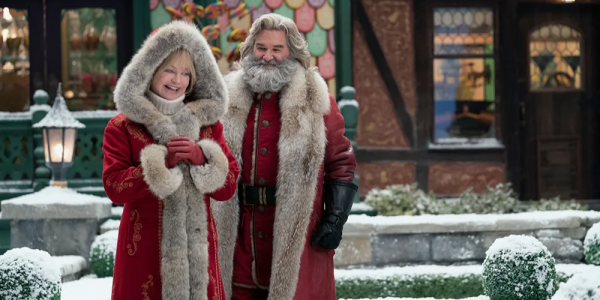
Goldie Hawn appears briefly as Mrs. Claus near the end, and the casting immediately suggests a larger relationship beyond the adventure we have seen. Her chemistry with Russell requires very little introduction.
The scene works because Mrs. Claus does not seem surprised by the night’s chaos. She knows Santa well enough to recognize his tendency toward theatrical storytelling and gently challenges his version of events.
Hawn brings warmth and authority to a small role. Her presence makes the North Pole feel like a home rather than only a production center.
The cameo also provides Santa with a personal relationship outside his interactions with children. Russell’s performance shifts slightly around her. The confident public figure becomes a husband returning from a difficult work night.
I found the moment more charming than many of the larger magical sequences because the actors’ familiarity creates immediate emotional texture.
The Final Gift Is About Memory Rather Than Possession
On Christmas morning, Teddy receives an ornament that allows him another brief connection with his father. The object matters because of what it represents, not because of its material value.
This reflects the film’s broader treatment of gifts. The most meaningful presents are not necessarily the largest or most expensive. They recognize something the recipient cannot easily express.
Santa understands Teddy’s need more clearly than Teddy does. The gift does not promise that grief will disappear. It gives him a private way to maintain connection without allowing absence to control his behavior.
Kate’s experience has already provided the evidence she wanted, though the film playfully limits what can be recorded and shown to others. The magic remains personal rather than becoming a public discovery.
This choice preserves Santa’s mystery while allowing the children to retain the emotional truth of the night.
Where the Film Feels Most Conventional
The Christmas Chronicles follows a recognizable path from family conflict to magical disruption and eventual reconciliation. Several narrative turns can be anticipated long before they occur. Teddy will rediscover responsibility, Kate’s belief will be validated, and the siblings will repair their relationship.
The dialogue occasionally explains emotions too clearly, particularly when the performances have already made them apparent. The global stakes also feel less convincing than the family story. I cared much more about Teddy and Kate than the abstract possibility of worldwide Christmas collapse.
The digital creatures vary in effectiveness, and the busy third act sometimes appears designed to include every available holiday spectacle. Greater restraint might have allowed the emotional material to become more prominent.
Yet conventional structure is not necessarily a failure in a seasonal family film. Familiarity can provide comfort when the characters and performances supply enough individual personality.
Kurt Russell supplies that personality in abundance.
Why Kurt Russell’s Santa Remains the Film’s Greatest Strength
Russell avoids both extremes that frequently weaken cinematic versions of Santa Claus. He is neither a purely solemn symbol nor a bumbling comic figure. He can be authoritative, amused, irritated, compassionate, and vain within the same scene.
His Santa knows the effect he has on people, but he does not treat reverence as a requirement. He prefers practical cooperation to unquestioning worship. When Teddy and Kate make mistakes, he expects them to help repair the consequences.
The performance also suggests history. Russell carries himself like someone who has met generations of the same families and remembers private details nobody else could know. His familiarity with human weakness gives the character warmth without innocence.
Most importantly, he looks as though he enjoys being Santa. The work is exhausting and the night becomes disastrous, but the role still gives him energy. That enjoyment reaches the audience.
A Christmas Adventure With a Genuine Emotional Center
The Christmas Chronicles is not the most visually refined or dramatically complex holiday film I revisit. Its effects can look uneven, the plot becomes crowded, and the emotional lessons are presented with little ambiguity.
Still, the film understands that Christmas stories work best when the magic reveals something already present within the characters. Santa does not create love between Teddy and Kate. He places them in circumstances where they must acknowledge it.
The adventure gives Teddy a way to confront grief without pretending he has stopped missing his father. It gives Kate evidence that hope can remain valuable even when childhood is changing. It gives Claire a family that has begun communicating again rather than simply performing seasonal happiness.
Kurt Russell transforms a familiar figure into a lively screen presence whose confidence, humor, and musical energy define the production. Darby Camp and Judah Lewis support him with performances grounded enough to keep the family story visible beneath the spectacle.
I finished the film aware of its formula, but also aware of why that formula continues to work. The Christmas Chronicles offers flying reindeer, magical gifts, energetic elves, and a race against sunrise. Its lasting warmth, however, comes from two siblings learning that grief has separated them only because both were trying to protect the same memory.
Pros:
- Striking visual presentation with festive decor and innovative cinematography
- Engaging storyline that blends humor, adventure, and heartfelt moments
- Well-crafted character development, particularly the dynamic portrayal of Santa Claus
- Innovative mix of modern filmmaking techniques with timeless holiday traditions
- High rewatch value that keeps both children and adults entertained
- Wide accessibility across streaming and download platforms
Cons:
- Some familiar holiday tropes might feel predictable to seasoned viewers
- Certain pacing issues may disrupt the overall flow during slower narrative segments
- The blend of modern twists with traditional elements may not fully satisfy purists of classic holiday films









Movie Reviews

Minecraft

Grand Theft Auto V

Toca Boca World

Roblox

Leave a comment
Your comment is awaiting moderation. We save your draft here
0 Comments