
Review
I expected Klaus to be a comfortable animated explanation of how Santa Claus acquired his familiar traditions. I imagined a cheerful wo...

Klaus: Reimagining Tradition with Innovative Animation and Heartfelt Storytelling
I expected Klaus to be a comfortable animated explanation of how Santa Claus acquired his familiar traditions. I imagined a cheerful workshop, a few magical inventions, and a collection of recognizable details arranged into a predictable origin story. Instead, the film began with a selfish postal student being sent to one of the most hostile towns I had ever seen in a family movie.
That unexpected starting point immediately won me over. Klaus does not introduce Christmas as an established source of happiness. It takes me to a place where generosity appears irrational, children inherit adult grudges, and delivering a letter can feel more dangerous than entering a combat zone. The familiar holiday traditions emerge gradually from practical decisions, misunderstandings, and one relationship that neither participant initially understands.
As a gamer, I saw the structure almost like a reputation-building campaign. Jesper arrives in Smeerensburg with no useful allies, no respect from the local population, and an objective that seems impossible. Every successful delivery changes the behavior of the town slightly. New routes become available, children begin cooperating, and the environment itself appears less hostile. Yet the most important progression happens inside Jesper, where an entirely selfish mission slowly becomes something he no longer wants to abandon.
My Introduction to Smeerensburg Felt Like Entering a Hostile Server
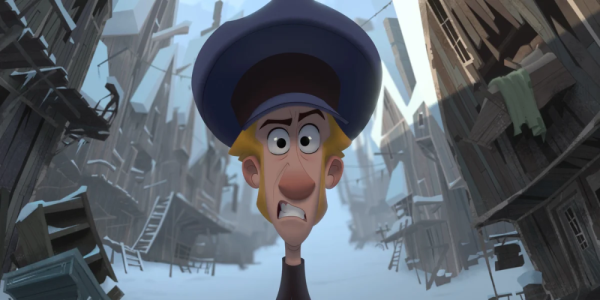
Smeerensburg is one of the strongest animated settings I have encountered in a Christmas film. From the moment Jesper arrives, the town communicates that visitors are neither expected nor welcome. Buildings lean at uncomfortable angles, streets appear cold and empty, and nearly every resident looks prepared to continue an argument that began before they were born.
The community is divided between the Ellingboes and the Krums, two families whose hatred has become more important than its original cause. Their conflict is not limited to a few aggressive adults. Children participate, household objects become weapons, and ordinary public spaces function like contested territory.
I enjoyed how completely the film commits to this idea. Smeerensburg is not merely unfriendly because the plot needs Jesper’s job to be difficult. The feud has shaped its economy, education, architecture, and daily behavior. Alva’s school has become a fish shop because nobody sees value in teaching children who are expected to continue the same inherited conflict.
The town reminded me of entering a multiplayer area where two factions have been fighting so long that nobody remembers the original quest. Every character recognizes the rules, but nobody questions whether following them produces anything worthwhile.
Jesper Begins as the Last Person Who Should Save Anyone
Jesper is not introduced as a misunderstood hero. He is privileged, lazy, manipulative, and confident that charm can protect him from consequences. His father’s postal academy is simply another inconvenience standing between him and a comfortable life.
I appreciated that the film allows him to be genuinely unpleasant without making him impossible to watch. Jason Schwartzman’s vocal performance gives Jesper enough energy and comic timing to keep his selfishness entertaining. He complains, invents shortcuts, and approaches every task as though effort were an unreasonable personal attack.
When his father sends him to establish a postal service in Smeerensburg, Jesper does not suddenly discover a sense of duty. He immediately begins looking for a loophole. His requirement to process six thousand letters becomes a score target rather than a public service.
This motivation is important because the film does not build his transformation on one inspirational speech. Jesper begins helping children because their letters can increase his total. The good consequences appear before the good intention. Only later does he become emotionally invested in what those consequences mean.
Jesper’s Original Strategy
- Find anyone willing to write a letter;
- Collect enough mail to satisfy his father’s requirement;
- Avoid becoming involved in local problems;
- Return home as quickly as possible;
- Enjoy the comfortable life he believes he deserves.
Almost every meaningful relationship in the film develops because this strategy fails. Jesper cannot manipulate the town without becoming connected to it, and he cannot create hope without eventually becoming responsible for protecting it.
The First Letter Changes the Entire Game
The story begins moving when Jesper encounters a lonely child’s drawing and delivers it to Klaus. What follows is not yet a Christmas tradition. It is one mysterious gift given to one child through a chain of misunderstandings.
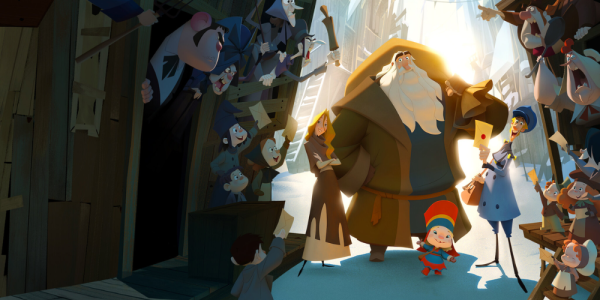
The other children see the result and immediately understand the system in their own way. A letter sent through Jesper may lead to a present from the imposing man in the forest. Jesper recognizes a solution to his postal quota, while Klaus sees an opportunity to place his unused toys in the hands of children.
I loved how naturally the tradition grows from these separate motivations. Jesper wants letters. Klaus wants toys to be useful. The children want gifts. None of them sits down and designs the mythology of Santa Claus.
Every familiar detail develops because somebody needs to solve a practical problem. Night deliveries reduce the chance of interference. A sled makes transportation easier. Reindeer provide movement through the snow. A list helps organize requests and behavior. Chimneys become useful when doors are inaccessible.
The film turns recognizable Christmas imagery into a series of improvised mechanics. That makes the legend feel earned rather than copied from an existing template.
Klaus Is Powerful Because He Rarely Explains Himself
Klaus initially appears more threatening than festive. He is enormous, silent, isolated, and surrounded by handmade toys inside a dark forest workshop. His physical presence makes Jesper’s nervousness understandable.
J.K. Simmons gives the character a deep restraint that contrasts perfectly with Jesper’s constant talking. Klaus does not waste words, and his silence forces me to pay attention to movement and expression. The way he handles wood, repairs an object, or observes a child often communicates more than dialogue would.
I was especially interested in the difference between his strength and his gentleness. Klaus can lift heavy objects and move through difficult terrain, but his most important skill is patience. He sees possibilities that other adults have stopped noticing.
He does not join Jesper because he wants recognition. For him, each toy carries memories of a future that never happened. Giving them away is emotionally difficult, but it also allows those unfinished hopes to create happiness elsewhere.
The film gradually reveals his history rather than using it as an immediate explanation. By the time I understood why the workshop contained so many unused toys, Klaus had already become more than a mysterious figure. His grief gave every delivery a second meaning.
The Toy Workshop Is Where the Film Became Personal
Klaus’s workshop is filled with objects made for children he and his wife never had. Before the deliveries begin, the toys exist in silence. They represent care without a recipient and a life interrupted before it could reach its intended form.
I found this idea far more affecting than a magical factory operated by cheerful workers. The toys are not created because Christmas requires inventory. They are physical expressions of Klaus’s love and loss.
When he begins giving them away, he is not simply clearing storage. He is allowing grief to become generosity. The action does not erase what happened, but it changes what the objects can mean.
This is where the film’s central phrase about selfless acts gains emotional weight. A good action does not remain isolated. One child receives a toy and writes another letter. Children begin behaving differently because they believe kindness may be noticed. Their changed behavior affects adults, teachers, and eventually the appearance of the town.
Klaus does not need supernatural powers to begin this chain. His willingness to open the workshop is enough.
Children Initially Choose Kindness for the Wrong Reason
One of my favorite details is that the children of Smeerensburg do not become generous because they immediately understand morality. They believe Klaus watches their behavior and rewards those who avoid causing trouble.
Their motivation is transactional. They cooperate because they want toys. Yet the effect of their behavior still changes the town. Fewer fights create safer streets. Shared activities produce friendships. Children who were expected to inherit the feud begin interacting outside it.
This mirrors Jesper’s development. He also begins doing something beneficial for selfish reasons. The film does not insist that a good deed becomes worthless when the initial motivation is imperfect. Instead, repeated actions can reshape the person performing them.
I found that idea refreshingly practical. People do not always wait until their hearts are completely pure before improving their behavior. Sometimes they follow an external incentive, experience the result, and gradually discover a more meaningful reason to continue.
The children’s transformation also embarrasses the adults. Their hatred looks increasingly absurd when the younger generation discovers that cooperation is more enjoyable.
Alva’s Classroom Became My Favorite Upgrade
Alva begins as a teacher who has abandoned teaching. Her classroom operates as a fish shop because the children do not attend and the town offers no reason to believe education can change anything.
Rashida Jones gives Alva a sharp, exhausted personality. She recognizes Jesper’s selfishness immediately and has little patience for another outsider promising improvement. Her cynicism feels earned because she once arrived with similar hope and watched Smeerensburg consume it.
The postal scheme accidentally gives her profession a purpose again. Children want to write letters, but many of them cannot read or write. Alva begins teaching one student, then another, until the classroom slowly returns.
I loved this progression because it happens visually. The fish disappear, desks return, books become useful, and the space changes from a place of resignation into a functioning school. It resembles restoring a neglected hub area in a game, except the upgrades are driven by human need rather than collected materials.
Alva also changes alongside the classroom. Her sarcasm does not vanish, but she begins investing effort again because the children finally offer evidence that the future might differ from the past.
Márgu Gave the Story Its Quietest Friendship
Márgu, the Sámi girl who cannot initially communicate with Jesper through a shared language, creates some of the film’s most tender scenes. Her request is not understood through direct translation, yet Jesper gradually recognizes what she wants.
Their interactions depend on attention rather than explanation. Jesper has spent most of the story talking his way through problems, but Márgu requires him to observe. Her excitement, gestures, and drawing communicate enough when he finally chooses to care.
I appreciated that her storyline gives Jesper an opportunity to help someone without receiving an immediate advantage. The letter does not simply function as another easy unit toward his quota. Delivering what she wants requires effort, cooperation, and a willingness to leave his routine.
The Sámi community also expands the world beyond the feud in Smeerensburg. Their practical assistance transforms the delivery operation, particularly through the use of reindeer and sleds. Once again, an element of the Santa legend develops through cooperation rather than unexplained magic.
Márgu’s happiness becomes one of the clearest signs that Jesper’s motivation has changed. He is no longer smiling because the postal count increased. He is smiling because a child received something meaningful.
The Animation Looks Like a Storybook With Real Light
Klaus is visually distinctive without abandoning the expressive qualities of traditional character animation. The designs use clear silhouettes, exaggerated shapes, and visible drawing principles, but the lighting gives characters an unusual sense of volume.
I repeatedly paused mentally on the way light entered a room, reflected from snow, or shaped a face. Klaus can stand in a dark workshop and feel physically present because illumination moves across his large form with convincing weight. Jesper’s expressions remain flexible and cartoon-like, yet his clothing and body react naturally to the environment.
The result creates a beautiful tension between two-dimensional design and three-dimensional depth. The characters look hand-drawn rather than molded, but they occupy their surroundings with remarkable solidity.
Smeerensburg’s early color palette is cold, desaturated, and heavy. As cooperation spreads, warmth enters through windows, clothing, decorations, and public spaces. The town does not transform instantly into a perfect holiday postcard. Its visual recovery follows the emotional recovery of its residents.
I also admired how movement defines personality. Jesper’s body stretches, bends, and collapses around his dramatic reactions. Klaus moves with deliberate weight. Alva’s posture reflects fatigue before gradually becoming more open. The family leaders occupy space as though every public area were another stage for their feud.
The Humor Comes From Character Rather Than Interrupting It
Klaus is consistently funny, but the comedy rarely feels separated from the story. Jesper’s physical discomfort, nervous improvisation, and exaggerated confidence all come from his personality. He is funniest when trying to avoid work while accidentally creating far more work for himself.
The town’s feud produces broader comedy. Children arrive at school armed for conflict, families construct elaborate traps, and community leaders treat minor cooperation as a threat to civilization. These jokes reveal how ridiculous inherited hostility has become.
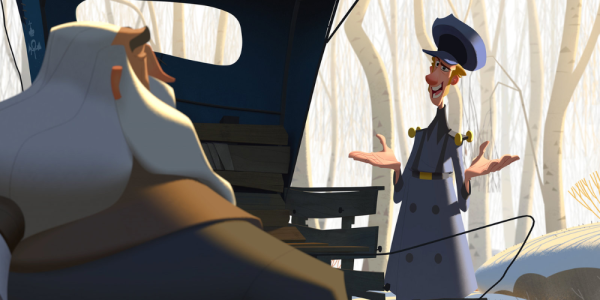
I particularly enjoyed the contrast between Jesper and Klaus during their early deliveries. Jesper talks constantly because silence makes him nervous. Klaus responds with brief instructions or a look that makes further discussion unnecessary.
The film also knows when to stop joking. Emotional scenes are allowed to breathe without immediately receiving a comic interruption. This balance made the humor more effective because I never felt that the story was afraid of sincerity.
The Ellingboes and Krums Are Fighting Against Change Itself
Tammy Krum and Aksel Ellingboe initially appear to be exaggerated comic antagonists. Their families have built identities around mutual hatred, and both leaders take pride in preserving traditions that make everyone miserable.
As the town improves, their opposition becomes more revealing. Peace threatens their authority. If children cooperate and adults begin questioning the feud, the leaders lose the purpose that has defined their social status.
They are not protecting their families from a real danger. They are protecting the story that makes them important.
I found this conflict effective because it gives the final act more than a simple misunderstanding. Jesper and Klaus are not only delivering toys. They are changing the systems through which Smeerensburg understands itself. The family leaders recognize that generosity can spread just as effectively as hostility, which makes the postal operation politically dangerous.
Their plan to expose Jesper works because it attacks the weakest point in the new community: trust.
Jesper’s Lie Had to Become Public
For much of the film, Jesper’s positive actions are built on a hidden selfish objective. He genuinely begins caring about Klaus, Alva, Márgu, and the children, but he never fully explains why he started the postal operation.
I knew this secret would eventually be revealed, and I initially worried that the resulting conflict would feel artificial. Instead, it works because Jesper has delayed the truth long enough that the people around him must question every shared experience.
Klaus has opened the most painful part of his past. Alva has invested her savings and hope in the town. The children believe the deliveries represent genuine kindness. Learning that Jesper once viewed all of them as steps toward returning home feels like a betrayal even though his motivation later changed.
The important point is that Jesper cannot repair the damage through another clever explanation. He has relied on charm throughout his life, but words are no longer enough. He needs to make a choice that offers no guaranteed reward.
Staying in Smeerensburg Is His First Honest Decision
Jesper’s transformation becomes real when he has the opportunity to regain his comfortable life and recognizes that he no longer wants it. The town he once treated as punishment has become the place where his actions matter.
This decision is not about preferring cold weather or abandoning luxury for its own sake. It is about choosing relationships over the identity his father prepared for him. Jesper has discovered that effort feels different when it serves people he values.
I liked that his father understands the change without needing a dramatic confrontation. He originally sent Jesper away because comfort had prevented him from developing purpose. By the time they meet again, the postal quota has become less important than the person Jesper became while trying to satisfy it.
The return to Smeerensburg is therefore not another failure to escape. It is the first destination Jesper actively chooses.
The Final Delivery Feels Like Defending a Community Project
The attempt to protect the Christmas toys brings together nearly every relationship built during the film. Jesper, Klaus, Alva, the children, and the Sámi community all contribute because the tradition now belongs to more than one person.
I enjoyed the sequence as both an emotional and mechanical payoff. Early deliveries required two reluctant partners moving through hostile streets. The final operation uses routes, allies, equipment, and trust accumulated throughout the story.
It feels like completing the last mission after upgrading an entire settlement. Every previously minor connection becomes useful, while the antagonists discover that stopping one person is no longer enough.
The resolution also avoids making violence the solution. The central victory comes from cooperation, preparation, and the fact that the tradition has already spread beyond the objects being transported. Even destroying the toys would not restore the old Smeerensburg completely.
Klaus’s Departure Is Beautiful Because It Remains Mysterious
The film spends most of its runtime constructing Santa Claus through practical details, so Klaus’s final disappearance introduces genuine mystery at exactly the right moment.
I did not need a technical explanation of what happened to him. The emotional meaning was clear. He had completed the work that allowed his love for Lydia and their imagined family to reach the world. His grief no longer existed only inside the workshop.
Jesper’s inability to find him adds sadness without turning the ending hopeless. Klaus is absent, but the tradition continues through the people he changed. Every year, Jesper waits and experiences a brief sign that his friend remains connected to the deliveries.
The film carefully moves from invented legend into possible magic. For most of the story, I can explain how every Santa tradition began. By the end, the legend has become larger than those explanations.
That transition worked on me because the film earned it through character first. Klaus matters before he becomes mythical.
Why the Ending Never Feels Like a Simple Victory
Smeerensburg improves, Jesper builds a family with Alva, and the Christmas tradition grows beyond the island. These developments are hopeful, but the film still allows time to pass.
Jesper and Klaus work together for years rather than completing one perfect Christmas and immediately entering legend. Their friendship develops through repeated seasons, shared labor, and the gradual expansion of their operation.
This passage of time made the conclusion more emotional for me. The relationship does not exist only to solve the original conflict. It becomes a major part of both men’s lives.
When Klaus disappears, Jesper loses a friend with whom he has shared years of meaningful work. The annual return of Klaus’s presence is comforting, but it does not remove that loss.
The ending understands that love and grief can continue together. That idea is already present in Klaus’s workshop, and it returns in Jesper’s final narration.
The Christmas Message Works Because It Is Demonstrated
Klaus repeatedly returns to the idea that one selfless act can inspire another. The phrase could easily become an empty holiday slogan, but the film builds its entire plot around proving it.
Klaus gives one toy. A child writes a letter. Other children change their behavior. Alva begins teaching again. Parents interact differently. Former enemies form friendships. Jesper discovers responsibility. Klaus finds a new purpose for his grief.
No single action repairs Smeerensburg. The town changes because small choices create conditions for other choices.
I appreciated that kindness is not presented as effortless. Delivering the toys requires work. Teaching requires Alva to risk disappointment again. Jesper must surrender the reward that originally motivated him. Klaus must open a workshop filled with painful memories.
The acts matter precisely because each person could reasonably choose not to perform them.
Why Klaus Became Part of My Holiday Rotation
I return to Klaus because it gives me the comfort of a Christmas story without behaving like a recycled collection of holiday symbols. It takes familiar traditions and rebuilds them through character, consequence, and visual invention.
Jesper’s transformation works because he does not become a completely different person. He remains talkative, theatrical, and capable of questionable improvisation. What changes is the purpose behind his energy. The skills he once used to avoid responsibility become tools for helping others.
Klaus provides the emotional foundation. His generosity grows from grief, making every toy more meaningful than a magical object produced by an anonymous workshop. Alva and Márgu ensure that the changes extend beyond the central friendship, while Smeerensburg gives the story a community that can visibly evolve.
The animation remains stunning, but its beauty never feels like a substitute for writing. Light, color, shape, and movement deepen what the characters are experiencing. The town becomes warmer because the people become warmer, not because the final act simply requires more festive decoration.
Klaus left me with the feeling that legends may begin through accidents, practical solutions, and people who do not initially understand the importance of what they are doing. The first letter is not magical. The first toy does not change the entire world. The transformation appears when someone responds with another generous action.
That is why the film’s version of Santa Claus feels so convincing to me. It does not ask me to believe that one extraordinary man created Christmas alone. It shows how an entire tradition can grow when kindness becomes something people choose to repeat.
Pros:
- Unique visual style that blends traditional hand-drawn techniques with modern digital animation
- Innovative narrative that reinvents the holiday genre while retaining a nostalgic charm
- Complex character development that adds emotional depth to the storyline
- Rich thematic exploration of compassion, redemption, and community
- Seamless integration of humor and heartfelt moments that appeals to both young and mature audiences
- Wide accessibility through multiple streaming platforms with options to download for offline viewing
Cons:
- Occasionally, the narrative pacing may feel uneven for viewers expecting a more traditional flow
- Some secondary characters might not receive the same level of development as the main protagonist
- The film's unique stylistic choices may not appeal to audiences who prefer conventional animation techniques









Movie Reviews

Minecraft

Grand Theft Auto V

Toca Boca World

Roblox

Leave a comment
Your comment is awaiting moderation. We save your draft here
0 Comments