
Review
When I first watched Bridgerton, I expected an elegant period romance filled with expensive dresses, candlelit dances, stolen glances,...

Bridgerton Unveiled: A Modern Ode to Regency Splendor
When I first watched Bridgerton, I expected an elegant period romance filled with expensive dresses, candlelit dances, stolen glances, and attractive people making poor decisions in enormous houses. The series delivered all of that within its opening episodes. What surprised me was how quickly the romance became inseparable from status, family obligation, reputation, money, and the terrifying speed with which one anonymous sentence could destroy a young woman’s future.
Bridgerton presents Regency-era London as a glittering social arena where nearly every public interaction carries a private calculation. A dance is never merely a dance. It can announce interest, create jealousy, strengthen a family alliance, or begin a rumor before the music has ended. Marriage is described as love, duty, survival, social advancement, and economic necessity depending on who is speaking.
As a critic, I do not approach Bridgerton as a precise historical reconstruction. Its costumes, music, casting, dialogue, and social atmosphere intentionally reshape the period into a romantic fantasy made for a contemporary audience. The series is less interested in showing me exactly how aristocratic London behaved than in using the marriage market to examine desire, performance, class, race, gender, and family pressure.
That approach occasionally produces contradictions. Bridgerton wants the emotional freedom of modern romance while retaining the restrictions needed to create scandal. It celebrates individual desire inside a society where personal choice is limited, then sometimes allows a satisfying love match to resolve conflicts that would be far more difficult outside fantasy.
I accepted those contradictions because the series understands its own central pleasure. It invites me into beautiful rooms, gives every character something they are desperate to conceal, and waits for the orchestra to begin.
Lady Whistledown Turns Gossip Into Political Power
Lady Whistledown’s society papers provide the series with its sharpest narrative mechanism. Her words travel through drawing rooms, breakfast tables, promenades, and royal residences before the people described in them have time to prepare a response.
Julie Andrews gives Whistledown’s narration elegance, amusement, and judgment. She sounds entertained by the social world even while exposing its hypocrisy.
I initially treated the narration as a playful method of explaining relationships and scandals. It gradually became clear that Whistledown possesses real power. She decides which secrets become public, how information is framed, and which person will enter the next social event already defeated.
The column is exciting because it gives someone outside the highest levels of authority the ability to influence them. It is also ethically troubling. Private pain becomes public entertainment, and the writer can claim honesty while avoiding the immediate consequences of that honesty.
Once Penelope Featherington’s identity becomes central to the story, the series asks whether writing can remain liberating when it repeatedly harms people the writer loves. Penelope’s intelligence and frustration make her choices understandable. They do not make every choice defensible.
I appreciated that the series eventually refused to treat Whistledown as a harmless romantic fantasy. Information provides Penelope with independence in a world offering women very few paths toward it. The same information can become a weapon whenever humiliation feels easier than direct confrontation.
Daphne and Simon Build a Romance From Performance
The first season uses one of romance fiction’s most reliable structures: two people agree to pretend they are interested in one another and gradually discover that the performance has become real.
Daphne Bridgerton needs attention from eligible men after Anthony’s interference damages her prospects. Simon Basset wants to avoid ambitious mothers and unwanted marriage arrangements. Their false courtship gives both characters a temporary solution.
Phoebe Dynevor gives Daphne a combination of social training and emotional inexperience. She knows how to behave in public but understands surprisingly little about intimacy, marriage, and her own body. That imbalance is not an accident. It reflects how carefully young women are prepared to attract husbands while being denied information about what marriage involves.
Regé-Jean Page gives Simon control, confidence, and visible anger beneath an apparently effortless social presence. His refusal to marry is not simple independence. It is tied to childhood rejection and a promise designed to punish a father who is no longer alive to experience the punishment.
The chemistry between Daphne and Simon carries the season. Their banter is playful, their physical attraction is immediate, and the series gives their relationship enough private conversation to feel more substantial than public fascination alone.
The marriage conflict is less successful for me. Both characters conceal crucial information, and one intimate scene crosses an ethical line that the series does not examine with enough clarity. The emotional reconciliation arrives more smoothly than the damage deserves.
I remained invested in them, but the season occasionally confuses passionate intensity with healthy communication.
Anthony Is Most Interesting When His Authority Fails
Anthony Bridgerton enters the series believing responsibility gives him the right to direct everyone around him. As the eldest son, he manages family reputation, financial decisions, and the marriage prospects of his siblings.
Jonathan Bailey makes Anthony frustrating, magnetic, arrogant, vulnerable, and frequently ridiculous. His sense of duty is genuine, but he uses duty to avoid confronting his own fear.
The death of his father forced Anthony into authority before he was emotionally prepared. He learned that loving someone creates the possibility of devastating loss. His response is to search for a marriage based on suitability rather than attachment.
I found this strategy believable and doomed from the beginning. Anthony can create lists, evaluate social qualifications, and announce that love is unnecessary. His body reacts to Kate Sharma before his mind has completed the argument.
Bailey is excellent at portraying desire as physical irritation. Anthony looks offended that another person has disrupted his control. A glance becomes a challenge. A conversation becomes competition. Silence becomes more revealing than dialogue.
His growth matters because the series does not ask him merely to choose the correct woman. He must accept that authority does not protect him from grief and that avoiding love is not the same as avoiding pain.
Kate Sharma Makes Resistance Look Effortless
Kate arrives in London focused on her younger sister Edwina’s future rather than her own. She is intelligent, observant, protective, and accustomed to placing personal desire behind family responsibility.
Simone Ashley gives Kate a commanding stillness. She does not need to speak loudly to challenge Anthony. Her expression often reveals that she has understood his weakness before he has finished presenting himself as reasonable.
Kate and Anthony work because they recognize themselves in each other. Both are eldest siblings who turned responsibility into identity. Both believe sacrifice proves love. Both interfere in another person’s life while describing that interference as protection.
Their hostility is entertaining because it contains admiration from the beginning. Anthony dislikes being judged by someone whose judgment matters to him. Kate dislikes that he can see the desires she has worked hard to hide.
I found their season more emotionally convincing than the first because attraction develops alongside shared character flaws. They do not simply need permission to be together. They need to stop treating their own happiness as a betrayal of family duty.
The love triangle involving Edwina continues too long. The season extends misunderstandings and delays honesty until nearly every relationship has been damaged. The tension remains effective, but the structure occasionally requires intelligent characters to avoid conversations they clearly know are necessary.
Edwina Deserved More Than Becoming an Obstacle
Edwina Sharma enters society believing she understands what she wants. She has been trained to become an ideal match, speaks with grace, and approaches marriage with the expectations encouraged by Kate.
The problem is that those expectations partly belong to other people. Kate has shaped Edwina’s future through love and sacrifice, while Anthony selects her because she appears compatible with a life designed to exclude emotional risk.
Charithra Chandran gives Edwina enough warmth and intelligence to prevent her from becoming a simple romantic obstacle. Her strongest scenes occur when she finally sees how much information has been withheld from her.
I appreciated her anger. The series occasionally expects wounded characters to forgive quickly because the central couple has undeniable chemistry. Edwina has every reason to feel betrayed by both Anthony and Kate.
Her development would have been stronger with more independent life beyond the triangle. The story recognizes that she must define herself, but much of her screen time has already been organized around other people’s desire.
Penelope and Colin Turn Familiarity Into Risk
Penelope Featherington has loved Colin Bridgerton long before he learns to see her as a romantic possibility. That imbalance gives their story both tenderness and pain.
Nicola Coughlan makes Penelope emotionally readable even when the character is hiding several identities at once. She can be shy in a ballroom, confident on the page, resentful toward friends, devoted to Colin, and frightened by the consequences of her own success.
Colin initially enjoys the comfort of Penelope’s attention without understanding its depth. He travels, returns with new confidence, and attempts to become the version of masculinity he believes society will respect.
Luke Newton handles Colin’s uncertainty best when the polished performance begins to fail. He wants to appear worldly, but his strongest qualities are sensitivity, loyalty, and the desire to be useful.
Their romance works because friendship provides history. They understand each other’s families, embarrassments, habits, and emotional insecurities. Physical desire does not replace that familiarity; it changes its meaning.
I found the season’s pacing uneven. Colin’s romantic realization arrives quickly after years of limited awareness, while Penelope’s conflict involving Whistledown requires far more time than the courtship itself receives.
The emotional center remains compelling because Penelope cannot obtain a satisfying marriage by hiding the part of herself that created her independence. Colin must love the writer as well as the childhood friend.
Penelope Is Both Victim and Architect of Her Isolation
Penelope is frequently ignored by society, mocked by members of her own family, and treated as permanently available by the people she loves. Her position makes the freedom of anonymous writing immediately understandable.
Lady Whistledown gives her money, influence, recognition, and a voice that commands rooms she cannot enter confidently in person.
The same secrecy creates distance. Penelope becomes capable of publishing truths she is unwilling to discuss privately. She can punish someone through language and then return to them while hiding her responsibility.
I liked that her story did not ask me to choose between seeing her as cruel or sympathetic. She is both harmed and capable of harm.
Her conflict with Eloise is especially effective because it involves genuine love, ideological disagreement, betrayal, jealousy, and unequal access to power. Penelope wants Eloise to understand the restrictions she experiences. Eloise wants Penelope to recognize the consequences of using private knowledge as material.
Their friendship is one of the most emotionally important relationships in the series, partly because reconciliation cannot be achieved through romantic attraction or a beautiful wedding.
Eloise Keeps Asking Questions the Romance Cannot Answer
Eloise Bridgerton approaches the marriage market with suspicion. She sees how little freedom it offers women and resists the assumption that every young woman must dream of securing a husband.
Claudia Jessie gives Eloise speed, humor, intelligence, and social awkwardness. She can identify a system’s hypocrisy while failing to notice how her own privilege shapes the way she challenges it.
I enjoy Eloise because she disrupts the romantic fantasy from inside the family most associated with successful love matches. She asks whether marriage should be the central destination for every woman.
Her criticism is sometimes broad. She can dismiss interests that do not resemble her own, treating another woman’s desire for marriage as evidence of submission rather than a choice shaped by different needs.
The relationship with Theo introduces a world outside aristocratic drawing rooms, though the series uses it cautiously. Eloise is curious about political ideas and working people, but she can enter those spaces without experiencing the same permanent risk as the people who live there.
I hope her eventual romantic story does not resolve her independence by revealing that she merely needed to meet the correct man. Love should complicate her ideas, not erase them.
Benedict Treats Society Like a Costume He Can Remove
Benedict Bridgerton has always appeared less committed to aristocratic expectations than Anthony or Colin. He is artistic, curious, flirtatious, and comfortable entering social environments outside the family’s official world.
Luke Thompson gives him a relaxed charm that hides uncertainty about purpose. Benedict enjoys freedom partly because Anthony carries the family’s heaviest formal responsibilities.
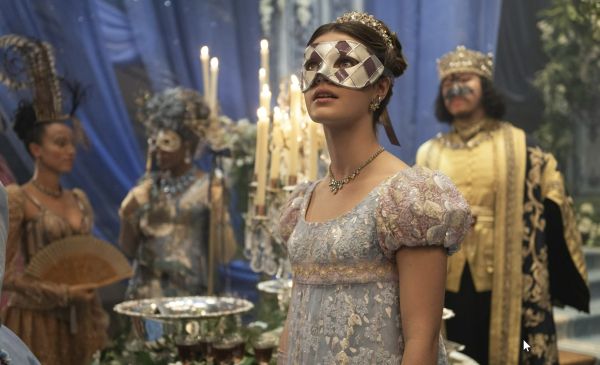
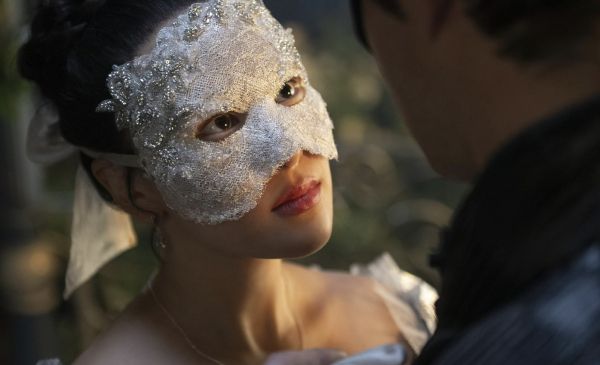
His fourth-season romance with Sophie Baek finally tests whether his openness extends beyond fantasy. Meeting a mysterious woman at a masquerade allows him to fall in love with an image separated from ordinary social position.
The Cinderella structure is immediately recognizable, but Bridgerton uses class to make the disguise more than a romantic game. Sophie can enter the ballroom temporarily, yet her daily life is shaped by service, dependence, and the decisions of wealthier people.
I enjoyed Benedict’s fascination with the Lady in Silver because it exposes his romantic idealism. He searches for a woman who appeared in an environment designed around masks while failing to recognize what the same person needs outside it.
His greatest flaw is not simple snobbery. He believes himself more progressive than the society around him, which makes it difficult for him to see the limits of his own imagination.
Sophie Baek Gives the Fantasy a Material Cost
Sophie’s position changes the emotional texture of Bridgerton. Previous central couples have faced reputation, family, cultural expectation, or personal trauma. Sophie faces the economic reality of being a servant in a world where wealthy people can turn her employment and safety into private decisions.
Yerin Ha gives Sophie dignity without making her unrealistically untouched by hardship. She can be romantic, practical, angry, hopeful, and cautious depending on what the situation allows.
The masquerade gives her temporary access to a world that usually demands her labor while denying her equal participation. The beauty of the evening therefore contains sadness from the beginning.
I found the contrast between Benedict’s search and Sophie’s daily reality especially effective. He can transform the encounter into a personal mystery. She must consider work, housing, reputation, and survival.
Their attraction works because Sophie refuses to become grateful simply because a wealthy man notices her. She wants to be seen as a complete person rather than rescued into a life determined by someone else.
The season occasionally softens class conflict through romantic fantasy. Individual kindness cannot remove the system creating Sophie’s vulnerability. Still, the relationship forces Bridgerton to examine who performs the invisible work behind every perfect ball.
The Masquerade Is the Series in One Room
A masquerade is the ideal Bridgerton setting because every character already performs a social identity. Masks merely make the performance visible.
The sequence provides extravagant costumes, controlled lighting, music, hidden observation, mistaken identity, and temporary freedom from reputation.
I enjoyed watching characters behave differently when they believed ordinary rules had been suspended. Confidence increased, attraction became more direct, and social categories appeared less stable.
The fantasy cannot last. The power of the masquerade depends on knowing that morning will restore names, titles, employment, family expectations, and consequences.
Benedict falls for Sophie while her class position is hidden, which raises the question at the center of their story: does he love her, or does he love the version of her that could appear beside him without challenging his place in society?
The answer requires more than identifying the woman behind the mask. It requires recognizing the social system that made the mask necessary.
Queen Charlotte Turns Romance Into Entertainment and Policy
Golda Rosheuvel’s Queen Charlotte observes the marriage market as ruler, strategist, and audience. She selects a diamond, evaluates couples, challenges Lady Whistledown, and treats social competition as part of royal life.
Her presence gives personal romance public consequences. One young woman’s courtship can become a test of the queen’s judgment.
I enjoy Charlotte most when boredom motivates her. She has enormous power, yet much of society repeats predictable rituals. Whistledown attracts her because anonymous criticism cannot be controlled through ordinary rank.
The queen can be generous and cruel within the same social structure. Her favor elevates families, while her disappointment can expose them to humiliation.
Queen Charlotte: A Bridgerton Story adds emotional history that deepens the character significantly. Her later obsession with marriage and heirs becomes connected with love, illness, duty, and the loneliness of royal responsibility.
Inside the main series, however, she occasionally functions too conveniently. Her approval can resolve public scandal faster than the social rules previously suggested.
Lady Danbury Understands Every Room Before Entering It
Lady Danbury is one of the series’ most consistently intelligent characters. She understands desire, power, family history, and reputation without pretending those forces can be separated.
Adjoa Andoh gives her authority through voice, posture, timing, and direct observation. Lady Danbury rarely needs to raise her voice because other characters already know she has noticed more than they intended to reveal.
She acts as mentor, strategist, friend, and occasional manipulator. Her interventions often help central couples, but she is not motivated by romance alone. She understands the political value of alliances.
I appreciate that age does not remove her from desire or emotional complexity. Her life contains choices and regrets beyond guiding younger characters toward marriage.
Her friendship with Violet Bridgerton is especially valuable because it allows two experienced women to discuss loneliness, family, and future possibility rather than existing only as mothers or social authorities.
Violet Bridgerton Believes in Love Because It Once Cost Her Everything
Violet encourages her children to seek love matches, which makes her appear unusually idealistic within the marriage market.
Her belief is grounded in experience. She had a loving marriage with Edmund and experienced devastating grief after his death.
Ruth Gemmell gives Violet warmth without making her endlessly patient. She can pressure her children, misread their needs, and project her own romantic history onto situations that differ from hers.
I found her relationship with Anthony especially moving because both characters responded differently to the same loss. Violet remembers love as worth the pain. Anthony remembers pain as evidence that love is dangerous.
As her children marry, Violet must confront life beyond active motherhood. The possibility of another relationship challenges the idea that one great love must make every later desire disloyal.
Bridgerton is most thoughtful when it allows older characters to possess futures rather than existing only as guides for younger romance.
Portia Featherington Survives Through Relentless Practicality
Portia Featherington is frequently manipulative, controlling, socially desperate, and capable of treating her daughters as pieces in a survival strategy.
Polly Walker makes her impossible for me to dismiss. Portia understands that status and money determine whether her family remains secure. She lacks the Bridgertons’ wealth, emotional unity, and reliable male protection.
Her methods can be cruel, but they emerge from a society offering women limited direct control over property and financial stability.
I often disagreed with her while admiring her ability to respond to disaster. Every season appears to create another crisis capable of destroying the Featheringtons, and Portia immediately begins constructing the next solution.
Her relationship with Penelope is painful because she underestimates the daughter most similar to her. Both women use information, strategy, and social perception to create power where society denies it.
Portia sees Penelope as unlikely to succeed within the marriage market, never realizing that Penelope has built an independent financial and cultural identity beyond it.
The Costumes Express Emotion Before the Dialogue Does
Bridgerton’s costumes are not restrained historical recreations. They use color, embroidery, fabric, silhouette, and jewelry to communicate family identity and emotional change.
The Bridgertons often appear in softer blues and elegant tones associated with security and social confidence. The Featheringtons use stronger colors, crowded patterns, and combinations that announce their desire to be noticed.
Penelope’s changing wardrobe reflects her attempt to control how society sees her. The transformation works because clothing becomes an act of agency rather than proof that the earlier version of her lacked value.
Kate’s colors, textures, and jewelry communicate cultural identity and emotional intensity. Queen Charlotte’s enormous hairstyles and dresses turn the body into royal architecture.
The costumes occasionally become so spectacular that I stop believing anyone could move comfortably. Historical realism is clearly not the priority. Visual storytelling is.
I accept the exaggeration because every ballroom must communicate hierarchy immediately. Before a character speaks, I can often understand whether they want to disappear, dominate, seduce, impress, or resist.
The Music Makes Modern Desire Sound Classical
Bridgerton’s orchestral arrangements of contemporary songs are one of its most recognizable creative choices. Familiar pop melodies appear through strings during dances, courtships, betrayals, and emotional revelations.
The technique creates a bridge between period fantasy and modern feeling. The characters may follow Regency social rules, but their desires are presented with the emotional directness of contemporary romance.
I enjoyed recognizing a melody gradually rather than being told immediately which song had been adapted. The best covers work inside the scene even when I do not identify the original track.
The device can become predictable. A major dance begins, strings introduce a familiar hook, and the music announces that the audience should pay close attention to this romantic moment.
Original scoring remains important because not every emotion benefits from recognition. Quieter family scenes often need music that supports rather than advertises itself.
The combination still gives Bridgerton a musical identity strong enough that hearing a pop song arranged for strings can immediately remind me of its ballrooms.
The Intimate Scenes Reveal Character When They Are More Than Decoration
Physical desire is central to Bridgerton. The series treats attraction as something visible through breath, posture, hesitation, gaze, and the repeated inability to maintain socially appropriate distance.
The strongest intimate scenes develop character. Daphne’s lack of knowledge exposes the failures of her education. Anthony and Kate’s restraint reveals how long both have denied personal desire. Penelope and Colin’s relationship changes when familiar emotional safety becomes physical vulnerability.
These scenes become weaker when they repeat information already established. Passion alone cannot replace unresolved conversation.
I appreciate that the series frequently centers female desire rather than treating women only as objects of romantic attention. The camera is interested in how attraction feels to its heroines.
Consent and communication are not handled consistently across every season. Certain conflicts require more direct ethical examination than the series provides.
Bridgerton is at its best when intimacy becomes another language through which characters reveal truths they cannot yet state publicly.
The Series Rewrites History Without Escaping Class
Bridgerton’s diverse aristocracy creates a period fantasy where race operates differently from the history I recognize. The choice allows actors of multiple backgrounds to occupy positions traditionally restricted in British costume drama.
I value the visual and dramatic possibilities this creates. It allows the series to build a romantic world that does not automatically exclude viewers who have rarely seen themselves presented as dukes, queens, debutantes, or members of influential families.
The world-building is not always consistent. Early explanations connect racial integration with royal marriage, while later seasons often treat the society as fully established without revisiting the political complexity.
Class remains far more rigid. Servants prepare the ballrooms, manage houses, carry messages, dress aristocrats, and maintain the beautiful world while receiving limited narrative attention.
Sophie’s story brings that division closer to the center. The series must confront the difference between enjoying freedom as a wealthy bohemian and surviving as a servant whose employment depends on aristocratic decisions.
Romance can cross class boundaries inside the genre, but a marriage does not automatically resolve the system that made the relationship dangerous.
The Ballrooms Are Beautiful Because Everyone Is Trapped Inside Them
Bridgerton’s dances provide its most reliable visual pleasure. Chandeliers, flowers, mirrored rooms, gardens, staircases, orchestras, and carefully coordinated costumes create spaces designed for romantic spectacle.
The beauty matters because the ballroom is also a controlled marketplace. Young women are observed, compared, evaluated, and discussed. Men possess more freedom but remain subject to family expectations and public reputation.
A dance provides brief physical closeness under strict supervision. Hands touch, bodies move together, and conversation becomes private only because the music makes it difficult for others to hear.
I enjoy how the camera moves around couples while the larger room appears to disappear. For a few seconds, the characters experience the fantasy that nobody else exists.
Then the dance ends, and society returns immediately.
This pattern gives Bridgerton its rhythm. Private desire emerges inside a public ritual, and every romantic decision threatens to become communal property.
The Dialogue Is Sharpest When Characters Stop Explaining the Theme
Bridgerton’s dialogue combines formal language, witty insults, emotional declarations, social euphemism, and modern directness.
The best conversations allow meaning to remain underneath the words. Anthony and Kate can discuss responsibility while arguing about desire. Penelope can speak about writing while defending independence. Eloise can criticize society while revealing fear of being ordinary.
I enjoy declarations of love when they emerge after sustained emotional conflict. Jonathan Bailey, Nicola Coughlan, Simone Ashley, Luke Thompson, and other cast members can make highly polished dialogue feel spontaneous through breath and hesitation.
The series occasionally explains emotional lessons after the performances have already communicated them. A character states exactly what the scene means, reducing the ambiguity that made the interaction interesting.
Romance naturally welcomes grand speeches. The strongest ones reveal something the speaker has resisted rather than summarizing the entire relationship for the audience.
Every Season Repeats a Formula and Changes Its Emotional Shape
Bridgerton follows one central romance per season while continuing family, friendship, and society storylines around it.
The structure is comforting. I know that longing, misunderstanding, scandal, physical attraction, family pressure, and eventual commitment will organize the story.
The variation comes from the romantic structure. Daphne and Simon begin with false courtship. Anthony and Kate resist attraction through duty and rivalry. Penelope and Colin move from friendship toward desire while Whistledown threatens trust. Benedict and Sophie combine masquerade fantasy with class conflict.
I appreciate this seasonal focus because each sibling receives a different emotional problem rather than joining one endless romantic storyline.
The disadvantage is that previous couples may disappear or receive limited material once their central season ends. A relationship becomes less dramatically useful after happiness is achieved.
I wanted more ordinary married life, not only brief reassurance that earlier couples remain in love. Romance does not stop producing interesting conflict after the wedding.
Scandal Sometimes Has Exactly the Consequences the Plot Needs
Reputation is presented as fragile enough that one rumor can destroy a family. This creates immediate tension during secret meetings, interrupted dances, and private correspondence.
The consequences are not always consistent. Some scandals disappear after royal approval, a marriage, or another larger story redirects public attention.
I understand the genre’s need for flexibility. If every social violation produced permanent exclusion, the romantic fantasy would become far darker.
Still, the uneven rules occasionally weaken suspense. I know that central characters are likely to survive scandals that would permanently damage someone with less narrative importance.
The series becomes more convincing when consequences affect relationships even after public reputation is repaired. Forgiveness from society should not automatically restore private trust.
What Frustrated Me Across Four Seasons
My largest frustration is the repeated dependence on withheld information. Characters frequently know that one honest conversation would change the situation, yet delay it until a public crisis forces the truth forward.
This creates effective romantic tension once or twice. Repetition makes intelligent characters appear controlled by the needs of the episode count.
The supporting cast is rich, but the number of parallel storylines sometimes leaves important developments rushed. A secondary romance or family conflict may receive several brief scenes without enough uninterrupted time to gain emotional depth.
The series also uses social rules inconsistently. Reputation can appear absolute in one episode and surprisingly flexible in another.
Class conflict is often resolved through the goodness of an individual wealthy character. Personal kindness matters, but it does not erase economic dependency.
Finally, Bridgerton sometimes confuses visual luxury with emotional development. A beautiful dance can intensify a relationship, but it cannot replace the conversation the characters continue avoiding.
Why I Still Accepted Every Invitation
Despite those frustrations, Bridgerton remains extremely watchable because it understands anticipation. A hand nearly touches another hand. A character enters a ballroom unexpectedly. An orchestra begins a recognizable melody. Someone looks across a crowded room and immediately loses control of the identity they intended to perform.
The cast commits completely to the emotional scale. Desire is treated as life-changing, family disappointment as devastating, and public embarrassment as a genuine social threat.
The production design creates a world I enjoy entering even when I question its rules. Gardens, estates, costumes, music, and crowded social events give each season a rich visual identity.
The anthology-like romantic structure also refreshes the series. A character who stood at the edge of another person’s story becomes the emotional center of the next season.
Most importantly, Bridgerton recognizes that romance is rarely only about two people. Every relationship changes siblings, parents, friendships, inheritance, reputation, and the balance of power inside a family.
Who Should Watch Bridgerton?
I recommend Bridgerton to viewers who enjoy historical fantasy, passionate romance, family drama, elaborate costumes, modern music in period settings, social gossip, slow-building attraction, and large ensemble casts.
Fans of strict historical accuracy may struggle with its deliberate reinvention of the period. The series uses history as a framework for romantic fantasy rather than a fixed rulebook.
Viewers who dislike repeated misunderstandings or withheld secrets may find the pacing frustrating. Most seasons extend romantic tension through characters refusing to state what they feel.
The series contains explicit intimate material and adult relationship themes, so it is not designed as a traditional family costume drama.
Anyone interested only in the central couples may enjoy the main arcs while finding the many secondary storylines distracting. I found the ensemble essential because it gives every romance a social context.
My Verdict as a Critic
Bridgerton is a lavish romantic fantasy that understands how desire becomes more intense when society demands that it remain hidden. Its ballrooms function as stages, marketplaces, battlegrounds, and temporary spaces where two people can imagine they are free.
The series is carried by strong performances. Jonathan Bailey and Simone Ashley give rivalry physical tension. Nicola Coughlan turns Penelope into one of the show’s most complicated figures. Luke Thompson brings Benedict an attractive combination of freedom and blindness, while Yerin Ha gives Sophie the practical intelligence needed to challenge his romantic fantasy.
I admire the costumes, production design, orchestral covers, and willingness to center pleasure, longing, and female perspective. I also remain critical of its repetitive misunderstandings, inconsistent social consequences, simplified class solutions, and tendency to resolve difficult ethical conflicts more quickly than they deserve.
I rate Bridgerton 8.5/10. It is not a flawless examination of love, history, or power. It is an exceptionally confident romantic spectacle that repeatedly finds emotional truth inside deliberate fantasy.
I rarely believed that its society could function exactly as presented. I always believed that the characters felt trapped by it.
That is why the dances worked for me. Every turn around the ballroom offered a few seconds of intimacy, but the music was always moving toward its end.









Movie Reviews

Minecraft

Grand Theft Auto V

Toca Boca World

Roblox

Leave a comment
Your comment is awaiting moderation. We save your draft here
0 Comments