Review
Landman pulled me into a world where nearly every conversation sounds like the beginning of a crisis. A damaged pipe, a missing truck,...

Landman: A Cinematic Voyage Through Tradition and Modernity
Landman pulled me into a world where nearly every conversation sounds like the beginning of a crisis. A damaged pipe, a missing truck, a legal complaint, an injured worker, or a tense meeting with an investor can quickly become part of a much larger problem. The series does not present the Texas oil industry as one simple business. It shows a complicated system in which labor, land, machinery, money, politics, family, and personal loyalty are constantly colliding.
I approached the show with the same mindset I bring to a management game. Tommy Norris appears to be the player character responsible for keeping an unstable operation running, except he has no clean interface, no reliable quest log, and almost no opportunity to pause. Every department brings him a different emergency, while powerful people expect him to produce solutions without creating additional costs or public attention.
What surprised me was how entertaining this constant pressure became. Landman can move from a dangerous industrial incident to a legal argument, an uncomfortable family dinner, and a negotiation with a billionaire without making those parts feel completely disconnected. Tommy stands at the center of them, translating between people who occupy very different levels of the same business.
Tommy Norris Is Always Managing the Next Disaster
Billy Bob Thornton gives Tommy the exhausted confidence of someone who has already seen every obvious mistake and knows that people will continue making them anyway. He speaks bluntly, reacts quickly, and rarely wastes energy pretending that an unpleasant situation is better than it looks.
Tommy is not the owner of the company, but he carries the practical burden of its survival. When something goes wrong in the field, he has to understand the operational consequences. When lawyers become involved, he has to protect the company’s position. When executives make a decision, he has to turn that decision into something that can function in the real world.
I found him compelling because his competence is never presented as calm perfection. Tommy is frequently angry, tired, physically uncomfortable, and surrounded by people who complicate his work. His ability does not make the job easy. It only means he understands exactly how difficult it is.
He reminded me of an experienced strategy-game player maintaining a campaign that began with several damaged systems. The company has resources, but it also has liabilities, dangerous working conditions, aggressive competitors, and people whose personal decisions can suddenly become operational problems.
The Series Made Every Oil Field Feel Dangerous
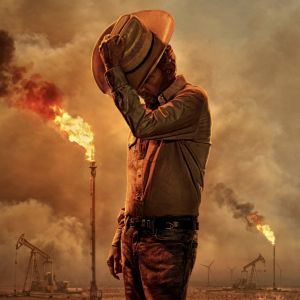
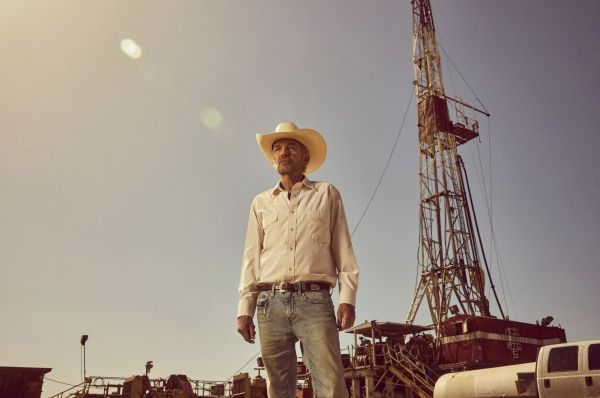
The industrial environments are among the most effective parts of Landman. Pumps, tanks, pipes, drilling equipment, trucks, and wide stretches of dry land create a world where machinery is always visible and rarely harmless.
I could feel that the characters were working around systems with enormous physical force. Pressure, heat, weight, combustible materials, and mechanical failure are not abstract background details. One overlooked problem can place an entire crew in danger.
The show often uses this environment to create tension before anything visibly fails. Workers move around equipment with practiced familiarity, yet the scale of the machinery reminds me that experience cannot remove every risk.
These scenes gave the series a strong physical identity. The oil business is not shown only through offices, contracts, and market discussions. The wealth begins in landscapes where people perform difficult work beside equipment capable of causing immediate and irreversible damage.
Cooper Entered the Industry Without a Tutorial
Cooper Norris gave me a useful entry point into the working side of the story. Unlike Tommy, he does not begin with years of knowledge or authority. He enters the oil patch needing to understand its routines, social rules, physical demands, and dangers while working beside people who have little reason to slow down for him.
His early experiences felt like beginning a difficult simulation without reading the manual. Other workers already know where to stand, how to react, which instructions matter, and what kind of mistake could become dangerous. Cooper has to learn while remaining useful.
I appreciated that the series did not make him instantly capable. He observes, asks questions, makes judgments, and gradually develops a relationship with the work. His progress comes from exposure rather than one motivational speech.
Cooper also sees parts of the industry that Tommy understands too well to explain emotionally. Tommy often treats risk as a practical reality. Cooper still reacts to the human consequences of that risk, which gives their perspectives an important contrast.
The Workers Were Not Decorative Background Characters
Landman works best when it gives the field crews enough personality to feel like people rather than symbols of difficult labor. Their humor, arguments, routines, and willingness to depend on one another create a believable sense of workplace culture.
These characters understand that careless behavior can affect everyone nearby. Trust therefore has a practical value. A person who ignores instructions is not merely irritating; they may create a dangerous situation for the entire crew.
I liked the moments when workers discussed the job without turning every conversation into a formal explanation for the audience. Their knowledge appears through decisions, warnings, and reactions to changing conditions.
The physical labor also provides an essential contrast with the executive side of the story. A financial decision made in a comfortable room can create consequences for people standing beside heavy machinery in extreme weather.
Monty Miller Played the Game From Another Level
Monty Miller operates in a world connected to Tommy’s but governed by different pressures. He thinks about investors, ownership, major deals, political consequences, and the survival of an organization whose problems cannot always be solved in the field.
His authority is significant, yet it does not make him free. Greater ownership brings greater exposure. A production problem, lawsuit, market shift, or criminal threat can affect far more than one location.
I enjoyed the conversations between Monty and Tommy because they often revealed the difference between strategic and operational thinking. Monty might see an asset, liability, or opportunity. Tommy sees the people, equipment, and immediate complications hidden inside that category.
Neither perspective is sufficient alone. The company needs high-level direction, but those plans become meaningless if they cannot survive contact with conditions on the ground.
Cami Had More Influence Than Her Screen Time Suggested
Cami Miller initially appears within a wealthy world far removed from the oil patch, but her position becomes increasingly important as business and family responsibility begin overlapping.
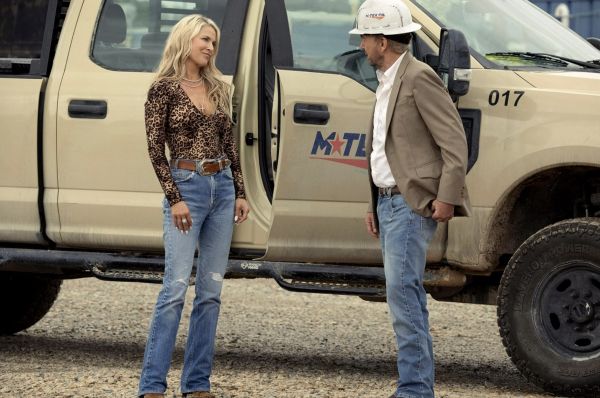
Demi Moore gives Cami a controlled presence that contrasts with Tommy’s visible exhaustion. She often enters scenes without needing to match his volume or bluntness. Her authority comes from understanding that wealth does not remove vulnerability; it changes the form that vulnerability takes.
I was interested in how the series placed her near decisions that involved both personal loyalty and corporate consequences. A company can be discussed through production numbers and legal structures, but ownership eventually becomes connected to individuals who must carry the result of earlier choices.
Cami’s strongest moments occur when other characters underestimate how carefully she is observing them. She does not need to behave like Tommy to become influential within the same system.
Rebecca Falcone Treated Conversation Like Combat
Rebecca brought a different kind of danger into the story. She does not work with drilling equipment or field repairs, but she understands how language, evidence, liability, and negotiation can determine what happens after an incident.
Her scenes with Tommy were especially entertaining because both characters are aggressive in different ways. Tommy relies on practical experience and direct confrontation. Rebecca uses legal knowledge and verbal precision.
Neither enjoys having their authority questioned, so even routine discussions can become contests over who understands the situation more completely.
I appreciated that Rebecca was not written as someone who exists only to explain legal terminology. Her confidence creates problems as well as solutions. She can identify weaknesses quickly, but understanding a case on paper does not always mean understanding every person involved.
Their conflict showed me that Landman is not only about extracting oil. It is also about controlling the story told after something goes wrong.
The Family Plot Was Louder Than the Oil Field
Tommy can negotiate with executives, confront dangerous people, and coordinate responses to industrial emergencies. His family remains the system he is least capable of managing.
Angela and Ainsley bring a completely different energy into his life. Their arrival often turns his limited personal space into another environment where he has no control over the schedule, conversation, or emotional consequences.
These scenes can feel almost like another series placed inside the industrial drama. The tone becomes broader, louder, and more comedic. At times, that contrast gave me relief from the heavier business story. At other moments, the family material felt exaggerated enough to weaken the tension created elsewhere.
Still, the family plot serves an important purpose. It prevents Tommy from becoming only a competent professional who delivers sharp speeches. At home, his judgment is less reliable, his patience is shorter, and his emotional history cannot be managed like a business emergency.
Angela Refused to Become a Quiet Supporting Character
Angela enters every room with the confidence that her feelings deserve immediate attention. She can be affectionate, demanding, impulsive, funny, and exhausting within the same conversation.
I understood why Tommy remained connected to her even when their interactions created obvious problems. Their relationship contains history, attraction, resentment, familiarity, and the strange comfort of knowing exactly how another person will disrupt your life.
Ali Larter plays Angela with enough commitment that even her most excessive scenes reveal something genuine. She wants intensity because ordinary stability does not seem emotionally convincing to her.
Her behavior often challenges the controlled masculine world surrounding Tommy. Executives and workers may follow recognizable professional codes, but Angela refuses to organize herself around those expectations.
The result is frequently chaotic, though it also exposes how little separation Tommy has maintained between work, family, and personal recovery.
Ainsley Often Felt Like an Unsupervised Side Mission
Ainsley’s storyline is deliberately exaggerated. She is confident, socially direct, and frequently unaware of how much attention her behavior creates.
Tommy reacts to her choices with the frustration of a player receiving another mission notification while already managing several critical objectives. He wants to protect her, but he also struggles to communicate without turning concern into anger.
Some of her scenes are funny because of Tommy’s reactions rather than the events themselves. He can handle threats connected to the oil business with practical logic, yet his daughter can leave him speechless through one casual comment.
I occasionally wished the writing gave Ainsley more interior depth beyond creating discomfort for the adults around her. Her confidence is memorable, but the series is strongest when it allows family members to exist as more than sources of chaos.
Oil Was Presented as Both Resource and Dependency
Landman spends considerable time explaining why petroleum remains embedded in modern life. Characters discuss transportation, manufacturing, energy, consumer products, employment, infrastructure, and the difficulty of replacing an established system quickly.
These arguments are usually delivered by people whose livelihoods depend on the industry, and I treated that perspective as part of the characterization rather than a neutral final answer to every energy debate.
The show is most interesting when it allows contradictions to remain visible. Oil creates jobs, wealth, and products people use constantly. Its extraction also creates physical danger, environmental concerns, legal disputes, and communities shaped by unstable cycles of expansion and decline.
I did not feel that every monologue explored these tensions equally. Some speeches are written with enough confidence that they resemble a final statement rather than the beginning of a complicated discussion.
Even so, the series encouraged me to think about how dependent modern systems are on industries that many people experience only through the finished products they purchase.
The Dialogue Is Often the Main Action Scene
Landman contains physical danger, but many of its most entertaining confrontations happen in offices, cars, restaurants, and living rooms.
Characters rarely exchange information neutrally. They test one another, hide weaknesses, negotiate authority, and search for the point where the other person may be forced to compromise.
Tommy’s dialogue is particularly effective because he often begins a scene already aware of the argument someone is preparing to make. He responds before they can finish building it, which makes conversations feel fast even when the characters are sitting still.
The style can become theatrical. People occasionally speak in polished monologues that sound more carefully structured than spontaneous conversation. I accepted this as part of the series’ identity because the performances make the speeches enjoyable.
From my gamer’s perspective, dialogue functions like a negotiation system where every character has hidden resources, leverage, and tolerance limits. Tommy’s skill lies in identifying those values before selecting a response.
The Cartel Storyline Changed the Type of Pressure
Business and industrial problems usually give Tommy some framework for action. He can examine contracts, repair equipment, contact specialists, or calculate financial consequences.
The criminal threat operates under different rules. Normal company procedures become less useful when the opposing side does not share the same concern for law, public reputation, or employee safety.
This storyline increased the danger but also pushed the series toward a more familiar crime-drama structure. I was sometimes more interested in the specific conflicts of the oil industry than in the broader threat of organized crime.
However, the plot demonstrates why infrastructure and remote industrial locations can become attractive to people seeking access, transportation routes, or leverage. Tommy cannot simply separate legal business from the surrounding world.
The Landscape Looked Open but Never Peaceful
West Texas is filmed as a place of enormous distance. Roads stretch across dry land, equipment rises from otherwise empty spaces, and vehicles can travel for long periods without reaching a dense urban area.
The openness creates visual freedom, but the characters rarely behave as though they are relaxed. The land has ownership, mineral rights, production value, legal boundaries, and hidden risks.
An apparently empty location may contain pipelines, machinery, active leases, or people protecting financial interests. The landscape is therefore never merely scenery.
I liked the contrast between the scale of the land and the narrowness of the characters’ choices. They may be surrounded by open space, yet contracts, debts, family obligations, and business relationships restrict every direction available to them.
Vehicles Functioned Like Mobile Offices
Tommy spends a large amount of time driving, taking calls, giving instructions, and moving between different kinds of problems. His vehicle becomes a temporary office where decisions are made before he reaches the next location.
These driving scenes help connect the series’ separate worlds. Tommy can leave a production site, receive information about a legal problem, argue with a family member, and prepare for a meeting without ever receiving a genuine break.
I enjoyed this structure because it communicated the geography of his work. Problems are distributed across large distances, and managing them requires constant movement.
The vehicle also gives Tommy limited privacy. He can speak openly, react to bad news, or experience a few seconds of silence before another call interrupts him.
Tommy’s Health Felt Like a Resource He Kept Ignoring
The series repeatedly shows that Tommy’s lifestyle is physically unsustainable. Stress, poor habits, limited rest, and constant exposure to conflict create a visible cost.
He manages his body the same way he manages an aging piece of equipment: keep it functioning long enough to solve the current problem and postpone proper maintenance.
This added vulnerability to a character who otherwise appears capable of talking his way through almost any situation. His intelligence cannot permanently negotiate with physical limits.
I often felt that Tommy treated every warning sign as an optional side objective. He recognized the problem, made a sarcastic comment, and returned to the urgent task in front of him.
The pattern made sense psychologically. Slowing down would require him to confront parts of his life that constant work allows him to avoid.
The Series Understands That Money Does Not Remove Fear
Landman moves between workers who risk their bodies and wealthy people who control enormous assets. The difference in lifestyle is obvious, but nobody appears completely secure.
Workers fear injury, lost income, and the consequences of one accident. Executives fear lawsuits, collapsing deals, hostile partners, and the possibility that a large organization may become impossible to control.
Money changes the available responses, but it does not eliminate uncertainty. A billionaire may survive a financial problem that would destroy an ordinary worker, yet that larger position attracts larger threats.
The show is most effective when it lets both realities exist without pretending that they are equal. Wealth provides protection and influence. It also creates obligations, exposure, and people waiting to benefit from weakness.
The Female Characters Often Challenged the Series’ Own World
Landman takes place within an industry and regional culture dominated by aggressive male personalities, but several women refuse to accept a passive role inside that environment.
Angela disrupts Tommy’s personal control. Rebecca challenges his professional authority. Cami occupies a position connected to ownership and long-term corporate responsibility. Ariana’s story brings attention back to the personal cost carried by families connected to field workers.
These characters do not all speak from the same social position, and the contrast matters. One woman may be protected by wealth, while another faces the immediate consequences of loss and instability.
The writing occasionally reduces women to provocations, romantic complications, or sources of emotional pressure. The stronger scenes move beyond that function and allow them to make decisions shaped by their own interests and circumstances.
Ariana Brought the Consequences Home
Ariana’s storyline gave the dangers of oil-field work a personal dimension that statistics and company discussions could not provide.
Industrial accidents are not finished when the equipment stops moving. Families are left with grief, financial uncertainty, legal questions, and the need to rebuild daily life.
Her connection with Cooper develops inside that difficult context, which prevents the relationship from feeling uncomplicated. Compassion, attraction, guilt, responsibility, and vulnerability overlap.
I appreciated that their scenes were quieter than Tommy’s constant verbal battles. Cooper does not always know the correct thing to say or do, and Ariana has reasons to question what his help might mean.
The relationship becomes another example of how the industry connects people through circumstances they would never have chosen.
The Series Sometimes Enjoys Its Speeches Too Much
Taylor Sheridan’s characters often speak with extraordinary confidence. They can explain an industry, defend a worldview, expose another person’s weakness, and deliver a memorable final line within one conversation.
When the performance supports the writing, these scenes are highly entertaining. Billy Bob Thornton can make a long explanation feel like a weapon being assembled piece by piece.
The limitation is that several characters occasionally sound as though they share the same ability to produce perfectly structured arguments. Real conversation contains more uncertainty, repetition, and incomplete thought.
I sometimes wanted the series to trust its environments and situations instead of explaining the meaning of everything through dialogue.
The strongest episodes balance the speeches with consequences. A character may describe how the industry works, but the next field incident reveals whether that explanation was complete.
The Humor Prevented the Pressure From Becoming Exhausting
Landman is frequently funny, although the comedy usually comes from irritation, blunt honesty, and people responding badly to uncomfortable situations.
Tommy’s reactions provide much of the humor. He often appears to be the only person who recognizes how absurd a problem has become, yet he is still responsible for solving it.
Family scenes use broader comedy, while workplace humor tends to be drier and more practical. Workers joke because the job is difficult. Executives use humor as a form of control or dismissal.
I appreciated these tonal breaks because the series contains enough injury, grief, and pressure to become oppressive without them.
Not every joke landed for me. Some family material continued past the point where the situation had already communicated its humor. The sharper comedy came from short reactions rather than extended comic scenes.
Seasonal Progression Felt Like an Expanding Management Crisis
The early episodes introduce separate pressures: dangerous field work, family disruption, legal complications, ownership concerns, and outside threats.
As the story progresses, those systems begin influencing one another. A field incident creates legal exposure. Legal exposure affects business decisions. Business pressure changes personal relationships, and family choices interfere with Tommy’s ability to maintain professional control.
This interconnected structure kept me engaged. Problems rarely disappeared completely after one episode. They changed form, moved to another department, or returned through a different character.
By the later stages, Tommy is not handling a collection of isolated emergencies. He is managing a network in which nearly every solution transfers risk somewhere else.
The Second Season Made Responsibility Heavier
As the series continues, the balance of power changes and characters who previously operated near important decisions are forced closer to the center of them.
Tommy faces increasing pressure from the company, the people who depend on him, and the unresolved influence of his own family history. Cami’s role becomes more demanding as ownership and personal loss can no longer be separated cleanly.
The addition of older family connections also deepens the question of how Tommy became the person he is. His bluntness, survival instincts, and resistance to vulnerability begin to look less like isolated personality traits and more like habits shaped across generations.
I enjoyed this expansion because it prevented the story from merely repeating the first season with a larger accident. The central question shifts from whether Tommy can solve a crisis to how long he can continue being the person everyone expects to solve it.
Sam Elliott Added a Different Kind of Authority
Sam Elliott’s presence brings another layer of West Texas history into the series. His voice, physical stillness, and measured delivery contrast with Tommy’s faster and more visibly irritated style.
Where Tommy often appears exhausted by the current version of the industry, Elliott’s character suggests an older source of family influence and regional identity.
Their scenes carry tension even before every detail is explained. Shared history creates a form of pressure that Tommy cannot dismiss through professional expertise.
I liked that this relationship challenged Tommy outside the areas where he normally holds an advantage. He can argue with lawyers and executives using experience. Family history does not respond to the same tools.
Survival Was More Important Than Heroism
Landman does not present the oil business as a setting where characters regularly make clean heroic choices. Most decisions involve compromise.
Tommy protects workers while also protecting the company. Executives care about people while remaining responsible for profits and investors. Families need financial stability from work that may place someone in danger.
The series repeatedly asks what survival requires when every available option carries a cost.
This moral complexity worked better for me than a simple story about good workers and evil billionaires. Power differences remain important, but individuals inside each level make choices shaped by pressure, loyalty, ego, and fear.
Tommy’s greatest ability is not always choosing what is right. It is identifying which consequence the organization can survive.
What Made Landman Feel Different From a Standard Corporate Drama
The show keeps its business decisions connected to physical places. Money does not move only through screens and conference rooms. It is tied to wells, roads, mineral rights, trucks, equipment, weather, and people working under dangerous conditions.
That connection gives every corporate argument weight. When characters debate a contract or operational choice, I know there may be a crew somewhere responsible for turning that decision into reality.
The regional setting also shapes the dialogue, attitudes, and social expectations. Characters understand reputation, family name, land ownership, and personal toughness as forms of currency alongside money.
The industry may operate globally, but the daily conflicts remain local and personal.
Why I Kept Watching Tommy Work
I did not continue Landman because I admired every choice Tommy made. I watched because he understands the machinery surrounding him better than almost anyone else and still cannot fully control it.
His job places him between people who rarely speak the same language. Workers need safety, income, and practical instructions. Lawyers need defensible decisions. Executives need production and stability. Family members need attention he has already spent elsewhere.
Tommy translates between these groups while carrying his own debts, habits, health problems, and unresolved relationships.
From my perspective as a gamer, Landman feels like a resource-management campaign in which every resource is unstable. Money can disappear into legal costs. Equipment can fail. Workers can be injured. Alliances can change, and family problems can become urgent at the least convenient moment.
There is no safe headquarters where Tommy can recover between missions. The phone keeps ringing, another vehicle is waiting, and every solved problem exposes the next one underneath it.
The World of Landman Runs on Controlled Damage
The series gradually convinced me that almost nobody is trying to create a perfect system. They are trying to keep an imperfect one functioning.
Oil brings wealth and employment, but it also creates danger and dependency. Family provides loyalty, yet it can become another source of conflict. Authority allows characters to act, but it also makes them responsible when those actions fail.
Tommy is valuable because he understands controlled damage. He knows which problem requires immediate intervention, which person can be pressured, and which loss may be unavoidable.
That knowledge makes him effective, but it does not make him happy. His entire life is organized around preventing catastrophic failure while accepting smaller failures as normal.
Landman remained memorable for me because it treated crisis management as both a profession and a personality. Tommy does not merely work inside an unstable industry. He has built himself into the kind of person who only knows how to function when something is going wrong.
The oil fields, business negotiations, family arguments, and criminal threats all test the same central question: what happens to a man whose value comes from surviving pressure when the pressure never stops increasing?
I finished each episode expecting Tommy to receive a moment of peace. Instead, another call arrived, another person entered the room, or another problem appeared somewhere across the Texas landscape.
That repetition should have become exhausting. In Landman, it became the reason I pressed play again.
Pros:
- Visually captivating cinematography enhances the overall experience
- Thought-provoking narrative encourages deep reflection
- Nuanced character performances add emotional depth
- Engaging thematic elements challenge conventional views
- Intricate blend of tradition and modernity creates a rich tapestry
- Balanced pacing allows for both action and introspection
Cons:
- The deliberate pacing may feel slow for viewers seeking constant action
- The complex narrative might be challenging for casual audiences
- Some scenes are overly symbolic, which can detract from character development









Movie Reviews

Minecraft

Grand Theft Auto V

Toca Boca World

Roblox

Leave a comment
Your comment is awaiting moderation. We save your draft here
0 Comments