
Review
I approached Bluey: Let’s Play! differently from most games on my phone. I was not expecting a campaign, difficult puzzles, or a progre...


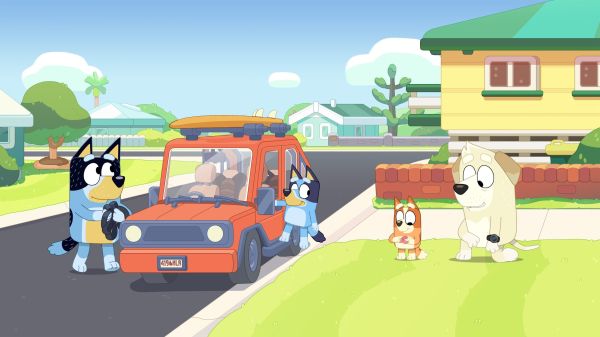


Bluey's Enchanting Journey: Rediscovering Family, Art, and Life's Simple Wonders
I approached Bluey: Let’s Play! differently from most games on my phone. I was not expecting a campaign, difficult puzzles, or a progression system that would keep me upgrading characters for weeks. I treated it more like a digital toy box. The main appeal was not reaching a final destination but choosing a location, placing familiar characters into it, and seeing what kind of small scene I could create.
That distinction shaped my entire experience. Bluey: Let’s Play! rarely told me that I was playing incorrectly. I could move characters around, interact with household objects, prepare food, change outfits, or simply experiment with the environment. The game gave me pieces of the Bluey world and trusted me to decide what should happen next.
The House Was My First Playground
I began inside the Heeler family home because it felt like the natural introduction. The rooms are immediately recognizable, and the environment has the same warm, slightly chaotic personality that makes the animated series feel believable. It does not look like a perfect display home where every object exists only as decoration. Toys, furniture, food, clothing, and household items make each room feel ready for play.
My first instinct as a gamer was to press everything. I opened objects, moved characters between rooms, tested which items they could hold, and tried combining things that clearly did not belong together. There was no complicated tutorial slowing me down. Most interactions were understandable through visual design alone.
The kitchen quickly became one of my favorite places because it offered so many opportunities for improvised situations. I could place characters around the room, prepare a pretend meal, and turn an ordinary family moment into a messy little story. Nothing I created was especially complex, but the freedom made the experience feel personal.
A Session Without a Mission
One evening, I opened the game without deciding what I wanted to do. I selected Bluey and Bingo, moved them through the house, changed their positions several times, and began arranging objects around them. Within a few minutes, I had invented a simple scenario in which they were preparing a surprise celebration while trying to hide everything from Bandit.
The game did not provide dialogue for my story. It did not display objectives or award points for placing the correct item in the correct room. I supplied the context myself. That reminded me of playing with physical figures as a child, when a table could become a castle and an ordinary box could become a vehicle.
This was the moment when Bluey: Let’s Play! made the most sense to me. It is not trying to replace imagination with scripted entertainment. Its strongest feature is giving imagination a recognizable setting.
Characters Function Like Story Pieces
Bluey and Bingo were naturally the characters I used most often, but the wider cast made the scenes more varied. Each familiar face brought a different personality to mind, even when the game itself was not directing the action. I already knew how these characters usually behaved, so placing them together immediately suggested possible jokes, disagreements, or games.
I enjoyed moving several characters into the same location and arranging them as though I were setting up a screenshot from an episode that never existed. Sometimes I created a family activity. At other times, I filled a room with so many characters and objects that it became deliberately ridiculous.
The controls are simple enough that young players should not need advanced coordination. Characters can be moved directly, and most objects respond in predictable ways. From an adult gamer’s perspective, the system is limited, but those limitations also keep the interface approachable.
I Played It More Like a Director Than a Competitor
Most games ask me to improve my performance. I learn enemy patterns, optimize equipment, or repeat levels until my score increases. Bluey: Let’s Play! gave me a different role. I felt more like a director arranging a small animated stage.
I decided who entered a room, where each character stood, what items they used, and what kind of activity they appeared to be doing. The game offered visual responses, but I was responsible for connecting those actions into a story.
This style of play works particularly well when an adult and child use the app together. One person can move the characters while the other invents dialogue. They can take turns adding a new event or introduce a problem that the characters need to solve.
For example, I could begin with Bluey preparing breakfast. Another player might add Bingo and announce that an important ingredient is missing. We could then move through different rooms, search for suitable objects, and invent increasingly silly explanations. The game becomes more engaging when the screen supports a conversation rather than replacing it.
Small Interactions Carry the Experience
There is no single mechanic deep enough to support the entire game by itself. Instead, Bluey: Let’s Play! depends on many small interactions. Characters can use objects, move through familiar spaces, change their appearance, and participate in simple activities.
I liked discovering which items responded and how they could be combined with the characters. The reactions are usually brief, but they add enough movement to keep each scene from feeling like a static picture. A room gradually changes as objects are moved and characters are repositioned.
The experience feels best when I resist the urge to search for a traditional objective. When I tried to play efficiently, there was very little to optimize. When I slowed down and experimented, the same room offered many more possibilities.
Visual Familiarity Does Most of the Work
The game benefits enormously from matching the visual identity of Bluey. The characters retain their recognizable shapes, expressions, and colors, while the environments resemble locations from the series. That familiarity creates an immediate emotional connection for anyone who already enjoys the show.
I did not need an elaborate introduction explaining the family or their home. The rooms already carried memories of familiar episodes and games. Entering one of those spaces felt a little like visiting a location from a favorite television series.
The presentation remains clean enough for younger players to identify interactive elements. Objects are colorful, characters remain visually distinct, and the screen does not become overloaded with complex statistics or menus. The interface stays focused on play rather than account management.
Where the Game Felt Too Restricted
The biggest interruption in my experience came from the division between available and locked content. Bluey: Let’s Play! allows players to begin exploring, but much of the broader experience is connected to paid access. Characters, locations, and activities that look inviting may not all be immediately usable.
From a parent’s perspective, this means the initial download should not be confused with unrestricted access to everything shown inside the app. The free portion can demonstrate the basic interaction style, but the larger toy box requires a purchase or subscription arrangement.
I found the restrictions particularly noticeable because open-ended games depend on variety. Repeating the same interactions in a small number of spaces eventually reduces the sense of discovery. New rooms and characters are not merely cosmetic extras here; they provide the ingredients needed to invent different stories.
The locked content does not make the basic experience unplayable, but it changes how I would evaluate the game. I would first test the available section with the intended player and observe whether they actually enjoy creating scenes. Paying for more content makes more sense when the child repeatedly returns to the app and actively invents new situations.
There Is No Traditional Challenge Curve
Bluey: Let’s Play! does not gradually become more difficult. I did not unlock advanced controls, encounter harder opponents, or improve a measurable skill rating. The complexity depends almost entirely on what the player imagines.
A very young child might simply move Bluey around a room and activate objects. An older child might build a complete story with several characters, locations, and rules. Both approaches use the same mechanics, but the second demands more creativity.
This makes the game accessible, although it may not satisfy players who need clear goals. I sometimes wanted optional challenges that would provide direction without removing the sandbox freedom.
Activities I Would Have Enjoyed
- Find specific objects hidden around a room;
- Prepare a meal by selecting the requested ingredients;
- Recreate a scene using a limited collection of items;
- Arrange characters for a family photograph;
- Complete a short cleanup activity after playtime;
- Invent a story using three randomly selected objects.
Simple prompts like these could help players who do not immediately know what to create. They would also give families a starting point before moving into completely open play.
The Sound Design Keeps Everything Gentle
The audio matches the relaxed tone of the experience. Sound effects provide confirmation when objects are activated, while character voices and familiar musical elements help the app feel connected to the series. I never felt that the game was trying to create artificial excitement through constant noise.
This matters because many children’s apps overwhelm the player with loud celebrations after every action. Bluey: Let’s Play! generally feels calmer. The audio supports the activity instead of turning each tap into a major event.
I still found that repeated sounds became noticeable during longer sessions. Since the core actions are simple, the same audio responses can appear frequently. Keeping sessions relatively short helped preserve the charm.
I Found the Best Way to Play Together
After experimenting alone, I created a simple cooperative storytelling routine. I placed two characters in a room and described what they were doing. The second player introduced a new object and explained how it changed the situation. We continued taking turns until the story reached a natural ending.
This approach made even familiar locations feel different. The same kitchen could host a cooking competition, a birthday surprise, or an imaginary restaurant. A bedroom could become a campsite or a secret headquarters. The visual assets remained unchanged, but the meaning of each object changed with the story.
I also liked asking questions during play. What is Bluey trying to build? Why is Bingo hiding that object? What should Bandit do next? These questions encouraged more active participation than simply watching animations.
Short Sessions Worked Better for Me
I did not enjoy Bluey: Let’s Play! as much when I tried to use it for a long uninterrupted session. Once I had explored a location and activated its main objects, the mechanical surprises became limited. The game became repetitive unless I continued inventing new scenarios.
Ten or fifteen minutes felt more suitable. That was enough time to create one story, rearrange a room, or test a new activity without exhausting the available interactions. The game was easy to leave and return to because there was no complicated mission progress to remember.
For younger players, a short session also makes it easier to connect the digital experience with physical play. After creating a pretend café in the app, a child could build another café using toys, paper, or household objects. The screen can provide inspiration without becoming the only place where the game exists.
What Bluey: Let’s Play! Became in My Hands
I expected a collection of basic children’s mini-games, but the experience was closer to an interactive playset. It gave me recognizable characters and locations, then stepped back and allowed me to arrange them. The result depended heavily on how much imagination I brought to the screen.
Its greatest strength is accessibility. The controls are direct, the visual language is familiar, and there is very little risk of a young player becoming trapped in a complicated system. The world feels warm and safe, making experimentation comfortable.
Its greatest limitation is also connected to that simplicity. Without self-created stories, the interactions can become repetitive, and much of the variety is positioned behind paid access. Players looking for structured levels or meaningful difficulty will find only a small amount of conventional gameplay.
I enjoyed Bluey: Let’s Play! most when I stopped asking what I was supposed to complete. Instead, I asked what kind of scene I could make. Used as a shared storytelling tool, it captures an important part of Bluey’s appeal: ordinary rooms and everyday objects can become the foundation for an adventure when someone is willing to imagine one.
Pros:
- Rich and emotionally resonant storytelling that balances humor with heart
- Engaging character development that offers subtle life lessons
- A universal appeal that transcends age, making it enjoyable for both children and adults
- Thoughtful social commentary that encourages reflection on modern life and family values
- Wide accessibility across major streaming platforms ensuring easy availability
- Vibrant and meticulously crafted animation that captivates viewers of all ages
Cons:
- The simplicity in storytelling might not satisfy an audience looking for more complex narratives
- The film's focus on family values and sentimentality may feel overly didactic to some viewers
- The pace of the narrative may seem slow for viewers accustomed to faster plot developments









Movie Reviews

Minecraft

Grand Theft Auto V

Toca Boca World

Roblox

Leave a comment
Your comment is awaiting moderation. We save your draft here
0 Comments