
Review
My first mistake in 99 Nights in the Forest was believing the opening daylight represented the normal state of the game. The trees look...

Mystical Journeys: Unraveling the Secrets of 99 Nights in the Forest
My first mistake in 99 Nights in the Forest was believing the opening daylight represented the normal state of the game. The trees looked simple, resources were easy to identify, and the first jobs appeared almost relaxing. I gathered wood, carried supplies toward the campfire, checked nearby structures, and watched the group divide naturally into explorers and builders.
Then the light began to fade.
The forest did not need to transform dramatically. The same paths simply became harder to read. Trees that had looked like useful landmarks became walls of darkness, and every unnecessary trip away from the fire started feeling like a poor decision. The daytime music and resource routine had encouraged confidence. Night exposed how little preparation that confidence had produced.
99 Nights in the Forest works because it turns time into a resource. Wood, food, ammunition, medical supplies, tools, and defensive materials all matter, but daylight controls how safely I can obtain them. Every minute spent wandering without purpose is a minute not spent upgrading the camp, locating a missing child, or preparing for the next attack.
The goal sounds straightforward: survive 99 nights in a hostile forest while searching for four missing children. In practice, the game becomes a long cooperative negotiation about priorities. Should the team improve the fire, build walls, search another structure, collect food, hunt animals, rescue a child, or prepare weapons for the next cultist raid? Most failures begin several days before the moment everyone notices them.
The Campfire Is More Important Than Any Weapon
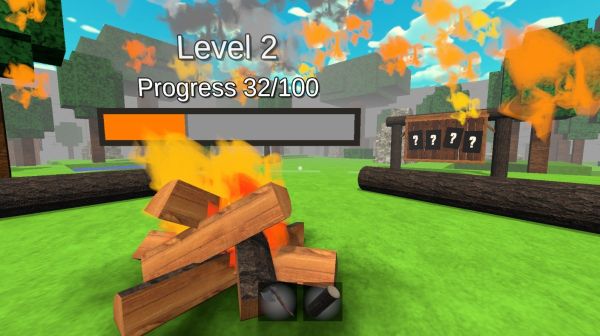
The central fire gives every run a clear emotional and mechanical anchor. It provides light, marks the location of the camp, supports survival systems, and creates a small area where the forest feels temporarily controlled.
I quickly stopped thinking of it as scenery. Fuel became a constant concern. A healthy fire created time for crafting, cooking, healing, and organizing supplies. A neglected one turned the camp into another dangerous patch of forest.
The fire also shapes teamwork. Players return from separate tasks and unload resources around the same location. One person may arrive with wood, another with food, and another with equipment taken from a distant building. For a brief period, the team can compare progress before splitting again.
This routine gives the game a useful rhythm. Exploration creates uncertainty, while returning to the fire provides temporary relief. The longer a run continues, the more that relief depends on construction rather than the original camp alone.
I liked how emotionally attached I became to a location made from basic materials. A few walls, storage containers, traps, and crafting stations gradually turned an empty clearing into something resembling a home. When enemies damaged it, the loss felt larger than the material cost because the base represented accumulated time.
Daylight Became a List of Impossible Priorities
Every morning begins with more tasks than one day can comfortably support. Damaged defenses need repair. The fire needs fuel. Food reserves may be low. Better tools require materials. Distant landmarks remain unexplored, and the missing children will not rescue themselves.
The game becomes interesting when these needs conflict. Gathering wood is safe and predictable, but spending every day near camp prevents meaningful progress. Exploring provides better loot and quest objectives, but it leaves fewer players maintaining the base.
I found that efficient teams assigned loose roles without turning the session into formal work. One player focused on wood and construction, another searched buildings, while a more combat-ready teammate collected animal materials or escorted weaker explorers.
Uncoordinated teams often duplicated effort. Three people might search the same area while nobody prepared food. Valuable tools could remain hidden in personal inventories. One player could spend resources on a decorative or low-priority item while the main defenses remained incomplete.
The game does not require perfect communication during the early nights, which makes the opening accessible. Later progress exposes every inefficient habit. A small shortage becomes dangerous when enemies grow stronger and travel distances increase.
The Deer Is Scariest When It Is Not Attacking
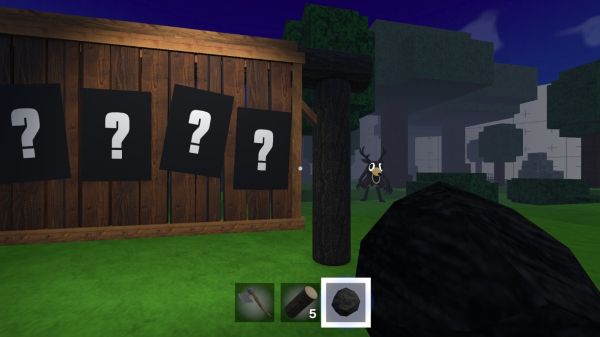
The Deer is the image most closely associated with 99 Nights in the Forest, but its effectiveness comes from more than its design. It represents a threat that cannot be solved through ordinary aggression.
Many survival games train me to convert fear into equipment. A stronger weapon eventually turns an early predator into a source of materials. The Deer resists that expectation. Light, distance, awareness, and preparation matter more than direct confrontation.
Seeing it between trees is more effective than watching it perform a long attack animation. Its shape is readable enough to recognize immediately, yet unnatural enough to remain uncomfortable. The forest gives it space to appear briefly and disappear before I understand its route.
I became especially cautious when travelling back to camp near sunset. Carrying valuable resources created a reason not to panic, while the approaching darkness created every reason to panic. Sprinting without watching stamina could leave me exposed at the worst possible moment.
The Deer occasionally becomes less frightening once repeated encounters reveal its mechanical behavior. Like most game enemies, familiarity eventually replaces part of the uncertainty. It remains dangerous, but experienced players begin treating it as a system to manage rather than an unknowable presence.
Updates and additional creatures help preserve tension by preventing one solution from handling every night threat. The forest becomes more effective when I cannot assume that the same defensive routine will solve every problem.
Cultists Turn Preparation Into an Actual Battle
The Deer creates fear through pursuit and presence. Cultists create a more conventional defensive crisis. They attack the camp, pressure walls, force players to use weapons, and punish teams that spent too many resources on exploration without developing combat capability.
I enjoyed the shift because it prevents every night from becoming a hiding exercise. Base design begins to matter once enemies approach through recognizable routes.
Walls, gates, traps, firing positions, and open movement space can determine whether a group survives comfortably or becomes trapped inside its own construction. A large base is not automatically a good base. More perimeter means more material to maintain and more places for enemies to breach.
The strongest camps I encountered were organized rather than enormous. Supplies were stored near the crafting area, defensive lines had clear access, and players could move around one another without becoming stuck.
Combat itself is functional rather than highly technical. Weapon quality, ammunition, positioning, and team focus matter more than complicated attack combinations. That simplicity fits Roblox and keeps the emphasis on preparation.
Enemy raids can become repetitive across a long run. Once a group develops strong equipment and understands the approach routes, some nights feel like scheduled maintenance. Harder variants and new enemy types help, but the core pattern remains visible.
Rescuing the Children Gives Exploration a Purpose
The missing children prevent survival from becoming the only objective. Without them, the safest strategy would often involve remaining near camp, gathering resources, and building stronger defenses until the night counter reached its final number.
Searching for the children forces movement into unfamiliar areas and gives the forest a narrative reason to contain caves, structures, and dangerous landmarks.
I liked the emotional clarity of the objective. The game does not require a complicated explanation before I understand why finding them matters. Each rescue also creates a clear sense of progress in a run that can otherwise feel dominated by resource accumulation.
Reaching a child is rarely the end of the problem. The team must survive the surrounding danger, manage the return journey, and avoid losing important supplies during the attempt.
These expeditions produced some of my favorite cooperative moments. A group leaving camp with food, medicine, light, and weapons felt like a proper rescue team. Returning with damaged equipment and one surviving bandage created stories that ordinary wood collection could not.
The search becomes less mysterious once experienced players learn likely locations and efficient routes. Randomized elements and evolving map knowledge preserve some variety, but repeated runs naturally become more procedural.
Building a Base Is Easy; Building the Right Base Is Not
Construction uses an accessible system that allows players to create shelter and defenses without needing the precision of a dedicated building simulator.
The early temptation is to create a complete cabin immediately. That often consumes resources better spent on tools, crafting upgrades, fuel, food production, or practical barriers.
I learned to treat the base as an evolving machine. The first version needed only enough structure to organize supplies and provide basic protection. Later versions could add stronger walls, traps, specialized stations, and improved access points.
Placement matters. A door in the wrong position can direct enemies toward storage. Narrow interiors can trap players during a raid. Defensive objects can obstruct attacks from teammates as easily as they obstruct enemies.
Building with strangers introduces another complication: ownership of the plan. One player may begin expanding in one direction while another places barriers according to a completely different layout.
The game would benefit from better cooperative construction signals. Simple markers, planning outlines, or a way to reserve materials for a shared project could reduce accidental waste.
Crafting Makes Every Piece of Scrap Feel Necessary
The crafting bench creates the main progression structure within a run. Basic gathering leads to better tools, improved tools increase efficiency, and efficiency allows the group to pursue more ambitious objectives before night returns.
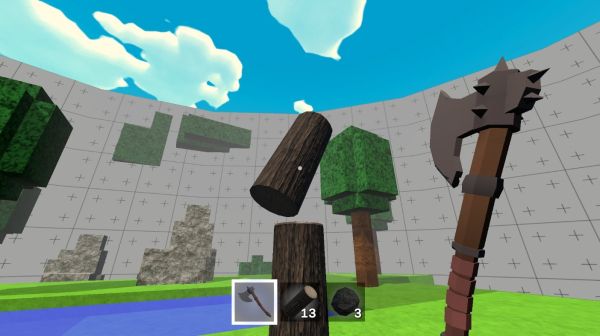
This loop is satisfying because upgrades affect ordinary work immediately. A better axe does not merely increase a number on a menu. It changes how much of the day must be spent collecting wood.
Higher-level equipment introduces a strategic question. Should the group save resources for one powerful upgrade or distribute several cheaper improvements among different players?
Public groups often struggle with this decision because resources disappear into personal plans. One player may craft an expensive weapon while the team still lacks basic medical supplies.
I liked the pressure created by limited materials, although certain recipes become difficult to remember without repeatedly checking the interface. A clearer shared recipe tracker would make coordinated goals easier.
Crafting remains important throughout a run, but the excitement changes. Early upgrades feel transformative. Late-game crafting can become a checklist required to keep pace with enemy health and damage.
Hunger Is Simple Until Everyone Needs Food at Once
Food management begins gently and becomes more important as exploration distances increase. Hunger limits recovery and encourages the team to establish a renewable supply rather than depending entirely on random discoveries.
I rarely found the act of eating interesting by itself. Its value comes from the decisions surrounding food. Should a meal go to the player defending camp, the explorer leaving for a distant objective, or the injured teammate who needs health regeneration?
Inventory habits matter. A player carrying every piece of food into the forest may leave the rest of the team exposed if they fail to return. Storing everything at camp can also be inefficient when an expedition lasts longer than expected.
Farming and renewable resources reduce pressure later, but they require early investment. Teams that ignore food during the calm opening may discover the shortage only when combat and travel demands become greater.
The survival systems remain readable rather than excessively realistic. I did not need to track calories, temperature layers, individual nutrients, or complicated cooking recipes. The simplicity keeps the game accessible while still requiring planning.
Classes Change What I Volunteer to Do
The class system gives players starting advantages and progression benefits that encourage different responsibilities. A resource-focused class naturally spends more time gathering, while a medical or combat-oriented class becomes more valuable during dangerous expeditions.
I liked that classes influence behavior without locking every player into one activity. A builder can still explore, and a combat specialist can still carry wood. The advantages create direction rather than absolute restrictions.
Some classes are significantly more useful than others depending on whether I play alone or with a full group. A support benefit can be excellent in coordinated co-op and almost irrelevant during solo survival.
Class strength also changes as updates introduce new equipment and enemies. A powerful late-game class may make early progression feel noticeably easier, while beginner options can become difficult to justify after stronger unlocks appear.
This creates one of the game’s monetization and progression concerns. Diamonds and class acquisition encourage repeated play, but the most desirable options can make the starting classes feel like temporary limitations rather than equally interesting choices.
I prefer classes that change strategy over classes that simply provide larger damage numbers. Faster construction, unusual resource interactions, animal support, or specialized technology gives a run a different identity.
Solo Survival Is a Different Genre
Playing alone removes the confusion of public teamwork but places every responsibility on one player. I must gather, build, cook, explore, fight, rescue, repair, and manage the fire without anyone continuing the other tasks.
The days feel much shorter in solo play. Travelling to one distant location can consume the time that a group would divide across several objectives.
The advantage is control. No teammate spends critical resources incorrectly, carries away the only useful tool, or disappears during a raid. The base develops according to one plan.
Solo runs become more dependent on class choice and route efficiency. A mistake that would be recoverable in co-op can end the entire attempt because nobody is available to revive me or recover my supplies.
I enjoyed solo play as a strategic challenge, but it lacks the unpredictable stories created by cooperation. Surviving a difficult night alone feels satisfying. Surviving because one teammate returned at the last moment with medicine creates a stronger memory.
Friends Make the Forest Better and More Chaotic
99 Nights in the Forest is at its best when a group communicates without turning every action into an order. Sharing discoveries, warning others about approaching danger, and announcing resource needs makes the base feel like a cooperative project.
The game supports natural moments of specialization. One friend becomes obsessed with construction, another searches every building, and someone else repeatedly returns with an animal or enemy following closely behind.
Comedy emerges from failure. A confident expedition may return immediately after encountering something unexpected. A player may close a gate at the wrong moment and trap a teammate outside. An expensive defensive plan may fail because nobody remembered to fuel the fire.
These situations soften the repetition of long survival runs. The mechanical tasks remain similar, but different players create new problems.
Voice communication provides a major advantage. Roblox text chat is less practical during combat, and filtered messages can make quick warnings unclear.
Public servers are inconsistent. Cooperative strangers can produce an excellent run, while inactive players, resource hoarding, early departures, and careless construction can damage a session before the difficult nights begin.
The Low-Detail Art Helps Me Read Danger
The forest uses a stylized Roblox presentation rather than attempting realism. Trees, structures, creatures, tools, and resources have clear shapes that remain readable on a wide range of devices.
This simplicity benefits gameplay. I can identify important objects quickly, understand where a defensive wall begins, and notice movement between trees without searching through dense realistic foliage.
The Deer’s design works especially well against the blockier environment. Its proportions and movement appear wrong in a world where most objects are visually simple.
Lighting does much of the atmospheric work. Daylight creates open visibility, sunset warns that the routine is ending, and darkness removes information beyond the camp’s illuminated area.
The visual style is not technically spectacular compared with dedicated PC survival games. That is not a serious weakness. Greater detail could make resource identification slower and reduce performance on mobile devices.
Some structures and environmental sections repeat noticeably. Long expeditions can pass through areas that feel functionally rather than narratively designed.
Sound Makes the Darkness Larger
Audio becomes most important when visibility disappears. Distant movement, creature cues, attacks against the base, and changes in ambient sound can warn me before the screen reveals the threat.
The game benefits from not filling every moment with loud music. Quiet exploration allows small sounds to create suspicion.
Camp activity has its own rhythm: gathering, crafting, building, footsteps, and the fire. During a raid, those ordinary sounds are replaced by impacts and enemy noise, making the base feel suddenly fragile.
Repeated audio cues become predictable across many runs. Once I know exactly what a sound announces, tension becomes preparation rather than surprise.
Headphones improve spatial awareness, especially when exploring away from the group. Mobile speakers communicate essential information but reduce the atmosphere significantly.
Reaching Night 99 Is Endurance, Not Just Skill
The title creates an immediate promise: survive 99 nights. That number gives every run a visible destination, but it also creates a substantial time commitment.
Later nights are not simply harder versions of the first night. By then, the team has developed a base, unlocked equipment, rescued children, learned routes, and accumulated supplies. The experience becomes a test of whether those systems can survive escalating pressure.
The length gives decisions consequences. Wasting resources on day five may influence the condition of the base much later.
It also creates downtime. A strong team can reach periods where daytime work becomes efficient and certain night defenses feel routine. The game must continue escalating without making previous preparation meaningless.
I respected the long-form structure more than I always enjoyed it. Completing a full run feels like an achievement because it represents sustained coordination. Restarting after a late failure can feel brutal.
Shorter sessions and alternative challenges help, but the full 99-night objective remains the game’s clearest identity.
Updates Add Variety and Create Balance Problems
New classes, biomes, enemies, event systems, tools, and special objectives give returning players reasons to enter the forest again.
I appreciate updates that create different routes through a run. A new biome or quest line changes where the team travels and what equipment becomes important.
Event content can make the forest feel overcrowded when several systems compete with the central rescue and survival goals. A run may begin with a clear plan and gradually become a collection of temporary activities.
Frequent additions also affect balance. A new class or weapon can make an older option feel inefficient, while a new enemy may strongly reward one specific counter.
The game’s active development is exciting, but it means guides and strategies become outdated quickly. I prefer learning through play, although the length of a full run makes experimentation expensive.
The Monetization Is Visible Even When the Core Game Is Free
99 Nights in the Forest can be entered through Roblox without purchasing a traditional full-price game. Progression currencies, class unlocks, and optional purchases create the financial layer around the experience.
I did not feel that spending money was required to understand the central survival loop. Basic gathering, exploration, building, rescue objectives, and night defense remain available without a purchase.
The pressure appears through convenience and class power. Stronger or specialized options can reduce early difficulty, improve resource efficiency, or make solo play more manageable.
When an unlock changes strategy, it can feel rewarding. When it mainly increases numbers, the difference risks making free or beginner classes feel intentionally weak.
The long-run structure makes convenience particularly attractive. Players who have already lost several late attempts may become more willing to pay for an advantage that reduces repeated early work.
I would prefer a progression model where every class offers a clear trade-off rather than forming a simple ladder from weak to powerful.
The Forest Becomes Less Scary but More Strategic
The first encounters depend on uncertainty. I do not know the routes, sounds, recipes, threats, or safest response to darkness.
Repeated play removes much of that fear. I begin recognizing enemy behavior, prioritizing resources, and predicting which upgrades will be needed next.
This is not necessarily a failure. The game changes from horror into survival strategy. The question stops being “What is in the trees?” and becomes “Did we prepare enough for what is in the trees?”
I missed the early uncertainty once every creature had a familiar counter. New threats temporarily restored it, though community guides and update videos can reveal solutions almost immediately.
The strongest horror moments remain those created by unexpected circumstances: losing the light away from camp, hearing a threat while carrying important supplies, or discovering that a planned escape route has been blocked.
What Annoyed Me During Longer Runs
Inventory organization becomes increasingly awkward as supplies accumulate. Important objects can disappear into piles around the camp, and teammates may not know who is carrying a required material.
Public groups make this worse. Shared storage requires trust and clear habits, while personal inventories hide resources from the team.
Repeated gathering can also become tiring. Better tools reduce the work, but wood and other basic materials remain necessary throughout a long session.
Some enemy encounters depend more on statistics and equipment than interesting decisions. When the correct response is simply producing enough damage, the survival systems feel less distinctive.
Late failure is my largest frustration. The long objective gives victory meaning, but losing after substantial progress can make restarting feel like repeating an extended introduction.
I also encountered the usual uncertainty associated with a large Roblox multiplayer game: players disconnecting, occasional interaction delays, unusual enemy movement, and objects not always behaving consistently under crowded conditions.
The Players Who Will Last All 99 Nights
I recommend 99 Nights in the Forest to players who enjoy Roblox survival games, cooperative base building, resource management, horror creatures, class progression, and long sessions built around gradual preparation.
It works best with friends who communicate and are comfortable dividing responsibilities without arguing over every resource.
Solo players can find a demanding strategic challenge, but they should expect slower progress and a greater dependence on efficient routes and class selection.
Players who dislike repeated gathering, long failed attempts, live-service progression, or cooperation with strangers may lose interest before reaching the later nights.
The horror is stylized rather than realistic, but the creature designs, darkness, pursuit, and sudden attacks may still frighten younger players. Roblox’s social features also mean families should review communication settings before children join public servers.
What I Carried Out of the Forest
99 Nights in the Forest succeeds because its simple actions support a larger cooperative story. Cutting trees is not exciting by itself. Cutting the final wood needed to repair a wall before sunset can be.
The fire, crafting bench, food supply, rescued children, defensive perimeter, and class abilities gradually connect into one survival system. Every player contributes to that system, even when they are working far from camp.
The game is less successful when repetition becomes visible. Gathering can feel mechanical, raids can become predictable, and late-game survival sometimes rewards accumulated statistics more than clever adaptation.
Public-server quality is another major weakness. A coordinated group transforms the forest into an engaging team challenge. Disconnected or selfish players can turn the same run into several people performing unrelated chores.
I rate 99 Nights in the Forest 8.4/10. It is accessible enough to understand during the first day and demanding enough to punish mistakes many nights later. The visual style is simple, but the survival decisions create genuine pressure.
The moment I remember most is not defeating a large enemy or unlocking an expensive class. It is returning from a rescue attempt after sunset and seeing the campfire between the trees. The walls were damaged, the team was low on food, and something was moving behind me.
For a few seconds, that small circle of light felt like the safest place in Roblox.
Pros:
- Dynamic and evolving game world that rewards exploration
- Unique narrative structure offering layered storytelling
- Customizable gameplay with robust mod and cheat support
- Cross-platform accessibility with consistent performance
- Exceptional sound design that deepens immersion
- Immersive atmospheric design that enhances the gaming experience
Cons:
- Occasional performance dips during intense scenes
- Compatibility issues may arise on older or unsupported devices
- Non-linear narrative can be confusing for some players









Recent Reviews

Minecraft

Grand Theft Auto V

Toca Boca World

Roblox

Leave a comment
Your comment is awaiting moderation. We save your draft here
0 Comments