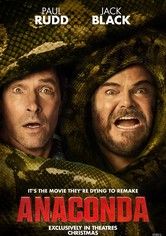
Review
I went into Anaconda expecting a conventional revival of the 1997 creature feature: a larger snake, more elaborate visual effects, and...
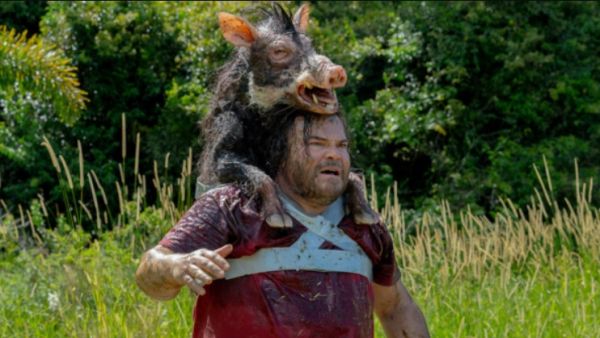

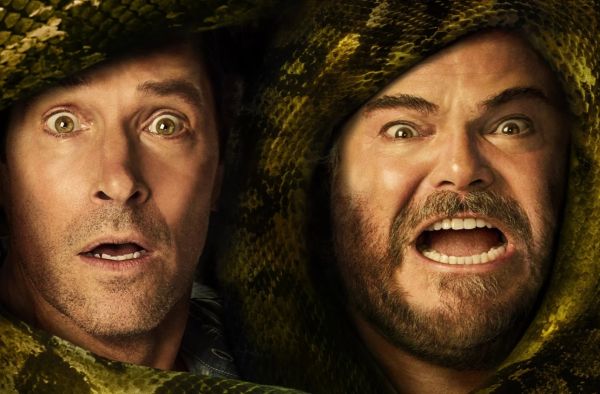
Anaconda: A Thrilling Journey Through Nature and Human Drama
I went into Anaconda expecting a conventional revival of the 1997 creature feature: a larger snake, more elaborate visual effects, and a group of recognizable actors running through the jungle while making increasingly poor survival decisions. Tom Gormican’s film has little interest in delivering that straightforward experience. Instead, it turns the existence of another Anaconda movie into the subject of the movie itself.
The central characters are not scientists, professional explorers, or documentary filmmakers. They are middle-aged friends dissatisfied with the direction of their lives. Their decision to travel to the Amazon and produce an unauthorized-looking remake of a film they loved in childhood is both ridiculous and emotionally understandable. They are not simply chasing a giant snake. They are chasing an earlier version of themselves, one that still believed creativity could lead somewhere exciting.
That idea gives Anaconda more personality than a standard studio reboot. It also creates the film’s main weakness. Gormican and co-writer Kevin Etten spend so much time commenting on sequels, intellectual property, nostalgic filmmaking, and cinematic disappointment that the actual creature feature occasionally feels secondary. The result is amusing, energetic, and surprisingly affectionate, but not always as sharp or frightening as its premise could have allowed.
The Remake Is the Joke Before the Snake Arrives
Doug McCallister and Griff Griffin have spent years talking about making movies without ever becoming the filmmakers they imagined they would be. Doug records weddings, while Griff survives on minor acting work and fading professional hope. When an opportunity appears to create their own version of Anaconda, they treat it less like a sensible production decision and more like a final chance to prove that their youthful ambition was not entirely misplaced.
I found the early material more effective than I expected. The screenplay understands the mixture of confidence and embarrassment that accompanies a late attempt to revive an abandoned dream. Doug and Griff know enough about filmmaking to recognize the scale of what they are proposing, but not enough to stop themselves.
Their preparation has the cheerful instability of a project built on enthusiasm rather than resources. Equipment is limited, the budget is fragile, responsibilities are poorly defined, and personal friendships are expected to compensate for the absence of professional infrastructure. The group heads toward the jungle with the belief that sincerity and persistence will somehow solve every practical problem.
Much of the comedy comes from the gap between the movie they imagine and the production they are actually capable of mounting. Gormican treats their amateurism with affection. The characters are foolish, but their desire to make something is never presented as completely worthless.
Jack Black Plays Enthusiasm as a Form of Denial
Jack Black’s Doug is the emotional center of the film, even when the performance threatens to overwhelm the surrounding material. Doug approaches the remake with enormous conviction because acknowledging its weaknesses would also mean acknowledging his own disappointment.
Black is naturally suited to a character who converts anxiety into volume. Doug talks faster when his plan begins collapsing, becomes more inspirational when the group grows less convinced, and treats every setback as evidence that a greater triumph must be approaching. His optimism is funny because it is visibly defensive.
I was most interested in the moments when that energy briefly disappears. Beneath Doug’s excitement is a man who fears that his creative life may already have ended without properly beginning. The film occasionally allows Black to lower his voice and let the character’s insecurity enter the frame. Those scenes give the louder comedy a necessary foundation.
At times, however, the performance is permitted to occupy too much space. Doug’s reactions can become repetitive, particularly when the screenplay relies on another extended outburst instead of developing the scene through conflict between the ensemble. Black remains charismatic, but the film is stronger when it resists treating charisma as a complete substitute for structure.
Paul Rudd Gives the Film Its Best Comic Counterweight
Paul Rudd plays Griff with the relaxed charm of someone who has spent years pretending professional disappointment does not bother him. He is more comfortable with irony than Doug and more willing to recognize when the production has entered absurd territory.
Rudd’s understated delivery provides an effective counterweight to Black’s intensity. He can make a simple pause feel like a complete assessment of Doug’s latest idea. His performance suggests affection, skepticism, competitiveness, and resentment without requiring the character to explain each emotion.
The friendship between Doug and Griff gives Anaconda its most consistent source of humanity. These men have known each other long enough to understand exactly how to offer encouragement and exactly where to apply pressure. Their collaboration is built on shared history, but so are their disagreements.
Griff’s acting ambitions complicate the production because he wants the remake to become more than a private adventure. Doug sees the project as personal redemption, while Griff still imagines it might lead to professional recognition. Their goals overlap until decisions about authorship, performance, and attention expose the differences between them.
Rudd is particularly good at showing how quickly casual charm can become wounded pride. Griff rarely announces that he feels overlooked. His posture changes, his jokes become sharper, and his apparent indifference begins requiring visible effort.
A Midlife Crisis Disguised as a Jungle Production
The film’s most interesting decision is to treat the remake as an emotional response to middle age. Doug, Griff, Kenny, and Claire are not simply nostalgic for a particular movie. They are nostalgic for the period when their futures appeared open.
Recreating Anaconda becomes a way of returning to the friendships and ambitions that existed before careers, relationships, disappointments, and routine narrowed their choices. The jungle offers distance from the lives they have accepted, but it cannot remove the tensions that developed inside those lives.
I appreciated that the screenplay does not portray nostalgia as entirely healthy or entirely foolish. Their shared love of the original film gives them a reason to reconnect and create something together. At the same time, nostalgia encourages them to confuse emotional importance with artistic necessity.
Their remake matters enormously to them, but that does not mean anyone else needs it. This tension allows Anaconda to comment on Hollywood’s dependence on recognizable properties while acknowledging the genuine affection audiences and filmmakers may feel toward imperfect older movies.
The film is at its sharpest when it recognizes that cynical commercial recycling and sincere personal nostalgia can exist inside the same project.
The Supporting Ensemble Deserves More Room
Steve Zahn and Thandiwe Newton bring useful texture to the group of longtime friends. Their characters have their own frustrations and histories, but the screenplay often positions them as witnesses to the conflict between Doug and Griff.
Zahn has an exceptional ability to make confusion look emotionally specific. A smaller reaction from him can be funnier than a heavily constructed line. He understands the unstable tone of the film and never appears to be forcing the absurdity.
Newton brings greater authority to the ensemble. Her presence suggests a character who has tolerated the men’s creative fantasies before and understands the personal weaknesses beneath them. I wanted the film to give her more decisive control over the story rather than repeatedly returning the central conflict to Black and Rudd.
Daniela Melchior enters with a different energy. Her character appears more connected to the immediate realities of the jungle, creating friction with a group whose understanding of the environment comes largely from movies. She also introduces uncertainty about motives and information, which helps the plot move beyond the friends’ internal disagreements.
Selton Mello delivers some of the film’s most distinctive comic material. His performance feels slightly out of step with the others in a productive way, as though his character has arrived from a stranger and less predictable movie. That tonal difference gives several scenes an energy the central buddy comedy cannot generate alone.
The ensemble contains enough talent to support a richer group dynamic. I occasionally felt the film had assembled several strong comic actors but remained too committed to its two stars to use everyone fully.
The Jungle Is Both a Location and a Film Set
Visually, Anaconda often presents the jungle through two competing perspectives. For Doug and Griff, it is initially a collection of cinematic possibilities. Rivers become tracking shots, trees become production design, and danger becomes material that might improve their movie.
The environment gradually rejects that interpretation. Heat, water, unstable terrain, limited visibility, and animal life refuse to cooperate with their production schedule. The jungle is not impressed by their nostalgia or artistic intention.
Nigel Bluck’s cinematography keeps the setting attractive without making it completely romantic. Wide images establish the group’s physical insignificance, while tighter compositions create uncertainty about what may exist beyond the visible frame. The camera occasionally adopts the language of a more traditional creature feature, allowing the film to move temporarily away from verbal comedy and into environmental suspense.
I wished the production had leaned further into tactile discomfort. The characters often look appropriately exhausted, but the jungle sometimes feels more like an adventurous studio environment than an overwhelming ecosystem. Greater visual density and physical menace could have made the comedy feel more desperate.
The self-aware premise also complicates immersion. Because the characters are constantly discussing filmmaking, I remained conscious that I was watching constructed scenes. This is intentional, but it weakens moments that require uncomplicated fear.
The Anaconda Has to Compete With the Screenplay
A creature feature ultimately depends on the presence of its creature. The new Anaconda understands that the snake must be both threatening and slightly absurd, but it takes considerable time before the animal becomes the dominant force in the story.
Once the real anaconda appears, the film begins shifting between two comic levels. The characters are trying to make a cheap fictional movie about a giant snake while surviving an actual giant snake that exceeds anything their production could create. Their amateur effects and staged reactions become embarrassing beside the genuine danger.
This contrast produces several entertaining sequences. A prop, performance choice, or production plan may suddenly acquire an unintended practical use. The line between their remake and their survival becomes increasingly unstable.
The snake itself is most effective when the direction emphasizes scale and movement rather than presenting it too clearly. A section of its body passing through vegetation or water can create more tension than a complete digital reveal. The audience needs enough information to understand the threat but not so much that the creature becomes visually ordinary.
Some effects are convincing enough to maintain the action, while others carry the artificial smoothness common to contemporary digital animals. This would be less noticeable in a pure comedy, but Anaconda still wants portions of the audience to feel genuine suspense.
I rarely found the creature frightening. It functions more successfully as an agent of chaos than as a source of sustained horror.
The Horror and Comedy Do Not Always Share the Same Rhythm
Combining comedy with horror requires careful control of timing. A joke can release tension, but too many jokes prevent tension from forming. Anaconda repeatedly approaches suspense and then interrupts it with dialogue or self-aware commentary.
I enjoyed several of these interruptions individually. Rudd’s dry reactions and Black’s escalating panic are reliable. The problem appears across the complete film, where the pattern becomes predictable. A threatening sound enters the scene, the characters prepare for danger, and someone undermines the mood before it can deepen.
The original 1997 film was hardly restrained realism, but it allowed its pulp seriousness to create a particular atmosphere. The new version treats seriousness itself with suspicion. Almost every convention must be acknowledged, questioned, or converted into a joke.
This protects the film from appearing foolish, but creature features often become entertaining precisely because they risk foolishness. A giant-snake movie does not always benefit from proving that it knows a giant-snake movie is ridiculous.
I wanted Gormican to let several scenes remain frightening without immediately apologizing for them. The comedy would have gained force after a genuine period of anxiety, and the creature would have felt more consequential.
The Meta-Humor Is Clever Until It Becomes Defensive
Anaconda contains jokes about remake rights, intellectual property, production budgets, casting, studio behavior, visual effects, and the questionable cultural need for another version of an old film. Some of this material is perceptive and genuinely funny.
The characters know they are participating in a project that may be dismissed as unnecessary. By acknowledging that criticism inside the story, the film attempts to turn skepticism into part of the entertainment.
This strategy works when the jokes reveal character. Doug’s insistence that the remake matters tells me something about his fear of failure. Griff’s concern about his role reflects professional insecurity. Arguments over creative choices expose old imbalances within the friendship.
The meta-humor becomes less effective when it seems designed to pre-empt every possible complaint. A film cannot completely protect itself from criticism by making the criticism first. Recognizing that a reboot is unnecessary does not automatically make the reboot necessary.
I occasionally felt Anaconda was watching the audience too closely, waiting to demonstrate that it understood the joke before anyone else could make it. Greater confidence in the characters and creature-feature mechanics would have reduced this defensive quality.
Gormican Directs Personalities More Confidently Than Terror
Tom Gormican previously demonstrated an interest in films where performers, public identities, and cinematic mythology overlap. Anaconda continues that fascination. The characters are attempting to create screen versions of themselves while the film’s actual stars play with the established expectations surrounding their personas.
Gormican handles the comic interaction between Black and Rudd with confidence. He knows when to allow a conversation to wander, when a reaction deserves emphasis, and how to extract humor from differing levels of enthusiasm.
His direction is less distinctive during the conventional action passages. The chases and creature attacks are clear, but they sometimes resemble functional connective material between comic scenes rather than the film’s principal attraction.
This imbalance may be deliberate. Anaconda is fundamentally a buddy comedy wearing the skin of a monster movie. Still, the title and legacy create expectations that the creature should eventually take command.
The film feels most coherent when the filmmaking project and survival story become inseparable. It feels more fragmented when it alternates between jokes about the remake and generic jungle danger.
The Editing Keeps the Film Moving but Limits Its Suspense
At approximately feature-comedy length, Anaconda rarely remains in one situation long enough to become tedious. Craig Alpert and Gregory Plotkin maintain a brisk rhythm, moving quickly through production complications, interpersonal arguments, animal encounters, and action.
This pace suits the banter. Black and Rudd work well when scenes maintain momentum, and the supporting performers are skilled at delivering reactions without slowing the exchange.
The same speed works against the horror. Suspense often requires delay, spatial understanding, and the possibility that nothing may happen immediately. Anaconda tends to move toward the next comic or narrative beat before uncertainty has fully developed.
The editing also manages a large ensemble and multiple tonal shifts without making the plot difficult to follow. I always understood where the group was, what they were attempting, and how the latest mistake had changed the situation.
Clarity is valuable, but the film could occasionally have benefited from confusion. The jungle should feel capable of separating people, distorting their sense of direction, and hiding the scale of the threat. The clean narrative progression prevents the environment from becoming truly disorienting.
The Score Knows It Is Accompanying an Adventure
David Fleming’s music supports the film’s mixture of broad comedy, friendship, and jungle action. The score often treats the characters’ filmmaking ambitions with greater grandeur than their resources justify, creating a useful contrast between aspiration and reality.
During creature sequences, the music adopts more conventional suspense patterns. Low tones, rhythmic pressure, and sudden accents announce the movement from comic conversation into danger.
I found the score effective but rarely surprising. It helps unify scenes whose tones might otherwise feel disconnected, yet it does not give the anaconda a particularly memorable musical identity.
A stronger recurring theme for the creature might have increased anticipation before its appearances. The original Jaws demonstrated the value of allowing music to make an unseen animal psychologically present. Anaconda generally relies more on immediate visual and sound effects.
The Film Is More Affectionate Than Cynical
Despite the constant references to remakes and Hollywood recycling, Anaconda does not hate the movie culture it satirizes. Doug and Griff’s project may be ill-advised, but their love for filmmaking is presented sincerely.
The film understands the pleasure of gathering friends, building something with limited resources, and trying to reproduce the feeling an older movie once created. Their remake may never achieve professional importance, yet the act of making it reconnects people who had allowed disappointment to separate them.
This affection prevents the meta-comedy from becoming empty industry commentary. The screenplay knows that audiences can mock an old creature feature while still loving it. Imperfection may be part of the attachment.
The new Anaconda therefore occupies an unusual position. It satirizes unnecessary nostalgia while depending on nostalgia for its existence. Rather than resolving that contradiction, the film treats it as part of the joke.
I found that honesty appealing. The production does not pretend to be an urgent reinterpretation of serious cultural material. It is a studio comedy built around performers, a familiar title, and the idea that making a bad movie with friends may still be a meaningful experience.
Doug and Griff Provide the Ending With Its Meaning
The final act inevitably places the characters inside the kind of spectacle they hoped to reproduce. Their fictional production becomes irrelevant as the actual danger exceeds the screenplay they brought into the jungle.
What matters is not whether they successfully create a superior version of Anaconda. The more important question is whether the experience repairs or destroys their friendship.
Doug and Griff have used the project to avoid speaking honestly about envy, disappointment, and the different paths their lives have taken. The crisis removes the protection of comic ambition. They can no longer treat every disagreement as a production problem.
Black and Rudd make the emotional reconciliation work through familiarity rather than grand revelation. Their characters do not need to discover that they care about one another. They need to admit that affection has coexisted with resentment for years.
This gives the conclusion more warmth than the creature plot alone could provide. The snake may generate the physical climax, but the friendship supplies the emotional resolution.
A Reboot That Works Best When It Stops Defending Its Existence
Anaconda is not a frightening revival of the creature feature, nor is it a ruthless satire of Hollywood nostalgia. It is a friendly, self-aware comedy about people using a foolish production to confront the lives they did not expect to have.
Jack Black and Paul Rudd carry the film with contrasting comic rhythms. Black turns suppressed anxiety into exuberance, while Rudd lets disappointment hide beneath charm. Their chemistry is persuasive enough to support both the improvised filmmaking and the later survival material.
The supporting cast adds variety, though several performers deserve more substantial development. The jungle provides scale and movement, while the central anaconda delivers energetic action without becoming a truly frightening screen presence.
I enjoyed the film most when it trusted its characters. Conversations about abandoned ambitions, old friendships, and the humiliations of amateur production contain more life than repeated jokes about the absurdity of remakes. The movie’s awareness is initially refreshing but eventually becomes a barrier between the audience and the adventure.
A stronger version might have allowed the horror to become genuinely tense, given the ensemble more balanced material, and reduced the number of moments in which the film comments on its own construction. The best parodies still need the underlying genre to work.
Even with those limitations, Anaconda possesses an easygoing charm that many modern reboots lack. It does not attempt to erase the eccentric reputation of the 1997 film or replace it with solemn mythology. It treats that reputation as a shared memory and asks what might happen if the people who loved a strange movie were foolish enough to enter it.
I left entertained more by the friendship than by the snake. For a film called Anaconda, that may sound like an imbalance. For this particular version, it is also the reason the experiment survives.
Pros:
- Strong ensemble cast with memorable performances
- Detailed sound design that heightens the tense atmosphere
- Thought-provoking themes of man versus nature
- Accessible on multiple modern streaming and download platforms
- Engaging narrative that combines suspense with introspection
- Impressive cinematography that vividly captures the jungle environment
Cons:
- Outdated technical elements compared to contemporary thrillers
- Occasional campy storytelling that may detract from the overall experience
- Some predictable plot twists that reduce suspense






Movie Reviews

Minecraft

Grand Theft Auto V

Toca Boca World

Roblox

Leave a comment
Your comment is awaiting moderation. We save your draft here
0 Comments