Review
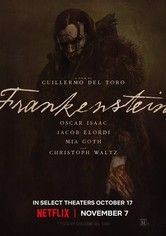
Frankenstein felt less like a conventional horror film and more like a tragic story campaign in which I already knew the final mission...

Frankenstein Reconstructed: A Cinematic Fusion of Gothic Tradition and Modern Ambition
Frankenstein felt less like a conventional horror film and more like a tragic story campaign in which I already knew the final mission would end badly. The tension did not come from wondering whether Victor’s experiment would succeed. It came from watching an intelligent man ignore every warning, reach the impossible goal he had built his life around, and then recoil from the living result.
Guillermo del Toro’s version immediately appealed to the part of me that enjoys games built around ruined castles, forbidden laboratories, damaged families, and characters whose greatest enemies are their own decisions. Every room looks as though it contains a piece of history. Every machine appears powerful enough to change the world and unstable enough to destroy whoever activates it.
Yet the film’s strongest element was not the machinery, the violence, or the physical design of the Creature. It was the emotional imbalance between creator and creation. Victor wants the achievement of producing life without accepting the responsibility of caring for it. The Creature enters the world with enormous physical strength but almost no understanding of language, affection, cruelty, or death. Their relationship begins at the exact moment Victor decides he does not want one.
The Film Opened Near the End of the Quest
I liked that the story begins with consequences already in motion. Victor is not introduced as a confident young scientist standing before an untouched future. He is exhausted, injured, and moving through an environment that seems determined to erase him.
The frozen landscape creates immediate isolation. There are few places to hide, almost no warmth, and no easy route back to civilization. It feels like the final region of a survival game where the player has arrived with depleted resources and one unresolved objective.
Beginning here changed the way I watched everything that followed. Even during Victor’s moments of ambition, I remembered the man he would eventually become. His confidence never looked like simple optimism. It looked like the first stage of a collapse.
The structure also made his narration feel less like an explanation and more like a confession. Victor is not proudly presenting his discovery to the world. He is reconstructing the choices that led him into the ice.
Victor Treated Death Like a Technical Problem
Oscar Isaac’s Victor fascinated me because he approaches human mortality with the confidence of someone convinced that every limit exists only because nobody intelligent enough has challenged it properly.
His desire to create life is connected to grief, resentment, ego, and an obsession with overcoming the powerlessness he experienced earlier in life. He does not enter science as a neutral researcher. He enters it carrying emotional injuries that he has never examined honestly.
This made his laboratory work feel dangerous before the Creature opened his eyes. Victor believes that knowledge can free him from fear, but his fear is influencing every experiment. He is not calmly asking whether life can be created. He is trying to defeat the idea that anything can be taken from him permanently.
As a gamer, I recognized the mentality of a player who becomes so focused on unlocking a forbidden ability that every other part of the build is neglected. Victor invests everything in reaching one spectacular achievement. He does not develop the patience, empathy, or emotional stability required to manage what happens after the ability is unlocked.
He prepares for creation as though success will be the end of the project. In reality, success is only the beginning of his responsibility.
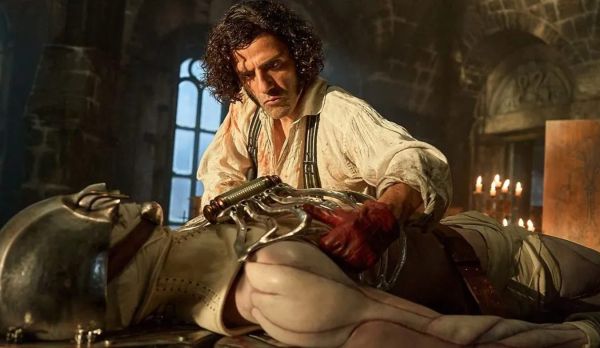
The Laboratory Looked Like a Cathedral Built for Science
The laboratory was one of the places where the film completely captured my attention. It does not resemble a clean modern research facility. It feels ceremonial, industrial, and almost religious.
Metal structures, medical instruments, cables, glass, stone, and enormous mechanical systems surround Victor as he works. The space reflects both precision and obsession. Everything has been assembled toward one purpose, yet the scale suggests that Victor is trying to perform more than an experiment. He is attempting to stage his own act of creation.
I appreciated how the technology remained physical. Machines have weight. Materials look cold, sharp, and difficult to control. Victor’s work does not happen through a few elegant switches. It requires preparation, bodies, tools, energy, and a willingness to transform the laboratory into something between a workshop and a tomb.
The environment also reveals how Victor sees himself. He is not satisfied with quietly discovering a new medical technique. He wants a moment large enough to redefine humanity’s relationship with life and death.
When the experiment finally works, the laboratory stops feeling like a monument to progress. It becomes the first room in the Creature’s prison.
The Creature’s First Moments Were the Real Birth Scene
Jacob Elordi’s Creature did not immediately feel like a polished supernatural figure. His first movements carried confusion, discomfort, and the instability of someone experiencing a body for the first time.
This changed the emotional meaning of his size. He is physically imposing, but his mind initially responds with the uncertainty of a child. He does not understand why he exists, why he feels pain, or why the person in front of him reacts with disgust.
I found these early scenes more unsettling than a direct attack. The Creature watches Victor for guidance because Victor is the only relationship available to him. Victor responds as though the experiment has produced an object that failed to match the image in his imagination.
The rejection happens before the Creature has done anything to deserve fear. He is punished for his appearance, his unfamiliarity, and the emotional panic of the person who assembled him.
That made Victor’s behavior difficult to forgive. He has spent years demanding the right to create life, but he cannot tolerate the reality that life arrives with needs of its own.
Victor Wanted a Miracle, Not a Son
The relationship between Victor and the Creature became the central conflict for me. Victor wants recognition for the act of creation, but he does not want the continuing role of creator.
He does not teach patiently. He does not create a safe environment in which the Creature can understand the world. He expects immediate evidence that the experiment is valuable and controllable.
When the Creature fails to satisfy those expectations, Victor responds through confinement, anger, and distance. He treats emotional development as another stage of the experiment rather than as a relationship between two conscious beings.
The Creature repeatedly looks toward Victor with the basic expectation that the person responsible for his existence should explain what that existence means. Victor cannot provide an answer because he never planned beyond defeating death.
I saw the tragedy as a failed escort mission in which the supposedly experienced character refuses to guide the newly introduced companion. The Creature has extraordinary durability but no map, no social knowledge, and no understanding of the enemies around him. Victor abandons him before he has learned the controls.
Language Became the Creature’s Most Important Upgrade
The Creature’s development becomes more compelling when he begins learning language. Words give him more than a way to communicate. They provide categories through which he can understand kindness, rejection, family, memory, and loss.
Before language, he experiences the world mainly through physical sensation and emotional reactions. After language, he can interpret what has happened to him and recognize the scale of Victor’s failure.
This transformation made the Creature more dangerous, but it also made him more sympathetic. Increased intelligence does not automatically make him cruel. It gives him the ability to understand that he has been treated cruelly.
I enjoyed watching his speech develop because it felt like genuine progression rather than a sudden narrative shortcut. His posture, attention, and relationship with other people change as he begins connecting words to experience.
There is a painful irony in the fact that the more human he becomes intellectually, the more clearly he understands that many humans will refuse to recognize him as one of them.
The Blind Man Offered the First Safe Area
The Creature’s time with the blind man gave the film a completely different emotional rhythm. For once, he enters a relationship in which his appearance is not the first and most important fact about him.
Their scenes felt like reaching a temporary sanctuary after surviving several hostile levels. The setting is quieter, the conversations have room to breathe, and the Creature is allowed to learn without being observed as a scientific specimen.
The blind man responds to his voice, behavior, and capacity for companionship. That acceptance allows the Creature to discover that human connection is possible.
This is important because it prevents the film from arguing that rejection is inevitable. The Creature is not naturally incompatible with humanity. He can form a caring relationship when someone meets him without immediate prejudice or a desire for control.
The experience also raises the emotional stakes. Once the Creature learns what kindness feels like, Victor’s rejection becomes even more painful. He now understands what his creator could have offered and deliberately withheld.
Elizabeth Saw the Person Victor Refused to See
Elizabeth brought warmth into a story dominated by control and inherited pain. She is curious about the Creature without reducing him to a scientific achievement.
Her approach contrasts strongly with Victor’s. Victor constantly evaluates whether the Creature validates his genius. Elizabeth is more interested in what the Creature perceives and feels.
I appreciated that her empathy did not make her naïve. Recognizing the Creature’s humanity does not mean ignoring the danger surrounding him. It means understanding that danger has causes beyond his physical existence.
Her presence also exposes Victor’s emotional limitations. He can analyze anatomy, energy, decay, and regeneration, but he struggles to interpret the needs of the people closest to him.
Victor often behaves as though emotional understanding is less important than intellectual achievement. Elizabeth demonstrates that his greatest failure is not a lack of knowledge. It is his refusal to apply attention and imagination to another person’s inner life.
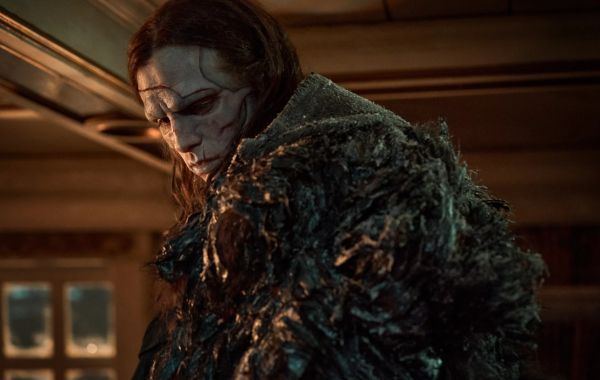
The Creature Design Never Felt Like a Simple Monster Costume
The Creature’s body communicates several ideas simultaneously. It is beautiful in its construction, disturbing in its unnatural unity, and visibly marked by the fact that it was assembled rather than born.
I could see Victor’s technical brilliance in the body, but I could also see his arrogance. The Creature carries physical evidence of being designed according to another person’s ambition.
The pale skin, scars, proportions, and controlled movement separate him from the people around him without making him visually empty. His face remains expressive enough for fear, curiosity, anger, and sorrow to register clearly.
This was essential because the Creature could not function only as an impressive visual effect. The entire story depends on my ability to see thought and emotion behind the body that other characters reject.
His appearance also changes according to the environment. In Victor’s laboratory, he looks like the result of an experiment. In nature, he appears almost mythic. Near ordinary people, his size and stillness create tension before he says anything.
Victor Inherited More Violence Than He Admitted
The film’s attention to Victor’s family helped me understand that his cruelty did not appear from nowhere. His childhood teaches him to associate authority with domination and affection with conditions.
He grows up resisting the power of his father while gradually reproducing similar behavior in his own relationship with the Creature.
This repetition is one of the most tragic parts of his story. Victor believes that scientific independence has allowed him to escape the emotional structure of his childhood. Instead, he carries that structure into the laboratory.
He controls access to knowledge, punishes disobedience, withholds approval, and expects the being beneath his authority to remain dependent.
Understanding this history did not excuse Victor for me. It made his choices more coherent. He has the intelligence to recognize patterns in nature but not the self-awareness to recognize a pattern in his own behavior.
Immortality Did Not Look Like a Reward
The ability to survive wounds and resist ordinary death initially appears to be proof that Victor has succeeded beyond imagination. The Creature possesses the durability that Victor wanted to extract from nature.
Yet the film gradually presents this durability as isolation rather than freedom.
Living indefinitely has little value when every meaningful relationship can disappear. The Creature may survive physical harm, but survival does not protect him from grief, memory, or abandonment.
From a gameplay perspective, he has been given an enormous health pool without a world in which that statistic produces happiness. Damage is not his most serious problem. Loneliness is.
This made Victor’s achievement feel increasingly hollow. He has solved one biological limitation while ignoring every philosophical and emotional consequence of the solution.
The Creature does not simply ask why he was made capable of living. He asks what he is expected to live for.
The Action Was Strongest When It Revealed Character
The film contains physical confrontations, chases, destruction, and moments when the Creature’s strength becomes impossible to ignore. I enjoyed these sequences most when they emerged from emotional conflict rather than functioning as isolated spectacle.
The Creature’s violence rarely feels like the movement of an empty predator. It is connected to fear, rage, betrayal, or a desperate attempt to reach someone who refuses to listen.
Victor’s actions are equally revealing. He frequently responds to a crisis by trying to regain control instead of asking what created the crisis.
The physical difference between them becomes almost ironic. The Creature appears monstrous but often seeks understanding. Victor appears human but repeatedly chooses behavior that strips others of dignity.
The film does not pretend that the Creature remains innocent forever. His suffering leads to choices with serious consequences. What matters is that the story allows me to trace the emotional path toward those choices.
The Production Design Made Wealth Look Cold
The grand interiors are visually impressive, but few of them feel comfortable. Large rooms, elaborate furniture, formal clothing, and carefully arranged spaces often create distance between characters rather than warmth.
This suited a story about people who possess resources without knowing how to build healthy relationships. Victor can obtain equipment, funding, bodies, and architectural space for his work. None of that gives him the emotional capacity to care for what he creates.
The environments frequently dwarf the characters. Corridors stretch behind them, ceilings rise above them, and rooms seem designed for status rather than intimacy.
I often felt that the Creature was not the only person living inside a structure built by someone else’s expectations. Victor, Elizabeth, William, and other characters are also moving through inherited systems of family, class, duty, and ambition.
The difference is that the Creature has no socially acceptable role available to him. He exists outside every structure except the one Victor tries to impose.
The Pacing Demanded Patience
Frankenstein is not a short or constantly accelerating experience. It takes time to establish Victor’s history, his work, the Creature’s development, and the shifting perspective between them.
I appreciated the scale because the story needed room for the Creature to become more than the result of one laboratory sequence. His emotional transformation would have felt shallow if the film had rushed directly from creation to revenge.
At the same time, some sections linger longer than necessary. The visual design is so rich that the movie occasionally appears reluctant to leave a location or emotional beat.
I did not mind the slower rhythm when it revealed character. I became less engaged when a scene repeated an idea that had already been communicated clearly through performance and imagery.
The film worked best for me when it trusted silence, faces, and physical space. Its world is detailed enough that not every theme needs to be explained through extended dialogue.
Victor and the Creature Became Reflections, Not Opposites
Early in the story, Victor appears to represent knowledge and civilization, while the Creature represents the unknown result of forbidden experimentation.
That distinction gradually collapses.
Both characters are intelligent, isolated, emotionally wounded, and capable of destructive obsession. Both want recognition from someone who refuses to provide it in the required form.
Victor wants the world to recognize his achievement. The Creature wants Victor to recognize his personhood. Each becomes increasingly consumed by the refusal of the other.
The difference lies in responsibility. Victor begins with education, social power, family connections, and the freedom to choose his project. The Creature begins with none of these advantages.
That imbalance prevented me from viewing their conflict as a simple cycle in which both sides were equally responsible from the beginning. Victor creates the conditions, abandons the result, and then treats the consequences as proof that his rejection was justified.
The Arctic Pursuit Felt Like a Final Mission With No Winner
When the story returns to the frozen landscape, the pursuit no longer feels like a heroic attempt to defeat a monster. It feels like the last stage of a relationship that has consumed both participants.
Victor and the Creature have reduced their lives to one another. Every other possible future has been damaged or abandoned.
The environment reflects that exhaustion. Ice, wind, darkness, and distance remove the social world that once surrounded Victor’s ambition. He wanted his achievement to change humanity, yet the final result is two isolated figures moving through a place almost empty of human life.
I found this conclusion more powerful than a conventional battle. Neither character can receive the victory they once imagined. Victor cannot undo creation, and the Creature cannot force Victor to become the loving creator he needed.
The pursuit continues because neither knows how to build an identity beyond the injury connecting them.
Forgiveness Was More Difficult Than Revenge
The film’s later emotional power comes from the possibility that understanding may arrive after it can no longer repair the damage.
Victor is forced to confront the Creature not as a failed object but as a conscious being shaped partly by his decisions. The Creature must decide what remains after the person he has pursued can no longer provide a satisfying answer.
Revenge offers a clear objective. Forgiveness does not.
In game terms, revenge has a target, a route, and a visible completion condition. Forgiveness requires a character to stop organizing every future action around the previous injury.
The film does not present forgiveness as pretending that the harm was unimportant. It presents it as the possibility of refusing to continue the same destructive relationship forever.
What Stayed With Me After the Credits
I expected Frankenstein to leave me thinking about the ethics of creating life. It did, but the more persistent question concerned responsibility after creation.
Victor’s greatest mistake is not simply entering a forbidden area of science. It is believing that intellectual achievement places him above ordinary obligations of care.
He wants the title of creator without accepting the role. He wants the moment of success without the years that must follow it. He wants life to validate him rather than exist independently of him.
The Creature becomes frightening not because he begins without humanity, but because he begins with the capacity for humanity and repeatedly encounters people who deny it.
From my perspective as a gamer, Frankenstein resembles a story in which the supposed protagonist unlocks the most advanced creation system in the world and then abandons the character generated by it. That character is left to explore without instructions, allies, or a defined place in society. Every later confrontation grows from that original act of neglect.
The film’s horror is therefore not limited to bodies, scars, laboratories, or death. It comes from the possibility that a person can possess extraordinary intelligence while remaining emotionally incapable of recognizing another life as valuable.
I finished the movie feeling more sorrow for the Creature than fear of him. His body may be assembled from the dead, but his need for recognition is painfully alive. Victor gives him physical existence and then spends the rest of the story refusing to understand what that gift demands.
That contradiction made Frankenstein memorable for me. The experiment succeeds. The creator fails.
Pros:
- Impressive performances from both the scientist and the creature that add nuance and emotional depth.
- A thoughtful directorial vision that respects the original material while innovatively reinterpreting it for today's audience.
- Intricate production design that authentically blends Victorian aesthetics with contemporary relevance.
- Culturally resonant themes that encourage viewers to reflect on the implications of technology and human ambition.
- Stunning cinematography and visual storytelling that marries classic horror elements with modern digital effects.
- A deep narrative that explores ethical dilemmas and the responsibilities of scientific progress.
Cons:
- The balance between historical homage and modern commentary occasionally feels uneven, potentially confusing some viewers.
- The film's deliberate pacing may feel slow for viewers accustomed to fast-paced action.
- The complex layers of philosophical and ethical questions might not appeal to audiences seeking straightforward horror.









Movie Reviews

Minecraft

Grand Theft Auto V

Toca Boca World

Roblox

Leave a comment
Your comment is awaiting moderation. We save your draft here
0 Comments