
Review
One Battle After Another introduced Leonardo DiCaprio’s Bob as someone who once believed history could be forced in a better direction...
Epic Odyssey: A Journey Through Conflict and Reflection
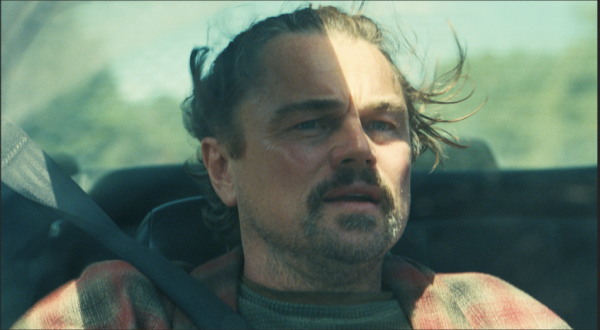
One Battle After Another introduced Leonardo DiCaprio’s Bob as someone who once believed history could be forced in a better direction and now struggles to organize an ordinary day. He lives off-grid, remains suspicious of nearly everything around him, and attempts to protect his daughter Willa while carrying the habits of a life built around secrecy, resistance, and constant threat.
I found Bob funny before I found him heroic. His paranoia has practical foundations, but years of isolation have transformed caution into confusion. He remembers fragments of old procedures, misplaces vital information, and reacts to new danger with the uncomfortable realization that the person he used to be may no longer be available when needed.
That contradiction gives the movie its strongest pulse. Bob has genuine experience, political convictions, and reasons to fear the people pursuing him. He is also exhausted, disorganized, and often several steps behind the younger, faster characters around him.
Paul Thomas Anderson could have treated the aging revolutionary as a figure of romantic resistance. Instead, he makes Bob’s decline visible. The man may still remember the language of rebellion, but slogans cannot automatically repair a relationship with his daughter or make his body respond as quickly as his memory expects.
My experience with the film was tense, strange, funny, and frequently uncomfortable. It behaves like an action thriller, political satire, family drama, and paranoid comedy without settling comfortably into any one of them. That instability can be exciting. It can also make the long running time feel deliberately exhausting.
The Revolution Is Already Over When the Story Begins
The movie’s political world is shaped by consequences rather than idealized beginnings. Bob and his former associates are not standing at the hopeful start of a movement. They are living years later, after relationships have fractured, enemies have gained institutional power, and revolutionary identities have become difficult to separate from personal damage.
I appreciated this perspective because the film does not treat political commitment as a temporary youthful costume. The decisions made by Bob’s generation continue affecting where people live, how they raise children, which names they use, and who remains afraid of being recognized.
At the same time, the movie remains suspicious of self-mythology. Former radicals can remember themselves as brave while ignoring the people who absorbed the consequences of their choices. Institutions can describe repression as public safety. Everyone has a story that makes their own behavior appear necessary.
The title captures the emotional exhaustion perfectly. There is always another conflict. One victory reveals a larger structure. One escape creates a new form of vulnerability. The characters rarely receive enough distance to decide whether they are still fighting for a future or merely reacting to the past.
Willa Is Not Interested in Becoming Her Father’s Symbol
Chase Infiniti gives Willa the most grounded presence in the movie. She has grown up inside Bob’s fear without sharing all of his memories, which means his rules can feel less like survival and more like suffocating parental control.
Willa is self-reliant because she has needed to be. She understands that Bob loves her, but she also recognizes how unreliable he can become when his past begins controlling the present.
I liked that she is not written simply as the younger character who discovers her parent was right about everything. Bob’s enemies are real, yet that does not make every choice he made as a father wise or fair.
Willa wants explanations, autonomy, and the ability to define herself outside the political story that produced her family. Other characters repeatedly view her as a connection to Bob, to Perfidia, or to an unresolved history. She resists becoming evidence in someone else’s argument.
Her competence does not feel artificially perfect. She becomes frightened, makes emotional decisions, and occasionally misunderstands the scale of the forces around her. The difference is that fear rarely prevents her from observing what adults are trying to hide.
Several of the film’s best scenes allow Willa to watch before she speaks. Her expression often reveals that she has understood the emotional structure of a situation long before Bob manages to explain it.
DiCaprio Turns Panic Into Physical Comedy
Leonardo DiCaprio plays Bob with a body that always seems slightly behind the emergency. He runs, searches, shouts, attempts to remember coded information, and tries to recover an old sense of command while the situation keeps exposing how unprepared he has become.
The performance is broad without becoming empty. Bob’s physical confusion is funny because the danger is real. He knows enough to understand what could happen, but knowledge does not automatically produce graceful action.
I especially enjoyed the moments where Bob tries to sound authoritative around people who can clearly see that he is improvising. His voice rises, his explanations become less convincing, and the confidence of the former revolutionary collapses into parental desperation.
DiCaprio also prevents the comedy from erasing Bob’s guilt. The character understands that his choices helped create the danger surrounding Willa. Every frantic attempt to reach her contains fear that he may be arriving too late to repair something he damaged years earlier.
The role occasionally leans heavily on familiar DiCaprio intensity: sweating, shouting, wide-eyed disbelief, and a man losing control inside an increasingly absurd system. Anderson uses those qualities effectively, though a few scenes extend the panic after the comic rhythm has already become clear.
Lockjaw Walks Like Authority Has Entered His Skeleton
Sean Penn’s Colonel Steven J. Lockjaw is physically disturbing before the screenplay explains the full extent of his obsession. He moves with rigid control, as though posture itself can establish dominance.
Penn creates a man who has transformed insecurity into ideology. Lockjaw wants discipline, hierarchy, and recognition from institutions that represent a purified version of the country he imagines.
His hatred is personal and political at the same time. He can describe his actions through order and loyalty, but desire, humiliation, and resentment continually break through the official language.
I found him most unsettling when he attempted politeness. Open aggression would be easier to classify. Lockjaw prefers procedures, titles, coded conversations, and environments where cruelty can appear respectable.
The performance sometimes approaches caricature, particularly in the character’s posture and vocal precision. That exaggeration belongs to the film’s satirical world, although it occasionally makes Lockjaw feel less dangerous as a person than as a grotesque representation of authoritarian hunger.
His fixation on Willa reveals how completely he treats other human beings as objects inside his own story. She matters to him through blood, reputation, and control rather than through any genuine understanding of who she is.
Perfidia Beverly Hills Refuses to Be Reduced to a Memory
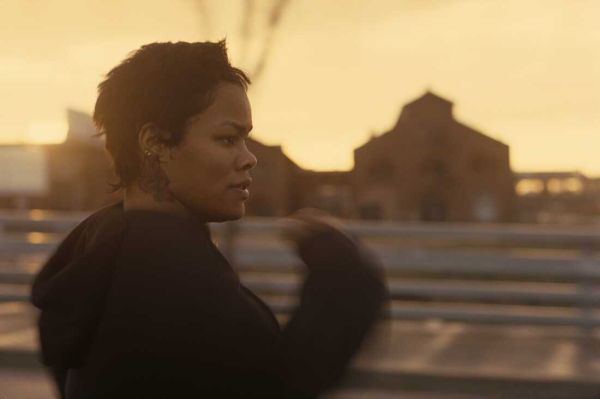
Teyana Taylor brings intensity and unpredictability to Perfidia Beverly Hills. She is a revolutionary, a mother, a lover, and an independent force whose decisions continue shaping the story long after other characters attempt to explain her.
I appreciated that the film does not present her only through Bob’s emotional perspective. His memories contain love, fear, admiration, and betrayal, but Perfidia’s motivations cannot be completely organized around what she meant to him.
She appears more comfortable with direct confrontation than Bob, yet that confidence carries its own destructive consequences. The movement needs people willing to take risks, but the film keeps asking who pays for those risks afterward.
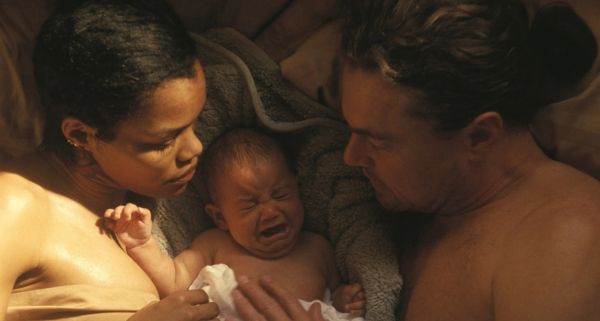
Perfidia also complicates the family drama. Willa’s identity is connected to a mother who exists partly through stories told by people with conflicting motives. Each person remembers a different Perfidia because each needed something different from her.
Taylor gives the character enough charisma to make those competing memories believable. I understood why people followed her, feared her, desired her, and resented her.
I wanted more time inside her own perspective. The film often uses her as the emotional origin of later conflict, which risks making her more powerful as an idea than as a fully present character.
Sergio Turns Calm Into a Form of Resistance
Benicio del Toro’s Sergio provides the film with a very different kind of authority. Where Bob is frantic and Lockjaw is rigid, Sergio appears calm, practical, and socially connected.
He understands that survival does not depend only on weapons or political theory. It depends on communities, routines, favors, communication, and knowing which person can quietly solve a problem.
Del Toro is extremely funny without pushing for obvious jokes. A pause, a small correction, or the patient way Sergio watches Bob panic can communicate complete judgment.
I enjoyed how his character changes the rhythm whenever he appears. The movie often moves through noise and pursuit, but Sergio behaves as though panic is a luxury nobody can currently afford.
His network also provides a contrast with Bob’s isolation. Bob attempted to survive by withdrawing. Sergio survives through relationships. One protects himself by reducing contact, while the other creates enough human connection that no individual authority can control every route.
The film could have turned Sergio into a convenient helper who always knows the solution. Del Toro avoids that by giving him visible limits, irritation, and a sense that helping Bob is both morally necessary and personally inconvenient.
The Movie Treats Secrecy Like a Language Everyone Has Partly Forgotten
Passwords, coded phrases, hidden contacts, alternate identities, and emergency procedures appear throughout the story. These tools once allowed the revolutionaries to operate under pressure.
Years later, memory becomes unreliable. Bob struggles to recall what should be automatic. Old systems have changed, people have disappeared, and the language of resistance has become fragmented.
I found this both funny and sad. A code can sound dramatic when created during a political struggle. Sixteen years later, it may become one more piece of information a tired parent cannot remember while his daughter is missing.
The movie also shows how secrecy damages intimacy. Bob withholds information to protect Willa, but every hidden fact gives her another reason not to trust him. Protection becomes indistinguishable from control when the protected person is denied the ability to understand the danger.
Lockjaw’s institutions use secrecy differently. They hide power behind procedure and membership, creating private systems that preserve public respectability.
Both sides depend on restricted knowledge, but they use it toward different ends. The film never suggests that these differences are morally irrelevant. It does suggest that secrecy changes the people who rely on it.
The Action Is Messy Because the Characters Are Messy
One Battle After Another contains pursuits, raids, gunfire, escapes, vehicles, and sudden physical confrontations, but it rarely presents action as clean competence.
People miss opportunities, misunderstand instructions, take poor routes, and survive through a combination of preparation, luck, and help from others. Bob is not an action hero waiting to reveal perfect training.
I enjoyed this lack of polish. It makes danger less predictable because characters cannot be trusted to execute the obvious plan correctly.
The camera often keeps enough distance for me to understand geography. Anderson allows roads, rooms, and surrounding terrain to determine how a sequence develops instead of cutting every movement into isolated impacts.
The final pursuit uses landscape brilliantly. The road rises, falls, disappears, and returns, limiting what drivers can see ahead. Each hill creates a brief moment where information vanishes.
That sequence produced some of the strongest tension I felt in the film because the environment remained simple. There was no need for collapsing cities or enormous digital destruction. A road, several vehicles, limited visibility, and emotionally compromised drivers were enough.
VistaVision Gives Paranoia an Unusually Wide Horizon
Michael Bauman’s cinematography uses large spaces without making the characters appear safe inside them. Roads, deserts, towns, compounds, and institutional buildings often extend beyond what one person can control.
The wide frame allows threats to exist at the edge of attention. A vehicle may appear in the distance, a character may remain isolated on one side of the image, or several groups may occupy the same environment without understanding one another’s plans.
I liked the texture of the image. The film does not look clinically digital, even when the staging becomes precise. Light, color, faces, and landscapes retain a physical quality that supports the story’s connection between old political history and contemporary fear.
Anderson also uses close-ups carefully. Bob’s panic becomes larger when the frame traps me with his expression. Lockjaw’s controlled face becomes more unpleasant when small physical tensions are impossible to ignore.
The visual scale occasionally makes simple movement feel monumental. A character crossing an open space can appear exposed long before any weapon becomes visible.
Jonny Greenwood’s Score Refuses to Let My Pulse Settle
Jonny Greenwood’s music frequently feels like a nervous system operating outside the characters. Repetition, percussion, piano, and unstable rhythmic patterns create momentum even when the scene contains limited physical action.
The score understands Bob particularly well. His mind appears to be processing several threats at once, and the music can turn a basic task into an approaching emergency.
I appreciated that the soundtrack does not rely only on heroic action cues. It can sound playful, mechanical, ominous, or emotionally distant depending on which part of the political world is controlling the scene.
At times, the music pushes so aggressively that I felt instructed to remain anxious even when the visual material might have benefited from quieter uncertainty.
The strongest uses occur when rhythm and editing become inseparable. Movement, repeated actions, and musical patterns create a feeling that the characters are trapped inside a machine that has been running longer than any of them understand.
The Comedy Comes From Failure, Not Relief
The film is extremely funny in places, but the comedy does not pause the danger. It emerges because people remain ridiculous while facing serious consequences.
Bob forgetting information, misusing old procedures, or attempting to sound prepared creates laughter and concern simultaneously. I am amused by his incompetence while understanding that Willa may suffer because of it.
Lockjaw’s obsession becomes grotesquely comic because he attempts to fit private desire inside a formal ideology. The more seriously he presents himself, the more visible his insecurity becomes.
Sergio provides quieter humor through competence. Watching him respond to Bob is funny because one character understands the situation while the other is generating additional problems.
This combination prevents the movie from becoming a lecture. Political ideas appear through character behavior rather than existing only in speeches.
Some jokes are extended through repetition, and the long runtime occasionally makes a comic situation feel overworked. Anderson appears willing to remain inside discomfort longer than most mainstream thrillers would allow.
The Political Satire Is Broad, but the Human Damage Is Specific
One Battle After Another examines revolutionary movements, racial power, authoritarian institutions, underground networks, and the way political violence continues through families.
The satire frequently exaggerates organizations and behavior, but the emotional consequences remain personal. Willa does not experience history as an abstract argument. It determines who pursues her, what her father hides, and which adults believe they have a claim over her identity.
Bob’s generation discusses causes and enemies. Willa experiences the inherited result. That difference gives the film much of its tension.
I appreciated that Anderson does not create a simple equivalence between revolutionaries and authoritarian forces. Both can fail, lie, and harm others, but their goals and structures are not presented as morally identical.
The movie is especially critical of political language used to hide appetite. Lockjaw’s ideology provides a respectable container for personal obsession, fear, racism, and the need to dominate.
At the same time, revolutionary language can hide ego, neglect, and romantic fantasies of sacrifice. The film respects resistance while refusing to treat every person claiming its language as emotionally mature.
Fatherhood Becomes Bob’s Only Test That Matters
Bob may still care about politics, survival, and unfinished history, but the story gradually reduces his purpose to one direct need: find Willa and keep her alive.
This does not make the political material irrelevant. It gives it a human measure. Bob’s beliefs matter partly through the kind of father they allowed him to become.
He has taught Willa caution and independence, yet he has also surrounded her with fear and incomplete information. His love is real, but love alone does not make his parenting effective.
I found the film moving when Bob stopped attempting to perform his old revolutionary identity and admitted how frightened he was as a parent.
The rescue cannot erase years of confusion. Reaching Willa is only the first step toward becoming someone she can trust.
The movie understands that protecting a child and controlling a child can look similar from the protector’s perspective. The difference becomes visible when the child asks for truth and receives another instruction.
The Running Time Makes Exhaustion Part of the Experience
At more than two and a half hours, One Battle After Another asks for patience. The film contains enough plot, character, action, and political material to justify substantial length, but it does not distribute that material evenly.
Certain sequences move with remarkable energy. Others linger on confusion, institutional behavior, or comic discomfort longer than I expected.
I sometimes admired the refusal to rush. Characters receive space to reveal themselves through behavior rather than compressed exposition.
At other points, I felt the movie had already communicated an idea and continued circling it. Bob’s panic, Lockjaw’s rigidity, and the absurdity of certain organizations are established strongly enough that not every repetition adds equal value.
The length does create accumulation. By the final chase, I felt tired in a way that matched Bob’s condition. The struggle had not been one clean mission. It had become a day of constant recovery, error, movement, and renewed threat.
Whether that exhaustion feels purposeful or excessive will depend heavily on a viewer’s tolerance for Anderson’s rhythm.
The Film Is More Emotional Than Its Cool Surface Suggests
The direction, political references, unusual comedy, large-format cinematography, and ensemble cast make One Battle After Another easy to discuss as an ambitious object.
What remained with me was simpler. A father understands that his daughter has become more capable partly because he failed to provide stability. A young woman realizes that several adults see her as the unfinished business of their own lives. A movement discovers that history continues without preserving the heroic version people remember.
The film does not offer easy emotional speeches every time these ideas appear. Affection is frequently expressed through travel, protection, irritation, and the decision to keep helping someone who has become difficult to help.
Bob and Willa’s relationship gives the chaos direction. Without it, the political chase could become an impressive but distant exercise. Their imperfect connection makes each mistake matter.
What Did Not Fully Work for Me
The first issue was tonal crowding. Political satire, family drama, absurd comedy, thriller tension, and large action sometimes compete within the same sequence. I enjoyed the unpredictability, but not every transition felt emotionally smooth.
Lockjaw is memorable, yet his exaggerated physicality occasionally reduces him to a symbol when the story might benefit from a more ordinary form of menace.
Perfidia shapes almost every major relationship, but I wanted more access to her perspective beyond the memories and consequences carried by others.
The political organizations are intentionally strange, though their absurdity sometimes makes the world feel less coherent. I understood the satirical purpose before I always understood how the institution functioned.
The runtime also magnifies repetition. A character trait that feels funny during the first hour can become tiring after another extended variation.
None of these issues removed my investment. They made the movie feel messy in ways that were sometimes productive and sometimes simply messy.
The Performances Keep the Film From Splitting Apart
DiCaprio gives the story frantic emotional energy. Chase Infiniti provides control and clarity. Sean Penn creates a villain whose body communicates ideology before his dialogue does.
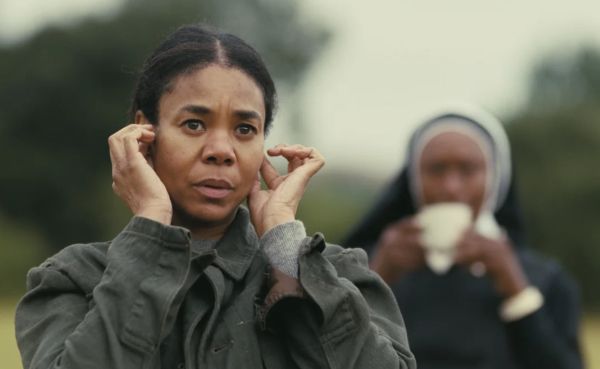
Benicio del Toro brings calm humor and practical warmth. Teyana Taylor gives Perfidia enough force to remain present even when the narrative moves away from her. Regina Hall adds intelligence and lived history to an ensemble where nearly every relationship contains information someone else lacks.
The cast members appear to understand that they are not performing inside a conventional realistic thriller. Some characters are broad, others restrained, and the differences create the movie’s unstable social texture.
Chase Infiniti impressed me most because Willa could easily disappear between several famous performers using large character choices. She does the opposite. Her stillness often pulls attention away from the louder adults.
Who Will Connect With One Battle After Another?
I would recommend the film to viewers who enjoy Paul Thomas Anderson’s character rhythms, political satire, paranoid thrillers, complicated family relationships, unusual action staging, and movies willing to let comedy remain uncomfortable.
Leonardo DiCaprio fans receive a performance that is less controlled and glamorous than many of his major roles. Bob is frightened, physically awkward, emotionally compromised, and often funny for the wrong reasons.
Viewers looking for a clean action movie may become frustrated. The film contains strong action, but it repeatedly interrupts momentum for character behavior, political detail, and extended comic situations.
Anyone expecting a direct adaptation of Thomas Pynchon’s Vineland should approach it as a loose cinematic transformation rather than a literal translation.
The long runtime will also divide audiences. The film requires attention and tolerance for tonal instability. It is not designed as background entertainment.
The Last Hill on the Road
The final pursuit stayed with me because it reduced the enormous political history to several people trying to see what waited beyond the next rise.
The road hides danger for a few seconds at a time. Every hill creates uncertainty. A vehicle disappears, another returns, and nobody can fully understand the complete situation from their current position.
That visual idea reflects the entire film. Bob cannot see beyond his version of the past. Lockjaw cannot see beyond his need for recognition and control. Willa is the character most capable of imagining a future that is not simply another repetition.
The sequence is exciting, but its power comes from accumulated emotional pressure rather than speed alone. By then, reaching Willa means more than completing a rescue. Bob must prove that his love can become action without becoming another form of possession.
My Final Verdict
One Battle After Another is a sprawling, anxious, politically charged action comedy about people discovering that history never remains safely behind them.
Paul Thomas Anderson combines revolutionary memory, authoritarian obsession, racial power, family secrecy, physical comedy, and parental fear inside a film that constantly changes emotional direction.
The result is not perfectly controlled. The runtime is demanding, the satire can become extremely broad, and several character ideas repeat beyond their strongest expression. Perfidia deserved greater narrative space, while Lockjaw occasionally feels more symbolic than human.
The film remains compelling because Bob and Willa give the chaos a personal center. Leonardo DiCaprio makes failure funny and painful, while Chase Infiniti provides the intelligence and independence needed to prevent Willa from becoming merely the person everyone is chasing.
I rate One Battle After Another 8.7/10. It is messy, ambitious, funny, frightening, and emotionally sharper than its political spectacle initially suggests.
The movie begins with people who believe they can change history through one decisive action. It ends with the harder realization that change may depend on what they do after the slogans have faded, the organizations have fractured, and someone they love finally asks them to tell the truth.
Pros:
- Balanced pacing that juxtaposes introspection with high-octane action
- Powerful sound design that enhances both battles and quieter scenes
- Nuanced character performances that add authenticity to the story
- Cultural resonance that appeals to a global audience
- Rich narrative with layered emotional conflict
- Visually arresting cinematography and innovative direction
Cons:
- Some symbolic imagery can overshadow clear storytelling at times
- Occasional pacing issues during less intense scenes
- Complex narrative elements may confuse viewers expecting straightforward action







Movie Reviews

Minecraft

Grand Theft Auto V

Toca Boca World

Roblox

Leave a comment
Your comment is awaiting moderation. We save your draft here
0 Comments