
Review
I return to How the Grinch Stole Christmas almost every holiday season, but I never experience it as a calm Christmas classic. The film...

Grinch Reborn: A Modern Ode to Holiday Transformation
I return to How the Grinch Stole Christmas almost every holiday season, but I never experience it as a calm Christmas classic. The film is loud, visually excessive, occasionally strange, and driven by a performance that seems determined to use every facial muscle available to a human actor. That chaos is precisely why it remains so memorable to me.
On paper, the story is simple. The Grinch lives above Whoville, hates Christmas, and decides to remove every gift, decoration, and festive meal from the town. Yet the movie expands that familiar premise into a full fantasy world with its own social rules, history, architecture, and deeply competitive approach to holiday celebration.
I do not watch it because I believe every scene works perfectly. I watch it because few Christmas films commit this completely to their own unusual personality. Whoville looks like a snow-covered theme park designed during a sugar rush, while the Grinch moves through it like a player who has entered the wrong server and decided to ruin the seasonal event for everyone.
The Grinch Is More Entertaining Than He Is Approachable
Jim Carrey’s performance controls almost every part of the movie. His Grinch does not simply speak or walk. He stretches words, twists his posture, reacts to ordinary objects as though they have personally insulted him, and turns nearly every line into a physical routine.
I found the performance exhausting during some scenes, especially when several jokes arrive without enough space between them. At the same time, I cannot imagine this version of the film working with a restrained central character. The exaggerated sets, costumes, and camera movements require someone equally exaggerated at the center.
Carrey also gives the Grinch moments of recognizable vulnerability beneath all the theatrical behavior. His hostility is not presented as random evil. It comes from humiliation, loneliness, resentment, and years spent watching a community celebrate values that it did not always extend to him.
That background does not excuse everything he does, but it gives his anger a foundation. I could understand why Christmas represents rejection to him rather than warmth. His plan to steal the holiday becomes an attempt to prove that Whoville’s happiness depends entirely on possessions and spectacle.
My Favorite Location Is Not Whoville
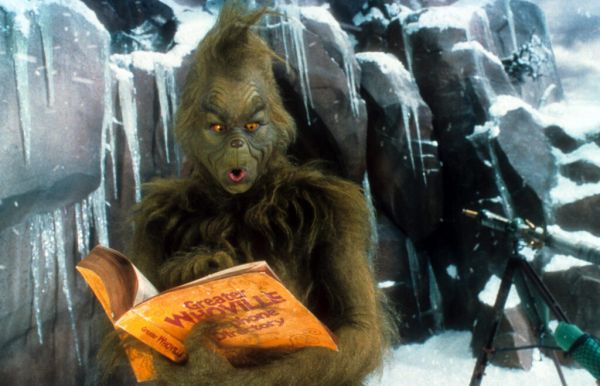
The Grinch’s cave is the environment I enjoy exploring most. It is messy, industrial, isolated, and filled with improvised machines that look only partially safe. The space reflects its owner better than any dialogue could. He has built an entire private world out of discarded objects, strange inventions, and defensive sarcasm.
As a gamer, I see the cave as a personal base created by someone who refused to follow the intended building system. Nothing matches, every mechanism appears unnecessarily complicated, and the useful equipment sits beside piles of unexplained junk. It feels functional only because the Grinch understands his own disorder.
The cave also creates a strong contrast with Whoville. The town is crowded, colorful, and constantly performing happiness. The mountain is cold, quiet, and physically separated from the community. When the film moves between them, the visual difference reinforces the emotional distance between the Grinch and the Whos.
Max prevents the cave from becoming completely unpleasant. His presence brings warmth into a location the Grinch has designed around isolation. Their relationship is unequal and frequently unfair, but Max remains the closest thing the Grinch has to a genuine companion.
Whoville Treats Christmas Like a Competitive Multiplayer Event
Whoville is presented as cheerful, but the celebration has become strangely aggressive. The residents compete over decorations, gifts, public status, and elaborate seasonal displays. Christmas is not merely a tradition; it is the town’s entire economy and social ranking system.
I enjoyed the satire because it gives the Grinch a valid observation even when his response is destructive. The Whos speak about generosity while buying enormous quantities of unnecessary products. They praise community while preserving old social hierarchies. They welcome Christmas enthusiastically, but their enthusiasm often looks more like consumption than kindness.
The town square scenes capture this contradiction especially well. Everything is bright and inviting, yet the celebrations are highly organized around attention and recognition. Mayor Augustus MayWho does not simply participate in Christmas. He uses it as part of his public identity.
This makes the film more interesting than a straightforward story about one miserable outsider attacking a perfect community. Whoville has contributed to the conflict. Its residents are not terrible people, but their traditions have become so automatic that they rarely examine who feels excluded by them.
Cindy Lou Who Approaches the Problem Like a Curious Player
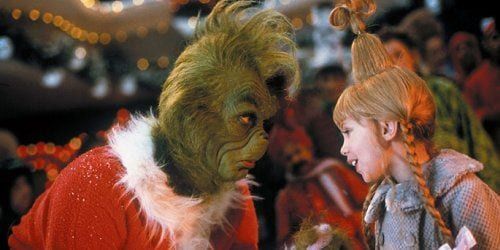
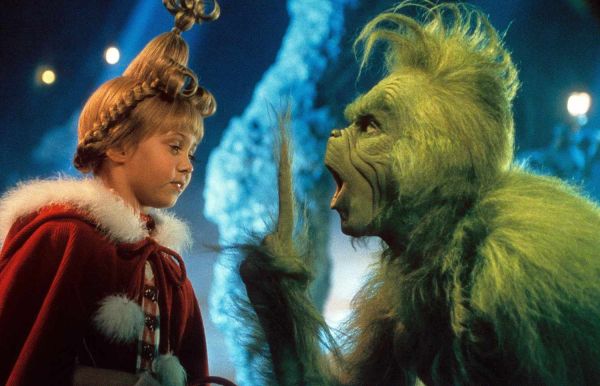
Cindy Lou Who is the only character who questions the obvious explanation. Everyone tells her that the Grinch is dangerous and that Christmas is wonderful, but she investigates both claims instead of accepting them.
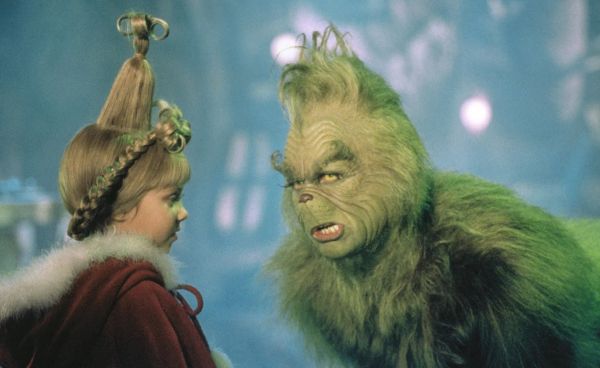
I liked that her curiosity drives the story more than fear does. She visits the mountain, speaks directly to the Grinch, and tries to understand why he despises the holiday. Her approach is simple, but it exposes how little the adults around her have attempted to learn.
Taylor Momsen gives Cindy enough sincerity to balance the louder performances. She does not need to compete with Carrey’s energy. Her calmness is what makes their scenes work. The Grinch expects judgment or terror, while Cindy offers direct questions and unexpected compassion.
She also recognizes that Whoville’s celebration has become disconnected from its stated values. Her doubts are not cynical. She genuinely wants Christmas to mean something beyond packages and decorations.
What Cindy Changes Without Realizing It
- She forces the Grinch to interact with someone who does not immediately reject him;
- She encourages Whoville to reconsider its version of his history;
- She separates the meaning of Christmas from the town’s shopping habits;
- She exposes the Mayor’s personal motivations;
- She gives the Grinch an opportunity to return before he believes he deserves one.
The Backstory Makes the Conflict Messier
The film expands the Grinch’s childhood far beyond the original story. I have mixed feelings about this decision. Part of the character’s appeal comes from his almost mythical role as a creature who simply hates Christmas. Explaining that hatred risks making him too ordinary.
However, the school flashbacks do add emotional context. Young Grinch wants acceptance, attempts to participate, and becomes the target of public humiliation. His anger toward the holiday becomes connected to one specific moment when hope turned into embarrassment.
The sequence also shows that the adults of Whoville allowed the social environment to remain cruel. The problem was not limited to children teasing someone who looked different. The community failed to recognize how deeply the experience affected him.
What I find most effective is that the Grinch still carries the logic of that childhood moment into adulthood. He treats kindness as a trap because his most vulnerable attempt to connect ended badly. His performance of confidence and disgust protects him from repeating the experience.
Martha May Complicates the Story
Martha May Whovier gives the past conflict a more personal dimension. The Grinch’s childhood affection for her is mixed with insecurity, while the Mayor continues treating her as part of his social status.
Christine Baranski plays Martha with enough exaggerated elegance to belong in Whoville, but she also suggests that the character understands more than she openly says. She remembers the Grinch differently from the town’s official version of him.
I did not find the romantic element essential to the film’s message, but it helps reveal how competition influenced the Grinch’s humiliation. The Mayor’s hostility was not simply a childhood joke. It grew from jealousy and the desire to protect his position.
Martha also represents one of the lives the Grinch imagines he might have had. His resentment is not only directed at Christmas. It is directed at the social world he believes continued successfully without him.
The Holiday Cheermeister Scene Is the Movie in Miniature
The public celebration after the Grinch accepts the Holiday Cheermeister title contains nearly everything I associate with the film. It begins with awkward hope, becomes chaotic comedy, reveals the town’s superficiality, and ends with another emotional injury.
For a brief period, the Grinch enjoys participating. He eats, competes, interacts with the crowd, and receives attention that is not immediately hostile. The sequence suggests that his isolation is not as complete as he pretends. He still wants recognition from the community.
The mood changes when the Mayor uses Martha and the electric razor to recreate the circumstances of the Grinch’s childhood humiliation. The joke is cruel because it targets the exact vulnerability that brought him back to the town.
His destructive response is excessive, but the emotional trigger is clear. The celebration invited him to believe that things might be different, then proved that the old power structure remained intact.
The Sleigh-Building Montage Feels Like a Crafting Sequence
Once the Grinch decides to steal Christmas, the film enters one of its most enjoyable stretches. He develops the plan, creates equipment, modifies the sleigh, prepares Max, and studies the town as though he is assembling a holiday-themed heist build.
I always enjoy watching the machines inside the cave activate. They are impractical, dangerous, and perfectly suited to the Grinch’s personality. Every tool appears designed to make a simple task more theatrical.
The sequence also changes the film’s energy. Until this point, the Grinch has mostly reacted to Whoville. Now he becomes active and organized. His plan is ridiculous in scale, but he executes it with impressive commitment.
Max’s role makes the preparation funnier and more sympathetic. He is recruited as a substitute reindeer, receives almost none of the promised benefits, and still helps complete the mission. The Grinch behaves like a player who has assigned every difficult support task to the only cooperative member of the team.
The Theft Works Because the Houses Feel Physical
The Christmas Eve scenes benefit from the practical appearance of Whoville’s interiors. The rooms are curved, crowded, and filled with objects that seem slightly too large or too strangely shaped. The Grinch moves through them like an intruder inside an elaborate stage set.
I liked the tactile quality of the theft. He does not press a button and make Christmas disappear. He drags trees, collects food, removes stockings, packs gifts, and forces oversized objects through narrow spaces.
The physical comedy is strong because the task is so inefficient. Stealing every visible piece of Christmas from an entire town would require impossible planning, yet the film treats the operation like one long night of determined manual labor.
Cindy’s encounter with the disguised Grinch adds tension without changing the playful tone. He invents an explanation quickly, and she accepts it because she still assumes an adult-looking figure must have a reasonable purpose. The scene quietly shows how easily appearances shape trust in Whoville.
The Visual Design Is Beautifully Uncomfortable
Whoville is colorful, but it is not conventionally pretty. Buildings curve at strange angles, faces are heavily stylized, costumes contain excessive textures, and almost every object looks handmade. The world is inviting and unsettling at the same time.
I admire the commitment to practical environments and detailed makeup, even when the results are visually intense. The film never resembles an ordinary town covered with Christmas decorations. It creates a separate fantasy culture.
The wide-angle photography and frequent close-ups emphasize distorted faces and architecture. Characters sometimes appear to lean toward the camera, making social interactions feel more energetic and invasive.
This style may be uncomfortable for viewers expecting a gentle holiday atmosphere. I think that discomfort suits the story. Whoville presents itself as perfect, but the design constantly suggests that something beneath the cheerful surface is slightly distorted.
The Makeup Helps and Restricts the Performances
The transformation of the cast is technically impressive. The Whos have distinctive noses, teeth, hairstyles, and facial shapes, while the Grinch’s green fur and expressive prosthetics create an instantly recognizable figure.
Carrey works aggressively against the limitations of the costume. His eyes, mouth, shoulders, and hands remain in constant motion. I could almost feel the effort required to produce that much expression beneath layers of makeup.
At the same time, the visual transformation sometimes creates distance. Some emotional moments have to fight against exaggerated faces and costumes. A quiet expression that might feel natural in another film becomes part of a much larger visual design.
The movie generally accepts this trade-off. It chooses a strong fantasy identity over subtle realism. When the emotional scenes succeed, they do so because the actors find small human reactions inside deliberately artificial appearances.
The Comedy Has Not Aged Evenly
Some jokes still work perfectly for me. The Grinch arguing with himself, creating a full schedule for avoiding social contact, and reacting dramatically to minor inconveniences remains entertaining. His relationship with Max also produces reliable physical comedy.
Other jokes feel tied to the style of family comedies made around the beginning of the 2000s. The film occasionally relies on loud sound effects, extended reaction shots, and references that interrupt the fantasy atmosphere.
I noticed these moments more as an adult than I did during childhood viewings. The pacing can become restless, as though the movie is worried that a few quiet seconds will lose the audience’s attention.
Still, the strongest comedy comes from character rather than temporary references. The Grinch’s theatrical self-pity, Whoville’s competitive cheerfulness, and Max’s silent exhaustion remain funny because they grow naturally from their personalities.
The Story Finally Becomes Quiet on the Mountain
After stealing everything, the Grinch waits to hear the Whos react. This is the point where his entire theory is tested. He expects despair because he believes the objects were the only source of their happiness.
When the town gathers and sings without the decorations, the film finally slows down. The Grinch cannot dismiss the moment as easily as he dismisses the public ceremonies. Nobody is competing for attention, displaying an expensive purchase, or rewarding the Mayor.
The Whos are simply together.
I appreciate that this discovery does not prove Whoville was always correct. The town did become overly focused on consumption, and it did treat the Grinch badly. The song shows what Christmas can mean when the community removes the performance surrounding it.
The Grinch’s transformation works because he is not defeated by force. His argument is defeated by evidence. He removed the objects and discovered that something remained.
The Heart-Growing Moment Still Works on Me
The famous change in the Grinch could easily feel sentimental, but Carrey plays it with enough confusion and physical discomfort to preserve the character’s personality. He does not immediately understand what is happening to him. Kindness feels almost like a medical emergency.
I find this reaction convincing because the Grinch has spent years treating emotional distance as safety. Reconnecting with compassion is not peaceful at first. It disrupts the entire identity he has built.
The moment also arrives after he has already completed the theft. His change does not prevent the mistake. It forces him to take responsibility for it. He must save the sleigh, return the stolen items, and face the people he harmed.
That distinction matters. Feeling better does not automatically repair the damage. The Grinch has to act differently once his understanding changes.
Returning the Gifts Is More Important Than Being Forgiven
The film moves quickly through the Grinch’s return to Whoville, but I like that he enters the town openly. He does not leave the items outside and disappear. He confesses, accepts the possibility of punishment, and apologizes.
The community’s forgiveness may feel unusually immediate, especially considering the scale of the theft and destruction. Yet the scene functions as a reversal of the earlier public humiliation. Whoville once gathered to laugh at his vulnerability. Now the town gathers and chooses not to repeat that cruelty.
Cindy’s role is essential because she created the possibility of this return before anyone else believed it was reasonable. Her compassion does not magically change the Grinch, but it gives him one memory of Whoville that is not connected to rejection.
The final meal in the cave completes the transformation of the setting. The isolated home becomes a shared space. The Grinch does not need to abandon his mountain or become identical to the Whos. He only needs to stop using isolation as proof that he requires nobody.
Why I Still Rewatch It
How the Grinch Stole Christmas is not the most graceful holiday movie I revisit. It is too loud in places, several jokes feel excessive, and the expanded story occasionally stretches a simple premise beyond its natural shape.
Yet its imperfections are inseparable from its identity. The production design is unusually committed, Jim Carrey gives a performance that no quieter film could contain, and the story offers more criticism of Whoville than I remembered from childhood.
I also enjoy how the message has become more relevant to me over time. As a child, I understood that the Grinch should not steal presents. As an adult, I pay more attention to the community that confused celebration with consumption and popularity with goodness.
The film does not ask me to reject gifts, decorations, food, or festive traditions. It asks whether those things still have meaning when kindness disappears. Whoville must rediscover that meaning, while the Grinch must learn that rejecting the entire holiday cannot protect him from the original pain beneath his anger.
I continue returning because the movie feels handmade, excessive, funny, and emotionally sincere beneath all the noise. It is a Christmas story covered in green fur, crooked buildings, mechanical inventions, and jokes that occasionally behave like they have consumed too much sugar.
Somehow, the heart underneath the spectacle still survives.
Pros:
- Nuanced character development that humanizes the Grinch
- Seamless integration of special effects with live-action sequences
- Captivating musical score that enhances both emotional and narrative depth
- Wide accessibility with multiple viewing options including streaming and download
- Innovative reinterpretation that blends classic charm with modern sensibilities
- High-quality production design with vibrant sets and dynamic cinematography
Cons:
- Limited free access on certain platforms could restrict availability for some audiences
- May feel too modern for fans of traditional adaptations
- Some pacing issues may arise for viewers expecting a more streamlined narrative

RELATED MOVIES







Movie Reviews

Minecraft

Grand Theft Auto V

Toca Boca World

Roblox

Leave a comment
Your comment is awaiting moderation. We save your draft here
0 Comments