
Review
The Hashira Training Arc felt like the calm area before a final raid boss. The danger never completely disappeared, but the usual rhyth...
Unleashing Courage: A Journey Through Demon Slayer’s Hashira Evolution
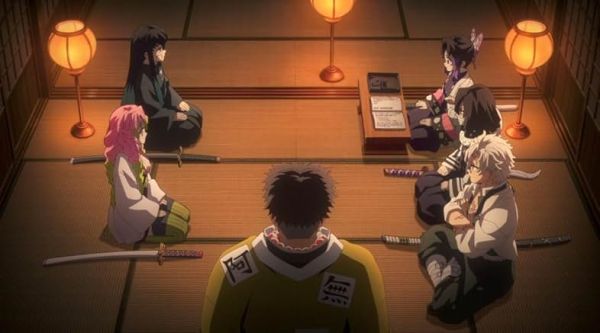
The Hashira Training Arc felt like the calm area before a final raid boss. The danger never completely disappeared, but the usual rhythm of entering a location, facing a powerful demon, and surviving an extended battle was temporarily replaced by preparation. As a gamer, I immediately recognized this structure. It reminded me of returning to the main hub after a difficult campaign chapter, upgrading every available skill, speaking with party members, and realizing that the next mission probably would not allow much time for recovery.
I expected the reduced number of major battles to make the season feel like filler. Instead, I became more interested in the characters because the quieter format gave them room to exist outside combat. Tanjiro still trains with his familiar determination, but the arc is equally concerned with the Hashira, their personalities, and the different philosophies behind their techniques.
Each Hashira Feels Like a Different Difficulty Setting
The training program is not presented as one repetitive exercise stretched across several episodes. Every Hashira has a different idea of what improvement means. One focuses on stamina, another emphasizes movement, and another pushes the trainees toward physical limits that initially appear unreasonable. The changing methods helped the season avoid feeling like a long workout montage.
Tengen Uzui’s section carries the confidence and theatrical energy I remembered from the Entertainment District Arc. Even after stepping away from active duty, he has the presence of a veteran player who completed the campaign on the highest difficulty and now watches new players make every mistake he once learned to avoid. His training looks demanding, but it also feels organized and practical.
Muichiro Tokito provides a very different atmosphere. His calm expression and exceptional ability make difficult exercises appear almost effortless. Watching regular members of the Corps struggle around him highlighted the enormous distance between an average swordsman and a Hashira. At the same time, his interactions with Tanjiro show how much he has emotionally changed since the Swordsmith Village Arc.
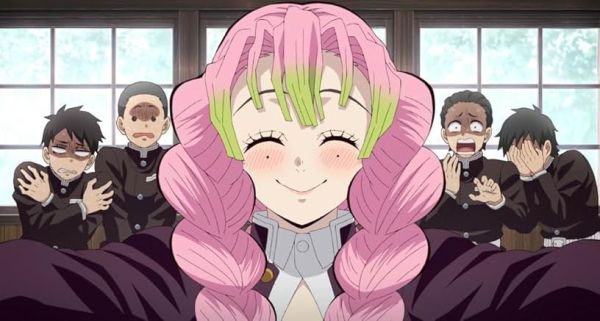
Mitsuri Kanroji brings warmth and flexibility to the program. Her section is lighter in presentation, but the physical challenge remains serious. I enjoyed this contrast because Demon Slayer often uses bright comedy immediately before reminding the viewer that these characters are preparing for something terrifying.
Training Stations That Stood Out to Me
- Tengen’s stamina exercises feel like an endurance tutorial that refuses to lower its difficulty;
- Muichiro’s movement training reveals how much precision separates talent from mastery;
- Mitsuri’s flexibility routine adds visual humor without making the preparation meaningless;
- Obanai’s sword control exercises introduce pressure through restricted movement;
- Sanemi’s sessions replace encouragement with raw intensity;
- Gyomei’s final stage feels like a strength challenge designed for endgame characters.
Tanjiro’s Progress Is Quiet but Convincing
Tanjiro does not receive a sudden transformation or a convenient new technique every episode. His improvement is shown through repetition, adaptation, and his ability to understand what each instructor expects from him. That made the progression more satisfying to me than a simple power increase.
In many action games, training sequences are reduced to a menu where experience points become stronger statistics. The Hashira Training Arc makes the process physical. Tanjiro becomes exhausted, makes mistakes, changes his approach, and continues. His strongest ability is not raw talent but his willingness to remain focused when everyone around him is ready to stop.
His attitude also affects the other trainees. Tanjiro does not motivate people with grand speeches. He simply continues working, notices when someone is struggling, and treats improvement as something that can be shared. This creates several small moments where the Demon Slayer Corps begins to feel like a genuine organization rather than a collection of background fighters waiting for the main characters to save them.
Giyu’s Silence Finally Receives Context
One of the most valuable parts of the arc is the attention given to Giyu Tomioka. He has always been distant, but earlier seasons often used that distance as part of his mysterious personality. Here, his isolation becomes emotionally understandable.
Giyu does not avoid the other Hashira because he believes he is superior. His behavior comes from guilt and from the belief that he does not deserve his position. That distinction completely changed how I interpreted him. His cold appearance began to look less like arrogance and more like a defensive wall that had remained in place for years.
Tanjiro approaches the situation in the only way that fits his personality: with persistence so sincere that it becomes impossible to ignore. Their conversations are not visually extravagant, yet they carried more emotional weight for me than several larger encounters from previous arcs. Giyu’s story also reinforces one of the series’ strongest themes—the people who survive a tragedy do not always feel fortunate to have survived it.
The Season Lets the Supporting Cast Breathe
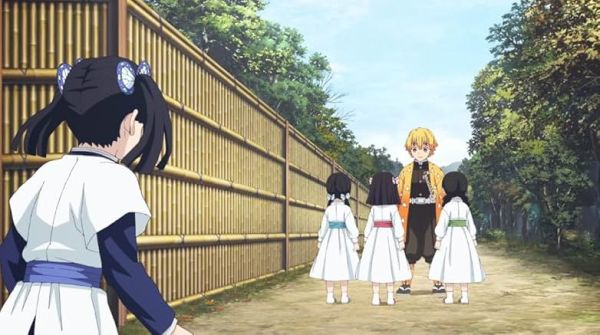
Without a constant enemy attacking the group, the supporting characters receive more casual interactions. These scenes may appear less important than a dramatic confrontation, but they make the world feel inhabited. Corps members eat together, complain about exercises, compare their progress, and search for enough motivation to continue.
Zenitsu remains loud and anxious, although the arc gradually suggests that something more serious is developing beneath his usual behavior. Inosuke treats the training like a competitive event created specifically for him. His confidence provides comedy, but it also makes sense because physical challenges are the closest thing he has to a comfortable social language.
Nezuko has less active screen time than I expected. Her new condition is important to the larger conflict, but this chapter is primarily focused on the swordsmen preparing for battle. I noticed her absence because she has always been central to Tanjiro’s journey. Still, the limited use of Nezuko contributes to the uncomfortable feeling that major forces are beginning to move around her.
Comedy Works Better When the Pressure Is Real
This arc is frequently funny. Characters collapse during training, misunderstand instructions, and react dramatically to exercises that seem impossible. The visual timing is sharp, especially when the animation suddenly shifts from detailed character art to exaggerated expressions.
The comedy worked for me because it never erased the purpose of the training. Everyone understands that the situation is serious. The lighter scenes function like party dialogue between dangerous missions: they allow the characters and the viewer to relax without pretending that the larger threat has disappeared.
There were a few moments when the jokes continued longer than I needed. Zenitsu’s panic, in particular, can dominate a scene once it begins. However, the season generally balances humor with unease more effectively than I expected.
A Different Kind of Visual Showcase
Hashira Training does not rely on constant large-scale battles, so the animation team finds other ways to create movement. Sword drills, running exercises, sparring sessions, and environmental transitions are presented with impressive control. The animation often communicates the weight of a character’s body, the force behind a step, or the speed difference between two fighters.
I especially appreciated the small details during training. Clothing responds naturally to movement, dust rises from the ground, and exhausted characters gradually lose the clean posture they had at the beginning of an exercise. These details prevent the routines from looking like repeated animation loops.
The arc also uses lighting to establish mood. Daytime training areas feel open and energetic, while nighttime conversations become quieter and more personal. The backgrounds are detailed without distracting from the characters, and the color design maintains the polished appearance associated with the series.
Gyomei’s Training Feels Like Endgame Content
Gyomei Himejima’s section was the point where the program stopped feeling like ordinary preparation. His exercises are so demanding that simply understanding how to begin becomes a challenge. The other trainees have already endured multiple stages, yet Gyomei’s routine makes their earlier progress look like an introduction.
I liked that Tanjiro could not solve the problem through determination alone. Effort remains essential, but he also needs concentration and a better understanding of how his body responds under pressure. The solution connects physical control with mental discipline, which makes the training feel relevant to the combat system established throughout the anime.
Gyomei himself becomes more interesting through his quiet presence. He does not need Sanemi’s aggression or Tengen’s dramatic confidence to command attention. His strength is obvious, but the arc also reveals gentleness and spiritual focus beneath his intimidating appearance.
The Slow Pace Will Divide Viewers
The season is deliberately less action-heavy than the Entertainment District and Swordsmith Village arcs. Viewers expecting a major confrontation in every episode may find the middle portion slow. Some training stages could have been shorter, and a few anime-original interactions make the journey feel longer than the central story requires.
I did not mind the slower pace because I treated the season as a character-focused preparation chapter. Still, the structure occasionally feels uneven. An episode may spend considerable time on comedy or routine exercises before ending with a brief reminder of the approaching danger.
This creates an unusual experience: individual episodes sometimes feel modest, but the complete arc becomes more effective when watched as one continuous progression. Every exercise builds physical readiness, while every quiet conversation adds emotional pressure.
Muzan’s Presence Changes the Temperature of the Story
Even when Muzan is not directly involved in the training, the threat associated with him hangs over the season. The Demon Slayer Corps knows that the conflict is moving toward a decisive stage. The training is therefore not about becoming generally stronger someday. It is preparation for an enemy who is already searching for a way to complete his objective.
The contrast between the training grounds and Muzan’s movements works especially well. One side is attempting to strengthen ordinary people through cooperation, discipline, and shared knowledge. The other side depends on fear, control, and overwhelming individual power.
This opposition gives the quieter episodes urgency. Every day spent training is useful, but it is also another day in which the enemy can act first.
The Finale Completely Changes the Scale
The final episode delivers the explosive payoff that the restrained season has been preparing. The direction becomes more cinematic, the visual effects grow more elaborate, and the careful training structure is replaced by immediate uncertainty. I felt the same rush I get when a game suddenly removes access to the safe hub and launches the entire party into the final campaign.
What impressed me most was the tension before the action. Characters speak calmly, but every pause feels dangerous. The staging allows the audience to understand the emotional significance of the confrontation before the spectacle begins. When the situation finally changes, it does so with enormous force.
The transition into the Infinity Castle is one of the arc’s strongest visual moments. Space becomes unreliable, characters are separated, and the Demon Slayer Corps is pulled away from the organized formation it spent the entire season building. The irony is effective: everyone has trained together, but the next stage may require them to survive in scattered groups.
By the end, Hashira Training feels less like a standalone adventure and more like the loading screen before the largest mission in the series. It develops the Hashira, strengthens Tanjiro’s relationships, and gives the Corps a sense of unity that earlier arcs only suggested. I finished it without the satisfaction of a completed battle, but with the much stronger feeling that every character had just crossed a point from which returning to normal life would be nearly impossible.
Pros:
- Powerful voice acting that adds emotional depth to every scene
- Rich and immersive sound design that complements the visual storytelling
- Innovative narrative techniques that blend symbolic imagery with traditional themes
- Balanced pacing that skillfully combines high-energy scenes with quieter introspective moments
- Breathtaking animation quality that brings intense action sequences to life
- Deep exploration of character development and personal growth throughout the arc
Cons:
- Limited accessibility on certain streaming platforms can restrict immediate viewership
- Complex plot elements may overwhelm new viewers
- Some sequences might have pacing issues for audiences expecting continuous action









Movie Reviews

Minecraft

Grand Theft Auto V

Toca Boca World

Roblox

Leave a comment
Your comment is awaiting moderation. We save your draft here
0 Comments