Review
Demon Slayer: Infinity Castle begins with almost no interest in restoring normality. Muzan Kibutsuji has entered the Demon Slayer Corps...
Ethereal Battles and Timeless Reflections: A Journey Through Demon Slayer Infinity Castle
Demon Slayer: Infinity Castle begins with almost no interest in restoring normality. Muzan Kibutsuji has entered the Demon Slayer Corps headquarters, Kagaya Ubuyashiki has made his final move, and every surviving fighter understands that preparation is over. Then the ground vanishes beneath them.
Watching Tanjiro, the Hashira, and the other Corps members fall into the Infinity Castle gave me the clearest possible signal that this movie was not another self-contained mission. There would be no village to protect, train to investigate, or district to explore before the enemy appeared. The characters had been dragged directly into Muzan’s territory, separated from their allies, and placed inside an environment designed to prevent any stable plan.
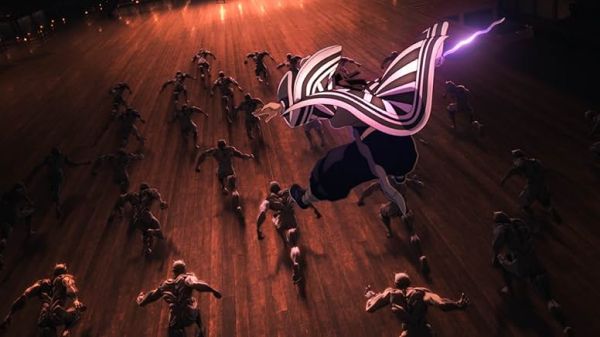
I felt the scale immediately. Rooms rotated in impossible directions. Staircases stretched through open space. Floors became walls, doors opened onto distant chambers, and Nakime rearranged the fortress as though every fighter were a piece on a board. The castle did not feel like a location waiting to be explored. It behaved like an active weapon.
This first Infinity Castle film is visually extraordinary, emotionally severe, and structurally unusual. It does not attempt to complete the entire final conflict. Instead, it follows several major confrontations unfolding simultaneously inside the fortress. That gives individual characters meaningful attention, but it also means the film ends while the larger war remains unresolved.
My reaction was stronger than simple admiration for the animation. Ufotable has already established an exceptional technical standard for Demon Slayer. What surprised me was how often the spectacle supported character history rather than replacing it. The most memorable moments were not always the largest attacks. They were the pauses before an attack, the memories attached to a familiar technique, and the instant when a fighter finally understood what had been driving them for years.
The Infinity Castle Is Not a Background
The fortress is one of the film’s greatest achievements because its architecture affects every emotion and movement. Nothing feels permanent. Two characters can appear close while being separated by an impossible vertical distance. A corridor can rotate, split, or disappear before anyone reaches the end.
Nakime’s biwa becomes the sound of spatial instability. Each note can move walls, redirect fighters, or open another part of the castle. Her control makes the Demon Slayer Corps appear vulnerable even before the Upper Ranks engage them directly.
I loved how the camera moved through this environment. It followed falling characters across enormous chambers, rotated with shifting platforms, and travelled through interconnected rooms without always revealing where one space ended and another began.
The scale is difficult to understand logically, and that is intentional. Infinity Castle is not built according to ordinary geography. It reflects Muzan’s power structure: endless, controlled from a central position, and designed to isolate everyone beneath him.
The visual complexity occasionally became overwhelming. During the opening descent, so many characters, platforms, and camera movements appeared in rapid succession that I had to focus carefully to understand where everyone had gone.
Once the major battles began, the film wisely reduced the spatial chaos. Each confrontation developed a recognizable arena, allowing the choreography and emotional conflict to become clearer.
Shinobu Walked Into Her Battle Knowing the Cost
Shinobu Kocho’s confrontation with Doma was the section I found most difficult to watch emotionally. She enters the room carrying years of controlled anger, but her usual polite expression remains almost unchanged.
That composure has always been central to Shinobu. She speaks gently, smiles frequently, and uses calm language even when describing deep hatred. Infinity Castle finally places her in front of the demon connected with the loss that shaped her life.
Doma immediately creates a disturbing contrast. He appears relaxed, conversational, and almost delighted to meet her. His friendliness contains no genuine empathy. He copies the appearance of emotion without understanding the experience behind it.
I found him more unsettling than a visibly furious enemy. Rage can reveal personal investment. Doma treats suffering as something interesting but emotionally distant. His smile remains unchanged even when discussing human lives.
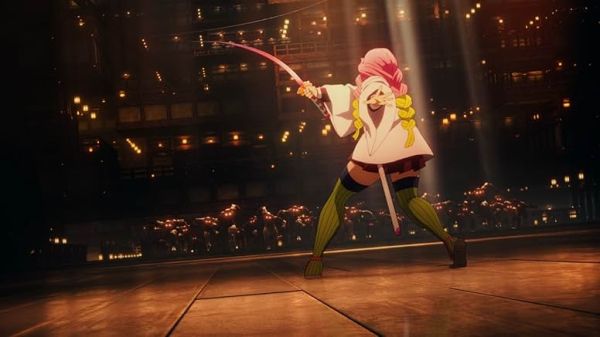
Shinobu’s fighting style remains one of the most distinctive in the series. She lacks the physical strength required for conventional decapitation, so every movement is designed around speed, precision, and poison. Her blade functions more like a stinger than a traditional sword.
The animation gives her attacks an elegant lightness. She appears to move through the room without touching the ground, while butterfly imagery follows techniques that are medically calculated and potentially fatal.
This beauty never makes the battle feel safe. Doma can analyze and counter her poison, forcing Shinobu to adapt while confronting the physical difference between them.
Doma Is Terrifying Because Nothing Reaches Him
Doma’s Blood Demon Art fills the screen with ice, mist, frozen figures, and attacks that threaten the lungs as much as the body. His abilities are visually beautiful, but the beauty feels empty in the same way he does.
He observes Shinobu with curiosity rather than fear. Even her anger becomes another sensation for him to examine. That lack of emotional response makes their conversation painful because Shinobu needs him to understand what he has taken, while he is fundamentally incapable of sharing the meaning.
I appreciated that the film did not make him constantly loud or theatrical. His quiet confidence is more effective. He behaves as though the battle is a pleasant interruption rather than the result of years of grief.
The confrontation also reveals the limits of vengeance as immediate emotional satisfaction. Shinobu has reached the enemy she wanted to find, but the meeting cannot restore Kanae or make Doma experience remorse.
Her plan therefore becomes larger than personal expression. She cannot rely on the enemy to understand her pain. She must turn that pain into strategy.
The film treats her final decisions with both horror and dignity. I understood that Shinobu had prepared for this possibility long before entering the castle. That knowledge did not make the result easier to accept.
Zenitsu Was Silent, and That Was More Frightening Than His Screaming
Zenitsu’s arrival in Infinity Castle immediately felt different from his previous appearances. He was not panicking, complaining, or searching for someone else to protect him. His silence communicated that the conflict had already become personal.
His confrontation with Kaigaku gives him an opponent connected directly with his training and his relationship with Jigoro Kuwajima. Kaigaku is not simply another demon blocking the route to Muzan. He represents a wound inside the legacy of Thunder Breathing.
I have often found Zenitsu’s comedy excessive. His fear can become loud enough to overwhelm otherwise serious scenes. Infinity Castle removes that protective behavior and reveals the discipline beneath it.
The difference is powerful because the series spent so long showing how rarely Zenitsu believes in himself. Here, he does not need another character to reassure him. He already knows what must be done.
Kaigaku treats Zenitsu as inferior because Zenitsu mastered only the first Thunder Breathing form. That criticism has followed him throughout his training. Instead of learning all the established forms, Zenitsu refined one technique until it became extraordinary.
Their battle becomes an argument about talent, recognition, resentment, and the meaning of inheritance. Kaigaku believes strength should have guaranteed him respect. Zenitsu understands that receiving a teacher’s care also creates responsibility.
Thunder Breathing Has Never Looked Cleaner
Ufotable presents Zenitsu’s movement with remarkable clarity. Lightning fills the screen, but the attack remains readable because his technique depends on one explosive line of motion.
The contrast between stillness and acceleration is essential. Zenitsu prepares, the environment becomes quiet, and then the distance between two points disappears.
Kaigaku’s demonic variation of Thunder Breathing is more aggressive and visually unstable. His lightning appears darker, spreading across the environment instead of following Zenitsu’s disciplined precision.
I liked how their techniques communicated personality. Kaigaku wants more forms, greater recognition, and visible superiority. Zenitsu has accepted the limitation that once caused him shame and transformed it into specialization.
The emotional peak is not simply that Zenitsu performs a powerful attack. It is that he reveals a form he created himself. For a character who spent so much of the series believing he was inadequate, creating a new technique represents genuine ownership of his training.
The sequence is relatively short compared with the other major confrontation, but the focus benefits it. There are no repeated reversals or extended stages. The battle moves directly toward the unresolved relationship between the two students.
Jigoro’s Absence Is Present in Every Exchange
Jigoro does not need to stand inside the room for his influence to control the battle. Both Zenitsu and Kaigaku define themselves through their relationship with him.
Zenitsu remembers patience, training, frustration, and unconditional belief. Kaigaku remembers expectations he considered unfair and recognition he believed he deserved.
The tragedy is that Jigoro wanted both students to inherit Thunder Breathing together. Their rivalry transformed that hope into another source of pain.
Zenitsu’s anger is therefore not based only on Kaigaku becoming a demon. It comes from understanding the consequences of Kaigaku’s decision for the person who trained them.
I found the flashbacks effective because they did not interrupt the battle randomly. They explained why Zenitsu’s unusual calm mattered. He was not temporarily fearless. He had decided that fear could not be allowed to dominate this responsibility.
This was the version of Zenitsu I had wanted to see for a long time. His anxiety did not disappear from his character. It had been placed beside loyalty, grief, and purpose rather than being used as the entire performance.
Akaza’s Arrival Changed the Movie’s Weight
The confrontation between Tanjiro, Giyu Tomioka, and Akaza occupies the largest emotional and physical space in the film. It also carries history from Mugen Train that neither Tanjiro nor I had forgotten.
Akaza’s presence immediately returns the story to Rengoku. Tanjiro has improved enormously since their first encounter, but his anger remains connected with watching a Hashira give everything to protect others.
Giyu brings a different relationship to the battle. He does not carry Tanjiro’s direct history with Akaza, yet his restrained personality and Water Breathing create a strong contrast with Akaza’s aggressive enthusiasm.
Akaza genuinely enjoys fighting powerful opponents. Unlike Doma, he experiences clear emotion. He respects strength, becomes excited by improvement, and repeatedly attempts to persuade skilled humans to become demons.
That respect does not make him honorable in any complete moral sense. He values fighters while showing little concern for the lives or relationships their deaths destroy.
The battle is spectacular, but it works because every participant brings a different understanding of strength. Tanjiro sees strength as protection. Giyu treats it as duty. Akaza sees it as the only form of lasting value.
Giyu Finally Stops Fighting Like He Has Nothing to Lose
Giyu has always appeared emotionally distant, but the series gradually revealed that his restraint is connected with guilt rather than superiority. He questions whether he deserves his position and carries the memory of people who survived only through sacrifice.
Infinity Castle allows that internal conflict to affect his swordsmanship. Fighting beside Tanjiro forces him to participate rather than remain detached.
His Water Breathing is calm, controlled, and defensive in ways that complement Tanjiro’s increasingly direct movement. Their coordination does not appear perfect immediately, but they learn to create openings for each other.
I particularly enjoyed the moments where Giyu’s expression changed only slightly. He is not a character who delivers every feeling through a speech. The animation uses posture, eyes, and breathing to show when he begins treating his own survival as meaningful.
His awakened Demon Slayer Mark increases his abilities, but the emotional change matters more than the visual symbol. Giyu fights with greater commitment because he begins accepting that remaining alive can honor the people he lost.
The film could have given his internal development slightly more space. Akaza and Tanjiro naturally dominate the emotional history of the confrontation. Giyu’s arc remains quieter, though it provides essential balance.
Tanjiro’s Anger Has Become More Precise
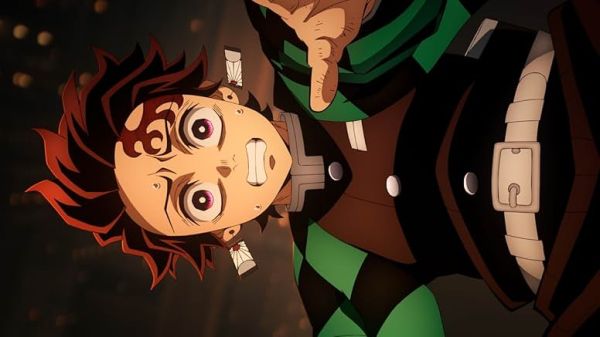
Tanjiro is still compassionate, but Infinity Castle shows how much experience has changed the way he enters battle. He analyzes movement faster, recognizes patterns, controls his breathing under greater pressure, and understands how to cooperate with a Hashira.
His anger toward Akaza is intense but not uncontrolled. He remembers Rengoku’s values and refuses to accept Akaza’s definition of strength.
I appreciated that Tanjiro challenges the idea that victory determines moral worth. Akaza survived Mugen Train, while Rengoku did not. From Akaza’s perspective, survival proved superiority. Tanjiro understands that Rengoku succeeded because every passenger survived.
This disagreement gives the action philosophical weight without requiring abstract discussion. Their techniques express what each character believes strength is for.
Tanjiro’s growth also appears through observation. He begins understanding how Akaza detects fighting spirit and searches for a way to remove himself from that perception.
The Selfless State is visually quieter than many of the film’s largest techniques. That restraint makes it effective. Tanjiro does not overcome Akaza by producing the loudest attack. He changes the way he exists inside the confrontation.
Akaza’s Backstory Reframed Everything Without Excusing It
I knew Demon Slayer would eventually reveal Akaza’s human past, but I was not prepared for how completely it changed the emotional direction of the battle.
As Hakuji, he was shaped by poverty, desperation, violence, and the desire to protect his sick father. His physical strength developed before he had a healthy purpose for it.
Meeting Keizo and Koyuki gave that strength a different meaning. Training became discipline rather than survival. Caring for Koyuki gave him a future that did not depend on fighting everyone who stood in his way.
The happiness of those memories makes what follows more painful. Akaza’s demonic philosophy did not appear from nowhere. It distorted the values and losses of his human life.
He became obsessed with strength while forgetting the people for whom he originally wanted to become strong. Muzan preserved the physical ability and erased the emotional purpose.
The film does not suggest that tragedy removes responsibility. Akaza has caused enormous suffering. His history explains the shape of his obsession, but it does not transform his victims into acceptable consequences.
This balance is one of Demon Slayer’s recurring strengths. Understanding how someone became monstrous is not the same as declaring their actions harmless.
The Battle Continued After the Point Where Another Film Would Have Ended
Akaza’s regeneration creates one of the confrontation’s most frightening developments. The usual condition for defeating a demon appears to have been met, yet his body continues attempting to fight.
This escalation demonstrates the strength of an Upper Rank demon, but it also reveals how deeply his identity is connected with refusing weakness.
I initially expected another larger attack to resolve the situation. Instead, the true conflict becomes internal. Memories begin returning, and Akaza confronts the person he became after losing the life he once wanted.
The visual battle and the emotional battle happen simultaneously. Tanjiro and Giyu have pushed him to a physical limit, but Akaza must decide whether his endless pursuit of strength still has any purpose.
The sequence risks becoming prolonged because the confrontation appears to end more than once. I felt some fatigue during the repeated regeneration and internal resistance.
The emotional resolution justified much of that length. Akaza’s defeat is not presented as one swordsman proving greater power. It is the collapse of a philosophy built to avoid remembering grief.
Rengoku Remains Part of the Fight
Rengoku does not return physically, but his influence is present in Tanjiro’s anger, Akaza’s memory, and the meaning attached to the confrontation.
The Mugen Train arc established a conflict between two ideas of strength. Infinity Castle completes that argument.
Akaza believed Rengoku’s mortality made his effort meaningless. Tanjiro’s survival and growth demonstrate the opposite. Rengoku’s choices continued shaping other people after his death.
I found this more satisfying than a simple revenge victory. Tanjiro does not honor Rengoku by becoming identical to him or by seeking only personal punishment. He carries the values Rengoku demonstrated and uses them to protect others.
The film avoids turning Rengoku into constant nostalgic imagery, though it knows exactly when a memory of him will affect the audience.
Nezuko’s Reduced Presence Is Structurally Necessary but Emotionally Noticeable
Nezuko is not at the center of the castle battles because her ability to survive sunlight has changed Muzan’s objective. Protecting her remains essential even when she is outside the immediate battlefield.
I understood why the story separated her from Tanjiro. The final conflict needs the Demon Slayer Corps to confront Muzan’s forces directly, and Nezuko’s condition represents the prize Muzan is trying to reach.
Her reduced presence still changes the emotional balance. Tanjiro’s journey began with a promise to restore his sister, yet the first Infinity Castle film spends most of its time on battles involving other personal histories.
This is not a flaw by itself. The final arc must resolve the stories of Zenitsu, Shinobu, Giyu, Akaza, and the remaining Hashira.
I simply felt the absence of the sibling relationship that usually provides the series with its clearest emotional foundation. The trilogy’s later films will need to return to Nezuko with enough weight to connect the final war back to its beginning.
The Film’s Structure Feels Like Several Finales at Once
Infinity Castle moves between separate confrontations rather than following one continuous protagonist. Shinobu faces Doma. Zenitsu meets Kaigaku. Tanjiro and Giyu confront Akaza. Other fighters move through the castle toward battles that the film only begins to establish.
This structure creates variety. Each section has different movement, color, emotional history, and combat philosophy.
It also fragments momentum. A confrontation may reach a tense point before the film moves to another part of the castle. When it returns, I need to reconnect with the exact physical and emotional situation.
The transitions generally work because Nakime’s castle provides one unified environment. Every battle feels like part of the same coordinated descent into Muzan’s domain.
I would not recommend treating the movie as a fully independent story. It assumes substantial knowledge of the television series, Mugen Train, and the relationships developed across previous arcs.
It also ends as the first part of a trilogy rather than resolving the entire central conflict. Several major characters and enemies remain active, and Muzan’s final confrontation has not yet reached its conclusion.
Ufotable Has Turned Sword Fighting Into Architecture
The animation is technically astonishing, but the most impressive quality is how movement interacts with space. Characters do not simply exchange attacks against a decorative background.
Akaza breaks surfaces, changes distance, and fills the arena with pressure. Giyu’s Water Breathing creates controlled defensive patterns. Tanjiro’s Hinokami Kagura uses sharper, more forceful lines of motion.
Zenitsu’s attacks depend on stillness followed by extreme acceleration. Shinobu’s movement is light and precise, while Doma fills the environment with frozen hazards that change how she can approach him.
The castle itself continues moving around these styles. Platforms shift, walls open, and the camera travels through impossible angles without making every battle unreadable.
There were moments when the digital camera movement felt almost too smooth. The physical weight of a traditionally staged duel can disappear when the viewpoint flies freely through three-dimensional space.
Most of the time, the film balances digital scale with carefully drawn character animation. Faces retain emotional detail even while the surrounding environment becomes enormous.
The Color Design Separates the Battles
Each major confrontation has a recognizable visual identity. Shinobu and Doma’s battle uses cold blues, pale ice, butterfly imagery, and controlled interior elegance.
Zenitsu and Kaigaku are defined by darkness interrupted by lightning. Their attacks make the environment visible in sudden flashes, matching a confrontation shaped by resentment and incomplete understanding.
Akaza’s battle uses stronger reds, blues, and destructive physical movement. His Compass Needle creates a visual structure around combat that feels both ritualistic and aggressive.
These distinctions help the film maintain clarity despite moving between several battles. I could understand the emotional tone of a scene immediately from its lighting and effects.
The visual beauty occasionally creates tension with the subject matter. Doma’s ice techniques are stunning even while representing an emotionally empty predator. Demon Slayer frequently uses beauty to make danger more unsettling rather than less serious.
The Music Carries Memory Into the Action
Yuki Kajiura and Go Shiina’s music connects the film with earlier arcs while giving the Infinity Castle a larger cinematic scale.
The score uses heavy percussion, choral textures, strings, traditional instruments, and recurring character themes. Familiar musical ideas return at moments connected with Rengoku, Shinobu, Zenitsu, and Akaza’s human past.
I appreciated that the soundtrack did not treat every attack as the largest moment in the movie. Some of the strongest emotional scenes use restrained music or allow silence to carry the transition.
Akaza’s memories benefit especially from the change in musical language. The aggressive battle score gives way to something more human, revealing how far his demonic identity has moved from Hakuji’s original life.
The cinema presentation adds enormous physical impact. Percussion and low-frequency effects make the castle’s movement feel present in the room, while quieter dialogue becomes intensely focused.
The Voice Performances Matter as Much as the Effects
Natsuki Hanae gives Tanjiro greater maturity without removing the emotional openness that defines him. His anger toward Akaza sounds controlled until memories of Rengoku push it forward.
Takahiro Sakurai’s Giyu remains restrained, but small changes in tone reveal how much effort the character spends containing emotion.
Hiro Shimono’s Zenitsu performance is particularly effective because it abandons the exaggerated panic associated with the character. His quieter delivery makes every sentence feel deliberate.
Akira Ishida gives Akaza confidence, enthusiasm, frustration, and eventual emotional disintegration. The transition between demonic certainty and returning human memory is one of the film’s strongest performances.
Saori Hayami preserves Shinobu’s gentle voice while allowing anger to appear through precision rather than volume. Mamoru Miyano makes Doma sound pleasantly interested in everything and emotionally connected to nothing.
The English dub also retains the series’ established cast, but I found the Japanese performances especially important to the tonal shifts within the major confrontations.
The Film Is Emotionally Heavy Without Becoming Completely Hopeless
Infinity Castle contains sacrifice, grief, betrayal, family loss, survivor guilt, and characters entering battles they do not expect to leave.
The story could easily become emotionally exhausting. What prevents that is the continued belief that relationships matter beyond immediate survival.
Jigoro’s belief continues through Zenitsu. Rengoku’s values continue through Tanjiro. Kanae’s influence shapes Shinobu and Kanao. Sabito and Tsutako remain part of Giyu’s understanding of his own life.
The dead are not used only to create sadness. Their choices continue affecting how living characters act.
This idea also provides the strongest answer to Muzan’s worldview. He values endless biological survival while treating every relationship as disposable. The Demon Slayer Corps accepts mortality but creates meaning through what one person gives another.
The Pacing Is Both Powerful and Uneven
The movie moves rapidly during the opening descent and then devotes substantial time to its central battles. This allows emotional histories to develop rather than reducing every confrontation to a brief montage.
Akaza’s section receives the greatest attention, which is understandable given his importance to Tanjiro and the depth of his past.
The imbalance means some viewers may feel that Shinobu or Zenitsu’s confrontations end too quickly by comparison. Each battle could almost support its own film.
Flashbacks are frequent. Most provide essential emotional information, but the movement between present combat and past tragedy occasionally slows physical momentum.
I did not mind the slower sections when they changed my understanding of a character. I became less patient when a memory repeated information the series had already established clearly.
The film also ends without conventional closure because it is the first part of the final trilogy. The individual confrontations produce meaningful outcomes, but the central war continues.
This Is Not the Best Entry Point for New Viewers
Infinity Castle assumes that I know the Corps hierarchy, breathing styles, Upper Rank demons, Hashira histories, Muzan’s goals, Nezuko’s condition, and the emotional significance of previous losses.
A new viewer could appreciate the animation but would miss most of the meaning. Akaza’s confrontation depends heavily on Mugen Train. Zenitsu’s battle depends on his training history. Shinobu’s conflict depends on Kanae and Doma.
The movie does not pause to provide a complete introduction because doing so would damage the urgency for established viewers.
I consider that the correct decision. A final arc should reward the time spent with the series rather than repeating every explanation for a hypothetical first-time audience.
Anyone interested in watching should begin with the television anime and Mugen Train rather than treating Infinity Castle as an isolated action film.
What Frustrated Me
The first frustration is structural incompleteness. The film delivers major emotional resolutions, but it remains one part of a trilogy. Several important confrontations are delayed, and the final conflict with Muzan remains ahead.
The second is the repeated use of flashbacks during battles. Demon Slayer often places a character’s entire human history near the emotional peak of a fight. The stories are effective, but the pattern has become predictable.
I also felt that certain characters received very limited attention. Inosuke, Kanao, the remaining Hashira, and Nezuko are positioned for later importance but cannot all receive meaningful development here.
The visual scale occasionally became excessive. Effects, moving architecture, internal monologue, music, and attacks can compete for attention during the busiest moments.
Finally, the movie’s emotional intensity rarely relaxes. The television series usually uses comedy and travel between major threats. Infinity Castle has entered the final war, so relief is naturally limited. Watching it can feel draining even when the material is excellent.
The Moments I Kept Replaying in My Head
I remembered the entire Corps falling through the castle while Nakime controlled the space around them.
I remembered Shinobu maintaining her smile while facing the demon who represented years of grief.
I remembered Zenitsu speaking without panic and revealing that he had created something of his own.
I remembered Giyu choosing to fight as though his life had value rather than treating survival as an accident.
Most of all, I remembered Akaza confronting the difference between the strength he pursued and the people he had originally wanted strength to protect.
Those moments remained with me because they connected visual spectacle with character identity. The film’s beauty would be less meaningful without the years of emotional preparation behind it.
Who Will Get the Most From Infinity Castle?
I recommend Demon Slayer: Infinity Castle to viewers who have followed the anime through the Hashira Training Arc and want a large-scale continuation of the final conflict.
Fans of Akaza, Giyu, Shinobu, Zenitsu, and the Upper Rank demons receive substantial character material alongside the action.
Animation enthusiasts will find some of ufotable’s most ambitious environments, compositing, lighting, and camera movement.
Viewers who prefer complete standalone stories may be frustrated by the trilogy structure. The film ends with major parts of the conflict unresolved.
Anyone sensitive to intense fantasy violence, prolonged suffering, family tragedy, or emotionally heavy character histories should expect a darker experience than many earlier Demon Slayer arcs.
My Verdict From Inside the Castle
Demon Slayer: Infinity Castle is not simply a longer television episode placed in cinemas. Its scale, visual construction, sound design, and battle choreography are designed around theatrical presentation.
The movie succeeds because it treats the final arc as a collection of personal reckonings rather than one enormous anonymous battle. Shinobu faces the emptiness behind Doma’s smile. Zenitsu confronts the damaged legacy of his training. Tanjiro and Giyu challenge Akaza’s belief that strength exists only to defeat weakness.
Akaza’s story is the emotional center. His human past does not erase his actions, but it reveals the grief hidden beneath a philosophy of endless combat. The resolution transforms the battle from revenge into a confrontation between remembered humanity and chosen monstrosity.
The film has weaknesses. It is structurally incomplete, emotionally relentless, and occasionally overloaded with flashbacks and visual information. Some characters receive only enough screen time to prepare for later installments.
I rate Demon Slayer: Infinity Castle 9.1/10. It delivers the animation quality I expected, but its strongest achievement is emotional rather than technical. The castle constantly changes shape, yet every important battle is ultimately about a character being forced to look directly at the part of their past they could no longer escape.
When the film ended, Muzan was still waiting, the castle was still moving, and several battles had barely begun. I did not feel that the story was complete. I felt that the door to the final conflict had finally closed behind everyone.
Pros:
- A deep and emotional narrative that blends traditional lore with modern storytelling
- Well-developed character arcs that offer relatable challenges and growth
- Captivating and dynamic fight sequences with innovative choreography
- Thought-provoking themes that invite prolonged discussion and analysis
- Wide accessibility across various digital platforms for streaming and offline viewing
- Stunning visuals and intricate animation designs that captivate the audience
Cons:
- Some introspective moments can slow down the pacing for action-oriented fans
- Complex thematic elements might not fully resonate with all audience demographics
- Non-linear narrative structure may confuse viewers unfamiliar with the series









Movie Reviews

Minecraft

Grand Theft Auto V

Toca Boca World

Roblox

Leave a comment
Your comment is awaiting moderation. We save your draft here
0 Comments