Review
GOAT made me feel as though I were watching the animated adaptation of a sports game career mode. Will begins as an undersized player w...


GOAT 2026: A Visionary Odyssey Through Technology and Emotion
GOAT made me feel as though I were watching the animated adaptation of a sports game career mode. Will begins as an undersized player with limited respect, an unconventional style, and almost no margin for error. He enters a professional league where everyone appears faster, stronger, louder, and far more established. From that point forward, every practice session, rivalry, mistake, and match feels like another stage in a difficult progression system.
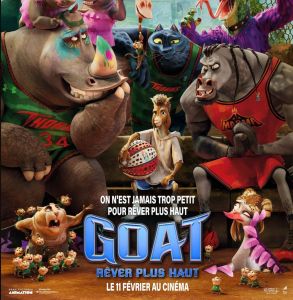
I expected a straightforward underdog story in which effort would solve every problem. The film follows some familiar sports-movie ideas, but its energetic animation and unusual animal world give those ideas a distinct personality. Roarball is not simply basketball with animal characters. It is presented as a fast, physical spectacle where different species bring completely different bodies, abilities, and playing styles onto the same court.
That setup allowed me to enjoy GOAT on two levels. I could follow Will’s personal attempt to prove himself, while also studying the fictional sport as though I were learning the mechanics of a new competitive game.
I Understood Will Before He Ever Reached the Professional Court
Will is easy to underestimate. His size makes other characters assume that he cannot survive the physical demands of roarball, and his ambition initially sounds unrealistic even to people who care about him.
What made him appealing to me was that his confidence never felt completely secure. He speaks and behaves like someone determined to prove that he belongs, but I could see how much every dismissive comment affected him. He does not simply ignore doubt. He stores it, carries it onto the court, and sometimes allows it to influence his decisions.
That insecurity made his early excitement believable. Receiving a professional opportunity does not instantly transform him into a polished athlete. He enters a world whose pace, expectations, and personalities are larger than anything he has previously experienced.
I recognized the feeling from competitive games. Moving into a higher rank can be exciting until the first match reveals how much faster everyone else processes the action. The controls have not changed, but familiar decisions suddenly stop working because stronger opponents punish every hesitation.
The Professional League Felt Like an Entire Ecosystem
One of my favorite creative choices was the all-animal sports world. Different body types influence how I read every player before they even move. A large animal appears capable of controlling space through strength, while a smaller competitor seems built around speed, precision, or unpredictability.
The film uses this visual language immediately. I do not need a detailed statistics screen to understand why certain players dominate the court. Their size, posture, movement, and reputation communicate their role.
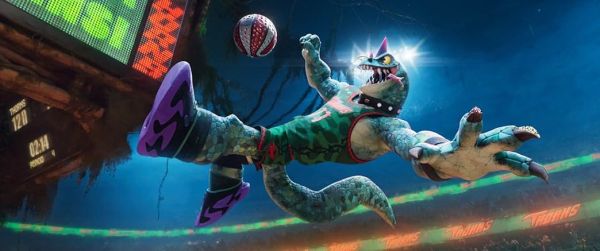
Roarball also feels more physical than a standard animated version of basketball. Players collide, launch through the air, change direction rapidly, and use the arena in exaggerated ways. The sport has enough familiar structure to remain understandable, but the animal athletes allow the action to move beyond normal human limitations.
I kept imagining how the league would function as a multiplayer game. Each species could have different attributes, while team composition would determine whether a lineup emphasized strength, speed, reach, control, or mobility. Will would appear weak on a basic statistics screen, yet his unusual proportions could create advantages that larger players do not initially recognize.
His First Practice Looked Like a Failed Tutorial
Will’s entrance into the professional environment is not comfortable. The experienced players already understand the rhythm of the sport, the expectations of the team, and the physical pressure of each session. Will arrives with enthusiasm but lacks the same level of experience.
I liked that the film allowed him to look unprepared. He does not immediately surprise everyone with a flawless performance. His movements are inconsistent, his confidence is challenged, and the gap between dreaming about the league and functioning inside it becomes clear.
His teammates are not eager to reorganize their entire approach around a small rookie. From their perspective, Will represents additional risk. They have careers, reputations, and established habits, while he arrives asking them to believe that the sport can be played differently.
This creates a more convincing challenge than simply facing an arrogant rival. Will must prove that he can contribute without expecting the team to trust him automatically. Enthusiasm is useful, but professional competition requires reliability.
The Team Was Not Waiting to Become His Family
Many animated sports stories introduce a group of misfits who immediately begin bonding after one motivational speech. GOAT gives its team more resistance. The players have individual personalities, existing relationships, and personal reasons for questioning Will’s presence.
I appreciated that Will could not earn everyone’s respect through charm alone. He had to show that his unusual style could create real value during matches. Even then, acceptance did not happen at exactly the same speed for every teammate.
The group dynamic reminded me of joining an established online squad. The team may technically have an open position, but that does not mean the current members are ready to trust a new player. They need to learn whether the newcomer communicates, understands the objective, and remains useful when the match becomes difficult.
Will’s desire to prove himself sometimes makes that process harder. He can become focused on producing one spectacular moment rather than making the simpler decision that benefits the entire lineup.
This was an important weakness. His ambition is necessary, but it can also become selfish when he starts treating every possession as a personal test.
Jett Fillmore Was More Interesting Than a Standard Sports Idol
Jett represents the established level of greatness Will hopes to reach. Her reputation, confidence, and physical presence make her appear almost impossible to challenge. When she enters a scene, I understand why younger players would study her career and imagine following the same path.
What interested me was the pressure behind that status. Being viewed as one of the league’s defining athletes means that every decline, mistake, or moment of uncertainty becomes more visible. Other characters do not see only a player. They see a symbol of what elite performance is supposed to look like.
Will initially approaches greatness as though it were a permanent state. He imagines that reaching the professional level will remove insecurity. Jett’s position reveals the opposite. The higher an athlete climbs, the more people expect them to remain there.
Their relationship works because Will needs more than technical instruction from her. He needs to understand what long-term competition demands emotionally. Talent may earn attention, but maintaining a career involves adaptation, responsibility, and the ability to continue after the public image of perfection begins to weaken.
Will’s Size Was a Limitation Until It Became Information
The film’s central message could have become overly simple: being small is secretly better than being large. I did not read it that way. Larger players still possess obvious advantages, and Will cannot pretend that physical differences do not matter.
His real progress begins when he stops trying to imitate athletes built for a different style. When Will plays as though he were physically larger, he competes under conditions that favor everyone else. When he studies what his own body can do, he begins identifying openings that other players overlook.
This is similar to learning a character with unusual mechanics in a competitive game. At first, the character can feel weak because the obvious strategy does not work. Improvement comes from understanding spacing, timing, movement, and matchups rather than copying the most popular playstyle.
Will’s smaller frame affects how he changes direction, moves through crowded spaces, and avoids direct physical confrontations. He cannot dominate the court through the same methods as a much larger animal, but he can disrupt expectations.
The difference between weakness and specialization becomes one of the film’s strongest ideas.
Roarball Matches Had the Energy of Boss Encounters
The major matches are built around escalating pressure rather than realistic sports pacing. Opposing players appear enormous, arenas amplify every reaction, and individual moments are presented with the intensity of final-stage confrontations.
I enjoyed how clearly the action communicated changing control. Even when several characters moved at once, I could usually understand which team had momentum, where the danger was developing, and what Will was attempting to accomplish.
The animation frequently changes perspective to emphasize speed and scale. A large player charging toward Will can make the court feel suddenly narrow. A quick change in direction can stretch the environment and turn a short movement into a dramatic escape.
The sport is exaggerated enough to create spectacle but consistent enough for tactical decisions to matter. I never felt that the result depended only on whoever produced the most visually impressive move.
Team positioning, confidence, and adaptation still influence the outcome. The spectacle works because it grows from the sporting conflict rather than replacing it.
I Could Almost See the Hidden Attribute System
As I watched each player, I began mentally assigning game statistics:
- strength for controlling physical space;
- speed for transitions and sudden attacks;
- reach for interceptions and defensive pressure;
- balance for surviving contact;
- court awareness for predicting movement;
- team chemistry for coordinated plays;
- confidence for performing under public pressure.
Will would begin with low strength and limited professional experience, but strong potential in agility, creativity, and determination. Jett would have elite attributes, although her emotional pressure might temporarily affect consistency.
This imagined system helped me appreciate that the characters did not need identical abilities to be valuable. A strong team requires players whose skills complement one another.
Will’s mistake is initially assuming that recognition comes from performing every role himself. The film gradually pushes him toward a more mature understanding: becoming important to a team does not require becoming the best at everything.
The Training Sequences Showed More Than Physical Progress
Training scenes are expected in a sports movie, but I liked how GOAT connected practice with identity. Will is not only improving technique. He is learning which parts of his original approach deserve to survive in the professional league.
At first, coaching and criticism can sound like instructions to become someone else. Will already fears that he does not fit the expected image of a roarball athlete, so every correction risks confirming that fear.
Gradually, he begins separating useful feedback from pressure to imitate others. He needs discipline, timing, and better decision-making, but he does not need to erase the qualities that made him noticeable in the first place.
That distinction made the progression more satisfying. Improvement does not mean replacing his personality with a generic professional attitude. It means giving his creativity enough structure to work consistently.
I have experienced a similar problem in games. Learning accepted strategies can improve performance, but following them too rigidly can remove the improvisation that originally made a playstyle effective.
The Film Understands the Difference Between Attention and Respect
Will receives attention because he is unusual. A small goat entering a league dominated by physically imposing animals naturally becomes a story. Cameras, fans, commentators, and other players notice him before they fully understand what he can do.
Attention initially feels like success. People know his name, discuss his size, and react strongly to his presence. However, being visible does not mean being respected.
Some characters treat him like a novelty. Others expect him to fail because his failure would confirm their assumptions about the sport. Even positive attention can become uncomfortable when it focuses entirely on how different he looks.
Will has to decide whether he wants to remain a surprising story or become a dependable athlete. One spectacular performance can create excitement, but repeated contribution creates trust.
This idea gave the sports narrative more depth. The goal is not simply to make everyone watch him. It is to change how they evaluate what a roarball player can be.
The Animal Designs Communicated Personality Immediately
The character design is one of the film’s most effective storytelling tools. Each animal’s species influences their silhouette, movement, and apparent role without completely determining their personality.
Larger characters occupy more of the frame and often move with visible weight. Smaller characters appear quicker and more reactive. Long limbs create unusual athletic possibilities, while horns, paws, hooves, tails, and different body shapes contribute to the visual comedy.
The designs remain expressive during fast scenes. I could read frustration, confidence, embarrassment, and surprise without needing every feeling explained through dialogue.
I also enjoyed how uniforms and accessories helped turn the athletes into recognizable public personalities. Professional sports involve image as well as performance, and the film’s players often look like carefully managed stars rather than anonymous competitors.
Will’s simpler appearance strengthens his early outsider status. He looks as though he has entered a world already full of established brands and legends.
Public Failure Felt More Dangerous Than Physical Contact
Roarball is presented as a rough sport, but the emotional threat often comes from being judged in front of an audience. A mistake does not happen privately. It becomes part of a player’s reputation.
Will is constantly aware that critics are waiting for proof that he does not belong. This makes him more likely to overcorrect after an error. Instead of returning to the basic plan, he may attempt something unnecessarily dramatic.
I understood that reaction. In a ranked match, one early mistake can make me feel that I need to compensate immediately. That urgency usually creates another poor decision.
The film shows how confidence can become unstable when it depends entirely on applause. Support from the crowd feels powerful, but the same crowd can turn doubtful just as quickly.
Will’s growth requires him to establish a reason for playing that survives changes in public opinion.
The Humor Worked Best Inside the Sporting World
GOAT includes plenty of physical comedy, exaggerated reactions, and jokes based on animal behavior. The humor was strongest for me when it grew naturally from the league.
Large athletes struggling with smaller spaces, unusual species using equipment differently, dramatic sports personalities, and chaotic team interactions all made the fictional world feel playful.
I was less interested when the comedy interrupted an emotional moment too quickly. The film sometimes seemed nervous about allowing a serious scene to remain quiet for long. A joke would arrive before the previous feeling had fully settled.
Still, the overall energy matched the story. GOAT is not attempting to become a heavy examination of professional athletics. It wants the pressure to feel real enough that Will’s journey matters, while keeping the experience bright and accessible.
The Predictable Parts Did Not Automatically Feel Weak
I could anticipate several major developments. An underestimated rookie would struggle. The team would resist him. A moment of progress would be followed by a setback. Personal ambition would conflict with teamwork before an important final challenge.
Those elements are familiar because they form the structure of many successful sports stories. What mattered was whether I cared about the characters moving through them.
GOAT kept me engaged through movement, humor, and the specific rules of its animal league. Even when I understood the likely emotional destination, I wanted to see how Will’s playing style would develop and how the team would begin using it.
A familiar progression can still be satisfying when each stage produces a visible change. Will does not finish the story as the same player with a larger audience. His relationship with competition, teamwork, and greatness evolves.
I Wanted More Time With the Supporting Team
The large roster gives the film visual variety, but not every teammate receives equal development. Several characters have memorable designs or comedic personalities without enough quiet scenes to reveal much beyond their role on the court.
I wanted to understand more about how the team functioned before Will arrived. Existing friendships, rivalries, and frustrations could have made his disruption feel even more significant.
The same applies to the league itself. Roarball is interesting enough that I would have enjoyed more detail about different teams, playing traditions, famous athletes, and how specific species changed the history of the sport.
The film gives me enough information to follow the story, but the world often seems larger than the plot has time to explore.
That is a good problem for an original animated movie to have. I left feeling that the setting could support additional stories rather than feeling that every possible idea had already been used.
The Central Question Was Not Whether Will Could Become Bigger
Will spends much of the story surrounded by players whose physical size appears to define professional excellence. The obvious solution would be for him to become stronger, more aggressive, or more similar to them.
Instead, the more important transformation is internal. He must stop treating his size as an apology. That does not mean ignoring practical limitations. It means refusing to interpret every difference as evidence of inferiority.
The film’s message worked for me because Will still has to train. Self-belief alone does not make him ready for professional competition. He improves through effort, coaching, mistakes, and experience.
Confidence becomes useful only when supported by skill and self-awareness.
By the later matches, Will is not asking the sport to pretend that he is physically identical to everyone else. He is demonstrating that its definition of a valuable player was incomplete.
Greatness Looked Different by the Final Match
At the beginning, Will appears to associate greatness with fame, spectacular plays, and becoming the athlete everyone discusses. He wants entry into the professional world because it represents the highest possible level of success.
By the final stages, greatness becomes less individual. It includes the ability to trust teammates, recover after public failure, and choose the right play rather than the most impressive one.
This does not remove his ambition. Will still wants to stand out and change the sport. The difference is that he begins understanding how individual creativity and team responsibility can support one another.
I found that progression more meaningful than a simple victory. Winning one match would not permanently settle every question about his career. Learning how to function inside the league gives him a foundation for challenges that continue beyond the film.
Why GOAT Worked for Me
GOAT combines a recognizable underdog narrative with an animated sports world that feels energetic enough to support its own game. Will’s journey is easy to follow, but the species-based competition, exaggerated physical action, and professional league culture give the story a visual identity beyond its familiar structure.
I enjoyed the film most when it treated roarball as a system rather than a background. Different athletes bring different strengths, and Will succeeds only after learning how his unusual abilities fit into the larger team.
From my perspective as a gamer, his progression feels like mastering a character the competitive community has already dismissed. The obvious attributes look weak, the standard strategy does not fit, and early matches seem to confirm every negative assumption. Then practice reveals a different approach—one based on timing, creativity, and exploiting opportunities other players cannot see.
The movie also understands that becoming the greatest is not a permanent achievement unlocked after one successful performance. It is an ongoing relationship with pressure, failure, adaptation, and teamwork.
Will enters the league hoping to prove that a small player can survive among much larger athletes. What makes his journey memorable is that survival is not enough. He wants to influence how the sport is played.
That ambition gives GOAT its strongest identity. It is not only a story about entering a world that says there is no place for you. It is about learning the world’s rules, developing the skill to compete within them, and then showing everyone that some of those rules were never as permanent as they appeared.
Pros:
- Groundbreaking cinematography with dynamic lighting and camera work
- Seamless integration of CGI with practical effects enhancing visual storytelling
- Rich character development with authentic and engaging performances
- Thought-provoking social commentary on technology, sustainability, and the human condition
- Immersive world-building and meticulous production design that transports viewers into a futuristic realm
- Captivating narrative that blends mystery with introspection
Cons:
- Occasional pacing issues during slower, character-driven scenes
- Mature themes and visuals that might not appeal to all audience segments
- Complex narrative that may be challenging for casual viewers









Movie Reviews

Minecraft

Grand Theft Auto V

Toca Boca World

Roblox

Leave a comment
Your comment is awaiting moderation. We save your draft here
0 Comments