
Review
Demon Slayer caught my attention with a tragedy so direct that the entire series could have collapsed into simple revenge. Tanjiro Kama...
Demon Slayer: A Mesmerizing Journey of Tradition, Innovation, and Emotion
Demon Slayer caught my attention with a tragedy so direct that the entire series could have collapsed into simple revenge. Tanjiro Kamado returns home to find his family gone and his sister Nezuko transformed into the very kind of creature responsible for the attack. From that moment, he has every reason to become bitter. Instead, he remains compassionate, observant, and stubbornly convinced that Nezuko’s humanity is still present.
That choice defines the anime more than its swords, supernatural techniques, or spectacular battles. Tanjiro does not enter the Demon Slayer Corps because he enjoys fighting. He wants to protect his sister, understand what happened to her, and prevent other families from experiencing the same devastation. Even when facing cruel enemies, he notices traces of the people they once were.
My experience with Demon Slayer moved between emotional sincerity and visual spectacle. One episode could present grief with surprising restraint, while the next filled the screen with elemental sword effects, collapsing buildings, dramatic internal monologues, and enough movement to make pausing feel necessary. The anime is not subtle in every area, but it is remarkably confident about what it wants me to feel.
I became invested because Tanjiro’s kindness never made him passive. He can feel sympathy for an enemy and still understand that the threat must be stopped. That balance gives the series a moral center strong enough to survive its louder comedy and increasingly enormous action sequences.
Tanjiro Is Strongest When He Is Still Learning
Tanjiro begins as a physically capable but inexperienced boy whose greatest advantages are discipline, empathy, and an unusually sensitive sense of smell. He is not introduced as a hidden master waiting to remember his power. His early progress is exhausting, repetitive, and painful.
I appreciated watching him learn basic survival before gaining the techniques that later define his fighting style. Training under Sakonji Urokodaki gives the opening arc a grounded sense of effort. Tanjiro repeats movements, fails tests, improves his breathing, and gradually understands that determination alone cannot overcome every obstacle.
Water Breathing suits his early personality. Its movement appears controlled, adaptable, and fluid rather than purely aggressive. When Hinokami Kagura later becomes increasingly important, the shift feels connected to family memory as well as physical growth.
The anime sometimes accelerates his improvement when the plot requires a dramatic breakthrough. Tanjiro can discover a new level of strength during extreme danger with remarkable timing. These moments are emotionally effective, though the pattern becomes predictable after several arcs.
His limitations remain important. He becomes injured, exhausted, frightened, and overwhelmed. Even when he wins a confrontation, the cost is visible. The series rarely allows major battles to feel effortless.
Nezuko Communicates More Than Her Limited Dialogue Suggests
Nezuko spends much of the story unable to speak normally, yet she never feels like a decorative companion. Her expressions, movement, protective instincts, and changing abilities communicate a clear personality.
The bamboo muzzle is the most recognizable part of her design, but the character works because she retains emotional connections despite her transformation. Her bond with Tanjiro is not based only on his memory of who she used to be. She repeatedly chooses to protect him and other humans.
I liked how Nezuko’s physical size could change according to the scene. She becomes smaller for travel or comedy, then appears more imposing when danger forces her demonic power forward. The visual contrast is effective, although some transformations lean heavily into dramatic presentation.
Her abilities occasionally create convenient solutions. When a battle reaches a nearly impossible point, Nezuko may reveal another useful property connected with her unusual condition. The story eventually provides reasons for her differences, but the timing can feel designed around immediate rescue.
Even with that criticism, she remains essential. Tanjiro’s promise would lose meaning if Nezuko were only a silent objective waiting at the end of the journey. Her actions prove that she is participating in the struggle for her own humanity.
Zenitsu Nearly Drove Me Away Before He Won Me Over
Zenitsu Agatsuma produced my most complicated reaction in the main cast. His fear is understandable. He knows enough about demons to recognize how easily he could die, and unlike Tanjiro, he does not naturally move toward danger with confidence.
The problem is volume. Zenitsu screams, complains, panics, chases affection, and turns simple conversations into extended performances. During the early episodes, his comedy often interrupted the atmosphere rather than improving it.
Then the anime reveals what happens when his conscious fear stops controlling him. His Thunder Breathing scenes are among the cleanest and most visually satisfying action moments in the series. He focuses on one fundamental technique and develops it beyond ordinary limits.
I enjoyed this approach more than giving him a broad collection of powers. His strength comes from repetition, precision, and the ability to turn one movement into something extraordinary.
Zenitsu also improves when the story gives him personal responsibility rather than using him only as comic noise. His later confrontations connect with mentorship, shame, loyalty, and the fear that he has failed to become the person someone believed he could be.
I never stopped finding some of his behavior irritating. The difference is that I eventually understood why he belonged beside Tanjiro and Inosuke.
Inosuke Turns Every Plan Into a Competition
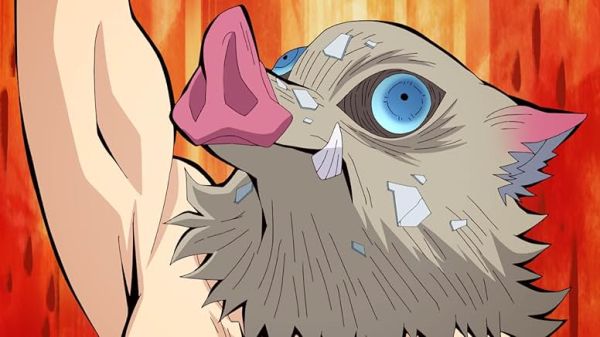
Inosuke Hashibira enters wearing a boar mask, carrying two damaged swords, and treating almost every living person as a potential rival. His first impression is ridiculous by design.
What surprised me was how quickly the comedy developed into character. Inosuke does not understand ordinary social behavior because he was raised outside normal human communities. Praise confuses him. Kindness affects him more deeply than he wants to admit. Teamwork initially feels like an insult to his independence.
His Beast Breathing gives him an unpredictable fighting style based on instinct, flexibility, spatial awareness, and aggressive movement. Where Tanjiro studies and adapts, Inosuke often charges forward and discovers the shape of a problem through direct contact.
The mask creates strong visual comedy, especially when the anime contrasts his rough behavior with the unexpectedly delicate face beneath it. More importantly, it allows his body language to carry emotion before he becomes comfortable expressing it verbally.
I enjoyed watching him slowly develop concern for other people. He never becomes calm or conventionally polite. His growth appears through small changes: recognizing another person’s pain, accepting help, or entering danger for reasons that are not entirely competitive.
The Hashira Feel Like Separate Genres Sharing One Organization
The Hashira are introduced as the strongest swordsmen in the Demon Slayer Corps, but raw power is not what makes them memorable. Each carries a different visual style, temperament, training history, and relationship with the organization.
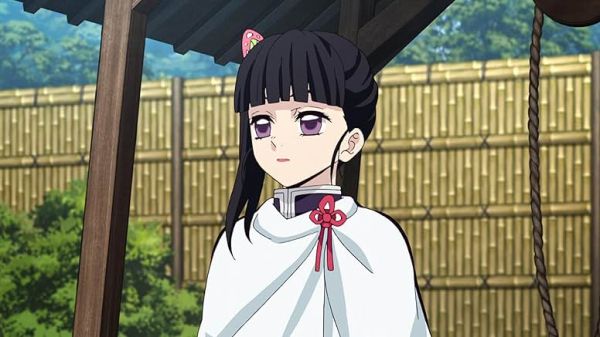
Giyu Tomioka’s restraint gives him an almost severe presence, yet his early decision to spare Nezuko makes Tanjiro’s entire journey possible. Shinobu Kocho speaks gently while carrying intense anger beneath her politeness. Tengen Uzui approaches danger with theatrical confidence and a demand for everything to appear spectacular.
Muichiro Tokito initially seems emotionally absent, while Mitsuri Kanroji is open, affectionate, and visibly delighted by the people around her. Sanemi Shinazugawa appears almost entirely shaped by rage. Gyomei Himejima combines overwhelming strength with prayer, grief, and humility.
Rengoku made the strongest immediate impression on me. He is loud, disciplined, direct, and completely committed to protecting others. His enthusiasm could have become parody, but his certainty gives the Mugen Train arc its emotional structure.
The Hashira Training arc is especially valuable because it allows these personalities to interact outside isolated battles. Not every segment is equally engaging, but the arc transforms legendary figures into people carrying exhaustion, guilt, rivalry, and unresolved family wounds.
Mugen Train Changed the Scale of My Attachment
The Mugen Train story begins with a clever horror idea: passengers become trapped inside dreams designed to keep them emotionally satisfied while an enemy attacks their vulnerable bodies.
Tanjiro’s dream is especially painful because it gives him back the family he lost. The sequence does not rely only on danger. It asks whether he can voluntarily abandon happiness when he knows it is false.
Rengoku dominates the arc through presence rather than long-term screen time. He treats responsibility as something obvious. Protecting every passenger is not a heroic fantasy to him; it is simply what his position requires.
The final confrontation shifts the arc away from the original train threat and toward a battle built around opposing beliefs. Rengoku sees strength as a duty to protect those with less power. Akaza sees strength as value in itself and considers human mortality a defect.
I found the emotional ending effective because the series allows consequences to remain. There is no convenient reversal restoring the status quo. Tanjiro, Zenitsu, and Inosuke continue carrying what happened into later arcs.
The anime sometimes pushes the grief very hard through repeated reactions and extended music. Even so, the emotional foundation is strong enough to support the intensity.
The Entertainment District Arc Is Beautiful, Loud, and Relentless
The Entertainment District arc expands the visual world dramatically. Night streets, layered buildings, patterned clothing, interior spaces, lantern light, and crowded rooftops give the setting a distinct identity.
Tengen Uzui initially appears self-absorbed, but the story gradually reveals a man consciously rejecting the values of the shinobi environment that shaped him. His three wives are not treated only as comic accessories; they participate in intelligence gathering and understand the danger of his work.
Daki and Gyutaro function effectively because they are emotionally inseparable. Their cruelty is undeniable, yet their history reveals how poverty, humiliation, and dependence shaped their relationship.
The battle occupies a huge portion of the arc and continuously escalates. Buildings collapse, poison spreads, characters exceed their physical limits, and apparent victories become temporary.
Ufotable’s animation reaches an extraordinary level here. Movement, lighting, fire, debris, and sword effects combine into sequences that feel almost impossibly polished for television anime.
The downside is exhaustion. The confrontation contains so many last-second recoveries and renewed attacks that I occasionally stopped believing any apparent defeat. The spectacle remained impressive, but the dramatic rhythm became stretched.
Swordsmith Village Gives Supporting Characters More Space
The Swordsmith Village arc separates Tanjiro from Zenitsu and Inosuke, which changes the energy immediately. Without the familiar trio constantly reacting to one another, the story spends more time with Muichiro, Mitsuri, Genya, and the craftspeople responsible for the Corps’ weapons.
I enjoyed seeing swordsmiths treated as more than invisible suppliers. Their work is essential, and the village represents a practical weakness in the Demon Slayer organization. Protecting the fighters means protecting the people who make their weapons possible.
Muichiro’s development begins with emotional distance and gradually reconnects him with memory, anger, and purpose. His calm Mist Breathing produces some of the most elegant visual effects in the anime.
Mitsuri brings a very different energy. Her Love Breathing is flexible, fast, and visually playful, while her personal history deals with the pressure to hide qualities that made her unusual.
Genya’s presence creates useful tension because he does not fight like the others. His methods feel rougher and less graceful, reflecting frustration about abilities he does not possess.
The arc is visually strong but structurally uneven. Its two main threats receive less balanced development, and certain comic material interrupts moments that would benefit from greater tension.
Hashira Training Slows Down Before the Final Descent
After several arcs built around immediate attacks, Hashira Training provides preparation, character interaction, and a growing sense that everyone understands the next conflict may be final.
I liked seeing ordinary Demon Slayer Corps members struggle through training designed by the strongest fighters. The physical challenges communicate the enormous gap between the Hashira and everyone else.
Tanjiro’s ability to connect with different personalities becomes especially useful. He does not solve every emotional problem, but his direct kindness forces isolated characters to acknowledge the people around them.
The pacing can feel thin because the arc is transitional by nature. Some episodes stretch relatively simple training stages, and viewers waiting for another major battle may become impatient.
For me, the slower rhythm created necessary anticipation. The anime needed space to gather its characters, reveal remaining tensions, and make the coming conflict feel like an event involving the entire organization.
The arrival of Muzan at the Ubuyashiki estate changes that calm instantly. The shift works because the previous episodes allowed me to feel how much preparation was at stake.
Muzan Is Frightening Because He Treats Everyone as Disposable
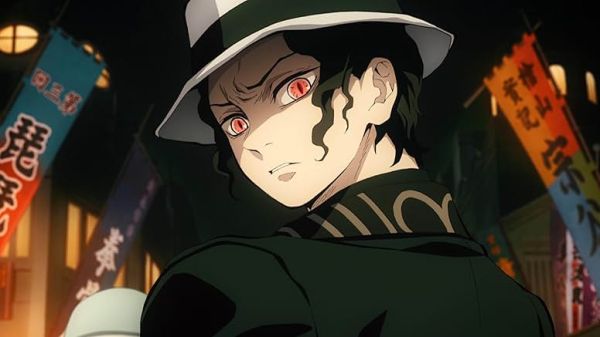
Muzan Kibutsuji possesses elegance, control, and extraordinary power, but his defining quality is contempt. He does not create loyal followers through respect. He controls them through fear, hierarchy, and the knowledge that failure may be punished immediately.
His appearance can change, allowing him to move through human society while concealing his identity. These transformations make him feel less like a monster waiting in one fortress and more like a threat capable of entering ordinary life.
I found his interactions with the Upper Rank demons more revealing than many direct displays of power. He encourages competition while denying genuine trust. Every relationship beneath him is unstable.
His obsession with overcoming sunlight gives the story a clear biological objective, but his behavior reveals a deeper fear of limitation. He cannot accept that anything in the world should remain beyond his control.
The anime occasionally presents him with such complete authority that I wondered why he allowed threats to grow for so long. His arrogance explains part of this, though certain decisions remain convenient for the story.
The Upper Ranks Carry the Series’ Most Difficult Emotional Material
Demon Slayer repeatedly reveals the human histories of its enemies near the end of their battles. This structure could become manipulative, and sometimes it does. A tragic past does not erase what a character has done.
The strongest backstories do not ask me to forgive. They explain the path from human pain to monstrous behavior.
Gyutaro and Daki are shaped by poverty, exploitation, and sibling dependence. Akaza’s identity is connected with love, discipline, loss, and a life that repeatedly punished every attempt at belonging. Other demons reveal jealousy, fear, ambition, or the desire to escape weakness.
Tanjiro’s compassion allows these stories to exist without reducing the danger. He can recognize sadness while still protecting people from the person that sadness helped create.
The repeated timing is noticeable. Once an enemy begins remembering childhood, I understand that the confrontation is approaching its emotional ending. Greater variation in when and how these histories appear would make them less predictable.
Breathing Styles Turn Swordsmanship Into Visual Mythology
One of Demon Slayer’s most recognizable choices is representing sword techniques through water, fire, lightning, mist, insects, sound, love, wind, stone, and other visual forms.
These effects give every fighter an immediate identity. Water Breathing flows through controlled arcs. Thunder Breathing emphasizes explosive acceleration. Flame Breathing appears forceful and direct. Mist obscures movement and perception.
The styles are not only cosmetic. They reflect personality, training, body type, and philosophy. Tengen’s Sound Breathing fits his theatrical awareness of rhythm. Shinobu’s Insect Breathing compensates for limitations through precision and poison.
I appreciated how the anime makes techniques readable even during complex fights. Named forms can become excessive, but they give structure to movement that might otherwise appear as one continuous sequence of flashes.
The visual effects sometimes create confusion about what physically exists in the scene. I learned to treat them as expressive representations of technique rather than literal elemental magic in every instance.
Ufotable Makes Darkness Look Expensive
The animation is the most immediately impressive element of Demon Slayer. Ufotable combines detailed character art, digital effects, camera movement, three-dimensional environments, and carefully controlled lighting.
Night battles benefit enormously from this approach. Sword effects remain bright against dark forests, streets, and interiors, while moonlight and fire create clear silhouettes.
The camera frequently moves through environments in ways that would be difficult with traditional flat staging. Characters run across rooftops, fall through rotating spaces, and fight while the viewpoint follows their momentum.
Infinity Castle pushes this visual design even further. Rooms, platforms, staircases, and gravity appear to reorganize around the characters, creating a battlefield that feels intentionally impossible.
The presentation is not flawless. Digital backgrounds occasionally appear smoother or less tactile than foreground characters. Certain effects become so elaborate that they risk hiding the choreography beneath color and debris.
Most of the time, the technical ambition supports rather than replaces the emotion. The most memorable attacks matter because I understand who is performing them and what the moment costs.
The Comedy Is the Part I Most Often Wanted to Restrain
Demon Slayer uses exaggerated facial expressions, shouting, sudden visual simplification, and physical reactions to release pressure between darker scenes.
Some of this comedy works beautifully. Inosuke misunderstanding kindness, Tanjiro responding seriously to absurd behavior, and the group failing to function like ordinary friends can be genuinely funny.
The problem appears when the anime moves from grief or suspense into extended screaming without enough transition. Zenitsu is responsible for many of these moments, though he is not the only character used this way.
The comedy can also repeat one personality trait until it becomes a complete scene. Zenitsu is frightened, Inosuke wants competition, Mitsuri becomes overwhelmed by affection, and another character reacts loudly.
I never wanted the humor removed entirely. Without it, the series would become emotionally oppressive. I wanted better control over duration and placement.
The Music Knows When to Become Enormous
The score combines orchestral power, traditional Japanese textures, choral elements, percussion, and quieter melodic themes. Major battles receive music that matches their scale without making every confrontation sound identical.
Tanjiro and Nezuko’s shared moments often use music to reconnect the supernatural story with family grief. Rengoku’s themes carry confidence and warmth. The Upper Rank battles use heavier, less stable sound to emphasize danger.
Opening and ending songs contribute strongly to each arc’s identity. I associated particular music with specific settings long after finishing the episodes.
The anime occasionally uses silence more effectively than another musical crescendo. A pause before movement or a quiet reaction after a battle can communicate exhaustion better than constant scoring.
Why I Continued Despite Knowing the Formula
After several arcs, I understood the pattern. Tanjiro enters a new location, meets a Hashira or supporting fighter, discovers a powerful enemy, becomes pushed beyond his limits, and learns another painful history.
The formula is visible, but the characters attached to it change the emotional result. Rengoku’s certainty does not feel like Tengen’s theatrical confidence. Muichiro’s isolation does not resemble Mitsuri’s openness. Akaza’s history creates a different response from Gyutaro’s.
The story also maintains a clear destination. Tanjiro wants to restore Nezuko and confront Muzan. Every arc contributes training, information, relationships, or consequences connected with that goal.
I rarely felt that the anime had forgotten its central promise. Even when side characters received attention, Nezuko’s condition and the threat of Muzan remained present.
My Experience With the Infinity Castle Shift
Entering Infinity Castle feels like crossing a boundary the earlier series spent years approaching. The Demon Slayer Corps no longer has the luxury of recovering between separate missions. Major fighters are divided across a shifting fortress and forced into confrontations carrying years of unresolved history.
The setting is visually ideal for the final stage because it removes ordinary geography. Floors become walls, rooms move, distances change, and characters can be separated instantly.
I found the scale thrilling, but the structure naturally divides attention across several battles. Emotional momentum can pause when the story moves to another group.
The advantage is variety. Each confrontation has a different relationship, fighting style, and emotional purpose. The final arc is not one continuous duel but the collision of many personal histories.
Who Should Watch Demon Slayer?
I would recommend Demon Slayer to viewers who enjoy action anime, emotionally direct storytelling, supernatural folklore, strong sibling relationships, highly polished animation, and clearly defined heroic goals.
It is approachable for people who do not watch much anime because the central premise is easy to understand. The terminology grows over time, but the emotional motivations remain clear.
Viewers sensitive to graphic fantasy violence, frightening creature designs, family tragedy, or prolonged suffering should approach carefully. The colorful sword effects do not remove the darker material.
People who dislike loud comedy, repeated internal monologues, named techniques, or emotional flashbacks may find the presentation exhausting.
What Demon Slayer Does Better Than Its Reputation Suggests
The series is often praised primarily for animation, which can make the writing sound secondary. I think that description is incomplete.
The plot is not unusually complicated, but clarity is one of its strengths. Tanjiro’s motivation is immediate, the major threat is established early, and emotional relationships carry across arcs.
The anime also understands that compassion and strength do not need to oppose each other. Tanjiro’s empathy does not prevent action. It prevents action from becoming empty.
Supporting characters receive enough history to affect how I interpret their battles. Even when the structure is predictable, the emotional specifics often work.
My Final Verdict
Demon Slayer: Kimetsu no Yaiba is a visually extraordinary action series built around a surprisingly simple emotional foundation. Tanjiro wants to save his sister, honor his family, and protect strangers from the suffering he already understands.
The anime’s strengths are immediate: beautiful animation, memorable character designs, distinct fighting styles, powerful music, emotional battles, and a central sibling relationship that remains important throughout the story.
Its weaknesses are equally visible. Comedy can become loud and repetitive, battles sometimes rely on several consecutive last-second breakthroughs, enemy histories follow a recognizable pattern, and emotional scenes occasionally continue after their strongest moment has already landed.
I still found the journey compelling because the series rarely becomes cynical. It acknowledges cruelty, grief, jealousy, fear, and institutional sacrifice without suggesting that kindness is foolish.
I rate Demon Slayer 8.8/10. The animation may be the first reason many viewers notice it, but Tanjiro’s refusal to surrender his compassion is the reason the story stays with me. The swords create the spectacle. The relationships give that spectacle meaning.
Pros:
- Breathtaking visuals showcasing fluid animation and vibrant, symbolic color palettes
- Innovative narrative techniques that challenge traditional storytelling formats
- Rich symbolism that deepens the understanding of the characters' internal struggles
- Meticulous attention to detail in both artistry and sound design, creating an immersive experience
- A harmonious blend of traditional cultural elements with modern digital animation techniques
- Captivating storytelling that engages viewers on multiple emotional levels
Cons:
- Some cultural references might not resonate with a global audience
- Certain side characters could benefit from more in-depth development to enhance their roles
- Complex narrative pacing may be challenging for viewers expecting linear storytelling









Movie Reviews

Minecraft

Grand Theft Auto V

Toca Boca World

Roblox

Leave a comment
Your comment is awaiting moderation. We save your draft here
0 Comments