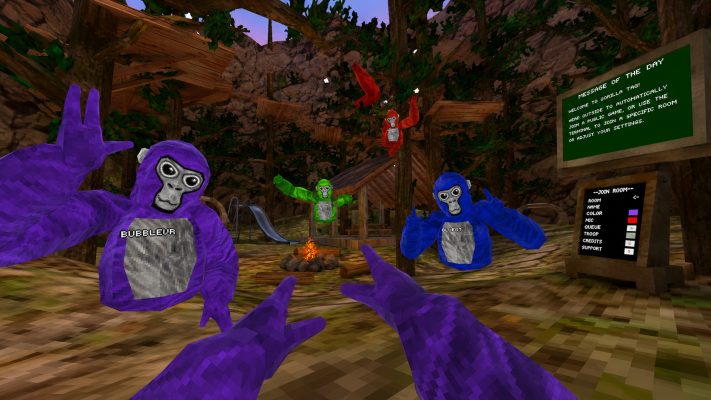
Gorilla Tag looks simple until you try it for the first time. There are no traditional buttons for walking, no smooth joystick movement, and no quiet little tutorial that politely carries you through everything. Instead, you move like a gorilla by pushing, swinging, climbing, jumping, and launching yourself with your arms. At first, this can feel strange, funny, and slightly unfair to your furniture if your play space is too small.
This beginner course is designed to help new players move from awkward first swings to confident movement. Gorilla Tag is not only about being fast. It is about rhythm, body control, map awareness, smart climbing, and knowing when to chase or escape. The best players do not just flap their arms wildly and hope physics becomes friendly. They understand how each push sends them forward, upward, sideways, or into a tree with educational force.
We will go through 7 practical steps: setting up your space, learning basic movement, controlling jumps, climbing, wall running, chasing, and improving through practice. The goal is not to become the fastest player in one day. The goal is to stop feeling lost, move with more control, and enjoy the game without turning every match into accidental arm cardio.
Step 1: Set Up Your Play Space Before You Start Swinging
Before learning movement, make sure your real-world space is safe. Gorilla Tag can be energetic because your arms do most of the work. Beginners often get excited, reach too far, swing too wide, or forget that the real world still contains walls, desks, lamps, pets, chairs, and other objects that did not agree to join the match.
A good play setup makes the game feel better immediately. You want enough room to move your arms freely in every direction. Stand in the center of your play area and slowly stretch your arms around you. If you touch furniture, the space is too tight. Gorilla Tag becomes much more fun when you are thinking about movement instead of worrying that your controller is about to meet a bookshelf.
- Clear your space before playing so you can swing without hitting objects.
- Use a secure headset fit because fast arm movement can shift your headset.
- Start slowly during your first sessions to understand your real movement range.
- Take breaks if your arms, shoulders, or wrists feel tired.
- Keep water nearby because Gorilla Tag can become a workout very quickly.
This step may sound basic, but it matters. Confident movement starts with a safe setup. If your brain trusts the space around you, you move more naturally inside the game.
Step 2: Learn the Basic Push Before Trying Fancy Movement
The main movement idea in Gorilla Tag is simple: your hands push against surfaces, and your body moves away from that push. If you push backward against the ground, you move forward. If you push downward and backward, you can launch forward and slightly upward. If you push too hard without control, you may fly in a direction your plan did not approve.
Beginners often swing both arms quickly and randomly. That creates movement, but not control. Instead, practice single-arm pushes first. Put one hand on the ground, push behind you, and see how your body moves. Then try the other hand. After that, use alternating arm pushes, almost like crawling or running with your hands. The goal is smooth rhythm, not maximum speed.
- Place one hand on the ground. Feel how the game reacts when you push.
- Push backward to move forward. Keep the motion controlled and not too wide.
- Alternate hands. Build a left-right rhythm instead of using both arms randomly.
- Keep movements compact. Huge swings are tiring and harder to control.
- Practice stopping. Movement control includes slowing down, not only going faster.
A good beginner should spend time simply moving across flat ground. It may not look impressive, but it teaches the foundation for every chase, escape, climb, and wall move later. If your ground movement is messy, advanced movement will feel like trying to do parkour on a banana peel.
Step 3: Control Your Jumps Instead of Launching Yourself Everywhere
Jumping in Gorilla Tag is powerful because it lets you move between surfaces, escape tags, reach branches, and climb faster. But uncontrolled jumping is one of the easiest ways to lose direction. Beginners often push too hard, fly past the target, miss the branch, hit a wall badly, or land in front of the player they were trying to avoid. The game is very honest about bad angles.
A controlled jump comes from angle and force. If you push straight down, you go upward. If you push backward and down, you move forward and up. If you want a shorter jump, use a smaller push. Practice jumping between easy nearby surfaces before trying long launches. Learn how much force your arms need for different distances.
- Use small jumps first to understand distance and landing control.
- Aim your body before pushing so your jump has direction.
- Look toward your landing spot instead of staring at the ground.
- Use one strong push for clean jumps rather than several panicked movements.
- Practice landing softly by preparing your next hand contact before you arrive.
Jumping becomes much easier when you stop treating it like an emergency button. Think of each jump as a planned movement from one safe point to another. Speed comes later. Accuracy comes first.
Step 4: Start Climbing With Short, Controlled Pulls
Climbing is one of the most important skills in Gorilla Tag. It lets you reach trees, walls, platforms, and better escape routes. At first, climbing can feel awkward because you are not using normal game controls. You are physically pulling and pushing yourself through the environment with your hands.
The beginner trick is to avoid giant arm movements. Short, repeated pulls are easier to control. Grab or touch the surface, push down or pull your body upward depending on the angle, then quickly place the other hand higher. Climbing is rhythm. If you panic and swing too wide, you lose contact with the surface and slide or fall.
- Start on easy vertical surfaces before trying complex routes.
- Use short hand placements. Smaller movements keep you close to the wall or tree.
- Alternate hands steadily. Do not rely on one arm for every pull.
- Stay close to the surface. If you drift too far away, climbing becomes harder.
- Look where your next hand will go. Planning the next contact keeps movement smooth.
Climbing feels slow at first, but that is fine. Control matters more than speed. A player who climbs steadily will escape better than a player who launches upward once and then falls like a confused coconut.
Step 5: Learn Wall Movement One Piece at a Time
Wall running and wall climbing look amazing when experienced players do them, but beginners should not rush into advanced wall movement immediately. Wall movement requires timing, angle, and repeated contact. If you push too directly into the wall, you may lose speed. If you push too far away, you disconnect. If you move too wide, your arms get tired quickly.
Start by practicing simple wall contact. Stand near a wall, place one hand on it, and push slightly downward and backward to move along it. Do not try to cross the whole wall immediately. Learn how the surface responds. Then practice small repeated pushes. The goal is to stay connected while moving sideways or upward.
- Practice on lower, safer wall sections before trying tall routes.
- Keep hand movements short so you do not lose contact.
- Push at an angle instead of straight into the wall.
- Use rhythm rather than random speed.
- Accept small progress. Wall movement takes time to feel natural.
Do not feel bad if wall movement seems impossible at first. Many players struggle with it. The skill improves when your body learns the timing. One day you will suddenly make a smooth wall move and feel like you have unlocked a secret language. Then you may immediately miss the next wall. That is also part of the course.
Step 6: Chase Smarter by Predicting Movement
Tagging another player is not only about moving fast. If you chase directly behind someone, they can lead you into bad angles, sudden turns, trees, walls, or routes where they are more comfortable. Smart chasing means predicting where the player is going and cutting off their path instead of copying every movement.
Watch the player’s direction. Are they heading toward a tree? A wall? A branch route? A common escape path? Instead of following their exact trail, move toward where they will be next. This is especially useful against players who are faster than you. You may not beat them in pure speed, but you can make their route smaller.
- Watch the target’s next surface. Players usually move toward familiar escape points.
- Cut corners. Do not follow the longest path if a shorter route exists.
- Use height carefully. Being above a player can create better tagging chances.
- Stay calm near the tag. Panicked lunges often miss.
- Force mistakes. Pressure can make players choose bad routes.
A good chase is controlled pressure. You do not need to tag instantly. Stay close, reduce their options, and wait for the mistake. Many tags happen because the escaping player runs out of clean movement choices.
Step 7: Escape With Routes, Not Panic
Escaping feels exciting because every second matters. But beginners often panic when someone gets close. They swing too hard, miss surfaces, jump without a plan, or run into open areas where they have fewer options. A strong escape uses routes. You should know where you want to go before the chaser is right behind you.
Good escape routes include surfaces you can reach consistently. If you are great at trees but weak at walls, use trees. If you are confident on low platforms, use them. If you know a loop around a map section, practice it until it feels natural. Escaping is not about using the hardest route. It is about using a route you can perform under pressure.
- Choose familiar routes when someone is close behind you.
- Change direction suddenly only when you can control the next movement.
- Use vertical movement to make chasing harder.
- Avoid open flat areas if the chaser is faster on the ground.
- Keep your next move ready before landing or touching a surface.
The best escape is not always the fastest. Sometimes it is the one that gives you the most options. If you can move from ground to tree, tree to branch, branch to wall, and wall back to ground, the chaser has to keep adapting. That is how you create space.
Conclusion
Gorilla Tag becomes much more fun when movement starts to feel intentional. Your first sessions may feel awkward, but every push teaches you something. Learn the basic ground swing. Control your jumps. Climb with short pulls. Practice wall movement slowly. Chase by predicting routes. Escape by using familiar paths instead of panic.
Confident movement does not come from wild arm speed. It comes from rhythm, control, map knowledge, and practice. Start slow, stay safe, and focus on one skill at a time. Soon the same maps that felt confusing will begin to feel readable, and every chase will become less random and more like a movement puzzle you actually know how to solve.






Leave a comment
Your comment is awaiting moderation. We save your draft here
0 Comments