
Review
MECCHA CHAMELEON gave me one of the strangest multiplayer disguises I have ever created: a poorly painted section of wall with two susp...


MECCHA CHAMELEON: The Adaptive Cyber Odyssey That Evolves with You
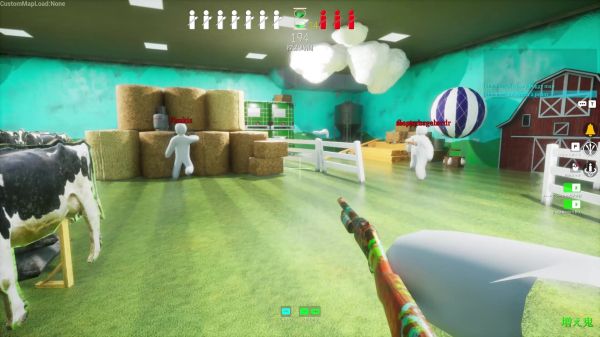
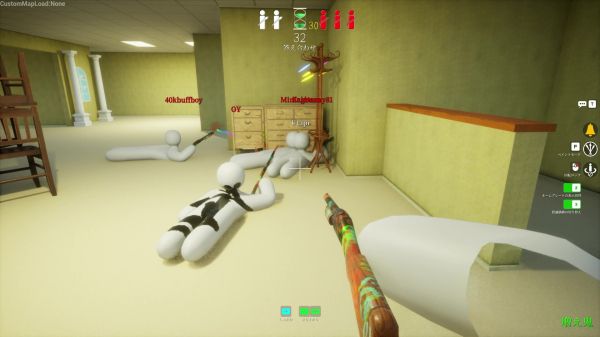
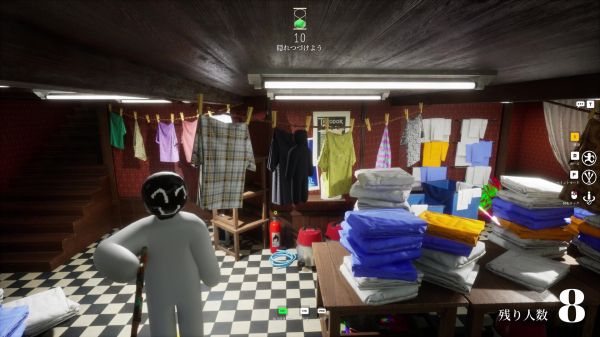
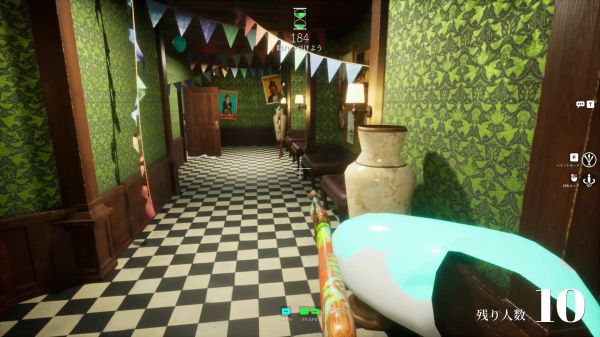
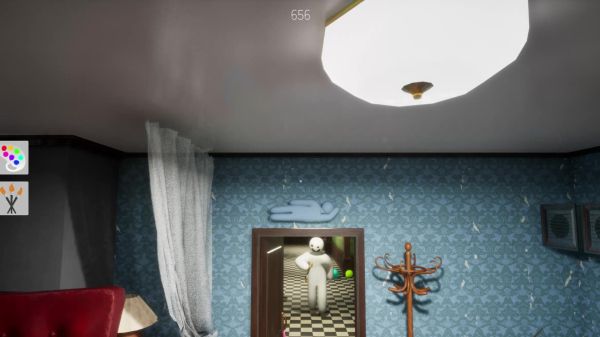
MECCHA CHAMELEON gave me one of the strangest multiplayer disguises I have ever created: a poorly painted section of wall with two suspicious legs. The game’s central idea is wonderfully simple because Hiders begin as plain white figures and must cover their bodies with colors taken from the surrounding environment. A successful disguise depends on choosing the right location, matching its patterns, and arranging the character in a pose that does not immediately look human. My artistic ability was frequently questionable, but that only made the resulting rounds more entertaining.
I initially expected something close to a conventional prop-hunt game where players transform into existing objects and search for a convincing place to stand. MECCHA CHAMELEON gives the Hider much more creative responsibility because the environment does not automatically provide a perfect disguise. I had to examine colors, lighting, shapes, and viewing angles before painting my body manually. The game therefore feels like a mixture of hide-and-seek, visual deception, improvised digital art, and social comedy.
From my perspective as a gamer, the best part is that technical perfection is not always necessary. A beautiful disguise can fail because it was placed in an obvious location, while an ugly design may succeed because the Seeker assumes nobody would attempt something so ridiculous. Every round becomes a test of perception rather than mechanical speed alone. I am not simply hiding from another player; I am trying to predict what that player considers normal.
Painting My Own Camouflage Changes the Familiar Formula
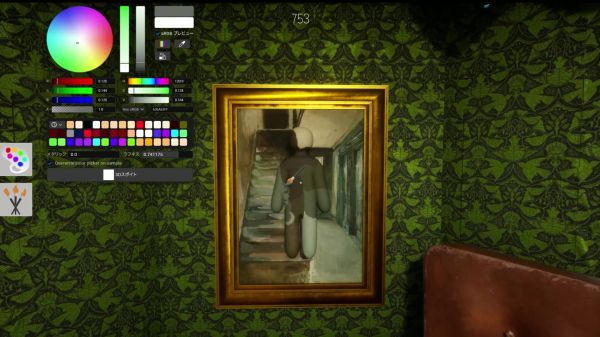
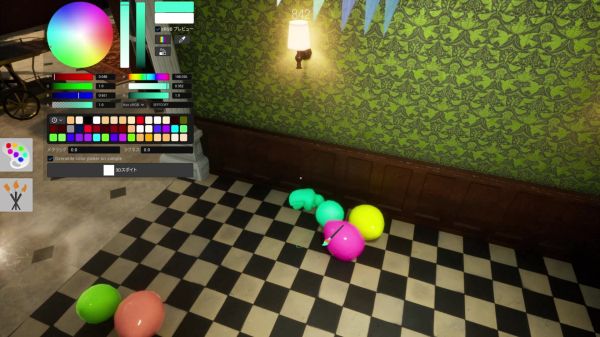
The painting mechanic is what separates MECCHA CHAMELEON from most hide-and-seek games. Instead of pressing one button to become a chair or box, I need to build the disguise directly on the character’s body. I can copy nearby colors, cover different areas, and attempt to reproduce the visual structure of the chosen hiding place. This process gives every disguise a personal quality because even two players using the same wall may paint themselves differently.
I enjoyed how quickly the preparation phase became a creative challenge. A plain surface looked easy until I noticed shadows, edges, decorative lines, and small color changes that could expose the character. More detailed objects offered better camouflage but required much more careful painting. The game constantly asks whether I should attempt an ambitious imitation or choose a simpler design that can be completed reliably.
Color Matching Is Only the Beginning
My earliest disguises focused entirely on selecting the closest possible color. That helped, but the human outline remained easy to recognize whenever the body stood in an unnatural position. The shape of the pose, direction of the limbs, distance from the surface, and location of the head mattered just as much as the paint itself. A perfectly matched color could not save a figure that looked like someone standing politely beside a cupboard.
I gradually began selecting hiding places according to the body shape they could support. Long horizontal patterns worked well when the character could stretch across them, while narrow decorative objects required a compact pose. Corners offered useful visual confusion because they broke the silhouette naturally. MECCHA CHAMELEON rewards players who think about composition rather than treating camouflage as a flat color-selection task.
Copying Environmental Colors Makes Experimentation Fast
The ability to sample colors directly from the environment prevents the painting process from becoming an exhausting search through a complicated palette. I could approach a surface, capture its main tone, and begin covering the avatar immediately. This gave me enough time to think about secondary details and positioning before the hiding period ended. The tool is easy to understand even when the resulting artwork is far from convincing.
I appreciated that color sampling does not automatically complete the disguise. Lighting, texture, and surrounding objects still influence how the sampled color appears on the character. A shade taken from one location may look noticeably different after I move elsewhere. The tool supports creativity without replacing observation.
Patterns Separate Functional Disguises From Great Ones
A single color can work against a large plain wall, but many maps contain stripes, panels, signs, shelves, windows, and decorative textures. Recreating even a small part of those patterns makes the body much harder to identify. I began using lines and contrasting patches to continue shapes already present behind the character. When the alignment worked, the body appeared less like a painted person and more like an extension of the environment.
The challenge is completing enough detail before the timer ends. Spending too long on one small pattern can leave the rest of the body bright and obvious. I learned to establish the major colors first and add only the details visible from the Seeker’s likely approach. The most effective disguise is not necessarily the most complete painting; it is the one that controls the important viewing angle.
Posing Is Where the Real Deception Happens
The avatar can be arranged into different positions, allowing the body to imitate shapes that would be impossible while standing normally. Limbs can disappear along environmental lines, and the torso can become part of a larger object. The pose determines whether the disguise appears intentional or immediately suspicious. Painting and positioning need to be planned together rather than completed as separate tasks.
I enjoyed experimenting with poses because one small adjustment could transform a hopeless location. Lowering the body removed a recognizable shoulder line, while extending an arm continued the edge of a nearby decoration. Other changes made the figure look even more unnatural and attracted attention instantly. MECCHA CHAMELEON turns body language into a stealth mechanic.
A Good Location Can Carry Imperfect Artwork
Some areas naturally contain enough visual clutter to hide painting mistakes. Shelves, machinery, posters, plants, and overlapping decorations provide shapes that distract the Seeker’s attention. A rough disguise placed among them can survive because the scene already contains several irregular elements. Plain rooms offer fewer opportunities because every unusual outline becomes important.
I often achieved better results by choosing a strong location quickly rather than spending the entire preparation period searching for a perfect one. A good surface gave me time to paint and test the pose from several angles. Arriving late at an excellent hiding spot usually produced a rushed disguise that failed immediately. Location quality matters, but preparation time remains a valuable resource.
Obvious Hiding Places Create a Psychological Trap
The most visually suitable location is often the first place an experienced Seeker checks. Large paintings, empty wall sections, and conveniently shaped decorations attract attention precisely because they appear designed for camouflage. This creates an interesting conflict between artistic quality and predictability. A perfect imitation can still fail when the opponent expects someone to be there.
I began hiding near strong locations rather than directly inside them. Seekers frequently inspected the obvious surface carefully and ignored the less impressive disguise several steps away. The strategy worked because their attention had already found a convincing target. MECCHA CHAMELEON rewards players who camouflage their intentions as well as their bodies.
Terrible Art Can Become a Successful Mind Game
Some of my longest survivals came from disguises I considered complete failures. The colors were slightly wrong, the pose was awkward, and the body did not resemble any specific object. The Seeker looked directly at me and continued moving, possibly assuming that no player would choose such a visible location. My lack of artistic skill accidentally became another layer of deception.
This unpredictability prevents the game from becoming a competition only for talented digital painters. Observation and psychology remain just as important. A visually impressive player may be discovered because the disguise is too carefully placed, while a beginner survives through confidence and absurdity. MECCHA CHAMELEON allows imperfection to create memorable strategy.
Playing as a Seeker Requires a Different Type of Vision
The Seeker’s task appears straightforward because every Hider must be somewhere inside the map. In practice, searching requires learning which environmental details should be trusted. I found myself examining shadows, repeated patterns, object spacing, and surfaces that looked slightly more complicated than expected. The entire map became suspicious after I had seen what creative players could imitate.
I enjoyed the transition from artist to detective because the same environmental knowledge supports both roles differently. As a Hider, I search for shapes that can absorb my body. As a Seeker, I search for shapes that may have been created by a body. Every successful disguise teaches the opposing team another visual clue for future rounds.
Movement Can Reveal More Than Appearance
A disguised player may remain visually convincing until panic creates a small movement. One adjustment, rotation, or attempt to escape can immediately separate the character from the background. Seekers therefore benefit from watching suspicious areas instead of interacting with everything randomly. Patience can expose a Hider who begins doubting the disguise.
I struggled with remaining still when the Seeker approached closely. Every instinct suggested that I should run before being identified. Moving too early usually confirmed the suspicion and removed any remaining chance of survival. MECCHA CHAMELEON makes confidence a practical defensive skill.
Sound and Social Reactions Add Another Layer
Multiplayer voice or chat can transform a quiet search into a performance filled with false confidence, nervous laughter, and deliberate misdirection. A Hider may comment on another location to redirect attention, while the Seeker tries to interpret reactions. Friends who know one another well become especially dangerous because they recognize habits and preferred hiding styles. The social game extends beyond the visible map.
I enjoyed rounds where everyone remained playful instead of treating every mistake as a serious competitive failure. A discovered player could laugh at an ambitious disguise, and the remaining Hiders became more nervous as the search continued. The mechanics create tension, but the group determines whether that tension feels friendly or hostile. MECCHA CHAMELEON is strongest when deception becomes shared comedy.
Private Rooms Provide the Most Reliable Experience
Playing with friends gave me control over the group’s tone and expectations. We could agree on unusual rules, allow extra preparation time, test custom maps, or organize themed disguise challenges. Everyone understood that ridiculous attempts were part of the entertainment. The rounds became more memorable because the same players developed recognizable strategies over time.
I also liked that private sessions made experimentation easier. A beginner could learn the painting tools without feeling pressured by experienced strangers. We could inspect successful disguises afterward and discuss why they worked. The game became part competition and part collaborative art workshop.
Public Matches Deliver Greater Unpredictability
Strangers bring unfamiliar habits, artistic ability, and searching methods into every room. I could not predict whether a Seeker would inspect carefully, move rapidly, or focus only on common hiding areas. Hiders also produced camouflage ideas I had never considered. Public play therefore gave the game stronger long-term variety.
The quality of the social experience naturally varied between servers. Some groups communicated well and remained focused on the round, while others created confusion through disruptive behavior or unclear settings. Finding a suitable room could take patience. When the group worked, public matches demonstrated how inventive the wider community had become.
Host Settings Let the Group Shape the Pace
Preparation time, search duration, map choice, player count, and room privacy influence how each match feels. Short hiding periods reward quick location selection and simple painting, while longer periods allow detailed camouflage. A small group creates a more thoughtful search, whereas a crowded room fills the map with suspicious shapes. The host can adjust the game toward creativity or rapid chaos.
I preferred having enough preparation time to complete a recognizable design without allowing everyone to search endlessly for one flawless position. Extremely short rounds made the painting mechanic feel rushed, while excessive preparation created too much waiting for Seekers. Balanced settings keep both roles active. The ideal configuration depends heavily on the group’s experience.
Player Count Changes the Nature of the Search
A match with only a few Hiders encourages careful inspection because every disguise matters. Larger groups create visual confusion and increase the chance that several players select similar locations. A Seeker may identify obvious figures quickly and still overlook one quiet survivor. The map feels completely different according to how many bodies have been added to it.
I enjoyed medium-sized sessions where the environment remained readable but every room contained several possibilities. Very crowded matches could become difficult to manage, especially when several players moved or communicated simultaneously. Small games were more tactical and personal. MECCHA CHAMELEON supports both styles, but the emotional rhythm changes significantly.
Becoming a Seeker After Discovery Keeps Me Involved
In modes where discovered Hiders join the search, being found does not necessarily mean spending the remainder of the round watching passively. The team of Seekers grows while the final survivors face increasing pressure. This creates a natural escalation because more eyes examine the same map. A strong disguise becomes more impressive with every additional player who fails to recognize it.
I liked assisting the search after my own camouflage collapsed. Knowledge of Hider thinking helped me inspect locations the original Seeker had ignored. At the same time, I wanted the final survivor to maintain the deception because an excellent disguise deserved recognition. The changing team structure keeps eliminated players connected to the round.
Maps Need Visual Complexity Without Becoming Noise
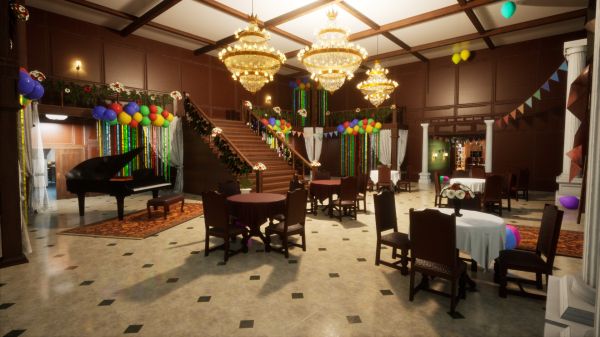
A strong MECCHA CHAMELEON map provides different colors, surfaces, object shapes, elevations, and lighting conditions. Hiders need enough variety to create original disguises, while Seekers need environmental logic that can be learned. If every wall is completely plain, painting becomes repetitive. If every surface is filled with random detail, searching may feel like visual exhaustion rather than deduction.
I enjoyed maps that included distinct themed rooms because each area supported another style of camouflage. Industrial spaces rewarded metallic patterns, domestic rooms offered furniture and decorations, and colorful public areas allowed more ambitious body painting. Good map design makes the central mechanic feel broader without changing its controls. Every environment becomes another artistic vocabulary.
Lighting Can Improve or Destroy a Disguise
A sampled color may appear accurate under one light and completely wrong when viewed from another direction. Shadows can hide body edges, but they can also create an unnatural outline around the character. Bright areas reveal painting detail clearly while making mistakes easier to identify. Choosing a location therefore requires evaluating illumination as carefully as surface color.
I began standing where the Seeker was likely to approach and mentally checking how the body would appear from that position. A disguise designed only from my own close camera often failed at a distance. Lighting changes according to perspective and surrounding geometry. MECCHA CHAMELEON quietly teaches practical lessons about visual composition.
Distance Determines Which Details Actually Matter
Fine patterns may look excellent from nearby and disappear when the Seeker views the location across a room. Large color blocks and silhouette alignment become more important at that range. Conversely, a disguise that works perfectly from far away may collapse under close inspection. The ideal design depends on how accessible the hiding place is.
I liked locations that allowed the character to blend from the main search route while remaining difficult to approach directly. The Seeker might notice something unusual without obtaining a clear angle. This created hesitation, which often protected me for several additional seconds. Camouflage is partly about managing the opponent’s confidence.
Camera Perspective Creates Honest and Accidental Advantages
The viewing angle can hide portions of the body behind environmental objects or make the avatar appear aligned with a background pattern. A disguise may look flawless from one side and obvious from another. Skilled Hiders choose locations where the Seeker’s natural camera path favors the intended illusion. Seekers respond by changing height and angle during inspection.
I enjoyed crouching mentally into the role of a photographer while preparing a disguise. I considered framing, negative space, and where the eye would travel first. The game rarely explains these ideas formally. Its mechanics encourage players to discover them through repeated success and failure.
Vertical Spaces Reward More Careful Searching
Seekers naturally inspect walls and ground-level objects, making ceilings, high shelves, raised decorations, and unusual elevations valuable hiding possibilities. Reaching them may require map knowledge and quick movement during preparation. The body also needs a pose that fits the elevated surface convincingly. A white figure hanging awkwardly above a doorway is not automatically camouflaged.
I frequently forgot to look upward during my first searching rounds. Experienced Hiders used that habit immediately. After discovering several elevated disguises, I changed my route and began scanning rooms vertically. MECCHA CHAMELEON teaches perception by punishing assumptions.
Corners Break the Human Silhouette Naturally
A corner divides the visible body across two surfaces and can hide parts of the pose from a single viewpoint. Different colors on each wall also allow the character to become part of a transition rather than one solid object. This makes corners attractive hiding locations. Their popularity means Seekers often inspect them deliberately.
I enjoyed using less obvious corners behind furniture or architectural details. The body could continue multiple lines at once, creating visual uncertainty. Simple corner hiding became predictable quickly, but combining it with another object restored effectiveness. Strong disguises often use several environmental advantages together.
Hiding Beside Other Players Is Risky and Hilarious
Two Hiders may choose the same object or surface, creating a larger pattern that looks convincing from far away. One player’s weak disguise can also draw attention toward everyone nearby. The group needs coordination to avoid overlapping bodies or leaving suspicious gaps. Most public matches do not provide enough time for detailed collaborative planning.
I enjoyed attempting group camouflage with friends because the result resembled an improvised mural. When successful, the Seekers searched elsewhere because the combined shape appeared intentional. When unsuccessful, one person’s movement exposed the complete arrangement. Cooperative hiding adds another level of creativity that the basic rules do not require.
Painting Another Player’s Idea Can Become a Friendly Challenge
Our group occasionally selected one object and asked every Hider to imitate it somewhere else on the map. The disguises revealed different interpretations of the same colors and shapes. Seekers then judged which version was most convincing after the round. This created an informal art contest inside the hide-and-seek structure.
I liked how easily the game supported custom challenges without additional tools. We could limit ourselves to one color, forbid corners, require visible locations, or create intentionally comedic costumes. The central mechanic is flexible enough to support many player-made rules. Replay value comes partly from the group’s imagination.
Streaming Fits the Game’s Immediate Visual Humor
Viewers can understand the basic situation quickly because one team is trying to imitate the map while another searches for suspicious shapes. The preparation process creates opportunities for audience suggestions, and the search produces clear moments of tension. A terrible disguise can be entertaining even when it fails. The game does not require extensive competitive knowledge before a spectator can participate emotionally.
I found audience-style sessions especially enjoyable when Hiders explained their ideas without revealing locations to the active Seeker. Viewers could compare confidence with the actual result. Public participation also allowed new players to enter between rounds. MECCHA CHAMELEON turns visual creativity into naturally shareable multiplayer content.
The Simple Character Model Is a Smart Design Choice
Hiders begin as clean white humanoid figures without detailed clothing or complicated accessories. This provides a neutral surface for painting and makes color choices easy to understand. A more detailed default body would interfere with camouflage and reduce creative control. The blank character functions like a moving canvas.
I appreciated how the simplicity makes every disguise visibly player-made. The model itself does not perform the artistic work. Paint, pose, and location create the identity. MECCHA CHAMELEON uses minimal character design to support maximum variation.
The Low-Detail Style Helps Shapes Remain Readable
The environments use stylized geometry that supports visual deception without requiring realistic textures. Objects have clear silhouettes, colors remain identifiable, and rooms can contain many hiding opportunities without becoming visually incoherent. This gives players enough information to imitate surfaces manually. Photorealistic environments might make matching detail impossibly demanding.
I liked how the art direction keeps the game playful even during tense searches. A discovered character looks funny rather than frightening. The visual style also allows poorly painted bodies to belong inside the same world. Creative imperfection feels intentional.
Painting Controls Need Precision Without Becoming Professional Software
The game provides enough painting functionality to create colors, patterns, and recognizable imitations without presenting a full digital-art interface. This accessibility allows a new player to begin immediately. More experienced users can still create detailed disguises through careful brush movement. The tools occupy a useful space between complete automation and overwhelming complexity.
I occasionally wanted stronger control over brush size, symmetry, or body-section selection when attempting precise patterns. Fast preparation makes accidental marks costly because correction consumes time. The roughness also contributes to the game’s charm. Perfect tools might remove some of the desperate improvisation that produces its funniest moments.
The User Interface Can Feel Busy During Preparation
Painting, sampling, posing, moving, monitoring time, and selecting a hiding place all need to happen within one phase. Interface elements therefore compete with environmental visibility. I occasionally opened the wrong option or lost valuable seconds while adjusting the body. Familiarity reduced these problems, but the first rounds felt less intuitive than the basic concept suggested.
I would prefer clearer grouping of painting and pose controls, especially for players using different screen sizes. Important actions should remain easy to reach without covering the body. A short interactive tutorial could demonstrate one complete disguise from sampling to final placement. The current system becomes manageable, yet stronger onboarding would reduce early confusion.
Performance Matters Most When the Search Begins
Stable movement and camera control are important because Seekers need to inspect small visual inconsistencies quickly. Frame drops or input delay can make a suspicious object difficult to evaluate. Hiders also need responsive painting and posing during a limited preparation period. Technical inconsistency affects both creativity and competition.
I prioritized stable settings over maximum visual detail because the game’s stylized art remains readable at modest quality. Network conditions also influence how smoothly players appear and how reliable interactions feel. Private sessions with a suitable host provided the most consistent results. Large or geographically distributed groups could experience greater variation.
Host Connection Can Influence the Complete Room
Multiplayer sessions depend partly on the host’s network environment, especially as player count increases. A strong connection keeps movement and round transitions smooth, while instability can create delays or disconnects. This matters because a long preparation becomes frustrating when the match fails before the search concludes. The host should be selected according to reliability rather than only who created the group first.
I found that reducing player count helped sessions experiencing instability. The game remained entertaining with a smaller group because the search became more deliberate. Larger rooms offered greater chaos but demanded more from the connection. Flexible expectations made technical limitations easier to manage.
Custom Maps Can Expand the Game and Require Caution
Community-created maps can introduce new architecture, colors, objects, themes, and hiding strategies. This is one of the most promising sources of long-term variety because the core mechanic changes significantly according to environment design. A new room can make familiar painting techniques useful again. Creative players can contribute experiences rather than only disguises.
I remain careful when installing unfamiliar community content, especially uploads with little history, unclear descriptions, or no trusted feedback. Official maps and established creations provide a safer starting point while the community ecosystem develops. User-generated content can be one of a game’s greatest strengths, but it should never be treated as automatically trustworthy. Enjoying creative maps works best alongside basic digital caution.
Repetition Depends More on Players Than Content Volume
The rules remain almost identical across rounds: paint, hide, search, and survive or discover everyone. Variety comes from maps, roles, opponents, artistic ideas, and social behavior rather than an expanding list of abilities. A group that repeats the same locations and strategies may exhaust the novelty quickly. Curious players can continue finding new forms of deception for much longer.
I stayed engaged by setting personal challenges. One round focused on accurate color, another used an intentionally visible position, and another attempted a complex environmental pattern. Switching between Hider and Seeker also prevented one role from becoming routine. MECCHA CHAMELEON provides a strong toy, but players need to keep inventing games with it.
There Is a Real Skill Ceiling Beneath the Comedy
Funny screenshots and poor paintings can make the game appear completely casual. Experienced players demonstrate significant skill through rapid sampling, pattern reproduction, pose alignment, map knowledge, and prediction of search routes. Seekers improve by recognizing visual anomalies and controlling inspection time. The humorous presentation does not remove competitive depth.
I enjoyed noticing my own progress without needing a complicated ranking system. My disguises became faster and more intentional, while my searches relied less on random checking. Familiar maps developed a deeper strategic language. MECCHA CHAMELEON allows players to improve at art, perception, and psychology simultaneously.
The Best Hiders Understand Human Attention
A Seeker does not inspect every pixel equally. The eye moves toward contrast, symmetry problems, isolated shapes, and locations associated with previous disguises. Strong Hiders use this by placing the body near visually dominant objects or continuing patterns the eye expects to see. They do not only imitate the environment; they guide the observer away from the important detail.
I found this aspect fascinating because it extends beyond ordinary stealth mechanics. The character can remain completely visible while escaping recognition. Success depends on perception rather than physical concealment. The game turns attention itself into terrain.
The Best Seekers Build a Systematic Route
Searching randomly wastes time and allows several rooms to be checked repeatedly while others remain untouched. A systematic route helps the Seeker cover the map, remember suspicious areas, and return after seeing the complete visual language. Starting with common hiding spots can remove obvious players quickly. Later inspection can focus on subtle anomalies.
I improved when I stopped interacting with every unusual shape immediately. I first examined the room’s normal patterns and compared repeated objects. One item with a different edge or color became easier to notice after the surrounding structure was understood. Effective searching is closer to visual analysis than frantic movement.
Memory Becomes Stronger Across Repeated Maps
Knowing where objects normally appear makes player-created changes easier to recognize. A new shape beside a familiar shelf or an extra color patch on a wall becomes suspicious immediately. Hiders respond by using locations that already contain irregular detail. The strategic balance evolves as everyone learns the environment.
I enjoyed this progression because the same map did not remain static conceptually. The architecture stayed unchanged, but the group’s knowledge transformed which hiding spots were viable. An unbeatable location during the first session became useless later. Players need to innovate as collective memory improves.
Winning as the Final Hider Feels Surprisingly Dramatic
As more players are discovered, the number of Seekers increases and attention narrows toward the remaining locations. Hearing or seeing the search approach while staying completely still creates genuine tension. The disguise may have survived several inspections already, but every new angle threatens to expose it. The final seconds become far more exciting than the simple mechanics suggest.
I enjoyed surviving through confidence rather than escape. Running would reveal the character immediately, so victory depended on trusting the painting and pose. When the timer reached zero, even an imperfect disguise felt like a strategic masterpiece. The emotional reward comes from fooling human perception directly.
Finding the Final Hider Produces Equal Satisfaction
The last survivor is usually protected by a strong location, careful painting, or the group’s repeated failure to inspect one area correctly. Identifying the disguise requires questioning assumptions formed during the round. A surface that appeared normal several times may become suspicious only after everything else has been checked. The discovery feels earned because it resolves a visual puzzle created by another player.
I liked gathering around the hiding spot afterward to examine why it worked. The best disguises became informal lessons for everyone. Players remembered the technique and attempted variations in later rounds. Competition creates a shared library of artistic tricks.
The Game Is More Entertaining When Failure Is Celebrated
A failed disguise often produces a better story than a flawless one. The Seeker may enter the room and recognize the character instantly, leaving everyone to examine an ambitious painting that never had a chance. Treating those moments as part of the entertainment keeps beginners involved. Harsh criticism would discourage the experimentation the game needs.
I enjoyed groups that praised creative attempts regardless of survival time. A player who tried to imitate a complicated sign contributed more to the session than someone repeating one safe corner constantly. MECCHA CHAMELEON benefits from competition, but its creative identity depends on allowing failure to remain funny. The community determines whether artistic risk feels welcome.
What I Would Improve in Future Updates
I would add a stronger guided tutorial covering sampling, painting, posing, and inspecting the disguise from likely Seeker angles. New players understand the objective immediately but may not understand the most efficient controls. A practice room without a timer would allow experimentation before entering multiplayer. This would make the first real match more creative and less confusing.
I would also expand moderation, server filtering, map-rating information, and security visibility around community content. Players should be able to identify established rooms and trusted maps easily. Saved paint templates or limited preset tools could support accessibility, although they should not replace manual creativity. The game’s roughness is charming only when it does not interfere with safety or basic reliability.
Why MECCHA CHAMELEON Kept Fooling Me
MECCHA CHAMELEON remained entertaining because every round transformed an ordinary environment into a visual argument. Hiders claimed that one suspicious shape belonged in the room, while Seekers tried to prove otherwise. Painting provided the evidence, posing created the silhouette, and location established the context. The rules are simple, but human perception makes the result unpredictable.
From my perspective as a gamer, manual camouflage is the feature that gives the game lasting identity. Automatic prop transformation would make hiding faster but far less personal. Here, every successful disguise contains visible choices and imperfections. I can recognize another player’s idea even before discovering whether it works.
The game also understands that comedy and skill can exist together. A serious player can study lighting, patterns, viewing angles, and search routes, while a beginner survives through one absurd artistic decision. Both results belong naturally inside the same match. MECCHA CHAMELEON does not need to choose between competitive depth and social nonsense.
Private rooms produced my favorite sessions because friends could invent challenges, inspect disguises, and laugh at failed attempts without disrupting the atmosphere. Public matches offered broader creativity through unfamiliar players and strategies. The ideal experience depends less on one official mode and more on finding a group that enjoys deception without turning every round hostile. Social tone is as important as map design.
The visual style supports the mechanic effectively through readable colors, simple character models, and environments filled with recognizable shapes. The game does not require realistic graphics to create convincing camouflage. In fact, a more detailed world might make manual imitation too demanding. Stylization gives players enough control to become creative quickly.
Technical roughness and community-content concerns remain important limitations. Connection quality can influence multiplayer stability, interfaces could become clearer, and unfamiliar custom maps should be approached carefully. These issues matter because the game relies completely on online sessions and shared environments. A brilliant central idea still needs dependable systems around it.
My favorite disguise involved imitating part of a colorful machine. The body paint looked acceptable from the front and completely ridiculous from either side, so I positioned myself where the main doorway created the intended angle. Several Seekers entered, examined the machine, and moved away because the additional shape appeared to belong there. I survived through framing rather than artistic accuracy.
Another memorable round ended almost immediately because I attempted to become a plain wall. I matched the color reasonably well but forgot that the wall contained no human-shaped decoration. The Seeker entered, paused for less than a second, and identified me without checking anything else. That failure taught me more about silhouette than several successful rounds had.
MECCHA CHAMELEON will appeal most to players who enjoy party games, creative tools, visual puzzles, and social deception. It may feel repetitive to anyone expecting extensive progression, a campaign, or constantly changing mechanical abilities. The central activity remains painting a body and testing whether another person believes the illusion. Its value depends on how many new ideas the players bring into that process.
The game ultimately succeeds because it makes observation feel playful. Walls, furniture, machines, and decorations stop being ordinary background objects once I know another player may have copied them. Even after the round ends, I continue looking at the environment differently. MECCHA CHAMELEON turns questionable art into camouflage, camouflage into psychology, and one plain white avatar into the most suspicious object in the room.
Pros:
- Visually stunning graphics and detailed environments
- Innovative chameleon mechanic enhances strategic gameplay
- Supported mods and cheats for extended replayability
- Robust performance across multiple platforms including unblocked environments
- Dynamic and engaging gameplay mechanics
- Highly customizable controls and user interface
Cons:
- Balancing issues may arise from extensive mod and cheat integration
- Steep learning curve for new players
- Frequent updates may occasionally disrupt gameplay

RELATED APPS

Recent Reviews

Minecraft

Grand Theft Auto V

Toca Boca World

Roblox

Leave a comment
Your comment is awaiting moderation. We save your draft here
0 Comments