
Review
Red Ball 4 looks simple enough to understand before the first level even begins. I control a bright red ball, roll across compact platf...












Red Ball 4: A Captivating Journey of Minimalism, Challenge, and Community Engagement
Red Ball 4 looks simple enough to understand before the first level even begins. I control a bright red ball, roll across compact platforming stages, collect stars, avoid hazards, and stop an army of square enemies from transforming the world into something as rigid as they are. The premise is playful, the controls are minimal, and the visual style appears designed for quick mobile sessions. What surprised me was how effectively the game turns those basic ingredients into a platformer built around momentum, timing, environmental observation, and small physics-based puzzles.
I approached Red Ball 4 expecting a lightweight game that would become repetitive after several stages. The early levels certainly introduce familiar ideas gently, but the campaign keeps adding moving platforms, crates, buttons, water, unstable surfaces, rotating mechanisms, enemy patterns, and increasingly demanding jumps. None of these mechanics is complicated independently. The challenge comes from combining several of them inside short levels where one careless movement can send the ball back toward the nearest checkpoint.
From my perspective as a gamer, the strongest quality of Red Ball 4 is its clarity. I always understand what my character can do, what the level wants me to notice, and which environmental object is likely to matter. The game does not bury its platforming beneath large menus, elaborate skill trees, or unnecessary systems. It gives me movement, physics, hazards, and enough personality to make repeated attempts enjoyable.
A Red Ball Is a Surprisingly Expressive Hero
The main character has one of the simplest designs imaginable, yet the animation gives the ball enough personality to remain memorable. Its eyes react to movement, danger, and victory, while the round body naturally communicates momentum. Rolling quickly makes the character appear energetic, and balancing near the edge of a platform creates immediate tension. The design works because every visual element supports the movement system.
I liked that the hero does not need a detailed biography to become recognizable. The motivation is presented through the conflict with the square enemies and the threat to the world’s natural shape. This is enough context for a platformer where the physical journey matters more than dialogue. Red Ball feels heroic because the game constantly places the small character against machines, factories, and enemies much larger than expected.
The Round Versus Square Theme Gives the World a Clear Identity
The conflict between the red ball and the square enemies is visually simple but thematically effective. Curves represent movement, freedom, and natural energy, while the square forces are associated with control, machinery, and transformation. The opposition appears in enemy design, architecture, traps, and the overall progression of the campaign. Even without complex storytelling, the shapes communicate who belongs to which side.
I appreciated how this theme keeps the environments coherent. A square enemy is easy to recognize immediately, even when the level introduces another variation. Industrial areas look more threatening because their machinery appears connected to the enemy’s desire to reshape everything. The art direction turns geometry into character design.
The Controls Are Minimal but Not Completely Effortless
Red Ball 4 generally relies on movement controls and a jump command. This makes the game easy to begin because there is no long tutorial explaining combinations or advanced abilities. The ball accelerates, slows, rolls down slopes, and responds to changes in direction with enough physical weight to require attention. Jumping is simple to perform but depends heavily on speed and positioning.
I needed time to understand how much momentum a particular jump required. Pressing forward too early could send the ball beyond a narrow platform, while approaching too slowly might leave it unable to cross the gap. The movement remains accessible, but successful platforming requires more than tapping jump whenever an obstacle appears. The game’s depth comes from controlling a simple character precisely.
Momentum Is the Real Central Mechanic
The ball does not move like a character with fixed running speed and instant stopping. It gathers momentum, reacts to slopes, and carries motion into jumps. This makes the terrain part of the control system. A hill can provide the speed needed for a longer leap, while a narrow ledge may require slowing down before landing.
I enjoyed learning when to use the ball’s natural movement instead of fighting it. Some sections become easier when I allow gravity to create speed, while others require careful corrections before the character reaches a hazard. The best levels make momentum feel like a tool rather than an inconvenience. Red Ball 4 is most satisfying when one smooth movement carries me through several obstacles without interruption.
Jumping Feels Better When I Plan the Landing First
The jump button is responsive, but the character’s horizontal movement continues influencing the arc. This means the destination matters as much as the moment of takeoff. I often failed early attempts because I focused only on clearing the obstacle and ignored the small platform waiting afterward. A successful jump needs enough distance to cross the gap and enough control to remain safe after landing.
I began releasing movement or correcting direction while airborne to prepare the final position. The game allows some adjustment, but not enough to erase a badly planned jump completely. This balance keeps the controls forgiving without making precision meaningless. Landing becomes part of the challenge rather than a guaranteed result after takeoff.
The Early Levels Teach Through Arrangement
Red Ball 4 rarely stops the action to explain every mechanic through text. Instead, it places a simple obstacle in a safe environment and allows the player to discover the solution. A crate appears before it is needed for a more complicated puzzle, while a button is introduced where the effect can be observed immediately. Later levels combine those familiar objects into larger sequences.
I appreciate this teaching style because it respects experimentation. The game communicates through level design rather than constant instructions. When a new object appears, I can usually understand its purpose by touching, pushing, or observing it. Learning becomes part of play instead of a separate lesson.
Crates Are Simple Objects With Many Purposes
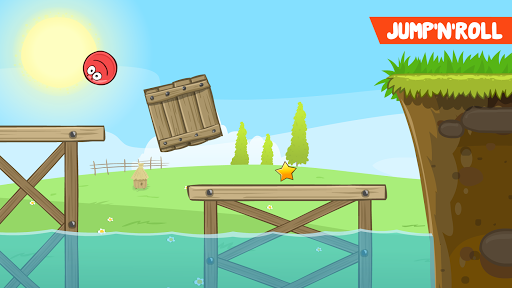
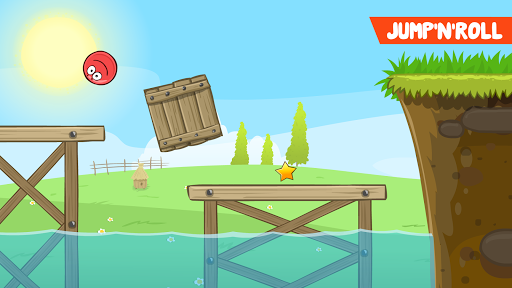
Crates can be pushed onto buttons, used as platforms, positioned beneath ledges, or moved to block environmental mechanisms. Their basic behavior remains consistent, so the challenge comes from recognizing where they should be placed. A crate may need to remain intact for a later obstacle, making careless movement costly. The object becomes both a tool and a responsibility.
I enjoyed puzzles where one crate supported several stages of progress. Moving it to the first button opened a path, but I still needed to retrieve it and reposition it elsewhere. The level asked me to think beyond the immediate door. Red Ball 4 creates satisfying puzzle chains without requiring complicated controls.
Buttons Turn Weight Into a Puzzle Resource
Floor buttons respond to the player, crates, and other suitable objects depending on the situation. This creates puzzles based on temporary and permanent pressure. Standing on a button may open a door that closes as soon as I leave, so another object must take my place. The game teaches me to consider the weight of everything nearby.
I liked how buttons create clear cause and effect. The connected mechanism usually moves visibly, allowing the relationship to be understood immediately. The difficulty comes from reaching the new path while keeping the button active. A very simple interaction becomes a small planning problem.
Moving Platforms Demand Rhythm More Than Speed
Platforms that travel horizontally, vertically, or along rotating paths change the level from static geometry into a timing challenge. Rushing toward them can lead to a missed landing or a collision with another hazard. Waiting too long may break the rhythm of the next sequence. The safest movement often begins before the platform reaches the apparently perfect position.
I enjoyed learning the cycles and entering them smoothly. A platform section feels difficult when every movement is reactive, but it becomes almost musical after several attempts. The ball’s momentum adds another layer because landing on a moving surface does not automatically stop horizontal motion. Timing and control need to work together.
Water Changes the Pace Without Changing the Controls
Water sections slow movement and alter how the ball responds to the environment. The character may float, sink according to the situation, or need to use nearby objects and platforms to continue. These areas feel different from ordinary ground movement even though the control scheme remains familiar. The change in pace encourages more deliberate inputs.
I appreciated water as a temporary contrast to faster rolling sections. It prevents the campaign from relying entirely on slopes and jumps. The slower response can feel slightly awkward until the physics become familiar. Once understood, water creates another space for puzzles and careful navigation.
Hazards Are Easy to Recognize and Difficult to Ignore
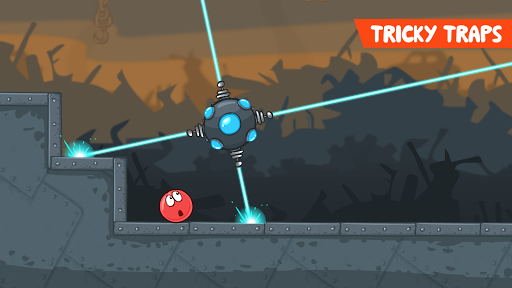
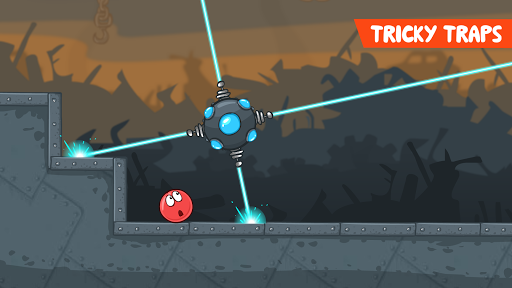
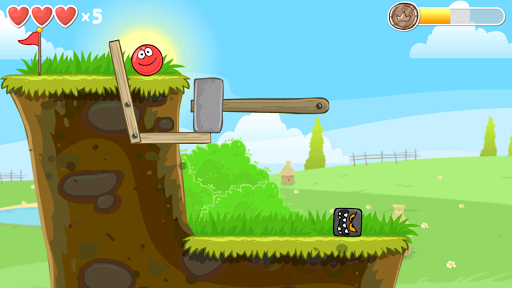
Spikes, crushing mechanisms, deep gaps, dangerous machinery, and other traps use clear visual language. I rarely failed because I could not identify the threat. I failed because I approached with too much speed, mistimed the movement, or focused on one hazard while forgetting another. This distinction makes failure feel understandable.
I like games where danger is readable before it becomes active. Red Ball 4 gives me enough information to plan, then asks for the execution needed to survive. A section may look intimidating, but the solution is usually visible after observing the timing. The game is demanding without becoming visually dishonest.
The Square Enemies Create Mobile Obstacles
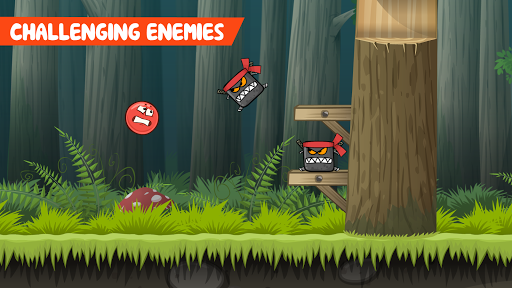
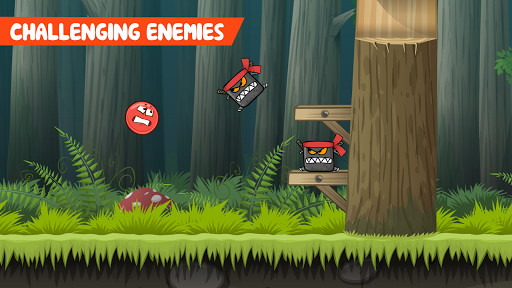
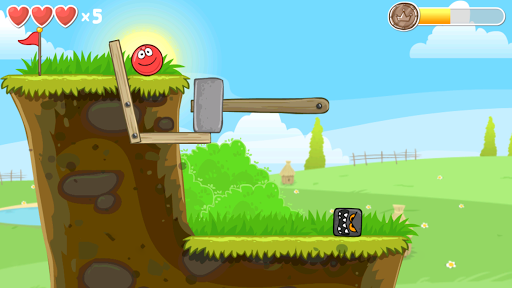
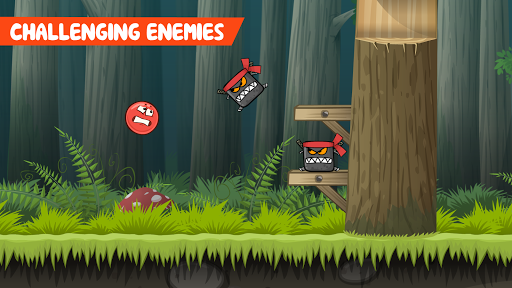
Basic enemies move along predictable routes and damage the ball through contact. They can often be defeated by landing on them from above, turning an obstacle into a small timing challenge. Their patterns are simple enough to study while still affecting platforming. A narrow ledge becomes more dangerous when an enemy occupies the safest landing area.
I enjoyed how enemies are integrated into the terrain rather than placed randomly. Their movement often matches the rhythm of nearby platforms or hazards. Defeating one at the correct moment can clear the path, while attacking carelessly may send the ball into another danger. Combat remains part of movement rather than becoming a separate system.
Enemy Variations Keep Familiar Rules Relevant
Later enemies introduce different movement patterns, durability, attacks, or environmental interactions. The game builds on the established idea that the ball must approach from a safe angle. I could not assume that every square would behave like the earliest version. Observation remained necessary even after the basic rules were familiar.
I liked this gradual expansion because it avoids overwhelming the opening stages. Each variation adds one question to the encounter instead of replacing the complete combat language. The visual design still makes every enemy belong to the same invading force. Mechanical variety and thematic consistency support each other.
Stars Give Exploration a Clear Optional Goal
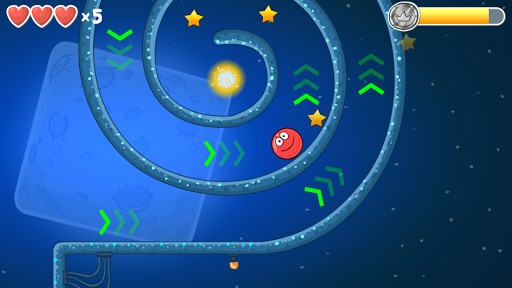
Stars appear throughout levels, often placed along the main route and in slightly more demanding locations. Collecting them encourages me to examine corners, attempt riskier jumps, and use environmental objects more completely. The level can usually be finished without perfect collection, allowing players to choose how much challenge they want. Completion becomes an additional layer rather than a requirement for basic progress.
I enjoyed replaying levels to collect stars missed during the first attempt. Familiar obstacles became easier, so attention could shift toward hidden or dangerous placements. This created a natural reason to return without changing the level completely. Red Ball 4 uses collectibles to reward mastery instead of merely extending playtime.
Three-Star Runs Change How I Approach Familiar Stages
Finishing a level and completing it perfectly are different experiences. During the first run, I focus on survival and understanding the path. A later attempt allows more efficient movement, better puzzle planning, and deliberate collection. The same stage feels more controlled once every mechanism is understood.
I liked the satisfaction of turning a messy first completion into a smooth three-star run. The level itself has not changed, but my relationship with it has. This is one of the clearest signs of effective platformer design. Mastery creates a new version of familiar content.
Checkpoints Keep Failure From Becoming Exhausting
Longer levels include checkpoints that preserve progress after reaching important sections. This prevents one late mistake from forcing a complete restart. The game remains challenging because the current obstacle still needs to be solved, but repeated early sections do not consume unnecessary time. Checkpoints support experimentation.
I appreciated their placement because most appear after a meaningful sequence rather than every few seconds. Reaching one feels like securing progress. The system also makes harder levels suitable for shorter mobile sessions. I can practice one section repeatedly without losing patience with everything before it.
The Life System Adds Pressure but Can Interrupt Flow
Some versions of Red Ball 4 use a limited life or heart system, meaning repeated failure can temporarily interrupt progress or require another method of continuation. This creates tension because mistakes have a broader cost than restarting one checkpoint. It can also feel unnecessary in a platformer where learning often depends on several attempts. The system is most noticeable during difficult boss battles and precise obstacle sequences.
I prefer challenge created by level design rather than waiting or resource limitation. The platforming is strong enough to motivate another attempt without additional pressure. Losing several lives after experimenting with a new mechanic can discourage curiosity. A more generous restart structure would allow the movement and puzzles to remain the complete focus.
Boss Battles Expand the Scale of the Adventure
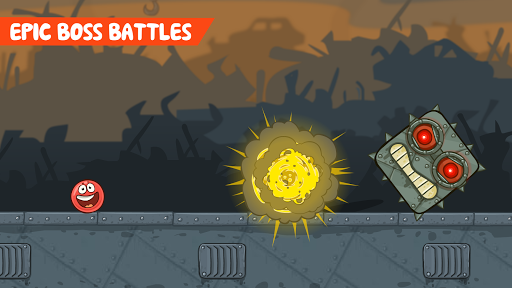
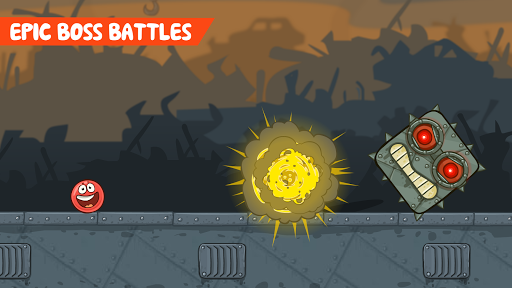
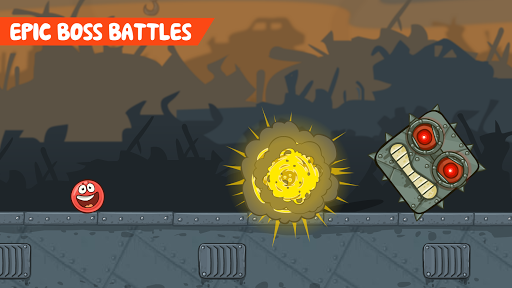
Boss encounters place the small red ball against larger mechanical or square threats with repeated attack patterns. These battles usually combine movement, environmental interaction, and observation rather than introducing a complicated combat system. The player needs to survive, identify the vulnerable moment, and use the level correctly. Each boss acts like a larger puzzle built around danger.
I enjoyed how the battles preserve the game’s platforming identity. Red Ball does not suddenly gain a large weapon inventory or another control scheme. Victory still depends on rolling, jumping, and reading the environment. The bosses feel different from ordinary stages without disconnecting from the mechanics learned earlier.
The First Boss Teaches Patience Better Than Any Tutorial
Early boss encounters are designed to punish constant movement without making the attack pattern impossible to understand. I initially tried to chase every opening and placed the ball in unnecessary danger. Watching the complete pattern revealed safer moments to act. The battle became easier when I stopped treating every second as an opportunity.
I liked how this lesson transferred into later stages. Red Ball 4 rewards controlled movement repeatedly. Momentum is powerful, but unnecessary speed creates mistakes. Bosses turn that principle into a clear survival rule.
Factory Areas Give the Campaign Its Strongest Mechanical Identity
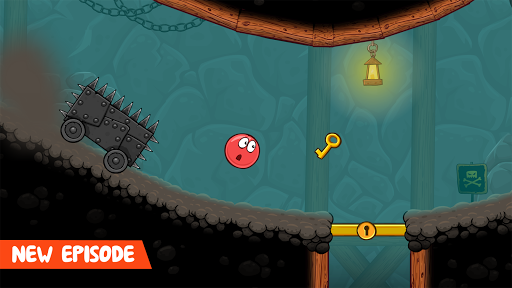
Industrial environments contain gears, presses, moving machinery, metal platforms, switches, and enemy technology. These locations connect directly with the square invasion and feel more dangerous than the earlier natural areas. The visual design becomes colder and more rigid as Red Ball moves closer to the source of the threat. Environment and story progression align naturally.
I enjoyed the factory stages because the machinery creates puzzles and atmosphere simultaneously. A rotating device is not only decoration; it affects timing and movement. The levels feel constructed by the enemy rather than arranged for the player’s convenience. The world becomes more hostile as the campaign advances.
Forest Levels Make Physics Feel Playful
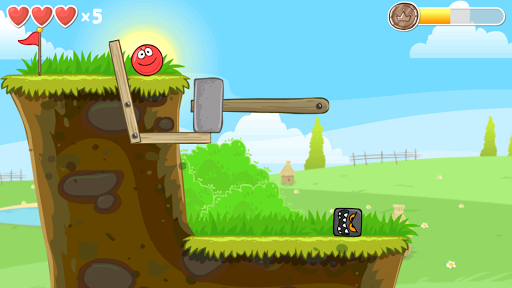
Natural environments use slopes, logs, water, rocks, and softer visual elements to introduce the movement system. These areas feel bright and welcoming even when hazards appear. Rolling down hills and bouncing across simple gaps gives the character a lively sense of motion. The forest stages establish the adventure before the machinery becomes dominant.
I liked the contrast because it gives the campaign visual progression. The natural world shows what Red Ball is trying to protect. Later industrial areas feel more threatening because they replace curves and organic spaces with rigid structures. The environmental transition reinforces the central round-versus-square conflict.
Cave Stages Reward Careful Observation
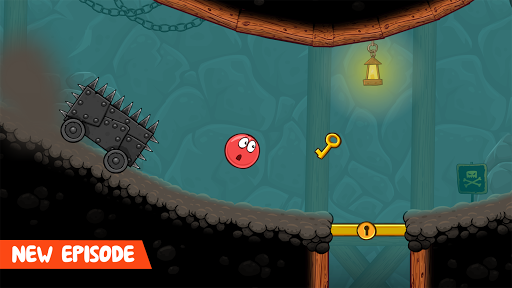
Caves reduce the visual openness of outdoor levels and place greater emphasis on narrow paths, vertical movement, and hidden mechanisms. The environment can conceal routes above or below the obvious path. Lighting and darker surfaces create a more enclosed atmosphere. Movement feels more cautious because mistakes often lead into deep gaps or hazards.
I enjoyed searching for stars in these areas because the cave structure supported secret ledges naturally. A collectible visible through a wall or across a gap suggested another route. The levels encourage spatial thinking without becoming maze-like. Exploration remains focused and readable.
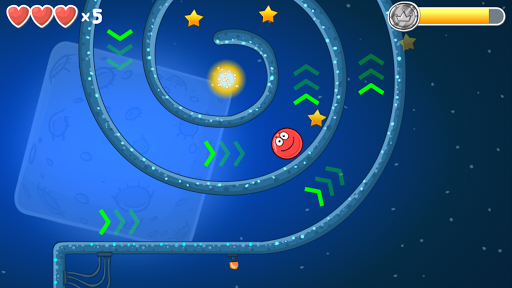
The Moon-Themed Areas Change the Physics Fantasy
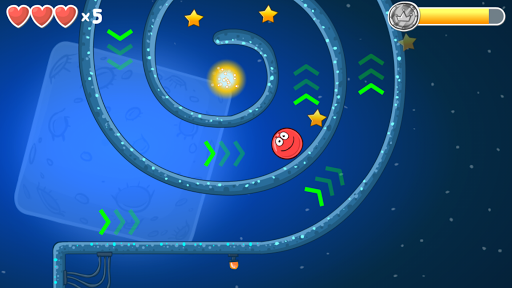
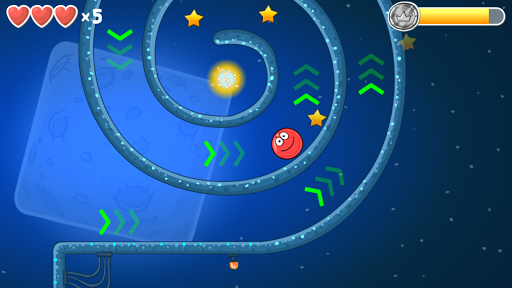
Later settings use unfamiliar terrain and more dramatic environmental ideas to prevent the campaign from remaining visually predictable. Reduced gravity or unusual movement conditions can change the timing of jumps and landings. The familiar ball suddenly behaves differently enough to require another period of adjustment. The control scheme stays simple while the environment changes its meaning.
I appreciated this kind of late-game variation because it tests whether I understand movement rather than whether I memorized one jump arc. Longer airtime creates opportunities and new risks. A jump that appears excessive may become correct under different physics. Red Ball 4 expands through environmental rules instead of adding unnecessary buttons.
Short Levels Fit Mobile Play Extremely Well
Most stages can be completed within a manageable amount of time, making the game suitable for brief sessions. I can finish one level, collect several stars, or retry a difficult section without committing to a long campaign segment. Checkpoints reduce the frustration of interruptions. The structure respects the way many people use mobile games.
I also enjoyed playing several levels consecutively because progress feels constant. A short stage does not mean a shallow one when the design introduces a clear idea and develops it efficiently. Red Ball 4 rarely keeps one puzzle active longer than necessary. The campaign moves with the same energy as its protagonist.
The Game Works Well for Younger Players Without Feeling Empty
The controls, art style, and clear hazards make Red Ball 4 approachable for children. There is little text to read, and the objectives are communicated visually. At the same time, later levels require genuine timing, patience, and problem-solving. The game does not reduce every challenge to an automatic victory.
I appreciate this balance because family-friendly presentation should not mean the absence of meaningful gameplay. Younger players can enjoy the character and basic movement, while experienced players can pursue complete star collection and smoother runs. The same level supports different levels of engagement. Accessibility and challenge remain compatible.
Visual Design Keeps Important Objects Readable
The art uses strong colors, clean shapes, and clear separation between the foreground and interactive objects. The red character remains visible across forests, caves, factories, and other environments. Enemies use recognizable square forms, while hazards are visually distinct from safe platforms. This clarity is essential on smaller screens.
I rarely felt that the game hid danger through decorative clutter. Background elements create atmosphere without competing heavily with the playable space. The simplified style has also aged well because it depends on direction rather than realism. Red Ball 4 looks cheerful and functional at the same time.
Animation Gives Physics More Personality
The ball rotates according to movement, compresses or reacts during landings, and changes expression according to the situation. Enemies also communicate behavior through simple but readable animation. These details make the world feel active without requiring complex character models. Motion explains mechanics visually.
I enjoyed watching the ball gather speed because the rotation made momentum obvious. A jump feels stronger when the character’s movement supports the arc visually. The animation is not only decorative. It helps me understand how the ball is behaving.
Sound Effects Make Every Interaction Feel Immediate
Collecting stars, activating buttons, defeating enemies, landing, and encountering hazards all produce clear audio feedback. The sounds confirm actions quickly, which is especially useful during faster platforming sequences. The cheerful effects match the visual tone without making danger feel completely harmless. Audio keeps the movement responsive.
I liked the satisfying sound associated with collecting a star because it made optional exploration feel rewarding immediately. Repeated effects can become familiar during long sessions, but they rarely become confusing. Each important event has a recognizable response. The sound design supports clarity as strongly as the visuals.
The Music Maintains a Light Adventure Tone
The soundtrack supports the playful platforming without demanding constant attention. Natural areas feel energetic and friendly, while mechanical zones create a stronger sense of pressure. The music helps distinguish environments even when the core controls remain unchanged. It gives the campaign momentum between larger encounters.
I appreciated that the score does not attempt to make the simple story feel excessively dramatic. The tone remains adventurous and approachable. Boss battles receive enough intensity to feel important without becoming disconnected from the rest of the game. Music supports the scale instead of exaggerating it.
Touch Controls Are Convenient and Occasionally Imprecise
On mobile devices, virtual buttons provide immediate access to movement and jumping. The layout is easy to understand, but the lack of physical feedback can make precise direction changes harder during demanding sequences. A finger may slide away from the intended button or cover part of the lower screen. These issues matter most when one small correction determines the landing.
I adapted by using shorter, deliberate presses instead of holding movement constantly. A larger screen also improved comfort because the controls felt less crowded. The game remains fully playable through touch, but a physical controller or keyboard can provide greater consistency where supported. Input preference changes the difficulty more than the rules do.
Keyboard Controls Make Direction Changes Cleaner
On platforms supporting keyboard input, left and right movement feel immediate and predictable. Jump timing also benefits from a physical key because the input is easier to confirm. This makes speed-focused sections and narrow landings more comfortable. The game’s limited control scheme transfers naturally.
I enjoyed the sharper response, although digital direction still means the ball can gather speed quickly if a key is held too long. Precision does not remove the need to understand momentum. It simply makes intentional corrections more reliable. Red Ball 4 remains a physics platformer regardless of input method.
Performance Is Generally Light but Stability Still Matters
The stylized two-dimensional presentation does not demand advanced hardware, so the game runs comfortably on many devices. Older phones or browser environments may still show input delay, frame inconsistency, or loading interruptions. These problems become noticeable because platforming depends on timing. A small delay can turn a correct decision into a missed jump.
I prefer closing unnecessary applications before longer sessions on limited hardware. Stable performance matters more than any visual improvement because the art remains readable at its standard presentation. Red Ball 4 does not need expensive effects to look good. It needs movement to remain consistent.
Advertisements Can Affect the Rhythm Depending on the Version
Some mobile releases may include advertising or optional viewing systems connected to continuation and rewards. These interruptions can break the flow between short levels, especially after a difficult failure. The platforming itself is designed around quick retries, so any delay feels more noticeable. The exact experience can vary according to platform and edition.
I prefer versions that keep commercial interruptions outside active play as much as possible. Red Ball 4 already creates a natural desire to attempt one more level. It does not need aggressive interruption to encourage engagement. The cleaner the transition between failure and retry, the stronger the platforming feels.
The Difficulty Curve Is Mostly Fair
The campaign begins with broad platforms and simple enemy behavior before gradually introducing more demanding combinations. New mechanics usually appear in safe conditions and return later inside harder sequences. This creates a clear sense of development. I rarely encountered a challenge that required knowledge the game had not already introduced.
Some sections still produce sudden increases in precision, especially around bosses or moving machinery. These moments can feel difficult compared with the immediately previous level. Checkpoints and short stages keep the frustration manageable. The overall curve encourages improvement rather than expecting perfection immediately.
Failure Usually Teaches One Specific Lesson
A missed jump reveals that I lacked speed, carried too much momentum, or chose the wrong takeoff position. A failed puzzle shows that an object was used too early or left in the wrong place. Enemy contact usually comes from approaching at an unsafe angle. The cause is visible enough that the next attempt can change meaningfully.
I enjoy this kind of failure because it encourages immediate retry. The game rarely asks me to repeat an action without understanding what should improve. Even when execution remains difficult, the goal is clear. Red Ball 4 respects the player by making its rules consistent.
Speedrunning Potential Exists Beneath the Casual Presentation
The movement system supports faster routes, momentum preservation, enemy skips, and efficient puzzle solutions. Players interested in completion time can approach each level as a sequence to optimize. A safe method and a fast method are often different. The simple controls make every small improvement visible.
I enjoyed replaying early stages with speed in mind because familiar terrain became another challenge. Rolling smoothly through slopes and landing without corrections felt satisfying. The game’s short levels make repeated practice convenient. Red Ball 4 can function as a relaxed platformer and a precision optimization game.
Perfect Runs Feel Like Continuous Motion
The most satisfying levels are those I can complete without unnecessary stopping. Momentum carries the ball through jumps, enemies are defeated at the correct point, and puzzles are solved through efficient object placement. The level appears designed around one smooth sequence even if the first attempt was cautious and interrupted. Mastery transforms hesitation into flow.
I liked how this feeling emerged naturally rather than through a special combo meter. The reward is the movement itself. A smooth run demonstrates understanding without needing another system to announce it. Red Ball 4 makes elegance visible through motion.
The Story Remains Simple and Functional
The square enemies want to transform the world, and Red Ball travels through several regions to stop them. This provides enough motivation to connect the levels and bosses. The narrative does not attempt to compete with the platforming through long scenes or complicated exposition. Characters and visual events carry most of the information.
I appreciate the restraint because the game’s tone does not require a dramatic script. The conflict is clear, playful, and easy to understand across languages. Each world feels like another stage in the invasion. Story progression supports environmental variety without interrupting play.
Humor Comes From Shape and Animation
The square enemies look threatening enough to function as opponents but remain amusing because of their exaggerated expressions and rigid movement. Red Ball’s reactions also create visual comedy during victories, danger, and unexpected physics. The humor is integrated into the character design rather than delivered through constant jokes. This keeps the tone light without becoming distracting.
I enjoyed moments where a carefully planned movement ended with the ball balancing awkwardly on a crate or rolling farther than expected. Physics creates comedy naturally. The game allows failure to look playful even when it costs progress. That emotional softness makes repeated attempts easier to accept.
The Campaign Benefits From Environmental Variety
Forests, caves, factories, mechanical interiors, and more unusual later settings prevent the journey from feeling visually static. Each environment introduces its own arrangement of slopes, surfaces, hazards, and puzzle objects. The ball’s abilities remain unchanged, so the level design carries most of the variety. This makes environmental creativity essential.
I liked how the campaign gradually shifts from natural spaces toward areas shaped by the enemy. The progression feels like movement deeper into the conflict. New scenery is not only decorative; it supports different platforming ideas. Red Ball 4 uses world design as mechanical progression.
Some Puzzle Solutions Are More Physical Than Logical
Not every puzzle is solved by identifying one hidden rule. Sometimes the challenge is pushing a crate with the correct speed, balancing it on a surface, or entering a mechanism without losing control. The solution may be obvious while execution remains difficult. This keeps the puzzle and platforming elements connected.
I enjoyed this combination because it prevents the game from becoming a sequence of static brainteasers. Understanding the answer is only the first stage. The ball still needs to carry it out through movement. Physics gives every solution a little uncertainty.
The Game Rarely Overcomplicates Its Best Ideas
A weaker platformer might introduce several power-ups, currencies, upgrade menus, and temporary abilities before the basic movement had been explored fully. Red Ball 4 remains focused on rolling, jumping, pushing, timing, and observing. Environmental changes provide variety without replacing the core. The game understands the value of a strong foundation.
I appreciate this restraint because every level contributes directly to the main control experience. There is little time spent managing systems outside play. Starting another stage immediately returns me to the movement I enjoy. The simplicity feels intentional rather than incomplete.
What I Would Improve in the Controls
I would add more control customization on mobile, including adjustable button size, transparency, and position. Players with different screen sizes and hand positions could create a more comfortable layout. A slightly stronger visual or haptic response for touch inputs would also help during precise jumps. These changes would improve execution without reducing difficulty.
I would preserve the basic movement physics rather than making the ball stop instantly. Momentum is central to the game’s identity. The goal should be making input more reliable, not removing the need for control. Red Ball 4 is enjoyable because movement has consequences.
What I Would Improve in the Progression
I would reduce or remove life-based interruptions and allow immediate retries from checkpoints consistently. The level design already creates enough challenge. Experimenting with timing and physics should not feel discouraged by an external limit. A practice-friendly structure would make difficult stages more inviting.
I would also add optional challenge goals such as time targets, limited-jump runs, or hidden collectible variations. These could provide additional reasons to revisit levels without changing the main campaign. Players who want a relaxed experience could ignore them completely. The existing movement system is strong enough to support deeper optional mastery.
Why Red Ball 4 Still Feels Easy to Recommend
Red Ball 4 remained enjoyable because it understands exactly what kind of game it wants to be. It is a compact physics platformer with clear controls, readable environments, short levels, playful characters, and a steady stream of new mechanical combinations. It does not attempt to become a giant adventure filled with unrelated systems. The game focuses on movement and continually finds new ways to make that movement matter.
From my perspective as a gamer, momentum is the feature that gives the platforming its personality. Rolling down a slope, carrying speed into a jump, correcting the landing, and continuing without stopping creates a satisfying sense of flow. The same physics can also create humorous mistakes when I approach with too much confidence. Success and failure both emerge from the character’s natural motion.
The environmental puzzles add enough thought to prevent every level from becoming a sequence of jumps. Crates, buttons, platforms, water, and machinery ask me to inspect the surroundings before acting. The solutions are usually understandable, but execution keeps them interactive. Red Ball 4 balances observation and movement without allowing either side to dominate completely.
Enemy encounters remain simple but effective because they are placed inside the platforming. A square enemy changes the timing of a jump or controls the safest part of a ledge. Defeating it requires the same movement skills used everywhere else. Combat strengthens the central mechanic rather than interrupting it.
The star system provides a good optional challenge for players who want more than basic completion. I can finish a level cautiously and return later for a cleaner route. This makes improvement visible and gives short stages additional value. Collecting every star feels satisfying because the game places them where movement skill matters.
Boss battles provide memorable breaks in the ordinary structure while preserving the same controls. I still roll, jump, avoid danger, and use the environment. The scale changes without forcing the game to become something else. This consistency is one of Red Ball 4’s greatest strengths.
The visual and audio presentation also supports the game effectively. Clear shapes make hazards readable, bright colors preserve the friendly tone, and expressive animation gives the small hero personality. The round-versus-square theme communicates the conflict instantly. Even a young player can understand the basic story without reading a long explanation.
Touch controls and commercial interruptions can affect the experience depending on the platform. Precise movement is easier with reliable physical input, and life systems can weaken the natural retry rhythm. These limitations exist around the platforming rather than inside its core design. When the game allows uninterrupted play, its strengths become much more obvious.
My favorite stages were the ones that initially looked complicated and later became smooth. During the first attempt, I stopped before every mechanism and corrected almost every landing. After learning the sequence, I could roll through the same section with confidence, using slopes and platforms as one continuous route. That transformation from uncertainty to flow is exactly what I want from a platformer.
Red Ball 4 may appear modest beside games with enormous worlds and complex progression systems, but its focus gives it lasting appeal. It can be played for several minutes, shared with younger players, replayed for full collection, or practiced for faster completion. The character is simple, the story is direct, and the controls can be understood immediately. Beneath that accessibility is a carefully designed game about learning how a rolling body interacts with a world built to stop it.
Pros:
- Well-designed levels with a gradual increase in difficulty that keeps the game challenging
- Customization options available through mods and cheats for enhanced replayability
- Accessible across multiple platforms, including PC, mobile, and tablets
- Minimal system requirements that allow smooth performance on most devices
- A vibrant community and responsive developer support that continually improve the game
- Engaging and intuitive gameplay that appeals to players of all skill levels
Cons:
- Occasional difficulty spikes can lead to frustration during challenging levels
- Lacks an intricate storyline, which might not appeal to fans of narrative-driven games
- Simplistic graphics may not satisfy players looking for visually rich experiences

RELATED APPS



Recent Reviews

Minecraft

Grand Theft Auto V

Toca Boca World

Roblox

Leave a comment
Your comment is awaiting moderation. We save your draft here
0 Comments