Review
My return to Pou began with a creature staring directly at me from the center of an almost empty room. Its shape was still difficult to...



Pou: A Timeless Virtual Pet Adventure that Blends Simplicity with Innovation
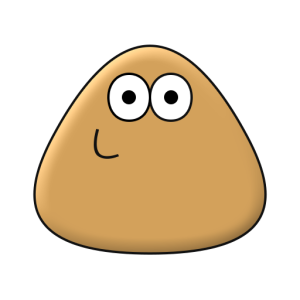
My return to Pou began with a creature staring directly at me from the center of an almost empty room. Its shape was still difficult to describe politely: a rounded brown alien with enormous eyes, a tiny mouth, and an expression that made every unmet need look like a personal accusation. Before I had time to examine the menus properly, I was buying food, dragging it toward Pou, cleaning the room, and checking several status bars to understand what had deteriorated while I was away. The design is simple enough that responsibility begins almost immediately.
Pou is a virtual-pet game built around caring for an alien creature while gradually unlocking food, clothing, room decorations, backgrounds, laboratory items, pets, balls, and minigames. Its basic routine resembles older digital-pet toys: Pou becomes hungry, dirty, tired, bored, or unwell, and I respond through a short interaction. Playing minigames produces Coins, Coins purchase customization and supplies, and experience levels unlock additional items. The loop is uncomplicated, but its clarity is the reason it still works more than a decade after the original release.
The game does not attempt to simulate a realistic animal. Pou does not require complicated training, genetics, daily walks through a large world, or carefully balanced nutrition. It functions more like a collection of small touch interactions held together by one expressive character. That modest ambition makes it easy to understand, although it also means the experience can feel repetitive once every room and status meter becomes familiar.
Pou’s Appearance Is Strange Enough to Become Memorable
Pou does not resemble a conventional cat, dog, bird, or fantasy creature. Its original brown body is deliberately plain, leaving the large eyes and changing facial expression to communicate personality. The design is easy to redraw, recognize, customize, and display clearly on a small phone screen. A more detailed character might have aged visually much faster.
The absence of a fixed species also gives customization greater freedom. A hat, wig, pair of glasses, shirt, mask, or unusual body color can change Pou without creating the impression that a real animal is being dressed unnaturally. Pou can become a superhero, wizard, athlete, robot, seasonal character, or complete visual accident. The character behaves like a blank mascot capable of absorbing almost any theme.
I did not always find Pou conventionally adorable. The expression can move from cheerful to exhausted or unwell with very little subtlety. That exaggerated discomfort is mechanically useful because I can understand the current problem instantly. The design creates attachment partly through charm and partly through the feeling that ignoring those eyes would be unnecessarily cruel.
The Status Bars Turn Care Into a Readable Checklist
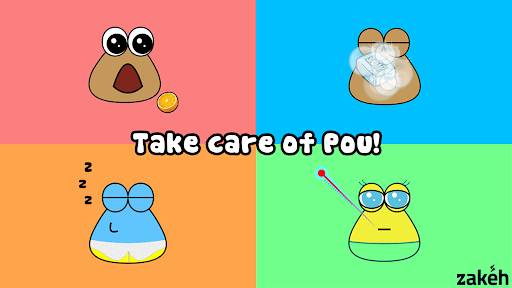
Pou’s health, hunger, energy, and fun are represented through visible meters. These values decrease over time or change after activities, giving every room a clear purpose. The kitchen addresses hunger, the bathroom handles cleanliness, the bedroom restores energy, and the game room improves entertainment while generating currency. I rarely need written instructions because the relationship between problem and solution is visually obvious.
This clarity makes the game suitable for short sessions. I can open the app, inspect the meters, perform several actions, and leave within a minute. There is no need to remember a complicated quest state or restart a lengthy activity. Pou fits naturally into moments when I have only enough attention for a few taps.
The checklist can eventually become mechanical. Feeding Pou does not require understanding preferences beyond price and meter restoration. Cleaning is completed through a simple repeated gesture, and sleep mainly requires switching off the light and waiting. Caring becomes maintenance rather than discovery after enough repetition.
Hunger Is the Most Frequent Reminder That Pou Exists
Food is purchased from the shop and dragged toward Pou in the kitchen. Different categories include fruit, vegetables, sweets, drinks, snacks, and more unusual items. The visual variety gives the shop personality even when most choices perform a similar basic function. I can pretend to provide balanced meals or feed Pou according to whatever item looks funniest.
The hunger meter rises immediately after eating, producing clear feedback. Food also contributes to physical growth and weight, allowing careless feeding to change Pou’s body shape. This gives the mechanic a little more consequence than simply filling one bar. Potions or exercise can later modify some of those results.
The economic balance makes cheap food practical while expensive novelty items function more like collection goals. I rarely felt a mechanical need to purchase every type. The variety exists primarily to support expression and small visual reactions. Once I found efficient options, choosing something different became a matter of role-playing rather than strategy.
Cleaning Pou Is Satisfying Because the Result Is Immediate
Pou gradually becomes visibly dirty, covering the simple body with marks that communicate neglect clearly. Cleaning involves applying soap and using water until the character returns to its normal appearance. The interaction takes only a few seconds but produces one of the strongest before-and-after changes in the game. Touch input makes the action feel more direct than selecting a menu command.
The bathroom also includes practical tools connected with health and cleanliness. These items reinforce the idea that every room supports a part of the care routine. The presentation remains playful rather than clinical. Even when Pou looks unwell, the game avoids creating genuine distress.
Cleaning is still one fixed interaction repeated indefinitely. There are no different messes, bathroom upgrades that change the process, or challenges requiring another approach. Its satisfaction depends on visual feedback rather than mechanical depth. I enjoy the action in brief visits and would not want a long minigame attached to every bath.
Sleep Creates the Game’s Most Passive Routine
In the bedroom, turning off the light allows Pou to recover energy over time. The room changes visually, Pou closes its eyes, and the game encourages me to leave rather than continue demanding activity. This supports the virtual-pet fantasy because the creature appears to maintain a schedule independent of my attention. Returning later to a rested Pou creates a modest sense of continuity.
Energy potions and other items can reduce waiting when I want to keep playing. This introduces convenience spending through earned Coins or premium purchases. The option is useful during a long session, though regular play rarely requires constant acceleration. Pou is designed around returning later rather than completing everything immediately.
The sleep mechanic is not interactive enough to remain interesting by itself. Bedding, wallpapers, pillows, and decorative choices give the room more personality, but the central action remains switching off the light. The game treats rest as an interval between activities rather than another activity. That restraint is appropriate for a small virtual-pet app.
Health Is Simple Enough for Younger Players to Manage
Pou can become unwell, and laboratory items restore health or alter physical conditions. The symptoms are communicated through facial expression, reduced meters, and visible changes rather than detailed diagnosis. I can identify the relevant item and apply it without studying a complex medical system. The mechanic adds responsibility without becoming stressful.
The laboratory contains potions affecting health, hunger, energy, weight, age, and other conditions. These items are practical shortcuts as well as playful experiments. Giving Pou one and watching the immediate transformation remains entertaining, particularly when the effect changes appearance noticeably. The room introduces a mild fantasy element beyond ordinary pet care.
Potions can make natural maintenance feel optional once enough Coins are available. Instead of feeding, resting, or exercising through normal routines, I can purchase a quick correction. This weakens the relationship between actions and consequences. I prefer using potions occasionally rather than allowing the laboratory to replace the rest of the game.
Pou Grows, but Adulthood Is Not a Dramatic Destination
Experience and care gradually increase Pou’s level and physical age. A smaller Pou becomes larger, while new shop items and customization options unlock through progression. Watching the character grow gives early sessions direction. Each level creates a reason to inspect the shop again.
The transformation is gentle rather than dramatic. Pou does not develop a new personality, learn complex behavior, or enter another life stage with completely different mechanics. Growth mainly changes scale and access. The same basic needs and rooms remain relevant throughout the game.
This makes long-term progression stable but emotionally limited. I never worry that an older Pou will become incompatible with favorite activities. I also never experience a surprising developmental milestone. The game preserves one recognizable mascot indefinitely instead of simulating an entire lifespan.
The Game Room Is Where Pou Becomes a Minigame Collection
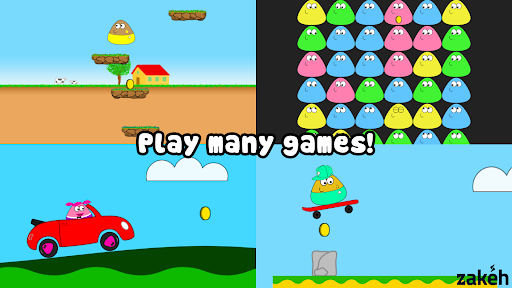
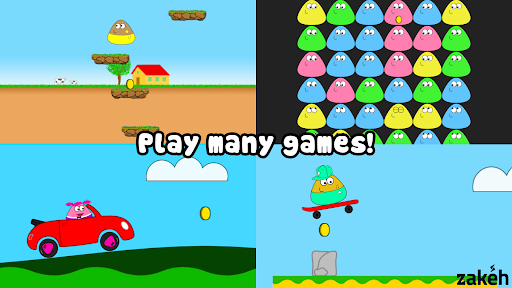
Most active progression occurs through the game room, where a large selection of short minigames awards Coins and experience. The catalogue includes racing, matching, jumping, flying, memory, sports, puzzle, avoidance, and reaction-based activities. Each game uses simple controls suited to touchscreens. I could understand nearly every one after a brief first attempt.
This variety is essential because the care mechanics alone would not support extended sessions. When one game becomes repetitive, another provides a different rhythm. A puzzle may reward slower observation, while a flying or jumping game demands rapid reactions. Pou behaves like a launcher connecting several small arcade ideas through one shared economy.
The quality is uneven. Some minigames remain enjoyable after repeated play, while others feel like simplified versions of familiar mobile concepts. Controls can be less precise in activities demanding fast directional movement. The broad catalogue values accessibility and quantity more than mastery of one exceptional game.
Sky Jump Is Simple Enough to Become Habit-Forming
Sky Jump asks Pou to move upward across a sequence of platforms while avoiding a fall. Tilting or directing the character creates a familiar vertical progression loop. The objective is understood instantly, and every successful landing leads naturally toward another attempt. A run can end quickly enough that restarting feels effortless.
The difficulty increases through spacing, movement, and the pressure created by a rising score. I began making risky jumps because a safe route felt slower or less rewarding. This is the kind of minigame that produces personal goals without requiring a formal campaign. Beating my own record became more important than the Coins.
Motion or touch control quality depends on device and settings. Small errors near platform edges can feel inconsistent, particularly on older screens or during unstable frame timing. The game remains forgiving enough for casual play. Serious score chasing reveals limitations that do not matter during ordinary sessions.
Food Drop Connects Feeding With Arcade Play
Food Drop places Pou beneath falling items and asks me to collect useful food while avoiding unwanted objects. The mechanic reuses familiar visual assets from the kitchen inside a faster challenge. This creates consistency between pet care and minigames. The objects are readable enough that decisions happen quickly.
The game becomes more demanding as items fall faster and safe movement space decreases. One mistake can interrupt a strong run, encouraging another immediate attempt. Its rules are simple enough for younger players while still supporting score improvement. I found it more enjoyable than several games with more complicated instructions.
Repetition eventually reduces the surprise because the item types and movement remain predictable. New seasonal objects or modifiers could have expanded it further. The minigame succeeds through clean execution rather than depth. It is one of the better examples of Pou’s short-session design.
Hill Drive Turns Pou Into a Physics Problem
Hill Drive places Pou inside a vehicle crossing uneven terrain while managing speed, balance, and fuel. The activity is more deliberate than the fastest arcade games because one careless acceleration can overturn the vehicle. Hills require momentum without allowing complete loss of control. Coins collected along the route encourage risky lines.
Vehicle behavior is exaggerated but readable. The front and rear of the car respond clearly as the road changes, making recovery possible after a poor landing. Different visual themes provide some variety. I enjoyed the contrast between Pou’s passive home routine and the absurdity of sending the same creature across unstable hills.
Progress can feel slow during weaker runs, and physics occasionally create outcomes that seem more random than planned. The game rewards familiarity with terrain patterns. It never becomes a deep driving simulation, but it offers more mechanical texture than a one-touch jumping activity.
Cliff Jump and Jet Pou Reward Immediate Reactions
Movement-focused minigames such as Cliff Jump and Jet Pou turn Pou into a small arcade character navigating hazards. Their appeal comes from direct input and rapid failure. I can understand why a run ended and restart before frustration grows. The familiar mascot makes even basic obstacle avoidance slightly more personal.
Jet Pou provides continuous movement requiring height control, while jumping games rely on timing and route recognition. These differences prevent every activity from feeling identical despite similar goals. High scores depend on sustained concentration more than complicated strategy. They work especially well during short sessions.
The controls can become sensitive on smaller screens. Fingers obscure part of the play area, and rapid corrections may produce overreaction. Practice reduces the issue without eliminating device differences. Pou’s minigames were designed for broad compatibility rather than precision competitive play.
Connect, Match, and Memory Games Provide a Slower Pace
Puzzle-oriented games ask me to connect items, find matching pairs, remember positions, or clear arrangements through pattern recognition. These activities provide a useful break from constant reaction challenges. They also make Pou suitable for players who do not enjoy rapid movement controls. The rules resemble familiar casual puzzles, reducing the learning barrier.
The visual language uses food, symbols, colors, and Pou-themed objects consistently. This keeps the games connected with the broader app even when the mechanics are borrowed from established formats. Difficulty usually increases through board size, time, or more complicated arrangements. The progression remains approachable.
These games rarely introduce original puzzle systems. Their value comes from convenience and variety inside one app. I would not select Pou solely for its matching mechanics, but I appreciate having them beside the virtual pet. They extend play without asking for another installation.
Sports Games Add Friendly Competition
Pou includes football, volleyball, and other activities that can support direct competition or score-based play. Touch controls reduce each sport to a few readable actions. The games capture the basic pleasure of returning a ball, finding an angle, or defending a goal. They do not attempt to recreate complete team sports.
Beach Volley and selected activities can be played against another participant through supported multiplayer features. Competing with a friend makes the limited mechanics more unpredictable. Human timing is less repetitive than an automated opponent. The social element gives older minigames another reason to remain installed.
Connection and account setup introduce friction that solo play avoids. The community features are modest compared with modern multiplayer platforms. Pou works primarily as a personal pet with occasional friendly competition. Players expecting large public tournaments or persistent social spaces will not find them.
Coins Connect Every Activity and Create Repetition
Minigames produce Coins used for food, potions, clothing, accessories, wallpapers, balls, pets, and other customization items. This gives even a mediocre score practical value. I am rarely playing only for a number on one leaderboard. Every attempt moves the larger collection forward.
Prices vary enough that desirable items may require repeated play. Expensive clothing or backgrounds become medium-term goals. The structure encourages me to identify one efficient minigame and repeat it for currency. This is where the playful catalogue can become a farming routine.
Purchasing Coins through the app provides a shortcut. The core game remains functional without spending because minigames generate currency continuously. Payment mainly removes repetition or accelerates customization. Whether this feels fair depends on how quickly a player wants specific cosmetic items.
Level Restrictions Give Progression Meaning and Add Waiting
Many shop items unlock only after reaching a particular level. This prevents a completely new Pou from purchasing every appearance immediately. Leveling creates anticipation and gives regular care another purpose. The shop becomes a preview of future customization.
The restriction also creates situations where I have enough Coins but cannot buy the desired item. The only answer is more experience through care and games. This can make progression feel artificial because Pou’s level does not always correspond to a new ability. It functions primarily as a gate.
Unlocks arrive frequently enough during the early game to maintain momentum. Later levels naturally require more time. Players returning to an old account may already have most of the catalogue open, reducing this part of progression. Starting fresh provides the clearest sense of gradual expansion.
Customization Is the Strongest Long-Term Motivation
Pou can wear outfits, shirts, dresses, suits, costumes, wigs, hats, glasses, masks, shoes, facial items, and other accessories. Body colors and visual details extend the options further. Combining categories allows a surprisingly wide range of appearances. The simple character model keeps most items readable.
I enjoyed creating coherent themes and intentionally terrible combinations equally. A formal outfit can make Pou appear serious until one oversized hat destroys the effect. Seasonal items support Halloween, winter, spring, Valentine’s Day, sports, and other themes. Customization turns the pet into a small personal mascot.
The interface could provide stronger outfit saving and organization. After collecting many items, returning to one favorite appearance requires navigating categories again. Search, favorites, and complete preset slots would improve the wardrobe. The volume of customization eventually exceeds the simplicity of the menu built to manage it.
Room Wallpapers Make the House Feel Personal
Each room can use different wallpapers, allowing the kitchen, bedroom, laboratory, bathroom, and game room to develop separate identities. Patterns, colors, seasonal designs, landscapes, and themed backgrounds provide substantial variety. Changing a wall is immediate and visible every time the room opens. The purchase feels more permanent than one temporary potion.
The rooms themselves remain structurally fixed. I cannot move furniture freely, expand the house, or create entirely new layouts. Customization operates like changing skins over established spaces. This keeps navigation simple but limits creative expression.
Scenes and outdoor backgrounds broaden the visual catalogue beyond ordinary wallpaper. Ice, desert, volcano, football, spring, Easter, Jurassic, and other themes create stronger transformations. These updates show how Zakeh continues expanding the classic game through cosmetic environments rather than rebuilding its central mechanics.
Pets Give Pou Company Without Becoming Full Virtual Pets
Pou can acquire smaller companion animals such as a hamster, bunny, monkey, or other available pets. These creatures appear in dedicated contexts and add movement or visual charm. Their presence makes Pou’s home feel less isolated. Some minigames and walking activities incorporate them more directly.
The companions do not possess the same depth of care as Pou. I am not maintaining several complete sets of health and hunger meters. This prevents the game from becoming overloaded. It also means the pets function closer to accessories than independent characters.
I would have enjoyed more interactions between Pou and its companion. Shared animations, toys, reactions, or room behavior could make the relationship stronger. The existing system adds variety without changing the main routine. Pou remains the center of every meaningful decision.
Talking Pou Is a Small Feature With Enduring Comedy
Pou can listen through the microphone and repeat speech in an altered voice. The mechanic is technically simple but works because the character’s mouth and expression respond to the recording. Children can create immediate jokes without learning another system. Adults may use it once, laugh, and rediscover it months later.
Microphone permissions are required, making privacy and device settings relevant. Parents should understand which permissions are active before handing the app to a child. The feature does not need to remain enabled for the rest of the game. Pou’s central care routine works without voice access.
Repetition quality depends on the microphone and surrounding noise. The altered voice can make unclear speech even harder to understand. Precision is not the point. The feature succeeds as a playful reaction rather than a serious voice tool.
Achievements Provide Direction for Players Who Need Goals
Achievements reward levels, scores, care actions, customization, collections, and other milestones. They give structure to a game without one formal ending. A player can choose one target and adjust activities accordingly. Unlocking special items provides a practical incentive beyond a badge.
The achievement catalogue encourages trying minigames that might otherwise remain ignored. Reaching a score threshold requires learning one activity rather than farming only the easiest source of Coins. This improves variety. Long-term milestones also give old accounts something to continue pursuing.
Several achievements depend mainly on repetition or time. They measure persistence more than mastery. The system is appropriate for a casual virtual pet, though it cannot replace deeper progression. I treat achievements as suggestions rather than requirements for completion.
Offline Play Is One of Pou’s Greatest Advantages
The core care mechanics and many minigames can be used without a constant internet connection. This makes Pou suitable for travel, limited-data environments, or devices used by children under controlled connectivity. I do not need to maintain an active server session simply to feed or clean the character. The app preserves the immediate accessibility expected from an older mobile game.
Online functions, account recovery, advertisements, purchases, visits, and social features naturally require connectivity. Some rewards may behave differently while offline. The important distinction is that the central pet does not become inaccessible when a network fails. That independence gives Pou greater durability than many service-dependent mobile titles.
Offline access also reduces the pressure of live events and daily online competition. I can return according to my own schedule. Pou’s needs continue changing with time, but the app does not demand constant server-based participation. The experience feels personal rather than rented temporarily from one active season.
Android Offers Free Entry With Ads and Purchases
On Android, Pou is available as a free download supported by advertising and optional in-app purchases. This creates almost no financial barrier for trying the game. The full care loop, minigames, leveling, and earned Coins remain available without an initial payment. The model helped Pou reach an enormous audience across devices and regions.
Advertising interrupts the simple presentation. Depending on region, version, connection, and activity, ads may appear around reward opportunities or transitions. Younger players may not always distinguish an advertisement from game content clearly. Device-level parental controls and purchase restrictions are important.
Optional purchases mainly provide Coins or remove some waiting and repetition through faster access to items. I never considered payment necessary for basic play. The temptation appears when one cosmetic item costs more Coins than I want to earn manually. Pou monetizes impatience and collection rather than essential care.
The iOS Version Uses a Different Entry Price
On iPhone and iPad, Pou is sold as a paid app in many regions while still offering in-app purchases. The initial price is modest, but the model differs from Android’s free entry. Store prices vary by country. Players should check the current local listing rather than assuming both platforms use identical terms.
Purchasing the app does not automatically provide unlimited Coins or every cosmetic item. Progression and optional spending remain part of the experience. The paid entry may reduce some expectations associated with free advertising, though the store still identifies additional purchases. The exact ad behavior can differ by platform and version.
The iOS app remains small compared with many modern games and supports phones and tablets. Its interface benefits from larger tablet screens, particularly during minigames and wardrobe selection. The central design was created for touch input and translates naturally across device sizes.
Pou Is Not Pay-to-Win Because There Is Little to Win
Most of Pou is single-player care, collection, and score improvement. Buying Coins can unlock food, potions, decorations, and clothing sooner, but it does not create a meaningful competitive position across the entire game. Multiplayer minigames depend more on controls and familiarity than wardrobe value. No expensive hat makes Pou faster automatically.
Paid acceleration can reduce the satisfaction of earning customization. A large Coin purchase allows the shop to be cleared without engaging deeply with minigames. That may be useful for someone interested only in designing Pou. It removes one of the few long-term progression loops.
The monetization is best described as convenience and cosmetic acceleration. It is comparatively mild beside mobile games selling energy systems, randomized rare characters, or competitive power. Ads remain the more noticeable annoyance during ordinary free play. Pou’s simplicity limits both its depth and its ability to create aggressive spending pressure.
The Data and Account Systems Deserve Attention
Pou supports account-related features that can help recover progress or access the same pet after reinstalling or changing devices, depending on current version and configuration. Social visits and online functions also require identification beyond a completely local save. This is useful because a long-developed Pou can represent years of progress. Losing the account would be more frustrating than losing one short minigame score.
Store disclosures indicate that the app may collect personal information, app activity, and other categories of data. Google Play also states that the developer reports no sharing with third parties, while noting that collected data is not encrypted according to the current declaration and that deletion can be requested. Families should review these disclosures directly because practices and regional requirements can change.
I would like clearer in-game explanations of backup, deletion, privacy, and child-account behavior. The cheerful presentation can make account systems appear less important than they are. Any app aimed partly at children should make permissions and recovery easy for adults to understand. This concern exists separately from the quality of the virtual pet.
The Visual Style Has Aged Through Simplicity
Pou uses clean two-dimensional rooms, large icons, flat colors, and simple animations. The presentation lacks the lighting, textures, particles, and physical detail of newer virtual-pet games. It also loads quickly, remains readable on inexpensive devices, and rarely hides an interaction beneath visual clutter. The same basic design works across an enormous range of screen sizes.
Animation is limited but expressive enough for the required states. Pou eats, sleeps, reacts, repeats speech, becomes dirty, changes size, and responds to items clearly. Facial expression carries most of the emotional work. The character does not need a complex skeleton to communicate discomfort or excitement.
Modern players may find the interface old-fashioned. Buttons, category navigation, shop pages, and room transitions reveal the app’s age. I consider the style part of Pou’s identity, but refinement could improve organization without replacing the familiar appearance. A complete redesign would risk removing the immediacy that made the game accessible.
Sound Design Is Functional and Intentionally Silly
Pou uses small vocal noises, eating sounds, interface effects, minigame audio, and altered speech to create personality. The sounds are clear enough to confirm actions immediately. Feeding, cleaning, purchasing, and completing a game all receive recognizable feedback. The audio works well through small phone speakers.
Repetition becomes noticeable quickly. Care actions happen frequently, so the same sound may play dozens of times during one week. Muting the app does not prevent understanding most interactions. I often lowered volume during routine maintenance and restored it for minigames.
The voice-repetition feature is naturally the most distinctive audio element. Pou’s processed response can remain amusing despite its simplicity. The rest of the soundscape supports usability rather than atmosphere. There is no large soundtrack attempting to make pet care emotionally dramatic.
Performance Is Strong Because the Game Is Technically Modest
Pou’s small rooms, simple models, limited effects, and compact minigames place modest demands on modern mobile hardware. Launching and changing rooms are generally fast. Battery use is lower than in large 3D games, though advertisements and network activity can affect consumption. Older devices are more likely to run Pou comfortably than many current releases.
Device fragmentation still creates occasional problems. Screen aspect ratios, operating-system updates, permissions, account restoration, touch sensitivity, and advertisement frameworks can affect behavior. Later updates continue adding compatibility fixes and new cosmetic content. The June 2026 Android update confirms that the classic app has not been completely abandoned.
I encountered no serious performance problem during ordinary care. Minigames requiring precise motion may expose sensor or frame differences more clearly. The application’s main technical strength is reliability rather than ambition. It performs its narrow tasks without demanding high-end hardware.
Updates Are Slow but Surprisingly Persistent
Pou launched in the early 2010s and continues receiving occasional updates many years later. New scenes, wallpapers, outfits, masks, balls, seasonal themes, and compatibility work extend the catalogue. The updates do not usually rebuild core systems. They add more reasons to customize an established pet.
The pace can feel slow for active players who already own most items. Store notes have referred repeatedly to larger work happening behind the scenes. Zakeh now presents Pou 3D as a separate evolution of the character, explaining why the original game receives more conservative additions. The classic version remains maintained rather than transformed.
I prefer modest support to an unnecessary redesign filled with temporary events and complex currencies. I would still welcome quality-of-life features such as outfit presets, stronger sorting, improved backup guidance, and new minigame variations. Pou’s age should not prevent interface refinement. Its familiar identity can survive practical modernization.
Pou 3D Is a Separate Direction, Not an Automatic Upgrade
Zakeh promotes Pou 3D as a newer interpretation of the alien pet available on mobile devices. It changes the presentation and aims to evolve the mascot beyond the flat rooms of the original. The existence of a separate app allows classic Pou to remain recognizable. Players can choose between nostalgia and a more modern experiment.
Progress, purchases, and expectations should not be assumed to transfer automatically between separate products. Owning or developing a classic Pou does not necessarily mean receiving the same items in another app. Store listings and account instructions need to be checked individually. The two games share a character rather than functioning as one universal installation.
I still value the original because its limitations create clarity. Every room fits on one screen, every interaction is visible, and the minigames begin immediately. A 3D world can provide greater expression while adding navigation and technical complexity. Classic Pou remains appealing precisely because almost nothing stands between a need and the gesture that solves it.
The Social Features Are Friendly and Limited
Pou allows visits to friends and selected shared activities. Seeing another player’s customization provides inspiration and comparison. The feature turns clothing and wallpapers into social expression rather than completely private decoration. Multiplayer games add a modest competitive layer.
The system is much smaller than a modern social game. There are no vast public plazas, live voice channels, complex guilds, or endless user-generated houses. This reduces moderation and safety risks. It also means social interaction is unlikely to become the main reason for playing.
I consider the limitation appropriate. Pou works best as a personal creature that can occasionally meet others. Turning it into a large social network would change the tone completely. The existing features support curiosity without replacing care.
Pou Is Better as a Routine Than as a Long Play Session
The care loop is designed around repeated brief visits. Status bars fall, I restore them, play one or two games, adjust an outfit, and close the app. This rhythm prevents any individual interaction from needing substantial depth. The game occupies small spaces in the day rather than one dedicated evening.
Long sessions expose repetition quickly. Cleaning, feeding, buying supplies, and farming Coins become mechanical when performed continuously. Minigame variety helps but cannot transform Pou into a deep arcade compilation. The experience becomes less charming when I attempt to force rapid progress.
I enjoyed Pou most after accepting its natural pace. Returning to see a tired or hungry character creates context for the next action. Waiting allows care to feel responsive rather than manufactured. The app is closer to a habit than a conventional campaign.
The Lack of Serious Consequences Makes Care Comfortable
Pou can become hungry, dirty, tired, or unwell, but the game does not turn neglect into a traumatic permanent outcome. Returning after a long absence creates a list of needs rather than irreversible loss. This makes the app safer for younger players and people who do not want a virtual pet to become a source of anxiety. Care is encouraged without severe punishment.
The absence of consequence weakens emotional realism. I know that Pou will remain available regardless of how long I leave. Responsibility becomes optional in a way that a classic digital pet might not allow. The attachment comes from routine and customization rather than fear of loss.
I prefer this forgiving design for a phone app. Notifications and daily obligations already compete for attention. A pet that punished absence harshly would turn affection into pressure. Pou asks me to return without making one missed week feel morally significant.
Children Can Understand Pou, but Adults Should Configure the Device
Large icons, visual meters, simple gestures, bright items, and short games make Pou approachable for children. Reading is useful but not necessary for many basic actions. The character reacts clearly enough to guide experimentation. Care themes can encourage recognition of hunger, cleanliness, rest, and play.
The application also includes advertisements, purchases, microphone access, account features, and data practices requiring adult attention. Purchase authentication should be enabled, and advertising should not be treated as educational content. Parents may also prefer disabling permissions that are not needed. The game’s visual innocence does not remove the responsibilities associated with any connected mobile app.
Shared play can make the experience stronger. An adult can explain currency, discuss food choices, or take turns with minigames. Pou is simple enough to become a small cooperative routine between family members. Leaving every decision to a young child is convenient but not always the safest configuration.
Nostalgia Is Now Part of the Product
Many players first encountered Pou on older Android phones, inexpensive tablets, or family devices. Returning years later creates memories connected with the interface, sounds, minigames, and absurd wardrobe. The game has remained visually consistent enough that recognition happens immediately. It functions partly as a preserved piece of early mobile culture.
Nostalgia cannot hide every weakness. Coin farming remains repetitive, advertisements interrupt free play, and several minigames are basic. The interface has not gained all the organization expected from a modern app. Familiarity makes these problems easier to tolerate rather than removing them.
The strongest nostalgic moment is seeing a developed old Pou after recovering an account. Clothing, level, rooms, and records become evidence of time spent on another device years earlier. Few mobile games preserve that kind of personal continuity. Account recovery therefore matters more than the simple graphics suggest.
My Biggest Frustrations
Pou’s care interactions become repetitive quickly because feeding, cleaning, sleeping, and restoring health rarely evolve. Growth unlocks more items but does not introduce major behavior or personality changes. Many minigames are enjoyable only in short bursts, and the uneven controls become noticeable during score chasing. Coin prices encourage farming one efficient activity rather than exploring the whole catalogue naturally.
The wardrobe and wallpaper collection now exceed the organizational quality of the menus. Better search, favorites, outfit presets, room presets, and sorting would improve customization dramatically. Social features remain modest, account recovery can confuse returning players, and the app should explain backup and privacy more clearly. Android advertising also interrupts the calm virtual-pet routine and deserves careful parental configuration.
The monetization is not mechanically aggressive, but purchasing Coins can replace the central reward loop. The iOS and Android pricing models differ, which may confuse players comparing devices. Updates remain slow and focus primarily on cosmetics. Pou is stable and recognizable rather than ambitious.
Who Should Play Pou?
I recommend Pou to players who enjoy virtual pets, short mobile sessions, simple minigames, cosmetic collection, offline play, and low-pressure routines. It is particularly suitable for people seeking a game that can be understood within minutes and revisited without remembering a complicated story. Younger players can engage with the visual care loop, provided an adult configures purchases, permissions, and advertising appropriately. Older players may receive as much value from nostalgia as from the current mechanics.
Players who want realistic pet behavior, deep social interaction, a large explorable world, sophisticated customization tools, or meaningful narrative progression will find Pou limited. Long uninterrupted sessions expose repetition, while serious arcade players will consider most minigames too simple. Anyone strongly opposed to advertising should examine platform differences and available purchase options before committing to the Android version. Pou is designed as a recurring companion rather than a complete hobby.
The game is also a good option for older or modest mobile devices because its technical demands remain low. Offline support makes it useful during travel or unreliable connectivity. No competitive spending is required. The central question is whether one expressive alien and a collection of small routines are enough to create attachment.
My Final Verdict
Pou remains effective because it understands the scale of the experience it wants to provide. Feeding, cleaning, resting, playing, using potions, changing clothes, decorating rooms, earning Coins, and watching the character grow all fit naturally into brief phone sessions. The interface is immediately readable, the mascot is impossible to confuse with another virtual pet, and the broad minigame catalogue gives active players something to do after every status meter is full. Offline availability and modest technical requirements have helped the game survive across several generations of devices.
The same simplicity defines its limitations. Care never develops into a deeper relationship simulation, growth changes little beyond size and unlocks, and many activities become repetitive when played for more than a few minutes. Ads interrupt Android sessions, currency farming can become tedious, and years of cosmetic additions need better organization. Pou has been maintained carefully rather than reinvented.
I rate Pou 7.9/10. It is not the deepest virtual pet, the strongest minigame collection, or the most modern mobile app. It remains one of the easiest digital creatures to understand and remember. I may open the game intending only to check one meter, but Pou’s exhausted stare usually convinces me to provide a meal, clean the room, change the wallpaper, and attempt one more Sky Jump run before leaving it alone again.

RELATED APPS





Recent Reviews

Minecraft

Grand Theft Auto V

Toca Boca World

Roblox

Leave a comment
Your comment is awaiting moderation. We save your draft here
0 Comments