Review
Hytale feels like a game that escaped from its own development history and arrived carrying several different ambitions at once. It wan...
Exploring Hytale: A Journey Through Creativity, Community, and Unblocked Adventures
Hytale feels like a game that escaped from its own development history and arrived carrying several different ambitions at once. It wants to be a survival sandbox, an action RPG, a cooperative exploration game, a creative construction platform, a server ecosystem, and a toolkit through which players can design experiences far beyond the original adventure. That combination is immediately exciting because almost every session presents another direction I could follow. It is also the reason the current Early Access version often feels like a collection of promising foundations waiting for their deeper systems to catch up.
I entered expecting the familiar rhythm of collecting wood, making tools, building shelter, and gradually reaching more dangerous regions. Hytale certainly provides that structure, but its world begins suggesting larger possibilities almost immediately. Creatures possess recognizable behaviors, ruins contain environmental stories, weapons have more personality than simple damage values, and the landscape frequently appears designed for deliberate adventures rather than only random resource collection. Even when the systems remain unfinished, the world communicates that it wants exploration to feel like a journey rather than a mining routine repeated beneath different scenery.
Orbis Feels Designed for Adventure From the First Day
The world of Orbis is procedurally assembled, yet it contains enough handcrafted detail to avoid looking like an endless arrangement of interchangeable blocks. Roads lead toward ruins, settlements occupy believable terrain, underground spaces contain constructed areas, and distant landmarks create reasons to leave the safety of my first shelter. I rarely feel that I am walking only because another resource must be collected. Movement itself carries the possibility of finding a structure, creature, biome transition, or environmental event capable of changing the next hour.
Terrain generation is especially effective when natural geography and authored content appear to support one another. A narrow valley may guide me toward an old entrance, while a mountain route reveals structures that could not be seen from below. Forests contain enough variation in height and density to feel more convincing than flat collections of trees. The world remains readable as a block-based environment, but it avoids making every surface look artificially aligned around the player.
Procedural generation still produces repetition and occasional awkwardness. Some environmental arrangements feel more accidental than intentional, and familiar structures become easier to recognize after several long expeditions. The world is strongest when generated terrain creates context for handcrafted encounters. Additional location variety will be essential because exploration loses tension once I can predict what waits inside every recognizable silhouette.
The Visual Style Finds Its Own Space Between Blocks and Animation
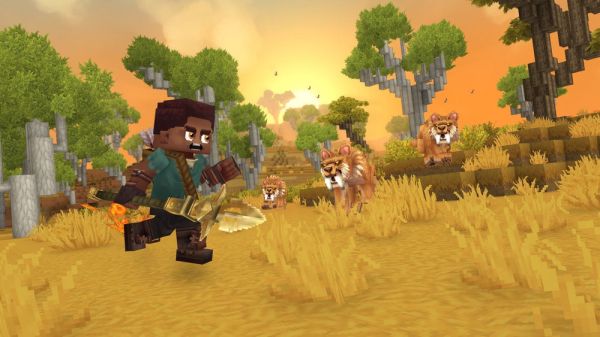
Hytale uses block-based environments without limiting characters and creatures to rigid cubes. Trees, vegetation, furniture, weapons, monsters, and animated details possess smoother shapes while remaining visually compatible with the terrain. This gives the world a handcrafted storybook quality rather than the appearance of a texture pack placed over a familiar formula. I can immediately understand how objects fit into the construction grid without feeling that every living thing was carved from the same rectangular template.
Character animation contributes greatly to this identity. Creatures turn, react, attack, rest, and move with enough personality that encounters feel more expressive than their simple geometry suggests. Humanoid characters use readable poses and equipment silhouettes, allowing me to identify weapons and intentions quickly. The animation communicates charm without removing the physical clarity needed during combat.
Lighting gives each region a strong atmosphere. Morning fog, warm interiors, underground illumination, changing skies, and firelight can transform an ordinary structure into a memorable discovery. The visual effects are rarely photorealistic, but they create mood through color and contrast. Hytale understands that a stylized world does not need technical realism to feel alive.
The Day Begins With Familiar Survival Rules
My first hours involve gathering basic materials, crafting equipment, finding food, and establishing somewhere safe to organize supplies. These actions are easy to understand because Hytale builds upon a survival vocabulary many players already know. Wood leads toward early tools, stone expands possibilities, and better resources gradually open more effective equipment. The game does not waste time pretending that basic resource collection is a completely new invention.
The difference appears in how quickly these systems begin connecting with adventure. Equipment is not only a stronger version of the same object, and useful materials are often found through exploration rather than endless digging alone. Enemy drops, structures, biome resources, and crafted components encourage me to move between surface travel, combat, and workshop management. Progress feels healthier when it comes from participating in several activities instead of repeating one efficient task.
Early balance remains uneven in places. Some resources accumulate naturally while others create sudden bottlenecks that slow an otherwise clear goal. Certain recipes become essential before the game explains where their ingredients are most reliably obtained. These problems are understandable in Early Access, though survival progression benefits from making obstacles feel like discoveries rather than missing information.
Building Is Accessible Enough to Invite Large Ideas
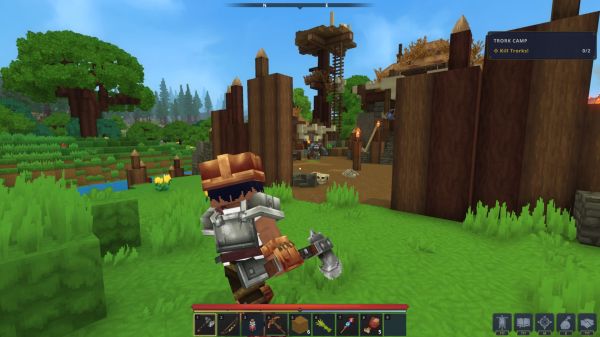
Construction uses a familiar block placement system, allowing walls, floors, roofs, roads, towers, farms, and interior spaces to be assembled without a technical editor. The variety of materials gives structures more visual character than one basic stone-and-wood progression would provide. Small decorative elements help rooms feel occupied rather than functioning only as storage containers. I can create a practical shelter quickly and then continue refining it into a convincing home.
I appreciate how the world’s visual style supports imperfect construction. A simple building can still look attractive because beams, windows, furniture, plants, and lighting add depth without demanding architectural expertise. More experienced builders can use shapes and material combinations to create elaborate settlements. The system serves both players who need one safe room and those planning entire towns.
Inventory and material management become the less glamorous side of ambitious construction. Large projects require repeated collection, sorting, transport, and crafting of intermediate components. Better building inventories, copying tools, templates, and project planning would reduce the administrative work without removing resource cost. Creative tools already demonstrate that Hytale can support faster workflows, and parts of that convenience could improve survival construction as well.
Creative Mode Reveals the Scale of the Game’s Ambition
Creative Mode is not merely survival with unlimited blocks. It exposes a broader set of tools for manipulating terrain, placing objects, controlling environments, and creating structured experiences. I can approach the world as a level designer rather than only a resident. The difference matters because Hytale is clearly intended to support communities whose projects become more complex than ordinary homes and adventure maps.
World-editing tools allow large changes that would be impractical through individual block placement. Terrain can be shaped, structures duplicated, and environments assembled with much greater speed. This makes experimentation less expensive because one failed idea can be changed without losing hours of manual work. The creative workflow already feels capable of supporting serious community projects.
The learning curve naturally becomes steeper once I move beyond ordinary placement. Powerful tools need clear selection behavior, previews, undo functions, organization, and documentation. Hytale has improved these systems through updates, but their long-term success will depend on making advanced creation understandable without requiring every builder to become a professional developer. The best platform tools hide technical complexity until the user is ready to explore it.
The Trigger Volume Tool Makes Encounters Easier to Imagine
The Trigger Volume Tool allows creators to define areas that activate events when players enter, leave, or interact with them. This may sound like a technical addition, but its creative value is immediate. A doorway can begin an ambush, a room can change lighting, a hidden area may trigger dialogue, or a boss arena can recognize when the group has arrived. Structured adventures become possible without requiring every simple event to be written from code.
I enjoy tools like this because they bridge the gap between building a location and making that location behave. A beautiful dungeon becomes much more convincing when doors close, enemies appear, and objectives change according to player movement. The creator can focus on timing and experience rather than on the underlying implementation. This gives non-programmers access to ideas that previously would have remained decorative.
Visual scripting and code-free tools should not replace deeper scripting access. Advanced creators will inevitably need variables, conditions, persistence, custom interfaces, and complex interactions. The ideal system allows simple ideas to remain simple while giving ambitious projects room to grow. Hytale appears to understand that accessibility and depth can exist in layers rather than competing directly.
Combat Has More Intention Than Basic Sandbox Fighting
Weapons possess distinct timing, reach, movement, and special behavior rather than acting like identical tools with different statistics. A sword supports dependable close pressure, heavier equipment demands greater commitment, and ranged options change how I approach open terrain. Shields, dodges, positioning, and enemy attack patterns make encounters more active than repeated clicking. The combat is readable enough for casual exploration while leaving room for mechanical improvement.
I appreciate the weight of committed attacks. Beginning one action at the wrong time can leave me exposed, especially against enemies with clear counterattacks. This encourages watching movement rather than assuming better equipment will solve every encounter. The best battles feel like short exchanges of distance and timing rather than two characters standing together until one health bar disappears.
Hit feedback and enemy reactions are generally satisfying, though crowded encounters can become visually noisy. Several creatures attacking from different angles make camera awareness and terrain important. Narrow spaces can trap both the player and the enemies in awkward collisions. Continued refinement of targeting, reach, and group behavior will determine whether combat remains enjoyable as enemy complexity increases.
Weapon Variety Creates Actual Playstyles
Changing weapons can alter the entire pace of exploration. Fast equipment allows quick reactions and frequent repositioning, while heavier attacks reward planning and controlled openings. Ranged weapons provide safety but introduce ammunition, aim, and distance concerns. Magical tools add another layer through effects that can control space or interact with groups differently.
I enjoy carrying several options rather than relying on one universal weapon. A narrow underground area may favor something different from an open battlefield. One enemy could be easy to interrupt while another punishes close approach. The inventory becomes a collection of answers rather than one vertical power ladder.
Balance will become increasingly difficult as more weapons, spells, modifiers, and enemy types arrive. A tool that is exciting in cooperative exploration may dominate competitive servers or trivialize one boss encounter. Separate tuning options and server control could help communities preserve their preferred style. Hytale’s platform identity means that one universal balance cannot satisfy every experience built upon it.
Enemy Behavior Gives Encounters Character
Creatures do not all approach through the same direct path. Some remain cautious, others pressure aggressively, and certain enemies use range, numbers, movement, or environmental positioning to create danger. Their animation often reveals the next action clearly enough for a response. This makes learning an enemy feel more valuable than simply comparing equipment levels.
Groups become more threatening because different behaviors overlap. A durable opponent may occupy attention while smaller creatures approach from the sides. Ranged attackers force movement that creates openings for something closer. Even familiar enemies become dangerous when terrain removes the space needed to manage them comfortably.
Artificial intelligence remains inconsistent around obstacles and unusual structures. Enemies may struggle with player-built environments, narrow paths, elevation, or objects placed in unexpected positions. Sandbox freedom makes this an extremely difficult problem because players can reshape almost every battlefield. Reliable navigation will be essential if future chapters depend on more elaborate encounters.
Dungeons Give Exploration a Clear Climax
Finding an underground complex or constructed ruin creates a different kind of anticipation from discovering another resource deposit. These locations use rooms, enemy placement, lighting, vertical routes, and rewards to form compact adventures. Entering one without preparation can produce a genuine decision about whether to continue or return with better supplies. The structure gives exploration a temporary beginning and destination.
I enjoy dungeons that reveal their history through layout and decoration. Abandoned equipment, broken passages, ritual spaces, and environmental changes can suggest what happened without requiring a long text explanation. The world feels richer when locations appear connected to previous inhabitants. Hytale’s stylized art is especially effective at communicating these small visual stories.
Repeated dungeon templates eventually become recognizable, reducing uncertainty. Procedural variation can rearrange rooms, but meaningful surprise requires different encounter ideas, secrets, puzzles, and rewards. Future chapters need locations that change how I behave rather than only extending the same corridor structure. The current foundations are enjoyable, but content variety will determine their lifespan.
Loot Is Most Exciting When It Changes My Options
Finding a weapon or item feels valuable when it introduces a new ability, combat rhythm, or exploration tool. A simple numerical improvement is useful but rarely memorable. Hytale’s strongest rewards encourage me to rethink the current loadout or attempt an activity that previously seemed impractical. The item becomes part of the next story rather than another object placed immediately into storage.
Randomized properties add variation while creating the usual problem of inventory clutter. Several nearly identical items can accumulate quickly, forcing comparisons that interrupt exploration. Clear sorting, recycling, upgrading, and visual identification are important for keeping loot enjoyable. A sandbox inventory already contains blocks, food, tools, resources, and quest objects before equipment variation is considered.
I would like major discoveries to possess stronger histories or acquisition stories. A weapon recovered from a significant location should feel different from one generated through an ordinary chest. Named items, crafting transformation, and visible wear could build attachment. Hytale is already good at making locations memorable, and its rewards should preserve that memory after I return home.
Crafting Connects Exploration With Settlement Life
Crafting stations provide a reason to organize a permanent base rather than carrying every recipe through one universal interface. Different work areas create the appearance of a functioning workshop. Materials found during expeditions return home and become equipment, decorations, food, storage, and future preparation. This creates a satisfying rhythm between leaving and returning.
The recipes are readable enough to establish short-term goals. I can see what is missing and decide whether the next trip should focus on mining, hunting, farming, or exploration. Production does not currently require an industrial network as complicated as a dedicated automation game. The emphasis remains on personal crafting and adventure support.
As the catalogue expands, recipe organization will become increasingly important. Search, favorites, categories, material substitution, and planned projects can reduce repeated menu navigation. Crafting depth should come from decisions and resource relationships rather than from difficulty locating the correct icon. The system is functional now, but future content could overwhelm it without continued interface improvements.
Farming Provides a Calm Counterweight to Exploration
Planting crops and maintaining food production gives the base a daily routine beyond storage and crafting. A farm visually changes over time, making the settlement feel productive while I am pursuing other goals. Food security also reduces dependence on constant gathering during longer expeditions. The system supports players who enjoy gradual domestic improvement as much as combat.
I appreciate the contrast because not every session needs to involve a dangerous dungeon. Expanding fields, arranging paths, caring for animals, or improving a kitchen can provide a peaceful evening. These activities make the home worth protecting and revisiting. Without them, the base risks becoming only a group of chests beside a portal or crafting station.
Farming depth remains lighter than in a specialized life simulator. Seasons, soil, crop relationships, animal breeding, food quality, and village demand could create more meaningful decisions later. The current system provides atmosphere and supplies effectively. It needs additional connections with settlements, cooking, and trade to become a full progression path of its own.
Creature Taming Makes the World Feel Less Hostile
Taming systems allow certain creatures to become companions or mounts rather than permanent opponents or background decoration. This changes how I view animals encountered during travel. A creature may represent transportation, assistance, or a future addition to the settlement. The world begins offering relationships alongside resources and danger.
Mounts improve exploration by reducing travel time while giving the journey more personality. Different creatures can feel suited to particular terrain or styles of play. Caring for one creates attachment that a simple speed item would not provide. Losing track of a familiar companion becomes an emotional problem rather than a minor inconvenience.
The system will benefit from stronger commands, storage, safety, and progression. Companions need to navigate player-built spaces without becoming trapped or placing themselves in avoidable danger. Breeding, equipment, traits, and stable management could add depth without turning every animal into a statistic sheet. The basic fantasy is already effective because travelling with a creature makes Orbis feel more personal.
Mountable Dinosaurs Fit Hytale Better Than They Should
Dinosaurs might appear inconsistent with a fantasy world containing magic, medieval equipment, and ancient ruins, yet Hytale’s varied biomes make them feel surprisingly natural. Discovering one in a dangerous region immediately gives the area a distinctive identity. The creature’s size and movement communicate that the world contains threats and possibilities beyond ordinary forests. Taming one transforms that intimidation into one of the game’s most entertaining rewards.
Riding a large creature changes how I cross terrain and how other enemies appear around me. Travel becomes less vulnerable while still requiring awareness of obstacles and narrow passages. The mount is not useful everywhere, which prevents it from replacing every other option. It feels like a regional tool and personal achievement rather than a universal solution.
Boats Make Coastlines More Than Decorative Borders
Functional boats open routes that would otherwise require long swimming sessions or inconvenient travel around water. Islands, coastlines, rivers, and ocean structures gain practical value once movement across them becomes enjoyable. A boat also supports fishing and group travel, making water part of a wider expedition. The world feels larger when the ocean is a route rather than an empty barrier.
I enjoy preparing a naval trip differently from an ordinary land journey. Storage, food, destination planning, and the possibility of returning with unusual materials give the boat a clear purpose. Travelling with friends makes the vessel into a temporary shared base. The journey itself becomes social because everyone occupies one moving space.
Water physics and vehicle interaction need continued refinement. Shorelines, shallow areas, collisions, and unusual terrain can create awkward movement. Boats must also remain easy to recover because losing one through a technical problem is far less entertaining than losing it through poor planning. The system has excellent potential if future ocean content continues expanding around it.
Fishing Supports Both Relaxation and Resource Gathering
Fishing provides a slower activity that fits naturally beside farming and exploration. Choosing a location, waiting for movement, and collecting different catches creates a break from combat. The resulting fish can support cooking, collection, or trade depending on the wider systems. It gives rivers and lakes another reason to matter.
I enjoy activities like this because they help a sandbox support different moods. One player can organize equipment while another fishes beside the settlement. Cooperative play does not require everyone to perform the same task constantly. The world becomes more believable when useful activity exists beyond fighting and mining.
The mechanic will need enough regional and situational variety to remain interesting. Different waters, weather, time, equipment, and bait could influence results. Rare discoveries should encourage travel without turning fishing into a repetitive probability test. The current foundation is pleasant, though its long-term value depends on how deeply it connects with the rest of the economy.
Multiplayer Makes Every Expedition More Dynamic
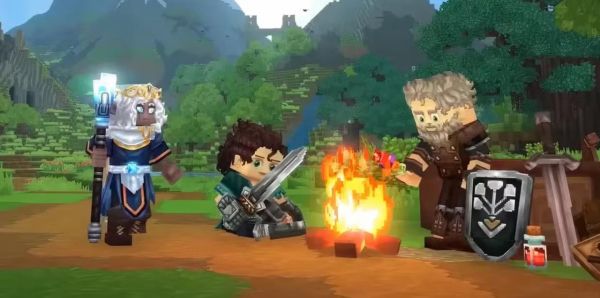
Cooperative play allows groups to divide responsibilities naturally. One player may focus on construction, another gathers materials, and someone else prepares equipment for the next expedition. Combat becomes more flexible because several weapon roles can support one another. The settlement begins reflecting the interests of the entire group rather than one individual plan.
Shared exploration creates memorable disagreement. One person wants to enter the suspicious ruin immediately, another insists on returning with supplies, and somebody has already opened the door before the discussion is complete. These moments cannot be generated through scripted dialogue. The social consequences of curiosity become part of the adventure.
Progress permissions and shared ownership need clear controls. Players should be able to protect important builds, limit access, and decide which resources belong to the community. Friendly groups can operate informally, but public servers require stronger governance. Hytale’s future as a social platform depends as much on administration tools as on new creatures or weapons.
Server Discovery Makes Community Worlds Easier to Reach
The integrated server browser is an important step because community experiences should not depend entirely on external addresses and private invitations. I can explore available servers, examine their descriptions, and join populations centered around survival, role-play, minigames, or custom rules. This gives creators a direct route toward finding players. It also helps newcomers understand that Hytale extends beyond the official world.
Discovery quality depends on filtering and moderation. Popularity alone may push established servers upward while new creative projects remain difficult to find. Tags, language, region, playstyle, version, rules, and age suitability should all be easy to evaluate. A good browser helps players find communities where expectations already align.
Server identity needs stronger presentation than one title and player count. Screenshots, update history, verified information, community links, and clear monetization details would improve trust. The system is already useful, but it will become one of Hytale’s most important interfaces as custom content expands. Players may eventually spend more time choosing worlds than creating new personal saves.
The Social Sidebar Reduces Friction Between Sessions
A friends list and social sidebar make it easier to see who is online, join their world, and continue a shared project. This sounds ordinary, yet it is essential for a game built around persistent communities. Players should not need to exchange server information every time they want to meet. The interface makes Hytale feel like one connected platform instead of a collection of isolated worlds.
Discord integration further connects existing communities with the game. Many server groups already use Discord for organization, events, moderation, and development. Bringing those relationships closer to Hytale reduces the distance between planning and playing. The challenge is preserving privacy and ensuring that external services remain optional.
Social tools should continue expanding toward invitations, groups, permissions, recent players, and community events. A sandbox becomes easier to revisit when the game remembers who helped build it. Hytale’s technical tools attract creators, but strong social continuity is what keeps ordinary players returning to those creations.
Controller Support Broadens Access Without Solving Every Interface Problem
Controller support allows Hytale to feel comfortable from a sofa and prepares the foundation for possible future platform expansion. Movement, combat, inventory selection, and basic construction translate naturally enough. The stylized interface and direct action make the game well suited to controller play. Players no longer need to treat keyboard and mouse as the only serious option.
Inventory management and advanced creation remain more complicated. Moving large numbers of items, editing detailed settings, or navigating technical tools can require more steps than a mouse-based workflow. Context-sensitive shortcuts and customizable radial menus could reduce this friction. One control scheme does not need to handle survival and professional world editing in exactly the same way.
I appreciate that controller support arrived while the game is still in Early Access. Accessibility is easier to build into systems early than to attach after every menu has been designed around a cursor. Continued input refinement will be important if Hytale eventually reaches consoles. A sandbox this broad should support several comfortable ways to play.
Character Customization Is Expressive Without Abandoning Readability
Avatars can be personalized through body features, hair, clothing, colors, accessories, and equipment. The designs retain the block-inspired style while allowing enough variation for players to look distinct inside a group. Clothing layers and silhouettes communicate personality without making characters difficult to recognize during movement. The editor supports role-play as well as ordinary personal expression.
I enjoy matching appearance to the current world. A survival explorer, fantasy warrior, village resident, and server character can use completely different visual identities. Cosmetics become more meaningful when they fit a story rather than existing only as rarity indicators. Hytale’s creative communities will inevitably expand this system far beyond the official catalogue.
Customization also raises moderation and compatibility questions. Community-created models and cosmetics need performance limits, safety rules, and clear distribution. Players should understand which content is official and which comes from a server. Strong creator freedom works best when the platform gives users transparent control over what is being loaded.
Modding Is Not an Extra Feature but a Central Design Principle
Hytale is built around the expectation that players will change objects, rules, interfaces, creatures, encounters, and entire experiences. This separates it from games where mods operate around unsupported boundaries. The official tools aim to make custom creation part of the ordinary ecosystem. Servers can present identities that go far beyond adjusted survival settings.
I find this potential more exciting than any single official feature. A strong platform could support RPG campaigns, competitive arenas, social worlds, strategy games, cooperative challenges, and ideas that do not yet have convenient genre names. Hytale provides rendering, networking, animation, world generation, and asset systems as building blocks. Creators can focus on the experience rather than beginning from an empty engine.
The promise still needs to be judged through long-term tool quality. Documentation, version stability, asset pipelines, debugging, profiling, collaboration, and distribution determine whether ambitious projects can survive. Powerful tools are not enough if every update breaks months of work. Hypixel Studios must treat creators as development partners whose projects need predictable foundations.
The Model Maker Encourages a Consistent Community Art Style
Hytale’s model creation tools allow custom objects and creatures to remain compatible with the game’s stylized visual language. Creators can build shapes, textures, animations, and assets without relying entirely on external professional software. This lowers the barrier for communities that have strong ideas but limited technical art experience. The result can look integrated with the world rather than obviously imported from another style.
Animation support is particularly valuable because a creature’s personality depends heavily on movement. A technically simple model can become memorable through posture, reaction, and unusual behavior. Giving creators access to this layer increases the diversity of possible projects dramatically. Custom enemies no longer need to behave like recolored versions of official ones.
The tool naturally requires learning. Modeling, texturing, rigging, and animation remain creative disciplines even when the interface is accessible. Templates, example projects, tutorials, and shared asset libraries can help users progress gradually. Hytale’s community will grow faster if new creators can modify one existing object before attempting an entirely original creature.
Minigame Potential Is Present Even Before the Official Mode Is Complete
Hypixel Studios emerged from a team experienced in operating one of the largest Minecraft server communities, so expectations around minigames are naturally high. Hytale’s combat, movement, scripting, networking, and customization systems already provide much of the required foundation. Community servers can experiment with arenas and structured activities before the official minigame ecosystem reaches its full form. The platform’s future may depend as much on short competitive experiences as on survival exploration.
I am most interested in minigames that use Hytale’s mechanics rather than copying familiar server formats exactly. Weapon timing, creature behavior, destructible terrain, custom models, and scripted encounters create opportunities for more ambitious designs. The strongest community experiences will feel native to Hytale rather than like direct ports. The tools should encourage invention by making unusual rules easier to implement.
Competitive integrity requires separate attention. Anti-cheat, server authority, matchmaking, moderation, spectator tools, and performance all matter once player ranking or rewards are involved. A sandbox can tolerate some unpredictability, while serious competition cannot. Hytale must support both without allowing one environment’s priorities to weaken the other.
Early Access Is Visible in Almost Every Major System
Hytale already contains enough exploration, building, combat, crafting, creative tools, and multiplayer functionality to support substantial playtime. The problem is not absence of activity. It is the uneven distance between one polished feature and another system that still looks like an early framework. I may move from an atmospheric dungeon into an interface or behavior that clearly needs more iteration.
The developers have spent the opening months rebuilding foundations and updating a version of the project that had fallen years behind during its turbulent history. That work is less exciting than a constant stream of new biomes and bosses, but it is essential for a game expected to support long-term community development. Tools, networking, input, server discovery, and stability determine whether future content has somewhere reliable to exist. The updates suggest that the studio understands this priority.
Players should still purchase according to the game available now rather than the game imagined for several years later. Adventure content remains incomplete, balance changes regularly, and many systems will expand substantially. Early Access is not only a label attached to occasional bugs. It describes a world whose final progression, narrative, and platform structure are still being built in public.
The Long Development History Creates Unusual Expectations
Hytale was announced years before its Early Access release and became associated with an enormous range of promises, hopes, and imagined features. The project then changed ownership, underwent major technical work, was cancelled, and eventually returned to its original founders. Few games reach players after such a dramatic path. Every current system is therefore judged not only against other games but also against years of community imagination.
I try to separate the game in front of me from the perfect version that existed in speculation. The current Hytale cannot contain every adventure, tool, server type, and feature people expected across a decade. It can provide a foundation strong enough for those directions to develop. Evaluating that foundation reveals a promising sandbox with genuine identity rather than a completed replacement for every game that inspired it.
The revival also gives the project a sense of vulnerability. Hytale does not feel like an inevitable product produced by an unlimited machine. It feels like a game whose community and creators actively refused to let it disappear. That history creates goodwill, but goodwill should not replace critical evaluation. The best way for the revival to matter is for the game to become stable, useful, and consistently enjoyable.
Chapter 1 Could Define What Adventure Mode Truly Means
The upcoming first chapter represents more than another content update. It is an opportunity to demonstrate how Hytale combines sandbox freedom with authored progression. Quests, locations, characters, enemy factions, rewards, and exploration need to coexist without turning the world into a linear campaign. The player should feel directed without losing the ability to build, travel, and create personal goals.
I want the chapter to give Orbis stronger narrative context. Existing ruins and creatures already suggest cultures and conflicts, but many discoveries currently depend on environmental implication. Memorable characters and developing regional stories could make each biome emotionally distinct. The world needs reasons for its structures to exist beyond providing another place to find loot.
The challenge will be replayability. A heavily scripted story can feel excellent once while procedural exploration supports repeated worlds more naturally. Branching encounters, variable objectives, world-state changes, and server-friendly progression could help the chapter remain useful beyond one campaign. Hytale’s greatest opportunity is combining authored meaning with sandbox unpredictability rather than choosing only one.
Performance Is Generally Strong Until Complexity Accumulates
The stylized presentation allows Hytale to perform smoothly across a broad range of systems during ordinary exploration. World movement, combat, and smaller builds usually feel responsive. The game’s visual identity does not depend on expensive photorealistic effects, which gives the developers room to prioritize simulation and creation. This is important for servers expected to contain custom assets and complicated logic.
Large builds, high entity counts, scripts, distant terrain, and busy multiplayer spaces naturally create heavier pressure. Community creators will discover performance limits faster than ordinary players because they will construct scenarios the official content never attempted. Profiling and budget tools should help them understand where the cost comes from. A platform succeeds when creators can optimize intentionally rather than guessing blindly.
Technical stability has improved through regular updates, though Early Access problems remain possible. Network behavior, world loading, custom content, and unusual interactions create an enormous testing surface. Frequent patches are encouraging as long as they do not destabilize community projects repeatedly. Performance and compatibility need to become part of every feature discussion rather than an afterthought.
The Soundscape Gives Every Region Its Own Rhythm
Environmental audio helps distinguish forests, caves, settlements, weather, water, and hostile spaces. Distant creature sounds can create anticipation before anything becomes visible. Combat effects are clear enough to communicate impact without overwhelming the stylized presentation. The world sounds active even during quiet travel.
Music enters with enough restraint that exploration retains room for natural ambience. Stronger themes make discoveries and dangerous areas feel more significant. I appreciate that the soundtrack does not continuously announce adventure when I am building or organizing equipment. Silence and environmental sound allow the player’s current activity to determine the mood.
Community experiences will eventually need flexible audio tools of their own. Custom music, spatial sound, dynamic triggers, and server-specific mixing can transform a good location into a convincing world. These features also require content controls and download transparency. Hytale’s creative promise includes sound design as much as visible blocks and models.
The Interface Is Friendly Until My Inventory Becomes a Warehouse
Basic crafting, equipment, storage, and navigation are easy to understand. Icons are readable, categories provide direction, and important information is usually available without opening several technical panels. The game does a good job of welcoming players who already understand sandbox conventions. Early actions rarely require long tutorials.
Complexity appears as the number of blocks, ingredients, weapons, tools, food items, drops, and custom objects increases. Storage rooms become necessary, and locating one specific component can interrupt preparation. Search and sorting help, but broader logistics tools will become essential as official and community content expands. The interface must be able to support catalogues much larger than the launch version contains.
I would welcome connected storage, named inventories, automatic deposit rules, project lists, and stronger item comparison. These systems reduce repetitive organization while preserving the need to gather resources. A sandbox should challenge me through exploration and creation rather than through remembering which chest contains one unusual component. Inventory convenience becomes more important, not less, as the game becomes deeper.
Hytale Is Most Convincing When Its Systems Overlap
My favorite sessions do not focus on one isolated mechanic. I leave the settlement to find a resource, discover a ruin, change equipment after meeting unfamiliar enemies, rescue an interesting creature, and return with a new building idea inspired by the location. Exploration produces crafting goals, combat produces stories, and construction records what happened. The world feels coherent because one activity creates motivation for another.
The weaker moments occur when a system exists without enough connection. Farming is less meaningful when food variety has limited consequences, and a rare item is less exciting when it does not affect future choices. Hytale already contains many promising pieces. Its next stage should focus on relationships between them rather than only increasing their quantity.
Chapter content, settlement behavior, economy, creature relationships, crafting progression, and server tools can all reinforce one another. A village might request regional resources, unlock recipes, attract characters, and become threatened by events created through the same scripting tools available to players. The official game can demonstrate what the platform is capable of building. Every strong adventure system then becomes another example community creators can expand.
A Sandbox Worth Playing Now and Watching Closely
Hytale’s Early Access version already has a distinct personality. Its animated block world feels warmer and more adventurous than a simple technical sandbox, while combat and dungeon exploration provide clearer momentum than construction alone could offer. Building is approachable, creative tools are ambitious, and multiplayer increasingly connects players with community servers. The game has enough genuine strengths that its appeal does not depend entirely on future promises.
Its weaknesses are equally visible. Adventure progression remains incomplete, generated content eventually repeats, artificial intelligence struggles with the freedom of player-made terrain, and several domestic systems need stronger long-term connections. Inventory management grows cumbersome, balance is still developing, and the creator ecosystem requires stable documentation and compatibility. Hytale is already broad, but many parts are not yet deep enough to support years of independent play.
I remain impressed by how naturally the game combines exploration with creation. Finding an unusual ruin makes me want to understand its story, copy part of its architecture, and build something inspired by it at home. Taming a creature changes travel, a new weapon changes combat, and one creative tool suggests an entire custom adventure. The world constantly turns discoveries into ideas.
Hytale does not currently replace every survival sandbox, action RPG, creative platform, or multiplayer server ecosystem it resembles. It does something more interesting by creating a space where those identities can gradually meet. The reborn project still carries technical scars and unfinished promises, but it also possesses the rare feeling of a platform whose most important experiences may not exist yet. I enjoy the current adventure, but the most exciting thought is that another player may already be using its tools to build the reason I return next year.
Pros:
- Extensive customization tools for building unique worlds
- Strong community support with robust modding capabilities
- Engaging multiplayer features for social interaction
- Frequent content updates that keep gameplay fresh
- Broad accessibility across platforms and unblocked play options
- Immersive gameplay mechanics and dynamic environments
Cons:
- Potential performance issues on lower-end devices
- Some cheat or mod features might detract from the intended gameplay experience
- Steep learning curve for new players due to complex mechanics

RELATED APPS




Recent Reviews

Minecraft

Grand Theft Auto V

Toca Boca World

Roblox

Leave a comment
Your comment is awaiting moderation. We save your draft here
0 Comments