Review
Avatar World gave me a colorful digital neighborhood where creating a character was only the beginning of the experience. After designi...




Avatar World: Immersive Adventures and Limitless Creativity
Avatar World gave me a colorful digital neighborhood where creating a character was only the beginning of the experience. After designing my first avatar, I could move between homes, shops, schools, salons, medical spaces, entertainment areas, and other interactive locations while inventing a completely personal story. There was no central campaign telling me who my character needed to become or which building had to be visited next. The game provided the people, rooms, clothing, objects, and reactions, then trusted me to decide why any of them mattered.
I approached Avatar World as someone familiar with open-ended life games such as Toca Boca World, so I expected a collection of attractive rooms with simple object interactions. The game does follow that recognizable digital-dollhouse formula, but its detailed avatar creator, expressive animations, frequent updates, and growing collection of locations give it a distinct personality. I could spend one session designing a family apartment and another creating a school drama, fashion event, medical story, pet-care routine, or completely unreasonable restaurant disaster. The mechanics remain easy to understand, but the number of possible combinations gives imaginative players plenty of material.
From my perspective as a gamer, Avatar World works best when I stop waiting for the application to provide a formal objective. Its systems are not designed around gaining experience, defeating opponents, or reaching a final level. Progress comes from expanding my collection, discovering interactions, decorating spaces, and developing stories across several locations. The player acts as character designer, director, set decorator, and audience at the same time.
The Character Creator Became My Real Starting Point
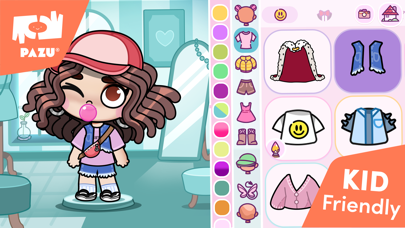
The avatar creator offers enough options to establish personality before the character enters the wider world. I could adjust facial details, hair, skin tone, clothing, accessories, and other visual features until the result suggested a specific role. A bright outfit created an energetic performer, while practical clothing produced a student, employee, caregiver, or ordinary resident. The creator does not need written biographies because appearance already communicates the beginning of a story.
I enjoyed designing several characters together rather than treating each avatar as an isolated project. Shared colors or accessories could suggest a family, band, sports group, or team of friends, while different styles gave every member a recognizable personality. The strongest designs were not necessarily the most complicated. One carefully selected hairstyle or unusual accessory often communicated more than several decorative elements competing for attention.
Small Facial Details Make Characters Feel Individual
Avatar World’s visual style uses simplified cartoon features, but the available combinations still create a broad range of expressions and identities. Eyes, eyebrows, mouths, face shapes, and decorative details can change whether a character looks confident, shy, mischievous, elegant, or permanently surprised. These differences become important during role-play because there is no long dialogue system defining personality. The face needs to carry much of that emotional information visually.
I liked creating characters whose appearances contradicted their roles. A serious-looking avatar could become the most chaotic student in a school story, while a cheerful character managed a highly organized medical clinic. This contrast gave my scenes more humor and prevented every personality from feeling predetermined by clothing. The creator provides a direction, but the player remains free to change what the design means.
Hair and Clothing Can Transform the Same Avatar Completely
Changing an outfit or hairstyle is enough to move a character from one story into another. A casual resident can become a performer, employee, doctor, student, party guest, or fantasy-inspired figure without rebuilding the entire avatar. This flexibility is useful because open-ended games often depend on reusing a manageable cast across many locations. One character can occupy several roles during different sessions.
I appreciated having the freedom to create formal, casual, colorful, and themed appearances. Some clothing pieces work best as complete coordinated looks, while others are more interesting when mixed with items from unrelated sets. Experimenting with unexpected combinations became a large part of the entertainment. The wardrobe functions like a storytelling library rather than a list of equipment upgrades.
The Map Feels Like a Collection of Connected Playsets
Avatar World contains multiple locations that can be visited through a broader map. Each area has its own theme, objects, characters, and possible routines, but the game becomes more convincing when I treat them as parts of one continuous town. A character can wake up at home, travel to school, visit a store, attend an event, and return with new objects. The application does not require this sequence, yet it supports the idea naturally.
I enjoyed moving the same group through several locations because continuity made small decisions feel meaningful. Clothing selected at home became part of a later social scene, while food collected from one area could appear during a celebration elsewhere. The map gives stories enough distance to develop without demanding realistic travel mechanics. Changing location is quick, which keeps attention on the scene rather than the journey between buildings.
Homes Provide the Most Flexible Storytelling Space
Residential areas can support family routines, roommate stories, celebrations, arguments, sleepovers, cooking sessions, or quiet everyday life. Beds, kitchens, bathrooms, storage, furniture, and decorative objects make it easy to create scenes that feel familiar. Nothing prevents one room from becoming a temporary studio, office, classroom, or pet-care area. The player decides how literally each space should be interpreted.
I spent more time in homes than I initially expected because domestic locations connect nearly every type of character. A performer still needs somewhere to prepare before an event, while a student may return home with friends after school. Ordinary routines give larger stories a beginning and ending. The home becomes a narrative anchor rather than only a place for furniture.
Decorating Turns Empty Rooms Into Personal Sets
Room customization allows furniture and decorative items to establish the mood of a space. Bright objects and playful arrangements can create a child’s bedroom, while restrained furniture may suggest an adult apartment or professional studio. Practical details such as food, storage, lighting, seating, and personal items make a room feel occupied. The best designs often include a little disorder because perfectly arranged spaces can look more like shops than homes.
I enjoyed building rooms around the characters who would use them. A musician received instruments and performance items, while a fashion-focused avatar needed mirrors, clothing storage, and a place to prepare looks. Designing from personality gave each object a reason to be present. Decoration became easier once I stopped trying to place every attractive item in the same room.
Object Movement Keeps Every Scene Interactive
Characters can hold, carry, eat, wear, open, activate, or otherwise respond to many objects throughout the world. This direct interaction makes locations feel more like physical toy sets than static backgrounds. A bag can contain supplies for another scene, food can be distributed between several people, and decorative items can become important props. Objects receive meaning from how they are used rather than from fixed descriptions.
I liked carrying items between locations because it created continuity without a traditional inventory menu. A gift collected during shopping could be taken to a party, while medical equipment became part of an invented emergency story. The freedom also produces accidental comedy when objects appear in inappropriate places. Avatar World allows the player to decide whether an unusual combination is a mistake or the beginning of another idea.
The School Supports More Than Classroom Stories
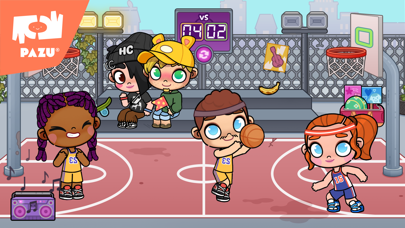
School environments naturally suggest lessons, friendships, clubs, lunch breaks, performances, sports, and minor social conflicts. Characters can become students, teachers, visitors, or employees according to how they are dressed and positioned. The game does not provide grades or a structured school schedule, so the player can focus on whichever part of the setting is interesting. One session may involve a normal day, while another turns the building into the location of a major celebration.
I appreciated how easy it was to build a recurring cast around the school. A few recognizable students and teachers gave later visits a sense of continuity. Small changes in clothing, seating, or friendship groups suggested that time had passed. The environment becomes stronger when it is treated as a repeated social location rather than explored once and forgotten.
Medical Locations Encourage Care-Based Role-Play
Clinics and health-related spaces provide tools for stories involving checkups, accidents, recovery, doctors, patients, and concerned family members. The interactions remain gentle and visually approachable rather than realistic or frightening. This makes the setting suitable for younger players who may want to recreate familiar experiences without intense consequences. Characters can receive attention and return to ordinary life immediately afterward.
I liked assigning different roles to the available avatars. One character became a calm doctor, another acted as an anxious parent, and someone else arrived with an extremely exaggerated problem. The environment supports both educational imitation and playful comedy. Care becomes an activity centered on attention and response rather than punishment.
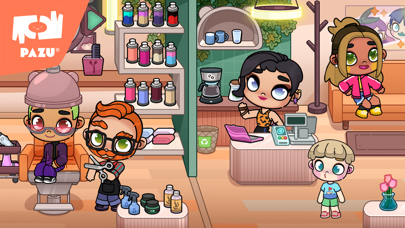
Salons Make Visual Transformation Part of the Story
Hair and beauty locations allow appearance changes to happen inside the world instead of only through an external customization screen. This makes a makeover feel like an event involving stylists, customers, waiting friends, and final reactions. A character can begin with one look and leave prepared for a party, performance, interview, or entirely new identity. The process becomes part of the narrative rather than a menu adjustment.
I enjoyed creating salon scenes where the planned look went in a completely different direction. A formal appointment could end with unusual colors, oversized accessories, or mismatched clothing. Because the changes can be adjusted again, experimentation remains safe. The game encourages players to treat style as temporary creative play rather than a decision that must remain perfect.
Shopping Areas Give Objects a Social Purpose
Stores provide clothing, food, gifts, and other items that can support stories across the wider map. There is no need to simulate a complicated economy every time a character chooses something. The focus stays on selection, carrying, sharing, and using the item afterward. Shopping becomes part of social role-play rather than a resource-management challenge.
I liked creating characters with very different approaches to the same store. One carefully selected a single gift, while another attempted to carry almost everything visible. Employees, customers, and friends could all be arranged around the scene. The location becomes entertaining because people interact with the products and one another, not because the shop provides a formal mission.
Food Interactions Create Immediate Reactions
Restaurants, kitchens, cafés, and food items offer some of the easiest ways to begin a scene. Characters can prepare, serve, carry, share, and consume different foods while displaying visual responses. A simple meal can become a family dinner, birthday event, restaurant shift, date, or chaotic cooking experiment. Food gives characters a practical reason to gather in one place.
I enjoyed combining ingredients and objects without worrying whether the result matched a realistic recipe. The game’s playful tone makes unusual meals feel intentional. Character reactions communicate whether something appears enjoyable, surprising, or questionable. These small emotional responses help scenes feel active even without written conversations.
Pets Add Warmth and Another Type of Responsibility
Animals introduce stories involving adoption, care, feeding, play, medical visits, and family routines. Their designs match the game’s expressive visual style, making them easy to include in both ordinary and humorous situations. A pet can become the center of an entire story or simply accompany a character between locations. The player decides how much responsibility the animal creates.
I appreciated that pet care remains gentle and flexible. Forgetting one routine does not create severe consequences or force the player into constant maintenance. This allows children to explore the positive side of caring for an animal without turning the game into a stressful schedule. Pets remain companions rather than another progress bar.
Secrets Reward Players Who Touch Everything
Avatar World includes hidden objects, unusual reactions, coded areas, and small surprises that encourage careful exploration. A decorative item may move, open, reveal another object, or react when combined with something found elsewhere. These discoveries provide a reason to revisit locations after the obvious interactions have been tested. Curiosity becomes a form of progression.
I liked that many secrets are discovered through observation rather than complicated puzzle rules. A strange symbol, suspicious object, or unusual arrangement may suggest where to tap next. Younger players can find things accidentally, while experienced players may search deliberately. The world feels more playful when not every important object announces itself immediately.
Updates Keep the Map From Feeling Completely Finished
Regular additions can introduce locations, furniture, clothing, events, characters, or new interaction possibilities. This gives returning players another reason to open the game after familiar areas have been explored. A new location can connect with older ones and inspire stories that use existing characters differently. The world grows through accumulation rather than a conventional sequel structure.
I appreciate the excitement of discovering another part of the map, but frequent content also makes it harder to feel that the collection is complete. New items may be free, event-based, or connected to optional purchases. Players need to evaluate which additions genuinely expand their preferred play style. More content is useful when it creates possibilities rather than only filling menus.
The Free Experience Provides a Strong Introduction
Avatar World can be downloaded and explored without purchasing every available expansion immediately. The starting content is enough to understand character creation, location-based play, object interaction, and the game’s overall tone. This is important because families can observe whether a child enjoys open-ended storytelling before spending money. The core concept does not remain hidden behind the first payment screen.
I found the free material useful for testing how naturally my own stories developed. A player who becomes bored without clear objectives may not gain enough value from additional locations. Someone who repeatedly reuses characters and rooms is more likely to appreciate expansion packs. The free experience works as both entertainment and a practical demonstration of the full design.
Optional Purchases Can Expand Creativity and Create Pressure
Additional packs may provide homes, furniture, clothing, locations, or themed content that broadens what can be created. The most valuable purchases are those that connect with several existing systems rather than supporting one short scene. A home pack can influence many family stories, while a specialized decorative set may appeal mainly to players with one particular interest. Reusability matters more than the initial excitement of opening the package.
I would review each purchase individually instead of treating completion as the goal. Avatar World can make unavailable content visually tempting because every new room suggests another possible story. Buying everything quickly may reduce the satisfaction of exploring what is already present. Creative play does not require ownership of every object displayed in the application.
The Avatar Pass Changes the Relationship With Ongoing Content
A pass or recurring content system can provide regular items and incentives for active players. This may be valuable for families who use Avatar World frequently and enjoy receiving a continuous stream of customization options. It becomes less attractive when the game is opened only occasionally or the available rewards do not match the player’s interests. Recurring payments should be evaluated according to actual use rather than fear of missing something.
I prefer checking billing conditions, renewal settings, and included content before beginning any subscription-like option. Children may understand that an item is attractive without understanding how recurring charges work. Adult management is therefore essential. The creative experience is strongest when purchasing decisions remain separate from the child’s immediate play session.
The Lack of Third-Party Advertising Protects the Flow
Frequent advertising can make children’s mobile games difficult to enjoy and risky to navigate independently. Avatar World avoids interrupting ordinary play with unrelated advertisement videos, allowing attention to remain inside the current story. This makes moving between locations and experimenting with objects feel more continuous. The game’s commercial structure still includes optional content, but it does not constantly send the player toward unfamiliar external products.
I appreciate this because young children naturally tap interesting buttons without understanding where they lead. A cleaner play environment reduces confusion and accidental exits. Adults still need to manage stores and account settings carefully. Once those boundaries are established, the central world feels calmer than many free mobile alternatives.
Direct Touch Controls Suit the Dollhouse Design
Characters and objects are manipulated directly through taps and dragging rather than joysticks or complex button layouts. This makes the interface easy for young players to understand because the visible object is usually the thing that needs to be moved. A person can be placed in a chair, food can be moved to a hand, and clothing can be selected without navigating several mechanical layers. The screen behaves like an interactive play surface.
I found the controls most comfortable on a tablet, where several characters and small objects remain visible without feeling crowded. Phones offer greater portability but require more precise finger movement. A character may occasionally receive the wrong item because the finger covers part of the scene. The forgiving interaction design makes these mistakes easy to correct.
Larger Screens Improve Decorating and Group Scenes
Room decoration becomes easier when furniture, characters, and small objects can be viewed together. A tablet allows me to judge spacing and move several items without repeatedly zooming or covering the room. Group stories also benefit because every participant remains easier to distinguish. The digital toy-set feeling becomes much stronger on a larger display.
I still found phone play suitable for quick outfit changes and short scenes. The limitation becomes more visible when arranging crowded parties or moving tiny accessories. Screen size does not change the available content, but it changes how comfortably the content can be directed. Families using an older phone should expect a slightly more cramped creative workspace.
Performance Matters Most During Busy Rooms
Avatar World’s cartoon presentation is less technically demanding than a realistic three-dimensional game, but detailed rooms can still contain many animated objects and characters. Older devices may show longer loading, delayed touch responses, or instability when switching between locations. A crowded room can become more demanding than an empty map screen. Responsive input is especially important for younger players who may repeat an action when nothing happens immediately.
I prefer keeping enough free storage and closing unnecessary background applications before long sessions on limited hardware. Updates may increase the amount of installed content over time. Testing major locations after an update helps identify problems early. The game remains visually effective without requiring advanced graphics settings, but device condition still influences comfort.
Loading Between Locations Can Interrupt Long Stories
Moving across the map sometimes introduces short pauses while another location becomes available. Adults understand these transitions, but younger children may interpret them as a failed input or lose track of the story during repeated movement. Remaining in one area for a longer scene often produces a smoother experience. The connected world does not require characters to travel constantly.
I organized my longer stories into stages so each location received enough time to matter. The home contained preparation, the school or store provided the main event, and another destination completed the day. This reduced unnecessary switching. The map offers variety, but constant movement can make play feel more like menu navigation than storytelling.
There Is No Traditional Multiplayer Pressure
Avatar World focuses on personal play rather than competitive online matches, public rankings, or direct interaction with strangers. The player can imagine social events using local characters without entering a public communication space. This suits the young audience and protects the relaxed creative structure. A story does not become less successful because another account owns more content or designed a different room.
I consider this one of the game’s strongest qualities. Online competition would shift attention from imagination toward comparison and performance. The application creates the fantasy of a busy social world while the actual experience remains controlled by one player. Parents can participate nearby without managing a live online community.
Shared Play Still Works Through Conversation
An adult, sibling, or friend can join by suggesting roles, voicing characters, or controlling part of the scene through turn-taking. One person may arrange the shop while another decides which characters enter. They can invent dialogue aloud even though the game does not provide a formal conversation tree. The screen becomes a shared stage for storytelling.
I enjoyed this more than silent observation because questions helped characters gain personality. Asking where someone was going or why an object mattered encouraged the player to explain the story. Adults do not need to improve or correct the scene. The best shared play happens when the child remains the director.
Everyday Routines Become Meaningful Gameplay
Characters can wake up, dress, eat, attend school, work, shop, visit friends, care for pets, and return home. These actions would be background systems in many conventional games. Avatar World places them at the center because children often enjoy recreating routines they observe in real life. Familiar actions provide a framework for understanding relationships and responsibilities.
I found the absence of dramatic stakes refreshing. A complete session might involve preparing breakfast and organizing a small party without any major conflict. The story still feels satisfying because the player controls every stage. Avatar World recognizes that everyday life can provide enough material for imaginative play.
Family Structures Remain Flexible
Characters are not permanently assigned as parents, children, siblings, or roommates. The player decides how they are connected and can change those relationships during another session. This allows many types of households and social groups to be represented without requiring one official family structure. Clothing, age presentation, and positioning provide enough context for the current story.
I appreciated being able to create large families, single residents, groups of friends, or mixed households according to the location. Nothing prevented one character from taking a completely different role later. This flexibility reflects the temporary nature of physical dollhouse play. Identity remains open to revision whenever imagination changes direction.
Workplace Stories Add Organization Without Economic Complexity
Shops, clinics, salons, restaurants, and other service locations allow characters to become workers and customers. The game does not require a detailed wage system, business score, or employee-management interface. Work appears as a social routine involving tools, clothing, and interactions. A player can operate a serious business or create complete workplace chaos.
I liked assigning clear responsibilities before beginning a scene. One character managed customers, another prepared items, and someone else dealt with an unexpected problem. The absence of formal rules allowed these roles to change naturally. Work becomes another storytelling structure rather than a simulation that needs to be optimized.
The Game Encourages Emotional Storytelling
Character expressions and reactions can support scenes involving friendship, embarrassment, excitement, care, celebration, disagreement, or apology. The emotions remain visually simple and reversible, which keeps the experience comfortable for younger players. A conflict does not need to become permanent. Characters can move, exchange an item, or change expression to suggest that the situation has improved.
I appreciated having enough emotional feedback to make stories readable without long text. A surprised face or enthusiastic reaction communicates an immediate response. The player supplies the deeper meaning through context. This balance allows one animation to support many different narratives.
The Absence of Failure Protects Experimentation
Avatar World rarely tells the player that an outfit, room arrangement, meal, or story is incorrect. Objects can be placed strangely, characters can occupy unusual roles, and rooms can ignore practical design rules. The application continues responding without reducing a score. Creative mistakes become invitations to continue rather than reasons to restart.
I enjoyed testing ideas that would be impractical in a realistic life simulator. A bedroom could become a restaurant, a pet could attend school, and a medical clinic could host a celebration. Because everything remains reversible, the player does not need to protect a perfect result. The game values process more than completion.
Open-Ended Freedom Can Also Feel Directionless
Players who enjoy missions, rewards, and clearly defined progression may explore several locations and then wonder what should happen next. Avatar World supplies materials rather than a complete narrative. Imagination is responsible for transforming those materials into long-term entertainment. This makes the game highly engaging for one child and surprisingly brief for another.
I think simple prompts can help without changing the game’s identity. A missing pet, school performance, birthday surprise, new neighbor, restaurant opening, or medical appointment gives the player an immediate starting point. Once characters begin moving through the situation, new ideas often appear naturally. The application provides the stage, but some players benefit from receiving the first scene.
Repeating Interactions Has Different Value for Young Players
An adult may understand an animation after seeing it once, while a child may activate it repeatedly to confirm the reaction and enjoy familiar humor. Repetition supports touch confidence, memory, and understanding of cause and effect. Avatar World allows the same objects and actions to be used without imposing a limit. The lack of a new reward does not necessarily make the activity meaningless.
I had to judge the game according to its intended audience rather than my usual expectations about content progression. A child may enjoy feeding the same character several times or repeatedly changing one hairstyle. The process itself remains satisfying. Open-ended children’s games often gain longevity through repetition combined with small imaginative changes.
Older Players May Want More Structured Systems
As children become more comfortable with games, they may begin wanting deeper construction, quests, dialogue, economy, or social simulation. Avatar World intentionally avoids much of that complexity to remain approachable. Its rooms and characters can support sophisticated stories, but the mechanics do not automatically create them. The player must continue supplying narrative structure.
I would not add heavy systems that undermine the freedom, but optional challenges could provide inspiration. A simple scene generator, daily story prompt, or visual scenario card could help players who feel uncertain. These features should remain suggestions rather than mandatory progression. Avatar World’s identity depends on the ability to ignore instructions completely.
What I Would Improve in Future Updates
I would add better tools for saving several room arrangements, families, and recurring character groups. Players could preserve one detailed story world while experimenting with another without rebuilding everything manually. Visual save slots would be easier for younger users to understand than complicated file menus. This would support longer narratives and reduce anxiety about changing a favorite scene.
I would also improve item sorting and provide stronger filters as the collection continues growing. Clothing, furniture, food, and accessories become harder to locate when many packs are installed. Categories based on theme, color, room, or recent use could make creative preparation faster. Expansion creates value only when the player can find the content easily.
Why Avatar World Kept Me Creating New Stories
Avatar World remained enjoyable because every major system supports personal expression. Character creation establishes identity, clothing changes roles, locations provide context, objects create interaction, and decoration turns generic rooms into personal spaces. The game does not demand that these systems lead toward one official conclusion. Each player can decide what a successful session looks like.
From my perspective as a gamer, the avatar creator and connected map form the strongest foundation. Designing a character is satisfying by itself, but taking that avatar through homes, schools, shops, salons, clinics, and social locations gives the design a life beyond the editor. A hairstyle becomes part of a makeover story, while an outfit suggests where the character might go next. Customization and role-play continually inspire one another.
The object interaction is simple enough for younger players and flexible enough for surprisingly detailed scenes. Food, gifts, furniture, tools, pets, clothing, and small decorative items can all become narrative props. Moving objects between locations creates continuity without a complex inventory. The world feels connected because characters can carry evidence of what happened earlier.
The visual style also supports the experience effectively. Strong colors, expressive faces, rounded designs, and clear silhouettes make characters readable on mobile screens. Diversity in appearance allows groups to feel distinct without losing the shared art direction. The game looks cheerful while leaving room for personal interpretation.
Optional purchases remain the area requiring the most adult attention. New locations and packs can extend creative possibilities, but owning everything is not necessary for meaningful play. The best additions are those that can be reused across several stories. Families should consider actual interest, billing terms, and frequency of play before building a large collection.
I appreciate that ordinary gameplay is not interrupted constantly by unrelated advertisements or public multiplayer pressure. The player can remain inside the current story without being redirected toward another application or ranked comparison. This creates a calmer environment for creative play. Administrative and purchasing decisions can remain outside the child’s central experience when the device is configured carefully.
My favorite session began with the simple idea of preparing one character for school. The morning routine expanded into a missing backpack, a visit to a shop, an unexpected pet, a late arrival, and a celebration that took over the classroom. None of these events came from a mission list. The available characters and objects suggested the next part naturally.
Avatar World will not satisfy players looking for combat, difficult puzzles, competitive rankings, or a traditional campaign. Its challenge lies in creating something interesting from systems that refuse to define success. For imaginative children and players who enjoy digital dollhouses, that freedom can provide far more value than a short scripted adventure. For objective-focused players, the same freedom may feel empty after the first exploration.
The game’s growing world gives it strong long-term potential, especially when new content connects with existing locations rather than replacing them. A new shop can support an older family story, while additional furniture changes how a familiar home is used. Expansion makes the map feel alive when it creates new relationships between systems. The world becomes richer through connection, not only size.
Avatar World ultimately succeeds because it understands that play does not always need a winner, final score, or carefully written plot. It gives me characters, homes, businesses, pets, clothing, food, secrets, and enough interactive detail to create my own reasons for using them. The application remains quiet while imagination does most of the talking. That confidence turns a collection of cartoon rooms into a world capable of supporting another story every time I open it.
Pros:
- Engaging blend of combat and exploration
- High-quality graphics and sound design
- Robust cross-platform support including unblocked play
- Flexible modding and customization options
- Smooth performance with intuitive interface
- Immersive narrative and detailed game world
Cons:
- Potential performance issues on older systems
- Overreliance on user mods may disrupt game balance
- Steep learning curve for beginners

How much storage do you need?
 Avatar World
RELATED APPS







Recent Reviews

Minecraft

Grand Theft Auto V

Toca Boca World

Roblox

Leave a comment
Your comment is awaiting moderation. We save your draft here
0 Comments