
Review
My clearest early memory of Forza Horizon 5 begins at the top of Gran Caldera, where my car sat beneath a broad Mexican sky while dust,...








Navigating New Horizons: The Immersive World of Forza Horizon 5
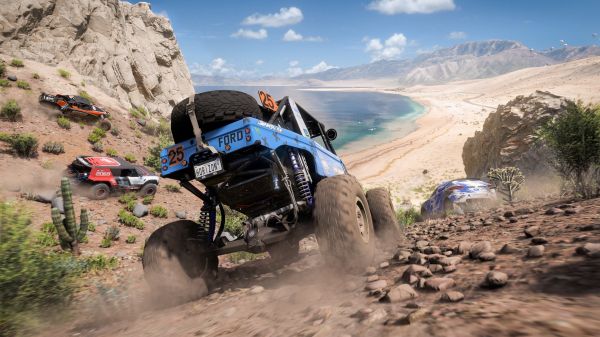
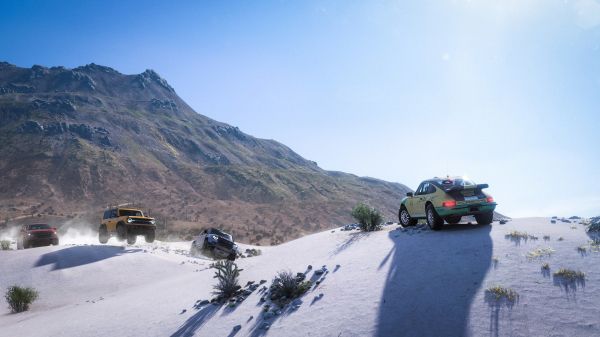
My clearest early memory of Forza Horizon 5 begins at the top of Gran Caldera, where my car sat beneath a broad Mexican sky while dust, snow, loose rock, and an impossibly inviting road stretched below. The game did not ask me to respect a formal racing schedule or wait for permission to explore. Within moments, I was accelerating down the mountain, missing a corner, cutting across terrain, frightening wildlife, and arriving somewhere completely different from the route I had planned. That mixture of speed, freedom, spectacle, and minor irresponsibility defines almost everything Forza Horizon 5 does well.
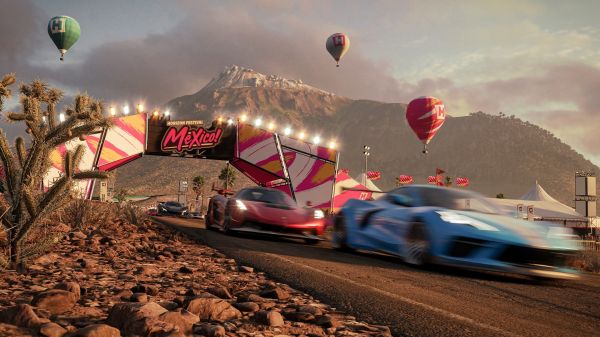
Forza Horizon 5 is an open-world driving game built around the Horizon Festival, a celebration where nearly every activity becomes an excuse to use another car. I race on roads, dirt, mud, sand, volcanic slopes, city streets, jungle trails, custom circuits, stunt ramps, and impossible orange tracks suspended above the clouds. I collect cars, tune them, paint them, photograph them, share them, auction them, give them to strangers, and occasionally remember that I originally selected the game because I wanted to race. The structure is generous enough to support serious time trials, relaxed exploration, cooperative events, creative construction, competitive multiplayer, and short sessions where I simply drive without selecting an objective.
Mexico Is Designed as a Driving Playground Before a Real Country
The map combines deserts, jungles, farmland, beaches, wetlands, ruins, towns, highways, canyons, dunes, mountain roads, and the enormous Gran Caldera volcano. These regions are compressed into one environment where climate and geography change within a short drive. The result is not a geographically faithful simulation of Mexico. It is a collection of landscapes selected because they produce distinct surfaces, views, speeds, and racing lines.
This approach gives the map extraordinary practical variety. A lightweight roadster feels natural on the winding mountain routes, while a rally car becomes useful when the road dissolves into mud and forest. High-speed hypercars have long highways where their acceleration can develop, and off-road vehicles can cross terrain that would make an ordinary sports car bounce helplessly between rocks. I rarely need to drive for long before reaching a place that suits the vehicle I selected.
The map’s cultural representation is cheerful and visually attractive, though often broad. Murals, music, architecture, archaeological sites, local characters, festivals, and environmental details communicate a recognizable setting. At times, the world feels filtered through the needs of an international automotive holiday where every road remains available and every resident appears comfortable with cars crossing nearby fields at extreme speed. The atmosphere is welcoming, but it rarely explores the country beyond the boundaries of a celebratory travel image.
Gran Caldera Gives the Map a Natural Center
The volcano is visible from a large portion of the world and becomes a useful point of orientation. Its roads climb through changing vegetation and eventually reach cold, exposed terrain far above the warmer regions below. Driving upward feels like a journey because the surface, weather, visibility, and engine behavior change gradually. Descending can become either a controlled technical run or a reckless attempt to discover how many corners the car can ignore.
The summit also demonstrates how the game balances realism and amusement. A serious driving simulator might treat volcanic roads primarily as a test of braking, tires, temperature, and risk. Forza Horizon 5 adds jumps, speed zones, expeditions, cross-country routes, and permission to leave the road whenever curiosity wins. The mountain remains visually convincing while functioning like a giant piece of playground equipment.
I returned frequently because different vehicles reveal different versions of the same route. An all-wheel-drive rally car grips loose sections and encourages speed, while a classic rear-wheel-drive sports car demands more careful throttle control. Weather can reduce visibility enough to make a familiar descent feel uncertain. Gran Caldera is more than a landmark because its roads remain useful long after the introductory spectacle ends.
Guanajuato Is Beautiful and Occasionally Difficult to Read at Speed
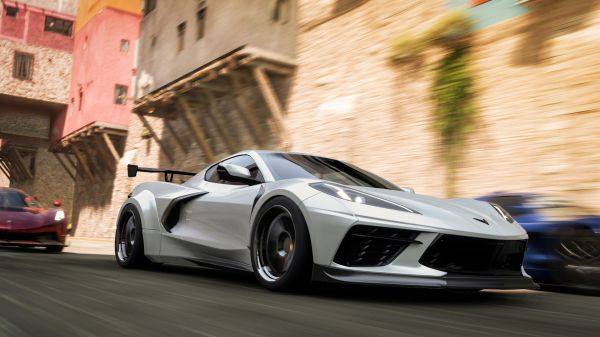
Guanajuato provides dense streets, colorful buildings, narrow corners, elevation changes, plazas, tunnels, and abrupt intersections. The city gives road racing a very different rhythm from the broad highways and open countryside. Walls sit close enough that one missed braking point can destroy an otherwise clean run. Tunnels produce dramatic changes in sound as engines move from open streets into enclosed stone passages.
The layout is initially confusing because several levels, turns, and underground routes overlap. The minimap helps, but navigating at racing speed requires familiarity rather than one quick glance. I occasionally entered the wrong tunnel or discovered that the road I wanted was above me. This complexity becomes an advantage after enough time because the city supports routes that feel technical and memorable.
Urban collisions reveal the forgiving nature of the handling and damage systems. A mistake costs speed but rarely ends the race through permanent mechanical failure. Rewind can remove the error entirely in most solo activities. Guanajuato creates pressure without asking one wall to ruin an entire evening.
The Jungle Makes Shortcuts Feel Like Discoveries
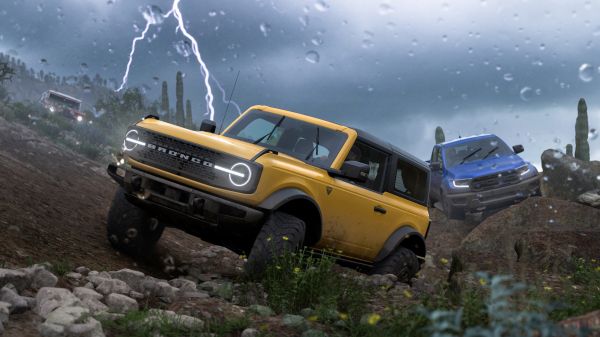
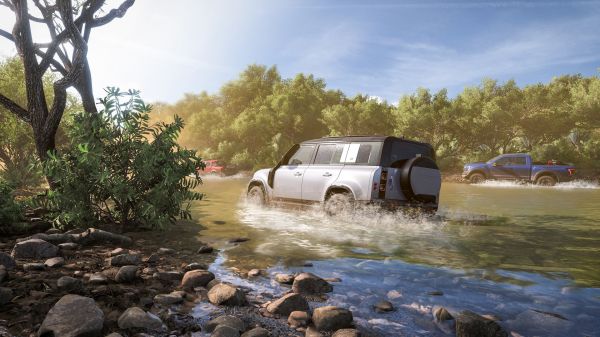
Dense vegetation, wet trails, rivers, ruins, and uneven ground give the jungle a strong physical identity. Road cars lose stability quickly when leaving prepared surfaces, while rally and off-road builds can turn apparent obstacles into alternate lines. Rain changes grip and visibility, making routes less predictable. Cross-country races use the terrain itself rather than simply drawing dirt tracks through it.
The jungle is especially effective during expeditions and exploration because sightlines are short. A ruin or road may remain hidden until I am already close. This contrasts with the desert, where distant objects can be seen long before arrival. The environment encourages slower observation even though the game usually rewards speed.
Vegetation can interfere with visibility during competitive races. Small obstacles, tree trunks, and terrain changes may be difficult to read beneath effects or other cars. The route indicators prevent complete confusion, but they also remind me that the environment was not built solely for clean circuit competition. The jungle’s unpredictability is part of its personality and a source of occasional frustration.
The Desert Gives Fast Cars Room to Become Ridiculous
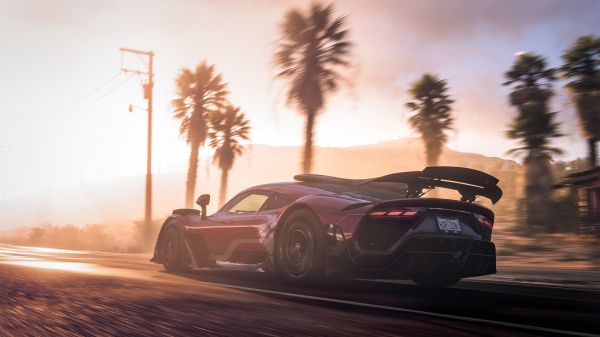
Open roads and long sightlines allow powerful cars to reach speeds that would be irresponsible anywhere else on the map. The desert communicates acceleration clearly because distant scenery approaches rapidly while the road remains visible far ahead. Speed traps and danger signs are particularly enjoyable here. A tuned hypercar can cross enormous distances before I have time to reconsider the decision.
Sand and dunes provide another use for off-road vehicles. Leaving the highway becomes less about following a route and more about maintaining momentum across an uneven surface. Jumps happen naturally as much as through designed ramps. The terrain makes heavy trucks, buggies, and rally raid machines feel necessary rather than included only to enlarge the vehicle list.
The emptier scenery can make some races visually repetitive. One stretch of dry terrain may resemble another when driven at high speed. Seasonal weather and event props improve variety, but the desert works best when it connects two more distinctive locations or supports a particularly fast challenge. Its practical value is greater than its visual complexity.
The Coast Provides Space to Drive Without a Plan
Beaches, roads, resorts, wetlands, and open water create some of the map’s most relaxed areas. I often drove along the coast after completing an event because it offered a broad route with few immediate demands. Sunlight across the water and changing weather make it useful for Photo Mode. The location does not need to provide constant racing intensity to justify itself.
Cross-country events use beaches and shallow water to create unstable surfaces. Vehicles throw sand and spray while competing for lines that are less clearly defined than a paved circuit. This can be exciting in solo races and chaotic online. Large vehicles may obscure smaller opponents, while collisions can redirect several cars at once.
The coast also reinforces the festival atmosphere. It feels like a place where players gather because driving is pleasurable rather than necessary. The world rarely communicates danger or isolation. Even the most remote beach seems only one radio song away from another public event.
Driving Feels Accessible Without Becoming Completely Weightless
Forza Horizon 5 sits between an arcade racer and a simulation-focused driving game. Cars respond to weight transfer, grip, surface, drivetrain, braking, suspension, power, and weather, but the handling remains forgiving enough for a controller user to recover from dramatic slides. Assistance options can simplify braking, steering, shifting, and traction. Removing those assists reveals substantially more nuance without turning the game into a professional motorsport simulator.
Different vehicles communicate their construction convincingly. A front-wheel-drive hatchback pulls through corners differently from a powerful rear-wheel-drive coupe. Heavy off-road trucks absorb terrain while light sports cars change direction sharply on prepared surfaces. Classic cars often require more care than modern machines filled with stability and grip. The enormous garage would feel meaningless if every vehicle behaved like the same body with another visual model.
The handling is still shaped around entertainment. Cars can survive jumps, collisions, and terrain that would end a real drive immediately. Damage can be cosmetic, simulated lightly, or disabled according to settings, but the main structure never treats vehicle preservation as the central goal. I can appreciate the differences between cars without fearing a repair invoice after one badly judged landing.
Controller Feedback Makes Surfaces Easy to Feel
Vibration communicates wheel slip, rough ground, braking pressure, engine behavior, and collisions. On Xbox controllers, the trigger feedback helps distinguish acceleration and braking conditions. The PlayStation 5 version uses DualSense vibration and trigger resistance to communicate similar information. These effects provide practical feedback rather than functioning only as decoration.
I can feel when tires begin losing grip before the car has rotated completely. Braking on wet pavement produces another response from braking on dry asphalt. Moving from a road into gravel or grass changes the controller immediately. This makes the surface transitions central to driving even when I am not watching every tire visually.
Players who find strong vibration tiring can reduce or disable it. I prefer a moderate setting because maximum feedback becomes exhausting during long off-road events. The best configuration communicates the vehicle without making the controller feel like it is protesting every small bump.
Steering Wheels Offer More Precision and More Setup Work
Wheel support allows finer control over steering, throttle, braking, and force feedback. Road racing becomes more deliberate because small changes can be applied continuously rather than through a short analog stick. Driving slower historical cars can become especially enjoyable because their behavior feels less filtered. The cockpit perspective and physical wheel create a stronger connection with the car.
Forza Horizon 5 was still designed primarily around controllers. Off-road chaos, rapid camera changes, stunt activities, and very fast corrections may feel easier through a gamepad. Wheel users often need to adjust force feedback, rotation, dead zones, and sensitivity before the handling becomes comfortable. The default profile is not ideal for every manufacturer or device.
I enjoy a wheel during road routes and Rally Adventure, then return to a controller for general exploration and multiplayer games. The flexibility is valuable. The game supports serious input without demanding that every activity follow the expectations of a racing simulator.
The Opening Hours Give Me Too Many Rewards to Feel Like a Beginner
Forza Horizon 5 begins with spectacular introductions and quickly unlocks cars, events, festival sites, wheelspins, accolades, and new activities. I rarely feel poor or restricted. Powerful vehicles arrive early, and one lucky reward can place an exotic machine in the garage before I understand basic tuning. The game wants excitement immediately rather than asking me to spend hours in slow cars.
This generosity is inviting but weakens traditional progression. Obtaining a supercar does not feel like the distant result of a career because the game may provide several before the first major chapter ends. Credits remain useful, rare cars remain desirable, and specific events require suitable categories. The emotional movement from an ordinary vehicle toward extraordinary machines is much less pronounced than in older racing campaigns.
I eventually stopped thinking of progression as climbing toward faster cars. The real progression involves expanding choice, completing stories, improving records, building tunes, collecting rare models, and defining personal goals. For players who need a clear economic career, the opening can feel almost absurdly generous. For players who simply want access to interesting cars, it is liberating.
Horizon Adventure Gives Freedom and Reduces Narrative Momentum
Accolade points unlock Horizon Adventure chapters associated with road racing, dirt racing, cross-country events, street racing, public relations stunts, and festival expansion. I can choose which branch to develop rather than following one fixed championship sequence. This allows a player interested in rally driving to avoid spending many hours on road circuits first. The map opens according to preference.
Expeditions introduce new festival sites and provide scripted showcases involving storms, ruins, volcanoes, vehicles, and environmental spectacle. These missions add personality between ordinary races. They also contain optional objectives that reward exploration. Their heavily directed presentation contrasts with the freedom available afterward.
The flexible structure weakens the sense of one escalating career. Festival leaders praise almost everything, and major unlocks arrive frequently enough that few decisions feel risky. I understand what I unlocked but rarely feel that the festival changed because of one competitive achievement. Horizon Adventure is excellent as a content-delivery system and modest as a story.
The Story Treats Me Like a Celebrity Before I Earn It
The player arrives with an established reputation, and festival characters respond with immediate enthusiasm. This avoids the familiar racing-game story where an unknown driver slowly proves basic competence. It also means the campaign begins near the emotional destination. Characters rarely doubt the player or create meaningful rivalry.
The tone remains relentlessly positive. Mistakes, losses, and destructive driving produce little social consequence. Everyone seems pleased that another event happened, another car appeared, and another road was used at impossible speed. The friendliness makes the game comfortable but reduces dramatic contrast.
I do not need a serious crime story or hostile rival in every racing game. A little competitive tension would make victories more memorable. Forza Horizon 5 succeeds as a festival fantasy where the entire world celebrates cars. It is less successful at providing characters I care about independently of the activities they unlock.
Horizon Stories Add Structure Through Short Driving Episodes
Stories group several missions around a theme, character, business, vehicle type, or cultural subject. One chapter may require speed, another careful driving, photography, route selection, stunts, or reaching a location under a time limit. The format provides variety beyond standard races. Three-star goals encourage replay without blocking basic completion.
The strongest Stories use vehicles and routes to communicate their subject. A historical car sequence becomes more interesting when the dialogue explains why the model matters. A photography challenge can direct attention toward architecture or scenery I previously passed without noticing. These chapters are effective when context and mechanics support one another.
Dialogue occasionally continues while I am concentrating on a narrow road or fast objective, making details easy to miss. Repetition becomes noticeable when retrying for three stars. Some performance targets also depend heavily on finding unintended shortcuts. The format remains valuable because it encourages different kinds of driving inside a world otherwise dominated by racing.
Road Racing Gives the Cleanest Test of Car Control
Road events use prepared surfaces, visible corners, and routes where braking and acceleration can be planned carefully. These races reveal differences in grip, balance, gearing, and top speed clearly. A well-tuned car feels composed through repeated corners rather than simply fast in a straight line. Rivals time trials make road routes especially useful for improvement.
AI behavior can create frustrating contact near the opening. Several cars enter the same corner, and one collision may push me outside the checkpoint. Rewind removes the error in solo play, but relying on it can weaken the satisfaction of completing a clean race. Higher difficulty increases pressure without always making opponents behave naturally.
Road racing is where I appreciate the handling model most. Surface unpredictability is reduced enough that mistakes usually belong to braking, line selection, or throttle control. The rest of the game may produce larger spectacles, but one clean road race remains the clearest demonstration of driving quality.
Dirt Racing Balances Grip and Controlled Instability
Dirt routes mix loose surfaces, paved sections, elevation, water, and changing corner shapes. Cars need enough grip to remain responsive while allowing rotation through turns. Rally builds become especially satisfying because they convert apparent instability into controlled movement. The fastest line may involve a slight slide rather than perfect road-style precision.
Surface transitions require attention. A car stable on dirt can react sharply when tires return to asphalt. Braking distances change, and a corner approached according to the previous surface may become dangerous immediately. Controller feedback communicates these changes effectively.
Dirt racing remains accessible because the game allows generous recovery and rewind. Competitive times demand far greater control. The difference between surviving a route and mastering it can be several seconds per section. This makes the category useful for both casual and serious play.
Cross-Country Racing Is Spectacular and Frequently Chaotic
Cross-country events ignore ordinary road logic and send vehicles through fields, rivers, dunes, forests, farms, and large jumps. The courses emphasize suspension, power, stability, and willingness to accept imperfect landings. A vehicle may spend significant time moving across terrain never intended as a road. The category uses the open world more completely than any other race type.
Collisions and physics create unpredictability. One car landing poorly can obstruct several others. Small terrain differences may redirect a vehicle during a jump, while vegetation hides obstacles until the last moment. This is exciting in casual play and frustrating when attempting precise competition.
I treat cross-country racing as the festival’s most playful category rather than its fairest. The routes produce memorable images and reward suitable builds. They are less reliable as a pure measurement of driving precision. That distinction becomes important in online events where one collision can decide everything.
Street Racing Provides Atmosphere Without Much Illegality
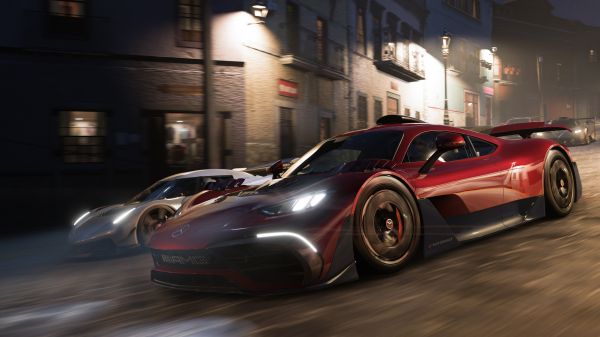
Street events occur at night and use roads containing civilian traffic, artificial lighting, and less formal festival presentation. Headlights, wet surfaces, tunnels, and city routes create strong visual drama. Traffic becomes another moving obstacle rather than static track decoration. These races feel faster because the environment appears less controlled.
The game does not develop a serious underground-racing narrative. Police do not pursue the event, and consequences remain minimal. The street scene functions mainly as another aesthetic branch of the Horizon Festival. Characters speak about secrecy while the entire event still feels professionally organized.
I enjoy the routes despite the weak fiction. Traffic creates decisions unavailable in closed races, and nighttime Mexico looks excellent. The category could support stronger rivals, risk, and progression. Mechanically, it provides useful contrast with official road events.
Drag Racing Is Mostly About Preparation
Drag events reduce driving to launch quality, traction, gearing, power delivery, and timely shifts. The short duration means tuning can matter more than complex cornering. A car built for top speed may lose because it cannot apply power efficiently from the start. Small changes become visible immediately.
The event type is limited mechanically, but it supports one important part of automotive culture. Players can compare builds quickly and organize informal meets. The open world contains long roads where community drag racing occurs even outside official events. The festival structure is flexible enough to support self-created rules.
I rarely spend long sessions in drag events because the repetition arrives quickly. They work as short tests between more varied races. EventLab can create more unusual drag formats, although the central interaction remains intentionally narrow.
Drifting Can Be a Discipline or an Accidental Lifestyle
Drift Zones measure angle, speed, and continuity across selected roads. Cars built for drifting allow controlled slides through long sequences, while ordinary powerful rear-wheel-drive vehicles may produce less predictable results. Tuning differential, tires, suspension, gearing, and power changes the behavior dramatically. Learning to connect corners cleanly becomes its own progression path.
The handling assists affect drifting substantially. Traction and stability controls make sustained slides more difficult, while manual shifting gives greater control over wheel speed. Players who normally use assists may need a separate configuration for drift activities. The game allows this flexibility but does not always explain it clearly.
I enjoy drifting most outside formal scoring, where one failed transition does not invalidate the run. Mountain roads and festival spaces naturally become community gathering points. Online players often communicate entirely through movement and engine noise. The activity reveals how Forza Horizon 5 can function as a social driving space without one explicit multiplayer objective.
PR Stunts Turn the Entire Map Into an Arcade Challenge
Speed Traps, Speed Zones, Drift Zones, Danger Signs, Trailblazers, and similar activities give roads and terrain secondary purposes. A bridge becomes a launch point, a mountain path becomes a timed route, and one straight road becomes a tuning test. These challenges remain available during ordinary exploration, making progress possible without entering a separate event screen.
Three-star targets encourage vehicle selection and tuning. A road car may dominate one Speed Zone while failing completely on a rough Trailblazer. This gives specialized vehicles practical value. Seasonal objectives regularly return players to stunts with new class restrictions.
Traffic and online players can interfere, though the game often ghosts participants appropriately during structured attempts. Rewind allows experimentation in solo play. Finding an unconventional route can be as important as driving cleanly. PR Stunts reward knowledge of the map as much as raw vehicle performance.
The Eliminator Converts the Map Into Automotive Battle Royale
The Eliminator begins with players spread across the map in modest cars. Vehicle drops provide upgrades, while challenging another player creates a point-to-point race where the loser leaves the event. The arena gradually contracts until the remaining drivers enter a final race. Map knowledge, vehicle choice, positioning, and prediction matter as much as conventional racing.
Head-to-head challenges are exciting because the destination appears after the race begins. A player facing the correct direction gains an immediate advantage. Terrain can favor one vehicle strongly, and the fastest route may ignore roads completely. Understanding which obstacles can be crossed becomes essential.
Random vehicle drops create uneven situations. One player may find a strong upgrade while another remains in a weak car. Skilled navigation can overcome part of the difference, but chance remains central. The mode is most enjoyable when treated as an improvised survival race rather than perfectly balanced competition.
Hide & Seek Gives Driving a Different Kind of Pressure
Hide & Seek divides players between one Hider and several Seekers inside selected areas. The Hider uses traffic, buildings, routes, and abilities to avoid detection while moving toward objectives. Seekers coordinate scans and positioning to restrict escape. The mode values misdirection and map awareness more than outright lap speed.
Blending with ordinary vehicles creates a playful social deception mechanic. A Hider moving too quickly becomes obvious, while one behaving too carefully may attract suspicion anyway. Seekers need to cover routes instead of following one another in a line. Communication improves the mode considerably.
Balance varies according to map, team coordination, and knowledge. Experienced players understand hiding locations and escape routes that newcomers cannot anticipate. Repeated matches may become predictable on one area. The mode remains a welcome example of using the driving system for something beyond racing.
Horizon Arcade Works Best When Enough Players Participate
Arcade events appear on the map and invite nearby players into cooperative sequences involving speed, drifting, destruction, jumps, or other objectives. Participants contribute together toward shared targets. The activities are short and informal, making them suitable while travelling between larger goals. No detailed matchmaking process is required.
Low participation once made some events difficult, though balancing improvements adjusted requirements according to the number of players. A full group creates cheerful chaos, while one or two participants produce a quieter challenge. The event type depends heavily on the social population visible in the open world.
I appreciate the ability to join without committing to a long championship. Rewards are useful but not the primary attraction. Arcade events make the festival feel active by allowing temporary cooperation with strangers. They are strongest when the objective naturally encourages everyone to drive together rather than scatter across the region.
Horizon Tour Is the Most Relaxed Cooperative Racing Mode
Horizon Tour matches a group of players against AI teams across a short championship. Between races, everyone drives together toward the next start. This travel section creates a convoy feeling absent from menu-based multiplayer. The difficulty is generally approachable, making Tour suitable for casual cooperation.
AI opponents rarely provide the intensity of high-level competition. Strong players may finish far ahead while newcomers struggle behind. Team scoring allows individual mistakes to be absorbed, which supports accessibility. The result feels more social than demanding.
I use Tour when I want multiplayer without the tension of Horizon Open. Vehicle restrictions encourage me to select cars I might otherwise ignore. The shared drive between events is sometimes more enjoyable than the races themselves. It captures the festival fantasy particularly well.
Horizon Open Provides Competition and Contact Problems
Horizon Open includes racing, drifting, playground games, and other competitive formats. Matchmaking creates events across vehicle classes and categories, requiring a broad garage or willingness to use recommended options. Clean driving, tuning, and route knowledge matter. Human opponents behave less predictably than Drivatars.
Contact remains one of the largest frustrations. Some players enter corners too quickly, use other cars as barriers, or attempt to force opponents outside checkpoints. Ghosting and slowdown systems reduce the worst behavior without eliminating it. Distinguishing an accident from deliberate contact is difficult in a fast public race.
A clean competitive event can be excellent. Several drivers with similar pace create pressure unavailable in solo play. A messy event can feel decided during the first corner. Ranked racing was removed from the Horizon structure, reducing one source of long-term competitive progression but also avoiding some of its stress.
Drivatars Create Personality and Unconvincing Performance
AI cars use player names and data-inspired behavior to create the appearance of racing against a wider community. Difficulty can be adjusted across several levels. Lower settings support relaxed progression, while higher levels demand faster cars and cleaner routes. The system creates constant opponents without requiring online matchmaking.
At high difficulty, Drivatars occasionally appear to operate under different performance rules. Their acceleration, grip, or stability can feel disconnected from the visible car. They may also follow rigid lines or behave strangely after collisions. The challenge increases without always appearing human.
Difficulty rewards provide an incentive to raise the setting, though I prefer a level that creates close racing rather than maximum bonuses. Rewind allows individual errors to be corrected, making high difficulty more approachable. The AI is functional and demanding without consistently reproducing the uncertainty of real opponents.
Rewind Makes Experimentation Easy and Consequences Optional
Rewind allows recent driving to be reversed during most solo activities. A missed checkpoint, poor braking decision, or unstable landing can be corrected immediately. This reduces frustration and allows difficult routes to be learned through repeated local attempts. New players can understand the handling without restarting every event.
The feature also removes much of the tension from mistakes. A race can become a sequence of edited moments rather than one continuous performance. I sometimes used rewind automatically even after a minor error. Disabling it gives every corner more weight.
The choice belongs to the player, which is the correct approach. For relaxed exploration and story completion, rewind respects time. For Rivals, serious competition, or personal improvement, clean uninterrupted driving becomes more meaningful. The game accommodates both attitudes without treating one as the only legitimate way to play.
Nearly 900 Cars Create Extraordinary Choice and Significant Clutter
The garage spans everyday hatchbacks, classic sports cars, modern hypercars, trucks, off-road machines, rally legends, racing prototypes, electric vehicles, unusual microcars, movie vehicles, and machines built for purposes far beyond ordinary roads. Manufacturers and decades receive broad representation. One session can move from a modest compact to a multi-million-credit racing machine without changing the underlying world.
This variety supports personal attachment. I can ignore the statistically strongest car and develop a model I simply enjoy. Tuning allows many vehicles to enter classes beyond their standard performance. A familiar road changes when approached through another weight, drivetrain, or power level.
The catalogue is difficult to navigate after hundreds of acquisitions. Duplicate cars, reward notifications, manufacturer menus, filters, favorites, and tuning states create management work. I occasionally owned a vehicle without remembering when or how it arrived. Abundance turns individual ownership into a less meaningful event unless I create personal rules.
Car Mastery Adds Small Progression Trees to Individual Vehicles
Each car contains a mastery grid purchased with skill points earned through driving. Bonuses may include experience, credits, wheelspins, skill multipliers, and improvements related to specific activities. This gives one favored car additional development. Performing drifts, jumps, near misses, speed runs, and wreckage builds the required points naturally.
The system encourages driving a wide range of cars because each has another set of rewards. It can also become repetitive when several grids contain similar bonuses. Some vehicles historically provided unusually efficient wheelspin paths, leading to balance changes. Mastery occasionally feels like opening reward nodes rather than improving the physical car.
I appreciate the connection between active driving and account resources. The grid is less convincing as a representation of vehicle knowledge. Tuning changes performance directly, while mastery mostly improves rewards. The two systems serve different purposes despite both being attached to one car.
Tuning Can Transform an Ordinary Car Into a Personal Project
Upgrades affect engine power, drivetrain, tires, suspension, brakes, weight, aerodynamics, gearing, and other characteristics. Swaps can change engines or convert drivetrain layouts, allowing dramatic transformations. Detailed tuning adjusts tire pressure, gear ratios, alignment, damping, aero, differential, and more. The system supports both quick improvement and serious experimentation.
Performance classes limit how far upgrades can go before the car enters another category. Building near the top of a class becomes a strategic exercise because every component consumes performance index. More power is not always the best choice. Tires, weight, gearing, and handling may produce a faster complete vehicle.
The game does not teach advanced tuning deeply enough. Community guides and downloadable setups make the system accessible, but using another player’s tune locks individual changes until the setup is removed. I often download a strong baseline and later build my own version after understanding the car. Tuning is one of the deepest systems and one of the least fully explained.
Community Tunes Save Time and Reduce Learning
Players publish setups that can be searched according to class, category, creator, and popularity. This allows a new car to become competitive within seconds. Seasonal events become easier because someone has usually created a suitable tune already. The system shares expertise across the community.
Popular does not always mean ideal. Some tunes prioritize top speed, others easy handling, and others one specific event. Descriptions are short, making the intended use unclear occasionally. A car can feel unpleasant despite having impressive ratings.
Downloading everything prevents me from learning why a setup works. Building even a basic personal tune creates stronger understanding of grip, gearing, and balance. I appreciate having community options while resisting the temptation to treat tuning as one download button. The game supports both convenience and mechanical curiosity.
Livery Creation Turns Cars Into Social Artwork
The paint and vinyl editor allows detailed designs using shapes, layers, manufacturer colors, materials, and community-created groups. Skilled artists reproduce racing liveries, fictional themes, brands, characters, abstract patterns, and original work with astonishing accuracy. Designs can be shared publicly and applied quickly. The same car can carry completely different identities across the community.
Creating complex artwork through a controller is slow. Layer management, alignment, scaling, and curved surfaces require patience. PC input helps in some areas without transforming the editor into professional design software. The limitations make excellent work more impressive.
Licensed and inappropriate content creates moderation challenges. Designs may be removed, creators may receive penalties, and standards are not always interpreted consistently by the community. I mostly use original colors and simpler patterns. The editor remains powerful enough to become a separate hobby inside the game.
Photo Mode Is One of the Best Reasons to Own Beautiful Cars
Photo Mode allows camera movement, focus, exposure, color adjustment, time effects, and vehicle-specific framing. Mexico provides varied backgrounds ranging from cities and ruins to mountains, beaches, storms, and festival lights. Car models contain enough detail to reward close inspection. One ordinary drive can become a long photography session.
Updates expanded controls and features, making the tool more capable than at launch. Motion, weather, and lighting can be adjusted to create dramatic results. Community challenges encourage specific subjects or locations. Shared images become another form of participation.
Vehicle interiors and small model imperfections become more visible under close examination. Some cars are more detailed or accurate than others due to age and source material. The overall quality remains exceptional across such a large catalogue. Photo Mode turns collecting into something more meaningful than a menu number.
Gift Drops Make Generosity Part of Progression
Players can send cars to strangers through Gift Drops, selecting broad recipient categories such as new players or community contributors. The receiver discovers the gift in the world with a short message. This provides a useful destination for duplicate cars. It also reinforces the festival’s welcoming tone.
Gift messages are limited, preventing deep social interaction or unwanted direct contact. The simplicity protects safety but makes the exchange anonymous. I rarely know whether the receiver needed the car or already owned several copies. The gesture remains pleasant despite that uncertainty.
The system reduces the urge to sell every duplicate for credits. Cars can circulate through the community rather than disappearing into a menu. Receiving an unexpected vehicle can create a memorable early moment, especially for a new player. The feature is small but unusually consistent with the game’s identity.
The Auction House Creates an Economy and Several Frustrations
Players can buy and sell eligible cars through timed auctions. Rare Festival Playlist rewards may command high prices, while common vehicles receive little attention. Searching the market allows collectors to obtain cars missed during earlier seasons. Successful trading can become a separate progression strategy.
Desirable cars are often purchased immediately, making manual bidding ineffective. Sniping listings requires speed, repetition, and familiarity with menus. Seller limits and price ranges prevent complete freedom. The economy responds to rarity more strongly than actual vehicle usefulness.
Server or exploit concerns have caused interruptions historically, demonstrating the vulnerability of a player market. The Auction House is useful without being pleasant consistently. Horizon Backstage now provides another route toward selected rare cars, reducing dependence on competitive market searches.
Festival Playlist Creates Routine Through Weekly Restrictions
The Festival Playlist rotates weekly and monthly challenges, championships, PR Stunts, multiplayer objectives, treasure hunts, photo tasks, and reward cars. Restrictions encourage the use of specific classes, countries, eras, manufacturers, or vehicle types. This gives the large garage practical purpose. A car ignored for months may suddenly become useful.
Earning enough points unlocks seasonal and series rewards, including hard-to-find cars. The structure provides a clear reason to return every week. It also creates fear of missing vehicles that may not return for a long time. Backstage and later reruns reduce the permanence without removing the pressure.
I enjoy the Playlist when it suggests varied activities I would not select independently. It becomes tiring when completion feels necessary for one desired car. Seasonal championships can repeat familiar tracks with another restriction. The system is effective at maintaining engagement and less effective at respecting players who prefer irregular schedules.
Horizon Backstage Reduces the Cost of Missing Old Rewards
Backstage Passes allow selected rare cars to be claimed from a rotating or growing collection. Community votes influence additions, giving players some control over availability. Weekly Playlist rewards provide passes. This creates a recovery path for people who missed an earlier season.
The system does not make every unavailable car immediately accessible. Players still need passes, and additions arrive gradually. Collectors may wait months for one specific model. The scarcity remains part of the live-service design.
I prefer Backstage to permanent exclusivity. A racing game should preserve long-term access to its vehicles whenever licensing permits. Limited-time rewards can encourage activity without becoming impossible trophies forever. The system moves closer to that balance.
Wheelspins Make Every Level Feel Exciting and Arbitrary
Wheelspins award cars, credits, clothing, horns, and other items through a randomized wheel. Super Wheelspins provide three rewards at once. They arrive through levels, mastery grids, purchases, accolades, and seasonal activities. The animation creates anticipation even after many hours.
Receiving a valuable car can be exciting. Receiving a small credit reward or cosmetic item after significant effort can feel disappointing. Random distribution contributes to the game’s early generosity while weakening intentional progression. One player may obtain a powerful rare vehicle far sooner than another.
Wheelspins cannot be purchased directly with real money as a conventional loot-box system, which prevents the most aggressive version of randomized monetization. They remain a central reward mechanic shaped by chance. I would prefer more direct choices after major milestones. The wheel is entertaining until it replaces a reward I wanted to earn deliberately.
Clothing Rewards Feel Like Noise When I Mainly Care About Cars
Character customization includes clothing, accessories, prosthetics, hair, voice, identity options, and emotes. The player appears during festival scenes, houses, podiums, and selected multiplayer moments. Broader representation is welcome because the festival is meant to include many kinds of players. Sign language support and accessibility presentation add further value.
Cosmetics frequently appear in wheelspins and reward tracks. For players focused entirely on vehicles, a pair of shoes feels much less valuable than credits or a car. The contrast creates disappointment even when the customization item is well designed. The reward pool attempts to serve different interests simultaneously.
I appreciate avatar options while wishing they occupied a more separate progression path. Cars remain visible during almost every activity, while clothing appears briefly. The current economy treats them as comparable rewards when their practical value is very different.
Houses Provide Benefits Without Becoming Meaningful Homes
Properties across Mexico can be purchased with credits or unlocked through progression. They provide fast-travel access, garages, and special bonuses such as skill songs, wheelspins, or other conveniences. Their locations encourage exploration. Some are visually impressive enough to suit a successful festival driver.
Interaction is limited. I cannot walk through detailed interiors, decorate rooms, display a personal collection extensively, or build a domestic life. Houses operate as menu locations and perk containers. The fantasy of ownership remains shallow.
The system serves progression adequately without becoming memorable. One house may matter because of its fast-travel benefit rather than emotional attachment. A future Horizon game could make garages and homes stronger expressions of collection. Forza Horizon 5 keeps attention on roads instead.
Fast Travel Becomes Convenient Only After Investment
Initially, fast travel is limited, encouraging physical exploration and discovery of roads. Purchasing the appropriate house and destroying Fast Travel Boards gradually reduces the credit cost. Finding every board eventually allows free travel to any road. This creates a useful long-term convenience reward.
Boards are hidden on roofs, in fields, beneath bridges, and around remote areas. Some require jumps or unusual routes. Searching for them turns map traversal into a collection challenge. Community maps can trivialize discovery, but finding one independently remains satisfying.
Free fast travel changes the rhythm substantially. Seasonal tasks and tuning become faster, while spontaneous road discoveries become less frequent. I still drive manually when I want atmosphere. The option respects time without forcing me to stop using the world.
Horizon Realms Preserves the Game’s Temporary Worlds
Horizon Realms collects selected Evolving World locations and themes from earlier updates, allowing them to be revisited after their original seasons ended. These include special festival spaces, transformed environments, and community favorites that once existed temporarily. Each Realm includes a Skill Score leaderboard. The feature turns discarded seasonal work into permanent content.
This is one of the smartest later additions because live-service updates often disappear after a few weeks. New PlayStation players can experience content released years earlier. Returning players gain access without waiting for an exact rerun. The world’s history becomes playable instead of surviving only through videos.
Realms remain curated rather than containing every earlier event in complete form. Some seasonal atmosphere and rewards cannot be reproduced exactly. The feature still demonstrates a healthier approach to temporary content. I hope future live-service games preserve updates this deliberately.
EventLab Is a Construction Tool Hidden Inside a Racing Game
EventLab allows players to create routes, races, stunt courses, minigames, challenges, and elaborate environments. Props, rules, checkpoints, weather, vehicle restrictions, scoring, objects, triggers, and logic systems support creations far beyond standard circuits. EventLab Island provides a large blank space for ambitious projects. Community events can resemble platformers, obstacle courses, miniature cities, or arcade games.
The editor has expanded significantly through updates. Multi-selection, snapping, larger prop combinations, custom flyers, and improved object tools reduce construction friction. Skilled creators continue finding uses the original interface never suggested. The system extends the game’s life beyond official tracks.
Building through a controller remains slow, and advanced logic is intimidating. Testing, correcting, and publishing a large event can require many hours. Discovery is inconsistent because exceptional creations compete with basic farming events and short challenges. EventLab’s potential exceeds the interface connecting ordinary players with its best content.
Community Events Range From Brilliant to Barely Functional
The best EventLab creations use scenery, rules, and routes to provide experiences unavailable in the official map. One creator may build a detailed racetrack, another a giant stunt park, and another a challenge based on careful low-speed control. These events reveal the flexibility of the physics and driving systems. They can make a familiar car feel useful in another context.
Quality varies dramatically. Some events use confusing checkpoints, broken rules, excessive props, performance-heavy environments, or reward-focused shortcuts. Ratings and popularity help without guaranteeing quality. New creations may remain invisible while older events dominate search results.
I rely on recommendations from communities and featured playlists more than random discovery. Official curation gives talented creators valuable exposure. The game would benefit from stronger tags, reviews, and testing information. EventLab is a major feature limited partly by how difficult it is to find the right event at the right time.
The Test Track Makes Tuning Less Frustrating
The Horizon Test Track allows car changes and tuning adjustments to be tested quickly without repeated loading and event setup. This supports experimentation because I can feel the difference immediately. Friends can join, turning technical adjustment into a social activity. The open area provides enough space for acceleration, cornering, braking, and drifting tests.
A dedicated telemetry route or automated comparison tools would improve it further. I still need to interpret behavior personally and remember earlier settings. Serious tuners may use external data and controlled circuits. The Test Track reduces friction without replacing detailed methodology.
I appreciate any feature that encourages players to understand their cars rather than downloading every setup. Changing one differential or gearing value and feeling the result creates a direct learning loop. The system arrived after launch but now feels like an essential part of the tuning experience.
Hot Wheels Turns Physics Into a Theme-Park Contract
The Hot Wheels expansion places enormous orange tracks above the clouds, connecting islands through loops, magnetic surfaces, jumps, tubes, and routes that ignore ordinary geography. The visual premise gives permission for extreme speeds and impossible structures. Cars become toys in the most complimentary sense. The expansion embraces spectacle more openly than the base map.
Progression begins with lower vehicle classes and gradually permits faster machines. This gives the expansion a clearer sense of advancement than the main campaign. Completing events, stunts, and challenges unlocks additional categories. The structure forces me to learn the tracks before using the most powerful cars.
Track walls and magnetic systems reduce the danger of some impossible sections, though high speeds still create dramatic errors. The environment can become visually repetitive because orange plastic dominates every route. Different biomes and track pieces provide contrast. The expansion is mechanically playful and intentionally detached from realistic driving culture.
Hot Wheels Is Best When Speed Becomes Difficult to Process
Boost sections, long descents, loops, and S2-class cars create moments where the road approaches faster than comfortable interpretation. The challenge becomes trusting track design, reacting quickly, and maintaining control through extreme transitions. Ordinary Mexico cannot provide this type of speed safely. The expansion is built specifically around it.
Some races feel guided because track walls prevent major deviation. The most interesting routes include splits, jumps, open sections, and surfaces where one mistake changes momentum. Open driving between events is less free than in Mexico because the road network is physically constrained. The park is a huge connected track rather than a natural landscape.
I enjoy Hot Wheels in concentrated sessions. Returning to Mexico afterward makes ordinary roads feel slow and physically believable. The expansion’s excess works because it exists as a distinct destination. It would become exhausting as the only version of Horizon.
Rally Adventure Provides the Better Expansion for Driving Detail
Rally Adventure takes place in Sierra Nueva, a rugged region filled with dirt roads, quarries, canyons, villages, desert routes, jumps, and technical surfaces. Events can be played as traditional multi-car races or rally stages against the clock. Co-driver calls describe upcoming corners and hazards. This gives the expansion a stronger motorsport identity than the base festival.
Three teams focus on road, dirt, and off-road disciplines, creating another progression structure. Completing challenges advances each branch and unlocks cars and events. The map is smaller than Mexico but denser with roads designed for active driving. Elevation and surface changes make many routes memorable.
I prefer Rally Adventure because it emphasizes car behavior without abandoning Horizon accessibility. A tuned rally machine feels responsive and physical across changing terrain. Dust effects, narrow roads, and pace notes create concentration. The expansion still allows large jumps and generous recovery, but the underlying driving remains more deliberate.
Pace Notes Add Information and Occasional Confusion
During rally stages, the co-driver communicates corner direction, severity, jumps, crests, and hazards. Visual indicators reinforce the calls. This allows me to prepare before seeing the complete turn, especially on narrow routes. Learning to trust the information improves speed significantly.
Calls can arrive too late or become difficult to interpret during very fast sections. The visual icon may compete with route markers and environmental detail. Experienced rally players may find the system simplified, while newcomers need time to understand severity numbers. The implementation supports accessibility more than strict simulation.
I enjoy the rhythm created by listening, preparing, and executing. The co-driver turns one route into a continuous sequence rather than a collection of surprise corners. Even imperfect notes provide stronger identity than ordinary checkpoint racing. Rally Adventure would lose much of its value without them.
The Expansions Are Substantial and Deliberately Separate Purchases
Hot Wheels and Rally Adventure each provide a new map, progression, events, challenges, and vehicles. They can be purchased individually, together through the Expansions Bundle, or as part of Premium Edition and the Premium Add-Ons Bundle. The base game remains complete without them. Neither expansion is required for ordinary Mexico multiplayer.
The additional cost becomes significant when combined with Car Passes and separate car packs. Premium Edition provides the most complete initial package, especially during sales. Standard Edition players can decide later whether one theme appeals. I appreciate that the two expansions have clearly different identities rather than dividing one larger map artificially.
Car rewards from expansions can be used in the base game after unlocking them. Friends need compatible access to enter expansion maps together. Cross-platform availability now includes PlayStation 5, Xbox, and PC. Ownership does not automatically transfer between platform stores.
Car Pass Adds Vehicles Without Changing the Game’s Structure
The Car Pass delivers a collection of additional vehicles over time or through the completed catalogue now available. These cars appear in the garage after being claimed and can be used across compatible activities. The selection includes varied manufacturers and categories. It broadens collection rather than providing new gameplay systems.
The base game already contains an enormous number of cars, making the Pass unnecessary for most players. Its value depends on attachment to specific included models. Buying it only because more cars sounds automatically better can lead to another group of vehicles never driven. I recommend examining the exact list.
Car Pass ownership provides convenience and exclusivity, not direct competitive superiority. Similar performance can generally be achieved through base-game cars. Individual models may become strong in particular categories before balancing or community adaptation. The overall multiplayer environment does not require the Pass.
Separate Car Packs Make the Complete Garage Expensive
Additional packs include themed groups, pop-culture vehicles, racing machines, performance cars, and unusual models outside the original Car Pass. They are sold separately or included in larger collections depending on platform and edition. For dedicated collectors, these packs expand an already extraordinary catalogue. For ordinary players, they create a confusing purchase landscape.
The presence of licensed cars behind payment is understandable because every model requires agreements and production work. The quantity accumulated across years makes full ownership expensive. A player may purchase Premium Edition and still discover several packs not included. The word “Premium” does not mean every later vehicle automatically belongs to the package.
I evaluate packs according to specific cars rather than completion percentage. The base garage is large enough that no pack is necessary to enjoy every major mode. Collecting everything becomes a premium hobby beyond the standard game. The store could communicate bundle overlap more clearly.
VIP Provides Convenience and Bonuses Rather Than Exclusive Skill
VIP membership includes credit bonuses, weekly Super Wheelspins, cosmetic recognition, and selected vehicles or benefits depending on package details. This accelerates progression and increases rewards. It does not improve steering, braking, grip, or driver performance directly. Competitive results still depend on cars, tunes, and driving.
Double credits matter less in a game already generous with vehicles and money. Weekly wheelspins add more randomized rewards to an economy overflowing with them. VIP feels strongest early and less meaningful after the garage becomes established. Its value is convenience rather than necessity.
The Crown icon and exclusive presentation provide social distinction, though they rarely matter during actual racing. I never felt disadvantaged mechanically without VIP. Players purchasing Premium Edition receive it as part of the complete package. Buying it alone deserves more careful consideration.
The Monetization Is Direct but Fragmented
Forza Horizon 5 is a premium game with Standard, Deluxe, and Premium editions, two expansions, Car Pass, VIP, and several separate car packs. Purchases are visible and generally direct. The game does not sell fuel, race entries, or premium currency required for ordinary progression. Wheelspins are randomized but earned through play rather than purchased as conventional loot boxes.
The fragmentation is the larger problem. A new player may struggle to understand what Deluxe includes, what Premium adds, which later packs remain separate, and whether one collection overlaps another. PlayStation 5 adds another platform storefront where ownership from Xbox or PC does not transfer. Cross-play exists without cross-buy.
I do not consider the game pay-to-win. Paid cars may perform strongly in particular classes, but the enormous base roster contains competitive alternatives. The practical pressure targets collectors and fans of specific models rather than players who need purchased power to finish events. Complete ownership remains far more expensive than full mechanical access.
The PlayStation 5 Version Opens the Festival to a New Community
Forza Horizon 5 arrived on PlayStation 5 in April 2025 with the same central content as Xbox and PC. Cross-play allows PS5 drivers to join the established community. Standard, Deluxe, and Premium editions are available digitally, while the expansions and car packs can be purchased through the PlayStation Store. There is no announced physical disc edition.
The port uses performance and quality modes. Performance targets 60 frames per second, while Quality targets 30 with increased visual fidelity. PS5 Pro improves image quality and adds ray-traced car reflections in more situations under Quality mode. DualSense vibration and trigger effects communicate surface changes, braking, and wheel slip effectively.
A Microsoft account is required, which can surprise players buying through PlayStation. The account supports cross-platform services, UGC, and leaderboards. Save progress from Xbox or PC does not transfer as a complete cross-save to PS5, though selected online statistics and community data synchronize through the linked account. The version is technically strong but not a free extension of ownership elsewhere.
PS5 Performance Mode Is the Best General Choice
Sixty frames per second improves steering response, traffic awareness, and the readability of fast movement. The map remains visually impressive despite reduced settings compared with Quality mode. Dense vegetation, city detail, weather, and car materials hold up well during motion. Racing benefits more from responsiveness than one additional reflection.
Quality mode is useful for Photo Mode, relaxed exploration, and players comfortable with lower frame rates. The difference in motion is immediately noticeable after switching. PS5 Pro narrows the compromise through stronger image quality. Standard PS5 owners still receive an excellent port.
I use Performance almost exclusively. The handling feels more immediate, especially in S1 and S2 cars. A game built around speed should preserve smooth movement whenever possible. Quality mode demonstrates technical detail without becoming my preferred way to drive.
Xbox Series X Remains an Excellent Native Platform
Xbox Series X provides fast loading, strong visual modes, smooth performance, and close integration with the wider Xbox ecosystem. Game Pass access lowers the cost of entering the Standard Edition, while purchases such as expansions remain separate. Cross-save through Xbox Play Anywhere supports movement between compatible Xbox and Windows versions. The controller’s impulse triggers suit the handling model well.
Quality and performance choices create the familiar trade-off between fidelity and frame rate. Performance mode preserves the responsiveness necessary for competitive driving. The visual difference is noticeable but rarely transformative during actual races. Mexico remains attractive in both.
Quick Resume can return to the game rapidly, although online services may need to reconnect. This can produce menu delays or session errors occasionally. Restarting the connection is usually simple. The platform provides the most seamless relationship between console ownership, Game Pass, and Microsoft account progress.
Xbox Series S Makes Predictable Compromises
Series S runs the complete world, expansions, multiplayer, and EventLab catalogue with reduced image quality and detail compared with Series X. Performance options prioritize smooth play within the hardware limits. The map remains recognizable and colorful. Mechanical content is not removed.
Distant vegetation, reflections, resolution, and complex scenes reveal the compromise. Guanajuato and heavy weather can appear softer. Photo Mode users will notice more than players racing at high speed. Storage capacity may become a larger concern as the game and expansions accumulate.
The version remains impressive for the device. I would choose Series X, PS5, or a capable PC for the cleanest presentation. Series S still provides the full festival rather than a simplified edition. Stable performance matters more than distant detail during ordinary play.
Xbox One Shows the Strength and Cost of Cross-Generation Support
The Xbox One version preserves the map, cars, campaign, and most central systems for older hardware. This broad support allowed more players to enter at launch. Visual quality, loading times, crowd detail, and frame rate naturally fall below newer consoles. The world remains playable but less fluid.
Fast cars expose the limitations most clearly. Lower frame rate reduces responsiveness and makes rapid scenery harder to process. Loading and menu transitions interrupt the festival rhythm more often. Some advanced visual effects are reduced.
I consider it a useful compatibility version rather than the ideal experience. The game’s scale and speed benefit enormously from current storage and processing. Moving to newer hardware changes more than resolution. It makes exploration and repeated event entry feel substantially smoother.
PC Offers the Best Visual Range and the Largest Troubleshooting Burden
A strong PC can run high frame rates, high resolutions, ultrawide displays, improved textures, and detailed environmental settings. Benchmark tools help identify performance limitations. Steering wheels and input devices have broad configuration support. Steam and Microsoft Store versions provide different ownership ecosystems.
Hardware variation creates inconsistent results. Drivers, shaders, overlays, background applications, storage, memory, and CPU performance may affect stability. Updates have fixed crashes, UGC issues, handheld keyboard support, and general performance problems over time. Some systems still experience stutter or device-specific faults.
The port includes extensive settings and generally scales well. I recommend using the benchmark, leaving headroom for demanding weather or city scenes, and prioritizing stable frame rate. Maximum settings are less important than consistent response. The PC version is excellent after configuration and less effortless than console.
Steam Deck and Windows Handhelds Support Portable Progress
Forza Horizon 5 can run on handheld PC devices with suitable settings, making seasonal objectives and short races convenient away from a desk. The Steam version has received handheld-specific improvements such as virtual keyboard support. Lower resolution helps performance. Controller-style input matches the game naturally.
Battery consumption is significant, and visual compromises are unavoidable. Dense environments and high-speed driving may require lower settings or frame-rate caps. Text and map details become smaller. Online connection remains necessary for many social and seasonal features.
I enjoy handheld play for collecting rewards, tuning, and relaxed exploration. Serious Rivals attempts and detailed EventLab construction are better suited to a larger display. Portable access expands the game without becoming its strongest presentation.
Cross-Play Keeps Every Platform Relevant
Xbox, PC, and PlayStation 5 players can share online sessions, convoys, events, and community creations. This supports a large population across Horizon Open, Tour, Arcade, Hide & Seek, and EventLab. Friends no longer need the same console family. The PS5 release strengthened an already mature community.
Platform icons and account systems can create confusion during invitations. Every player needs the relevant online account configuration and Microsoft linkage where required. Privacy and parental settings may prevent cross-network communication. Resolving these issues is less intuitive than selecting a race.
Once connected, the shared ecosystem works impressively. Liveries, tunes, EventLab events, records, and Gift Drops circulate across platforms. Cross-play extends the life of every mode. I rarely need to consider where another driver is playing during the event itself.
Cross-Save Is More Limited Than Cross-Play
Xbox console and Microsoft Store PC versions share progress through the Xbox ecosystem, while Steam uses its own save structure. PlayStation 5 requires a new game progression even when the same Microsoft account is linked. Selected online data such as leaderboards, published UGC, followed creators, and some community records can synchronize. Cars, campaign completion, credits, and complete garage progress do not simply migrate everywhere.
This limitation matters for players with hundreds of hours on another platform. Purchasing the PS5 version means rebuilding much of the collection and campaign. The fresh start may be enjoyable for some and unacceptable for others. Cross-play does not imply universal progression.
The distinction should be explained clearly before purchase. Account linking primarily enables network features and shared community information. It does not transform every platform store into one ownership system. I would welcome broader save portability in future releases.
Accessibility Is One of the Game’s Strongest Achievements
Forza Horizon 5 includes options for difficulty, steering, braking, traction, stability, shifting, rewind, game speed, color blindness, high contrast, subtitles, text size, screen narration, and controller remapping. Sign-language interpretation is available for selected cinematics in American and British Sign Language. Prosthetic customization broadens avatar representation. These features allow more players to engage with a fast racing game.
Game Speed is especially valuable because it can slow offline play without changing the underlying physics relationship completely. Players who struggle with rapid reactions gain more time to process corners and obstacles. The feature supports learning and physical accessibility. It cannot be used to create an advantage in online competition.
Not every menu and community creation supports accessibility equally. EventLab designers may use colors, text, timing, or layouts that create new barriers. The official foundation remains unusually comprehensive. Playground Games treats accessibility as part of the design rather than one small settings page.
The Radio Creates Energy and Repetition
Several stations cover electronic music, rock, pop, classical pieces, Latin selections, and other styles. DJs comment on festival progress, weather, events, and seasonal changes. Music makes long drives feel purposeful even when I have no selected objective. Skill Songs temporarily increase multiplier potential, connecting radio with gameplay.
Track repetition becomes unavoidable across hundreds of hours. Licensing also affects which songs can remain available long term. Streamer Mode replaces or removes music likely to create broadcast problems. Players can disable the radio and use another audio source.
The soundtrack’s strongest moments occur when one song aligns unexpectedly with a landscape or race. Scripted expeditions also use music effectively. I eventually lower the radio during serious tuning and restore it for exploration. The festival feels quieter without it, though engine sound alone can be satisfying.
Engine Audio Is Improved but Inconsistent Across the Huge Garage
Cars produce distinct engine notes, transmission sounds, turbo effects, exhaust behavior, and surface noise. Camera position changes the balance between intake, exhaust, tires, and environment. Tunnels amplify sound dramatically. Electric cars provide another audio character through motor whine and tire noise.
The quality varies across models. Some cars sound detailed and immediately recognizable, while others feel less accurate or powerful than expected. An enormous catalogue makes uniform recording and implementation difficult. Enthusiasts attached to one specific car may notice errors more strongly than general players.
Upgrades can change sound according to engine swaps, exhaust, aspiration, and transmission. This gives tuning an audio consequence. I occasionally avoid one powerful swap because it removes the character that made the original car appealing. Performance is not the only reason to preserve an engine.
Weather Changes Roads More Than the Career
Mexico’s seasons include wet and dry conditions, storms, dust, snow at altitude, and regional weather differences. Rain reduces grip and changes reflections, while tropical storms affect visibility. Dust storms create dramatic free-roam moments. Gran Caldera can remain cold while lower regions are warm.
Seasonal changes are less transformative than those in Forza Horizon 4. The map does not become entirely covered in snow or radically inaccessible. This protects vehicle variety because road cars remain usable throughout the year. It also makes each season less distinct.
I prefer the regional realism for ordinary driving and miss the dramatic identity of full winter occasionally. Festival Playlist restrictions and event themes provide additional seasonal structure. Weather adds driving variation without reorganizing the whole map.
The World Looks Alive and Rarely Feels Inhabited Deeply
Traffic, aircraft, wildlife, festival sites, towns, farms, beaches, and online drivers create constant movement. Roads rarely feel completely abandoned. Environmental detail supports photography and exploration. The map gives the impression of a large public celebration spread across an entire country.
Interaction with ordinary residents is extremely limited. I cannot enter most buildings, speak with pedestrians freely, or affect communities beyond scripted missions. Traffic follows simple behavior and occasionally creates absurd collisions. The world functions as a driving space more than a social simulation.
This focus is understandable. Detailed civilian systems would consume resources without improving racing directly. The cultural setting remains visually rich and mechanically shallow. Mexico is memorable as a collection of roads and landscapes rather than a place where non-festival life develops independently.
Online Free Roam Is Social and Strangely Silent
Other players appear across the map and may join informal drives, drifts, drag races, jumps, or photo sessions. Quick chat phrases and Link messages support basic communication. A stranger may follow my car for several kilometers without either of us speaking. Movement becomes a form of social expression.
The world uses technology that groups relevant players while managing a larger population invisibly. Drivers may appear or disappear as sessions change. This can make convoys feel inconsistent until formally established. Network problems occasionally leave the world emptier than intended.
I enjoy spontaneous contact because it asks for no commitment. One driver honks, another changes direction, and a temporary convoy begins. The silence is peaceful and occasionally awkward. More flexible social tools could improve connection while increasing moderation risks.
Convoys Make Nearly Every Activity Better
Convoys allow friends to travel, race, explore, and enter events together. The leader selects activities while the group joins through prompts. Cooperative races, Tour, Arcade, EventLab, expeditions, and expansion content support shared play according to access. The open world becomes more entertaining when one mistake has witnesses.
Connection and event synchronization can produce issues. One player may fail to receive an invitation, disappear from the visible session, or load into another state. Restarting a convoy often resolves the problem. Cross-platform accounts add another layer of possible friction.
With stable connection, the system captures the festival premise perfectly. Friends can compare cars, tunes, liveries, routes, and photographs without entering one strict mode. A convoy can spend an evening racing or never complete one official event. The game supports both.
Server Dependence Affects More of the Game Than It First Appears
The main campaign and free-roam driving can be experienced largely alone, but Festival Playlists, Auction House, shared designs, EventLab discovery, multiplayer, Gift Drops, messages, and seasonal rewards require online services. Server outages remove a large portion of the modern experience. The world remains drivable but less connected.
Licensing and service support also shape the game’s long-term future. Previous Forza titles have eventually reached end-of-life sales status because of expiring agreements. Existing owners typically retain access, but new purchases can disappear. Forza Horizon 5 remains actively sold and supported in 2026.
The PS5 release and continuing playlists suggest a long lifespan. Permanent preservation of all licensed cars, music, and online creations cannot be assumed. Horizon Realms is encouraging because it preserves older seasonal environments. The game still depends on a network and commercial agreements far beyond one installation.
Technical Stability Has Improved Through Years of Updates
At launch, players encountered convoy problems, crashes, disappearing online cars, broken challenges, and progression issues. Numerous updates have addressed stability, performance, UGC, event logic, platform-specific behavior, and individual vehicles. The 2026 patches continue fixing crashes and general performance rather than adding only content. The current game is substantially more reliable.
The enormous combination of platforms, cars, events, community creations, wheels, input devices, and network systems ensures that some problems remain. EventLab content may break independently of the official game. One update can introduce another platform-specific issue. Support pages continue listing known and fixed problems.
My ordinary sessions are stable, with occasional online synchronization or menu delays. PC requires more troubleshooting than consoles. The core driving rarely fails technically. The remaining friction appears most often around connected systems rather than the road itself.
The Game Is Enormous Enough to Become Directionless
After the opening, the map fills with races, stories, stunts, boards, houses, expeditions, seasonal events, multiplayer modes, Realms, EventLab icons, and expansion entrances. Almost everything provides experience, credits, cars, or accolades. There is no shortage of tasks. The challenge is deciding which one matters personally.
Players who enjoy self-directed play can spend hundreds of hours comfortably. Players seeking one clear campaign may feel that the game is constantly presenting alternatives without priority. The narrative rarely provides strong urgency. Completion percentages spread across several menus rather than one understandable path.
I enjoy the freedom after accepting that total completion is unnecessary. One evening can focus on rally routes and another on photography or auctions. Trying to clear every icon turns a celebration into administrative work. Forza Horizon 5 is better when treated as a place to visit than a list to finish.
The Constant Praise Eventually Loses Meaning
Characters celebrate completed events, new festival sites, discovered roads, acquired cars, skill chains, and almost every other form of progress. The positive tone removes hostility and supports accessibility. It also means little emotional difference exists between an ordinary result and an extraordinary achievement. Everyone behaves as though every action was historic.
I occasionally want a rival who doubts the player, a championship that requires qualification, or an event where poor performance changes the response. The game avoids discouragement so thoroughly that praise becomes background noise. Winning does not always feel special when celebration is guaranteed.
The driving provides its own satisfaction, reducing dependence on story recognition. One improved Rivals time means more to me than another congratulatory radio message. The career would benefit from trusting mechanical achievement enough to use praise selectively.
My Biggest Frustrations
Progression is so generous that expensive and exotic cars lose part of their emotional value. Wheelspins distribute rewards randomly, clothing clutters the prize pool, and new vehicles often arrive faster than I can learn them. The Horizon Adventure campaign provides freedom without a strong competitive arc, while characters praise nearly every action. The world is beautiful but functions more convincingly as a driving park than a lived-in version of Mexico.
Online racing remains vulnerable to deliberate contact, inconsistent public teammates, connection failures, and EventLab quality problems. Festival Playlist rewards use limited availability to encourage weekly participation, even though Backstage and Realms now preserve more historical content. The product catalogue is fragmented across editions, expansions, Car Pass, VIP, and numerous separate vehicle packs. Premium Edition still does not contain every later car.
Drivatar behavior can feel artificial at higher difficulty, cross-country physics occasionally decide races unpredictably, and the interface becomes crowded after years of features. Full progress does not transfer universally between Xbox, PC, Steam, and PlayStation 5. The game has improved technically, but connected systems remain more fragile than the driving itself.
Who Should Play Forza Horizon 5?
I recommend Forza Horizon 5 to players who enjoy cars, open-world exploration, accessible racing, detailed tuning, photography, collection, cooperative play, custom events, stunts, and the freedom to choose between relaxed and competitive sessions. It is especially strong for someone who wants a racing game that does not demand deep simulation knowledge before becoming enjoyable. Assistance options make it approachable, while Rivals, tuning, manual controls, and clean online racing provide substantial depth.
Car enthusiasts receive an enormous catalogue spanning ordinary road vehicles, historical machines, racing icons, off-road specialists, hypercars, and unusual licensed models. Creative players can spend hundreds of hours inside EventLab or the livery editor. Social players benefit from convoys, Horizon Tour, Arcade, Hide & Seek, Open, and cross-platform support. Solo players still receive a large campaign and world without needing competitive multiplayer.
I would be more cautious recommending it to anyone seeking a strict motorsport simulation, detailed career economy, strong narrative, police pursuits, realistic damage, or an open world filled with deep civilian interaction. Completionists may find the seasonal structure exhausting. Players who dislike randomized rewards or limited-time car availability will encounter frequent irritation. The game is built around abundance and celebration rather than scarcity and consequence.
My Final Verdict
Forza Horizon 5 remains one of the finest open-world driving games because nearly every part of Mexico is designed to reveal another enjoyable characteristic of a car. Gran Caldera creates elevation and spectacle, Guanajuato demands precision, the jungle rewards adaptable rally builds, the desert gives high-speed machines space, and beaches turn off-road driving into playful chaos. The handling is accessible without making every car identical, while tuning, Rivals, drifting, PR Stunts, and competitive racing provide depth for players willing to pursue it.
Years of updates have transformed the package beyond its original campaign. Horizon Realms preserves older seasonal worlds, Hide & Seek uses cars for social deception, EventLab supports extraordinary community creations, and the Test Track improves tuning. Hot Wheels provides impossible speed above the clouds, while Rally Adventure delivers the more focused driving expansion through Sierra Nueva and pace-note stages. The PlayStation 5 release and cross-play have also brought a large new audience into a mature ecosystem.
The game’s greatest weakness is that generosity eventually reduces meaning. Cars, praise, rewards, activities, currencies, wheelspins, playlists, and menu notifications arrive constantly. I rarely struggle to obtain something enjoyable, but I also rarely feel that one new vehicle represents a major career achievement. The story is forgettable, public racing can become messy, and complete ownership requires navigating too many paid packs.
I rate Forza Horizon 5 9.3/10. It does not provide the most disciplined career, the strictest simulation, or the cleanest competitive environment. It provides something I value just as much: the ability to select almost any car, point it toward a volcano, city, jungle, highway, beach, rally stage, plastic loop, or player-created absurdity, and know that the next ten minutes will probably produce a reason to keep driving.
Pros:
- Expansive open-world environment that encourages exploration
- Dynamic weather and time-of-day effects enhance realism
- Robust multiplayer and active community engagement
- Wide range of customization options including mods
- Regular updates ensure fresh and engaging content
- Stunning graphics and attention to detail
Cons:
- Steep learning curve for beginners
- Limited accessibility in some restricted network environments
- Occasional performance drops during intensive multiplayer sessions









Recent Reviews

Minecraft

Grand Theft Auto V

Toca Boca World

Roblox

Leave a comment
Your comment is awaiting moderation. We save your draft here
0 Comments