Review
Minecraft: How to Train Your Dragon gave me something I had wanted from Minecraft for years: a convincing reason to spend most of my ad...
Dragons Unleashed: Crafting a Legendary Minecraft Realm
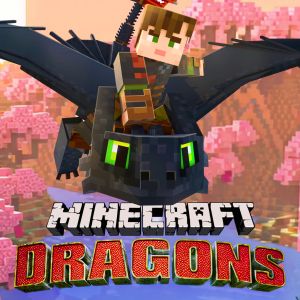
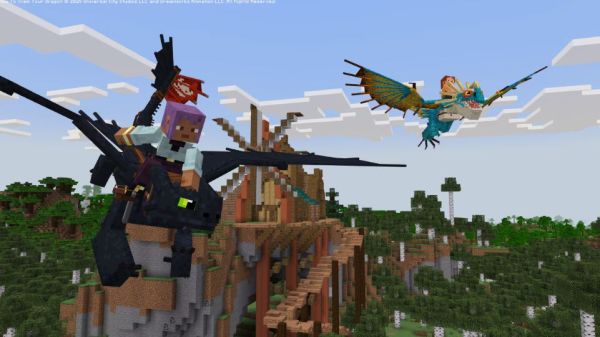
Minecraft: How to Train Your Dragon gave me something I had wanted from Minecraft for years: a convincing reason to spend most of my adventure in the sky. The familiar block-based world remains visible everywhere, but the experience is built around Berk, dragon riders, recognizable characters, and a collection of flying creatures with different personalities and abilities. Instead of beginning another survival world by punching trees and preparing a basic shelter, I entered an established Viking community where becoming a dragon rider was the central fantasy. That change gave the adventure an immediate identity and made it feel more focused than an ordinary themed texture pack.
I approached the DLC as both a Minecraft player and a fan of games built around unusual mounts. I expected a visually attractive map with a few scripted scenes, simple quests, and a dragon that functioned like a reskinned horse. The actual experience is more ambitious because flying becomes an essential method of exploration rather than an optional novelty. The islands, activities, characters, and challenges are arranged around the freedom provided by dragon travel.
From my perspective as a gamer, the DLC works best when I treat it as an interactive DreamWorks adventure rather than a complete replacement for normal Minecraft progression. It provides a handcrafted world, recognizable locations, guided activities, and a clear fantasy to inhabit. It does not offer the same endless development as a long survival save filled with personal construction projects and resource systems. Its strength comes from allowing me to temporarily live inside Berk and experience Minecraft through the role of a dragon rider.
Berk Immediately Feels Like More Than a Decorative Map
The Island of Berk is the heart of the experience, and its construction communicates the setting before any character needs to explain it. Viking homes climb across steep terrain, wooden structures connect different elevations, and dragon-related details appear throughout the settlement. The location feels dense enough to support exploration while remaining readable from the air. I quickly began recognizing major areas by shape rather than constantly checking where I had landed.
I appreciated how the settlement combines familiar Minecraft blocks with architecture inspired by the films. The designers did not attempt to hide the game’s cubic nature, but they used scale, color, and silhouette to recreate the rough warmth of Berk. Buildings look handmade and slightly chaotic, which suits a village built by people adapting their lives around dragons. The result feels more convincing than a perfectly symmetrical fantasy town would have.
The First Dragon Flight Is the Real Opening Moment
Walking through Berk is enjoyable, but the DLC reveals its full personality when I finally leave the ground. Dragon flight changes how I understand the world because cliffs, towers, coastlines, and distant islands suddenly become parts of one open route. The map is designed to look attractive from above, with enough elevation and environmental variety to make ordinary travel feel cinematic. Even a simple journey between objectives becomes entertaining when it involves diving toward the ocean and rising beside a mountain.
The first flight also creates a sense of freedom that ordinary Minecraft transportation rarely provides so quickly. Elytra travel can be excellent in standard survival, but it normally requires significant progression, supplies, and experience. Here, flight belongs to the fantasy from the beginning and shapes almost every major activity. I did not feel like I had unlocked a convenience; I felt like I had entered the role the entire DLC was created to support.
Dragon Controls Require an Adjustment Period
Flying a dragon is not identical to moving with an elytra or controlling a creative-mode character. Momentum, turning, height changes, landing, and camera position need to be understood before precise travel becomes comfortable. My early flights involved wide turns, awkward approaches, and several landings that looked far less heroic than intended. The controls became easier once I stopped trying to correct every movement too aggressively.
I found slower, smoother inputs much more reliable than constantly forcing the dragon toward the exact center of the screen. Open-air travel feels natural fairly quickly, while narrow environments and small landing areas expose the limitations more clearly. A dragon is physically larger than the player, so spaces that look generous from a distance may become inconvenient during the final approach. The slight awkwardness gives flight weight, although greater precision would improve some objectives.
Each Journey Feels Better When I Fly for Pleasure
The most enjoyable flights were often the ones with no urgent task attached. I could follow the coastline, circle Berk, climb above the clouds, or descend toward another island simply because the movement felt satisfying. Minecraft’s blocky landscapes become surprisingly beautiful when viewed at speed from above. The limited visual complexity helps important terrain shapes remain readable during flight.
I liked using the dragon as a way to examine the map’s construction. Hidden ledges, small structures, ships, and environmental details are much easier to notice when I can approach them from any direction. The world feels designed for curiosity rather than only for moving between marked destinations. Flight turns the map into a three-dimensional playground.
Toothless Carries the Strongest Emotional Recognition
Toothless is naturally the dragon most players will want to encounter because his design and relationship with Hiccup define the franchise. Seeing him translated into Minecraft’s visual style could have looked strange, but the recognizable head shape, color, eyes, and movement preserve his personality. He appears expressive even within the limitations of the block-based presentation. The result feels like a Minecraft interpretation rather than a generic black dragon with a familiar name.
I enjoyed being near Toothless almost as much as flying because small movements and reactions help him feel like a character. His presence gives the DLC immediate emotional credibility for fans of the films. Other dragons may offer interesting appearances and abilities, but Toothless remains the creature that makes Berk feel complete. The designers clearly understood that getting his personality right mattered more than adding another elaborate building.
The Dragon Roster Makes Exploration More Interesting
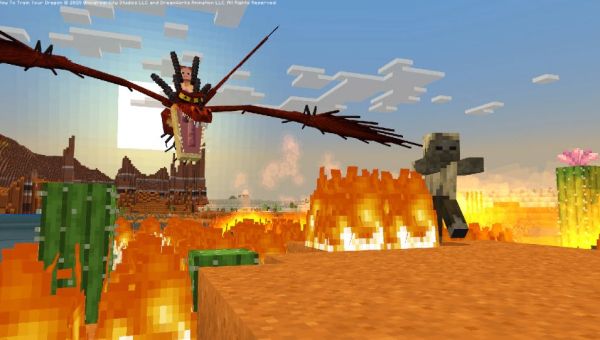
The DLC includes several recognizable dragon species, giving the player more than one visual style and flying companion to appreciate. Different body shapes, colors, sizes, and animations make the creatures feel distinct even when they share fundamental riding mechanics. Discovering another species became a reward because I wanted to see how it looked in motion and how its design had been adapted. The roster provides a light collection fantasy without turning the experience into a complicated creature-management simulation.
I would have enjoyed even deeper differences in handling and practical abilities between every dragon. Some variation is present, but the experience remains designed for accessibility rather than demanding mastery of many separate flight models. This makes switching dragons easy for younger players and fans who want immediate fun. More mechanically specialized creatures could have added greater long-term replay value.
Training Dragons Feels Like the Correct Central Goal
The process of meeting and working with dragons gives the adventure a purpose that fits both Minecraft and the source material. Minecraft already rewards observation, experimentation, collection, and learning how different creatures behave. How to Train Your Dragon adds emotional meaning to those activities by connecting them with trust. The dragon is not simply equipment found inside a chest; it is the partner that makes the rest of the adventure possible.
I liked that the experience focuses more on cooperation than domination. The franchise has always been strongest when humans learn to understand dragons instead of treating them only as threats or tools. That idea remains visible throughout the DLC’s tone. Becoming a rider feels like joining a relationship rather than equipping a vehicle.
Hiccup Functions as the Natural Guide
Hiccup is the obvious character to introduce the player to Berk and the responsibilities of dragon riding. His presence connects the adventure with the central ideas of the films while giving objectives a recognizable voice and purpose. The Minecraft version preserves his thoughtful, slightly awkward energy through visual design and dialogue. He feels like someone guiding a new rider rather than a generic quest marker wearing a familiar skin.
I appreciated that Hiccup does not need to dominate every part of the journey. The player receives enough direction to understand what to do while still being allowed to explore independently. His role is most effective when he establishes context and then allows the dragon-riding systems to carry the experience. The world feels connected to his story without making me a passive observer of it.
Astrid Brings More Competitive Energy
Astrid’s presence gives the rider community a stronger sense of discipline and competence. She represents the side of dragon training that involves speed, courage, precision, and practical responsibility. Objectives connected with her naturally feel more demanding than simple exploration. Her direct personality also provides a useful contrast with Hiccup’s more analytical approach.
I liked seeing the wider group of riders because Berk should feel like a community rather than a stage containing only Hiccup and Toothless. Familiar characters help the map communicate social history immediately. Even brief interactions can suggest friendships and rivalries that existed before the player arrived. The DLC benefits from allowing me to join an established group rather than making the entire island wait for my character.
The Viking Cast Gives Berk Personality
Recognizable villagers and dragon riders appear across the map, contributing humor and familiarity. Their exaggerated designs adapt naturally to Minecraft because both properties use strong silhouettes and expressive personalities. The characters make Berk feel inhabited even when I am not following a formal objective. They also provide visual anchors that help fans connect locations with memories from the films.
I wanted a greater number of longer character-driven quests because the cast is enjoyable enough to support them. Several interactions remain brief and focused on directing the player toward another activity. More dialogue choices or small personal stories could have made the community feel deeper. The existing presentation is charming, but it occasionally feels like the beginning of a more substantial role-playing structure.
The Missions Provide Direction Without Becoming Too Complicated
Activities generally involve exploration, riding, helping characters, locating targets, racing, and using dragon abilities. The objectives are straightforward enough for younger players to follow without extensive preparation. This accessibility suits both Minecraft’s broad audience and the family-friendly nature of How to Train Your Dragon. I rarely felt uncertain about the general purpose of a task.
The simplicity can make experienced players complete parts of the adventure quickly. Challenges focus more on enjoying the setting and movement than mastering difficult systems. I accepted this because the DLC is designed as a themed adventure rather than a demanding action campaign. The best missions are those that use flight creatively instead of asking me to perform ordinary ground tasks inside a branded environment.
Races Turn Flight Into a Test of Control
Dragon races are among the clearest ways the DLC transforms free movement into a structured challenge. Passing through checkpoints requires planning turns, controlling altitude, and maintaining enough speed without overshooting the route. The same controls that feel relaxing during open exploration become more demanding when accuracy matters. A small mistake can create a wide correction that costs valuable time.
I enjoyed repeating races because improvement was easy to notice. My first attempts involved reacting late to every turn, while later runs followed smoother lines and used the dragon’s momentum more effectively. The courses give landmarks and terrain another purpose. Berk becomes both a home and a training ground.
Target Activities Make Dragon Abilities Feel Practical
Using a dragon’s ranged ability gives flight another layer beyond transportation. Aiming while moving requires coordination between camera direction, distance, and the dragon’s current path. Open targets are easy to understand, while smaller or moving objectives become more challenging. The mechanic is simple enough to remain accessible but varied enough to break up ordinary travel.
I liked that abilities feel connected to the creature rather than represented through a generic tool in the player’s hand. The dragon remains the center of the activity. Better targeting feedback and more specialized abilities could have made these sequences deeper. Even in their simple form, they help the rider fantasy feel active.
Rescue Tasks Fit the Spirit of the Franchise
Helping dragons and Viking residents creates a more heroic purpose than merely collecting rewards. The source material is built around protecting a fragile relationship between communities and creatures, so rescue-focused objectives feel thematically appropriate. Flying rapidly toward someone in danger gives travel urgency without changing the game into a darker action experience. The player becomes useful because riding provides access ordinary villagers do not have.
I appreciated the positive tone because it keeps the adventure suitable for a wide audience. Success restores safety and strengthens the community rather than celebrating destruction. Minecraft’s flexible mechanics are used to support cooperation. These missions may be mechanically simple, but they preserve the emotional identity of How to Train Your Dragon.
The Islands Give the Adventure a Sense of Scale
Berk is the central settlement, but surrounding islands make the world feel broader than one village. Flying across open water creates anticipation because distant terrain gradually develops into cliffs, forests, ruins, or another area worth examining. The separation between islands gives dragons an obvious practical value. Without flight, the geography would feel inconvenient; with it, the same distance becomes part of the fantasy.
I liked the moment of leaving the safety of Berk and heading toward unfamiliar land. The ocean below creates visual openness that makes every island appear important. Some locations contain more activity than others, but the journey itself remains enjoyable. The map is strongest when it gives me reasons to trust the dragon and leave familiar airspace.
Block-Based Landscapes Suit the Film’s Geography Surprisingly Well
How to Train Your Dragon is filled with steep cliffs, rocky coastlines, wooden villages, caves, and dramatic islands. These shapes translate naturally into Minecraft because the game already excels at recognizable terrain silhouettes. The block structure makes mountains and buildings readable from long distances. It also allows the map to remain detailed without becoming visually confusing during high-speed flight.
I enjoyed the contrast between square construction and organic dragon movement. The creatures appear more alive because they fly through a world built from rigid geometry. Berk’s irregular architecture prevents the village from feeling too artificial. The crossover works because both worlds share an appreciation for landscapes that invite exploration.
Caves Provide a Useful Change From Open Skies
Underground and enclosed spaces temporarily remove the freedom that defines most of the adventure. Navigation becomes slower, visibility is reduced, and the player needs to examine the environment more carefully. This contrast prevents the entire map from feeling like one extended flight route. Returning to open air afterward makes the dragon’s mobility feel valuable again.
I liked caves when they contained visual clues or a clear discovery rather than only a narrow path. Minecraft is naturally suited to hidden underground areas, so the crossover feels comfortable there. Dragon size can make tight spaces awkward if riding remains possible too close to the entrance. Better transitions between mounted and ground exploration would improve these sections.
Ground Movement Feels Ordinary After Learning to Fly
Walking through the village is initially enjoyable because I want to inspect the buildings and characters. After spending time in the air, ordinary movement begins to feel slow and limited. This is not necessarily a flaw because the DLC wants dragon riding to remain desirable. However, tasks that require repeated ground travel can feel less exciting than the activities built around flight.
I often looked for a reason to mount a dragon even when the destination was nearby. The companion becomes my preferred way to experience the map. This is a sign that the central mechanic succeeds. It also means every objective that removes the dragon needs another strong idea to replace that freedom.
The Adventure Is Better With Another Player
Cooperative play fits the rider-group fantasy naturally. Two players can explore islands, fly alongside each other, attempt activities, and create their own aerial journeys between formal objectives. The world feels more alive when another dragon is moving nearby instead of every familiar rider remaining a non-player character. Shared discoveries also make the compact adventure last longer.
I enjoyed the informal moments most, such as circling Berk together or choosing an island without following the main route. Flying in formation requires enough control to become a small challenge by itself. Cooperative play can also expose synchronization or positioning problems when dragons occupy crowded spaces. The social value usually outweighs those inconveniences.
Role-Playing Adds Replay Value Beyond the Missions
Fans can use the map as a setting for personal stories involving new riders, rescue teams, races, exploration groups, or Viking families. The recognizable buildings and characters provide enough context to begin without constructing everything manually. Players can assign roles and invent situations after completing the guided content. The DLC becomes a digital playset once its formal adventure is finished.
I think this is especially valuable for younger players who already know the films well. They may care less about collecting every objective and more about spending time beside Toothless or pretending to join Hiccup’s team. Minecraft supports that style naturally because the player is rarely restricted to one intended activity. The map’s longevity depends partly on imagination.
The World Is More Scripted Than Normal Minecraft
A handcrafted Marketplace adventure needs greater control than an ordinary survival seed. Characters, events, locations, and progression rely on systems that expect the player to interact with the map in particular ways. This creates a more cinematic experience but reduces some of Minecraft’s usual freedom. Breaking or changing important structures may be restricted to protect the adventure.
I accepted these limits because unrestricted building could easily damage quests and scripted areas. The tradeoff is that players who expect a normal survival world may feel confined. This DLC is closer to an adventure game built inside Minecraft than a complete dragon expansion for every possible save. Understanding that difference is important before entering.
It Is Not a Full Survival Conversion
The DLC does not transform the complete base game into an endless How to Train Your Dragon survival system. Its primary value comes from the dedicated world, designed activities, and licensed characters. Players looking for dragons that can be carried into every personal world may expect a different type of product. The experience is more comparable to visiting a themed campaign than installing a universal overhaul.
I enjoyed the focus because it allowed the designers to control scenery, pacing, and character placement carefully. A universal add-on might offer more freedom but less narrative detail. The limitation becomes disappointing only when the product is understood incorrectly. As a self-contained adventure, it delivers the fantasy much more effectively.
The Visual Adaptation Is Charming Rather Than Realistic
Dragons and characters maintain the Minecraft aesthetic while preserving recognizable features from the films. Faces are simplified, bodies are built from angular shapes, and environments use familiar blocks. The designers do not attempt to recreate cinematic realism inside an engine that would not support it naturally. The result looks consistent with the host game.
I liked how quickly I recognized characters despite the simplified models. Color, costume, hair, and silhouette carry most of the identity. Toothless is especially successful because his large eyes and dark shape remain expressive. The adaptation demonstrates that accuracy does not always require visual complexity.
Dragon Animation Is the Most Important Technical Achievement
The creatures need to appear convincing during takeoff, flight, turning, landing, and ground movement. Their wings, tails, heads, and bodies animate with enough coordination to communicate weight and personality. The motion is naturally more stylized than in the films, but it remains far beyond an ordinary Minecraft animal. Dragons feel designed as major companions rather than simple environmental mobs.
I paid close attention to takeoff and landing because those actions determine whether the mount feels connected to the world. Successful transitions make flight feel physical, while awkward clipping can briefly weaken the illusion. Most open-air movement remains visually strong. The animation carries a large part of the DLC’s value.
Sound Gives the Dragons Personality
Dragon calls, wing movement, environmental audio, and character sounds make the world more expressive. Toothless and other creatures need recognizable audio behavior because their personalities are not communicated through long conversations. Hearing a dragon nearby can draw attention before it appears on screen. The soundscape helps Berk feel occupied by creatures rather than decorated with static models.
I enjoyed quieter moments when wind, water, and distant dragon noises created atmosphere without a mission demanding attention. The audio supports the feeling of living beside these animals. Repeated effects naturally become familiar during longer sessions. Even so, the creatures would feel far less alive without them.
The Music Supports Wonder More Than Pressure
The How to Train Your Dragon universe is strongly associated with adventurous orchestral emotion, and the DLC attempts to preserve that sense of excitement and discovery. Music rises during important movements and gives familiar locations greater emotional scale. Flying above Berk feels more meaningful when the soundtrack supports the view. The score helps a block-based map resemble a cinematic journey.
I appreciated that the overall tone remains hopeful. The adventure contains danger and challenges, but it does not lose the warmth associated with friendship between riders and dragons. Music reinforces that optimism. The DLC wants the player to feel excited about the world rather than afraid of it.
The Interface Keeps Objectives Readable
Guidance needs to remain clear because the map includes vertical travel, several islands, and players who may be unfamiliar with adventure maps. Quest information and visual direction generally make the next step understandable. I rarely needed to search every building randomly for the correct character. This keeps the pace moving and makes the DLC suitable for younger fans.
The guidance can sometimes reduce the feeling of independent discovery when I follow markers too closely. I enjoyed the world more when I occasionally ignored the direct route and explored another island first. A stronger balance between optional clues and direct instruction could support both audiences. The current structure prioritizes accessibility.
The Marketplace Format Shapes the Entire Experience
As a Minecraft Marketplace product, the DLC is built for Bedrock Edition and designed to function across supported platforms within that ecosystem. This allows console, mobile, and Windows players to access the same general adventure. It also means the content follows Marketplace rules and technical limits rather than the open modification environment associated with Java Edition. The convenience of installation comes with less flexibility.
I appreciated being able to launch a complete themed world without managing external files or compatibility settings. The experience feels packaged and approachable. Players who enjoy modifying every system may find the structure restrictive. The DLC is designed for reliability and broad access rather than unlimited customization.
Performance Depends on the Platform and Number of Players
The detailed map, animated dragons, scripted characters, and long viewing distances can be more demanding than an ordinary small Minecraft world. Performance is generally manageable, but flight makes unstable frame rates especially noticeable because the environment moves quickly across the screen. Busy sections of Berk may place greater pressure on limited devices. Multiplayer can introduce additional strain when several dragons are active nearby.
I would prioritize stable rendering distance and frame pacing over maximum visual settings. Smooth flight contributes more to the fantasy than seeing every distant block at the highest possible detail. Closing unnecessary background applications may help on mobile hardware. The adventure remains visually attractive even when settings are adjusted conservatively.
Mobile Controls Make Precise Flying Harder
Touch input is convenient but less precise than a controller during sharp turns, races, and small landing approaches. Fingers occupy screen space while the player manages camera movement and flight direction. Open exploration remains comfortable enough, but timed activities can require practice. A larger tablet provides more room than a small phone.
I preferred controller input because analog movement matches the smooth steering dragon flight needs. Keyboard and mouse can also provide quick camera control, although the exact feel depends on personal habits. The DLC remains playable across formats. Precision matters most when the activity asks for speed and accuracy simultaneously.
Younger Players May Enjoy the Setting More Than the Objectives
Children familiar with the franchise may spend most of their time following characters, choosing dragons, and flying around Berk. They may not care about completing every challenge or understanding the full progression. The map supports this because its central fantasy is enjoyable without formal success. Simply riding a recognizable dragon can provide enough motivation.
I see this as a strength rather than a failure of mission design. A licensed children’s adventure should allow fans to inhabit the world without demanding constant performance. Adults or older siblings can help with difficult controls when necessary. The experience works both as a campaign and as an interactive toy.
Experienced Minecraft Players May Finish the Main Content Quickly
Players accustomed to complex maps, redstone systems, survival challenges, or advanced movement may find the objectives straightforward. The DLC is not designed around punishing difficulty or extensive optimization. Its challenge comes mainly from learning flight and completing themed activities. Once those mechanics are understood, progress can be rapid.
I still found value in the world because the environmental design and dragon riding provide enjoyment beyond completion. The question is whether the player values the franchise fantasy or only the amount of difficult content. Fans are likely to appreciate the experience more than players seeking a deep new survival system. The DLC knows its audience clearly.
The Adventure Could Use More Long-Term Dragon Development
I wanted a deeper system for building relationships with individual dragons over time. Feeding preferences, skill growth, cosmetic equipment, personal behavior, or expanded training challenges could have made each companion feel more unique. The current system provides recognizable creatures and immediate riding satisfaction. It does not fully explore the long-term possibilities of caring for them.
A progression structure could give repeated flights a stronger purpose without turning the experience into heavy resource management. Completing activities with one dragon might unlock another maneuver or visual detail. This would encourage attachment beyond selecting a favorite appearance. The foundation is strong enough to support much deeper companion systems.
More Dynamic Events Would Make Berk Feel Alive Longer
After completing the main activities, the world becomes more dependent on player-created stories. Random rescue requests, races, weather challenges, migrating dragons, or village events could provide reasons to continue returning. These systems would not need to be complicated. Small changes would make familiar routes feel less static.
I enjoyed Berk enough to want it to continue producing situations after the guided adventure ended. The settlement already looks active, but most important events are tied to predetermined objectives. Dynamic tasks could bridge the gap between campaign and sandbox. The map deserves a longer life than one completion route.
The DLC Understands Why Flying With a Dragon Matters
The most important achievement is not the accuracy of one building or the number of recognizable characters. It is the feeling of leaving a cliff beside a dragon and moving freely across the islands. The controls, map layout, animation, sound, and objectives all support that central moment. When those systems work together, the Minecraft engine briefly disappears behind the fantasy.
I rarely cared that the world was built from cubes while flying above the ocean. The simplified style made the landscape readable and allowed the dragon to remain the focus. This is exactly what a successful crossover should achieve. It uses the host game’s strengths rather than apologizing for its visual language.
Why I Continued Returning to Berk
Minecraft: How to Train Your Dragon remained memorable because it gives a familiar game a completely different center of gravity. Standard Minecraft begins on the ground and asks the player to build upward through resources and preparation. This adventure begins with a community already shaped by flight. Dragons are not a final reward; they are the reason the world has been designed this way.
From my perspective as a gamer, the flight system carries most of the experience. It requires a short adjustment period, especially during narrow turns and precise landings, but open exploration feels satisfying quickly. Races and target challenges give movement enough structure to encourage improvement. Free flight remains the strongest activity because it allows the map, music, and dragon animation to work together naturally.
Berk is equally important because it provides a recognizable home rather than a generic fantasy village. Its vertical architecture, Viking details, rider spaces, and surrounding cliffs make dragon travel feel necessary. Hiccup, Astrid, Toothless, and the other familiar figures give the settlement emotional context. I felt like a visitor joining an existing culture instead of a player entering an empty showcase map.
The DLC’s limitations become visible after the first excitement fades. Missions are straightforward, character interactions could be deeper, and dragons need more individualized long-term development. The dedicated adventure structure also provides less building and survival freedom than some players may expect from Minecraft. It is a focused licensed experience, not an endless transformation of the entire game.
Those limits did not remove the pleasure of choosing a dragon and leaving Berk without a destination. The map contains enough islands, cliffs, water, and hidden corners to make personal exploration worthwhile. Cooperative play adds another layer because flying beside another rider makes the world resemble the films more closely. Role-playing can extend the experience long after formal objectives are complete.
The visual adaptation deserves praise because the characters and dragons remain recognizable without looking disconnected from Minecraft. Toothless carries the same mixture of power and friendliness through a much simpler model. Dragon animations provide enough movement to make the creatures feel like major companions. The block-based landscapes then create clear aerial routes around them.
I would have loved a larger campaign with more personal stories for the riders, deeper dragon training, and dynamic events across the islands. The existing mechanics feel like the foundation of a complete dragon-riding game rather than the maximum possible version. More progression could make one selected companion feel truly personal. The adventure creates attachment and then ends before exploring all of its potential.
My favorite moment did not come from completing one specific mission. It happened when I climbed high above Berk, turned back toward the village, and watched the island appear beneath the dragon’s wings. The buildings looked small, the ocean stretched between distant land, and the route forward belonged entirely to me. That scene captured the crossover better than any dialogue could.
Minecraft: How to Train Your Dragon is most successful as a playable fantasy for fans. It allows me to visit Berk, meet familiar characters, ride recognizable dragons, explore islands, and participate in activities that suit the franchise. Players seeking a difficult campaign or a universal survival overhaul may find it limited. Players who have imagined becoming one of Berk’s riders will understand its appeal immediately.
The DLC reminded me that a crossover does not need to reproduce every system from both properties equally. It needs to find the point where their strengths meet. Minecraft provides exploration, readable landscapes, creative freedom, and a world that can be transformed into almost any setting. How to Train Your Dragon provides companionship, flight, adventure, and a community built around understanding extraordinary creatures. When I launch from Berk on dragonback, those ideas fit together almost perfectly.
Pros:
- Dynamic narrative and immersive quests keep players engaged
- Customizable gameplay with extensive mod support allows endless variations
- High-quality visuals coupled with adaptive audio create a captivating atmosphere
- User-friendly controls cater to both experienced gamers and newcomers
- Accessible on multiple platforms with unblocked access for flexible play
- Innovative blend of Minecraft and dragon lore enhances creativity
Cons:
- Overwhelming customization options can be confusing for inexperienced players
- Minor integration issues with cheats might occasionally disrupt game balance
- Potential performance hitches on older hardware may affect gameplay


Recent Reviews

Minecraft

Grand Theft Auto V

Toca Boca World
Roblox
Leave a comment
Your comment is awaiting moderation. We save your draft here
0 Comments