Review
My first session in Roblox Tung Tung Tung Sahur lasted only a few moments before the central joke explained itself. I entered a basic m...
Mastering Creative Frontiers: An Insider’s Look at Roblox Tung Tung Tung Sahur
My first session in Roblox Tung Tung Tung Sahur lasted only a few moments before the central joke explained itself. I entered a basic multiplayer arena, noticed other players moving in different directions, and then saw the wooden meme character approaching with the unmistakable bat in hand. There was no elaborate cinematic introduction, lengthy tutorial, or carefully staged story sequence. The experience wanted me to understand one thing immediately: Tung Tung Tung Sahur was nearby, and standing still was a poor strategy.
The game is a compact Roblox action experience built around defeating the main creature, collecting or using available combat tools, surviving the surrounding chaos, and occasionally turning those tools against other players. It draws almost all of its identity from the viral Tung Tung Tung Sahur character and the larger Italian Brainrot trend. That makes the concept instantly recognizable to players already familiar with the meme, but it leaves very little substance for anyone arriving without that context. The game is easy to enter and understand, yet it also reveals nearly everything it has to offer during the opening minutes.
The Meme Is the Main Mechanic
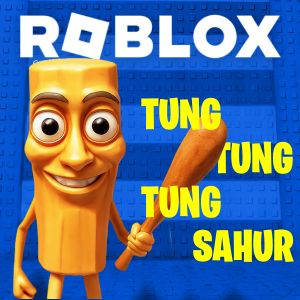
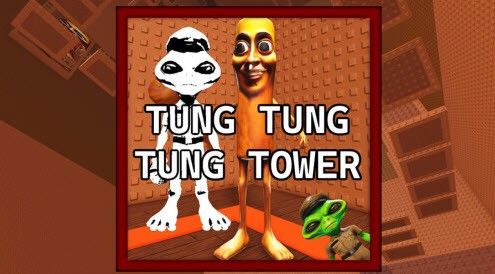
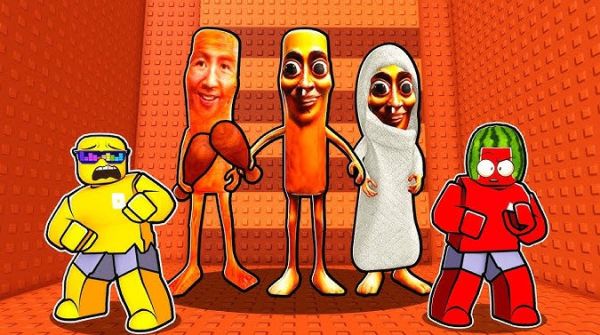
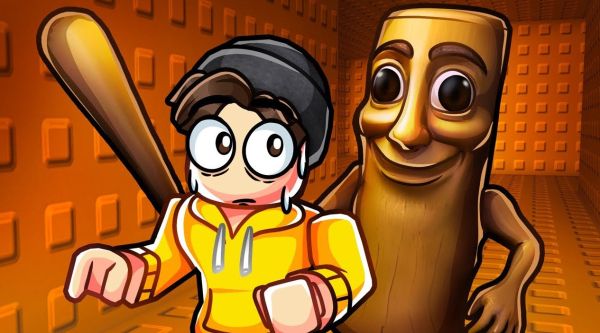
Tung Tung Tung Sahur is represented as a tall wooden figure carrying a bat, combining a silly expression with the visual language of a simple horror pursuer. The design works because it is simultaneously ridiculous and slightly threatening. Seeing the character move toward a group of Roblox avatars creates the kind of chaotic scene that translates well into short videos and shared jokes. The humor comes less from written comedy and more from watching an absurd internet character interrupt ordinary player behavior.
The problem is that recognition carries most of the experience. The game does not significantly reinterpret the character, build a substantial world around him, or develop a new version of the meme through mechanics. Tung Tung functions primarily as a target and threat rather than a personality. Once the initial surprise disappears, I am left evaluating the movement, combat, map, and progression without the meme doing all the work.
There Is Almost No Story to Follow
The game does not spend much time explaining why Tung Tung Tung Sahur is present, what the players are trying to protect, or why everyone has gathered in the same combat area. The objective is essentially contained in the description: defeat the character and have fun fighting with friends. This directness suits a quick Roblox meme experience because I can join without reading several dialogue boxes. It also means there is no narrative reason to remain after I have seen the central encounter.
A small amount of environmental storytelling could have improved the premise considerably. A neighborhood waiting for the pre-dawn call, a strange ritual that summoned the wooden figure, or a laboratory studying Italian Brainrot creatures would have given the action context. Even a short sequence of missions could have transformed the meme into a miniature adventure. Instead, the game behaves more like a temporary playground built around one recognizable model.
Movement Is Simple and Immediately Familiar
Anyone comfortable with standard Roblox controls will understand movement without instruction. I can run, jump, adjust the camera, avoid the pursuing character, and reposition around other players using the familiar avatar system. This accessibility is important because the game targets a broad and relatively young audience. It does not create a complicated movement system that would prevent someone from participating immediately.
The simplicity also limits expressive play. There are no advanced evasive maneuvers, special movement abilities, stamina decisions, or class-specific traversal options shaping how I escape danger. Survival usually depends on maintaining distance, using the available space, and avoiding obvious contact. After several encounters, movement becomes practical rather than interesting.
The Main Encounter Is More Chaotic Than Tactical
Fighting Tung Tung Tung Sahur is most entertaining when several players attack at once. Avatars move around the enemy, weapons appear from different directions, and individual plans dissolve into a noisy group effort. The boss-like figure gives everyone a clear shared target even when nobody communicates. This makes the game easy to enjoy with friends because cooperation can happen accidentally.
The encounter lacks the mechanics required for deeper teamwork. Tung Tung does not appear to demand specialized roles, carefully timed defenses, coordinated objectives, or complicated positioning. Players generally approach, deal damage, retreat when necessary, and repeat the process. The result can be funny, but it rarely becomes strategically satisfying.
Attacks Need Stronger Physical Feedback
Combat in a simple Roblox experience depends heavily on readable impact. I need to understand when my attack connected, whether the enemy reacted, and how dangerous the next moment will be. Tung Tung Tung Sahur provides enough basic feedback to communicate that a fight is occurring, but the attacks lack the weight associated with a large wooden creature carrying a heavy bat. Hits can feel like numerical interactions rather than two physical objects colliding.
Improved recoil, sound, brief reactions, clearer damage indicators, and more varied attack animations would make every exchange easier to read. The bat should feel dangerous before it reaches me, not only after my health changes. Stronger feedback would also make successful evasions more satisfying. Combat currently functions, but it does not create many memorable mechanical moments.
Player-versus-Player Combat Adds Noise Rather Than Structure
The experience allows players to fight one another, which creates unpredictability around the central encounter. A person who appeared to be helping against Tung Tung may suddenly redirect attention toward another avatar. This can produce amusing betrayals and spontaneous rivalries, especially inside a private group. The freedom supports the game’s playground identity.
Public PvP is less convincing because there is little structure explaining why players should compete. There are no clearly presented teams, meaningful competitive objectives, balanced loadouts, or strong reasons to care about an individual victory. Someone with better equipment or more knowledge can interrupt players who are simply trying to see the main character. The feature creates activity but not necessarily good competition.
The Map Provides Space but Little Identity
The arena gives players enough room to move around the main threat and one another. Open areas help me see Tung Tung approaching, while obstacles can create brief opportunities to change direction or separate from another player. The layout supports the basic loop without requiring extensive learning. I rarely became completely lost or unsure where the action was happening.
Visually, the environment feels secondary to the character placed inside it. There are not enough distinctive landmarks, interactive objects, secrets, or changing hazards to make the map memorable on its own. A stronger location could have become part of the joke, perhaps using narrow streets, alarm clocks, kitchens preparing sahur, or surreal structures associated with other Brainrot characters. The current space behaves primarily as a container for combat.
Thirty-Player Servers Sound More Ambitious Than They Feel
The listed server capacity allows as many as thirty participants to share one session. In theory, that number could create enormous battles where a crowd attempts to overwhelm Tung Tung or forms temporary alliances before turning on one another. A busy server would emphasize the social spectacle that suits meme-driven Roblox games. Watching dozens of avatars react to the same absurd threat could be the experience’s strongest form.
The practical problem is population. By August 2026, the game showed no meaningful active audience during my check, making the theoretical server size far less relevant. Empty or nearly empty sessions expose the limited solo mechanics quickly. A multiplayer game designed around chaotic groups needs bots, scaling, rotating challenges, or stronger solo content when the community moves elsewhere.
Playing Alone Removes Most of the Comedy
Without other players, the encounter becomes much more mechanical. There are no unexpected betrayals, crowded attacks, avatar reactions, or friends laughing when someone misjudges the distance. I am simply moving around a meme character and repeating the available combat actions. The central joke loses energy when nobody else is present to share it.
The game needed a more complete solo structure to remain viable after the trend declined. AI allies, short stages, escalating encounters, unlockable weapons, or a sequence featuring several Brainrot creatures could have provided an independent reason to play. Instead, solo sessions feel like entering a party after everyone has already left. The decorations remain, but the social event that gave them purpose is gone.
Friends Can Still Create Their Own Fun
A private group can treat the game as a short social toy rather than a serious action title. Friends can challenge one another, cooperate against Tung Tung, invent rules, or compete to survive with intentionally weak equipment. The lack of rigid structure becomes less damaging when everyone arrives with the same expectations. The experience works best when conversation supplies the personality that the game itself lacks.
This type of player-created entertainment has limits. A group may laugh during the first few rounds, but there are not enough systems to support an entire evening. Once everyone has seen the enemy, tested the tools, and started a few spontaneous fights, repetition arrives quickly. The game is suitable as a brief detour between larger Roblox experiences rather than the main destination.
The Italian Brainrot Connection Is Broad but Shallow
The game’s tags reference other popular characters such as Bombardino Crocodilo, Tralalero Tralala, Brr Brr Patapim, and Lirili Larila. These names place the experience inside the wider Italian Brainrot trend that spread rapidly across short-form video platforms and Roblox. The association helps discovery because players searching for one character are likely to recognize the others. It also establishes a tone of deliberate nonsense before the game begins.
The actual experience does not appear to build a rich crossover around the full group. Tung Tung remains the focus, while the other names work largely as searchable references. A proper Brainrot campaign could have given every character a separate area, attack style, boss encounter, and reward. Using the wider meme catalogue only as promotional language makes the game feel smaller than its tags imply.
The Humor Depends Heavily on Trend Recognition
Players familiar with the repeated chant, wooden design, and surrounding meme culture will understand the joke immediately. The character’s mere appearance can be enough to make younger audiences laugh, especially when paired with chaotic Roblox physics. No complicated comedic setup is required. This makes the experience highly accessible during the peak of the trend.
Meme recognition is also temporary. A joke that feels unavoidable for several months can lose most of its impact once social media moves toward another character or phrase. Games built almost entirely around trend recognition need strong mechanics to survive after that transition. Roblox Tung Tung Tung Sahur does not provide enough mechanical depth to separate itself from the period that created it.
The Game Feels Like a Trend Prototype
The experience resembles a project assembled quickly enough to participate while the meme was popular. The basic target, combat space, multiplayer access, and searchable title are all present. This speed may explain how it collected more than one hundred thousand visits despite limited content. Roblox makes this type of rapid cultural response possible.
The result lacks the refinement of a game designed around long-term play. Systems do not develop substantially, the map has little narrative purpose, and combat variety remains limited. I can appreciate the ability to turn an internet joke into a playable space quickly. I cannot ignore that the finished product still feels closer to a prototype than a complete action experience.
Progression Is Too Weak to Create Long-Term Goals
A persistent action game usually gives me reasons to return through weapons, cosmetics, abilities, ranks, quests, achievements, or changing encounters. Tung Tung Tung Sahur provides immediate activity but limited evidence of a substantial progression structure. I do not feel that every round moves my avatar toward a significantly different play style. Repetition therefore depends on enjoying the same basic encounter again.
A simple progression path could have changed the experience dramatically. I might unlock faster movement, stronger defensive tools, new attack types, themed bats, character morphs, or access to increasingly strange arenas. Progression would not need to be complicated for the target audience. It would only need to make the fifth session feel meaningfully different from the first.
Badges Could Have Added More Direction
Roblox badges are useful for turning small experiences into collections of specific challenges. Defeating Tung Tung under a time limit, surviving without taking damage, discovering a secret room, or completing a match with a group could have created clear secondary goals. Badges also remain visible on the account after the experience becomes less active. They provide a reason to attempt unusual behavior instead of repeating the safest strategy.
The game does not present a memorable badge-driven progression path on its public page. This leaves exploration and experimentation without formal recognition. A compact meme game benefits from achievements because its central mechanics cannot support endless variety. Even ten carefully designed challenges would have increased replay value substantially.
Visual Design Is Functional but Inconsistent
Tung Tung’s wooden body and simple facial design translate naturally into Roblox’s block-based visual language. The character remains recognizable without requiring advanced rendering or detailed textures. This simplicity also helps performance on weaker devices. The main model successfully communicates the meme at a glance.
The surrounding world and effects do not always match that clarity. Basic environments, ordinary avatar equipment, and inconsistent asset styles make the experience feel assembled from separate pieces. A unified art direction could have used exaggerated wooden architecture, surreal lighting, oversized household objects, or a distinct night-before-sahur atmosphere. The central character looks correct, but the world does not feel designed specifically for him.
Animation Gives the Character Motion Without Enough Personality
The pursuit works because Tung Tung moves toward players and presents an obvious physical threat. Basic movement is enough to create pressure when the character appears suddenly. The wooden proportions naturally produce an awkward quality that suits the joke. Watching him chase a group remains amusing during the first encounters.
More animation variety could have turned him into a recognizable game character rather than a moving meme model. Different bat swings, pauses, searching behavior, angry reactions, or special attacks tied to the repeated chant would have created personality. A boss should communicate mood and intention through movement. Tung Tung currently communicates direction more effectively than character.
Sound Should Have Been the Defining Feature
The name Tung Tung Tung Sahur comes from a repeated rhythmic call associated with waking people before the pre-dawn meal. That gives the game an obvious audio identity. A rising drum pattern could warn players that the character is approaching, control attack timing, or transform the environment during special events. Sound could have connected the meme directly with gameplay.
The game does not use rhythm as deeply as the concept deserves. The chant and impact sounds support recognition, but they do not become a complete mechanical system. I wanted attacks synchronized with beats, temporary safe moments between calls, or objectives requiring players to respond to audio cues. The title promises rhythm, while the experience mainly delivers pursuit and combat.
A Rhythm-Based Boss Would Have Been More Distinctive
Imagine a fight where three heavy beats signal the next attack pattern. Players could jump over one strike, hide during another, and counter after recognizing the sequence. Additional phases might increase speed or introduce false beats. This would give Tung Tung a mechanic no ordinary Roblox pursuer could reproduce.
The actual fight remains more conventional. That makes it accessible, but it also makes the character replaceable. Another popular meme model could occupy the same role without changing the underlying experience substantially. Strong design should make the mechanics feel inseparable from the subject.
The Controls Suit Younger Players
Standard Roblox movement and simple combat reduce the learning barrier. Younger players can enter, identify the enemy, and participate without studying several interfaces. The experience does not require precise platforming, complicated inventory management, or long written instructions. This accessibility matches its listed 5+ maturity category.
Easy controls do not require shallow design. Games for younger audiences can still use readable patterns, interesting objectives, and meaningful progression. Tung Tung Tung Sahur occasionally treats simplicity as the absence of additional systems. A few clearly communicated mechanics would have improved depth without making the experience inaccessible.
Mobile Play Fits the Short Sessions
The basic movement and combat structure is compatible with short mobile play sessions. There are not many complex buttons competing for screen space, and the visual target is large enough to track on a smaller display. Joining for several minutes makes sense when the goal is simply to see the meme and participate in one chaotic encounter. The low conceptual barrier suits Roblox’s portable audience.
Touch controls are less comfortable during quick camera adjustments and player-versus-player exchanges. Busy servers can make the screen harder to read, while weaker devices may struggle if many effects or avatars appear simultaneously. The game’s limited population in 2026 reduces that pressure, though it also removes much of the multiplayer appeal. Mobile compatibility is useful but cannot compensate for the missing long-term structure.
PC Provides the Cleanest Camera Control
Mouse and keyboard controls make it easier to track Tung Tung, turn quickly, and respond to players approaching from another direction. The simple presentation runs without demanding advanced hardware. Roblox’s standard interface also makes joining and leaving sessions straightforward. On PC, technical barriers are minimal.
The experience does not use PC capabilities for richer settings, advanced controls, or more detailed visuals. A larger display simply makes the limitations easier to see. The map remains basic, combat remains simple, and inactive servers remain inactive regardless of platform. PC is the most comfortable way to play rather than a significantly enhanced version.
Console Play Is Functional but Menu Navigation Remains Roblox-Like
Controller movement suits the basic chase-and-fight structure. Large targets and straightforward actions mean precise mouse aiming is not always necessary. Playing with friends from a living-room setup can strengthen the social comedy. The game’s short rounds also work well as a casual break.
Roblox experiences vary in how carefully they support controller prompts and interface selection. Tung Tung Tung Sahur does not offer a highly customized console presentation. Menus and certain interactions may feel designed primarily around Roblox’s general systems. The core action remains playable, but console users should not expect the polish of a dedicated standalone release.
There Is Little Technical Ambition to Create Major Problems
The simple map, standard avatars, limited systems, and recognizable enemy model keep the technical demands modest. I did not encounter the kind of large streaming problems associated with enormous Roblox worlds. Joining the central action is quick, and there are few complicated mechanics capable of breaking in unexpected combinations. The experience’s small scale supports stability.
Basic does not mean perfectly polished. Collision, network delay, attack detection, and player interactions can still feel inconsistent, especially during crowded fights. These moments matter because the game has so few systems that each one carries more weight. When an attack appears unclear, there is no deeper strategic layer to distract from the problem.
The Low Population Is Now the Largest Technical Reality
Roblox games depend on active communities as much as code. A multiplayer arena designed for up to thirty participants behaves completely differently when nobody else joins. Matchmaking cannot create chaos from an empty player pool. The game may still launch correctly while no longer delivering the experience implied by its design.
This is the situation new players need to understand in August 2026. The public page showed no meaningful active audience at the time of checking, and the experience had not received a visible update since May 2025. Friends can still enter together, but spontaneous public activity should not be expected. The game is technically available while socially close to inactive.
Private Groups Are Now the Most Reliable Option
Because the public audience has moved elsewhere, organizing a group directly is the best way to recreate the intended multiplayer energy. Friends can join simultaneously and use the open combat structure as a temporary party game. This avoids waiting for strangers who may never appear. It also allows the group to agree on rules for PvP and cooperation.
The experience’s page states that private servers are not supported, which limits control over who enters a session. A coordinated group can still try to join together through Roblox’s normal social features, but the setup is less convenient than a dedicated private instance. Supporting private servers would have made the game more useful after its public population declined. The omission matters more now than it did near launch.
Monetization Is Not the Main Problem
The core experience is free to enter through Roblox, and the public listing does not present an extensive store filled with complicated premium systems. I did not need to purchase access simply to see Tung Tung or understand the gameplay. This keeps the initial commitment low. Anyone curious can inspect the experience without financial risk.
The absence of aggressive monetization does not automatically create strong value. Time is still an investment, and the game offers limited content in return. Some Roblox experiences use purchases to accelerate progression or provide unfair advantages, but the more immediate issue here is that there is hardly enough progression to accelerate. The game needs stronger design before it needs a larger shop.
The Experience Is Not Pay-to-Win in a Meaningful Long-Term Sense
There is no substantial ranked structure, durable competitive ecosystem, or developed progression economy where spending would determine a long-term position. PvP exists, but it behaves like informal playground combat rather than a serious ladder. The primary target can be approached by anyone entering the server. Financial pressure is not central to the loop.
Balance between available tools may still vary, and players who understand the game can dominate newcomers. That is a design and population problem more than a commercial one. Without a stable community or competitive structure, purchased advantage would have little lasting meaning anyway. The game’s fairest feature is also evidence of how little has been built around the central encounter.
The Cultural Origin Deserved More Care
The phrase associated with Tung Tung Tung Sahur draws from the practice of waking people before the fasting day begins during Ramadan. The meme turned that rhythm into an absurd character that spread far beyond its original context. A game using the name could acknowledge that background respectfully while still participating in internet humor. It might include a brief explanation, neighborhood setting, or non-mocking reference to the actual purpose of sahur.
This Roblox experience focuses almost entirely on the meme creature and combat. The cultural connection becomes a recognizable sound and name rather than meaningful context. I do not expect a small action game to become an educational project, but one sentence could distinguish the real tradition from the later fictional character. That would make the experience more thoughtful without reducing its humor.
Copyright Uncertainty Affects the Wider Meme
Tung Tung Tung Sahur has appeared across many Roblox experiences, videos, mobile games, and meme compilations. Reports surrounding other major Roblox titles indicate that versions of the character have faced copyright or licensing concerns, leading to removals and replacements elsewhere. That wider uncertainty matters because a game built almost entirely around one meme character may depend on permission to keep using its recognizable design. Players should not assume every version is officially licensed.
I could not verify clear licensing information on this experience’s public page. That does not prove infringement, but it means I cannot present the project as an official adaptation. The experience should be understood as a Roblox meme game using the character rather than an authoritative release from the original creator. Clear attribution and licensing information would improve trust.
Competing Tung Tung Games Offer More Defined Concepts
Roblox contains several experiences using the same character in survival, horror, tycoon, phone-call, lava, and Area 51 formats. Some have millions of visits and clearer gameplay pitches, such as surviving several nights, building a two-player tycoon, or escaping a facility filled with Brainrot creatures. This competition makes a generic combat arena difficult to distinguish. A searchable title is not enough when many results use nearly identical words.
The Disritmia version has one advantage: its purpose is immediately understandable. I enter and attempt to defeat Tung Tung without learning a complicated premise. That directness can be useful for a very short session. Other experiences provide stronger themes and progression, making them more attractive after the initial curiosity is satisfied.
The Title Creates Search Confusion
Searching for Roblox Tung Tung Tung Sahur does not identify one universally recognized game. Results include differently named survival experiences, horror projects, tycoons, and small action arenas. Videos may also describe mechanics that belong to a completely separate mobile or browser title. Players can easily read one description and open another game expecting those features.
This confusion affects reviews as well. Claims about rhythmic drumming, neighborhood races, treasure hunting, or advanced horror mechanics may not apply to the Disritmia experience at all. The exact creator and experience page are necessary for accurate identification. A more distinctive subtitle would have helped the project establish its own identity beyond the meme phrase.
The Game Needed a Clearer Name and Hook
A title such as Tung Tung Sahur: Bat Arena, Escape the Sahur, or Brainrot Boss Battle would have communicated the actual format while separating the game from dozens of similarly named projects. The current title maximizes search recognition but sacrifices identity. Once several developers use the same phrase, players cannot remember which experience contained which mechanics. Branding becomes especially important after the trend’s peak.
A clearer hook would also guide future updates. An arena title suggests new bosses, weapons, and competitive modes. A survival title suggests stages, hazards, and escalating nights. The current project uses a broad meme name without establishing what kind of game it intends to become.
My Main Frustrations
The combat lacks weight, the map has little identity, and the central enemy does not have enough attack patterns to support repeated encounters. Player-versus-player fighting creates random interruptions without a structured competitive purpose. Progression, badges, secrets, and long-term goals are too limited to encourage return visits. The full Italian Brainrot cast is referenced more strongly in tags than in the playable content.
The population problem now overshadows everything else. A game built for social chaos has almost no active public community, no private-server support, and no visible recent development. Solo play reveals the shallow mechanics immediately, while finding enough strangers for a thirty-player spectacle is unrealistic. The experience captured a trend but did not build the systems required to survive after that trend moved on.
Who Might Still Enjoy Roblox Tung Tung Tung Sahur?
I recommend a brief visit to players who recognize the meme, enjoy collecting examples of Italian Brainrot games, or have several friends willing to join at the same time. Younger Roblox users can understand the objective immediately, and the standard controls create almost no learning barrier. The experience can produce several amusing minutes when a group deliberately treats it as a chaotic playground. It is also free, so inspecting it carries no direct financial risk.
I would not recommend it to players seeking a developed horror game, satisfying boss design, meaningful progression, active matchmaking, or a large Brainrot adventure. Solo users are particularly likely to find the experience empty. Anyone choosing between the many similarly named Roblox projects should verify the creator and description carefully. This version is a basic action arena, not the more elaborate tycoon, Area 51, FNAF-inspired, or survival experiences found elsewhere.
My Final Verdict
Roblox Tung Tung Tung Sahur succeeds at one immediate task: it places the viral wooden character inside a multiplayer arena and allows players to confront him with minimal delay. The model is recognizable, the controls are accessible, and the central encounter can become funny when several friends produce their own chaos. Its free entry and light technical requirements make it easy to sample. During the peak of the meme, that may have been enough to generate a memorable short session.
It is not enough to sustain a complete game. The experience needs stronger audio mechanics, more varied enemy behavior, a distinctive map, meaningful progression, structured PvP, additional Brainrot bosses, better solo support, and reasons to return after the first encounter. Its inactive population and lack of recent updates make those weaknesses even more visible in 2026. I rate Roblox Tung Tung Tung Sahur 5.4/10: it is a playable meme with a few minutes of social comedy, but once the repeated chant stops being surprising, there is very little game left to hear.
Pros:
- Cross-platform availability
- Extensive mod and customization support
- Engaging and creative gameplay
- Active and supportive community
- Optimized performance on various hardware
- Free to download and play
Cons:
- Lack of detailed tutorials for advanced features
- Occasional performance issues in complex levels
- Steep learning curve for new players
Recent Reviews

Minecraft

Grand Theft Auto V

Toca Boca World
Roblox
Leave a comment
Your comment is awaiting moderation. We save your draft here
0 Comments