Review
My opening hours in Ghost of Yōtei were driven by a simple expectation. Atsu had six names, a painful history, and enough skill with a...
Spectral Passages: Journeying Through the Enchanted World of Ghost of Yōtei™
My opening hours in Ghost of Yōtei were driven by a simple expectation. Atsu had six names, a painful history, and enough skill with a sword to turn every encounter into another step toward revenge. I assumed the campaign would send me through Ezo in a fixed sequence, placing one target after another at the end of increasingly elaborate strongholds. Instead, the game gave me a broad landscape, incomplete rumors, competing trails, and the freedom to decide which member of the Yōtei Six should occupy my attention first.
That freedom immediately made the revenge story feel more personal. I was not only following Atsu’s anger through predetermined chapters; I was deciding how that anger shaped her route across the world. One trail led toward a weapon master, another toward frightened villagers, and another toward people who remembered the Yōtei Six very differently from Atsu. Every new detail complicated the emotional simplicity of crossing another name from a list.
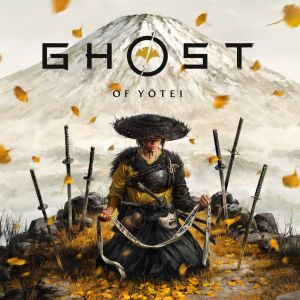
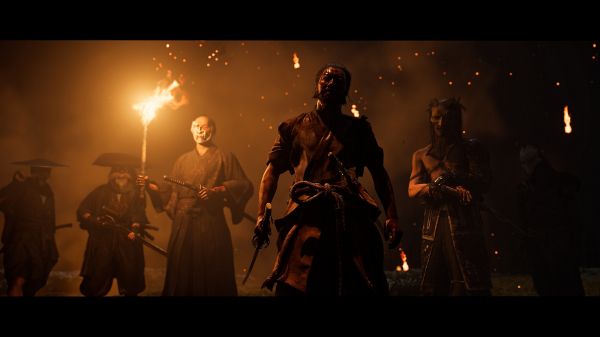
Ghost of Yōtei is a standalone open-world action adventure from Sucker Punch Productions, set in 1603 across the northern land of Ezo. Atsu returns sixteen years after her family’s destruction and begins hunting the Spider, the Oni, the Kitsune, the Snake, the Dragon, and Lord Saito. The premise resembles a classic revenge film, but the journey gradually becomes a story about identity, memory, chosen bonds, and the danger of allowing one terrible night to define an entire life.
Atsu Is Not Jin Sakai With a Different Face
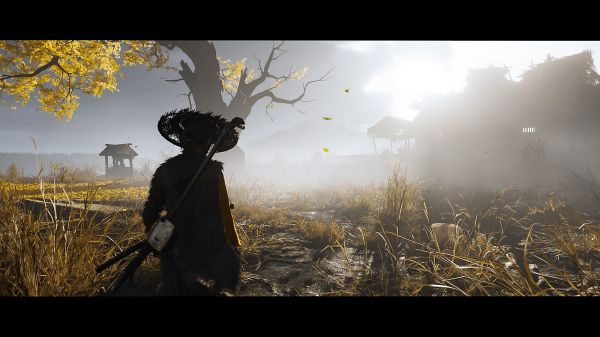
Atsu enters the story as a mercenary rather than a samurai shaped by an established code. She already understands deception, intimidation, improvised weapons, and the value of appearing more frightening than the people pursuing her. There is no long transformation from honorable warrior to feared Ghost. Her reputation begins taking shape around the idea that she has returned from death as an onryō, and she is willing to let enemies believe the legend.
This makes her more direct than Jin Sakai without making her emotionally simple. Atsu is angry, physically capable, and comfortable threatening people, but the performance leaves room for uncertainty and exhaustion. Quiet conversations reveal that maintaining the revenge mission requires constant effort. She can sound completely certain while standing before an enemy and deeply unsure once the sword is returned to its sheath.
I appreciated that the game does not force her into constant solemnity. Atsu can participate in games, play music, paint, share campfire conversations, and react dryly to the strange personalities she meets. These activities do not erase her grief. They show that another person still exists beneath the identity she constructed around the Yōtei Six.
The Yōtei Six Provide Structure Without Becoming Six Identical Chapters
Each member of the Yōtei Six has a distinct territory, network, combat identity, and relationship with Lord Saito’s larger ambitions. The Spider surrounds himself with deception and criminal influence, while the Oni cultivates an image of direct physical terror. The Kitsune operates through secrets and confusion, and the Snake presents another form of danger entirely. The Dragon and Saito sit closer to the center of the conspiracy, but the campaign allows earlier targets to feel like more than disposable steps.
The best hunts begin as investigations rather than direct assaults. I followed rumors, questioned survivors, studied locations, and discovered that the target’s reputation had affected entire communities. A feared outlaw may have become a symbol used by subordinates who never met the original person. Another member’s organization can survive beyond one confrontation because local corruption and fear have become self-sustaining.
Not every target receives equal development. A few members of the Six have richer personal histories and stronger connections with Atsu than others. The weaker arcs rely more heavily on visual presentation and memorable duels. Even then, the flexible order helps prevent the campaign from feeling like six episodes arranged on one straight line.
Lord Saito Is Most Effective When He Is Not on Screen
Saito’s influence reaches settlements, patrols, fortresses, merchants, and frightened informants long before Atsu approaches him directly. His men treat Ezo as territory waiting to be controlled rather than a place containing independent communities. This makes his threat political as well as personal. Atsu wants revenge for her family, but the wider population sees Saito as the source of an expanding system of violence.
The story is strongest when it shows what his rule means through ordinary consequences. A farm may be empty because its residents were displaced. A traveler may know useful information but refuse to speak near a road controlled by Saito’s patrols. A local authority may cooperate not through loyalty but because resistance would endanger everyone nearby.
Saito himself occasionally feels more conventional than the world built around him. His confidence, cruelty, and ambition fit the role clearly, but some secondary antagonists carry more unusual emotional weight. His value comes from connecting Atsu’s private loss with the future of Ezo. Defeating him means more than completing the list, even when the campaign tries to remind Atsu that revenge alone cannot rebuild what disappeared.
Ezo Feels Wilder Than Tsushima Without Feeling Empty
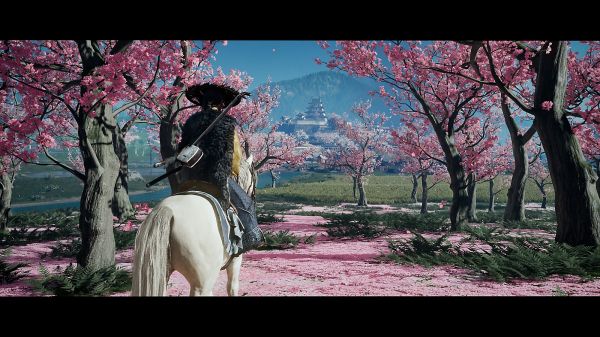
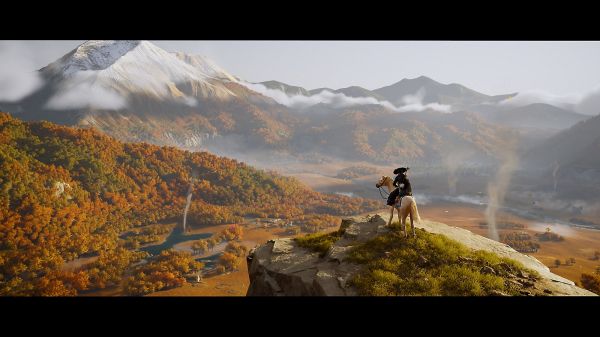
The landscape around Mount Yōtei is broad, cold, and frequently intimidating. Open grasslands lead toward dense forests, volcanic areas, wetlands, coastal routes, frozen regions, and mountain paths where weather can change the character of the journey quickly. The map contains fewer signs of settled authority than Tsushima did. Roads feel less secure, distances feel larger, and many communities appear to exist at the edge of established control.
Mount Yōtei remains visible from many locations and acts as a natural point of orientation. I often understood my general position by looking toward it rather than opening the map. This is one of the game’s greatest environmental achievements. The mountain is not merely a large object in the distance; it becomes a constant emotional and geographical presence.
The world does contain familiar open-world structures. Enemy camps, shrines, hot springs, collectibles, animal trails, weapon teachers, bounties, and side stories gradually fill the map. The difference is presentation. Many discoveries are introduced through smoke, sound, animals, wind, travelers, landmarks, or the spyglass rather than a wall of unexplained icons appearing immediately.
The Spyglass Gives Exploration a Deliberate Rhythm
Atsu can examine distant terrain and mark locations through her spyglass. This makes elevated positions valuable because reaching a ridge allows me to study roads, structures, smoke, camps, and unusual landmarks. Discovery becomes an action I perform rather than a reward given automatically for entering a region. I began climbing hills not only for screenshots but to understand the space ahead.
The system is simple, yet it strengthens the feeling that Atsu is planning her own journey. I can identify a threatening stronghold, notice a smaller activity beside it, and decide whether to approach now or continue elsewhere. The map remains useful without becoming the only way I understand geography. When the environmental design works properly, the world itself becomes the interface.
Occasionally, points of interest remain easy to overlook because weather or terrain obscures them. The game generally allows later discovery through rumors or exploration. I prefer missing a location temporarily to having every possible activity revealed at once. Ezo feels larger when part of it remains unknown.
Following the Wind Still Feels Better Than Following a Line
The guiding-wind system returns as a natural directional tool. A gesture sends grass, leaves, snow, dust, or other environmental elements toward the selected objective. The technique keeps my attention on the landscape instead of placing a bright route across the ground. It also preserves one of the strongest visual ideas from Ghost of Tsushima without tying the new story too closely to Jin.
Different environments make the effect more or less readable. Grasslands communicate direction beautifully, while enclosed spaces and severe weather may require another gesture. I occasionally opened the map because the visual cue became unclear near complicated terrain. These moments are minor compared with the atmosphere preserved by avoiding a permanent navigation arrow.
The system also reinforces the game’s cinematic ambitions. Atsu can ride through a field while the entire environment appears to guide her toward the next decision. Few interface mechanics make ordinary travel look this intentional. Even after many hours, I rarely became tired of summoning the wind.
The Horse Is a Companion Rather Than a Fast-Travel Button
Traveling across Ezo on horseback gives the map time to establish scale. The horse moves confidently along roads, across plains, and through shallow terrain while the camera allows the environment to dominate the frame. Long journeys become opportunities to notice distant smoke, animal movement, weather changes, and wandering characters. I used fast travel regularly, but some of the game’s strongest quiet moments happened because I decided to ride instead.
Horse handling is responsive enough for ordinary travel, though dense forests and narrow settlements can create awkward collisions. Automatic path behavior helps on established roads without removing direct control. The horse can also enter scenes or mission spaces in inconvenient ways, although updates reduced several cases where it interrupted objectives or cinematics.
The emotional bond is understated. Atsu does not constantly explain how important the animal is, and the game does not turn care into a large management system. Small animations, camp moments, and the routine of summoning the same companion create attachment naturally. The relationship works because it grows through use rather than one dramatic speech.
Camping Makes the Journey Feel Physical
Atsu can rest beneath the open sky, prepare food, reflect on events, and encounter travelers around the camp. This gives long journeys a beginning and an end beyond choosing another icon. Night, weather, firelight, and surrounding sounds create a sense that she is occupying the landscape rather than moving across a decorative map. Camps also provide space for character conversations that would feel unnatural during a sprint toward the next objective.
The mechanic is not a survival system. I do not need to manage hunger, temperature, or sleep schedules constantly. This is the correct choice because severe resource management would interrupt the pace of the revenge story. Camping adds texture and intimacy without turning Ezo into a checklist of bodily needs.
Repeated animations and tutorials can eventually become noticeable, though later balancing reduced unnecessary interruptions. I continued using the system after its practical novelty faded because the mood remained effective. Watching Atsu sit beside a fire made the violent sections feel more exhausting and therefore more meaningful.
The Wolf Creates Unscripted Partnerships
A wolf can appear during exploration and combat, developing a connection with Atsu through specific activities and encounters. It may distract enemies, attack dangerous targets, or help transform a difficult group fight. The animal does not behave like a permanent companion waiting beside Atsu during every mission. Its appearances feel more unpredictable and connected with the wilderness.
This makes the relationship feel less like a conventional pet system. I could not order the wolf through a complex command wheel or equip it with a collection of items. Instead, I learned to notice when it entered the battle and adapt around its behavior. Upgrades improve what it can contribute without turning it into the main source of damage.
The AI occasionally makes strange choices or reaches a target at an unexpected time. Patches adjusted several wolf abilities and interactions with enemy leaders. These rough moments never erased the pleasure of seeing it emerge from the environment during an ambush. The wolf feels like an ally with its own movement rather than another ability icon.
Combat Is More Flexible Because Weapons Replace Stances
Ghost of Tsushima used katana stances to answer different enemy types. Ghost of Yōtei expands the concept by giving Atsu several complete weapons, including the katana, dual katana, ōdachi, yari, and kusarigama. Each one changes range, speed, defense, crowd control, and the types of enemies I can pressure effectively. Switching weapons becomes a tactical decision rather than changing a symbolic posture while holding the same blade.
This makes the arsenal easier to understand physically. A long spear is useful because its reach is visible. An ōdachi feels capable of challenging heavy opponents because every swing communicates weight. Dual blades create rapid pressure, while the kusarigama can manipulate distance and disrupt enemies who rely on protection.
The system encourages switching without making every encounter a rigid color-matching exercise. One weapon may be especially effective against a particular threat, but personal comfort and upgrades still matter. I frequently began with the expected counter and changed when the surrounding group created another problem. The best fights feel like fluid adaptation rather than opening a menu to select the officially correct answer.
The Katana Remains the Foundation
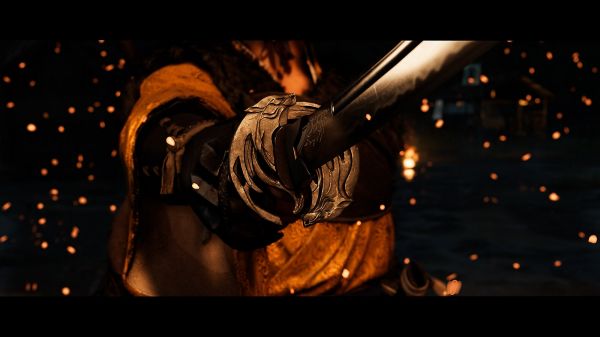
The katana provides the cleanest balance between speed, defense, precision, and familiar swordplay. Parries, dodges, direct attacks, and techniques remain readable without the larger commitment required by heavier weapons. It became my default choice when entering an unknown encounter. The weapon does not need a novelty mechanic because the game’s entire combat language feels natural through it.
Successful katana exchanges create a measured rhythm of threat and response. An enemy begins an attack, I decide between parry, dodge, interruption, or distance, and one correct answer creates an immediate opportunity. The system is accessible enough for ordinary difficulty while preserving strict timing on Lethal. Sword contact feels sharp through animation, audio, haptic feedback, and brief resistance.
The katana can feel less spectacular after unlocking the wider arsenal. This is partly because new weapons need strong identities. Returning to it later reminded me that visual complexity is not the same as mechanical quality. The basic sword remains one of the most satisfying tools in the game.
Dual Katana Reward Sustained Pressure
The dual blades allow Atsu to attack quickly, change direction, and overwhelm opponents before they establish a defensive rhythm. They are especially enjoyable against enemies who leave narrow openings after quick sequences. The style gives Atsu a more aggressive silhouette and visually separates her from Jin Sakai. I felt less like a patient duelist and more like a mercenary forcing the encounter to move at her pace.
The speed encouraged me to overextend. Long sequences can continue after the safe opening has disappeared, leaving Atsu exposed to another enemy. Dual blades are strongest when I understand exactly when to stop. Their apparent simplicity hides the discipline required to avoid turning every advantage into a counterattack against me.
Against groups, rapid movement helps reposition between targets, but the shorter range can become dangerous. I often paired them with thrown tools or disarming techniques to reduce pressure before committing. The weapon rewards aggression without making aggression automatically correct.
The Ōdachi Makes Heavy Opponents Feel Manageable
The ōdachi brings greater reach and force at the cost of slower commitment. It can stagger durable enemies, control narrow approaches, and punish opponents whose protection makes lighter attacks ineffective. Drawing the weapon changes the atmosphere of a duel because every motion appears deliberate. The DualSense feedback gives successful contact a satisfying sense of resistance.
Timing matters more than speed. Beginning a heavy sequence while another enemy approaches is an easy way to lose control. The weapon is most effective when I create space first and then use its range to maintain that space. It rewards preparation rather than desperate swinging.
I appreciated that the game does not treat heavy combat as inelegant. Atsu remains mobile and technically skilled even while using a large blade. The animations communicate training rather than brute force. It becomes another form of precision instead of the slow option for players who dislike parrying.
The Yari Controls Distance Beautifully
The spear gives Atsu reach, direct thrusts, broad control, and the ability to disrupt enemies before they reach comfortable range. It works particularly well in open spaces where positioning can be maintained. I enjoyed using it against groups approaching from one direction because it turned the space in front of Atsu into a dangerous line. The weapon also produces some of the campaign’s most graceful training sequences.
Close quarters reduce its comfort. Walls, obstacles, and enemies arriving from several directions make the long weapon harder to use cleanly. This prevents it from becoming the universal safe option. Switching to a katana or dual blades in a crowded interior feels like a practical response rather than an arbitrary system demand.
The yari’s value is communicated through animation more effectively than through numerical explanation. I know why it works because I can see the distance between Atsu and the target. This physical clarity is one of the arsenal’s greatest strengths.
The Kusarigama Is the Most Distinctive Weapon
The kusarigama combines a sickle with a weighted chain, allowing Atsu to attack, manipulate range, disrupt guards, and create unusual openings. It produces movements that no ordinary sword can imitate. Pulling an opponent out of position or attacking around protection makes the weapon feel connected with deception and improvisation. It is the arsenal’s strongest expression of Atsu as an unconventional fighter.
The timing initially felt less intuitive because chain movement creates a delayed relationship between input and impact. I needed to learn when the weight would reach its target and how much space a sequence required. Once that rhythm became familiar, the weapon offered some of the most satisfying crowd control in the game. It rewards understanding rather than immediate comfort.
Visual complexity occasionally makes exact contact difficult to read in crowded battles. The chain, surrounding effects, and several moving enemies can overlap. I still returned to it frequently because the weapon changes the geometry of combat instead of merely increasing damage.
Disarming Enemies Makes Improvisation Part of the Arsenal
Atsu can remove weapons from opponents and sometimes throw dropped equipment at another target. This gives encounters a spontaneous quality because the environment suddenly contains temporary tools. A sword, spear, or firearm that belonged to one enemy can become the answer to another. The mechanic fits a mercenary who uses whatever advantage appears.
Disarming is satisfying because it alters the enemy’s threat immediately. It is not only a flashy animation placed at the end of a health bar. A dangerous opponent becomes less capable, and the stolen weapon may interrupt someone elsewhere. The system encourages awareness of the whole arena rather than permanent fixation on one duel.
Targeting and edge interactions occasionally created inconsistent results, especially near complicated terrain. Launch updates corrected several problems involving dropped weapons and stealth interactions. In the polished version, improvisation generally feels intentional even when the battlefield becomes crowded.
Firearms Change the Rules Without Replacing Swordplay
Early firearms provide a powerful but limited answer during combat. Their sound, recoil, smoke, and force make every use feel significant. They can interrupt, damage protected targets, or remove a threat before it closes distance. Ammunition limitations prevent them from becoming the default solution to every encounter.
The weapon also reflects the historical transition of the period. Ezo is not presented as a sealed world containing only swords and bows. Traders, outlaws, and expanding authorities bring different technologies into conflict. Atsu’s willingness to use them reinforces her lack of attachment to formal warrior tradition.
Firearms are especially satisfying through the DualSense triggers. Resistance communicates the action before the shot, while recoil arrives through the controller and audio together. I still used swords for most encounters, but one carefully timed shot could reshape an entire fight.
The Bow Remains a Reliable Form of Quiet Control
Ranged combat allows Atsu to remove lookouts, create distractions, and weaken a camp before entering directly. Different bows and ammunition options support stealth or open battle. Drawing the string through adaptive trigger resistance gives the action a physical rhythm. Headshots remain satisfying because they reward patience and positioning.
Enemy awareness is improved enough that repeated shots from one location can expose Atsu quickly. Patrols investigate, nearby enemies react, and a missed arrow may change the entire approach. The bow is powerful without automatically erasing the need for movement. It works best as the first stage of a plan rather than the whole plan.
In open combat, ranged threats can be answered without chasing every opponent immediately. This becomes important when groups combine archers with aggressive melee fighters. The bow gives me another method of controlling priority, provided I create enough time to draw it safely.
Standoffs Still Create Excellent Tension
Atsu can challenge enemies openly and wait for the precise moment to draw. The camera tightens, surrounding sound becomes focused, and small body movements become the only useful information. Releasing too early leaves her vulnerable. Waiting too long gives the opponent the opening.
The mechanic remains theatrical without losing its usefulness. Successful upgrades allow additional enemies to be confronted in sequence, turning one challenge into a rapid display of control. I rarely became tired of the animation because uncertainty remains during the first exchange. Different enemy feints preserve enough risk to prevent automatic timing.
Occasional targeting problems originally selected distant enemies or created awkward framing, but updates improved those cases. The system works best in clear open spaces where every movement is visible. Even after unlocking powerful stealth tools, I often began camps with a standoff simply because it felt appropriate.
Perfect Parries Turn Defense Into Character Expression
A successful perfect parry produces a brief moment where Atsu appears completely in control. The visual cue, metallic impact, controller feedback, and immediate counter create one of the cleanest sensations in the game. Timing windows vary according to difficulty and charms, allowing players to decide how strict the system should become. On Lethal, every defensive choice carries real consequence.
Different weapons and enemy types complicate the rhythm. A familiar swordsman may be easy to read until another opponent attacks from the side. Heavy enemies delay their strikes, while rapid specialists create shorter decision windows. The game rarely allows one universal parry timing to solve the entire roster.
The mechanic is forgiving enough on standard settings to support cinematic play and strict enough on harder modes to reward practice. I appreciated being able to build around parries without being forced into them exclusively. Dodging, disarming, tools, and weapon counters remain valid alternatives.
Lethal Difficulty Makes Swords Feel Dangerous Again
Lethal increases the consequences for Atsu and her enemies. Encounters become shorter, mistakes become severe, and aggressive play can resolve a fight quickly in either direction. This changes the emotional quality of combat more effectively than simply increasing enemy health. Swords stop feeling like instruments used to reduce large bars gradually.
The mode exposes every clarity issue. An attack from outside the camera or an animation obscured by grass can become decisive. Balance updates addressed several weapons, charms, and specific Lethal interactions, but occasional frustration remains. I recommend learning the systems on another setting before expecting Lethal to feel consistently fair.
Once comfortable, I found it difficult to return to more durable enemies. The danger creates concentration and gives every patrol meaning. A small group beside a road can become more exciting than an elaborate stronghold on a forgiving setting.
Stealth Is Broader but Still Familiar
Atsu can move through grass, climb structures, use distractions, perform assassinations, employ smoke, and exploit enemy patrol routes. Camps offer several entrances and elevated positions, allowing direct combat to be delayed or avoided. The basic language will be familiar to anyone who played Ghost of Tsushima. Improvements come from the expanded weapons and environmental interactions rather than one complete reinvention.
Weapon-specific stealth attacks give the system more variety. Atsu does not always perform the same blade animation regardless of what she carries. This small detail strengthens the feeling that the arsenal affects every part of play. Updates corrected several inconsistencies involving non-katana stealth actions.
Enemy awareness remains readable and occasionally predictable. Guards investigate sounds, bodies, missing allies, and obvious disturbances, but organized camps can still be separated through familiar patterns. Stealth is satisfying and polished rather than revolutionary. Its greatest value is giving me control over when a large battle begins.
The Onryō Reputation Becomes a Weapon
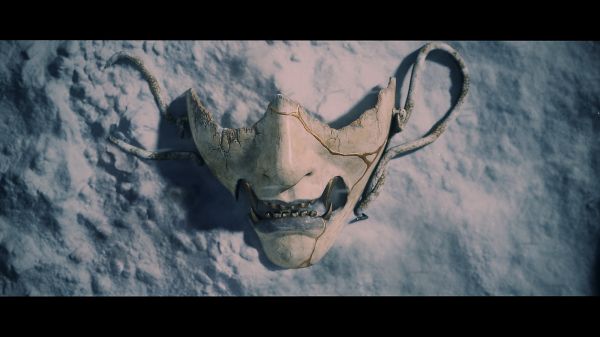
Atsu’s enemies gradually speak about her as a returning spirit. Stories travel ahead of her, changing how patrols, bounty hunters, and local communities interpret her actions. She can reinforce this fear through masks, intimidation, and brutal displays. Reputation becomes part of the campaign’s psychological warfare.
The legend also creates distance between Atsu and ordinary people. Being feared helps during combat but can make human connection more difficult. The narrative repeatedly asks whether the onryō is a useful disguise, a prison, or the only identity she believes remains available. This gives the Ghost concept a different meaning from Jin’s political transformation.
Mechanically, fear can disrupt groups and create openings. I enjoyed seeing one decisive action change the confidence of everyone nearby. The system remains somewhat unpredictable, preventing it from feeling like a guaranteed area attack. Atsu’s mythology works best when the enemy responds before I do.
Bounties Give the Open World Personal Targets
Bounty hunting fits Atsu’s mercenary background and provides a natural source of side combat. Targets have names, visual identities, rumors, and reasons local people want them captured or defeated. Tracking one can lead through camps, taverns, wilderness locations, or smaller stories. The structure turns optional combat into work Atsu might plausibly accept.
The quality varies. Strong bounties include unusual personalities, environmental clues, or encounter rules. Simpler ones end with another group fight and reward. The best targets feel like miniature western outlaws placed inside Ezo’s historical setting.
Capturing certain targets creates another decision beyond immediate violence. Updates removed some interactions that conflicted with capture objectives. The system could have supported more negotiation and changing outcomes, but it remains one of the most appropriate recurring activities in the game.
Sensei Training Makes Every Weapon Feel Earned
New weapon styles are learned through teachers rather than appearing automatically inside a menu. Finding a sensei often begins a short storyline involving philosophy, practice, and a demonstration of why the weapon matters. This creates anticipation before the arsenal expands. I remember where I learned each style because the process was connected with a person and place.
Training activities can be playful, practical, or deliberately frustrating. One teacher may focus on physical technique, while another wants Atsu to understand patience or distance. These lessons communicate personality through mechanics. The game rarely needs a long lecture when one unusual exercise can explain the principle directly.
After learning the weapon, upgrades and use continue the development. The system avoids pretending that Atsu becomes a complete master after one conversation. Mechanical familiarity arrives through actual encounters. This relationship between story instruction and player practice is one of the campaign’s smartest progression choices.
The Shamisen Gives Exploration a Musical Interface
Atsu can learn and play songs that guide her toward specific types of discoveries. Music becomes a form of navigation rather than a separate rhythm minigame placed inside a menu. Selecting a melody communicates what I want to find, and the environment responds through guidance. This creates a personal alternative to filtering map icons.
The DualSense touchpad and audio features make playing feel physical without requiring difficult musical performance. The action remains simple enough not to interrupt travel. It also gives Atsu a quiet form of expression that contrasts with her violent reputation. She is not only the onryō carrying several weapons; she is someone capable of sitting beside a landscape and producing music.
Repeated use eventually becomes functional, but the presentation preserves charm. I preferred choosing a song to find a particular activity over opening the map and enabling another category. The mechanic allows the game to hide a menu system inside character behavior successfully.
Sumi-e Painting Creates Some of the Best Quiet Moments
Painting sequences ask Atsu to observe animals, landscapes, or meaningful scenes and reproduce them through touchpad gestures. The mechanic is not a complex art simulator. Its value comes from slowing the camera, removing immediate danger, and asking me to notice one living detail. After a violent encounter, this change of pace can be unexpectedly affecting.
The final paintings become records of places and experiences. They communicate Atsu’s ability to see beauty while pursuing revenge. The activity avoids turning every peaceful moment into resource collection or statistical improvement. It exists partly because stillness matters.
Gesture detection occasionally feels less precise than intended, though it remains forgiving. I never felt punished for imperfect artistic movement. The sequence wants participation rather than technical excellence. This makes it suitable for a broad audience while preserving emotional purpose.
Onsen Scenes Are More Character-Focused Than Mechanical
Hot springs increase Atsu’s maximum health and provide short reflective moments. She may consider people, past events, or the emotional condition of her journey. Different locations use varied layouts and environmental details, avoiding the sense that every spring is the same object moved elsewhere. Updates improved several assets and interactions around these spaces.
The health reward is useful, but reflection is the stronger reason to seek them. Atsu rarely has another opportunity to stop completely. Sitting in silence creates contrast with constant movement and conflict. The game understands that character development can occur when nothing dramatic happens.
Some reflections remain brief or general. I would have welcomed more variation based on completed hunts and relationships. Even so, the activity contributes to the campaign’s emotional pacing. Ezo feels less like a battlefield when Atsu occasionally allows herself to inhabit it peacefully.
Zeni Hajiki Is an Excellent Small Distraction
Zeni Hajiki is a coin-flicking game built around angle, force, and simple physical judgment. It appears easy until an opponent’s coin placement creates a difficult route. The rules are learned quickly, making it suitable for short breaks inside taverns or settlements. Victory feels physical because the outcome follows the movement I selected.
The minigame supports the setting without pretending to be a major progression system. It also creates social encounters where Atsu can participate without threatening anyone. I played more matches than the rewards required because the rhythm remained pleasant. Small games are most successful when I would continue without a checklist.
Legends later allows friends to challenge one another through the shared lobby. This is a natural expansion because the game already works as a competitive social activity. It demonstrates how a minor campaign mechanic can gain another life in multiplayer.
Bamboo Strikes Remain Simple and Satisfying
Bamboo Strikes ask me to memorize and execute increasingly long button sequences. Their simplicity makes them easy to understand, while the speed required creates enough tension to make completion rewarding. They improve Spirit and provide a practical reason to seek them. The activity also fits a warrior training fantasy without requiring another combat encounter.
Repeated patterns become familiar, but environmental placement keeps the presentation varied. Wind, snow, forests, and settlement spaces alter the mood around the same mechanic. Legends adds score competition and small leaderboards in the lobby. That extension turns one private challenge into friendly comparison without complicating its rules.
Side Stories Are Strongest When Revenge Is Not the Subject
Optional tales introduce settlers, travelers, indigenous communities, merchants, teachers, criminals, and people caught between local life and Saito’s expansion. These stories give Ezo identities beyond Atsu’s mission. A small dispute may reveal changing trade routes, cultural tension, or fear created by armed groups. The region becomes more convincing when not everyone is waiting to discuss the Yōtei Six.
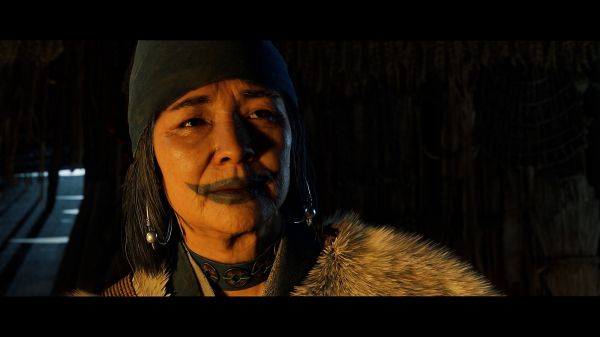
The best side characters challenge Atsu’s assumptions instead of admiring her reputation. Some see the onryō as useful, others as dangerous, and others simply want her to stop attracting trouble. Their priorities continue after Atsu leaves. This prevents optional content from becoming a collection of strangers requesting violence.
A few stories use familiar structures involving tracks, enemy camps, and final confrontations. Strong performances and environmental detail usually keep them engaging. The weakest quests feel like open-world obligations; the strongest feel essential to understanding what kind of future Ezo might have.
Historical Setting Is Used as Atmosphere, Not a Documentary
Ghost of Yōtei draws from early seventeenth-century Ezo, regional cultures, trade, settlement, weapon development, and political expansion. It uses recognizable historical ideas while telling a fictional revenge story. Atsu’s arsenal and abilities are shaped around playability and cinematic expression rather than strict reconstruction. The result feels historically inspired without claiming complete accuracy.
The representation of Ainu communities and northern Japan carries particular responsibility because these cultures appear less frequently in large commercial games. The strongest material gives local characters agency, daily concerns, and distinct relationships with the land. The game occasionally simplifies conflict to keep the story moving. Even then, the setting has more cultural specificity than a generic snowy samurai world would provide.
I approached the game as fiction rather than an educational authority. Its art, music, language, architecture, and environmental details encouraged further curiosity. That is a meaningful achievement, provided the dramatic story is not mistaken for comprehensive history.
Miike Mode Makes Combat Dirtier and More Intimate
Miike Mode adjusts the presentation toward the aggressive cinematic style associated with director Takashi Miike. The camera moves closer, violence becomes more pronounced, and encounters feel rougher and less elegant. The mode can make duels intensely personal because enemies occupy more of the screen. It changes atmosphere without rewriting the combat system.
The closer camera reduces awareness during group battles. Attacks from the side become harder to read, and environmental navigation may feel more constrained. I used the mode selectively rather than across the entire campaign. It works best during duels or sessions where mood matters more than complete tactical visibility.
The option demonstrates confidence in player-controlled presentation. Ghost of Yōtei does not insist that one camera and color treatment is the only valid version. These modes are not superficial filters when they alter how I perceive distance and danger.
Watanabe Mode Makes Long Rides Feel Like a Different Film
Watanabe Mode changes the musical and visual atmosphere toward a lo-fi-influenced style associated with director Shinichirō Watanabe. Exploration becomes calmer and more reflective. Riding through fields or camping under the sky takes on a modern musical mood that contrasts with the historical setting. The combination should feel inappropriate, yet it often works remarkably well.
I would not use it for every dramatic story scene because the altered mood can conflict with the intended tension. During unstructured exploration, it gives familiar routes another emotional identity. The option is particularly useful after finishing the campaign, when revisiting Ezo becomes more about atmosphere than suspense.
Patch 1.600 later added Watanabe Mode to the Legends lobby. This is a small but sensible extension. The shared space is designed for preparation and social downtime, making relaxed music a natural fit.
Kurosawa Mode Still Offers More Than a Black-and-White Filter
Kurosawa Mode returns with monochrome presentation, film grain, altered contrast, and audio adjustments inspired by classic samurai cinema. Wind, rain, faces, and silhouettes take on a different dramatic weight. Some scenes look extraordinary because the composition was already built around strong landscape shapes. Duels can feel as though they belong to another era of filmmaking.
Readability suffers when color normally communicates threats, collectibles, or environmental guidance. Dark interiors and heavy weather can become difficult to interpret. I used the mode for selected missions and screenshots rather than the entire first playthrough. It is a meaningful artistic option that asks the player to accept practical compromises.
Photo Mode Is Almost Too Easy to Use
Ezo constantly creates compositions through weather, vegetation, mountains, fire, snow, wildlife, and combat movement. Photo Mode allows time, wind, particles, camera settings, and other elements to be adjusted extensively. I often interrupted travel because one ordinary ridge produced a view worth preserving. The game seems designed with the expectation that players will stop and frame it.
Opening Photo Mode during selected camping stages adds another way to document quiet moments. Legends also includes Photo Mode for group scenes. Capturing four customized characters during supernatural combat creates a different kind of visual storytelling from Atsu’s campaign.
The only drawback is pacing. I occasionally spent more time arranging an image than completing the activity that created it. This is not a serious criticism of the tool. It is evidence that the world’s visual design remains engaging even when removed from gameplay.
The PS5 Version Uses the DualSense Exceptionally Well
Adaptive triggers create resistance when drawing a bow, handling tools, or using firearms. Haptic feedback communicates sword contact, weather, movement, and environmental textures without becoming constant noise. Small sounds through the controller add physical proximity to actions such as drawing or sheathing a weapon. The touchpad supports wind, music, painting, and other interactions naturally.
These features rarely feel like isolated technology demonstrations. They reinforce activities already important to Atsu’s journey. A sword clash feels sharper because sound, animation, and vibration arrive together. Riding through deep snow has a different texture from moving across a dry road.
Players can adjust or disable features according to comfort. I preferred keeping them active because they strengthen the game’s physical identity. Ghost of Yōtei is one of the better arguments for why a controller can communicate more than button input.
3D Audio Helps Me Read the World Without Looking at the HUD
Enemy voices, footsteps, wildlife, streams, wind, settlement activity, and distant conflict create directional information. Headphones make patrol positions easier to understand during stealth. In combat, an attack beginning outside the camera may be noticed through sound before it becomes visible. This is particularly useful on harder settings.
The environmental mix also supports exploration. A fox, bird, conversation, or unusual noise can pull attention away from the road naturally. I discovered several minor activities because I followed sound rather than an icon. The world feels active even when nothing important occupies the center of the screen.
Large battles can become dense, but essential cues generally remain distinguishable. Legends creates greater audio pressure through four players, supernatural enemies, and abilities. Good headphones become even more useful there.
Performance Modes Let Responsiveness Win
Ghost of Yōtei offers visual options prioritizing resolution, frame rate, or ray-traced features according to hardware and preference. The performance-oriented mode is my preferred choice because parries, rapid weapon switching, camera movement, and riding all benefit from smoother motion. The visual design remains impressive even when maximum image quality is reduced. Art direction carries more weight than one reflection setting.
Quality-focused modes produce sharper distant detail and stronger presentation in still scenes. They suit Photo Mode and slower exploration better than demanding combat. Switching modes allowed me to decide whether one session was about dramatic image quality or mechanical responsiveness. The fast loading makes experimentation painless.
Frame pacing remained stable through most of my campaign, though launch updates addressed various environment, mission, animation, and performance issues. The current build feels polished without being completely free from clipping or occasional open-world oddities.
PS5 Pro Enhancements Improve Clarity Rather Than Changing the Game
On PS5 Pro, higher visual quality can be maintained alongside strong frame rates through the available enhanced modes. Distant vegetation, detailed clothing, weather, and large landscapes benefit from cleaner reconstruction. Combat remains responsive while the world retains more visual information. The improvement is most noticeable when moving quickly through dense scenery.
The base PS5 still provides the complete experience and strong performance options. Nothing about the campaign, weapons, side stories, or Legends structure requires Pro hardware. The enhanced console improves presentation rather than creating a separate tier of content. I would not consider it necessary solely for this game.
Image reconstruction can occasionally produce artifacts around fine vegetation, hair, particles, or fast movement. These issues are minor compared with the overall clarity. Choosing a mode remains more important than assuming the most technically advanced label is automatically best.
Loading Is Fast Enough to Preserve Momentum
Fast travel, mission restarts, interiors, and transitions rarely create long waiting periods. This matters during duels and Lethal encounters where several attempts may be necessary. I can return to the action without spending enough time away from it to lose concentration. Open-world travel also feels less fragmented when movement between regions is nearly immediate.
Some transitions are concealed through animations or short sequences, but they are generally well integrated. Campaign and Legends menus remain responsive after later navigation improvements. The game uses the PS5 SSD as a quality-of-life advantage rather than a marketing detail.
Accessibility Options Support Several Types of Players
Difficulty settings, timing assistance, larger text, interface customization, controller alternatives, color adjustments, puzzle guidance, and other options make the game adaptable. Players can enjoy the story without mastering narrow parry windows, while others can reduce assistance and increase danger. Puzzle clues can be limited for players who prefer solving without repeated guidance. This allows one campaign to serve different priorities.
Large-text implementation and interface overlap required fixes in several languages after launch, but updates addressed many cases. Alternative controls also received corrections in minigames. The current options are broad enough to make a meaningful difference without hiding the core mechanics.
Miike, Watanabe, and Kurosawa modes are artistic rather than accessibility features, though they can alter readability significantly. Players should treat them as optional presentation layers rather than default improvements. The ability to combine modes and practical settings gives substantial control.
The Main Story Has Better Emotional Direction Than Its Premise Suggests
A simple revenge plot can become repetitive if every chapter confirms that revenge is justified and satisfying. Ghost of Yōtei complicates the structure through allies, survivors, communities, and information that Atsu did not possess as a child. The campaign does not ask me to forget what happened. It asks whether the person built entirely around answering that event can imagine a future afterward.
Atsu’s relationships provide the strongest movement away from isolation. Some allies need her abilities, while others see the damage created by her obsession. The wolf, horse, teachers, travelers, and recurring human characters gradually create another form of family. These bonds are not replacements for what she lost, and the story is wise enough not to present them that way.
Several emotional beats are predictable, particularly near the final targets. Strong performances and direction keep them effective. The story rarely reaches complete moral ambiguity, but it understands that healing is more difficult than completing a list.
Flashbacks Give the Family More Than Symbolic Importance
Memories allow the player to experience parts of Atsu’s childhood and family life rather than hearing only that they mattered. Ordinary interactions establish affection, expectations, and small disagreements. This prevents the family from existing merely as motivation for violence. I understand what Atsu misses because the game allows brief participation in it.
The transitions between present and memory are often elegant, using locations, objects, or actions to connect time periods. Returning to a childhood place can change the environment without a conventional loading screen. These sequences give the open world emotional layers. One building can contain both safety and trauma depending on when Atsu sees it.
The flashbacks occasionally state their themes clearly enough that subtlety is reduced. Their overall value remains substantial. Revenge stories need the lost people to feel human rather than idealized portraits, and Ghost of Yōtei generally succeeds.
Duels Remain the Campaign’s Purest Mechanical Tests
Formal duels remove surrounding enemies and concentrate attention on one opponent’s timing, distance, and personality. Weapon animations communicate character, with aggressive fighters pressuring differently from patient specialists. The environment, weather, and musical direction turn each encounter into a focused scene. Winning requires understanding rather than crowd management.
Difficulty settings strongly affect their quality. On forgiving modes, healing and generous timing can reduce tension. Lethal makes every exchange dangerous but may magnify camera or visibility problems. I found a balanced hard setting ideal for the first playthrough and returned to several encounters later under stricter conditions.
The best duel opponents feel connected with their narrative identity. Their combat style explains something about how they see themselves. The weaker ones remain mechanically enjoyable even when the surrounding character receives less development.
Strongholds Support Multiple Approaches Without Becoming Sandboxes
Enemy-controlled locations can be studied from outside, entered through several routes, approached silently, or challenged directly. Tall grass, rooftops, gaps, ropes, walls, and surrounding terrain provide options. Weapon choice further changes the plan because an ōdachi assault feels different from kusarigama-based disruption or bow-led stealth. The structure supports personal style.
Objectives and enemy placement remain authored enough that repeated strongholds reveal patterns. Leaders occupy important spaces, alarms need attention, and resources appear in expected areas. The game is not a fully systemic infiltration simulator. It provides several satisfying routes toward a designed confrontation.
I often began silently and allowed one mistake to turn the mission into open combat. The transition is smooth enough that detection does not automatically feel like failure. Atsu’s full arsenal means improvisation after a broken plan can be more entertaining than perfect stealth.
The Open-World Checklist Is Reduced, Not Eliminated
Ghost of Yōtei improves discovery through environmental cues, songs, rumors, animals, the spyglass, and strong landmarks. It still contains repeated activities that provide health, Spirit, charms, cosmetics, skills, or collection progress. After many hours, I recognized the structural categories quickly. The world can become a completion map if I approach it mechanically.
The solution is to follow curiosity rather than clearing one region systematically. Activities are short enough to become pleasant interruptions during travel. They become tiring when treated as tasks that must all disappear before the story continues. The game provides filtering and flexibility but cannot control completionist habits.
Several repeated activities justify themselves through location and character reflection. Others provide a familiar mechanic in another beautiful setting. The quality remains higher than average, but the sequel has not escaped the genre’s structural repetition completely.
Cosmetics Support Atsu’s Identity Without Becoming Random Loot
Armor, hats, masks, dyes, sword kits, and charms are earned through exploration, stories, merchants, challenges, and progression. Equipment has visible character and often connects with a place or relationship. I rarely felt that I was replacing one item because another had a slightly larger number. Builds come from charm combinations and armor properties rather than a flood of disposable rarity tiers.
Appearance customization is extensive enough to create several interpretations of Atsu. She can look like a practical traveler, feared onryō, armored fighter, stealth specialist, or wandering musician. Masks reinforce the legend while hats and dyes give more personal expression. Transmog-style freedom allows preferred appearances to survive build changes.
The Digital Deluxe Edition includes additional cosmetic and convenience items, but the strongest visual options remain earnable in the game. I never felt that Atsu’s standard presentation was intentionally incomplete. Premium cosmetics are optional rather than a solution to poor base designs.
Charm Builds Add Strategy Without Overloading the Interface
Charms improve defense, Spirit generation, stealth, weapon techniques, archery, wolf abilities, and specialized combat behavior. Combining several around one armor set creates a clear build. I can emphasize perfect parries, ranged control, open confrontation, or stealth without turning the game into a spreadsheet. The effects remain understandable during ordinary play.
Late-game combinations can become extremely strong. One build may produce frequent healing or fear, while another turns specific techniques into dominant solutions. Balance updates adjusted several weapons and charms, particularly around endgame and Lethal difficulty. The system remains flexible enough for experimentation.
I appreciated being able to save different equipment arrangements, though more explicit loadout management would always be useful in a game with several weapons and modes. Legends handles builds separately through its own gear structure. Campaign progression remains focused and finite.
There Is No Paid Power Economy Inside the Campaign
Ghost of Yōtei is a premium single-player game rather than a free-to-play service. The main story, weapon arsenal, open world, activities, Photo Mode, difficulties, and post-launch Legends update come with ownership of the game. There are no randomized campaign weapons, energy systems, or paid materials required for progression. Every important combat ability is earned through play.
The Digital Deluxe Edition provides cosmetics, a charm, early access to a Traveler’s Map, and other bonuses. These additions provide convenience or visual variety rather than defining the strongest builds. I would still prefer every mechanical charm to be found inside the standard campaign, but the overall difference is modest. The standard edition feels complete.
Legends is free for owners, though online multiplayer requires PlayStation Plus. This subscription requirement belongs to PlayStation’s network structure rather than a separate Sucker Punch battle pass. Legends has progression and loot but no need to purchase the mode itself.
Legends Turns the Yōtei Six Into Supernatural Nightmares
Ghost of Yōtei: Legends reimagines members of the Yōtei Six as enormous supernatural bosses inside a mythic cooperative world. The realistic historical tone of the campaign gives way to corrupted landscapes, curses, spirits, magical gear, and exaggerated enemy designs. This separation allows multiplayer to become mechanically wild without forcing the single-player story to explain every supernatural element. The visual transformation is substantial.
Story missions support two players across a sequence of twelve operations. Completing groups of missions unlocks four-player Incursions into strongholds belonging to the Spider, Oni, Kitsune, and Snake. Each path ends with a major boss rather than a simple recycled campaign duel. The structure gives smaller groups a progression route before requiring a complete team.
Legends feels connected with the campaign’s combat while developing another identity. Parries, weapons, stealth, ranged tools, and executions remain familiar. Class abilities and magical systems create enough difference that I could not treat it as campaign co-op with another character standing nearby.
Four Classes Give Multiplayer Clear Roles
The Samurai, Archer, Mercenary, and Shinobi each emphasize different weapons and tactical responsibilities. The Samurai uses the ōdachi and has broad access to weapon types, making the class suitable for direct pressure and survival. The Archer specializes in ranged options while also using the yari. The Mercenary uses dual katana and utility abilities, while the Shinobi combines kusarigama techniques with stealth-focused tools.
Every class can use a katana and ranged weapon, preventing rigid situations where one player becomes helpless outside a narrow role. Class identity emerges through preferred weapons, abilities, upgrades, and gear. This flexibility helps matchmaking because one missing role does not always make the activity impossible. Coordinated groups can still create stronger synergies.
Class balance changed through patches after release. Samurai healing and stagger performance improved, while several Archer resource loops were reduced. Shinobi and Mercenary interactions also received corrections and tuning. The current balance is healthier than launch, though higher-level players continue identifying powerful combinations.
Legends Story Missions Are More Than Campaign Encounters With Purple Lighting
Two-player missions use supernatural mechanics, curses, attunements, puzzles, and coordinated movement. Some enemies require specific responses before ordinary attacks become effective. Partners need to communicate or at least understand shared objectives. This creates a stronger cooperative identity than merely increasing enemy numbers.
Mission themes connect with individual members of the Yōtei Six. Environments and threats reflect distorted versions of their reputations. The progression toward each Incursion gives the short missions narrative direction. I understood why the next stronghold mattered even when the multiplayer story remained deliberately mythical.
Random matchmaking works for ordinary difficulty, but coordination becomes more important later. Pings and readable objectives help without replacing voice communication completely. The strongest missions create moments where both players need to act rather than one carrying the entire route.
Survival Uses Blessings and Curses to Make Territory Matter
Four-player Survival asks the team to defend three locations against waves of increasingly dangerous enemies. Holding an area allows a Blessing to be activated, creating advantages such as helpful spirits. Losing control activates a Curse that may introduce a hostile force or another disadvantage. Territory therefore affects more than a score bar.
The system creates difficult priorities. One location may be close to falling while another provides a powerful blessing the team does not want to lose. Splitting up increases coverage and personal risk. Staying together makes combat easier while allowing another area to collapse.
Each map uses different Blessings and Curses, preventing every Survival session from following one universal strategy. The underlying wave-defense structure becomes familiar, but territory effects keep the middle of the match active. Strong class combinations can control areas efficiently without removing the need to respond to emergencies.
Incursions Give Four-Player Teams Focused Assaults
Incursions are larger missions unlocked after completing sets of Story operations. Four players enter supernatural strongholds, solve encounter mechanics, fight coordinated groups, and eventually face a giant version of one Yōtei Six member. They sit between ordinary missions and the full Raid in complexity. The format provides a practical endgame path for teams not ready to commit to the hardest activity.
Bosses require more than continuous damage. Environmental mechanics, enemy waves, positioning, and role coordination shape the encounters. Failure becomes educational when the team can identify the missed mechanic. Inexperienced groups may struggle without clear communication, but repeated attempts gradually reveal the structure.
The best Incursions make every class feel valuable. Ranged pressure, direct defense, utility, and stealth tools can solve different sections. They are strongest when cooperation arises from mechanics rather than enemies simply having more health.
The Raid Is an Escape Room Under Constant Attack
The Legends Raid adds the Dragon and Lord Saito as its final supernatural targets. Four players move through labyrinthine strongholds containing puzzles, combat, traversal, and boss mechanics that require communication. The design deliberately aims for the feeling of solving an escape room while enemies keep applying pressure. This is significantly more demanding than campaign combat.
Sucker Punch improved accessibility compared with the extremely long Raid chapters from Ghost of Tsushima: Legends. Progress can be approached in more manageable segments, and groups can replay boss sections after reaching them. Teams still need time to learn mechanics and coordinate execution. The first clear may require several hours depending on preparation and communication.
The Raid is not suitable for silent casual matchmaking. Success depends on players explaining observations, assigning tasks, and recovering from mistakes together. This creates the strongest cooperative experience in the package and the highest participation barrier. I appreciate that the game contains one mode willing to demand genuine teamwork.
Legends Loot Supports Builds Without Invading the Campaign
Multiplayer progression uses weapons, charms, perks, and Legendary equipment earned through missions and higher difficulties. Gear creates class builds around status effects, cooldowns, counters, healing, ranged pressure, stealth, or ultimate abilities. This gives repeated missions a practical reward structure. Campaign equipment remains separate, preventing multiplayer loot from altering Atsu’s story.
Higher difficulties increase the chance of valuable gear and expose weaknesses in a build. One Legendary weapon can change how a class functions, while charms support more specialized combinations. Patch 1.600 added returning equipment such as Weightless Spirit and several new charms. It also strengthened multiple Legendary melee weapons.
The loot system is focused enough to avoid becoming an endless inventory flood immediately. Long-term players will still dismantle many items while searching for preferred rolls. The separation between modes allows Legends to use this progression without turning the main game into a rarity hunt.
The Legends Lobby Is a Surprisingly Good Social Space
Players can prepare builds, test attacks, practise parries, use Photo Mode, play Zeni Hajiki, and compare Bamboo Strike scores while waiting. This makes the lobby feel like a location rather than a static matchmaking screen. Friends can remain occupied while someone adjusts equipment. Small activities reduce the social friction of preparation.
Watanabe Mode gives the lobby a relaxed musical atmosphere. The fox volume was reduced after players found it intrusive, which is an amusing but useful example of post-launch refinement. Navigation also improved through later patches. The lobby now supports both practical preparation and casual interaction.
I would welcome more social games, visual trophies, and displays tied to Raid completion. The existing space already demonstrates how multiplayer menus can become part of the game world. It is one of Legends’ quiet strengths.
Legends Requires PlayStation Plus but Avoids a Separate Entry Fee
All Ghost of Yōtei owners can download Legends without purchasing an expansion. Online play requires an internet connection, PlayStation account, and active PlayStation Plus subscription. This means the mode is free as content but not necessarily free to access for players who do not already subscribe. Solo campaign ownership remains unaffected.
The absence of a separate Legends purchase helps maintain population. Friends only need the base game and network access. There is no division between players who purchased different multiplayer map packs. Later Raid content also arrived through an update rather than another premium tier.
Cosmetics and gear are earned through multiplayer feats and progression. The mode does not ask players to buy stronger equipment. This keeps competitive comparison connected with activity rather than payment.
Post-Launch Support Has Improved Both Modes
Launch and later patches addressed mission blockers, animations, environmental assets, target selection, horse interruptions, visual popping, camera behavior, interface problems, and Lethal balance. Legends updates improved class abilities, gear, boss encounters, navigation, enemy visibility, curses, and stability. These are practical changes affecting everyday play rather than only minor text corrections.
The current version is clearly stronger than the release build. Several problems involving mission flow and out-of-bounds situations no longer appear as frequently. Legends received particularly substantial balancing because player combinations exposed resource loops and exploits quickly. Continued tuning is expected in a cooperative loot mode.
I did not encounter a campaign-breaking issue during my main playthrough. Smaller animation and open-world problems remain possible. The overall technical quality is high for a world containing this much movement, weather, wildlife, and systemic combat.
The Absence of a PC Version Remains Noticeable
As of August 2026, Ghost of Yōtei is available on PlayStation 5 rather than PC. This limits access for players who experienced Ghost of Tsushima through its later PC release. Mouse support, ultrawide presentation, higher-end graphics settings, and community modification are therefore unavailable currently. PlayStation has not made the campaign a cross-platform release.
The PS5 version feels designed specifically around its controller, SSD, and audio capabilities. That focus benefits polish. It does not remove the disappointment for players without the console. A future PC release would need to preserve DualSense support while providing broad configuration and stable performance.
I cannot evaluate an unannounced or unreleased version as though it already exists. The current recommendation is therefore tied completely to PS5 ownership. Legends population also remains inside the PlayStation ecosystem.
The Story Ends More Successfully Than a Pure Revenge Tale Usually Does
The final hours force Atsu to confront the difference between completing revenge and surviving it. The campaign does not suddenly claim that her anger was meaningless. It recognizes that every step required sacrifice and that some wounds do not become harmless through one decision. The question is whether Atsu can become someone whose future is not controlled entirely by Saito.
Relationships built during the journey give the ending emotional alternatives. Allies do not replace family or erase grief. They demonstrate that connection remains possible after isolation became a habit. This makes the conclusion feel hopeful without becoming artificially cheerful.
A few final revelations are predictable, and one or two supporting arcs deserve more closure. Atsu’s central movement remains convincing. I finished the campaign feeling that revenge had been the beginning of her story rather than its complete purpose.
My Biggest Frustrations
Ghost of Yōtei improves exploration presentation without fully escaping repeated open-world categories. Shrines, camps, challenges, collectibles, bounties, and upgrades eventually become recognizable structures. Completing every icon can damage pacing and weaken the urgency of Atsu’s hunt. Several side tales also rely on familiar tracking and fortress patterns even when their characters are strong.
The Yōtei Six are not developed equally, and Lord Saito occasionally feels less distinctive than the atmosphere surrounding his rule. Some emotional turns are predictable, while the final act resolves several threads rapidly. Stealth remains polished but mechanically familiar, and enemy awareness can still be manipulated through recognizable patterns. Large groups occasionally produce camera and visibility problems, especially on Lethal or in Miike Mode.
The lack of a PC version restricts the audience, while Legends requires PlayStation Plus for online access. Raid content demands a coordinated team and may remain inaccessible to players who prefer solo or silent matchmaking. None of these issues destroys the experience, but they prevent it from feeling universally approachable.
Who Should Play Ghost of Yōtei?
I recommend Ghost of Yōtei to players who value cinematic sword combat, beautiful open worlds, personal revenge stories, environmental exploration, historical fiction, flexible weapons, careful parrying, stealth, Photo Mode, and character-driven side quests. It is especially strong for anyone who enjoyed Ghost of Tsushima but wanted a protagonist with a rougher identity and a broader physical arsenal. The campaign stands alone, so knowledge of Jin Sakai’s story is helpful rather than required.
Players who prefer tightly linear adventures may find the open world distracting, while completionists should resist clearing every activity before continuing the story. Anyone seeking a detailed historical simulation will need to accept substantial fictionalization and cinematic design. Players uninterested in repeated parry-based combat, stealth camps, or long rides may find the structure familiar despite its polish.
Legends adds major value for groups interested in class builds, supernatural missions, Survival, Incursions, loot, and a coordinated Raid. Solo players still receive a complete premium campaign without needing the multiplayer mode. The two experiences complement one another without making either feel like an incomplete half.
My Final Verdict
Ghost of Yōtei is a confident successor because it preserves the sensory elegance of Ghost of Tsushima while giving its new protagonist a different relationship with violence, reputation, and honor. Atsu’s hunt across Ezo provides clear direction, but the journey becomes richer through weapon teachers, travelers, settlements, memories, the wolf, music, painting, camps, and allies who challenge the identity she built around revenge. Mount Yōtei gives the world a powerful visual center, while the expanded arsenal makes combat more physically varied than Jin’s stance system. DualSense feedback, 3D audio, fast loading, cinematic modes, and excellent environmental art make the game feel specifically designed for PS5.
The open-world structure remains familiar, several targets deserve deeper writing, and stealth has evolved less dramatically than direct combat. Camera pressure, repeated activities, and uneven antagonist development occasionally expose the conventional game beneath the exceptional presentation. Legends strengthens the package significantly through four classes, supernatural Story missions, Survival maps, Incursions, gear builds, and a demanding Raid included at no additional content cost.
I rate Ghost of Yōtei 9.4/10. I expected to remember the moment Atsu finally reached the last name on her list. I remember that confrontation, but I also remember the quieter interruptions: a song beside a mountain road, a wolf emerging from the trees, paint moving across paper, and the gradual realization that revenge had carried Atsu into Ezo while the people she met there gave her a reason not to disappear inside it.
Pros:
- Robust and multi-layered gameplay combining combat and puzzles
- Dynamic exploration with hidden secrets offering exceptional replay value
- Intricate narrative and deep character development that enrich the experience
- Excellent performance and optimization across various platforms
- Strong support for mods and community-driven customization
- Immersive visual and audio design that captivates players
Cons:
- Cheats and mods can disrupt game balance for those preferring pure gameplay
- Non-linear story elements may lead to occasional confusion in progression
- Occasional technical issues on older or lower-end systems






Recent Reviews

Minecraft

Grand Theft Auto V

Toca Boca World

Roblox

Leave a comment
Your comment is awaiting moderation. We save your draft here
0 Comments