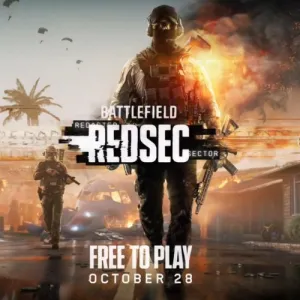
Review
My first meaningful lesson in Battlefield REDSEC arrived while my squad was trapped outside a two-story building near the center of For...



Battlefield™ REDSEC: A Tactical Masterpiece of Immersive Gameplay and Community Innovation
My first meaningful lesson in Battlefield REDSEC arrived while my squad was trapped outside a two-story building near the center of Fort Lyndon. An enemy team controlled the windows, the nearest door was covered, and the closing zone made a patient retreat impossible. In another battle royale, I would have searched for a side entrance or thrown enough explosives through the windows to force movement. In REDSEC, I placed explosives against a blank section of wall and created an entrance where the building had never intended to provide one.
The explosion did more than produce a dramatic cloud of dust. It removed the defenders’ confidence in the shape of their own position. One teammate entered through the new opening, another covered the original door, and I watched the enemy squad turn toward a threat that had not existed seconds earlier. That encounter explains what REDSEC contributes to the crowded battle royale genre. It does not completely reinvent looting, armor plates, shrinking zones, or squad revival, but Battlefield’s destruction and vehicles allow familiar situations to change physically.
Battlefield REDSEC is a free-to-play multiplayer destination connected with Battlefield 6. Its central experience is a large-scale battle royale set across Fort Lyndon, a concealed military research facility surrounded by Californian beaches, suburbs, industrial sites, waterways, and defensive infrastructure. The package also includes Gauntlet, a round-based squad competition built around changing objectives, and Portal, which lets players create or join custom experiences using REDSEC’s available maps, equipment, vehicles, and rules.
REDSEC Is More Than One Battle Royale Playlist
The name REDSEC comes from the idea of a redacted sector, which suits Fort Lyndon’s mixture of public spaces and secret military projects. The mode is presented as a separate free entry point into the Battlefield ecosystem rather than a small menu option available only to Battlefield 6 owners. Players can install REDSEC, form squads with people who own the main game, and participate in its progression without purchasing the premium campaign or conventional multiplayer package.
Battle Royale is the obvious headline, but Gauntlet gives the release a second competitive identity. Portal provides a third layer by allowing creators to change weapon access, player health, movement, vehicles, objectives, and even parts of the playspace through supported editing tools. This matters because a live-service shooter becomes easier to revisit when it offers more than one version of elimination-based competition. REDSEC can still feel narrow compared with the entire Battlefield 6 package, but it is not simply one map attached to one ruleset.
The free structure also makes REDSEC an introduction to Battlefield’s larger systems. New players learn classes, vehicles, destruction, recoil behavior, squad revival, gadgets, and spatial awareness without purchasing the main game. The experience occasionally feels like a commercial doorway toward Battlefield 6, especially when menus and progression connect the two products. The free portion remains substantial enough that I never felt forced to purchase the base game simply to understand what REDSEC was trying to accomplish.
Fort Lyndon Is Large Enough to Support Several Different Games
Fort Lyndon is described as the largest Battlefield map, and its scale becomes obvious during the initial drop. Beaches, residential districts, military compounds, industrial facilities, open roads, underground spaces, hills, waterways, and research areas create several tactical environments within one continuous battlefield. A squad landing near the coast faces different movement and visibility problems from one entering a dense urban section. The map does not depend on one universal rhythm.
Open terrain gives vehicles and long-range weapons room to dominate, while compact settlements reward close-range preparation and careful building entry. Industrial areas contain vertical positions, machinery, cover, and destructible routes. Coastal sectors support boats and later seasonal naval activity, giving the map another layer beyond roads and helicopters. The variety helps prevent every match from becoming a repeated rotation through the same recognizable compounds.
The enormous scale can also produce quiet periods. A poor landing route may leave a squad collecting average equipment while distant teams receive most of the action. Movement between locations becomes dangerous when vehicles are unavailable or the zone shifts unexpectedly. Fort Lyndon is impressive as a sandbox, but its size demands strong pacing systems to ensure that the middle of a match does not become a long search for contact.
The California Setting Creates an Unusual Battlefield Contrast
REDSEC places secret military conflict beside beaches, homes, recreational areas, roads, and apparently ordinary communities. This contrast gives Fort Lyndon more personality than a completely isolated desert base would provide. A firefight may begin near a quiet residential street and end with part of the surrounding architecture reduced to cover. The location looks as though civilians were expected to continue living beside secrets they were never supposed to understand.
The map’s colors also distinguish it from the gray industrial battlefields common in modern military shooters. Sunlight, blue water, pale buildings, vegetation, and open skies create visual clarity in many sectors. Smoke, fire, dust, and collapsing structures then alter that clean presentation during combat. The battlefield looks increasingly damaged as players begin imposing their own routes on it.
Some districts remain more memorable than others. Large open areas can blend together when traversed at speed, while several military interiors use familiar materials and layouts. Seasonal updates have improved variety by emphasizing different parts of the coastline and adding reasons to use the water. Fort Lyndon works best when a match moves through several environmental identities rather than remaining inside one broad field.
The Initial Drop Preserves Familiar Battle Royale Tension
Squads begin by selecting where to enter Fort Lyndon, immediately creating a choice between danger and preparation. Popular locations promise better equipment, missions, vehicles, or rapid combat, while quieter edges provide time to loot at the cost of a more difficult rotation. The aircraft route changes the practical value of every location. A normally desirable compound can become overcrowded simply because it appears early beneath the flight path.
Landing with a coordinated squad matters more than chasing one personally attractive rooftop. REDSEC’s class abilities and revival systems reward teams that remain close enough to assist one another. Splitting between adjacent buildings can work when communication is strong, but one early enemy squad may isolate and remove a player before help arrives. The first minute often determines whether the match begins as an organized plan or an improvised rescue operation.
The looting period is fast enough to begin fighting quickly. Weapons, armor plates, ammunition, gadgets, and useful resources appear in recognizable containers and locations. I rarely needed to spend several minutes comparing tiny attachment differences before understanding whether I was ready. The system supports rapid entry while still rewarding squads that search efficiently.
Looting Is Familiar but Less Exhausting Than It Could Have Been
REDSEC uses the expected battle royale structure of searching containers and environments for weapons, armor, ammunition, equipment, and upgrades. Weapon quality matters, but the interface generally communicates value without demanding a prolonged statistical inspection. I can identify a suitable rifle, collect plates, gather ammunition, and return attention to the surrounding area quickly. The game understands that looting should create combat possibilities rather than replace combat.
Finding the preferred weapon still depends on chance. One player may land on an effective combination while another leaves the same location carrying equipment poorly suited to the next engagement. Hidden intel caches and missions offer more directed ways to improve the squad’s position. These objectives create risk because they reveal intentions and encourage movement toward contested locations.
The inventory occasionally becomes awkward during urgent exchanges. Ammunition types, plates, gadgets, and weapon changes compete for attention while enemies may already be approaching. Controller navigation is serviceable but less immediate than mouse input. REDSEC avoids the worst excesses of inventory simulation, though it still contains moments where I am looking at a loot interface when I should be watching a doorway.
Training Paths Give Each Match a Sense of Development
Completing missions, finding intel, and taking risks can unlock or upgrade benefits along the squad’s current training path. This gives a match internal progression beyond acquiring a better weapon. A squad that actively engages with objectives can develop useful advantages before the final stages. Passive survival may preserve lives but leave the team less prepared for the groups that completed riskier tasks.
The system creates a meaningful question about timing. Chasing one more upgrade may require entering a dangerous location or delaying a safe rotation. Ignoring every mission can produce a calm early game followed by an unfavorable final encounter. REDSEC is at its best when resources tempt the squad into decisions rather than appearing as automatic rewards for remaining alive.
The exact value of progression options is not always equal. Experienced players quickly identify paths that suit the current meta, squad composition, or preferred strategy. This can reduce experimentation once an efficient route becomes common. Seasonal balancing is necessary to keep internal progression from becoming one solved checklist repeated in every match.
Classes Give Squads Roles Without Enforcing a Traditional Team Composition
Assault, Engineer, Support, and Recon provide the familiar Battlefield class foundation. Each role carries gadgets, traits, and practical advantages suited to different situations. Assault supports aggressive entry and direct fighting, Engineer interacts strongly with vehicles and explosives, Support improves squad endurance and recovery, while Recon contributes information and long-range pressure. A balanced squad can respond to a wider variety of threats.
The classes do not create a rigid structure where one missing role makes victory impossible. Every player can use weapons and participate directly in combat. The differences become more important across a complete match, particularly when vehicles, revives, detection, and defensive positions begin influencing the route. Class selection is therefore strategic without resembling a hero shooter where each character has one narrow combat function.
Public squads sometimes ignore composition completely. Several players may choose aggressive options and discover later that nobody can address a powerful vehicle efficiently. Another squad may contain strong utility but lack confidence during direct entry. REDSEC rewards complementary selection, yet it depends on players communicating before the match begins.
Assault Makes Aggressive Movement Easier to Sustain
The Assault role is designed for players who want to enter contested buildings, cross dangerous spaces, and maintain pressure after the first exchange. Its equipment and traits support direct engagement rather than distant observation. In coordinated hands, Assault becomes the person who turns information into action. A revealed enemy position means little until someone is willing to close the distance.
Aggression becomes harmful when separated from the squad. I repeatedly saw Assault players move one building ahead, begin a fight, and become impossible to revive safely. REDSEC’s movement can create the illusion that rapid entry is always valuable. The role works best when teammates are prepared to follow the opening rather than watching it occur through a wall.
Destruction complements Assault particularly well. Creating a breach removes the need to enter through a predictable doorway. Explosives become navigation tools as well as weapons. The class fantasy succeeds because aggressive players can change the environment instead of repeatedly challenging the same protected angle.
Engineer Becomes Essential Whenever Vehicles Control the Area
Vehicles are powerful enough that ignoring them can decide a fight before ordinary gunplay begins. The Engineer role provides the most natural answer through anti-vehicle tools, explosives, and technical utility. A squad with an Engineer can challenge a tank or force it to reposition rather than abandoning an entire area. This becomes increasingly important near open roads and final zones with limited cover.
Engineers also benefit from understanding vehicle behavior rather than simply carrying a launcher. One attack may remove armor without finishing the vehicle, while another angle can disable or pressure it more effectively. Ammunition management matters because wasting anti-vehicle resources on a poor shot leaves the squad vulnerable later. The role rewards patience inside a game that often encourages rapid firing.
When no vehicle appears, Engineer may feel less immediately valuable than a class providing constant healing or information. Destruction and explosive utility still preserve relevance. The class’s importance changes according to location, season, and the equipment available to enemy squads. That variability makes it a strategic selection rather than an automatic requirement.
Support Makes Reviving a Squad Feel Like a Tactical Act
Squad recovery is one of REDSEC’s strongest social mechanics. A downed player is not simply waiting for an individual self-revive or immediate elimination. Teammates can create cover, clear threats, and attempt a recovery. Support improves this process and helps the squad preserve momentum after a bad exchange.
Reviving inside a destructible environment creates unusual decisions. A wall may protect the downed player until another explosion removes it. Smoke can conceal the attempt, but enemies may fire through expected positions or destroy the cover entirely. I rarely felt that a revive was one static progress bar. The surrounding battlefield continues changing while the action occurs.
Support can become the least celebrated role despite determining whether the squad survives several engagements. Damage statistics and eliminations are immediately visible, while saved resources and successful recovery are less dramatic. REDSEC’s squad structure makes those contributions important even when the final scoreboard does not communicate the full story.
Recon Turns Information Into Battlefield Control
Recon supports spotting, observation, long-range pressure, and early awareness. Fort Lyndon contains enough elevation and open space that information about distant movement can change the squad’s route. Identifying an enemy team before it reaches a vehicle, mission, or strong position provides time to prepare. A squad that sees first often decides whether the encounter begins at all.
Long-range play can become too passive when a Recon player remains far behind the squad. Damage without coordinated follow-up may consume enemy plates without creating an elimination. The role is strongest when information and fire support enable movement from teammates. It should connect the group rather than operate as a separate sniper minigame.
Dense environments reduce sightlines but do not remove Recon’s utility. Tracking and awareness remain valuable inside settlements where enemies can move through destroyed structures. The class feels most distinctly Battlefield-like when combined with vehicles and destruction, since one piece of information can lead to an ambush through a route created seconds earlier.
Gunplay Feels Heavier Than Many Battle Royale Competitors
Weapons communicate recoil, weight, sound, and impact with the physicality expected from Battlefield. Automatic fire requires more control at distance than simply holding the trigger over a target. Close-range weapons remain dangerous without making every interior encounter completely random. The transition from movement to firing feels deliberate rather than frictionless.
Armor plates increase survival without turning enemies into enormous damage targets under normal conditions. Positioning and first-shot advantage remain important, yet players often have enough time to react, use cover, or receive squad support. The balance produces encounters where accuracy matters while teamwork can still reverse an unfavorable opening. Time-to-elimination can change substantially according to weapon quality and coordinated fire.
Weapon balance inevitably shifts across seasons. A particularly efficient rifle or close-range option can dominate loadouts once discovered by the wider community. Free seasonal access to gameplay-affecting equipment helps preserve fairness, but newly introduced weapons still require careful tuning. REDSEC depends on frequent adjustments because one overperforming weapon appears in far more matches than it would inside a conventional Battlefield playlist.
Customized Loadouts Are Valuable Without Appearing Immediately
REDSEC allows players to pursue preferred equipment rather than relying entirely on random ground loot. Acquiring a customized loadout generally requires more work or risk than simply opening a nearby container. This prevents every squad from entering the opening minutes with a fully optimized personal build. Ground equipment remains meaningful while the preferred loadout becomes a mid-match objective.
The system rewards preparation outside the match because players who understand their build can use the acquisition quickly. Newcomers may not know which attachments, weapons, or gadgets justify the effort. Default or discovered equipment can remain competitive enough to learn the game. REDSEC does not make a personal loadout an absolute condition for reaching the final stages.
Contested loadout opportunities create predictable conflict. Squads know that another group approaching the same objective probably intends to improve its equipment. This produces ambushes and defensive battles around resources rather than random contact in open terrain. The system is successful when obtaining the loadout creates a story, not when it becomes one safe purchase repeated every match.
Tactical Destruction Is REDSEC’s Defining Feature
Buildings can lose walls, cover can disappear, and rubble can create new defensive positions. This changes how I evaluate every structure. A room with one door is not truly a room with one door if the surrounding walls can be breached. A rooftop position may remain powerful until the floor beneath its defenders becomes unstable. Destruction creates possibility and uncertainty simultaneously.
The system is described as tactical destruction because its value extends beyond visual spectacle. Removing one wall can reveal a squad, create a firing line, provide a shortcut, or expose a vehicle. Collapsing material may become temporary cover. A well-used explosive changes the shape of the encounter rather than merely adding damage.
Not every structure is completely destructible, and learning the visual language requires time. Some surfaces react dramatically while others remain fixed for map stability or technical reasons. The distinction occasionally feels arbitrary during a hurried escape. Fort Lyndon is convincing enough that I often attempt destruction instinctively, which makes an indestructible object more noticeable when it appears.
Destruction Prevents Buildings From Becoming Permanent Fortresses
Battle royale endgames frequently reward teams that occupy one strong building before everyone else. REDSEC weakens that certainty. A protected squad may cover doors and stairways effectively, but attackers can open additional routes or gradually remove sections of safety. Remaining inside one structure becomes a temporary advantage rather than an unquestionable strategy.
Defenders can use destruction as well. Removing a wall creates an escape route, provides a new angle, or prevents attackers from predicting movement. Rubble may interfere with entry. The interaction becomes a contest over who changes the structure more intelligently.
Complete chaos is avoided because Fort Lyndon retains enough fixed geometry to remain navigable. If every building became a flat empty foundation, the final stages would lose all positional variety. REDSEC generally preserves a useful balance between alteration and structure. Some matches still end in heavily damaged spaces that are visually dramatic but difficult to read.
Vehicles Are Power Weapons With Their Own Strategic Costs
Battlefield would lose much of its identity if vehicles were reduced to transportation. REDSEC includes helicopters, armored vehicles, boats, utility vehicles, and less serious options such as golf carts. These machines can relocate a squad quickly, apply heavy pressure, or provide mobile protection. Finding one changes the tactical possibilities available immediately.
Powerful vehicles are not always sitting unlocked beside every road. Certain options require access, keys, or successful interaction with high-risk locations. This limits the number dominating the early game and gives squads reasons to contest specific resources. Acquiring a tank becomes an objective rather than random good fortune.
Vehicles also attract attention. A helicopter announces movement across a wide area, and an armored vehicle encourages Engineers to prepare an ambush. Fuel, exposure, terrain, and ammunition shape their usefulness. The strongest squad does not simply enter a vehicle and become untouchable; it needs coordination between driver, passengers, and supporting infantry.
Tanks Can Control Ground Without Guaranteeing Victory
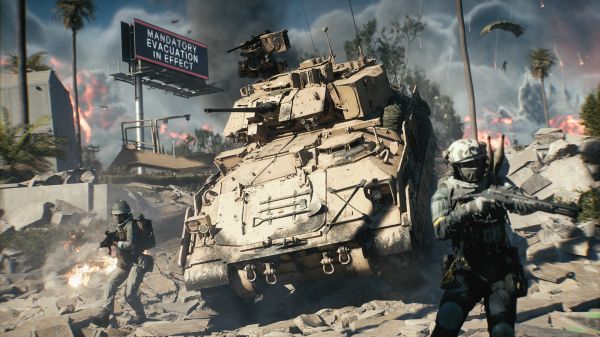
A tank entering an open engagement can force an unprepared squad to abandon cover. Its weapons, armor, and mobility allow pressure that ordinary rifles cannot answer. The psychological effect is immediate because every player understands that remaining visible is dangerous. A coordinated vehicle crew can control roads and punish teams rotating across open terrain.
Engineers, explosives, terrain, and concentrated fire provide counters. A tank operating alone becomes vulnerable to attacks from several angles. Dense settlements limit movement and allow infantry to approach through buildings. The vehicle’s power depends heavily on choosing suitable terrain.
Final zones can create uncomfortable balance when one surviving armored vehicle reaches an open area against squads lacking anti-vehicle resources. That possibility rewards preparation but may feel harsh after a long match. REDSEC needs vehicles to remain frightening without making one late acquisition more important than every earlier decision. Seasonal tuning continues to determine how well that balance holds.
Helicopters Create Mobility and Public Announcements
Helicopters allow squads to cross Fort Lyndon rapidly, reach difficult terrain, and attack from unexpected directions. They can rescue a team trapped by the zone or provide an aggressive route toward a distant objective. Flying also gives a broad view of activity below. The mobility is powerful enough to justify the attention it creates.
Every helicopter is visible and audible across a significant distance. Enemy squads can track its route, prepare anti-air weapons, or wait near a likely landing point. A careless pilot may convert an entire squad into one exposed target. The vehicle rewards skilled control and communication more than simple ownership.
Air movement can occasionally produce technical or visibility problems during heavy network activity. Rapid transitions between height, terrain, and effects place pressure on performance. The current experience is generally stable on suitable hardware. I still prefer a careful pilot to an enthusiastic teammate discovering the controls while carrying the full squad.
Boats Became More Important With the Pacific Front Season
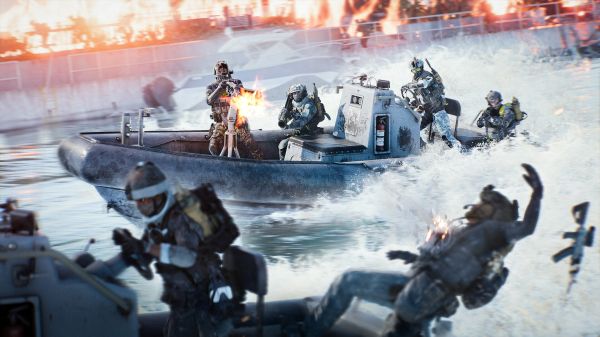
Fort Lyndon’s coastline and waterways initially supported movement without always becoming central to the match. Season 4 expanded naval warfare and gave squads more reasons to control water routes. Boats can now contribute to offensive plans rather than functioning only as emergency transportation. Coastal rotations feel less detached from the main battlefield.
Water creates visibility and vulnerability. A boat moving across open space is easy to notice, and reaching land may require a predictable approach. Naval power becomes useful when coordinated with information from the shore or another squad member. The best attacks use water as a new angle rather than assuming it is safer than the road.
Seasonal emphasis on the coast helps Fort Lyndon avoid becoming strategically static. Regions that were once secondary can become major points of interest after updates. The challenge is preserving value when the season ends or player attention moves toward another mechanic. Permanent map depth is more valuable than one temporary playlist novelty.
Golf Carts Capture Battlefield’s Necessary Absurdity
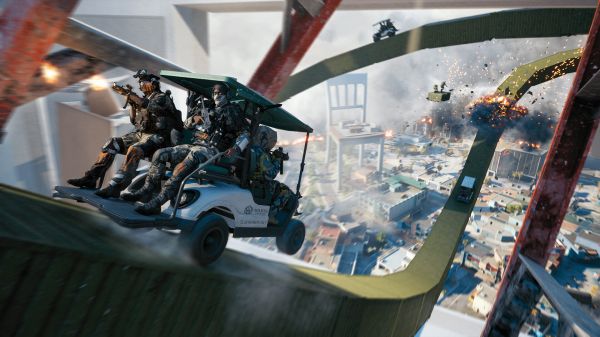
REDSEC includes golf carts because Battlefield has always benefited from serious combat systems producing unserious player stories. The vehicle is fast enough to create chaotic escapes and weak enough to make every encounter risky. A squad crossing a military blacksite in a golf cart looks inappropriate and completely natural within Battlefield. The contrast gives matches personality.
Golf carts have limited protection and little strategic value against armored opposition. Their usefulness comes from availability, maneuverability, and surprise. They can carry a squad toward another vehicle, escape the zone, or create enough noise to attract every nearby enemy. I rarely considered one the correct vehicle and frequently considered it the most entertaining option.
This type of emergent comedy is essential to REDSEC. A battle royale can become emotionally exhausting when every decision is treated as competitive procedure. Vehicles, destruction, and unpredictable squad behavior generate stories that remain funny even when the match ends badly.
The Closing Ring Is Designed to Be Feared
REDSEC’s boundary is far more lethal than the gradual damage fields used by many competitors. Touching it can end a player immediately rather than creating a long opportunity to heal while running. This transforms zone timing into an absolute requirement. Waiting outside for one extra container or prolonged fight can destroy an otherwise strong match.
The ring’s danger reduces strategies built around remaining deep outside the safe area. Squads need to understand available routes, vehicles, elevation, and expected combat before the boundary arrives. A fight near the edge becomes tense because winning too slowly can produce the same result as losing. The environment and timer become another opponent.
The severity occasionally feels unforgiving when a vehicle becomes stuck, a route is blocked, or a teammate disconnects during rotation. There is little room to recover from a technical or navigational mistake. The ring succeeds at preventing passive edge behavior, but it also creates some of the game’s harshest anticlimactic endings.
Final Circles Reward Preparation More Than Last-Second Heroics
By the final stages, surviving squads usually possess strong equipment, developed training paths, and some understanding of nearby positions. Cover has often been altered by earlier fighting. Vehicles may remain active, but the smaller area makes them easier to target. Every resource collected during the match suddenly has an obvious purpose.
A squad entering without armor plates, anti-vehicle tools, smoke, or useful information may struggle regardless of shooting skill. REDSEC allows individual heroics, but the endgame rewards teams that maintained supplies and class utility. One player cannot solve every type of threat simultaneously. The final area exposes weaknesses that ordinary fights allowed the squad to ignore.
Destruction keeps conclusions unpredictable. The apparently best structure may lose one side moments before the final push. A hidden squad can be exposed by explosives. These environmental changes prevent every circle location from having one permanently correct strategy.
Gauntlet Is the Better Mode When I Want Constant Objectives
Gauntlet removes much of the slow accumulation associated with a full battle royale match. Squads enter a round-based competition where changing missions, locations, and objectives determine who advances. Each round has a short time window, creating urgency from the opening seconds. The focus is not simply being the final surviving squad after one long match.
Objectives may demand capturing, collecting, defending, eliminating, or moving through a particular area. The random combination of mission and location changes how a squad should approach the round. One composition may excel during a direct fight and struggle when movement or defensive utility becomes more important. Adaptation matters more than memorizing one route.
I prefer Gauntlet when I want Battlefield combat without twenty minutes of looting before one decisive mistake. The mode creates repeated peaks of action and gives defeated teams a clearer understanding of why they failed. Its smaller population and structured rounds also make class contribution easier to notice.
Gauntlet Turns Squad Coordination Into the Primary Skill
In Battle Royale, a highly skilled player may rescue a scattered squad through shooting and movement. Gauntlet’s objectives often require several actions to happen simultaneously. One teammate may protect the objective while another watches a route and a third interacts with the mission. Individual eliminations matter, but they are valuable only when connected with the round’s goal.
Public matchmaking becomes inconsistent when players ignore the objective to chase combat. A squad can produce impressive damage and still be eliminated because another team completed the mission more efficiently. This is not a flaw in the rules. It is a predictable conflict between players who selected an objective mode and players who behave as though every playlist is team deathmatch.
Communication improves Gauntlet dramatically. Short rounds leave little time for lengthy explanation, so clear pings and immediate decisions become essential. A regular squad can develop role expectations quickly. Solo players depend more heavily on whether strangers understand the format.
The Elimination Structure Creates Tournament Pressure
Gauntlet removes weaker-performing squads between rounds until the remaining teams meet in one final mission. This gives the mode a visible arc. Early survival creates relief, later rounds increase pressure, and the final stage feels like the result of several successful adaptations. The structure resembles a compact tournament contained inside one session.
Elimination can feel severe when one poor objective draw or technical issue ends an otherwise strong run. There is no long opportunity to recover across a large scoreboard. The short rounds make starting again relatively painless. This encourages experimentation more than a forty-minute battle royale defeat would.
The final mission is especially effective when it uses a location altered by earlier fighting or demands movement between exposed areas. Less successful endings become direct shooting contests where the objective feels secondary. Gauntlet requires a healthy catalogue of mission types to preserve its identity over multiple seasons.
Portal Is REDSEC’s Best Long-Term Insurance
Portal allows players to create custom experiences by changing available weapons, vehicles, health behavior, movement settings, player counts, objectives, and other rules. The supported spatial tools let creators reshape spaces and place elements rather than selecting only one official preset. This turns REDSEC’s assets into a foundation for community experimentation. Free players can access the REDSEC content set without purchasing Battlefield 6.
Creators have built modes emphasizing precision, melee combat, unusual movement, vehicle chaos, survival, or smaller competitive encounters. The best experiences reveal possibilities the official playlists cannot support permanently. One night in Portal may feel like a tactical shooter and another like an absurd physics playground. This flexibility is strongly connected with Battlefield’s history of emergent play.
Discovery and population determine whether Portal reaches its potential. Excellent creations can disappear beneath more familiar or reward-focused servers. Official promotion, search filters, favorites, and creator support matter as much as the editing tools. A powerful editor is only useful when players can find the work produced with it.
Free Portal Access Comes With Content Boundaries
REDSEC players receive Portal creation and play using the content included with the free package. Battlefield 6 owners have access to a broader range of assets connected with the premium game. This division is understandable commercially, but it can create confusion when a free player encounters a shared code or experience requiring unavailable content. The ecosystem is connected without being completely identical.
The available Fort Lyndon playspaces provide substantial room for creation. Additional sections have been released or optimized over time, expanding what designers can build. Performance limitations naturally restrict how many objects, players, and complex systems can operate together. Portal is powerful rather than unlimited.
I appreciate that the editor is not locked completely behind the premium game. Free access gives REDSEC a creative identity beyond official matchmaking. It also creates a possible route for talented community designers to influence future Battlefield ideas. The strongest community modes often begin as experiments no official roadmap would risk immediately.
Ranked Battle Royale Changes the Emotional Cost of Every Decision
Seasonal Ranked Battle Royale adds visible progression and leaderboards to the central mode. Ordinary decisions acquire another consequence because placement and performance affect rank rather than one isolated result. Squads become more conservative in some situations and more aggressive in others depending on what the system rewards. The mode attracts players who want REDSEC to function as a serious competitive environment.
Ranked play magnifies balance issues. One overperforming weapon, vehicle strategy, map position, or class combination spreads quickly through the population. Players naturally reduce experimentation when points are at risk. The match variety created by a sandbox can narrow into several approved competitive patterns.
I enjoy Ranked most with a regular squad capable of discussing mistakes honestly. Solo queuing creates greater frustration because one teammate’s decision affects everyone’s progress. The mode needs strong matchmaking, clear scoring, anti-cheat enforcement, and stable servers to preserve legitimacy. A ranked battle royale is only as credible as its least reliable competitive system.
Anti-Cheat Is Essential Rather Than Optional
Free competitive shooters attract a large audience and create low-cost re-entry for people using prohibited software. REDSEC therefore depends on EA’s anti-cheat systems, reporting tools, investigation, and account enforcement. One suspicious opponent can damage trust in an entire match because players may have invested substantial time before the encounter. Ranked play increases that cost further.
Not every extraordinary elimination is evidence of cheating. REDSEC contains information tools, destructible cover, network differences, and skilled players who understand recoil extremely well. Clear replay, spectator, and reporting systems help separate suspicion from useful evidence. The planned expansion of spectator features can improve both tournaments and accountability.
No anti-cheat system can guarantee complete prevention. The relevant question is how quickly exploits are detected and whether players receive visible evidence that reports matter. Live-service communication needs to address security without revealing enough technical detail to assist attackers. REDSEC’s long-term competitive health depends on maintaining this balance.
Progression Is Shared With the Larger Battlefield Ecosystem
REDSEC connects experience and Battle Pass progression with Battlefield 6. Players moving between the free destination and premium multiplayer can continue developing the same broader account. This prevents REDSEC from feeling like an isolated side application with completely disposable progress. Friends can select different parts of the ecosystem without abandoning shared seasonal goals.
Shared progression also means menus contain rewards and references connected with content a free player may not own. This can make the interface feel like a store or launcher rather than a dedicated battle royale screen. I occasionally needed to confirm whether one challenge belonged to REDSEC, Battlefield 6, or both. Better filtering would make the free experience feel more coherent.
Account-wide progression supports long-term commitment but increases dependence on online services. An EA account and persistent connection are required. Server maintenance or account-linking problems remove access completely. This is expected from a modern free multiplayer release, though it prevents any meaningful offline component.
The Battle Pass Is Predictable but Constantly Present
Seasonal Battle Passes provide cosmetic items, currency, boosters, and account progression across structured paths. The launch pass used one hundred tiers and several routes, allowing players to choose some reward priorities rather than following one completely linear track. Gameplay-affecting seasonal content remains free or earnable. This protects matchmaking from paid map fragmentation.
The pass still uses limited time to encourage regular play. Unlocking every desired reward may influence which modes, classes, and objectives I select during a session. Boosters reduce time requirements and can be purchased through premium systems. The model sells convenience and cosmetics rather than direct weapon superiority, but it remains designed to convert attention into routine.
I prefer direct visible reward tracks to randomized containers. I know what the pass contains before purchasing it. The problem is accumulation. A new pass arriving every season can make one game feel like an ongoing responsibility rather than entertainment selected freely.
Battlefield Coins Purchase Appearance and Acceleration
Battlefield Coins are the premium currency used for soldiers, weapon packages, vehicle skins, cosmetic accessories, boosters, and the Battle Pass. Store items allow squads to personalize appearances across REDSEC and the larger Battlefield environment. None of the most important core mechanics requires a premium soldier. The free default presentation remains functional and appropriately military.
Weapon packages require careful communication. A cosmetic blueprint may include a configured appearance and attachments without providing an exclusive weapon unavailable to free players. New players can still interpret a store package as purchased power when the interface emphasizes a complete ready-made object. Transparency is essential in any competitive shooter.
Boosters create a softer form of advantage by reducing the time required to unlock progression. They do not make bullets stronger inside one match, but they allow faster account development. I consider this monetized acceleration rather than direct pay-to-win. The distinction matters while still deserving criticism when the ordinary progression rate feels intentionally slow.
REDSEC Is Free-to-Play Friendly at the Mechanical Level
Players can download the game, enter Fort Lyndon, select classes, use vehicles, participate in Battle Royale, play Gauntlet, and access Portal without buying Battlefield 6. Seasonal maps, weapons, and gameplay systems are intended to remain free or earnable. This protects the competitive population from being divided by paid expansions. A squad cannot purchase access to a stronger version of the map.
Cosmetic bundles and passes are heavily promoted because they finance the service. The store is not hidden, and seasonal presentation regularly highlights new items. Players uninterested in customization can ignore most of it without losing access to the central modes. The experience becomes more expensive for collectors who want several soldier and vehicle appearances.
The fairest part of the model is that friends can join one another even when only some own Battlefield 6. REDSEC functions as common ground. The premium game expands the surrounding ecosystem rather than unlocking a stronger competitive tier inside Fort Lyndon.
The User Interface Tries to Serve Too Many Battlefield Experiences
Menus need to present Battle Royale, Gauntlet, Portal, progression, classes, loadouts, store items, seasonal challenges, Battlefield 6 content, news, friends, and customization. This density makes the front end less elegant than the combat. Finding the desired playlist is easy after familiarity develops, but the initial presentation contains too many panels competing for attention. Live-service announcements occupy significant visual space.
In-match information is clearer. Armor, ammunition, squad condition, class equipment, objectives, map data, and zone movement are communicated without covering the entire view. Pings and teammate indicators support communication. The interface becomes strained when several missions, notifications, and loot prompts appear during a crowded fight.
Customization options allow parts of the display to be adjusted according to preference. Competitive players naturally reduce unnecessary visual information. New users benefit from guidance but may not know which elements can be removed safely. A mode-specific interface preset would improve accessibility.
Pings Make Silent Squads Functional but Not Excellent
The ping system allows players to identify enemies, locations, loot, vehicles, and movement intentions without voice chat. This is essential in public matchmaking where language, equipment, or comfort may prevent direct conversation. A clear enemy ping can redirect the entire squad. Repeated location pings create a basic plan before the next rotation.
Pings cannot communicate complex strategy efficiently. Gauntlet objectives, split approaches, vehicle roles, and final-circle decisions benefit from actual discussion. Excessive pinging also creates noise, particularly when one player marks every visible item. The system supports cooperation without replacing communication.
Proximity chat and expanded social tools have been discussed as future additions. These features could create entertaining encounters and new safety concerns simultaneously. Strong muting, reporting, parental controls, and privacy settings would be necessary. Battlefield chaos becomes socially richer when opponents can interact, but not every player wants that unpredictability.
Audio Design Turns Distant Combat Into Information
Gunfire, explosions, vehicles, collapsing structures, aircraft, footsteps, and the closing zone create a layered battlefield soundscape. I can often estimate the direction and scale of a distant engagement before seeing it. A prolonged vehicle exchange suggests one type of opportunity, while brief rifle fire may indicate a squad finishing another weakened group. Sound influences rotation decisions.
Interior audio changes as walls disappear and openings are created. An explosion outside may suddenly become much louder after part of the building collapses. This gives destruction an acoustic consequence as well as a visual one. Good headphones improve awareness substantially.
The mix becomes overwhelming during large combined-arms fights. Several vehicles, automatic weapons, explosives, squad communication, and interface warnings may compete simultaneously. Important footsteps can disappear beneath the battlefield. REDSEC prioritizes spectacle realistically, even when competitive clarity occasionally suffers.
Visual Effects Communicate Scale and Sometimes Hide Targets
Dust, debris, smoke, fire, water, weather, weapon effects, and vehicle destruction give REDSEC the presentation expected from a modern Battlefield release. One building breach can fill the street with visual material and transform a clean firing line into temporary confusion. This creates opportunities for movement. It also makes identifying one enemy model more difficult.
Smoke is particularly important because it can conceal revives, rotations, and entry. Environmental debris produces less predictable visibility than a controlled smoke grenade. A team may create concealment accidentally by destroying a wall. The battlefield gains temporary states rather than remaining visually fixed.
Competitive players may lower settings to improve clarity and performance. The game still looks strong because geometry, animation, and lighting carry the presentation. Maximum visual quality is impressive during screenshots and less important than a stable frame rate during a close fight.
Performance Needs to Remain Stable During Destruction
REDSEC’s most demanding moments combine a large map, many players, vehicles, network simulation, destruction, effects, and rapid movement. Stable performance is therefore a major technical achievement rather than an assumption. On suitable hardware, ordinary matches remain smooth enough for competitive gunplay. The system requirements are more substantial than those of a small arena shooter but reasonable for the scale.
PC performance depends on processor, graphics hardware, drivers, memory, storage, and selected settings. Fort Lyndon can expose CPU limitations when several systems become active nearby. Shader compilation, background software, and overlays may create additional inconsistency. An SSD and sixteen gigabytes of memory form part of the expected baseline.
Seasonal updates occasionally introduce new technical problems while solving older ones. Large live-service games rarely reach a permanent finished state. The relevant measure is whether critical problems receive rapid communication and correction. REDSEC’s current version is more developed than its launch build, though platform-specific complaints remain unavoidable across a broad hardware population.
PC Is the Best Platform for Configuration and the Most Complicated to Troubleshoot
Mouse input provides rapid aiming and inventory control, while keyboard bindings support extensive customization. High-refresh displays benefit REDSEC’s gunplay and movement. PC also offers several storefronts, including Steam, the EA app, and Epic Games Store. Cross-platform squads reduce the risk of choosing the wrong ecosystem.
The EA account layer remains required even through another store. Linking problems, security software, anti-cheat requirements, and background services can complicate the initial experience. Some players prefer one launcher and dislike another application appearing during startup. These issues are separate from the quality of the match but still shape the product.
Hardware variety makes universal performance claims impossible. One configuration may run smoothly while another with similar specifications experiences inconsistent frame pacing. The available options allow meaningful adjustment. I prioritize stable high frame rates, reduced visual clutter, and clear enemy visibility over maximum reflections or environmental detail.
PlayStation 5 Provides a Cleaner Entry Point
The PS5 version avoids the configuration complexity of PC and provides consistent hardware expectations. Controller aiming feels responsive, haptic feedback supports weapon and vehicle presentation, and fast storage keeps menu and match transitions manageable. Cross-play allows console players to join friends elsewhere. The overall experience is straightforward after the required account setup.
Online play may require the applicable platform subscription depending on access conditions and region. The free game itself does not remove every console network requirement. Controller players competing against mouse users may prefer input or cross-play settings that preserve comfort. Matchmaking population and available options determine how practical those preferences remain.
Visual quality is strong enough that Fort Lyndon retains its environmental detail without configuration work. Performance modes naturally provide the better competitive experience. Console stability is one of the easiest ways to experience REDSEC without troubleshooting a large PC installation.
Xbox Series X and Series S Offer Similar Convenience With Different Visual Limits
Xbox Series X presents the large map, destruction, vehicles, and effects at a high visual standard while maintaining responsive play through suitable modes. Series S supports the same central features with reduced resolution or detail according to hardware limits. Cross-play and shared EA progression keep the community connected. Both consoles provide a direct free download.
The difference becomes more visible during distant observation and complex effects. Series S naturally sacrifices some clarity to preserve the experience. The game remains mechanically complete rather than becoming a reduced edition. A competitive player should prioritize the smoothest available mode on either device.
Platform subscriptions and account linking create the same considerations found on PlayStation. The free-to-play label describes the software price, not necessarily every service required for online console multiplayer. Players should examine current platform rules before assuming no subscription applies.
The Standalone Download Is Larger Than the Name Suggests
REDSEC shares technology and assets with Battlefield 6, so the free installation remains substantial. Store listings indicate tens of gigabytes of required storage, with recommended space exceeding the minimum as updates accumulate. Owners of Battlefield 6 may add REDSEC through a smaller component because many shared files are already installed. New free players download a broader package.
Seasonal maps, audio, cosmetics, Portal assets, and technical updates naturally increase storage over time. Modular installation helps only when the platform and launcher expose those options clearly. Live-service games need to remove unused data as actively as they add content. An enormous free download creates a real barrier for players with limited storage or slower connections.
Updates can also require temporary extra space during installation. Console users with small internal drives may need to delete another game. REDSEC is free financially while still expensive in storage and bandwidth.
Seasonal Updates Give Fort Lyndon New Strategic Priorities
Each season introduces weapons, balance changes, cosmetics, challenges, map adjustments, and new activity across Battlefield 6 and REDSEC. The launch season established the basic free destination, while later updates refined playlists and expanded features. Season 4 emphasizes the Pacific Front, naval warfare, Ranked Battle Royale, and new coastal activity. This keeps the map from feeling mechanically frozen.
The benefit of consistent updates is obvious. Returning players find another reason to study Fort Lyndon and reconsider old routes. The disadvantage is that the game’s rules and strongest equipment change regularly. A player returning after several months may need to relearn balance, progression, and menu structure before feeling comfortable.
Seasonal storytelling remains secondary to competitive systems. Fort Lyndon contains a premise involving secret projects and rogue operators, but matches do not develop into one strongly authored campaign. The narrative mainly provides atmosphere and reasons for new content. Players seeking character-driven military fiction need the premium Battlefield campaign rather than REDSEC.
The Fort Lyndon Story Is Interesting Enough to Deserve More Attention
The map is presented as a redacted military facility hidden near beaches and a sleepy community. Rogue operators compete over secrets, advanced projects, and control of information. Intel caches and mission structures reinforce the idea that squads are collecting more than ordinary supplies. The setting contains enough mystery to support a continuing story.
During actual matches, survival and combat naturally overwhelm narrative details. There is little time to read documents while another squad approaches. Environmental clues provide more effective storytelling than lengthy text. A hidden laboratory or damaged experiment can create curiosity without demanding that the match stop.
Seasonal events could develop the blacksite through permanent environmental changes and evolving objectives. The strongest live-service maps accumulate history visibly. Fort Lyndon has begun changing through new warfare and modes, but it still has room to become a place with a remembered timeline rather than one flexible arena.
Solo Players Remain More Vulnerable to Matchmaking Quality
REDSEC is designed around squads, class synergy, revives, shared vehicles, and coordinated movement. Entering alone means accepting teammates selected through matchmaking unless a dedicated solo playlist is active. Strong random teammates can create excellent sessions without voice chat. Uncooperative ones can transform a promising match into four separate individual games.
Solo Battle Royale support has been tested or discussed through the evolving roadmap, reflecting demand from players who prefer complete personal control. A true solo format changes class value, vehicle balance, revival, and final-circle behavior. It cannot simply remove teammates without adjusting the systems built around them. The mode needs careful tuning to feel intentional.
I find REDSEC significantly more enjoyable with at least one familiar teammate. One reliable person provides shared decisions even when the rest of the squad is unknown. Full communication gives vehicles, Gauntlet, and final circles their strongest form. Solo queuing remains viable but emotionally inconsistent.
Custom Lobbies and Spectator Tools Could Strengthen Competitive Play
Expanded custom lobby and spectator support is important for tournaments, community events, practice, content creation, and organized matches. Portal already provides creation tools, but competitive communities also need reliable control over participants, observers, teams, and rules. A good spectator mode must show positioning, resources, zone movement, and destruction clearly. First-person views alone cannot explain a large battle royale.
Custom lobbies allow teams to practise strategies without depending on public matchmaking. They also create opportunities for private events and unusual community formats. Restricting the best tools behind expensive packages would limit participation. REDSEC benefits when organizers can build activity around the free population.
These features are less glamorous than a new weapon or vehicle, but they influence the game’s long-term cultural presence. Competitive shooters survive partly through communities able to run their own events. REDSEC already has the large sandbox required; it needs administrative tools matching that ambition.
Platoons Could Give Regular Squads a Stronger Identity
Battlefield has historically supported clan-like groups, and planned Platoon features can formalize recurring communities. A Platoon can provide shared identity, easier squad formation, internal competition, and reasons to remain connected between seasons. REDSEC benefits from players who know one another’s preferred classes and communication habits. Organized teams naturally use the sandbox more effectively.
Social systems need moderation and discovery controls. Players should be able to find groups matching language, schedule, region, competitiveness, and age expectations. A large directory without useful filters creates more noise than community. Leadership and permission tools also matter for long-term stability.
Platoons can strengthen Gauntlet and Ranked Battle Royale especially. Familiar squads reduce the randomness of public matchmaking. They may also widen the gap between organized players and casual groups, making matchmaking quality increasingly important.
The Game’s Strongest Moments Are Emergent Rather Than Scripted
REDSEC does not know in advance that a helicopter will crash into the building my squad is attacking. It cannot predict that a golf cart will become the final surviving vehicle or that one destroyed wall will expose two teams to each other simultaneously. The systems create these events through interaction. I remember them more clearly than ordinary eliminations.
This is where Battlefield’s identity matters most. Vehicles, classes, destruction, large spaces, and squad behavior overlap until one match produces a story another cannot reproduce exactly. The battle royale structure provides stakes, while the sandbox supplies unpredictability. REDSEC succeeds when those parts support one another.
The same unpredictability creates unfair-feeling outcomes. A distant explosion, third squad, vehicle, or collapsing structure may end a carefully controlled fight. Players seeking perfectly isolated competitive duels may dislike the chaos. Battlefield has always valued dramatic systemic possibility over complete competitive cleanliness.
Third-Party Attacks Are Constantly Encouraged by Sound and Scale
Gunfire and explosions travel across Fort Lyndon, allowing nearby squads to identify active battles. Winning one fight may leave the survivors damaged, low on plates, and surrounded by destroyed cover. Another squad can arrive before recovery is complete. The most dangerous moment is often immediately after success.
Good teams control the aftermath by reloading, reviving, collecting plates, checking surrounding angles, and moving before looting every item. Destruction makes remaining in the same building especially risky because the position may no longer provide protection. Vehicles can accelerate both the arriving threat and the escape.
Third-party pressure is inherent to large battle royale maps. REDSEC intensifies it through loud combined-arms combat. The experience can feel exhausting when several squads arrive sequentially. It also produces outstanding defensive stories when one team survives every layer.
Matchmaking Must Balance Population, Skill, Input, and Connection
A free cross-platform game has access to a large potential audience, but creating fair lobbies requires several competing priorities. Skill level, squad composition, input method, region, latency, rank, and queue time all matter. Tight skill matching may increase waiting or connection distance. Loose matching can place newcomers against experienced coordinated squads.
Battle Royale naturally produces broad performance differences because only one team wins. A player may interpret repeated early defeats as unfair matchmaking even when individual encounters were reasonable. Ranked modes provide clearer segmentation at the cost of greater pressure. Casual playlists need enough variety to remain welcoming.
Connection quality should remain a firm priority. Battlefield’s destruction, vehicles, and projectile interactions become difficult to trust under high latency. Losing to a stronger team is easier to accept than losing to an opponent whose movement appears inconsistent. Regional population affects how well every other matchmaking goal can be achieved.
New Players Need Better Education Than One Basic Tutorial
REDSEC introduces battle royale conventions, Battlefield classes, destruction, vehicles, armor, training paths, missions, loadouts, gadgets, and squad recovery. A player familiar with Warzone may understand looting but not how an Engineer changes vehicle encounters. A Battlefield veteran may understand classes and still need to learn the ring’s lethal behavior. The overlap creates a surprisingly large knowledge burden.
Training content and beginner guidance explain core controls, but practical lessons would improve onboarding. Players should practise breaching, reviving under pressure, damaging vehicles, using class gadgets, and rotating before the boundary arrives. A protected beginner playlist can provide early familiarity without making experienced players farm newcomers. Bots may help demonstrate systems if their behavior is clear and limited.
Portal can become an unofficial training ground through community-made ranges and practice modes. Official promotion of strong educational experiences would be valuable. The game already contains the tools; it needs to connect new players with them more directly.
The Free Package Has No Traditional Single-Player Content
REDSEC requires an internet connection and focuses on multiplayer competition or Portal experiences. There is no offline campaign following one squad through Fort Lyndon. The blacksite premise remains environmental context rather than a complete narrative mode. Players seeking a solo military story need Battlefield 6 or another game.
Portal may provide experiences involving AI, custom objectives, or lower-pressure practice depending on current tools and creator support. These remain community or sandbox activities rather than an authored campaign. They can make REDSEC useful for players uncomfortable with immediate competitive play. The quality varies significantly between creations.
The lack of offline access also means the game’s future depends on EA maintaining servers and population. The company may retire online features after notice under its service terms. This is a normal live-service limitation and an important distinction from owning a self-contained shooter.
My Biggest Frustrations
Fort Lyndon’s enormous size occasionally creates long quiet rotations, especially after a cautious landing or unfavorable zone shift. Public squads vary dramatically in cooperation, and class composition means little when players refuse to remain together. Vehicle balance can produce harsh late-game situations, while the lethal ring gives almost no recovery after navigation or technical mistakes. Third-party squads often arrive before one battle has finished resolving.
The interface tries to present REDSEC, Battlefield 6, progression, store bundles, Battle Passes, challenges, Portal, and seasonal announcements inside one connected system. New players may struggle to understand which content is free, premium, shared, or mode-specific. The store remains visible constantly, and boosters monetize faster progression even when direct combat power stays earnable. Large downloads and mandatory online account systems add further friction.
Competitive integrity depends on stable servers, effective anti-cheat enforcement, fair matchmaking, and frequent weapon balancing. One exploit or overperforming loadout spreads quickly inside a free game. Visual debris and combined-arms audio occasionally reduce clarity during the exact moments when precision matters most. REDSEC’s chaos is responsible for its greatest stories and many of its most frustrating defeats.
Who Should Play Battlefield REDSEC?
I recommend REDSEC to players who want a free squad-based battle royale with destruction, military vehicles, class utility, large environments, grounded gunplay, and matches capable of producing unpredictable systemic events. It is especially strong for groups of friends who communicate and enjoy adjusting plans when buildings, vehicles, and objectives change the battlefield. Gauntlet provides a faster objective-focused alternative, while Portal supports experimentation beyond official playlists. No Battlefield 6 purchase is required for the central free experience.
Players who dislike battle royale looting, shrinking zones, team dependence, seasonal progression, or always-online games may find little reason to remain. Solo players can enjoy public matchmaking but will experience more inconsistency than organized squads. Anyone seeking a campaign, offline bots, or a traditional sixty-four-player conquest experience should look toward the premium Battlefield 6 package. REDSEC is an extension of Battlefield’s identity, not a free replacement for everything the main game contains.
Competitive players should examine Ranked Battle Royale and Gauntlet, while creative communities may receive more value from Portal than the official battle royale. Casual groups can ignore rank and treat vehicles or destruction as a source of memorable chaos. The free entry makes experimentation easy, but understanding the deeper systems requires more than one evening.
My Final Verdict
Battlefield REDSEC succeeds because it does not merely copy a familiar battle royale structure and place Battlefield weapons inside it. Fort Lyndon supports vehicles, destruction, classes, missions, coastal warfare, hidden resources, loadout progression, and improvised routes across an enormous Californian blacksite. Buildings can be breached, defended, escaped, and gradually dismantled. Tanks and helicopters change the balance of entire areas, while Gauntlet turns the same combat systems into a compact objective tournament.
Portal gives the free package a creative future beyond official balance decisions, and seasonal updates continue shifting the strategic value of different parts of Fort Lyndon. Free access, cross-platform squads, and gameplay content available without paid map packs make the foundation fair. Battle Passes, premium cosmetics, boosters, a crowded interface, large storage requirements, and constant online dependence reveal the commercial structure surrounding that foundation.
The experience remains inconsistent when played with silent strangers, and its spectacular sandbox can undermine competitive clarity through vehicles, visual debris, third-party attacks, and unpredictable destruction. Those flaws are connected directly with what makes REDSEC memorable. I rate Battlefield REDSEC 8.7/10. I have played cleaner battle royales and more controlled tactical shooters, but few let my squad turn one hopeless doorway into a successful assault simply by deciding that the wall beside it no longer deserved to exist.
Pros:
- Dynamic and innovative gameplay that continually keeps players engaged.
- Cross-platform availability allowing seamless play on PC, console, and mobile devices.
- Robust multiplayer modes with smooth team coordination and competitive strategies.
- Highly customizable experience through safe mods and cheat integrations.
- Exceptional visual and audio design that heightens overall immersion.
- Immersive narrative that combines cinematic storytelling with tactical gameplay.
Cons:
- Performance may decline when multiple extensive mods are applied simultaneously.
- A steep learning curve for newcomers due to complex tactical mechanics.
- Extensive use of mods or cheats can sometimes disrupt game balance.







Recent Reviews

Minecraft

Grand Theft Auto V

Toca Boca World

Roblox

Leave a comment
Your comment is awaiting moderation. We save your draft here
0 Comments