Review
LEGO Fortnite Brick Life gave me a city, a phone, a small amount of spending money, and the freedom to decide what sort of resident I w...

LEGO Fortnite Brick Life: Uniting Imagination with Tactical Thrills
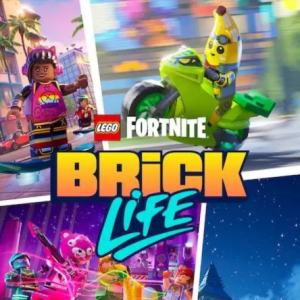
LEGO Fortnite Brick Life gave me a city, a phone, a small amount of spending money, and the freedom to decide what sort of resident I wanted to become. I could take a job, drive through Brick Bay, claim a place to live, buy furniture, meet other players, visit a cafe, or simply walk around looking for unusual interactions. There was no urgent campaign pushing me toward one final objective, and the game never treated my first profession as a permanent identity. The experience felt less like a traditional adventure and more like an online LEGO playset where daily life becomes the main source of entertainment.
That premise immediately separates Brick Life from LEGO Fortnite Odyssey. I am not gathering materials to survive in the wilderness, constructing a fortified settlement, or preparing for long expeditions through dangerous biomes. Brick Life replaces survival pressure with social role-playing, urban exploration, decorating, light work, vehicle collection, and spontaneous interaction. It is easier to enter and understand, although that simplicity also reveals how much the experience depends on imagination and the presence of entertaining people.
Brick Bay Is Designed as a Place to Meet Rather Than Conquer
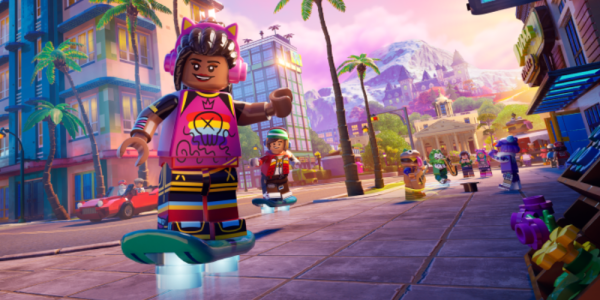
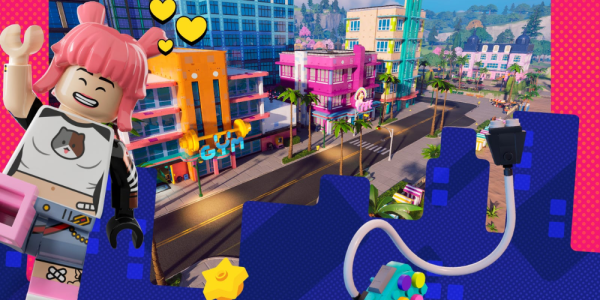
Brick Bay is compact enough that I can understand its basic structure after a few sessions. Roads connect residential areas, businesses, entertainment spaces, public buildings, beaches, schools, and central social locations without making ordinary travel feel exhausting. Major landmarks are visually distinct, which helps me navigate even when I am not watching the map constantly. The city is large enough to support different activities while remaining small enough that another player is rarely too far away.
The urban layout supports role-play more effectively than pure exploration. A restaurant can become a workplace, a meeting point, or the location of an improvised celebration depending on who arrives. Residential plots provide private spaces within the wider public world, while clubs and beaches encourage larger groups to gather naturally. The city does not need every building to contain a complex activity because many locations function as stages for player-created stories.
I enjoyed the visual contrast between Brick Bay’s districts. The center feels busy and commercial, the beach creates a relaxed space for social sessions, and areas such as Mourndale Academy introduce a more mysterious fantasy atmosphere. These differences help me choose a setting that matches the type of scene I want to create. The map would benefit from even more district-specific systems, but its current design already communicates a clear urban personality.
The LEGO Presentation Makes Everyday Activities More Playful
The entire city uses LEGO architecture, vehicles, furniture, food, and character designs, turning ordinary routines into something cheerful and slightly theatrical. Driving a small brick-built car through traffic feels less serious than navigating a realistic city, and even a basic apartment gains personality through recognizable LEGO pieces. The visual style allows the world to remain readable despite the number of objects and players moving through it. Bright colors and strong shapes make important locations easy to identify from a distance.
Character animation is deliberately expressive. Minifigures react with exaggerated movements, emotes appear naturally playful, and outfits adapted from Fortnite acquire a charming block-built interpretation. The limited facial detail is rarely a problem because body language and accessories communicate enough personality. Brick Life understands that a digital LEGO world should feel like a toy brought to life rather than a realistic city covered with brick textures.
The presentation also creates a comfortable tone for younger audiences. Conflict exists in a light and playful form, but the city is primarily organized around work, housing, socializing, collecting, and exploration. I never felt that the game was trying to become a serious crime simulation despite its obvious inspiration from urban role-playing servers. Brick Bay is designed for harmless improvisation rather than harsh consequence.
The Phone Becomes the Real Center of Daily Life
My in-game phone provides access to jobs, housing information, furniture shopping, messages, and other practical systems. This makes it the most important interface in Brick Life because almost every long-term activity begins there. I can check opportunities, purchase household items, and respond when a business requests additional help. The device keeps the city’s systems connected without requiring me to visit one administrative building for every action.
The phone is convenient, but it also makes parts of the city feel less necessary. Buying furniture from a catalogue is efficient, yet visiting a physical shop often creates more role-playing potential. When too many systems are handled through menus, Brick Bay risks becoming a decorative background around a mobile interface. The experience is strongest when the phone directs me toward a real place rather than completing the entire activity remotely.
I would like the phone to develop into a deeper personal organizer. A calendar of public events, player-created invitations, favorite jobs, property access, vehicle requests, and group activities could give each session a clearer rhythm. The foundation already exists because the device connects employment and ownership effectively. Expanding its social functions would make it feel like a tool for living in the city rather than merely purchasing things.
Jobs Provide Structure Without Creating Real Career Pressure
Brick Life allows me to switch between professions freely, removing the anxiety of choosing one path permanently. I can work as a security officer, courier, cafe employee, fortune teller, teacher, or another available role depending on the current mood. Each job provides tasks and spending money, giving a practical reason to visit different businesses. Changing careers instantly supports experimentation and fits the playful LEGO tone.
I appreciated being able to sample different occupations without restarting progress. One session can focus on deliveries, while another allows me to serve food or participate in a more theatrical role. Jobs also give strangers a reason to interact because customers, employees, and visitors naturally occupy the same space. A simple task becomes more entertaining when another player decides to participate in the scene.
The limitation is that most professions do not develop into complex careers. Tasks are approachable and repeatable, but they rarely require specialized knowledge, long-term training, or difficult decisions. The player earns money and gains another activity without building a meaningful professional identity. Brick Life treats work as a social minigame rather than a detailed simulation.
Changing Careers Is Convenient but Weakens Progression
The ability to begin a new job immediately is ideal for casual play. I never need to wait for an application, maintain qualifications, or worry that experimenting will damage an established career. This keeps the experience friendly for players who enter only for a short session. It also ensures that groups can choose matching roles quickly when creating a shared story.
However, unrestricted switching reduces the feeling that my character is developing. A long-serving chef does not necessarily gain deeper recipes, management responsibilities, or recognition from other businesses. A security employee does not gradually unlock more complex patrols or leadership duties. Without career progression, jobs can begin feeling like temporary methods of earning currency rather than personal paths.
A stronger system could preserve flexibility while rewarding commitment. Job levels, uniforms, tools, workplace decorations, special assignments, and titles would give long-term employees something to pursue. Players could still change careers whenever they wished, but returning to a favorite role would provide visible benefits. This would add depth without turning the city into a demanding employment simulator.
Business Calls Create Useful Moments of Shared Activity
Businesses occasionally request help through the phone, encouraging players to travel toward a location that needs workers. These requests help concentrate activity and prevent every job site from remaining empty. Arriving alongside several other residents creates the feeling that the city is responding to changing demand. The event structure is simple, but it gives daily work a more social context.
I enjoyed responding when the requested job matched the kind of activity I already wanted to perform. The call provided direction without feeling like a mandatory quest. It also introduced me to businesses I might otherwise have ignored. Brick Bay feels more alive when players are drawn toward one temporary need rather than remaining spread evenly across the map.
The requests could become far more varied. A restaurant might need help during a festival, a school could prepare for a special class, or a transport service might respond to an unusually busy period. Temporary situations would make familiar professions behave differently from one session to another. At present, the calls are useful, but they do not yet create a convincing city economy.
Money Gives Activities Purpose but Rarely Creates Hard Decisions
Working provides income that can be spent on homes, furniture, vehicles, and lifestyle items. This creates a clear loop: take a job, complete tasks, earn money, and use that money to shape the character’s life. The economy is easy to understand and does not require complicated financial planning. Younger players can see the relationship between work and ownership immediately.
The system becomes less compelling when purchases feel like the only reason to continue working. Once I have selected a preferred home and collected enough furniture, ordinary job income loses some urgency. There are limited maintenance costs, business investments, or long-term projects competing for money. Wealth primarily expands personal customization rather than creating strategic responsibility.
I do not want Brick Life to introduce punishing bills or financial failure, but more aspirational goals would improve the loop. Collaborative businesses, large vehicles, event hosting, neighborhood improvements, and expandable properties could provide expensive projects worth saving for. The economy needs additional destinations rather than harsher restrictions. Earning money is pleasant, but saving should eventually support something larger than another chair.
Housing Gives Every Player a Personal Corner of the City
Residential plots allow me to place a home and create a space separated from the public streets. Available designs range from modest houses to more luxurious apartments and penthouses, supporting different imagined lifestyles. Claiming a plot makes Brick Bay feel temporarily personal because one part of the map now reflects my choices. Returning home after work provides a satisfying rhythm even when no mechanical rest is required.
The placement system is direct enough that I can establish a residence quickly. I do not need to construct every wall from individual bricks or spend hours designing the basic structure. This keeps housing accessible to players interested in decoration rather than architecture. It also means that homes can appear somewhat similar until furniture and social use give them individual character.
I enjoyed visiting houses created by friends because the same building template can produce surprisingly different interiors. One player may design an organized modern apartment, while another fills every available space with unusual objects. Homes reveal personality more effectively than character outfits alone. They become the most obvious record of what a resident values inside Brick Bay.
Furniture Placement Is Simple Enough to Encourage Experimentation
Furniture can be purchased and placed to create bedrooms, kitchens, offices, entertainment rooms, and unusual themed spaces. The system avoids overly technical building controls, allowing objects to be positioned without requiring architectural experience. I can redesign a room quickly when the original idea does not work. This supports experimentation because mistakes are easy to correct.
The catalogue contains enough variety to establish the basic function of a home. Beds, tables, chairs, decorations, appliances, and entertainment items allow recognizable domestic scenes. LEGO styling keeps mismatched pieces visually compatible even when they belong to different themes. A chaotic collection can still look intentional because everything shares the same physical language.
Decorating would feel deeper with more interactive furniture. Objects become significantly more valuable when players can sit, cook, perform, play, study, or trigger group activities with them. Pure decoration improves appearance but does not always support extended role-play. Brick Life should continue prioritizing furniture that creates behavior rather than only filling space.
Rotating Store Inventory Encourages Return Visits
Some furniture and lifestyle items become available through changing shop selections. This gives players a reason to revisit stores and examine what has appeared since the previous session. A desired object may influence how I spend money or redesign a room. The rotation adds light anticipation to ordinary shopping.
The system can also create unnecessary pressure when an item fits a particular home design but disappears before I can afford it. Brick Life is most relaxing when creativity is not controlled by fear of missing a short opportunity. Rotations should create discovery without making essential building pieces feel artificially scarce. Basic furniture categories should remain consistently available even when special designs change.
I prefer stores that allow both predictable shopping and occasional surprises. A permanent catalogue provides reliable access, while featured items give each visit personality. This balance supports planning without removing the excitement of finding something unusual. Brick Life already uses the phone and physical shops, making it well positioned to combine both approaches.
Hosting a House Party Shows the Strength of the Social Sandbox
A decorated home becomes more meaningful when other players visit it. I can invite friends, use emotes, play music, prepare a scene, and allow the furniture arrangement to shape how everyone interacts. A living room becomes a party area, while a carefully designed kitchen can support restaurant-style role-play. The value of the property comes from the activity it enables rather than from its price alone.
House parties also reveal the limitations of relying on strangers. A coordinated group can create a funny and surprisingly convincing scene, while random visitors may run through rooms without engaging with the intended story. Brick Life provides the environment but cannot guarantee that everyone shares the same approach. Social role-playing always depends on consent and imagination from the participants.
More hosting controls would make private events easier to manage. Property permissions, guest roles, object interaction settings, invitations, and temporary party activities could help homeowners shape the experience. Players should be able to welcome strangers without giving them complete freedom to disrupt the space. A social city needs clear boundaries alongside openness.
Vehicles Turn Routine Travel Into Another Form of Expression
Cars, bikes, and other transport options make movement through Brick Bay faster while adding another collectible category. Vehicles differ visually enough to reflect a resident’s style, even when their practical purpose remains similar. Driving with friends creates simple social moments because the journey becomes part of the activity. A trip to the beach feels more like an outing when everyone travels together.
The handling prioritizes accessibility rather than realistic weight. Vehicles respond quickly, recover easily from minor mistakes, and fit the playful scale of the city. This makes them suitable for younger players who may be less comfortable with technical driving systems. The physics still allow enough awkward collisions to produce comedy.
Traffic and road behavior are not deep enough to create a convincing urban simulation. Vehicles sometimes feel like portable toys moving through decorative streets rather than part of an organized transport system. Additional taxi work, races, delivery routes, public transit, and parking interactions could make roads more meaningful. Brick Bay has the visual infrastructure for a richer transportation layer.
Hoverboards Fit the City Better Than Realistic Driving Rules
Hoverboards provide quick movement while preserving the light science-fiction personality inherited from Fortnite. They are particularly enjoyable around the beach and open public areas where rapid turns and casual exploration matter more than road discipline. The compact design allows me to move without blocking large sections of the street. It also creates a visually distinct alternative to cars.
I like how hoverboards support spontaneous group activity. Several players can race informally, perform jumps, or travel between nearby attractions without organizing a formal event. Their low commitment makes them ideal for a social sandbox. They feel like toys designed for fun rather than serious vehicles designed only for efficient transport.
The Beach Is Brick Bay’s Most Naturally Social Location
The beachfront combines open space, cafes, exercise areas, music, seating, and movement activities in one cheerful district. Players gather there without needing a structured objective because the location already suggests relaxation and conversation. I can ride along the coast, visit a cafe, use nearby equipment, or simply watch what other residents are doing. The area functions like a public park designed around LEGO holiday energy.
Open sightlines make the beach easier to understand than crowded urban interiors. I can see groups forming around a stage, cafe, or activity and decide whether to join them. This visibility encourages spontaneous participation. A social experience benefits from spaces where players can observe before committing to interaction.
The beach would be even stronger with rotating events. Concerts, sports sessions, building competitions, markets, and seasonal celebrations could transform the same area throughout the week. The existing stage and activity spaces already suggest this potential. Brick Life needs more reasons for public areas to change temporarily rather than remaining permanent backdrops.
Mourndale Academy Adds Mystery to an Otherwise Comfortable City
Mourndale Academy introduces magical and gothic elements that contrast with Brick Bay’s ordinary businesses and residential streets. Darker architecture, potion themes, and educational spaces suggest stories beyond everyday employment. The location allows me to role-play as a student, teacher, investigator, or visitor exploring something unusual. It gives the city a fantasy district without changing the entire tone.
I enjoy the academy because it demonstrates how Brick Life can contain multiple genres inside one city. A session can begin with a cafe job and end inside a magical classroom. The transition feels natural because LEGO worlds have always combined ordinary life with imaginative themes. More districts built around similarly strong concepts would improve long-term variety.
The academy currently feels more visually suggestive than mechanically deep. Classes, magical progression, clubs, puzzles, and student activities could turn it into a substantial experience of its own. At present, the environment provides a strong stage, but players must create much of the actual school life themselves. This pattern appears across Brick Bay: excellent settings often wait for deeper systems.
Clubs and Stages Give Emotes a Practical Social Purpose
Fortnite emotes and compatible Jam Tracks carry naturally into Brick Life’s party spaces. A rooftop club, beach stage, or private home can become a performance area without requiring separate musical controls. Players bring their existing Locker identity into a LEGO environment, allowing years of Fortnite collection to gain another use. This connection makes Brick Life feel integrated with the larger platform rather than completely isolated.
Jam Loops are especially effective in group settings because several players can contribute to a shared performance. The result may be coordinated music or complete noise depending on the group. Both outcomes fit the playful social tone. Music becomes an activity rather than simple background audio.
The clubs need more structured events to remain interesting after the novelty of the location fades. Scheduled performances, dance challenges, resident DJs, themed nights, and player invitations could create reasons to return regularly. A permanent room full of emotes can become empty quickly when no event concentrates the population. Social spaces require timing and community tools as much as attractive decoration.
Existing Fortnite Outfits Gain a Second Personality in LEGO Form
Compatible Fortnite outfits are converted into minifigure designs, allowing players to use familiar characters without abandoning the LEGO aesthetic. Some transformations are surprisingly detailed, capturing recognizable colors, accessories, and silhouettes through simplified brick forms. The result often feels like owning a digital version of an official minifigure. It adds value to collections acquired originally for completely different Fortnite modes.
I enjoyed changing outfits according to the current job or social event. A formal design suits a club, a casual outfit works at the beach, and a more unusual character can inspire an entire role-playing scenario. Appearance becomes part of the story because Brick Life does not assign one fixed protagonist. The same account can represent a different resident during every session.
Not every outfit has an equally complete LEGO version, and some designs naturally translate better than others. Clear communication about compatibility is therefore important. The larger the supported collection becomes, the more personal Brick Bay feels. Cosmetic integration is one of the strongest advantages Brick Life receives from existing inside Fortnite.
Public Servers Can Feel Alive or Completely Directionless
A server with active players creates the best version of Brick Life. Businesses have employees, roads contain traffic, homes host visitors, and public spaces produce unexpected scenes. I can join a group without planning the entire session in advance. The city feels like a shared world rather than a collection of unused sets.
A quiet or uncoordinated server produces the opposite impression. Jobs become solitary minigames, clubs feel empty, and public spaces offer little reason to remain after exploring their objects. NPCs provide some activity but cannot replace human improvisation. Brick Life depends more heavily on population quality than a structured competitive mode does.
Server discovery could help players find the social atmosphere they prefer. Role-play-focused servers, relaxed exploration sessions, family groups, music events, and career-oriented sessions would attract different communities. Currently, joining often means accepting whichever behavior happens to be present. Better matchmaking around intention would make social interaction more reliable.
Text Chat Expands Possibility but Requires Careful Safety Tools
Text communication allows players to explain roles, invite others to locations, organize events, and create dialogue beyond emotes. This is extremely useful in a role-playing city where intentions are not always obvious from movement alone. A player can announce a restaurant opening, request employees, or invite residents to a house party. The city becomes more coherent when people can describe what they are attempting.
The same openness requires moderation and privacy controls, particularly because the LEGO presentation attracts younger audiences. Chat filters, account settings, reporting tools, and parental controls are essential rather than optional extras. Players should be able to restrict who can contact them and leave uncomfortable interactions quickly. A social sandbox succeeds only when communication remains manageable.
I often rely on emotes and movement when playing with strangers because they communicate simple intentions without exposing the session to long conversations. Text becomes more valuable during organized role-play or cooperative activities. Offering several communication levels is the correct approach. Not every player needs the same degree of social access.
Brick Life Is More Entertaining With Friends
A friend group can assign roles, choose neighboring houses, work at the same business, and create stories extending across several locations. One player might run a restaurant while others become customers, delivery workers, entertainers, or deliberately difficult visitors. The systems provide enough structure to support the scene without determining every detail. Shared imagination fills the space between the game’s mechanics.
Planning also reduces the emptiness of public activities. A rooftop club feels active when the group decides to attend together, and a beach trip gains purpose when everyone brings a different vehicle or outfit. Even simple furniture becomes useful when the group agrees on what the room represents. Brick Life works like a physical LEGO set: the pieces matter, but the people using them create most of the entertainment.
Solo players can still explore, work, decorate, and collect, yet the experience becomes more repetitive sooner. NPC interactions and job tasks provide only limited narrative surprise. The city rarely generates a complete story independently. Brick Life is therefore best understood as a social tool rather than a single-player life simulator.
Solo Play Exposes the Lack of Deeper Simulation
When I play alone, I notice how few systems continue without direct player input. Businesses do not develop complex relationships, residents do not maintain detailed routines, and the economy does not transform significantly according to collective behavior. I can complete tasks and purchase items, but the city rarely surprises me through simulation. It waits for players to create the event.
This design is understandable because detailed NPC life would increase complexity and potentially interfere with role-play. However, a little more autonomous behavior could make quiet sessions feel less static. Residents could organize small events, request services, visit businesses, and react to neighborhood changes. The goal would not be replacing players but giving them material to respond to.
Solo progression also needs stronger personal objectives. Property collections, career achievements, city discoveries, vehicle challenges, and resident reputation could provide direction without forcing one campaign. These systems would help players enjoy Brick Bay even when friends are unavailable. Social play should remain the highlight, but it should not be the only source of momentum.
Daily Tasks Risk Turning Play Into Routine Too Quickly
Repeatable work and simple objectives provide dependable income, but they can become mechanical after the rewards are understood. A delivery route or service task feels pleasant initially because it introduces a location and interaction. Repeating it only for money gradually removes the role-playing context. The job becomes a button sequence rather than part of a life.
Variation is more important than difficulty. Different customers, unusual requests, workplace incidents, cooperative tasks, and temporary city conditions could make the same profession feel fresh. Brick Life does not need stressful failure to improve its jobs. It needs more situations that ask players to improvise.
I prefer sessions where work occupies only part of the experience. Completing a few tasks provides enough money before I move toward decorating, driving, or meeting other players. Attempting to maximize income reveals the limited depth much faster. Brick Life is healthier when treated as a social sandbox with jobs rather than as an economic game built around perfect efficiency.
The Lack of Serious Consequence Supports Creativity
Brick Life does not punish career changes, experimental decorating, unusual outfits, or inefficient daily choices. I can spend an evening socializing without worrying that the character’s needs or property will deteriorate. This freedom makes the experience accessible and prevents younger players from becoming trapped by earlier decisions. The city is designed for playful revision.
The absence of consequence can also weaken satisfaction. A home does not require meaningful maintenance, jobs rarely create professional risk, and social reputation is mostly informal. Success and failure become difficult to distinguish mechanically. The player must create emotional stakes through role-play.
A balanced approach could introduce optional goals rather than harsh penalties. Players might build a business reputation, complete resident collections, host successful events, or improve a neighborhood without losing progress when they step away. Consequence does not need to mean punishment. It can simply mean that actions leave visible traces.
The City Needs More Player-Owned Businesses
Working for existing establishments is entertaining, but ownership would create stronger long-term identity. A player-run cafe, shop, studio, vehicle service, or entertainment venue could combine property decoration with employment systems. Friends could take roles while the owner selects products, layout, and opening hours. This would turn money into investment rather than pure consumption.
Ownership would also create natural social hubs. Residents would visit because another player has built something unique, not because every server contains the same default business. Reviews, favorites, event listings, and rotating markets could help successful venues become known. Brick Bay would begin reflecting its current population more visibly.
The challenge would be moderation and accessibility. Businesses should not allow one wealthy player to control essential services or exclude others unfairly. Cosmetic customization and optional social activity would be safer than ownership of mandatory progression. Even a limited version could deepen the fantasy of building a personal life in the city.
Public Events Could Give Every Session a Distinctive Rhythm
Brick Bay contains beaches, clubs, schools, businesses, plazas, and roads capable of hosting temporary events. Festivals, markets, concerts, sports activities, costume gatherings, vehicle shows, and collaborative building days would concentrate residents around one shared purpose. The city would feel different depending on when I entered. Scheduled events could also make quieter locations relevant again.
I would prefer events that encourage participation without requiring repetitive reward farming. A small cosmetic, furniture item, or title can provide motivation, but the activity itself should remain enjoyable. Players should attend because the event creates unusual interaction. Brick Life’s strongest moments already come from gathering people together.
Community-created events would be even more valuable. Hosts could select a location, time, description, and basic activity, while other residents receive invitations through the phone. Permissions and reporting tools would need to remain strong. Giving players organizational tools would expand the city more effectively than adding another empty building.
The Visual Detail Is Stronger Than the Environmental Interaction
Brick Bay contains attractive storefronts, decorative interiors, roads, public spaces, and themed landmarks. The city looks ready for many forms of activity. I often approach an object expecting a reaction because its LEGO construction appears intentionally designed. Not every detail is interactive, creating a visible gap between appearance and function.
This limitation is understandable in a multiplayer world required to perform across many devices. Still, additional small interactions would greatly improve exploration. Vending machines, public seating, displays, school equipment, shop counters, arcade objects, and street decorations could all produce simple responses. LEGO environments invite touching, moving, and experimenting by their nature.
The best locations already demonstrate how effective interaction can be. Furniture, music tools, vehicles, and workplace objects give players something to do while they socialize. Expanding this philosophy would make empty moments more playful. A city designed from bricks should feel as manipulable as possible.
Performance Benefits From the Clean LEGO Style
The simplified geometry and bold visual language allow Brick Bay to remain readable while supporting many players. Character outfits, vehicles, homes, and environmental objects retain clear silhouettes even during crowded sessions. The game scales across the broad range of platforms supported by Fortnite. This accessibility is essential for a social experience whose audience should not be divided unnecessarily.
Performance can still vary when servers contain many customized homes, vehicles, effects, and players concentrated in one location. Transitions, object loading, and network behavior may become more noticeable during busy events. The experience is less mechanically demanding than Battle Royale, but social interactions still depend on smooth movement and reliable synchronization. A house party loses much of its charm when guests appear to jump between positions.
I appreciate that the visual direction does not chase realism at the cost of stability. LEGO design ages well because its appeal depends on recognizable construction rather than detailed surfaces. Future updates can add objects and districts without making earlier content look completely outdated. The art style provides a durable foundation for long-term expansion.
The Fortnite Interface Makes Entry Convenient and Discovery Messy
Brick Life exists inside the larger Fortnite ecosystem, which allows players to use one account, friend list, Locker, and installation. Joining friends is easy once everyone has selected the mode. Cross-platform access helps families and groups using different devices remain together. The broader platform provides an audience that a separate social game would struggle to assemble immediately.
Discover navigation can make Brick Life harder to locate among many official and creator-made experiences. Players may need to search, favorite the mode, or launch it through a dedicated library entry. The interface often prioritizes recommendations rather than the experiences I use most frequently. A social world benefits from becoming one reliable click away.
Once inside Brick Life, the mode has its own clear identity. The problem is reaching it without being distracted by Battle Royale, Festival, Odyssey, Creative maps, passes, and storefront messages. Fortnite’s expansion creates convenience and clutter simultaneously. Better personal home screens would help players treat Brick Life as a regular destination rather than one tile among hundreds.
Monetization Is Mostly External but Always Visible
Brick Life is free to enter, and its essential jobs, city areas, social systems, and housing loop do not require a separate purchase. Existing Fortnite cosmetics provide much of the visible personalization. Players can therefore participate without buying a dedicated Brick Life package. This makes the basic experience approachable for groups.
The wider Fortnite store remains connected to the desire for new outfits, emotes, Jam Tracks, LEGO decor bundles, and other compatible items. None of these should provide a serious gameplay advantage, but social spaces naturally increase the visibility of cosmetic ownership. A rare outfit or elaborate home collection becomes a status symbol because other residents can see it directly. Brick Life turns presentation into part of daily play.
I prefer cosmetic purchases that expand creative expression without restricting basic furniture or activities. The free catalogue should remain broad enough that every player can build a convincing home and participate comfortably. Premium items can offer themes rather than essential functions. Social role-playing becomes less welcoming when creativity is divided too strongly by spending.
Younger Players Receive a Friendly Introduction to Online Role-Play
Brick Life simplifies many ideas found in more complicated role-playing servers. Players choose jobs, earn money, own homes, drive vehicles, and interact socially without dealing with harsh economies or mature themes. The LEGO presentation makes these systems easy to understand. It can serve as a gentle introduction to collaborative storytelling.
The game also allows children to explore familiar adult routines through play. Working in a cafe, decorating an apartment, attending school, shopping, and meeting friends become safe fictional activities. Players can switch roles immediately when another idea becomes more interesting. This flexibility supports experimentation rather than achievement pressure.
Online communication remains the area requiring the greatest adult attention. Public servers include strangers whose behavior cannot be predicted by the LEGO rating alone. Parental settings, chat restrictions, friend controls, and reporting tools should be configured according to the player’s age. A family-friendly world still exists inside a large online platform.
Brick Life Needs Stronger Reasons to Remember Individual Residents
During a successful session, I may meet someone, visit their home, participate in a job, and create a funny scene together. Once the server ends, that resident can disappear unless we deliberately add one another. The city does not preserve much shared history automatically. Social moments are memorable personally but rarely reflected by the world.
Neighborhood guest books, event photos, resident favorites, shared achievements, or optional friend notes could create stronger continuity. These features would need careful privacy controls, especially for younger players. The goal would be helping trusted groups remember what they built together. A life simulator benefits from history as much as from new purchases.
Persistent communities could also make public businesses and districts feel more meaningful. Players might join clubs, schools, performance groups, or neighborhood associations that exist across sessions. Brick Life already has the places required for these communities. It needs more systems connecting people to them over time.
The Best Sessions Begin With a Plan and End Somewhere Unexpected
I enjoy Brick Life most when I enter with one simple intention. I might plan to earn enough money for furniture, redesign an apartment, or try a particular job. Another player then invites me to a party, a business requests help, or a group gathers near the beach. The session changes direction because social opportunity becomes more interesting than the original objective.
This unpredictability is different from the danger found in competitive Fortnite modes. Nobody needs to defeat me for the evening to change. Another person’s creativity is enough to redirect the experience. The city becomes a framework for improvisation rather than a sequence of authored missions.
These moments justify the limited mechanical depth because a simple system can support complex social behavior. A cafe job may involve only a few interactions, but players can turn it into a comedy, argument, celebration, or meeting. Brick Life does not write those scenes. Its achievement is making them easy to stage.
A Promising Social City With More Style Than Simulation
LEGO Fortnite Brick Life succeeds as an accessible digital playset. Brick Bay is colorful, easy to navigate, and filled with locations that naturally support social role-playing. Jobs provide immediate structure, housing gives every player a personal project, and vehicles make the city enjoyable to cross. Fortnite cosmetics, emotes, and Jam Tracks integrate smoothly into the LEGO presentation.
The experience becomes thinner when I look for deeper life simulation. Careers lack substantial progression, the economy offers limited long-term projects, NPC behavior is simple, and many locations rely on players to create their own purpose. Solo sessions expose these weaknesses quickly. Brick Life currently provides excellent stages without always supplying enough events to fill them.
I would like future updates to focus less on adding isolated furniture collections and more on connecting existing systems. Player-owned businesses, career levels, public events, community groups, interactive furniture, and stronger hosting tools could make every purchase and location support a wider social loop. The city already looks ready for these possibilities. It now needs more ways for resident decisions to leave lasting marks.
I continue returning because Brick Life understands the pleasure of creating an ordinary fictional day. I can work briefly, buy something unnecessary, drive to the beach, visit a friend’s apartment, and end the session playing music on a rooftop. None of these actions needs to become a dramatic quest. LEGO Fortnite Brick Life is charming because it turns daily routine into shared play, even if its virtual city still needs deeper foundations before that routine can remain compelling for years.
Pros:
- Seamless cross-platform play
- User-friendly download and installation process
- Robust mod community and customization options
- Engaging audiovisual design with dynamic sound
- Regular content updates and community events
- Innovative blend of creative building and strategic combat
Cons:
- Occasional performance drops on older hardware
- Steep learning curve for new players due to extensive options
- Some mods may lead to balancing issues during competitive play









Recent Reviews

Minecraft

Grand Theft Auto V

Toca Boca World

Roblox

Leave a comment
Your comment is awaiting moderation. We save your draft here
0 Comments