Review
My first instinct after entering Minecraft: SpongeBob SquarePants was not to follow the objective marker. I walked past the opening ins...
Underwater Blockbuster: Exploring the Creative Depths of Minecraft Meets SpongeBob SquarePants
My first instinct after entering Minecraft: SpongeBob SquarePants was not to follow the objective marker. I walked past the opening instructions, found Conch Street, and stood outside SpongeBob’s pineapple while the surrounding buildings recreated a location I had known for years in a completely different visual language. Squidward’s house, Patrick’s rock, the bright underwater roads, and the distant shapes of Bikini Bottom all looked immediately familiar despite being rebuilt from cubes. The adventure had already succeeded at its most important task before I completed a single activity: it made me curious enough to explore a licensed world without needing a reward.
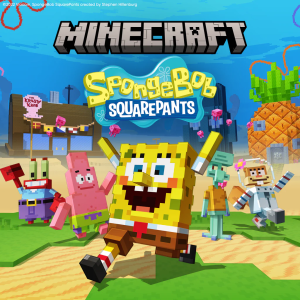
This is an official Bedrock Edition DLC created by Spark Universe in collaboration with Nickelodeon. It places me inside a large handcrafted version of Bikini Bottom and asks me to help SpongeBob create the best day ever for his friends. That simple premise connects several quests involving Patrick, Sandy, Squidward, Mr. Krabs, Plankton, Pearl, and the Flying Dutchman. The result is a family-friendly adventure map that combines exploration, short minigames, light building, racing, combat, collectibles, and character interaction without trying to replace Minecraft’s main survival experience.
The Blocky Art Style Fits SpongeBob Better Than It Should
SpongeBob SquarePants already uses exaggerated shapes, bold colors, simple silhouettes, and environments that ignore realistic underwater physics. Minecraft’s square geometry therefore feels less like a compromise than it does in many licensed adaptations. SpongeBob’s body translates naturally into a block-based model, while Patrick’s shape, Squidward’s house, and the Krusty Krab remain recognizable with relatively few details. The visual combination works because both properties depend more on memorable shapes than realistic anatomy.
The strongest buildings are those with unmistakable outlines. SpongeBob’s pineapple, the Chum Bucket, the Krusty Krab, Sandy’s treedome, and the boating school can be identified before I approach them closely. Smaller shops and residential areas use signs, colors, props, and environmental decoration to preserve the cartoon’s personality. The world occasionally looks like a themed Minecraft map rather than a living episode, but the central locations rarely lose their identity.
Bikini Bottom Is the Real Star of the DLC
The map links famous locations through roads, open areas, coral structures, businesses, homes, and smaller references. I could leave Conch Street, travel toward the Krusty Krab, continue toward urban districts, and find side spaces designed primarily for fans who enjoy recognizing details. This physical connection gives Bikini Bottom a stronger sense of geography than the television series normally requires. Places that appeared separately across episodes now exist inside one explorable environment.
The arrangement is not intended to be a perfectly accurate map of every episode. Distances are compressed, buildings are selected according to their usefulness, and familiar locations need to support Minecraft navigation. I accepted these changes because a literal recreation would be inconsistent anyway. The designers prioritize the emotional memory of Bikini Bottom rather than pretending the cartoon has one fixed city plan.
Conch Street Provides the Perfect Starting Point
SpongeBob’s pineapple, Squidward’s stone head, and Patrick’s rock form one of animation’s most recognizable groups of homes. Walking between them in first person creates an unusual feeling because the familiar exterior shots become spaces I can examine from every angle. Each house communicates its owner through furniture, colors, and recognizable props. SpongeBob’s home is cheerful and crowded, Squidward’s feels more controlled, and Patrick’s remains intentionally simple.
Interior scale occasionally conflicts with exterior appearance, which is a common requirement in game adaptations. Rooms need enough space for a Minecraft player to move, interact, and use the camera comfortably. The result can make a building feel larger inside than expected. This rarely damages the atmosphere because the interiors are designed around memorable objects rather than architectural realism.
The Krusty Krab Is More Than a Decorative Landmark
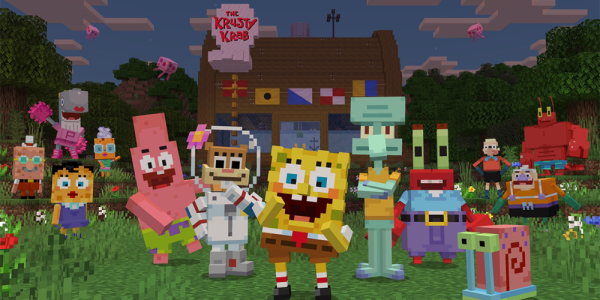
The Krusty Krab contains familiar dining areas, kitchen equipment, employee spaces, and the visual details required to support its role in the quests. I enjoyed standing behind the counter because ordinary Minecraft items suddenly felt connected with SpongeBob’s daily routine. The restaurant works as both fan service and an active mission location. It does not exist only for screenshots.
One early challenge asks players to defend the restaurant from hungry anchovies by using burger-based combat mechanics. This transforms a recurring joke from the show into an accessible action minigame. The system is not mechanically deep, but it creates a memorable connection between location, character, and objective. Flipping defensive patties is far more appropriate here than using a standard sword against a generic enemy.
SpongeBob’s Best Day Ever Plan Gives the Quests a Friendly Structure
The central objective is not to save the entire universe from an apocalyptic threat. SpongeBob wants to help his friends have an excellent day, which gives the story a lighter and more personal tone. Every major quest focuses on another character’s interests, problems, or personality. The structure resembles a collection of playable episode ideas rather than one enormous cinematic storyline.
This approach suits both Minecraft and SpongeBob. I can complete activities in a relaxed order, explore between them, and understand every motivation without absorbing complicated lore. Younger players can follow the goals easily, while older fans can appreciate the references and character behavior. The low stakes occasionally make the adventure feel slight, but they also protect its cheerful identity.
Patrick’s Quest Uses Building in the Most Natural Way
Patrick’s portion of the adventure asks players to construct something for him using Minecraft’s defining mechanic. This is one of the most conceptually successful activities because it allows player creativity to enter an otherwise heavily scripted map. The task does not need an elaborate explanation; Patrick wants something, and Minecraft provides blocks. My creation becomes part of the joke regardless of whether it is impressive or completely ridiculous.
The building system is more limited than starting a normal Creative world, since the quest needs to recognize completion and preserve the surrounding map. I could not redesign all of Bikini Bottom or transform Patrick’s neighborhood permanently. Even with those restrictions, the activity gives players ownership over one part of the adventure. I wanted more quests to use construction with the same confidence.
Sandy’s Redstone Challenge Makes Sense for Her Character
Sandy is a scientist and inventor, so a quest involving redstone feels appropriate instead of inserted simply because Minecraft contains circuitry. The activity introduces switches, mechanisms, explosions, and problem-solving in a playful context. Players familiar with redstone will understand the basic logic quickly, while younger users can experiment without risking a valuable survival build. The challenge connects Minecraft mechanics with Sandy’s technical personality effectively.
The puzzle remains approachable rather than becoming a complex engineering test. Experienced redstone builders will not discover an advanced machine requiring hours of design. That restraint is reasonable for a licensed family map intended to support a wide range of ages. The mission celebrates redstone without turning the DLC into a tutorial for complicated automation.
Plankton Brings the Necessary Mischief
Plankton naturally serves as the character most likely to transform a cheerful day into a problem. His machines, plans, and relationship with the Krabby Patty formula create an immediate source of conflict. The DLC understands that he should remain funny and persistent rather than becoming a genuinely disturbing villain. His presence gives the adventure enough opposition to prevent every quest from becoming a simple favor.
I would have liked a larger final sequence built around the Chum Bucket and Plankton’s technology. The available interactions capture his personality but do not develop into a highly complex campaign. His schemes feel like episodes inside the broader collection of activities. This is appropriate for the tone, though a stronger final confrontation could have given the base adventure a more satisfying climax.
The Flying Dutchman Adds a Different Type of Atmosphere
The 2023 update expanded the adventure with content involving the Flying Dutchman and cannons lost around the Kelp Forest. His ship, ghostly presentation, and dramatic personality introduce a darker visual flavor without becoming inappropriate for the game’s family audience. Helping recover the cannons requires movement and parkour rather than repeating the restaurant challenge. The activity gives returning players a reason to revisit the map after finishing the original questline.
A replayable cannon minigame extends the value slightly, especially for groups comparing performance. The Flying Dutchman remains more entertaining as a character than as a mechanically complicated encounter. I enjoyed the themed environment and dialogue more than the depth of the activity itself. His inclusion strengthens the collection of recognizable personalities even when it does not transform the adventure.
Pearl’s Pizza Delivery Adds Useful Movement Pressure
Another update quest involves helping Pearl deliver pizzas before they become cold. This creates a timed navigation challenge built around learning roads, choosing routes, and maintaining speed. The activity is straightforward, but it turns the map’s geography into part of the mechanic. Locations I previously explored casually become checkpoints inside a race against time.
The premise also suits Pearl’s situation and Mr. Krabs’ attitude toward spending money. Character humor supports the objective instead of appearing only in dialogue before an unrelated task. Repeating deliveries can improve route knowledge, though the limited variation eventually becomes predictable. A larger selection of randomized customers would have increased replay value.
Boatmobiles Make Travel More Entertaining
Driving through Bikini Bottom provides a stronger connection with the show than simply sprinting between every location. The boatmobiles look appropriate, move at a useful speed, and turn ordinary roads into playful travel routes. Mrs. Puff’s Boating School makes the mechanic feel especially natural because poor vehicle control is central to SpongeBob’s history. Even an accidental collision can feel thematically correct.
Vehicle handling remains simple and occasionally awkward. Tight turns, obstacles, and Minecraft’s block-based geometry can produce sudden stops or strange angles. The physics do not create a detailed racing simulator, but they are sufficient for family-friendly movement and minigames. The vehicles are most enjoyable when I accept their comedy instead of demanding exact control.
Rock Bottom Racing Gives the New Vehicles a Purpose
The update’s racing content turns transportation into a competitive activity rather than a novelty used only during exploration. Different vehicles can be tried, and successful participation allows selected rides to remain available for continued travel. This creates a clear reward connected directly with the activity. I appreciated obtaining something I could use after the race ended.
The racing is accessible enough for younger players and local groups, but the courses do not offer the depth of a dedicated kart game. Handling limitations and collision can influence results unpredictably. The fun comes from recognizable vehicles, themed routes, and friendly competition rather than mastering a sophisticated driving model. It works best as one event among many.
Jellyfish Fields Is Designed for Recognition and Movement
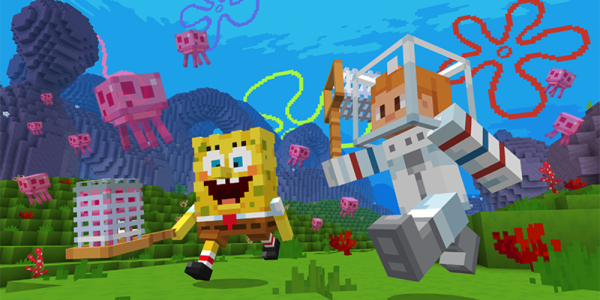
Jellyfish Fields uses bright terrain, floating creatures, flowers, open paths, and environmental details associated with SpongeBob’s favorite hobby. The region offers a pleasant contrast with the denser city areas. I spent time moving through it without an objective because the colors and open layout created one of the map’s most relaxing spaces. Jellyfish help keep the environment active rather than functioning as static decoration.
The area could have supported a deeper catching system with collection goals, equipment, species, or scores. What exists is charming but limited. The newer SpongeBob Biomes world would later develop activities such as jellyfishing more broadly, but that is a separate Marketplace product. In this DLC, Jellyfish Fields mainly serves atmosphere, exploration, and quest context.
Goo Lagoon Understands the Importance of Leisure
Goo Lagoon provides beach scenery, recreational structures, and a lighter atmosphere away from the central city. The location helps Bikini Bottom feel like a place where characters live rather than a chain of mission arenas. I enjoyed visiting because it captures the absurd concept of an underwater beach without trying to explain it. SpongeBob’s world works best when physical logic remains secondary to visual humor.
Like several locations, Goo Lagoon contains more environmental charm than mechanical depth. Additional sports, contests, lifeguard activities, or sand-building challenges could have made it a destination for repeated play. After exploring and completing relevant objectives, there is limited reason to remain. The map often provides excellent settings that deserve more systems.
The Reef Cinema Is a Small Detail With Significant Fan Value
The Reef Cinema is not as mechanically important as the Krusty Krab or boating school, but its inclusion helps the world feel comprehensive. Recognizing a secondary location rewards fans who explored the show beyond the most famous buildings. It also provides a social interior for screenshots and role-playing. These smaller spaces make the DLC feel authored by people who understood that Bikini Bottom contains more than three homes and one restaurant.
Many decorative buildings cannot support substantial interaction. Doors, rooms, seats, and props provide atmosphere without turning every structure into a quest. I do not consider that a serious problem because a city requires background spaces. The balance would improve with more minor secrets or collectibles placed inside them.
Collectibles Encourage Me to Inspect Familiar Places
The adventure hides items and rewards around the world, giving exploration a purpose beyond visual recognition. Collectibles may appear near landmarks, inside buildings, or along routes that are easy to miss while following objectives. Searching for them encourages slower movement and closer inspection of the designers’ work. They also provide optional goals for players who complete the story quickly.
The collection process becomes less satisfying once it turns into searching every corner without strong clues. A checklist can confirm what remains but not always communicate where the missing object might be. I prefer collectibles tied to specific references or small environmental puzzles. Simple hidden placement extends playtime without necessarily improving the experience.
The Adventure Works Better in Multiplayer
Minecraft Marketplace worlds can be shared with friends through ordinary Bedrock multiplayer when the host owns and loads the content correctly. SpongeBob’s cheerful group activities naturally benefit from another player. Building for Patrick, racing boatmobiles, defending the Krusty Krab, exploring locations, and searching for items become more social when reactions can be shared. The DLC’s premise is about improving everyone’s day, so cooperation suits it thematically.
Some scripted moments and objectives are designed around one progression state, which can create confusion if players separate or interact with different quest elements simultaneously. The group should remain reasonably close and agree on which activity is active. The content does not offer specialized cooperative roles or puzzles requiring several distinct players. Multiplayer improves the atmosphere more than it changes the mission design.
Solo Play Is Pleasant but Brief
Playing alone allows me to explore at my own pace, listen to every character, and examine buildings without another player rushing toward the next marker. The quests are accessible and do not require a full group. This makes the DLC suitable for younger solo players or adults interested primarily in the recreation of Bikini Bottom. The cheerful tone prevents the world from feeling empty immediately.
After completing the available quests and update content, solo replay value becomes limited. Racing, collectibles, and minigames provide reasons to return, but the scripted adventure does not change substantially. There are no branching story routes, difficulty modes, or randomized mission systems. Most players will obtain the strongest experience from one thorough playthrough followed by occasional visits.
The Characters Look Better Than Standard Minecraft NPCs
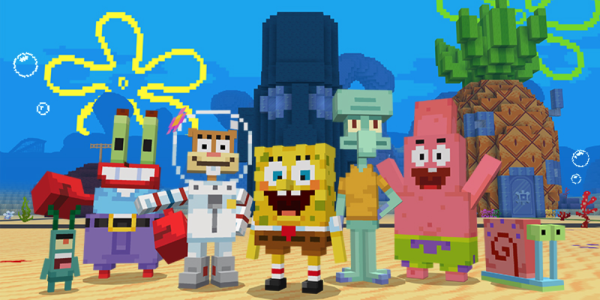
SpongeBob, Patrick, Squidward, Sandy, Mr. Krabs, Plankton, Pearl, and other residents use custom models that preserve their silhouettes and expressions. They do not resemble ordinary villagers wearing themed textures. This is essential because the humor depends heavily on body language and immediately recognizable forms. SpongeBob’s proportions and Patrick’s shape are especially compatible with exaggerated block modeling.
Facial animation and movement remain limited compared with the television series. Characters may turn, gesture, and perform scripted actions, but they cannot reproduce the full range of hand-drawn expression. Dialogue and voice-related presentation carry part of the personality instead. The adaptation captures appearance more consistently than comic timing.
Voice and Sound Effects Provide Most of the Personality
Familiar vocal styles, musical cues, environmental sounds, and exaggerated effects help the map feel connected with the show. Entering a famous location is more convincing when the audio changes appropriately. Character dialogue communicates enthusiasm, irritation, greed, or confusion even when animation remains simple. The audio gives static spaces a stronger emotional identity.
Repeated lines can become noticeable during exploration, and not every interaction receives fully cinematic presentation. Minecraft’s sound system also creates spatial limitations depending on position and device settings. The production remains strong for a Marketplace world, particularly during major quests. I remembered several locations partly because of how they sounded rather than only how they looked.
The Humor Survives the Move Into Minecraft
SpongeBob’s optimism, Patrick’s confusion, Squidward’s irritation, Sandy’s confidence, and Mr. Krabs’ financial priorities create a reliable comedic structure. The quests generally respect these personalities rather than assigning random objectives to famous models. Visual jokes and familiar references support the dialogue. The adventure remains cheerful without requiring players to know every episode.
The comedy is naturally less precise than an edited television story. Minecraft movement creates pauses, players can interrupt the intended timing, and scripted animations cannot reproduce every expression. Some jokes depend primarily on recognition rather than original writing. Fans will receive more from them than players unfamiliar with the series.
The DLC Uses Minecraft Mechanics Without Fully Becoming Minecraft
Building, redstone, exploration, parkour, combat, vehicle movement, and collectible hunting all appear across the quests. This prevents the experience from becoming a walking tour with dialogue boxes. Patrick’s construction request and Sandy’s technical challenge are especially effective because the Minecraft mechanic matches the character. The world provides enough variety to keep one activity from dominating the whole campaign.
Most systems remain restricted and scripted. I cannot mine freely through every structure, redesign the entire city, develop an independent survival economy, or carry all custom content into any normal world. The map protects its presentation by limiting ordinary Minecraft freedom. This creates a polished adventure at the cost of the sandbox possibilities suggested by the base game.
It Is Important to Distinguish This DLC From the SpongeBob Add-On
The original SpongeBob DLC is a prebuilt adventure world with a defined map, quests, and minigames. The later SpongeBob SquarePants Add-On from Spark Universe allows buildings, mobs, vehicles, weapons, tools, friends, and enemies from the franchise to be introduced into other compatible Bedrock worlds. That makes the Add-On more useful for players who want SpongeBob elements inside their own survival or Creative projects. The two products are related but mechanically different.
I prefer the original DLC for a guided tour of Bikini Bottom and character-driven activities. I prefer the Add-On for long-term experimentation inside personal worlds. Buying one does not automatically include the other, so Marketplace descriptions should be checked carefully. Players expecting portable SpongeBob content may be disappointed if they purchase only the fixed adventure map.
SpongeBob Biomes Is Another Separate Product
SpongeBob Biomes from Starfish Studios creates an infinite Dynamic World where Minecraft biomes are reimagined through Bikini Bottom themes. It includes custom terrain, survival mechanics, craftable equipment, characters, seahorse riding, jellyfishing, Krabby Patties, and a confrontation with the Flying Dutchman. This differs substantially from the 2022 handcrafted DLC. Its purpose is to combine SpongeBob aesthetics with a continuing survival world rather than provide one contained quest adventure.
The existence of several official products can make Marketplace browsing confusing. A player searching only for “Minecraft SpongeBob” may encounter the adventure DLC, Add-On, Biomes world, skin packs, and unrelated community content. The original DLC remains the best choice for exploring a detailed version of classic Bikini Bottom. It is not automatically the largest or most flexible SpongeBob product available in 2026.
The Bedrock Requirement Limits the Audience
The DLC requires Minecraft: Bedrock Edition and is distributed through the Minecraft Marketplace. Supported Windows, console, mobile, and other Bedrock platforms can access it according to Marketplace availability. Account-based ownership makes it easier to use across compatible devices after signing in. The world follows the usual Bedrock structure for templates and Marketplace content.
Java Edition players cannot install the Marketplace DLC directly into their normal game. They may find fan-made maps or resource packs offering related themes, but these are separate projects with different quality and licensing. This division matters because PC players may own only Java Edition or prefer its modification ecosystem. The official adventure is specifically a Bedrock product.
The Map Template Protects the Adventure but Limits Reuse
Purchasing the DLC allows the player to create a world from its template. This preserves the original version while permitting another copy to be started later. Quest logic, custom entities, textures, and scripted events remain connected with the template. The structure ensures that the adventure begins in the intended state.
Content cannot necessarily be separated and moved freely into every other world. A building or vehicle appearing inside Bikini Bottom does not automatically become available in an existing survival save. This is one reason the later Add-On is more suitable for portable features. Marketplace buyers should understand the difference between owning a world and owning a universal content package.
The Price Is Reasonable for the Presentation, Less So for Replay Value
As a licensed Marketplace adventure, the DLC charges for its custom map, characters, quests, models, audio, textures, vehicles, and minigames. The quality of the recreation is much higher than a small skin collection, and the free update expanded the original purchase without requiring another payment. Fans can spend several enjoyable hours exploring and completing activities. The price is easier to justify when the main goal is experiencing Bikini Bottom once with family or friends.
Players evaluating value only through replayable systems may find the package less convincing. The story remains fixed, progression is limited, and most activities do not generate substantially different outcomes. An ordinary Minecraft world can support hundreds of hours, while this DLC is closer to a short licensed adventure. Its value comes from authored detail and nostalgia rather than duration.
There Is No Pay-to-Win Structure Inside the Adventure
After purchasing the DLC, players do not need randomized containers, energy refills, paid upgrades, or stronger weapons from another shop to complete the quests. Every central activity is included in the world. One player does not gain a mechanical advantage by purchasing a more expensive character. This keeps the family experience straightforward.
The Marketplace surrounding the product contains many other SpongeBob items, worlds, skins, and creator products. That can create pressure to purchase additional content after finishing the adventure, but it does not alter the balance inside this map. I prefer this direct structure to free entry followed by repeated microtransactions. The cost and included experience are visible before play begins.
The Free 2023 Update Was an Excellent Decision
Owners received additional quests, improved interiors, more furniture, character customization, boatmobiles, racing, and a haunted minigame without purchasing a separate expansion. This made the world feel supported rather than abandoned immediately after release. Pearl and the Flying Dutchman gained more substantial roles, while new vehicles improved ordinary exploration. The update also addressed one of the original release’s central weaknesses by adding more reasons to return.
I would have welcomed another update after that, particularly one focused on the Chum Bucket, Glove World, Mermaid Man and Barnacle Boy, or a larger jellyfishing system. The world remains rich enough to support additional episode-inspired content. Development eventually shifted toward separate products such as the Add-On and SpongeBob Biomes. The original adventure now feels complete but no longer expanding.
Performance Is Generally Strong Because the World Is Controlled
The handcrafted map loads defined regions rather than generating an unlimited custom world during ordinary play. This helps maintain consistent visual design and predictable technical demands. Custom models, entities, vehicles, and scripted sequences ran reliably during most of my experience on suitable Bedrock hardware. The adventure does not require high-end PC components to display its core art direction.
Older consoles, mobile devices, or crowded multiplayer sessions may experience slower loading, reduced draw distance, or occasional scripting delays. Marketplace worlds can also behave differently after major Bedrock updates until creators issue compatibility fixes. The DLC’s age has not made it technically obsolete, but device quality still influences smoothness. Creating a backup before experimenting with world settings remains sensible.
Mobile Controls Are Adequate for Exploration and Less Comfortable for Racing
Touch input works well enough for walking through Bikini Bottom, speaking with characters, gathering collectibles, and completing simple tasks. The bright environments and large interactive targets remain readable on a small screen. Younger mobile players familiar with Bedrock controls should understand the adventure quickly. The short quest structure also suits portable sessions.
Boatmobile racing, parkour, combat, and quick camera changes are less precise through touch controls. A controller improves these activities significantly. The adventure rarely demands perfect execution, so mobile users are unlikely to become completely blocked. Comfort rather than accessibility is the main difference.
Console Play Suits the Family-Friendly Design
Playing on a television makes Bikini Bottom’s colors and recognizable buildings easy to appreciate. Controller input works naturally for movement, vehicles, building, and minigames. Local family participation can turn exploration into a shared activity even when only one person controls the character at a time. Supported multiplayer options allow the adventure to become a cooperative household project.
Marketplace access, Microsoft account requirements, and platform-specific multiplayer subscriptions may create friction depending on the console. Ownership rules should be checked before assuming one purchase covers every separate account. These are general Bedrock ecosystem issues rather than failures of the DLC itself. Once launched, the adventure fits console play comfortably.
The First-Person Camera Creates an Unexpected Sense of Scale
Television normally presents Bikini Bottom from carefully framed angles. Walking through it at player height makes buildings, roads, coral structures, and characters feel much larger. The Krusty Krab becomes a place rather than a background, while SpongeBob’s pineapple develops a believable interior volume. This perspective is one of the adaptation’s greatest strengths.
Third-person view is useful for seeing the included character skin and taking screenshots, but first person makes exploration more immediate. Some custom character models can feel strange when viewed too closely because they were designed for readable silhouettes rather than facial detail. The camera occasionally clips into crowded spaces or vehicles. These small issues do not remove the pleasure of physically occupying a familiar cartoon location.
The Included Skins Support Group Role-Play
Official character skins allow players to appear as familiar residents while exploring the map. A group can assign roles, pose inside famous locations, or create scenes separate from the scripted quests. This improves the product’s value for families and SpongeBob fans interested in screenshots. The skins also provide a clearer connection between the player and the surrounding world than using an unrelated default avatar.
Changing appearance does not grant character-specific abilities. Patrick does not gain unique strength, Sandy does not receive scientific tools automatically, and SpongeBob does not change the normal player physics. The skins are cosmetic additions rather than selectable classes. Their value depends primarily on multiplayer and visual role-playing.
The DLC Captures Nostalgia Without Depending Entirely on It
Older fans will recognize buildings, character behavior, jokes, props, and situations connected with classic episodes. Younger players can still understand the adventure because every quest explains its immediate objective. The map does not require detailed knowledge of SpongeBob history before it becomes enjoyable. Familiarity enriches the experience rather than functioning as an entry requirement.
Several moments lean strongly on recognition, and a player who dislikes the series will find limited appeal beyond the map’s technical construction. The combat and racing are not strong enough to compete independently with specialized games. The DLC succeeds because Minecraft exploration and SpongeBob’s world complement one another. Removing either identity would leave a much weaker experience.
The Adventure Is Designed for Children Without Treating Every Task as Automatic
Objectives are explained clearly, characters identify the next goal, and failure rarely carries severe punishment. This makes the map approachable for younger players who understand basic Minecraft controls. Building, racing, parkour, puzzles, and defense activities provide enough variety to maintain attention. Adults can assist without needing to manage complicated statistics or inventories.
Some navigation and timing challenges may still frustrate very young players, especially during vehicles or parkour. Quest triggers can also become confusing if someone leaves the intended area or interacts with objectives out of sequence. The map could use stronger recovery prompts when progress stalls. Its overall design remains forgiving and positive.
The Main Campaign Is Shorter Than the Map Suggests
Bikini Bottom contains enough visual detail to imply a very large adventure. The central quest count is comparatively modest, even after the update added two more activities. Players who move directly between objectives can finish the story much faster than those who explore every interior and search for collectibles. The map’s physical scale and the campaign’s narrative scale do not match perfectly.
This is not necessarily a flaw for a family DLC, since a focused story is easier to complete and replay. I simply wanted more characters to receive personal quests. Mrs. Puff, Gary, Mermaid Man, Barnacle Boy, Larry, Karen, and other residents could have supported additional activities. The world contains more potential stories than the campaign uses.
My Main Frustrations
The adventure restricts ordinary Minecraft freedom to protect its scripted map, preventing me from treating every building and custom item as part of a continuing sandbox. Several impressive locations contain little interaction after their associated quest ends. Combat, puzzles, and racing remain accessible but mechanically simple. Collectibles and repeated minigames extend the experience without creating a full progression system.
The product ecosystem is also confusing in 2026 because several official SpongeBob Marketplace releases now exist. The original adventure DLC, SpongeBob Add-On, SpongeBob Biomes, and cosmetic products serve different purposes but appear under similar names. Java Edition remains unsupported, custom content is largely tied to the world template, and the fixed story offers limited long-term replay. None of these issues damages the first visit to Bikini Bottom, but they matter when deciding what to purchase.
Who Should Play Minecraft: SpongeBob SquarePants?
I recommend the DLC to SpongeBob fans, families, younger Bedrock players, Minecraft users who enjoy licensed adventure maps, and groups seeking a cheerful cooperative activity. It is particularly strong for anyone who wants to explore a detailed Bikini Bottom, enter famous buildings, interact with familiar characters, and complete a varied set of short quests. The free 2023 update makes the package more substantial through additional missions, interiors, vehicles, and minigames. No additional purchases are required to complete the adventure after owning the world.
I would be more cautious recommending it to Java players, users seeking a long survival campaign, or builders who want every SpongeBob object available inside existing worlds. Those players may prefer the separate Add-On or the newer SpongeBob Biomes Dynamic World, depending on platform and priorities. Anyone expecting highly technical combat, racing, or redstone puzzles will find the activities too simple. This DLC is a guided celebration of Bikini Bottom rather than a complete reinvention of Minecraft.
My Final Verdict
Minecraft: SpongeBob SquarePants succeeds because it understands that exploring Bikini Bottom is more important than adding complicated systems. Conch Street, the Krusty Krab, Jellyfish Fields, Goo Lagoon, Sandy’s home, the boating school, the Chum Bucket, and numerous smaller locations create a convincing physical version of the cartoon’s world. Character-focused quests connect SpongeBob humor with building, redstone, defense, parkour, racing, deliveries, and exploration. The free update strengthens the adventure with enough additional content to make a return visit worthwhile.
The campaign is brief relative to the size of the map, several locations remain underused, and the mechanics rarely develop beyond accessible family minigames. Scripted world restrictions reduce sandbox freedom, while newer SpongeBob Marketplace products now offer more flexible survival and Add-On options. Even with those limitations, I rate Minecraft: SpongeBob SquarePants 8.6/10. I arrived expecting a pleasant licensed map, but the moment I stood between a pineapple, a stone head, and one extremely simple rock, Bikini Bottom felt less like a television background and more like somewhere I had finally been allowed to visit.
Pros:
- Engaging creative gameplay with endless building and exploration opportunities
- Wide platform support ensuring accessibility on multiple devices
- Vibrant community that actively supports mods, cheats, and custom content
- Technically optimized performance that runs well on both high-end and mid-tier systems
- Nostalgic yet refreshing audiovisual elements that enhance immersion
- Unique crossover experience blending two beloved franchises
Cons:
- Steep learning curve for players new to either franchise
- Limited appeal to players who prefer pure, single-franchise experiences
- Extensive mod usage may require additional system resources



Recent Reviews
Minecraft
Grand Theft Auto V

Toca Boca World
Roblox

Leave a comment
Your comment is awaiting moderation. We save your draft here
0 Comments