
Review
Slap Battles gave me one of the simplest instructions I have ever received in a Roblox experience: enter the arena and hit other player...

Roblox Slap Battles Unleashed: A Fusion of Laughter, Strategy, and Community Engagement
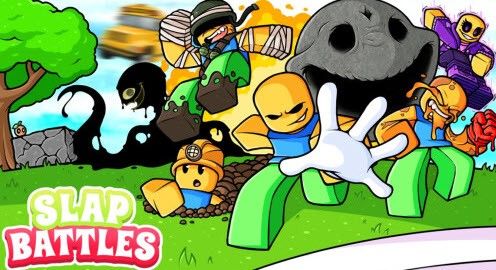
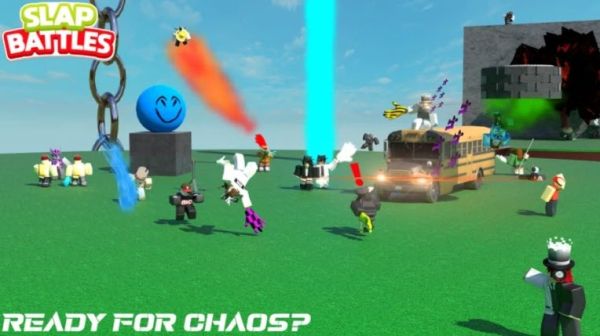
Slap Battles gave me one of the simplest instructions I have ever received in a Roblox experience: enter the arena and hit other players with an oversized glove. That explanation is technically accurate, but it leaves out teleportation, traps, transformations, time manipulation, flying objects, secret dimensions, boss encounters, badge puzzles, elaborate rituals, and the possibility of being launched across the map before I understand what touched me. What begins as a lightweight physics joke gradually reveals an enormous collection game built around unusual abilities and community knowledge. The basic slap remains important, yet the real attraction is discovering how absurdly far the developers can stretch that single action.
My earliest matches were almost completely uncontrolled. I ran toward the nearest player, clicked too early, missed, and immediately disappeared over the edge after receiving one well-timed response. Experienced players moved with far greater patience, waited for predictable approaches, and used abilities whose effects I could not identify quickly enough. The game looked random from my perspective, but repeated matches revealed a surprising amount of timing, positioning, cooldown management, and knowledge beneath the chaos.
The Main Arena Turns One Small Island Into Constant Trouble
The standard arena is intentionally exposed, giving players enough room to move while keeping the edge permanently relevant. There are few locations where I can forget that one strong impact may send me into the void. Central spaces attract large groups, narrow connections create natural ambush points, and elevated areas provide both visibility and danger. The map is easy to understand geographically, which allows the complicated glove interactions to remain the main source of confusion.
I appreciate that the environment does not attempt to compete with the abilities through unnecessary detail. Platforms, trees, structures, bridges, and smaller islands provide clear tactical landmarks. I can identify where a defensive player is waiting, which route a trap user is controlling, and where a crowded fight is likely to produce several easy targets. The simplicity makes every unusual effect more readable, at least until several abilities activate simultaneously.
The edge creates pressure even during calm encounters. A weak slap near the center may accomplish little, while the same contact beside a narrow ledge can decide the exchange immediately. Players therefore fight over positioning before they fight over damage or raw power. The arena rewards anyone who understands that the direction of contact matters as much as the glove producing it.
The Default Glove Teaches More Than It Appears To
The starting glove lacks the spectacular abilities that define most of the roster, but it teaches the core interaction clearly. I need to judge distance, face the correct direction, and choose the right moment rather than clicking continuously. Its ordinary power exposes my movement mistakes because there is no special effect available to rescue a poor approach. Learning to succeed with a simple glove makes later abilities easier to appreciate.
The Default glove also demonstrates that Slap Battles is not entirely controlled by unlock count. A player with basic equipment can still punish somebody who approaches carelessly or stands too close to an edge. Stronger gloves provide better tools, but those tools do not guarantee that every activation will connect. Timing remains relevant even when the visual effects become increasingly extravagant.
I occasionally returned to simpler gloves after unlocking more advanced options. Removing complicated cooldowns allowed me to focus on footwork, range, and reading another player’s movement. These matches felt cleaner and made the progression of my own habits easier to notice. Slap Battles is at its most satisfying when a successful contact comes from prediction rather than from filling the entire platform with an unavoidable effect.
Slaps Function as Currency, Progress, and Status
Every successful contact contributes to the Slap total used to unlock many standard gloves. Early requirements arrive quickly, providing a steady sequence of new toys and reasons to re-enter the arena. Later thresholds become much larger and require sustained play, efficient farming, or exceptional patience. The number beside a player’s name also communicates experience before the first encounter begins.
I enjoyed the early progression because each unlock could change my approach immediately. One glove might improve power, another introduces movement, and another depends on an activated ability rather than ordinary contact. The lobby presents these options physically, making progression feel like walking through an expanding catalogue. Seeing a distant glove requirement creates a clear long-term objective without opening another complicated reward screen.
The grind becomes less appealing once the distance between major unlocks increases. Repeating ordinary slaps for a large total can make matches feel like resource farming rather than spontaneous competition. The problem becomes stronger when experienced players dominate the same arena with abilities that make approach difficult. Slap Battles needs progression to create aspiration without making new players feel like targets placed there to support someone else’s currency total.
Every Glove Tries to Break One Familiar Rule
The roster is memorable because gloves rarely differ only through power and speed. One may create traps, another provides sudden movement, and others manipulate size, visibility, gravity, terrain, projectiles, clones, counters, or temporary transformations. Equipping a new glove can change which opponents I approach and which areas of the map feel useful. The game uses one equipment slot to provide an enormous range of playstyles.
This design gives the arena an almost party-game quality. I may understand one opponent perfectly and still be surprised by a second player using a completely different mechanic. Every glove introduces another small rule that must be learned through observation or failure. The resulting complexity is far larger than the cartoon presentation initially suggests.
The variety also creates balance problems that are almost impossible to solve completely. A glove designed around comedy may become frustrating when used repeatedly by an experienced player. An ability that seems weak in the center can become extremely effective near a ledge or during a crowded encounter. The developers must evaluate not only raw power but also control, mobility, cooldown, disruption, and how enjoyable the interaction feels for the person receiving it.
Active Abilities Reward Cooldown Awareness
Many gloves activate their main feature through a dedicated ability input. Once used, the effect enters a cooldown that creates a temporary period of vulnerability or reduced pressure. Good players track this rhythm and approach after an opponent has already committed the ability. Activating too early may look impressive while accomplishing almost nothing.
I initially treated abilities as emergency buttons and used them whenever another player entered the screen. This made my behavior predictable and allowed opponents to wait outside the effect before moving closer. I improved after considering what reaction the ability was supposed to create. Some tools work best as threats that influence movement even before they are activated.
Cooldowns also give ordinary slapping continued importance. A glove does not become completely useless after its special effect is spent because basic timing can still protect the user. The strongest designs combine a useful ability with a clear period where another player has an opportunity to respond. When that opportunity is missing, encounters can feel determined by equipment selection rather than interaction.
Passive Gloves Create Uncertainty Before the First Contact
Passive abilities operate without requiring the player to activate them manually. Their effects may alter ordinary slaps, provide defensive behavior, build power, or trigger under specific conditions. This makes them difficult to read when I do not recognize the glove immediately. The first contact can become an involuntary lesson in how the mechanic works.
I enjoy passive designs when their effect is visually understandable. A clear transformation, charge state, or environmental signal gives me enough information to make another decision. Hidden or poorly communicated reactions are more frustrating because the correct response arrives only after failure. A game containing hundreds of abilities needs strong visual language to keep learning manageable.
Passive gloves often support players who prefer movement and ordinary timing over ability management. I can focus on approaching correctly while the equipment strengthens the result automatically. The apparent simplicity may hide difficult conditions required to use the glove efficiently. Some passive tools become far more dangerous in the hands of somebody who knows exactly when their special state is ready.
Movement Is the Quiet Skill Behind Every Successful Slap
Slap Battles looks like a game about clicking another character, but movement determines whether that click becomes useful. I need to understand acceleration, jumping, rotation, spacing, and how another player is likely to respond near an edge. Running directly toward someone usually announces my intention too clearly. Small changes in direction create more opportunities than constant aggression.
Shift lock can make facing and side movement easier, particularly during close encounters. It allows me to maintain awareness of the target while adjusting position without relying entirely on camera rotation. The advantage is immediately noticeable once several players crowd the same platform. Mobile and console controls remain accessible, although precise orientation can feel more demanding on smaller screens or alternative input devices.
Jumping is useful but easily overused. A predictable jump creates a clear landing point where another player can prepare a slap. Remaining grounded provides better control, while changing height can avoid certain effects or cross environmental gaps. Strong movement comes from mixing options rather than repeating the one action that previously worked.
Physics Make Every Contact Slightly Unpredictable
Characters react dramatically to force, momentum, terrain, and ragdoll effects. A slap may produce a clean flight toward the edge or send somebody bouncing through another structure before they recover. Multiple abilities can interact and create outcomes that neither player intended. This unpredictability is one of the main reasons ordinary matches remain funny.
The physics also create frustration when the result appears inconsistent. Similar contacts may produce different distances because of movement, angle, server response, or another effect active at the same time. A character can appear safe and then continue sliding toward the edge after control returns. Understanding the system improves consistency without removing every strange outcome.
I would not want the physics to become completely precise. Slap Battles depends on exaggerated reactions and improbable recoveries for much of its personality. The ideal balance allows enough control for skill to matter while preserving the possibility of ridiculous accidents. The game is memorable partly because one ordinary contact can become a long, humiliating journey across the arena.
Crowded Fights Are Opportunities Disguised as Complete Disorder
When several players gather in one area, every participant becomes vulnerable to attacks from directions they cannot monitor simultaneously. Entering the center may provide quick Slaps, but it also places me beside multiple abilities and uncertain cooldowns. Watching from a short distance is often more effective than joining immediately. The last player entering the encounter can benefit from everyone else’s distraction.
Area-control gloves become especially influential during these moments. Traps, explosions, obstacles, projectiles, and wide effects can disrupt several players without requiring individual pursuit. The screen becomes difficult to read when these effects overlap, but their strategic purpose remains clear. A crowded platform rewards tools capable of influencing space rather than one target.
I enjoy these fights most when the chaos remains recoverable. Being launched, returning to the platform, and immediately responding creates fast stories without a long interruption. Some combinations can trap players in repeated ragdoll or remove meaningful control for too long. Comedy depends on timing, and even a funny effect becomes tiring when one player cannot participate.
One-on-One Encounters Reveal the Actual Mind Games
A quieter duel removes most environmental confusion and exposes how much prediction exists inside the basic combat. Each player waits for the other to enter range, wastes movement to provoke a response, and searches for the angle that will send the opponent toward the nearest edge. The first missed slap creates a short opening. Winning that exchange feels far more deliberate than collecting an accidental hit inside a crowd.
Different gloves create unusual matchups. A mobile ability may control distance, while a counter-focused glove encourages patience and punishes automatic aggression. Trap users want the opponent to move through prepared space, and ranged tools attempt to prevent close contact entirely. The duel becomes a small puzzle defined by both equipment choices.
Balance is naturally imperfect because certain gloves respond to one another more effectively than others. A difficult matchup does not always mean the weaker player lacks skill. Leaving the area and finding another opponent can be a sensible decision. Slap Battles rewards adaptability because insisting on one fair duel inside an intentionally unfair roster is rarely productive.
Badge Gloves Transform Progression Into Adventure
Not every glove can be purchased through a Slap requirement. Badge gloves are connected to achievements involving secret objectives, puzzles, unusual interactions, boss fights, platforming sections, or coordinated actions. These unlocks give the experience a second identity beyond arena grinding. The player becomes an explorer searching for conditions that may not be explained inside the main lobby.
I appreciate that badge challenges can make older gloves and locations relevant again. A strange ability interaction may be required to open a path or trigger an event. Another player’s equipment can become part of the solution, encouraging cooperation inside a game normally built around pushing people away. The reward feels personal because it represents a completed story rather than only a large currency total.
The obscurity can become excessive. Certain badges are difficult to discover without community guides, and failed attempts may provide little information about which step was incorrect. Secret content is exciting when clues support experimentation. It becomes less satisfying when progress depends on reproducing an exact hidden sequence learned outside the game.
Boss Encounters Show How Far the Game Has Expanded
Boss fights use the same movement and ability foundation in more structured encounters. Players may need to avoid attacks, complete platforming, use environmental mechanics, and survive several phases before receiving the related badge. These battles feel surprisingly ambitious compared with the simple main arena. They demonstrate that Slap Battles has grown into a broader collection of modes connected by gloves.
I enjoy bosses that communicate their attacks clearly and allow improvement between attempts. A failed run should teach me where to move, when to wait, and which attack pattern deserves the greatest attention. Cooperative encounters add another challenge because one person’s mistake can affect the group. Reaching the final phase with friends creates a form of tension absent from ordinary slap farming.
Technical consistency matters greatly during these challenges. Platforming and reaction-based attacks become frustrating when latency or unusual collision changes the result. The game’s playful physics are ideal for arena comedy but less comfortable during precise scripted sequences. The strongest bosses design around those physics rather than pretending they do not exist.
Obbies Add Precision to a Game Built Around Instability
Platforming challenges ask me to control movement more carefully than the main arena usually requires. Small platforms, moving hazards, launch mechanics, and narrow routes create a different test from slap timing. Falling may reset a large portion of progress, making patience more important than speed. The contrast gives badge progression useful variety.
The movement system is readable enough for ordinary jumps, but advanced sections can reveal inconsistencies around edges and momentum. A character may slide slightly farther than expected or react strangely after landing. Learning the obstacle often includes learning how Roblox movement behaves in that specific area. This can feel rewarding when mastered and irritating when the failure looks unrelated to the input.
I prefer obbies that are integrated into a larger quest. Platforming feels more meaningful when it represents one stage of reaching a secret glove or boss. A long isolated obstacle course can become repetitive without additional context. Slap Battles is strongest when challenges change type before one mechanic becomes exhausting.
Secret Rituals Encourage Cooperation and Community Research
Some advanced gloves require several players, specific equipment, unusual locations, or a sequence of interactions performed correctly. These rituals turn the community into part of the progression system. Players organize groups, explain roles, and repeat steps until the event activates. The glove becomes a record of successful coordination.
This structure creates memorable social sessions because the objective cannot always be completed alone. A stranger with the necessary glove may help unexpectedly, while one absent role can stop the entire attempt. Private servers make coordination easier by removing unrelated interference. Public attempts are more chaotic but occasionally produce wonderful spontaneous cooperation.
The dependency on other players can also become a barrier. Finding the correct group at the correct time is difficult, particularly for newcomers without an established community. One person leaving may invalidate a long preparation process. Cooperative requirements are more enjoyable when the game provides tools for assembling interested players rather than forcing everyone to search through external communities.
Mastery Gives Familiar Gloves a Second Life
Mastery systems add long-term objectives to selected gloves and reward players for using their mechanics repeatedly. Tasks may involve successful ability use, specific interactions, or achieving a required number of eliminations and effects. Completing the track can unlock an upgraded ability or expanded playstyle. A glove I previously ignored may become interesting again after receiving a Mastery path.
I like the concept because it rewards specialization rather than only collection. Spending time with one glove teaches its range, weaknesses, and unusual interactions more deeply. The final upgrade feels earned through practical use. Mastery can also create visible goals for players who already possess most standard unlocks.
The required numbers need careful balance. Repeating one narrow action hundreds of times may encourage artificial farming rather than natural play. Players can begin treating opponents as progress objects instead of participants in a match. The best tasks reward effective use during normal encounters and allow several approaches toward completion.
Slap Royale Changes the Experience Into Survival
Slap Royale separates players from the ordinary progression arena and places them in a more structured last-player-standing format. Equipment, items, positioning, and survival become more important because one defeat carries greater consequence. The larger environment changes how I approach other players. Avoiding attention can be more valuable than collecting immediate Slaps.
I enjoy how the mode uses familiar mechanics under different pressure. A glove that is entertaining in the normal arena may become a strategic tool when resources and opportunities are limited. Traps, healing, movement, and information matter more because recovery is less convenient. The final encounters feel tense even though the central action remains visually ridiculous.
The mode can be difficult for new players because experienced participants understand item locations, rotations, and glove advantages. Early elimination provides limited time to learn. Match length also makes unfair technical outcomes more frustrating than in the standard arena. Slap Royale is best approached after becoming comfortable with movement and the broader equipment language.
Public Servers Create Their Own Social Hierarchies
Every server develops a temporary personality depending on the gloves and players present. One experienced user may control the central platform, several friends could cooperate, and a disruptive ability might turn the entire lobby against its owner. Alliances appear without formal team systems. They usually last until somebody sees an easy opportunity for betrayal.
High-Slap players can become intimidating because their total suggests knowledge and access to advanced equipment. Some help newcomers, demonstrate secrets, or participate in badge attempts. Others use powerful abilities to control the arena repeatedly. The game provides enough freedom for both behaviors without clearly separating competitive and social intentions.
I find the server culture entertaining when rivalry remains playful. Repeatedly targeting the same person, interrupting a badge attempt, or trapping players without meaningful escape can make the experience unpleasant quickly. Tools that are funny once can become harassment when used continuously. Community behavior matters more in Slap Battles because so many abilities are designed specifically to disrupt control.
Private Servers Change Chaos Into Experimentation
Private sessions allow friends to test gloves, practice counters, arrange badge requirements, and explore secrets without constant interruption. This makes them especially useful for complicated rituals and abilities requiring several controlled steps. The absence of random players reduces comedy but increases reliability. I can finally understand what one glove does without being launched by another effect halfway through the test.
These servers also support custom challenges between friends. We can agree to use simple gloves, create informal teams, or attempt to reach unusual areas. The game does not need formal settings for every possibility because the physics and equipment already provide enough material. Slap Battles works surprisingly well as a social sandbox when players establish their own rules.
The controlled environment exposes which mechanics depend heavily on surprise. Certain gloves become less effective when everyone knows the ability and cooldown. Others remain strong because their value comes from space control or movement rather than confusion. Testing privately gives me better information before returning to public chaos.
Unlock Requirements Create Mystery and Frustration in Equal Measure
Walking through the lobby and seeing inaccessible gloves creates immediate curiosity. Some display a straightforward Slap requirement, while others reveal only a badge or unfamiliar condition. This mixture encourages both grinding and exploration. The collection appears larger because every glove represents a different story of acquisition.
I enjoy unlocks that provide enough information to begin investigating. A badge name, environmental clue, or connected NPC can point toward the correct type of challenge without revealing every step. Complete secrecy often transfers the work from in-game experimentation to external searching. The discovery feels weaker when I simply reproduce a guide exactly.
The enormous roster makes some obscurity inevitable. Explaining every glove fully inside the lobby would produce an overwhelming interface. A journal recording discovered clues and attempted steps could preserve mystery while supporting progress. Slap Battles has enough quest-like content to benefit from stronger internal tracking.
Visual Effects Communicate Personality but Can Hide Important Information
Gloves use bright particles, transformations, sounds, projectiles, and environmental effects to make abilities immediately memorable. A new unlock feels exciting because its presentation often changes more than the statistics. The arena becomes a constantly moving display of unusual hands and impossible events. This visual confidence is central to the game’s comedy.
Readability declines when several effects overlap. Large objects, flashes, clones, explosions, and altered characters can hide the player I was attempting to follow. On smaller screens, the amount of information becomes especially difficult to process. Reducing unnecessary visual obstruction would improve competition without removing the exaggerated style.
The strongest effects clearly indicate their dangerous area and duration. I can understand where not to stand and when it becomes safe to approach again. Poorly defined boundaries make learning depend on repeated failure. A roster this large needs consistency in warning language even when every glove maintains its own visual theme.
The Sound Design Makes Every Slap More Humiliating
Impact sounds give the central action far more personality than its mechanical simplicity would suggest. A successful slap is loud, immediate, and often followed by an exaggerated reaction or ability cue. The audio helps me understand when contact registered even during a crowded fight. It also makes being launched feel intentionally comedic.
Music and special effects become more prominent during secret areas, boss encounters, and unusual transformations. These changes signal that the experience has moved beyond the ordinary arena. Community-recognizable sounds also contribute to the game’s identity and recurring jokes. Longtime players can often identify a glove before seeing it clearly.
The arena can become extremely noisy when several abilities activate together. Important cues disappear beneath repeated impacts and effects. Volume controls and clearer sound priorities would help players who rely on audio for cooldowns or approaching threats. The chaos is appropriate, but it should not make all information equally loud.
The Humor Comes From Systems Rather Than Written Jokes
Slap Battles rarely needs a long scripted scene to create comedy. One player may charge an impressive ability, miss completely, and fall from the platform through their own movement. Another may confidently approach a harmless-looking target before triggering a counter. The physics and equipment produce punchlines automatically.
The names, descriptions, badges, and secret quests add another layer of absurdity. Serious challenge structures are often attached to ridiculous gloves or unusual creatures. The game is comfortable presenting a complicated ritual as the path toward one more strange hand. That contrast keeps the collection from feeling like a conventional power ladder.
Humor becomes less effective when one player has no opportunity to respond. Being surprised once can be funny, while being trapped repeatedly becomes an interruption. The developers need to preserve ridiculous effects while providing reasonable recovery and counterplay. Slap Battles succeeds because players are participants in the joke rather than permanent targets of it.
Mobile Play Is Accessible but Mechanically Demanding
The simple slap and ability inputs translate naturally to touch controls. A mobile player can understand the objective quickly and access the same broad collection of gloves. On-screen buttons make active abilities visible without memorizing keyboard inputs. This accessibility supports the large and varied Roblox audience.
Precise camera control and rapid direction changes can be more difficult on a small screen. Crowded encounters fill the display with effects and character models, making target selection harder. Advanced movement and platforming sections may also feel less comfortable than on keyboard or controller. The game remains playable, but the control method influences how easily certain challenges can be completed.
Interface scaling is important because ability buttons should remain accessible without covering the arena. Different devices create very different viewing conditions. A glove that is easy to understand on a large monitor may become visually confusing on a phone. Continued device-specific adjustment is necessary for a competitive experience built inside a cross-platform platform.
Progression Can Encourage Unhealthy Farming Habits
Large Slap requirements and demanding Mastery objectives naturally encourage players to search for the fastest possible method. This may involve targeting distracted opponents, arranging private farming sessions, or repeating one efficient ability rather than playing naturally. Progress becomes separated from entertainment. The player continues because the next glove is close, not because the current match remains enjoyable.
I found the game healthier when I treated unlocks as background progress. Using different gloves, joining badge attempts, and exploring modes allowed Slaps to accumulate without becoming the only purpose. The rate was slower, but each session contained more variety. A collection game should create anticipation without turning every interaction into arithmetic.
Alternative progression sources could reduce repetitive behavior. Challenges involving different gloves, exploration, successful counters, or cooperative objectives would reward broader participation. The game already contains enough systems to support varied advancement. Slaps should remain important without becoming the sole measure of meaningful play.
Game Passes Add Convenience and Controversy
Some equipment and benefits are connected to premium purchases rather than ordinary Slaps or badges. This is expected within Roblox’s broader economy, but it affects how players interpret fairness inside the arena. A visually dramatic or mechanically strong paid glove can create the impression that spending provides immediate dominance. Even balanced items attract suspicion when access depends on Robux.
I prefer premium options that provide distinct playstyles rather than direct superiority. A purchased glove can be entertaining and unusual without invalidating equipment earned through play. Clear weaknesses and counterplay are essential. The arena remains healthier when skill and knowledge determine outcomes more strongly than ownership.
Cosmetic or convenience purchases are easier to accept because they do not change the central exchange directly. Slap Battles has a large enough audience and content catalogue to support monetization without making free progression irrelevant. Trust depends on maintaining that boundary consistently. One excessively dominant paid option can damage perceptions far beyond its actual use rate.
Updates Keep the Collection Alive but Increase the Knowledge Barrier
New gloves, Mastery tracks, badge quests, balance changes, and seasonal events provide regular reasons to return. An update may introduce one simple Slap unlock or an elaborate challenge involving several systems. Existing gloves can also receive reworks that change familiar matchups. The arena rarely remains completely solved.
This development creates excitement for established players and confusion for newcomers. Every new glove adds another effect that must be recognized before responding correctly. Community wikis and videos become increasingly important because the in-game explanation cannot cover the accumulated complexity fully. Joining several years late means entering an arena where many participants already understand hundreds of interactions.
I appreciate updates most when they improve older content alongside adding something new. A Mastery path, clearer effect, or balance adjustment can restore relevance to a forgotten glove. Constant expansion without maintenance would make much of the lobby decorative. Slap Battles needs both novelty and preservation to keep its enormous roster meaningful.
Balance Is Less About Perfect Equality Than Reasonable Interaction
A game containing hundreds of unusual abilities will never make every matchup perfectly equal. Some gloves naturally control others, and environmental conditions change their effectiveness further. The more realistic goal is ensuring that most abilities provide understandable strengths, weaknesses, and moments for response. Losing should teach something beyond the fact that another player equipped the correct glove.
Cooldowns, warning effects, range limits, and positional requirements are useful balancing tools. Raw power can remain high when activation requires planning or creates meaningful vulnerability afterward. Problems emerge when one ability controls a wide area, activates safely, and offers little counterplay simultaneously. The frustration comes from losing agency rather than from the visual strength alone.
Regular adjustments are necessary because players discover combinations and techniques the original design may not have anticipated. One small interaction can transform a modest glove into a server-wide problem. Community feedback is valuable, though popularity should not be the only measurement. A glove can be uncommon and still create extremely unpleasant encounters.
Latency Can Decide Encounters That Look Completely Different
Slap timing depends on position and contact, making network delay particularly noticeable. I may see my character reach the opponent first while the server records their slap instead. Ragdoll behavior and rapid abilities can exaggerate the difference between local visuals and the final result. These moments feel unfair because the core interaction is so immediate.
High player counts and numerous effects place additional pressure on performance. A busy server can reduce frame stability on weaker devices, making reaction and camera movement harder. Players with smoother performance gain practical consistency even without a direct statistical advantage. Optimization matters greatly inside a game whose art style appears technically simple.
I learned not to treat every strange exchange as evidence of an impossible glove. Movement prediction must account for slight delay, particularly against fast players. This adaptation improves results without solving the underlying technical issue. Competitive clarity would benefit from continued work on hit registration and effect synchronization.
New Players Need Better Protection From Complete Overload
The lobby introduces many gloves immediately, while the arena contains players using effects a newcomer cannot identify. Early progression is fast enough to provide encouragement, but learning through constant removal from the platform can become discouraging. A basic tutorial explains controls more easily than it explains strategic survival. The real lesson is recognizing when not to approach somebody.
Beginner servers or rotating limited-glove playlists could create a gentler learning environment. Restricting the roster temporarily would allow players to understand movement and ordinary slap timing before facing complex abilities. This would not need to replace the main arena. It could function as a practical bridge toward the full experience.
I would also welcome an in-game glove encyclopedia containing short demonstrations. Seeing an ability once in a controlled preview would make its warning signs easier to recognize later. The game already treats glove collection as its main progression identity. Providing better knowledge about that collection would support both newcomers and returning players.
The Community Keeps Secrets Alive Longer Than the Developers Could Alone
Players create guides, theories, challenge groups, demonstrations, and discussions around every difficult badge or unusual interaction. This collective research gives hidden content a life beyond one update weekend. Discovering a secret often leads toward another mystery or requirement. The community effectively becomes an unofficial extension of the game’s interface.
I enjoy seeing players help others earn complicated gloves, particularly when the process requires equipment the newcomer does not own. Cooperation feels meaningful because the main arena normally encourages the opposite behavior. One experienced group can turn a confusing objective into a memorable shared event. These moments reveal a friendlier side of the community beneath the constant slapping.
External dependence remains a concern. Important mechanics should not become impossible to understand without searching another site or watching a long video. Community knowledge should deepen discovery rather than replace basic communication. Slap Battles has enough narrative and quest complexity to justify stronger documentation inside the experience itself.
The Best Gloves Create Stories Instead of Guaranteed Results
My favorite equipment does not simply remove the nearest opponent immediately. It creates a situation that both players can influence through movement, timing, or an unusual reaction. A trap may redirect the fight, a mobility tool can produce a dramatic recovery, and a transformation might change how everyone nearby responds. The ability becomes a story generator rather than a victory button.
These gloves remain entertaining even after their surprise has disappeared. Knowing the mechanic allows better mind games instead of making the equipment irrelevant. The user must hide intention, choose the right environment, or wait for another player’s mistake. Counterplay strengthens the glove because successful use feels more deliberate.
The weaker designs depend too heavily on unfamiliarity or overwhelming force. Once players understand them, they become either ineffective or persistently irritating. Slap Battles has created enough excellent abilities to demonstrate the better approach. The game’s long-term quality depends on expanding interaction rather than only increasing spectacle.
Every Server Eventually Produces One Unforgettable Accident
A routine session can change when several unrelated effects collide at the same moment. One player activates movement, another places a trap, a third launches an object, and somebody else arrives with an ability none of them noticed. The result may remove half the group or send one character through an impossible recovery. These moments cannot be planned reliably, which makes them worth remembering.
I often laughed more at my own failures than at successful slaps. Confidently charging the wrong opponent, activating an ability while facing away, or surviving one launch only to walk off another edge creates immediate comedy. The short return time makes embarrassment easier to accept. I can re-enter the arena before frustration completely replaces amusement.
This rapid cycle is central to the game’s appeal. Failure matters enough to create a reaction but usually does not remove much progress or time. The next attempt begins with slightly more knowledge and another opportunity for something strange to happen. Slap Battles converts repetition into entertainment through the instability of its systems.
A Simple Roblox Joke That Grew Into an Enormous Ability Collection
Slap Battles succeeds because its foundation remains understandable even after years of expansion. I equip one glove, enter a platform, and attempt to send other players over the edge before they do the same to me. Movement, timing, range, and position provide enough skill for ordinary encounters. Hundreds of glove abilities then distort that foundation in ways that create constant novelty.
The badge system, secret quests, bosses, obbies, rituals, Mastery tracks, Slap Royale, and community discoveries give the experience far more depth than its title suggests. Unlocking a glove can involve patient grinding, mechanical practice, exploration, teamwork, or solving a mystery. This variety makes the collection feel like a history of completed challenges. The lobby becomes a display of everything the player has learned and endured.
The same scale creates serious weaknesses. New players face an overwhelming knowledge barrier, large requirements encourage farming, paid equipment can raise fairness concerns, and some abilities remove control for too long. Visual clutter, latency, unclear hit registration, and hidden requirements can make failure feel less educational than it should. Balance will always remain difficult when every update adds another rule-breaking hand.
I continue enjoying Slap Battles because it rarely takes its own competition too seriously. One moment I am carefully tracking cooldowns and positioning beside an opponent, and the next I am flying across the map because a completely unrelated player activated something ridiculous behind us. The game gives skill enough room to matter without allowing mastery to remove surprise. Slap Battles may be built around one simple joke, but its enormous collection of gloves ensures that the joke keeps finding new ways to land.
Pros:
- Dynamic and engaging combat mechanics
- Vibrant aesthetic with playful audio cues
- Robust mod support for personalized experiences
- Frequent updates ensuring smooth performance on various devices
- Free-to-play model with unblocked access across platforms
- Accessible gameplay for all skill levels
Cons:
- Reliance on community mods and cheats may affect fair play
- Lacks a deep narrative or complex combat system for hardcore gamers
- Competitive matches can sometimes feel unbalanced








Recent Reviews

Minecraft

Grand Theft Auto V

Toca Boca World

Roblox

Leave a comment
Your comment is awaiting moderation. We save your draft here
0 Comments