
Review
Grand Theft Auto III feels surprisingly small when I return to it after years of increasingly enormous open-world games. Liberty City c...
Liberty City Reborn: The Enduring Impact of GTA III
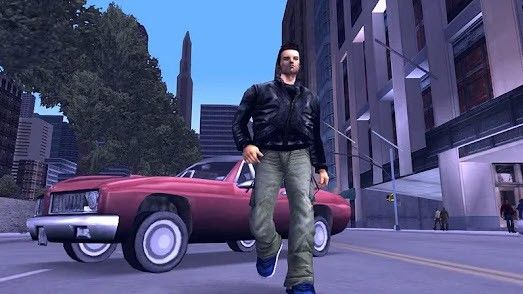
Grand Theft Auto III feels surprisingly small when I return to it after years of increasingly enormous open-world games. Liberty City contains only three main islands, the streets repeat familiar patterns quickly, and the available activities would barely fill a modern map legend. Yet the city still feels important because almost every corner represents an idea that later games would expand into an entire genre convention. Driving away from the opening mission and realizing that I could choose my own road remains more meaningful than many larger worlds filled with carefully organized distractions.
The game’s age becomes visible almost immediately. Character animation is stiff, aiming is awkward, mission checkpoints are limited, and several objectives punish mistakes by demanding another long drive before I can try again. Vehicles can feel light and unstable, while the camera occasionally struggles to follow action in narrow spaces. None of these limitations disappear simply because GTA III is historically important, but understanding what the game attempted in 2001 makes its roughness easier to place within the experience.
Liberty City Feels Hostile From the First Street
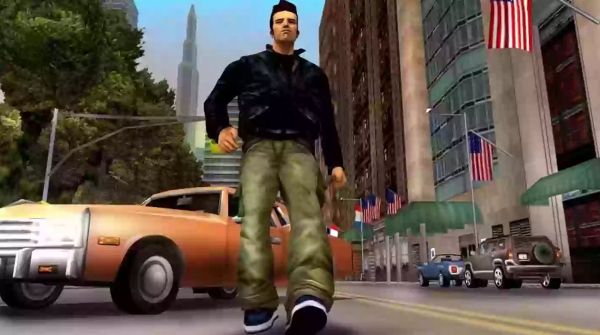
Liberty City is not an inviting playground designed to make the player comfortable. The sky is frequently gray, industrial buildings dominate large districts, and even wealthier areas possess a cold distance that prevents them from feeling peaceful. Traffic creates noise without warmth, pedestrians often sound irritated, and criminal groups control streets that become increasingly dangerous as the story progresses. The atmosphere suggests that everyone is attempting to gain something before somebody else takes it first.
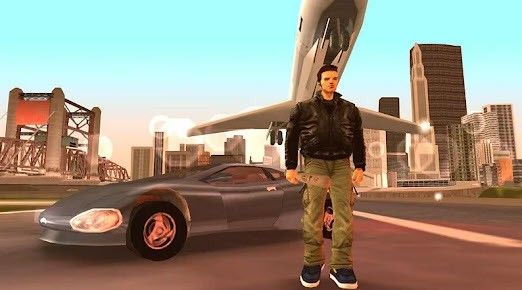
I enjoy how clearly the three islands communicate different levels of the city. Portland contains docks, warehouses, factories, narrow streets, and neighborhoods shaped by older criminal organizations. Staunton Island presents offices, construction sites, parks, commercial districts, and political influence hidden behind cleaner surfaces. Shoreside Vale provides airports, suburban roads, hills, infrastructure, and more isolated spaces, making it feel removed from the density of the earlier districts.
The map is compact enough that I gradually learn it without constantly opening a navigation screen. Bridges, tunnels, elevated tracks, waterfront roads, and major buildings create recognizable routes between mission locations. This familiarity makes driving more satisfying because I begin choosing shortcuts based on memory rather than following a line across the ground. Liberty City becomes understandable through repeated travel, including the repeated journeys caused by failed missions.
The City’s Small Scale Gives Every District Identity
Modern open worlds often use enormous landscapes to communicate scale, but GTA III benefits from placing its locations close together. A short drive can move from industrial docks into a crowded neighborhood, through a tunnel, and toward a hillside overlooking the water. The transitions are not always realistic, yet they keep the city visually varied. Almost every district serves several missions, ensuring that important places become familiar rather than disposable.
The limited scale also increases the impact of hostile territory. After damaging relationships with certain groups, driving through their neighborhoods can become genuinely inconvenient. Gunfire may begin before I have decided whether to stop, and a weak vehicle can become dangerous transportation instead of temporary protection. The city remembers parts of the story mechanically, even if the implementation is often harsher than necessary.
I sometimes miss the density of interior spaces found in later games. Most buildings are scenery, and shops provide only a small number of practical interactions. GTA III creates the appearance of a functioning city without allowing deep access to it. Its illusion depends on movement through streets rather than on detailed life inside individual buildings.
Claude’s Silence Makes Him Both Flexible and Empty
Claude never speaks, allowing other characters to explain plans, insult him, and assign dangerous work without receiving a verbal response. This silence makes it easy for me to treat him as an efficient criminal shaped by player actions rather than by a detailed personal philosophy. He appears willing to work for almost anyone who offers money or access. Loyalty rarely lasts longer than its usefulness.
The approach supports the simple mission structure because Claude does not require a long emotional explanation before changing employers. He can move between criminal groups while the player focuses on practical consequences. His blank expression also gives certain scenes a dry sense of comedy because everyone around him behaves theatrically while he remains almost completely unmoved. The city talks constantly, but its central character offers nothing in return.
The disadvantage is that Claude cannot carry the story emotionally. Later Grand Theft Auto protagonists react to betrayal, friendship, ambition, and personal loss through dialogue and performance. Claude mostly receives information and completes the next objective. This keeps the narrative efficient, though it makes the supporting cast more memorable than the person connecting them.
The Story Moves Through Employers Rather Than Personal Growth
The campaign is structured around meeting criminals, completing several jobs, earning trust, and eventually gaining access to another contact. Each employer introduces a different corner of Liberty City’s underworld. Mafia figures, triads, corrupt officials, media personalities, business owners, and street organizations all use Claude for tasks they cannot or will not perform personally. The story advances through employment rather than through a conventional heroic journey.
This structure gives the campaign a satisfying sense of escalation. Early jobs involve vehicles, small confrontations, debt collection, and local disputes. Later missions introduce larger conspiracies, heavily armed opposition, police attention, and objectives spread across multiple islands. Claude’s rise is visible through the importance of the people contacting him and the severity of the work they provide.
The narrative can feel abrupt because relationships are rarely developed beyond mission briefings. Characters appear, establish a strong personality, and send me into action before disappearing or being replaced by another employer. The writing relies on caricature and dark humor rather than emotional depth. It remains entertaining, but the story functions mostly as a reason to explore different mission types and city districts.
The Supporting Cast Gives Liberty City Its Voice
Grand Theft Auto III compensates for Claude’s silence with a collection of loud, paranoid, ambitious, and frequently unstable supporting characters. Salvatore Leone projects authority while gradually revealing insecurity and suspicion. Joey Leone treats crime like another part of the automotive business, while Toni Cipriani approaches family loyalty and criminal responsibility with constant aggression. Each character is exaggerated enough to become recognizable within a brief introduction.
Later employers broaden the tone beyond traditional organized crime. Media figures treat public attention as another weapon, corrupt professionals hide self-interest behind official roles, and wealthy criminals behave as though every problem exists for somebody else to solve. The performances give short cutscenes more energy than the simple character models might suggest. Voice acting carries much of the personality that animation cannot provide.
The writing frequently uses offensive stereotypes and humor rooted in the period of its release. Some jokes still support the cynical view of Liberty City, while others feel careless or dated rather than sharply satirical. Revisiting the game requires recognizing that its attitude was designed to provoke. Historical context explains the tone, but it does not make every line equally successful today.
Driving Is the True Foundation of the Game
Most missions begin, continue, or end behind the wheel. I drive toward employers, transport passengers, pursue targets, escape law enforcement, deliver vehicles, and cross the city after failure. The handling is immediately accessible because cars respond quickly and exaggerate their individual personalities. Heavy vehicles resist turns, sports cars become unstable at high speed, and taxis provide a dependable balance for ordinary travel.
The physics are loose enough to produce comedy without making every collision meaningless. Cars bounce, rotate, lose doors, catch fire, and become difficult to control after repeated impacts. A simple turn can become a larger accident when traffic blocks the intended route. These unpredictable moments give routine journeys enough variation to remain entertaining.
Vehicles also serve as temporary resources rather than permanent possessions. I take whatever is nearby, use it until it becomes damaged or inconvenient, and replace it with another car from the street. This supports the game’s fast criminal rhythm because transportation is always available. It also means that vehicle attachment is weaker than in later games with customization and personal garages.
Each Vehicle Class Changes How I Read the Road
A fast sports car encourages direct routes and risky overtaking, while a heavy truck makes traffic itself into a physical obstacle. Emergency vehicles offer useful speed or durability but attract attention and can be difficult to control. Vans provide stability without excitement, and motorcycles are completely absent from this entry. The available selection already creates enough variation for vehicle choice to influence mission strategy.
I often choose reliability over maximum speed because Liberty City’s streets contain sudden turns, traffic, barriers, and hills. A vehicle capable of surviving several collisions may complete a chase more effectively than a fragile car that reaches its highest speed briefly. Mission failure frequently begins with one unnecessary impact rather than with insufficient acceleration. Learning which vehicle fits the objective becomes part of preparation.
The camera can make fast driving difficult, especially after abrupt direction changes. It does not always rotate quickly enough to reveal the next road, and narrow streets can hide approaching traffic. I gradually compensate by memorizing routes and reducing speed before complicated intersections. The limitations make city knowledge even more valuable.
The Radio Stations Build an Entire Culture Inside the Cars
Radio is one of GTA III’s most enduring achievements because it turns every vehicle into a moving part of Liberty City’s media landscape. Music stations cover different styles, while talk programs deliver advertisements, interviews, callers, news, and absurd arguments. The city continues expressing itself while I travel between objectives. Long drives feel less empty because another layer of satire is always playing.
Chatterbox remains especially memorable because its callers reveal the city’s selfishness, paranoia, and bizarre personal problems without requiring visual scenes. The humor creates characters who never need to appear on the street. Commercials also parody products, political language, masculinity, consumer culture, and corporate irresponsibility. Liberty City sounds like a place attempting to sell something even while it falls apart.
The soundtrack is smaller than the enormous licensed collections used by later entries, but that limited selection gives each station a stronger identity. Repeated listening naturally makes certain tracks overly familiar during a long campaign. Even so, entering a car and hearing a recognizable introduction immediately changes the mood. Radio transforms travel time into part of the game’s personality.
Combat Reveals the Game’s Age More Than Driving
Gunfights are direct and frequently awkward. Targeting can select an enemy I did not intend to prioritize, while camera positioning makes nearby threats difficult to track. Claude lacks the smooth cover movement, manual aiming flexibility, and responsive transitions expected from later third-person shooters. Success often depends on controlling distance and approaching encounters with enough health and armor.
The weapon selection covers basic roles including pistols, automatic firearms, shotguns, precision options, explosives, and heavier equipment. Each category provides a clear increase in destructive potential, but the handling rarely develops into deep tactical gunplay. Automatic targeting carries much of the work during console-style encounters. On foot, the game is less about mechanical precision and more about surviving the situation long enough to reach the next objective.
Explosives can be particularly unpredictable because environmental geometry and vehicle reactions create wide consequences. A well-placed attack may clear a difficult area, while one small mistake can destroy Claude’s own transportation or reduce his health immediately. I enjoy the chaos when it emerges from experimentation. It becomes less amusing when a rigid mission requires another full restart afterward.
The Wanted System Turns Mistakes Into Moving Problems
Criminal actions attract police attention represented through wanted levels. A low level may bring patrol cars and officers, while higher levels introduce roadblocks, heavier units, and increasingly aggressive pursuit. The system creates escalation without requiring a scripted chase. Any ordinary journey can become a larger event if I continue causing trouble rather than escaping.
Changing vehicles, using hidden bribes, repainting a suitable car, and breaking visual contact can reduce pressure. These options make pursuit more than a simple speed test. I need to understand the city, preserve a functional vehicle, and avoid creating additional collisions. The police are not especially intelligent, but their numbers and persistence make them effective.
The system can interfere with missions when one accidental action creates attention at an inconvenient moment. Law enforcement may arrive while I am already dealing with hostile groups, turning a manageable objective into layered disorder. This unpredictability is central to the GTA formula. It also produces some of the game’s sharpest difficulty spikes.
Mission Design Alternates Between Inspired Freedom and Harsh Restriction
Many missions provide a destination, target, or vehicle and allow me to choose the route. I can select transportation, approach from another direction, collect equipment beforehand, or use city knowledge to avoid traffic. These small freedoms were remarkable when the game first appeared. They make the mission feel connected to the open world rather than completely separated from it.
Other missions depend on strict timing, fragile vehicles, escort behavior, or unusual conditions that are not communicated clearly before failure. Checkpoints are rare, so repeating the mission can require returning to the employer, watching the briefing again, finding another vehicle, and driving back across the island. The challenge becomes partly a test of patience. A short difficult sequence can consume far more time than its actual length suggests.
I often understand the intended solution only after one attempt reveals information the briefing did not provide. The next run becomes easier because I know the route, enemy position, or vehicle requirement. This trial-and-error structure reflects older design priorities. It creates satisfaction after success, but modern players may find the repeated setup unnecessarily severe.
Failure Has a Larger Cost Than the Mission Itself
When Claude is arrested or loses all health, he returns without much of the equipment gathered previously. Mission progress is lost, and another trip across the city is usually required. This consequence gives mistakes weight, but it also discourages experimentation during demanding objectives. A creative approach becomes less attractive when testing it may cost several minutes of recovery.
I began saving at safehouses frequently and collecting weapons before important jobs. Preparation reduces some frustration, although it adds another routine between attempts. The game expects players to learn through repetition while giving them limited tools for shortening that repetition. This creates a harsher rhythm than most modern open-world campaigns.
The Definitive Edition adds modernized controls and presentation, but the underlying mission structure remains rooted in the original design. Improved aiming cannot solve every objective built around limited information or long restarts. Preserving the structure maintains historical authenticity. It also preserves frustrations that could have been reduced without changing the identity of the missions.
Payphone Missions Make the City Feel Full of Hidden Work
Public telephones provide additional assignments separate from the primary criminal contacts. These missions make Liberty City feel as though opportunities exist beyond the people introduced through the central story. Claude receives work from voices that may never appear physically. The arrangement suits a protagonist defined mainly by his usefulness.
Payphone objectives often focus on driving, deliveries, timed routes, or eliminating several targets. They provide money and variety without requiring major narrative development. Some are among the more demanding activities because they combine time limits with city traffic and vehicle handling. Completion depends on route knowledge as much as reflexes.
I like how physically locating the ringing phone becomes part of accepting the mission. The city itself announces that work is available rather than placing every task inside one menu. This small detail gives side content a place within the environment. Later games would expand the idea into much larger networks of optional activity.
Vehicle Missions Provide Simple Long-Term Challenges
Taxis, ambulances, police vehicles, and fire engines activate repeatable jobs built around the function of the selected vehicle. Taxi work requires transporting passengers, emergency services demand rapid routes, and vigilante activity turns the police structure against other criminals. These modes add practical value to vehicles that might otherwise be used only briefly. They also provide an alternative to the main campaign.
The tasks become repetitive quickly because their structure changes mainly through destination and difficulty. Their appeal comes from attempting longer chains without losing the vehicle or failing the conditions. Completing them can provide useful rewards and a strong sense of mastery over the city. The challenge is mechanical rather than narrative.
Ambulance work is particularly demanding because driving quickly while preserving the vehicle requires careful control. Traffic and hills become serious obstacles, while one collision can damage the run substantially. The activity reveals how difficult the city can be even without hostile gunfire. It is a severe test of route planning and patience.
Hidden Packages Reward Players Who Study the Environment
Collectibles are placed across rooftops, alleys, enclosed yards, industrial spaces, and unusual corners of the map. Finding enough of them unlocks weapons at safehouses, providing a practical benefit rather than only a completion percentage. Their locations encourage me to leave major roads and examine the city’s geometry. Exploration becomes connected to long-term convenience.
The absence of modern tracking makes complete collection difficult without careful notes or external help. I may find a package and forget its location immediately, creating uncertainty later about which one remains missing. This reflects an era when games expected players to build their own records. It can feel rewarding or unnecessarily obscure depending on personal tolerance.
I enjoy finding packages naturally during the campaign because they turn detours into useful discoveries. Hunting every final location is less appealing once exploration becomes systematic. The city’s compact size makes completion possible, but not effortless. These collectibles establish a structure that later open-world games would repeat extensively.
Stunt Jumps Turn Urban Geometry Into a Playground
Ramps, broken structures, hills, bridges, and construction areas provide opportunities for unique jumps. The game recognizes successful attempts and rewards experimentation with vehicle speed and angle. Ordinary streets become more interesting when I begin noticing possible launch points. A route can be selected for entertainment rather than efficiency.
The physics make these jumps unpredictable enough to remain exciting. A vehicle may land cleanly, rotate unexpectedly, or strike an obstacle immediately after a successful flight. Finding the correct approach often requires several attempts. The activity uses the city’s structure without adding separate tracks or arenas.
Stunt jumps demonstrate how GTA III’s open world supports self-directed play. No employer needs to explain why I should launch a car across a rooftop. The possibility exists, and the game quietly acknowledges success. This simple relationship between curiosity and system response remains central to the series.
The Economy Becomes Irrelevant Surprisingly Quickly
Mission rewards and collected money create the appearance of an economic progression system. Cash increases steadily and contributes to the sense that Claude is becoming more successful. However, there are few meaningful expenses beyond medical needs, vehicle repainting, and limited practical services. Weapons can often be found, collected from enemies, or unlocked at safehouses.
This means that money functions more like a score than a strategic resource. I rarely postpone an activity because I cannot afford the required equipment. The campaign’s criminal motivation is financial, but the player economy does not create strong pressure. Later entries would provide more properties, customization, and purchases to give wealth a clearer purpose.
The weak economy does not damage the basic campaign because progression is driven by new islands and contacts. Still, it makes large rewards feel less exciting than the mission dialogue suggests. Claude earns substantial amounts without developing a visible lifestyle. His ambition remains as silent as his personality.
The Safehouses Provide Minimal but Important Stability
Safehouses allow saving and offer garages for storing vehicles. They give each island a practical base from which to prepare the next set of missions. Their simplicity reflects the larger design because Claude does not customize furniture, clothing, or personal possessions. The space exists to support the city rather than become a separate management system.
Weapon rewards from collected packages make the area more useful over time. Starting a mission with reliable equipment reduces the frustration of searching after every failure. Garages preserve selected vehicles, though limited space prevents large collections. The safehouse becomes a checkpoint in my personal route through Liberty City.
I appreciate how little time is required inside these locations. GTA III does not interrupt the campaign with extensive domestic systems. The disadvantage is that Claude’s life outside criminal work remains almost nonexistent. There is no meaningful contrast between the danger of missions and a quieter personal space.
The Visual Style Uses Darkness as Identity
The original release presents Liberty City through fog, limited draw distance, muted colors, and strong differences between weather conditions. Technical limitations contributed to this appearance, but they also created atmosphere. Buildings emerge from haze, distant streets remain uncertain, and nighttime drives feel isolated. The city appears larger partly because it cannot be seen completely at once.
Character models are simple and facial animation is extremely limited. Cutscenes rely on voice acting, body movement, and camera placement rather than subtle expression. Vehicles and major landmarks hold up better because their shapes remain clear. The game’s visual strength lies in composition and mood rather than detail.
The Definitive Edition increases clarity through sharper textures, stronger lighting, and greater viewing distance. These improvements make navigation easier and reveal more of the city at once. They can also weaken the foggy isolation that defined the original presentation. Technical improvement and atmospheric preservation do not always point in the same direction.
The Definitive Edition Is More Playable but Not Historically Neutral
Modernized targeting and controls reduce some of the friction associated with the original versions. Higher resolutions, updated surfaces, improved lighting, and expanded draw distances make the game easier to approach on current hardware. Autosave and navigation improvements support players who are accustomed to later GTA entries. These changes can make the campaign more comfortable without replacing its central structure.
The revised art direction has been controversial because certain character models, weather effects, and environmental details can look unlike the intended original style. Sharper graphics expose the simplicity of geometry that older rendering often softened. Increased draw distance makes the islands feel physically smaller. A remaster can preserve content while changing the emotional effect of seeing it.
I prefer treating the Definitive Edition as one way to access GTA III rather than as a perfect replacement for every earlier version. Its conveniences matter, particularly for new players. The original presentation remains valuable for understanding why the city felt so convincing in 2001. Both versions reveal different strengths and weaknesses in the same underlying game.
Pedestrians Make the Streets Feel Reactive but Not Deep
People walk, argue, flee from danger, react to vehicles, and occasionally become involved in conflict without Claude’s direct intention. Emergency services arrive after incidents, traffic responds to blocked roads, and police pursue visible crimes. These behaviors create the impression that the city is responding continuously. The simulation is limited, but its interactions can combine unpredictably.
Pedestrians repeat models, dialogue, and simple routines frequently. Following one person rarely reveals a meaningful daily schedule or destination. They exist primarily to create population and immediate reaction. The illusion works best while I am moving rather than observing closely.
Even this limited behavior was important because the city no longer felt like a static level between missions. Claude could interrupt ordinary traffic, create panic, and watch systems respond. The world appeared to continue independently enough to support experimentation. Later open-world games would add more detail, but the basic social structure is already present.
The Emergency Services Create Accidental Chain Reactions
Police, ambulances, and fire engines respond to events across the city. Their arrival can block streets, collide with traffic, or introduce new vehicles into an already chaotic area. One incident may therefore create another without direct scripting. The city’s systems frequently become their own source of comedy.
Ambulance workers attempt to reach injured pedestrians while other cars continue moving around them. Fire engines arrive near burning vehicles, sometimes becoming trapped in the same traffic caused by the original problem. Police may focus on Claude while ignoring the larger disaster developing nearby. These imperfect responses make Liberty City feel busy rather than intelligent.
I enjoy observing these systems because they reveal the game’s willingness to let events overlap. A carefully authored city might prevent emergency vehicles from creating additional trouble. GTA III often allows disorder to remain visible. That disorder supports the cynical atmosphere better than perfect simulation would.
The Lack of Motorcycles Changes the Pace of Exploration
Every journey depends on cars, trucks, service vehicles, boats, or movement on foot. Without motorcycles, navigating narrow gaps and escaping traffic requires more commitment. Cars occupy substantial road space and react visibly to collisions. The city feels designed around vehicles with weight rather than highly flexible transportation.
Boats appear in limited situations and offer access to waterways without becoming a major part of ordinary exploration. Aircraft are even more restricted, with the famous Dodo providing an intentionally difficult approximation of flight. These limitations keep the streets central to the experience. Liberty City is learned from ground level.
Later series entries would expand movement dramatically, but GTA III’s narrower selection gives driving a consistent identity. Nearly every player understands the city through the same basic transportation. The result is less freedom in one sense and stronger environmental familiarity in another. Roads matter because there are fewer ways to ignore them.
The Dodo Represents the Game’s Experimental Spirit
The Dodo appears to be an aircraft, but its shortened wings and difficult controls make sustained flight far from straightforward. Learning to use it became a challenge created partly by player curiosity rather than by the campaign. The game does not provide a polished flight school or an elegant control explanation. It simply places the vehicle in the world and allows players to test its limits.
Successfully remaining in the air feels like overcoming the system itself. The city can be seen from angles that ordinary missions rarely provide, revealing both the ambition and simplicity of the map. There is little practical reason to master the aircraft. The achievement matters because the possibility seemed almost forbidden.
This kind of experimentation contributed to GTA III’s reputation. Players exchanged discoveries, unusual techniques, and rumors about places that might be reachable. The game’s limitations became part of its mythology. Not every secret needed to provide a formal reward.
The Difficulty Is Frequently Uneven Rather Than Gradual
Some missions can be completed on the first attempt with an ordinary vehicle and basic equipment. Others suddenly demand precise timing, knowledge of enemy positions, durable transportation, or a route learned through previous failure. The campaign does not always communicate when preparation will become essential. Difficulty rises through specific missions rather than through a smooth curve.
Hostile districts create additional problems because traveling toward one objective can damage the vehicle before the mission properly begins. Certain enemy weapons are especially dangerous to cars, making familiar roads nearly unusable. The city’s persistent hostility supports narrative consequence but weakens practical accessibility. A completed story mission can permanently make later side content harder.
I eventually adapt by planning around the game rather than responding only to the stated objective. I save frequently, collect armor, choose stronger vehicles, and memorize approaches before starting difficult jobs. This preparation creates satisfaction when the plan succeeds. It also demonstrates how much hidden knowledge the game expects players to acquire.
The Final Portion Becomes More Action-Heavy Than the Opening
Early GTA III allows the city and driving systems to carry much of the experience. Later missions introduce heavier weapons, stronger enemies, longer pursuits, and more complicated objectives. Claude increasingly operates like a one-person solution to conflicts involving entire criminal organizations. The escalation is entertaining, though it reduces the grounded quality of the opening districts.
Vehicles become vulnerable under the amount of fire used by later opponents. Choosing the right approach and leaving transportation before it becomes dangerous is essential. Combat limitations are also more visible because larger encounters demand control the targeting system does not always provide. The campaign grows more ambitious faster than the mechanics grow more precise.
The final missions still feel appropriately significant because they connect the different islands and criminal relationships established earlier. The city that once seemed inaccessible has become a network Claude understands and exploits. Completion feels like mastery over the map as much as victory over one antagonist. Liberty City is the true obstacle that has been gradually overcome.
The Ending Fits Claude Better Than a Long Emotional Resolution Would
GTA III does not conclude with extensive reflection on Claude’s journey or the future of Liberty City. The ending is direct, cynical, and consistent with a protagonist defined by action rather than explanation. Relationships have value only while they serve the immediate objective. The game refuses to turn its criminal story into a moral transformation.
This limited resolution may feel abrupt compared with later Rockstar narratives. Supporting characters do not receive detailed conclusions, and Claude remains as unreadable as he was during the opening. The story has moved him through the city without revealing what success means personally. That emptiness is partly intentional and partly a consequence of the era’s simpler narrative design.
I find the ending appropriate because Liberty City never suggested that one completed conflict would change its character. Criminal organizations remain, institutions remain corrupt, and another ambitious person will replace anyone removed. Claude survives and gains leverage, but the city continues operating according to the same appetite. There is no clean conclusion available.
The Game’s Influence Can Make Its Original Ideas Feel Ordinary
Many features that made GTA III astonishing have become standard. Open cities, vehicle theft, wanted levels, radio stations, side activities, mission contacts, collectibles, and nonlinear travel appear across countless later games. Returning now can make the design seem basic because I have already experienced its descendants. The familiarity is evidence of influence rather than lack of invention.
The challenge is separating historical importance from present enjoyment. I can respect the freedom GTA III introduced while still finding its targeting unpleasant and its mission restarts exhausting. A classic does not need to remain comfortable in every detail. Its value can come from understanding how later design evolved from it.
The strongest elements still function without historical explanation. Liberty City has atmosphere, radio remains entertaining, vehicle chaos produces spontaneous stories, and the campaign moves efficiently between memorable characters. These qualities are not preserved only by nostalgia. They show that the foundation beneath the technical limitations was genuinely strong.
Later GTA Games Improved Almost Every System
Vice City added a stronger protagonist identity, more colorful atmosphere, and clearer thematic focus. San Andreas expanded customization, movement, territory, vehicles, and role-playing systems. Grand Theft Auto IV deepened physics, character writing, and urban detail, while Grand Theft Auto V refined controls and broadened the playable structure. Returning to GTA III means accepting the earliest version of ideas that later became much more sophisticated.
Yet the first 3D Liberty City retains a specific mood that later entries do not reproduce exactly. It is colder, emptier, more mechanical, and less interested in making the player emotionally comfortable. Claude moves through criminal organizations without pretending that any group offers a meaningful community. The city’s harsh simplicity gives it an identity beyond being a prototype.
I also appreciate how quickly the game allows me to begin playing. There are no long tutorials, extensive personal systems, property management layers, or complicated ability menus. The design presents a city, a vehicle, a contact, and an immediate problem. Its directness can feel refreshing after modern games that explain themselves for several hours.
Grand Theft Auto III Is Best Approached With Historical Patience
A new player expecting the responsiveness of GTA V may find the controls and mission structure unnecessarily difficult. The game provides limited guidance, inconsistent checkpoints, and several mechanics that require adaptation rather than intuition. Playing patiently means accepting that some failures will teach information instead of producing progress. Saving and preparing are essential habits.
It also helps to engage with the city rather than rushing only through story markers. Radio, hidden locations, vehicle missions, stunt jumps, and improvised police chases provide much of the experience’s personality. The campaign alone reveals the structure, but free exploration reveals why the structure mattered. Liberty City was designed to be used, not merely crossed between cutscenes.
The choice of version influences the experience. Modern releases offer easier access and improved control, while original versions preserve the darker rendering and period-specific presentation more accurately. Neither removes the game’s fundamental age. The best version is the one that allows the player to appreciate the city without expecting a complete modern redesign.
A Rough Landmark That Still Understands the Pleasure of Freedom
Grand Theft Auto III is no longer the most detailed, responsive, or mechanically generous open-world game. Its combat is clumsy, mission restarts are severe, the economy lacks purpose, and character development remains thin. Several objectives rely on repetition and knowledge that arrives only after failure. The visual and technical limitations are impossible to ignore during a complete playthrough.
Its achievements are equally impossible to ignore. Liberty City provides a compact but convincing urban environment, driving gives every mission immediate energy, and radio turns travel into cultural satire. The open structure allows story work, optional activities, exploration, and unplanned chaos to exist inside the same map. Even limited city systems can combine into situations no mission designer arranged directly.
I enjoyed returning most when I stopped comparing the amount of available content with modern releases. GTA III is focused on the fundamental thrill of entering a vehicle and realizing that the road does not need to lead toward the current objective. I can follow the mission, search for packages, perform taxi work, create a police pursuit, or simply learn another route through the city. That freedom appears ordinary now because this game helped make it ordinary.
Grand Theft Auto III remains a difficult classic to recommend without qualifications, but it is more than a historical artifact. Its rain-soaked streets, cynical radio, unstable vehicles, hostile neighborhoods, and silent protagonist create a mood that later scale and refinement never completely replaced. Liberty City may look primitive beside newer open worlds, yet its structure still invites movement and experimentation. I can see every limitation, feel every outdated control, and still understand why driving away from that first broken bridge changed expectations for an entire generation of games.
Pros:
- Rich narrative with memorable characters
- Innovative gameplay mechanics balancing chaos and strategy
- Extensive mod and cheat support enhancing replayability
- Intuitive control scheme for seamless navigation
- Enduring cultural impact influencing modern open world games
- Engaging and immersive open world environment
Cons:
- Potential technical glitches when using mods or cheats
- Controversial themes that may not appeal to all audiences
- Graphical limitations compared to modern high-definition games








Recent Reviews

Minecraft

Grand Theft Auto V

Toca Boca World

Roblox

Leave a comment
Your comment is awaiting moderation. We save your draft here
0 Comments