Review
Toca Boca Jr gave me a very different kind of gaming experience from the titles I usually review. There were no enemies to defeat, comp...

Toca Boca Jr: Unleashing a World of Creative Exploration
Toca Boca Jr gave me a very different kind of gaming experience from the titles I usually review. There were no enemies to defeat, competitive rankings to climb, or strict objectives telling me what counted as success. Instead, the app presented a collection of colorful interactive spaces where experimentation mattered more than winning. I quickly understood that the main appeal was not completing a challenge but discovering how many funny situations I could create by touching, moving, mixing, dressing, feeding, and rearranging everything on the screen.
Although Toca Boca Jr is designed primarily for younger children, I found its structure interesting from a game-design perspective. It removes many systems that usually create pressure, including timers, failure states, complicated instructions, and aggressive reward loops. The player is allowed to explore at a personal pace without worrying about selecting the wrong action. This freedom makes the app accessible, but it also places most of the responsibility for entertainment on curiosity and imagination.
From my perspective as a gamer, Toca Boca Jr feels less like one traditional game and more like a digital toy box containing several different activities. One section may focus on preparing food, while another revolves around caring for animals, experimenting with hairstyles, creating music, or interacting with unusual characters. The mechanics remain simple enough for children to understand without long tutorials. The variety helps the collection remain engaging even when each individual activity has a deliberately limited scope.
The Absence of Failure Changes Everything
Most games teach players through success and failure, but Toca Boca Jr avoids making mistakes feel negative. Food can be mixed into strange combinations, characters can receive ridiculous hairstyles, and objects can be used in ways that make no practical sense. The app rarely interrupts to explain that something is incorrect. This creates an environment where experimentation feels safe because every unusual result becomes part of the play rather than evidence of poor performance.
I appreciated how naturally this design encourages children to test ideas. A player can drag an object somewhere unexpected simply to see whether the app responds. When an interaction produces a funny animation or sound, that discovery becomes its own reward. The lack of punishment supports confidence, especially for younger users still learning how touchscreen interfaces work.
Touch Controls Feel Like Moving Physical Toys
The interface depends heavily on direct manipulation, which means characters and objects respond when dragged, tapped, rotated, combined, or placed in another location. There are very few abstract control layers between the player and the action. A child does not need to remember which button opens an inventory or which icon activates a special ability. The object on the screen usually communicates what can be done through its appearance and reaction.
This directness makes Toca Boca Jr particularly comfortable on tablets. Larger displays give small hands more room to move items without covering important parts of the scene. Phones remain usable, but crowded areas can feel slightly less precise when several interactive objects are placed close together. The app is strongest when the screen feels like an open play surface rather than a small collection of menus.
The Visual Design Makes Every Object Look Touchable
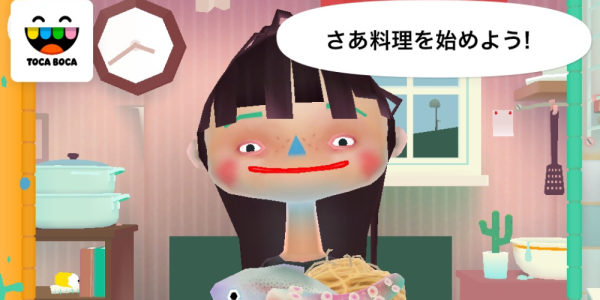
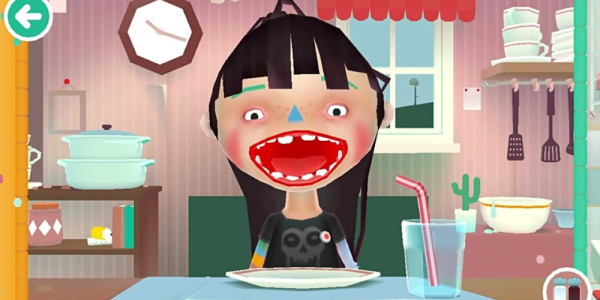
Toca Boca Jr uses bright colors, rounded shapes, expressive faces, and clear silhouettes to make its environments readable. Objects rarely disappear into detailed backgrounds because the art style prioritizes interaction over realism. Food, tools, clothing, animals, and furniture all look slightly exaggerated, which helps younger players recognize them quickly. Even unfamiliar items usually appear inviting rather than complicated.
I liked how the illustrations avoid feeling overly polished or sterile. Characters often have unusual proportions, imperfect teeth, messy hair, and exaggerated reactions that give them personality. The world looks friendly without requiring everything to appear conventionally cute. This visual humor helps the app remain memorable after the basic interactions become familiar.
The Characters React More Than They Explain
Instead of relying on long dialogue, the characters communicate through expressions, movement, sounds, and immediate responses. Giving someone a strange meal may produce a clear emotional reaction, while changing a hairstyle can transform the character’s entire appearance. These reactions allow children to understand cause and effect without needing advanced reading skills. The game communicates through performance rather than instruction.
This also makes the app accessible across different languages. A surprised face, enthusiastic sound, or unhappy response usually communicates the result instantly. I found the exaggerated animation especially useful because it makes every experiment feel acknowledged. The characters behave like active participants in play rather than static dolls waiting to be rearranged.
Toca Kitchen Encourages Completely Unreasonable Cooking
The cooking activities were among the easiest sections for me to understand and enjoy. Ingredients can be selected, prepared with different tools, combined, and served to characters who react according to the result. The process resembles cooking without becoming a realistic recipe simulator. I could prepare something sensible or create a meal that no responsible kitchen would ever serve.
The freedom is more important than culinary accuracy. A child can investigate what happens when one ingredient is cooked several ways or when an unusual combination is placed on the same plate. The app rewards curiosity with visual transformations and character reactions. It teaches basic ideas about preparation and preference without presenting them as formal lessons.
Food Preparation Has Satisfying Visual Feedback
Chopping, blending, frying, boiling, and processing food create visible changes that make every action easy to follow. Ingredients do not simply disappear into a menu and return as completed meals. The player watches them change shape, texture, and appearance through direct interaction. This makes the cooking process feel physical even though the mechanics remain intentionally simple.
I enjoyed how quickly the app responds because delayed feedback would weaken the connection between action and result. Moving a tool over an ingredient produces an immediate visual or audio reaction. Younger players can therefore learn through repetition without waiting for a long animation. The responsiveness helps ordinary preparation remain entertaining after several attempts.
Character Preferences Create Small Stories
Different characters may react differently to the same food, which gives serving meals a light social dimension. One character may appear delighted while another clearly dislikes the creation. These responses encourage the player to remember preferences or intentionally test them again. A simple cooking activity becomes a series of small stories about personality and experimentation.
I liked that the game does not always provide a written explanation for each reaction. The player must observe expressions and behavior instead. This turns basic interaction into a gentle exercise in reading emotional cues. The characters feel distinct because they do not respond identically to every choice.
Hair Salon Activities Offer Immediate Creative Transformation
The hair-focused sections allow characters to be washed, cut, styled, colored, and decorated through a set of playful tools. Every action creates an immediate visual difference, making the activity especially rewarding for children who enjoy customization. Hair can be styled carefully or turned into something completely chaotic. The app never insists that the final result needs to look realistic.
I found this activity satisfying because transformations happen in several stages. A character can begin with one recognizable appearance and gradually become almost unrecognizable through cuts, color, accessories, and styling. The tools are easy to understand because their real-world purpose is visually familiar. Creative freedom comes from combining simple actions rather than learning complicated design controls.
The Tools Feel Safe Without Losing Their Identity
Scissors, clippers, brushes, dryers, color sprays, and other salon tools are presented in a playful form. They behave clearly enough that a child can understand what each one does, but the interaction avoids realistic danger or permanent consequences. Hair can often be restored or changed again, which keeps experimentation comfortable. A dramatic mistake becomes another stage of the design rather than an irreversible failure.
This forgiving approach is essential because creative play depends on the willingness to test unusual ideas. If every cut permanently ruined the character, younger players might become cautious quickly. Toca Boca Jr allows endless redesign without attaching judgment to the result. The character becomes a reusable canvas instead of a problem that must be solved correctly.
Animal Care Adds a Gentler Rhythm
Activities involving pets and other creatures create a calmer form of interaction. Animals can be cleaned, fed, examined, dressed, or helped through simple care routines depending on the selected game. These tasks encourage attention to visual needs and character reactions. The focus remains playful rather than medically detailed or stressful.
I appreciated how caring actions produce positive feedback without turning the experience into a repetitive responsibility system. The animals do not require constant daily management to prevent severe consequences. Children can focus on one activity, leave, and return later without feeling guilty. Toca Boca Jr captures the pleasant side of care while avoiding the pressure found in more demanding pet simulations.
Mess Is Treated as Part of the Fun
Many activities allow environments and characters to become dirty, disorganized, or visually chaotic before being cleaned again. This cycle gives younger players control over both creating and repairing disorder. A clean room is not automatically the correct state, and a messy character is not presented as a serious problem. The app recognizes that making a mess can be just as entertaining as restoring order.
I liked the freedom to repeat this cycle without limitation. Cleaning is satisfying because the change is visible, while creating another mess remains equally acceptable. The player experiences cause, effect, and restoration through simple actions. These interactions resemble physical play but remove the real-world cleanup required afterward.
Music Activities Reward Noise Before Skill
Musical sections allow players to experiment with sounds, rhythms, voices, and instruments without requiring formal knowledge. Pressing, dragging, and combining elements creates immediate audio feedback. The result may become surprisingly musical or completely chaotic, but both outcomes are accepted. The app encourages listening and experimentation before introducing any idea of correct performance.
This approach works well for young children because sound becomes another interactive material. A player can discover which objects produce high, low, soft, or unusual noises through direct exploration. Repetition naturally reveals patterns without a written lesson. Toca Boca Jr allows musical curiosity to develop through play rather than evaluation.
Sound Effects Carry Much of the Humor
The app uses exaggerated chewing, splashing, mechanical, musical, and character sounds to make interactions feel more energetic. A visual reaction becomes funnier when paired with an unexpected noise. These sounds also confirm that the app has recognized an action, which is important for players who are still learning touchscreen precision. Audio feedback turns even small movements into noticeable events.
I found the sound design cheerful, although repeated effects can become tiring for adults sitting nearby during longer sessions. Children may enjoy hearing the same reaction repeatedly because repetition is part of how they explore cause and effect. Volume control becomes useful when the activity continues for an extended period. The audio is central to the personality, so playing permanently without it removes a large part of the experience.
There Is No Traditional Campaign to Complete
Toca Boca Jr does not build toward a final stage, boss encounter, or ending sequence. Each activity exists as an open environment that can be revisited whenever the player wants another type of play. Progress is measured through discovery and personal creativity rather than saved achievement. This makes the app easy to enter but difficult to evaluate through traditional gaming expectations.
I initially looked for hidden objectives because most games train me to search for completion conditions. Eventually, I understood that the absence of a finish line was intentional. A child can repeat one favorite interaction without the game pushing them toward another system. The experience respects personal rhythm more than structured advancement.
Open-Ended Play Depends on the Player’s Imagination
The freedom of Toca Boca Jr is also its main limitation. A child who enjoys inventing situations can continue using the same environment in many ways. A player who prefers clear goals, rewards, and instructions may become bored once the obvious interactions have been tested. The app provides objects and reactions but does not always provide a reason to combine them.
I think the experience works best when the player naturally creates small stories. A cooking section can become a restaurant, a salon can become a makeover challenge, and an animal area can become a rescue center. Parents or older siblings may also help by suggesting scenarios without taking control. The game supplies the stage while imagination supplies the objective.
The Collection Format Helps Prevent One Activity From Becoming Stale
Because Toca Boca Jr includes several types of play, a child can move to another activity when one begins feeling repetitive. Cooking, music, animal care, hairstyling, and other interactions create different sensory rhythms. The basic controls remain familiar, so switching does not require learning an entirely new interface. Variety becomes the main form of long-term retention.
I appreciated this format because each activity can remain focused instead of being overloaded with unrelated systems. The cooking game does not need to include a large house-building mode, while the salon can concentrate on transformation. The collection benefits from simplicity at the individual level and diversity at the package level. It feels more coherent than one giant app trying to place every interaction inside the same location.
The Simple Interface Supports Independent Play
Large icons, clear objects, limited text, and direct controls make it possible for younger children to explore without constant adult explanation. Menus generally avoid complicated settings or nested progression screens. The app communicates through images and reactions whenever possible. This helps children feel that they control the experience themselves.
Independent play does not mean every child will understand every feature immediately. Some gestures or hidden interactions may require demonstration, especially during the first session. Once the basic relationship between touching and response is understood, experimentation becomes natural. Toca Boca Jr is designed to be discovered rather than studied.
The Lack of Reading Requirements Broadens Accessibility
Many educational or children’s games depend heavily on spoken instructions and written prompts. Toca Boca Jr usually allows the player to understand the activity visually. A character, object, or tool demonstrates enough of its purpose through design and animation. This supports children who have not yet developed strong reading skills or who use another language at home.
I liked how the app avoids treating limited reading ability as a problem that needs to be highlighted. The player can participate fully through observation and touch. Language becomes an optional support rather than a barrier. This visual design also helps adults understand the activity quickly when introducing it to a child.
The Experience Is Educational Without Looking Like Homework
Toca Boca Jr can support ideas such as cause and effect, emotional recognition, sequencing, experimentation, categorization, and creative problem-solving. These lessons emerge naturally from interaction rather than appearing as quizzes. A child preparing food observes transformation, while a salon activity demonstrates how several tools create different results. The app allows learning to occur without announcing every concept formally.
I prefer this approach for early play because it preserves curiosity. The child is not constantly told that one action is a lesson or that one answer will be graded. Discovery becomes rewarding through animation and character response. The educational value remains present while entertainment stays in the foreground.
Cause and Effect Are Communicated Clearly
When the player touches or moves something, the app usually responds immediately and visibly. This consistency helps younger children understand that their actions influence the digital environment. Repeating the same action confirms the relationship, while changing it reveals another outcome. The interaction loop is simple but developmentally valuable.
I noticed that the strongest activities provide several stages of response rather than one isolated animation. An ingredient changes when cut, changes again when cooked, and creates another reaction when served. These connected steps support sequencing and memory. The child can predict part of the process while remaining curious about the final result.
Emotional Reactions Encourage Observation
Characters display happiness, surprise, discomfort, excitement, and other reactions through exaggerated faces and sounds. The player can compare how different actions affect different characters. This encourages attention to social feedback without requiring a written explanation of emotion. A child may begin anticipating who will enjoy a particular item based on earlier responses.
The expressions remain playful enough that negative reactions do not feel harsh. A character disliking a meal becomes funny rather than emotionally threatening. This allows experimentation with social consequences in a safe environment. The player learns that preferences differ without being punished for guessing incorrectly.
There Are No Aggressive Competitive Systems
Toca Boca Jr does not depend on leaderboards, daily rankings, multiplayer pressure, or direct competition between children. The player is not encouraged to compare progress with another account. This creates a calmer environment than many free mobile games built around constant events and visible achievement. Play remains private and self-directed.
I appreciated the absence of competitive pressure because the target audience is young. A child can explore one activity slowly without feeling that another player is advancing faster. The app does not turn creativity into a score that must be maximized. Personal enjoyment becomes the main measure of success.
The Subscription Model Needs Careful Consideration
Toca Boca Jr gathers multiple activities under one service, and access may depend on the current subscription or platform arrangement. This can be convenient because one payment provides a broader collection instead of requiring several separate purchases. It can also become expensive when the app is used only occasionally. Parents should evaluate how often the child returns and which activities receive regular attention.
I always prefer checking the exact billing period and cancellation settings before beginning any children’s subscription. A free trial can become a paid renewal if it is forgotten, even when the child has stopped using the app. The value is strongest for families who actively use several included experiences. One favorite activity alone may not justify an ongoing payment indefinitely.
A Unified Library Is Convenient for Parents
Keeping several Toca Boca activities inside one app reduces the need to download and manage multiple separate games. Updates, access, and navigation become easier when the collection is organized through one interface. A child can move between activities without returning to the device’s main app library. This makes supervised play more convenient.
The disadvantage is that access becomes tied to the larger service rather than permanent ownership of one small game. Changes to the included collection can affect which activity remains available. Families who prefer purchasing one title once may dislike this structure. Convenience and long-term control do not always point toward the same option.
The App Avoids Constant Advertising Interruptions
A children’s app becomes difficult to trust when every activity leads toward third-party advertising or another purchase prompt. Toca Boca Jr provides a more controlled environment where play is not constantly interrupted by unrelated commercial material. This allows children to remain inside the creative activity without being redirected toward external products. The absence of aggressive advertisements improves both safety and focus.
Subscription screens and account management still need to be handled carefully by adults. Young players should not be expected to understand billing or service terms. Once access is configured, the play areas feel much cleaner than many free alternatives. The app benefits from separating the child’s experience from the adult’s purchasing decisions.
Offline Use Can Matter During Travel
Children’s apps are often used during car journeys, flights, waiting rooms, or visits where internet access may be unreliable. Activities that continue functioning after the necessary content has been downloaded are much more practical in those situations. Toca Boca Jr’s self-contained interactions suit short offline sessions because they do not depend on live competition or constant server events. Families should still confirm that the desired content is fully available before leaving a connection.
I like apps that allow preparation in advance rather than revealing a download screen when the child is already expecting to play. Opening each activity once can help confirm that required files are present. Device storage also matters because a collection may occupy more space than one individual game. Reliable offline access makes the subscription more useful beyond the home.
Performance Is Usually Smooth but Device Age Matters
The stylized graphics are not built around realistic lighting or complex three-dimensional environments, but the app still contains many animations, sounds, and interactive elements. Modern tablets and phones generally provide a responsive experience. Older devices may show slower loading, delayed reactions, or occasional instability when switching between activities. Touchscreen accuracy can also decline when performance becomes uneven.
I consider responsiveness especially important for young children because they may repeat an input when nothing appears to happen immediately. This can create accidental actions or frustration. Closing background applications and maintaining enough free storage may improve performance on limited hardware. The visual simplicity should not be mistaken for zero technical requirements.
Loading Screens Can Interrupt Younger Players More Than Adults
Adults understand that one activity may need several seconds to load, but younger children can interpret the pause as a broken interaction. Toca Boca Jr generally keeps the structure straightforward, yet movement between larger experiences may still require waiting. Clear visual feedback helps communicate that the app is working. Faster transitions would make the collection feel even more cohesive.
I preferred staying inside one selected activity for a longer session rather than switching repeatedly. This allows the child to develop a story without losing attention during menu transitions. The collection format provides variety, but constant movement between games is not necessary to enjoy it. Each activity works best when given enough time for experimentation.
Parental Controls Should Remain Outside the Play Space
Account details, subscriptions, external links, and settings should be difficult for children to open accidentally. Toca Boca’s broader design philosophy generally separates adult decisions from child-focused interaction. This creates a safer experience and reduces the chance that ordinary exploration leads into billing or browser pages. Parents should still review the available controls on their specific platform.
I appreciate when adult sections require a deliberate action rather than one simple tap. Young children naturally test every visible button, so safety cannot depend on them recognizing which areas should be avoided. A well-designed gate protects both the child and the account owner. The best children’s interface allows curiosity without exposing administrative functions.
Session Length Can Be Controlled Naturally
Because there are no required online matches or long missions, Toca Boca Jr can be stopped almost anywhere. A child can prepare one meal, style one character, or interact with one animal before leaving. This makes it easier to fit play into short periods without abandoning progress halfway through a demanding challenge. The open-ended structure supports both brief and longer sessions.
The same lack of a natural ending can make stopping difficult when a child remains deeply engaged. There is always another object to move or another character to redesign. Adults may need to establish an external routine for ending play. The app does not provide a strong final screen because completion is not part of its design.
Shared Play Can Become More Valuable Than Silent Supervision
An adult can sit beside the child and ask what they are creating, why a character reacted, or what might happen after another action. These questions turn simple interaction into storytelling and conversation. The adult does not need to direct every movement or search for a correct answer. Shared attention is enough to expand the educational and imaginative value.
I think Toca Boca Jr works especially well when the child remains the main decision-maker. An adult can suggest possibilities without taking control of the screen. The resulting story often becomes more interesting because children interpret objects differently from adults. The app provides a neutral space where those interpretations can be explored safely.
Siblings Can Invent Their Own Cooperative Rules
The app does not rely on formal online multiplayer, but children can still share one device and take turns controlling parts of a scene. One child may prepare food while another chooses the character who receives it. They can design hairstyles for each other or build a small story around the available objects. Cooperation emerges socially rather than through a programmed scoring system.
Sharing one touchscreen can also create arguments when both children want to control the same item. Clear turn-taking rules may be necessary, especially with younger siblings. The open-ended design gives them enough flexibility to invent roles. Toca Boca Jr becomes a cooperative toy when the players agree on how to use it together.
Repeated Interactions Can Feel Very Different to Children and Adults
An adult may understand one animation after seeing it once, while a child may want to trigger it many times. Repetition helps younger players confirm expectations, enjoy familiar humor, and develop control confidence. The app supports this by allowing interactions to be repeated without penalty. Nothing demands that the player move on after discovering a result.
I noticed that this freedom can make the experience appear shallow when judged through adult gaming habits. There may be no new reward after the tenth repetition, but the repetition itself can remain enjoyable for the intended audience. Toca Boca Jr is designed around process rather than novelty alone. Its value should be measured according to how children engage, not how quickly an adult identifies every mechanic.
Older Children May Outgrow the Simplicity
The controls and activities are deliberately approachable, which means they may not provide enough challenge for children seeking structured progression or complex creative tools. Once the main interactions are familiar, the app depends heavily on self-directed storytelling. Players who prefer goals, collections, competition, or building systems may look for something deeper. Toca Boca Jr is best suited to an age and temperament comfortable with digital pretend play.
I would not interpret this as a failure because the simplicity is central to accessibility. Adding advanced systems could make the experience less welcoming for its main audience. The important question is whether the current player still invents new situations with the available tools. When imagination stops supplying variety, another Toca Boca experience with broader world-building may become more suitable.
Toca Boca World Offers a Different Type of Freedom
Families familiar with Toca Boca World may expect the same large character-driven environment from Toca Boca Jr. The two experiences share visual personality and open-ended play but emphasize different levels of complexity. Toca Boca Jr focuses on smaller standalone activities with immediately understandable interactions. Toca Boca World provides a broader setting for locations, characters, objects, and longer stories.
I see Toca Boca Jr as a gentler entry point for younger players. It allows them to learn direct touch interaction without managing a large world or extensive collection. Children who want more control over homes, cities, and continuing characters may eventually prefer the larger game. The two apps can support different stages of creative play rather than replacing each other directly.
The App Respects Creativity by Avoiding One Correct Result
A hairstyle does not receive a score, a meal does not need to match a recipe, and a musical sequence does not need to follow formal composition. This removes the pressure to imitate an example exactly. The player can decide whether the result is funny, attractive, strange, or worth changing again. Creative judgment remains personal.
I appreciated this freedom because many children’s apps use creativity as decoration around a hidden grading system. Toca Boca Jr allows the activity to remain genuinely open. The app responds without declaring one result superior. This encourages children to develop preferences instead of searching constantly for external approval.
The Humor Is Silly Without Becoming Mean
Characters make exaggerated faces, food combinations produce funny reactions, and tools can create ridiculous visual changes. The comedy comes from surprise, mess, and personality rather than humiliation. A character may dislike something, but the app does not frame failure as cruelty toward the player. The tone remains warm even when the result is chaotic.
I found this especially appropriate for younger audiences because humor shapes the emotional safety of experimentation. Children can laugh at an outcome without feeling that the character or player has been seriously harmed. The app keeps consequences temporary and reversible. Comedy becomes encouragement to continue testing ideas.
The Best Moments Come From Unexpected Combinations
Toca Boca Jr becomes most entertaining when two or more ordinary interactions create a surprising result. An unusual ingredient may react differently after being prepared with another tool, or one accessory may transform a character more dramatically than expected. These combinations encourage the player to revisit familiar objects. Discovery remains possible even after the basic function of each tool is known.
I enjoyed testing whether the app had anticipated an unreasonable idea. Sometimes nothing special happened, while other combinations produced a unique animation or reaction. The possibility of hidden behavior keeps exploration active. The game rewards curiosity through small surprises rather than large unlocks.
What I Would Improve in the Collection
I would add a clearer parent-facing overview explaining which developmental skills each activity may support without placing educational labels inside the child’s play area. This could help adults choose experiences based on interests such as music, care, cooking, or creative design. I would also provide clearer offline-download information and storage details before travel. These improvements would support families without complicating the child’s interface.
Inside the activities, I would add more optional objects and reactions over time to preserve discovery for returning players. The additions should remain free of competitive pressure and unnecessary progression systems. Small seasonal objects, new characters, or alternative tool responses could refresh familiar scenes. The core simplicity should remain unchanged because it is the reason the app works.
Why Toca Boca Jr Works as a First Digital Playground
Toca Boca Jr succeeds because it understands that young children do not need every interaction to lead toward a formal achievement. Touching, moving, mixing, and observing can provide enough motivation when the response is clear and entertaining. The app builds confidence by allowing almost every experiment to continue. It creates a digital environment where curiosity is more valuable than accuracy.
From my perspective as a gamer, the collection demonstrates how much design effort can hide behind an apparently simple interface. Objects need to communicate their purpose visually, reactions need to appear immediately, and controls need to remain forgiving when touch input is imprecise. The player should feel independent without encountering confusing systems. Toca Boca Jr handles these priorities more carefully than many children’s apps filled with unnecessary menus and rewards.
The different activities provide useful variety while preserving a consistent style. Cooking focuses on transformation and preferences, salon play emphasizes creative appearance, animal care introduces gentle responsibility, and musical sections encourage sound experimentation. Children can move toward the activity matching their current mood. The collection functions like several toy sets stored inside one familiar box.
The absence of scores, advertisements, public competition, and harsh failure creates a calm atmosphere. A child can repeat one interaction, abandon an unfinished idea, or redesign the same character several times without losing progress. This flexibility supports younger players who may not follow adult expectations about efficient play. The app allows attention to move naturally rather than constantly redirecting it toward objectives.
The subscription structure is the part I would evaluate most carefully. Access to several polished activities can justify the cost for a child who uses them regularly. Occasional use or interest in only one section may make the recurring payment less attractive. Parents should review billing conditions and current included content rather than assuming the service will remain identical forever.
Toca Boca Jr is not intended for players seeking challenge, progression, or a large world to master. Its systems are deliberately small, readable, and reversible. Older children may exhaust the obvious possibilities unless they enjoy inventing stories independently. For the appropriate age group, that simplicity is a strength rather than missing content.
I found the character reactions especially effective because they make the environment feel socially responsive without relying on text. A strange meal, dramatic haircut, or messy care routine produces an emotional response that children can understand immediately. The app acknowledges every experiment and encourages another one. This reaction loop gives ordinary objects personality.
My favorite aspect is the way the app treats unusual ideas as valid play. A meal does not need to look delicious, hair does not need to appear fashionable, and music does not need to sound organized. The player remains free to enjoy the process without being corrected. That respect for imagination gives Toca Boca Jr more value than a collection of simple touchscreen animations might suggest.
The experience becomes even stronger when shared with an adult who asks open questions rather than giving instructions. A child can explain what they created, predict how a character will react, or invent a reason for the current situation. The digital toy then supports language and storytelling without turning the session into a lesson. Toca Boca Jr provides material for conversation while allowing the child to lead it.
Toca Boca Jr is ultimately a safe, colorful, and thoughtfully designed playground built around experimentation. It does not demand that children become faster, more accurate, or more competitive. It gives them objects, characters, tools, sounds, and enough freedom to discover their own reasons for using them. The app works because it understands that play does not always need to produce a winner.
Pros:
- Highly accessible across multiple platforms including PC, Mac, and Android.
- Incorporates educational content seamlessly with gameplay.
- Engaging graphics and sound design that enhance immersion.
- Easy download and installation process regardless of hardware capabilities.
- Innovative control scheme that balances exploration with guided progression.
- Intuitive interface that caters to both novice and experienced gamers.
Cons:
- Lack of official cheat or mod support could restrict advanced player customization.
- Simple control scheme might be too basic for gamers seeking complex challenges.
- Limited narrative depth may not satisfy all storytelling enthusiasts.

How much storage do you need?
 Toca Boca Jr






Recent Reviews

Minecraft

Grand Theft Auto V

Toca Boca World

Roblox

Leave a comment
Your comment is awaiting moderation. We save your draft here
0 Comments