Review
Toca Life: City gave me a small digital neighborhood where almost every object could become part of a story. There were no missions tel...

Urban Creativity Unleashed: A Deep Dive into Toca Life: City
Toca Life: City gave me a small digital neighborhood where almost every object could become part of a story. There were no missions telling me which building to visit first, no score judging whether I dressed a character correctly, and no fixed plot explaining what everyone should do. I could move people between apartments, shops, restaurants, salons, and public locations while inventing relationships and situations as I played. The experience felt closer to arranging a living toy set than completing a conventional mobile game.
I approached it from the perspective of someone accustomed to progression systems, objectives, and mechanical challenges, so the freedom initially felt almost suspicious. I kept expecting the game to reveal a hidden task list or reward me for discovering the correct sequence of interactions. Instead, Toca Life: City trusted me to create my own reasons for visiting each location. Once I stopped searching for a formal campaign, the city became far more entertaining.
The game is primarily designed for children, but its construction reveals thoughtful design choices that are easy to overlook. Characters can be moved freely, objects can travel between locations, and most environments contain enough interactive details to support repeated experimentation. The simple controls make the city approachable without removing the possibility of longer stories. Toca Life: City succeeds because it provides structure without deciding what that structure must mean.
The City Works Like a Collection of Connected Playsets
Each location has its own visual identity and group of objects, but the city becomes more interesting when I treat those locations as parts of one shared world. A character can begin the day at home, visit a shop, change appearance at the salon, eat somewhere, and return with new items. Nothing forces this sequence, yet the connected map makes it easy to imagine. The world supports continuity even though it does not provide a written narrative.
I liked how quickly movement between locations creates the feeling of a larger community. A person I placed behind a counter could later become a customer elsewhere, while an object found in one building could become important in another scene. The city remains compact enough to understand but broad enough to prevent every story from taking place in one room. This balance gives younger players freedom without overwhelming them with an enormous map.
The Apartment Is More Than a Starting Room
The residential space provides a natural place for characters to sleep, eat, store objects, change clothes, and begin imaginary routines. Its furniture and household items make it easy to create family stories, roommate situations, celebrations, or ordinary mornings. I could rearrange people and objects repeatedly without the game asking whether the result looked realistic. The apartment becomes whatever the current story requires.
I appreciated how domestic spaces support slower play than shops and public locations. A child can spend time preparing food, placing characters in beds, organizing objects, or pretending that somebody is getting ready for work. These activities have no formal reward, but they help build narrative continuity. The apartment gives the city a sense of private life behind the public locations.
The Store Encourages Collection Without a Formal Inventory System
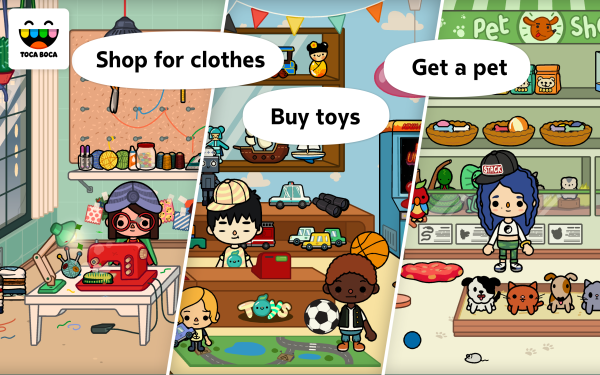
Shops naturally create reasons to examine clothing, accessories, food, and miscellaneous objects. Items can be moved between shelves, characters, bags, and other parts of the environment. The process resembles shopping without involving money management or restrictions. A character can leave with something practical, something fashionable, or an unreasonable collection of unrelated objects.
I liked that shopping remains part of pretend play rather than becoming another progression system. There is no pressure to earn currency or wait for a timer before selecting an item. The store exists because choosing and arranging objects is enjoyable by itself. This makes the activity suitable for young players who want to imitate everyday routines without dealing with complex rules.
Clothing Creates Instant Character Identity
Changing clothes is one of the fastest ways to turn a generic figure into a specific person inside an invented story. One outfit can suggest a worker, performer, customer, student, parent, or completely imaginary role. Characters can exchange items or wear combinations that would never appear in a normal fashion catalogue. The game does not judge whether the outfit matches the setting.
I found this freedom valuable because appearance becomes a storytelling tool rather than a reward. A player can redesign a character whenever the plot changes. Someone can begin as a shop employee and become a celebrity several minutes later without needing to unlock anything. The city allows identity to remain flexible and reversible.
The Hair Salon Provides the Most Immediate Transformations
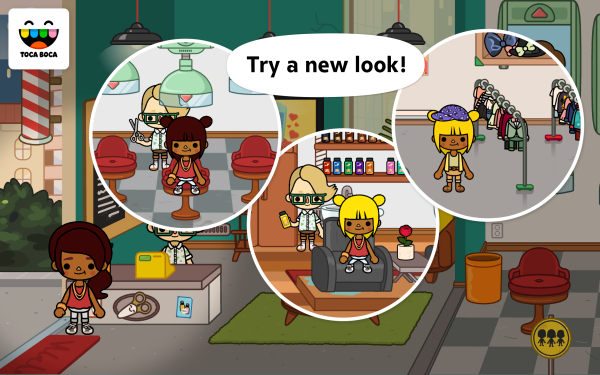
The salon is one of the most memorable locations because the player can change hairstyles, colors, facial hair, and accessories through direct interaction. Every tool produces an immediate visual result, making experimentation easy to understand. A careful makeover and a completely chaotic redesign are equally valid outcomes. The character never permanently suffers because another style can be created immediately.
I enjoyed the salon because it turns customization into an activity rather than a static menu. Tools exist inside the environment, so changing a character feels like part of the world. Children can create a stylist, customer, waiting area, or entire makeover story around the process. The location supports both visual experimentation and role-play at the same time.
Hair Tools Are Simple Enough for Independent Discovery
Scissors, color products, dryers, razors, and accessories communicate their functions through familiar shapes and clear reactions. A young player does not need to read a long explanation before testing one. Touching the character with a tool usually creates an obvious change. This immediate feedback encourages continued experimentation.
The game also makes mistakes harmless. Hair can grow back, colors can change again, and accessories can be removed whenever the player wants. This removes anxiety about ruining a favorite character. Toca Life: City treats customization as a temporary creative state rather than a permanent commitment.
The Food Area Turns Ordinary Meals Into Stories
Restaurants and food-related spaces provide ingredients, prepared dishes, drinks, tables, and characters capable of reacting to what they receive. A simple meal can become a family dinner, workplace lunch, birthday event, or chaotic kitchen experiment. Food can be distributed logically or combined into situations that make no practical sense. The game responds without explaining that the player has done something wrong.
I liked how serving food naturally creates character relationships. One person can cook, another can order, and somebody else can receive a meal they clearly dislike. These reactions give the scene a beginning and consequence without requiring text. The food system supports storytelling because preferences become visible through expression and sound.
Characters Communicate Through Reactions Rather Than Dialogue Trees
Toca Life: City does not rely on long conversations or written choices. Characters express themselves through facial changes, movement, sounds, and reactions to objects. This makes the game accessible to children who are not yet confident readers. It also allows the same scene to support different interpretations.
I appreciated this ambiguity because the player supplies the meaning. A surprised expression could represent excitement, confusion, or part of a larger joke depending on the invented story. The game provides emotional signals without closing the scene around one official explanation. This keeps role-play flexible and language-independent.
The Touchscreen Interface Feels Like Handling Small Toys
Characters and objects are moved directly with fingers, reducing the distance between intention and result. There is no complicated inventory grid, movement joystick, or set of action buttons to memorize. The player touches the item that matters and places it where it should go. This simplicity makes the city feel physically understandable.
On a larger tablet screen, the interaction becomes especially comfortable because several objects can be visible without feeling crowded. Phones remain usable, but smaller details may require more precise movement. Younger players may occasionally place an object in the wrong location because their finger covers part of the screen. The forgiving design makes these errors easy to correct.
Objects Can Travel and Gain New Meaning
An item found in one location can be carried into another part of the city, allowing stories to continue beyond the original room. Food can move to an apartment, clothing can become part of another character’s identity, and small objects can become gifts or important props. The ability to transport items creates continuity without a traditional quest inventory. Objects remain useful because the player decides what they represent.
I enjoyed turning ordinary items into story devices. A bag could contain supplies for work, presents for a celebration, or evidence inside an invented mystery. The game does not label these possibilities, which allows the same object to support many scenarios. Creative meaning remains more important than the official function.
Secret Compartments Reward Careful Exploration
Several locations include hidden interactions, unusual buttons, or objects that reveal something unexpected. These secrets give players a reason to tap areas that do not immediately appear important. Discovery feels rewarding because it emerges from curiosity rather than a visible checklist. The city contains enough surprises to make repeated visits worthwhile.
I liked that secrets rarely become difficult puzzles requiring advanced logic. A child can discover them accidentally and remember the result for later play. The hidden content adds a layer of mystery without changing the relaxed tone. Exploration becomes another form of experimentation rather than a test with one correct solution.
The Theater Supports Performance and Imagination
Entertainment spaces allow characters to become performers, audience members, employees, or backstage participants. Costumes, lights, music, and stage elements make it easy to invent shows without needing a formal rhythm or acting system. The player controls who appears and what the event means. A serious concert can become a comedy scene within seconds.
I enjoyed the theater because it gives the city a location built specifically around imagination. Characters can perform roles that do not match their earlier identity, reinforcing the flexibility of the game. The stage becomes a controlled space for stories inside the larger city story. It also encourages group arrangements and sequencing more than a simple residential room.
Music Adds Energy Without Demanding Skill
Musical objects and stage interactions produce immediate sound, allowing players to experiment with rhythm and performance. There is no requirement to reproduce a correct song or maintain perfect timing. Pressing different elements creates enough feedback to feel active even when the result is chaotic. This keeps music playful rather than intimidating.
I liked how the activity can support both solo experimentation and pretend group performance. Characters can become musicians, singers, dancers, or audience members according to the player’s arrangement. The app does not need a scoring system because the visual and audio response provides motivation. Musical play becomes part of storytelling rather than a separate competitive mode.
The Post Office Creates a Useful Community Connection
A postal location may appear less exciting than a salon or stage, but it supports stories involving deliveries, packages, work, and communication. Characters can send objects to one another or pretend to manage a public service. This expands the city beyond shopping and entertainment. Ordinary infrastructure becomes another source of role-play.
I appreciated the inclusion because children’s digital worlds often focus only on glamorous activities. A city also depends on workers, transportation, and practical services. Turning those systems into play helps the environment feel more complete. The post office gives ordinary objects a destination and reason to move.
Every Character Can Change Roles Instantly
The game does not permanently assign characters to jobs, families, or social categories. A figure working in the salon can later become a customer, performer, neighbor, or visitor. This flexibility prevents the available cast from limiting storytelling. The same small group can support many unrelated situations.
I found this especially useful because children often change stories without warning. The game adapts immediately instead of demanding a reset or new save. Clothing and location provide enough context to redefine identity. Characters remain tools for imagination rather than fixed narrative pieces.
There Is No Money, and That Is a Deliberate Strength
Shops and services exist without requiring players to earn currency or calculate prices. A child can choose objects freely and focus on the social meaning of shopping rather than the economic transaction. This removes one common source of frustration from mobile games. The store remains interactive without becoming a lesson in resource scarcity.
I appreciated the decision because virtual currency could easily introduce unnecessary pressure or monetization-like habits. Toca Life: City is interested in pretend play, not in making children repeat tasks before accessing an outfit. Everything visible is part of the toy set. The absence of an economy keeps experimentation open.
The Game Does Not Use Traditional Rewards
There are no experience bars, ranked stars, daily missions, or visible achievements controlling the main experience. The reward is the reaction produced by an interaction or the satisfaction of completing an imagined scene. This design may appear limited to players accustomed to constant progression. For younger children, it creates room to follow personal interests without being redirected.
I liked that the game does not interrupt a story to announce another unlocked badge. Attention remains inside the world rather than moving toward account statistics. A player can repeat the same activity because it remains enjoyable, not because a counter demands it. Toca Life: City respects play as an activity valuable by itself.
The Lack of Objectives Can Also Create Boredom
Open-ended freedom works best for children who naturally invent stories and roles. A player who prefers clear instructions may explore each location briefly and then wonder what should happen next. The game does not provide a campaign to solve that uncertainty. Most of its longevity depends on imagination.
I think adults can help by suggesting specific scenarios without controlling the outcome. A lost package, restaurant opening, surprise party, salon appointment, or stage performance gives the child a starting point. Once the story begins, the available objects usually create new ideas naturally. The app provides strong tools, but some players benefit from an initial prompt.
Everyday Routines Become Legitimate Gameplay
Characters can eat, sleep, shop, change clothes, go to work, attend events, and move through ordinary public spaces. These actions would function only as background animation in many traditional games. Here, they become the central activity. Toca Life: City understands that children often enjoy recreating familiar routines because those routines help them interpret the adult world.
I found the lack of dramatic stakes refreshing. A complete story might involve somebody getting ready, purchasing an item, and meeting another character for food. Nothing extraordinary needs to happen for the play session to feel complete. The game validates small social stories rather than insisting on adventure or conflict.
Family Stories Are Easy to Create
The variety of character ages and appearances allows players to build imagined households and relationships. People can share an apartment, prepare meals, leave for different locations, and reunite later. The game does not define which characters belong together. The player controls the family structure entirely.
I appreciated this openness because it supports many types of stories without imposing one model. Children can recreate familiar routines or invent something completely different. Characters can change roles between sessions if the player’s ideas change. The city functions as a flexible social stage rather than a fixed family simulation.
Workplace Role-Play Adds Structure Without Rules
Several locations naturally suggest jobs, including salon workers, shop employees, performers, food-service staff, and postal workers. A child can assign roles, move characters through routines, and decide when their work is complete. There is no wage system or performance score. Work is represented as a social activity rather than an economic obligation.
I liked how this allows children to imitate jobs they observe without facing complex simulation systems. The game provides recognizable tools and spaces while leaving the details open. A worker can behave professionally or create complete chaos, and both approaches remain valid. The role matters because the player says it matters.
The City Encourages Storytelling Through Sequencing
Moving characters through several locations creates a natural beginning, middle, and ending. A person can prepare at home, travel to another place, experience an event, and return with new objects. This sequence teaches narrative organization indirectly. The game never labels it as storytelling practice.
I enjoyed how one small decision could create the next stage automatically. Buying an outfit suggested visiting the theater, while finding food suggested organizing a meal. The world offers narrative connections through its objects and locations. Stories emerge from movement rather than written prompts.
Cause and Effect Remain Easy to Understand
Most interactions produce visible or audible reactions immediately. A character changes expression after receiving an item, a tool modifies appearance, and an object opens or moves when touched correctly. This consistency helps young players understand that their actions influence the environment. Repetition confirms those relationships.
The strongest interactions contain several stages, allowing one object to transform or produce different responses depending on context. These layered reactions reward testing without requiring explanation. I often found myself tapping unusual combinations simply to see whether the developers had anticipated them. The app turns curiosity into the main control system.
The Humor Comes From Reactions and Unusual Combinations
Characters can wear strange outfits, receive dramatic hairstyles, carry unreasonable objects, or appear in locations where they clearly do not belong. The game acknowledges these situations through expressive animation without treating them as mistakes. Comedy emerges from the player’s arrangement. The app provides the pieces but does not force a written joke.
I liked that the humor remains gentle and reversible. Nobody is permanently embarrassed or harmed because another look or story can replace the current one instantly. This keeps experimentation emotionally safe. Children can create absurdity without the game becoming cruel.
The Art Style Gives the City a Distinct Personality
Rounded shapes, strong colors, unusual faces, and playful imperfections make every location immediately recognizable as part of Toca Boca’s world. Characters do not look like polished dolls designed around one standard of beauty. They have different skin tones, hairstyles, clothing, body shapes, and facial features. The diversity feels integrated into the visual language rather than presented as a special mode.
I appreciated how the designs remain expressive even at a small screen size. Clear silhouettes make characters easy to move and distinguish. Environments contain enough detail to reward attention without hiding important objects. The art supports both usability and personality.
Background Details Make Locations Feel Lived In
Shelves, decorations, tools, food, furniture, signs, and small objects give every building a practical identity. Many of these details can be moved or used rather than existing only as decoration. This encourages close examination and makes repeated visits more rewarding. The city feels full because the background often becomes part of the play.
I liked discovering that an object I assumed was decorative could be opened or given to a character. These moments create small surprises without requiring a formal secret system. The visual design invites touching. A successful children’s interface makes curiosity feel reasonable rather than risky.
Sound Confirms Every Important Interaction
Objects, tools, characters, doors, food, and musical elements produce clear audio feedback. This helps young players understand that the app has registered their input. Sounds also give personality to actions that would otherwise be visually simple. A reaction becomes much funnier when supported by an exaggerated noise.
The repeated sound effects may become tiring for adults during long sessions, especially when a child enjoys triggering the same interaction many times. For the intended player, repetition supports learning and familiarity. Volume adjustment becomes useful without removing sound entirely. The app loses part of its responsiveness when played silently.
The Interface Avoids Unnecessary Text
Navigation and interaction depend primarily on recognizable icons, locations, and objects. Children do not need advanced reading skills to understand where they can go or what they can touch. This makes the game accessible across different languages and literacy levels. Visual communication carries most of the experience.
I appreciated that the game does not constantly explain obvious actions. A salon tool looks like something meant to touch hair, while food looks ready to be served or moved. Children can learn through direct testing. The interface respects their ability to observe.
Independent Play Is Possible After a Brief Introduction
A young child may need help understanding how to move between locations or carry objects at first. Once the basic gestures are demonstrated, the city becomes easy to explore independently. The absence of complicated menus reduces the likelihood of becoming trapped in an unfamiliar screen. Most mistakes can be corrected through another simple movement.
I think this independence is one of the game’s strongest qualities. The child controls the story rather than repeatedly requesting adult assistance. Adults can remain nearby without directing every action. Toca Life: City creates a digital space where young players can feel competent quickly.
Shared Play Can Create Better Stories
An adult or sibling can participate by suggesting characters, asking questions, or taking responsibility for one part of the scene. One person might operate the shop while another controls the customers. They can invent dialogue aloud even though the game does not provide spoken conversations. The city becomes a visual stage for cooperative storytelling.
I enjoyed this approach more than simply watching another player move objects silently. Asking what a character wants or where they should go next encourages explanation and imagination. The adult does not need to correct the story. The most interesting results often come from accepting the child’s unexpected logic.
The Game Supports Emotional Role-Play
Characters can appear happy, surprised, uncomfortable, tired, or excited depending on interactions. Children can use these reactions to create stories involving friendship, conflict, care, celebration, and apology. The game does not formalize these themes through dialogue choices. Emotional meaning emerges through arrangement and interpretation.
I appreciated the opportunity for children to explore social situations without real consequences. A disagreement can be created and resolved within seconds. A character can receive food, change appearance, or move somewhere else to express a new stage of the story. The app provides enough emotional feedback to support these ideas without becoming heavy.
There Is No Online Competition or Social Pressure
Toca Life: City does not require players to compare scores, rankings, collections, or progress with strangers. The experience remains local and personal. This helps protect the relaxed atmosphere and reduces the need for constant internet connection. A child’s story does not become less valuable because another account has more items.
I consider this absence especially important for younger players. Competitive systems can easily transform exploration into anxiety or repeated reward-seeking. Toca Life: City keeps attention on the immediate scene. Play remains about imagination rather than status.
No Timers Means the Player Controls the Pace
Objects do not normally require long waiting periods before becoming usable again. The player can repeat an action, change locations, or redesign a character without waiting for energy to recharge. This avoids one of the most frustrating patterns in mobile gaming. Time is not used to pressure the player toward payment or routine checking.
I appreciated how this makes short sessions productive. A child can open the game, complete one invented scene, and stop without worrying about losing a limited opportunity. Longer sessions remain equally possible because nothing forces a break. The game adapts to the player’s attention rather than managing it artificially.
The Original Standalone Structure Feels Refreshingly Direct
Toca Life: City was designed as a focused paid experience rather than a constantly expanding free service filled with separate purchases. The available city is presented as a complete playset. This structure makes it easier to understand what the player receives. There is less pressure to browse a store instead of playing.
I value this approach because children’s apps benefit from clear ownership and limited commercial interruption. The player can explore without encountering constant prompts for another currency or limited package. Families should still check the current platform availability and compatibility before purchasing. The design itself reflects a simpler mobile-game era.
The City Is Smaller Than Toca Life World
Players familiar with the larger Toca Life World may find the standalone city modest by comparison. It contains fewer locations, characters, and long-term customization systems. The focused scale can feel limiting after experiencing a much broader connected universe. However, it also makes the app easier for younger players to understand.
I see Toca Life: City as a concentrated introduction to the format. The player learns how characters, objects, locations, and role-play interact without facing an enormous map. Toca Life World offers greater expansion and variety for children ready for more complexity. The smaller game remains coherent because every location belongs to the same urban theme.
Limited Locations Encourage Reuse
The city does not provide endless new buildings, so players naturally revisit the same spaces. This can expose repetition when the obvious interactions have already been discovered. It can also encourage deeper storytelling because familiar locations gain different meanings in new scenarios. A restaurant can host a casual meal, celebration, disagreement, or workplace story depending on the characters present.
I appreciated how imagination can extend content beyond the number of rooms. One location does not need one fixed purpose. Rearranging objects and characters changes the context enough for younger players to create another story. The game’s longevity depends on this reuse.
Older Children May Want More Building Control
Toca Life: City allows significant object movement and character arrangement, but it is not a complete construction simulator. Rooms and buildings maintain their basic structure. Players cannot redesign the entire city or build new locations from the ground up. Children seeking deeper home decoration or world creation may eventually feel restricted.
I think this limitation keeps the interface accessible for the intended audience. Full construction would require more menus, placement rules, and failure possibilities. The game prioritizes immediate role-play over complex design. Players who outgrow that simplicity may prefer a broader creative game rather than expecting this one to become something different.
There Is No Character Creator in the Modern Sense
Characters can be dressed, styled, and placed into different roles, but the original game does not provide the same level of avatar construction found in newer Toca experiences. The available cast must support most storytelling needs. Clothing and hair create substantial variety without changing every facial or physical feature. This can limit players who want to reproduce a very specific person.
I still found the existing characters diverse enough for many stories. Their unusual designs make them feel like individuals rather than copies of one template. The lack of deep creation also encourages using characters who might not match the player’s first idea exactly. Imagination fills the remaining gap.
The Game Is Educational Without Becoming a Lesson
Toca Life: City can support storytelling, sequencing, emotional recognition, cause and effect, social role-play, and creative decision-making. None of these ideas are presented as tests. Children learn by arranging situations and observing responses. The activity remains playful because the app does not grade the result.
I prefer this form of early learning because it respects curiosity. A child practicing a restaurant story may also be organizing objects, assigning roles, and remembering sequences. Those skills develop naturally without interrupting the fantasy. Toca Life: City provides learning opportunities while allowing entertainment to remain the visible purpose.
Sequencing Emerges Through Daily Routines
A character can wake up, prepare, travel, shop, eat, work, attend a performance, and return home. Arranging these events in order creates a basic narrative sequence. The player learns that earlier actions can establish context for later ones. The game never needs to label this process formally.
I enjoyed seeing how one chosen object could connect multiple locations. An outfit purchased at the store might be worn during a theater performance before being taken home. This creates memory and continuity across the city. Story structure grows from practical movement.
Sorting and Organization Become Optional Play Styles
Some children may enjoy arranging food, clothing, salon items, or household objects into organized groups. Others may prefer creating visual chaos and moving everything into one room. The game supports both approaches because there is no correct arrangement. Organization becomes a personal choice rather than a required task.
I found tidying surprisingly satisfying after a chaotic scene. Returning objects to shelves or assigning them to characters creates visible order. The process can resemble real-world sorting without becoming a chore. Children control when organization begins and when another mess is created.
Repetition Serves a Different Purpose for Young Players
An adult may see the full result of an interaction after one attempt, while a child may repeat it many times. Repetition confirms cause and effect, improves touch control, and allows familiar humor to remain enjoyable. Toca Life: City does not limit these repetitions. The same tool, object, or reaction remains available whenever the player wants it.
I had to judge the game according to its intended use rather than traditional content variety. The absence of new rewards does not make repetition meaningless for a young child. Familiarity can provide confidence and comfort. The design understands that discovery and repetition are not opposites.
Short Sessions Work as Well as Long Stories
The city does not require a player to complete a long mission before leaving. A child can change one hairstyle, prepare one meal, or move one character to another location and stop. Longer sessions can connect several activities into a larger narrative. The app supports both without changing its rules.
This flexibility makes it useful during travel or brief quiet periods. There is little danger of abandoning a complex objective halfway through. The lack of a formal ending can make stopping difficult for a deeply engaged child, so external limits may still be useful. The game itself remains neutral about session length.
Offline Play Makes the City More Practical
A self-contained children’s game is valuable when internet access is unavailable or unreliable. Toca Life: City does not depend on live competition or constant event updates for its core play. Once installed correctly, the city can remain available during travel or waiting periods. This makes it more predictable than service-based games requiring frequent verification.
Families should confirm compatibility and download status before relying on it away from home. Older standalone apps may behave differently across newer operating-system versions. Testing the game in advance prevents disappointment. The offline-friendly design remains one of its practical strengths.
Performance Demands Are Modest but Compatibility Matters
The game uses stylized two-dimensional environments and relatively simple interactions, so it does not require the hardware power of a modern three-dimensional title. Most suitable devices can run it smoothly. Touchscreen quality and operating-system compatibility matter more than raw graphics performance. An older device may still experience loading or input issues.
I consider responsive touch especially important because young players may repeat actions when the first input appears ignored. This can move multiple objects accidentally and create frustration. Closing unnecessary background apps may help on limited devices. A stable experience keeps attention on play rather than technical problems.
The Game Looks Better on a Larger Screen
Tablets provide more room for characters, objects, and environmental details. Children can drag small items without covering as much of the scene with their fingers. The city also becomes easier to share when two people are playing together. A larger screen makes the digital toy-set quality more convincing.
Phones remain convenient and portable, especially for short sessions. Crowded locations may feel less comfortable when many objects have been moved into one area. The game’s clear art style prevents most readability problems. Screen size influences comfort more than content.
Privacy Benefits From the Local Design
The core experience does not depend on communicating with strangers, publishing creations, or sharing personal information publicly. Stories remain on the device and inside the player’s imagination. This reduces several risks associated with children’s online games. Adults still need to manage device permissions and store settings responsibly.
I appreciate children’s games that do not require social accounts to become enjoyable. Toca Life: City offers its full central fantasy through local interaction. A child does not need followers, friends lists, or public recognition. Creativity remains private unless the family chooses to discuss or record it separately.
The Game Never Pressures the Player to Perform Correctly
A character can wear mismatched clothes, work at the wrong location, carry unusual food, or move through a completely illogical schedule. The app continues responding without reducing a score. This freedom is essential to pretend play because children often discover ideas by violating adult expectations. Toca Life: City protects that experimentation.
I liked the absence of corrective messages because they would change the emotional tone immediately. The player decides whether a scene is complete, funny, or worth rebuilding. The game does not compete with imagination for authority. Its systems serve the story rather than controlling it.
The Best Stories Use Several Locations
Individual rooms contain enough interactions for short play, but the city becomes most convincing when characters move between them. A salon visit can prepare someone for the theater, while shopping can provide objects for a celebration at home. These connections make the world feel continuous. The map functions like a narrative organizer.
I enjoyed carrying one small storyline across the entire city because every location added another stage. The resulting story existed only in my interpretation, but the environment supported it clearly. Toca Life: City does not need written quests when its spaces suggest natural sequences. The player becomes both director and audience.
My Favorite Moments Came From Accidental Stories
I often began with one simple intention and created another situation through an unexpected interaction. A character received a strange hairstyle, carried too many objects, or arrived at the wrong location, and the original plan changed. These accidents made the story more memorable because I had not designed every stage in advance. The game’s openness allowed me to treat mistakes as inspiration.
This is where Toca Life: City feels most like a physical toy set. Real play rarely follows a perfect script because objects and ideas create new directions constantly. Digital environments can become restrictive when they allow only approved actions. Toca Boca preserves spontaneity by making most changes easy to accept or reverse.
What I Would Add to the City
I would expand the number of connected locations while preserving the same focused scale. A school, clinic, park, transport station, or additional workplace could create new everyday stories. The additions should remain immediately accessible without currency, timers, or progression requirements. More spaces would increase variety without changing the core philosophy.
I would also add a simple optional way to save several scene arrangements or character groups. Children could return to a favorite family, performance, or workplace story without rebuilding everything manually. The feature should remain visual and easy to use. It would support continuity while keeping every scene editable.
Why the City Still Feels Inviting
Toca Life: City remains appealing because it turns ordinary urban spaces into tools for imagination. Homes, stores, food counters, salons, workplaces, and stages are familiar enough for children to understand immediately. The game then removes the rules that usually restrict those places. Every location becomes available for experimentation.
From my perspective as a gamer, the strongest design choice is the absence of a formal objective. That freedom initially makes the app look mechanically limited, but it also prevents the systems from competing with the player’s ideas. Characters and objects exist to support a story rather than to satisfy an algorithm. The game is confident enough to remain quiet while the player invents meaning.
The connected locations create more narrative potential than isolated minigames would provide. A character can develop a routine, carry objects across the city, and appear in several roles during one session. This continuity makes the small map feel larger than its number of buildings suggests. The city becomes a network of possibilities rather than a menu of activities.
The salon, shops, food spaces, apartment, theater, and practical services each contribute a different type of play. Customization changes identity, food creates social reactions, shopping supports collection, and performance encourages group arrangement. None of these systems requires reading or advanced controls. Their value comes from how easily they can be combined.
The visual design supports accessibility through clear shapes, strong colors, expressive characters, and interactive details. Objects usually look touchable, while reactions confirm actions immediately. This gives young children confidence to explore independently. The city rarely makes curiosity feel dangerous.
The game is less suitable for players who need missions, building systems, long-term progression, or constant new rewards. Once the major interactions have been discovered, imagination becomes responsible for most of the remaining variety. Older children may prefer the broader tools and content of Toca Life World. Toca Life: City remains strongest as a focused digital playset.
I appreciate that the game does not use competition, public rankings, energy systems, or aggressive monetization loops inside the main experience. A child can use the same object repeatedly without waiting or paying. The absence of pressure creates a calmer relationship with the screen. Play begins when the app opens rather than after several reward menus.
Shared play can make the city even more valuable because characters and scenes provide material for conversation. Adults can ask what is happening, allow the child to explain, and suggest one new possibility without controlling the story. Siblings can divide roles and create their own rules. The app becomes a social toy even without programmed multiplayer.
My most memorable session began as a simple visit to the hair salon and developed into a complete theater performance. One character received an excessive makeover, another collected food for the audience, and several others moved from the apartment to the stage. Nothing in the game requested this sequence. The city simply provided enough connected tools for the idea to grow.
Toca Life: City understands that children do not always need a digital world to challenge them. Sometimes they need it to respond, remain flexible, and leave enough empty space for imagination. The game offers a small city without deciding who its residents must become. That freedom is the reason its simple locations can support so many different stories.
Pros:
- User-friendly interface with intuitive controls
- Beautiful, handcrafted art style paired with immersive audio
- Active community with ongoing updates and shared content
- Flexible gameplay that supports mods and experimental cheats
- Vibrant and engaging urban simulation environment
- Encourages creative freedom with open-ended gameplay
Cons:
- Limited character development compared to more story-driven titles
- Lacks a structured narrative for players seeking defined goals
- Pacing can feel too slow for those accustomed to high-adrenaline games

How much storage do you need?
 Toca Life: City






Recent Reviews

Minecraft

Grand Theft Auto V

Toca Boca World

Roblox

Leave a comment
Your comment is awaiting moderation. We save your draft here
0 Comments