Review
My first serious session in Black Desert began inside the character creator, where I adjusted details that most games would never allow...
Black Desert: An Epic Odyssey of Exploration and Digital Innovation
My first serious session in Black Desert began inside the character creator, where I adjusted details that most games would never allow me to notice. I changed facial proportions, eye shape, hair length, body structure, skin texture, posture, and several tiny features that became almost invisible once armor covered them. By the time I entered the world, I had already formed an attachment to a character who had not completed a single quest. That opening says a great deal about Black Desert: it offers extraordinary control, surrounds that control with complicated systems, and makes simple decisions take much longer than expected.
Black Desert is an open-world MMORPG built around fast action combat, long-term gear progression, large-scale PvP, economic systems, exploration, sailing, horse breeding, crafting, gathering, fishing, cooking, trading, and dozens of smaller activities. It does not guide me toward one correct version of endgame life. I can spend an evening defeating monsters, managing workers, preparing meals for Imperial Delivery, training horses, decorating a residence, hunting sea creatures, or standing beside a river while the fishing system operates with minimal input. The freedom is impressive, but the game rarely explains its possibilities with the clarity they deserve.
The World Feels Continuous in a Way Few MMORPGs Still Attempt
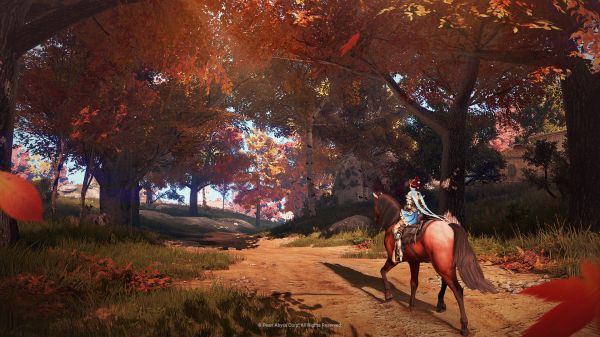
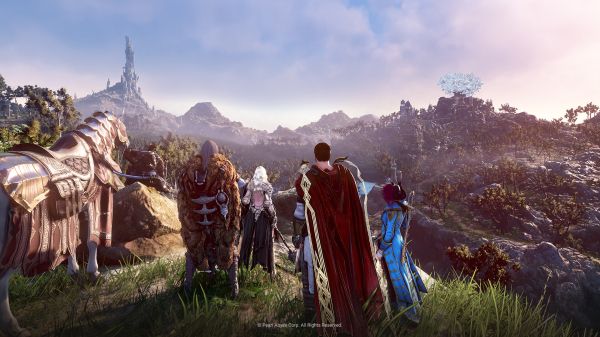
Black Desert’s world is largely seamless, allowing me to travel between towns, farms, forests, deserts, mountains, islands, monster zones, and ports without entering a traditional loading screen at every regional border. This continuity makes distance meaningful because cities are connected by physical roads rather than selected from a menu. I can leave Heidel on horseback, pass working farms and wandering enemies, cross several territories, and eventually reach a distant city while watching the architecture and landscape change gradually. Even after many hours, long journeys retain a sense of scale that smaller hub-based online games struggle to reproduce.
The world is not equally detailed everywhere because Black Desert has expanded for many years. Older regions contain simpler terrain, less elaborate settlements, and quest design that reflects an earlier stage of development. Newer areas use stronger cinematic direction, more distinctive environmental art, denser architecture, and clearer cultural identities. Moving between generations of content can feel uneven, but the accumulated map remains one of the game’s greatest achievements.
Combat Is the Strongest Reason to Accept Everything Else
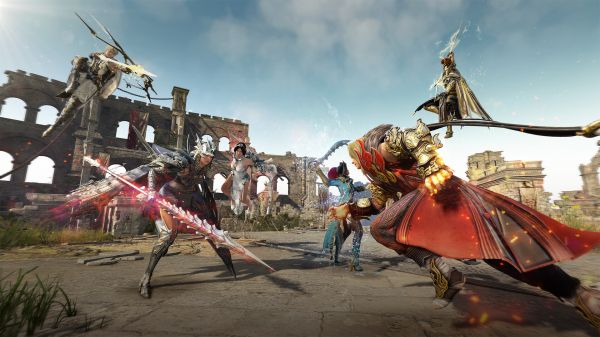
Black Desert uses real-time action combat rather than traditional tab targeting. I aim attacks through positioning and camera direction, combine keyboard inputs into ability sequences, cancel animations, move through enemies, manage defensive states, and respond to attacks without waiting for a global cooldown cycle. Each class has its own movement language, attack range, resource mechanics, defensive options, and preferred rhythm. The result feels closer to a character-action game than a conventional hotbar MMORPG when the controls begin making sense.
The early experience can be overwhelming because abilities are not presented only as isolated buttons. Many attacks require combinations involving directional inputs, mouse buttons, Shift, Space, or class-specific sequences. I initially opened the skill menu and saw an intimidating collection of names, flows, enhancements, and connections. After practice, those combinations became physical habits, and combat started feeling far more natural than clicking icons while watching cooldowns.
Every Class Feels Like a Different Interpretation of Movement
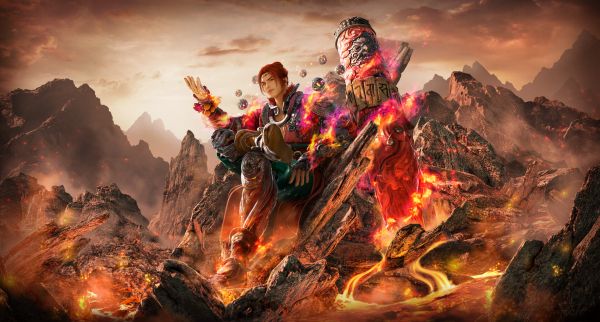
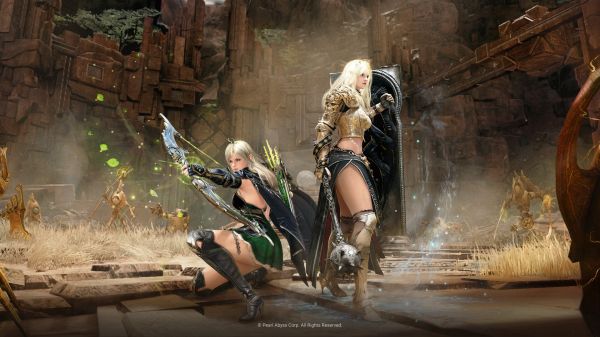
Black Desert’s class roster includes traditional warriors, archers, martial artists, spellcasters, assassins, gun users, supernatural fighters, and several designs that resist simple categories. Choosing a class is not only about selecting damage, defense, or support. It determines how I cross space, approach enemies, recover from danger, and connect one ability to another. A class with elegant dashes and aerial attacks feels fundamentally different from one built around heavy shields, grabs, and deliberate strikes.
This mechanical variety gives the game strong replay value because creating an alternate character can feel like learning a new combat system. The disadvantage is that balance becomes extraordinarily difficult across dozens of classes and multiple forms of content. A class may feel excellent in large-scale battles but awkward in duels, strong at one grinding zone but inefficient elsewhere, or mechanically demanding without receiving proportional results. I choose primarily according to feel because balance changes too frequently to build an entire identity around current rankings.
Succession and Awakening Can Transform the Same Character
Most classes eventually choose between Succession and Awakening. Succession develops the original weapon style and strengthens its existing identity, while Awakening introduces a new weapon and often changes range, movement, pacing, or battlefield role. This gives one class two meaningful paths without requiring a completely separate character. I enjoy reaching this stage because it forces me to reconsider everything I learned during the opening levels.
The choice is not always perfectly balanced or equally polished. One path may receive better damage, easier rotations, or stronger defensive tools during a particular patch. Some players switch depending on content, while others remain loyal to the style they prefer even when it is less efficient. The system succeeds because it offers genuine mechanical identity rather than a simple statistical specialization.
Agent Brings Firearms Into an Already Crowded Combat Roster
Agent uses revolvers and the Hexround system to create a fast, mobile combat style based on firearm attacks, rapid repositioning, and carefully staged bursts. The class shares part of its conceptual space with Deadeye but carries a heavier operative identity, emphasizing controlled engagements and aggressive movement. I enjoyed the immediate responsiveness because the attacks communicate impact clearly without abandoning Black Desert’s exaggerated fantasy speed. Agent feels modern and unusual inside a world traditionally dominated by blades, magic, and martial arts.
The class also raises questions about the game’s visual and thematic boundaries. Firearms can fit Black Desert’s technology, but every new class must compete for a distinctive silhouette and mechanical purpose. Agent succeeds through speed and presentation, though the long-term test will be whether the class remains recognizable after balance changes and new releases. Fresh classes bring players back, but they also increase the difficulty of maintaining coherent PvP balance.
Combos Feel Excellent Until Repetition Turns Them Into Work
Learning a class involves identifying movement skills, protection, crowd control, damage windows, resource recovery, and efficient sequences. In difficult combat, this creates satisfying decisions because I need to adapt rather than repeat one attack without thought. A clean rotation can gather enemies, apply debuffs, activate buffs, and finish a group with minimal wasted movement. Improvement is visible because the same monster zone becomes smoother as my inputs and positioning become more efficient.
Grinding for long periods exposes the physical cost of this complexity. Repeating a demanding sequence thousands of times can become tiring on the hands, especially with classes requiring constant camera movement and Shift-based inputs. Simplified skill setups and more comfortable classes reduce strain, but efficiency culture often rewards high input frequency. Black Desert has exciting combat, yet much of its progression asks me to repeat that combat far beyond the point where every encounter remains interesting.
Monster Grinding Is Both Meditation and Industrial Labor
PvE progression often centers on selecting a monster zone, arranging consumables, activating buffs, and following a repeatable rotation through groups of enemies. The best zones have clear routes, satisfying enemy density, useful mechanics, and enough risk to keep me attentive. Combat animations, loot feedback, and gradual income create a hypnotic rhythm that can be surprisingly relaxing. I often listen to music or talk with guild members while maintaining the rotation almost automatically.
The structure becomes monotonous because the enemies rarely develop into complex tactical encounters during ordinary grinding. Efficiency matters more than improvisation, and a successful hour is measured through silver, trash loot, rare drops, and experience. The difference between relaxing repetition and exhausting repetition depends on my mood, class, and chosen zone. Black Desert never hides that long-term progress is built from many repeated hours.
Modern Monster Zones Are Better Than Simple Circles
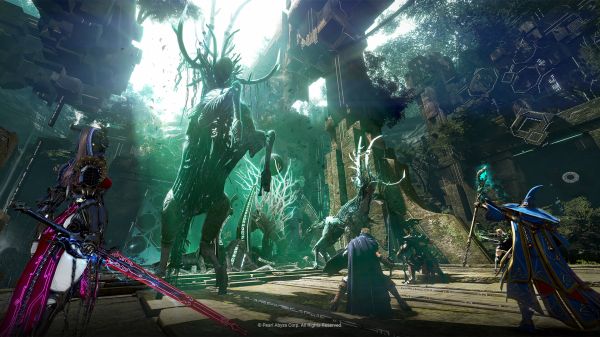
Newer PvE locations introduce mechanics involving positioning, environmental hazards, special enemies, defensive phases, temporary buffs, or changing objectives. These additions help distinguish zones and prevent every activity from becoming one identical clockwise route. I appreciate when a location asks me to watch the battlefield rather than only maximize attacks per minute. Stronger mechanics also give defensive builds and team coordination more practical value.
The balance is delicate because complicated mechanics can interfere with the calm routine many players want from grinding. A zone that demands constant precision may become mentally exhausting when repeated for dozens of hours. The best designs introduce enough variation to maintain attention without turning every pull into a boss fight. Pearl Abyss has improved in this area, though simple high-density zones remain popular for understandable reasons.
Bosses Provide Spectacle More Reliably Than Precision
World bosses gather large groups of players around massive enemies and produce impressive scenes filled with spells, weapons, pets, effects, and collapsing health bars. Participating is easy because I can travel to the location, join the fight, and receive rewards based on the event’s rules. The battles create a sense of shared world activity, especially when a famous boss appears according to a known schedule. Seeing dozens of different classes attacking together remains visually impressive.
Mechanical clarity is weaker. Effects obscure attack animations, performance may decline, collision becomes confusing, and individual contribution can feel difficult to judge. Some bosses rely on large area attacks or movement that becomes frustrating in a crowd. The encounters work as public events and reward opportunities more than finely tuned action battles.
Party Grinding Gives Cooperation a Practical Purpose
Certain monster zones are designed around groups, encouraging players to combine damage, buffs, positioning, and defensive support. These areas create a stronger social experience than solo grinding because a stable group can improve efficiency while making repetition less isolating. Communication helps when enemies use mechanics or when the rotation depends on consistent movement. A good group turns long farming sessions into a shared routine rather than private labor.
Finding compatible players can be difficult when gear levels, class expectations, and efficiency standards differ. Some groups demand optimized builds and precise behavior, while others are comfortable learning together. The game could provide better matchmaking and clearer role communication for this content. Guild communities remain the most reliable way to make group PvE feel natural.
The Gear System Gives Every Upgrade Emotional Weight
Black Desert’s equipment progression has historically been defined by enhancement levels, materials, failstacks, durability loss, and the possibility of failure. A successful upgrade can produce an immediate increase in power and access to stronger content. This creates dramatic emotional peaks because the result represents accumulated money, materials, preparation, and risk. Few MMORPG upgrades feel as personally significant as a major enhancement succeeding after repeated attempts.
The same system can become punishing and psychologically exhausting. Failure may consume valuable resources, reduce durability, or create pressure to attempt again because the previous investment feels wasted. Modern systems provide safer routes, guaranteed progression options, seasonal equipment, and improved support for new players. The game is far more approachable than it once was, but randomness still occupies a central place in high-end progression.
HYPERBOOST Makes Catching Up Less Absurd
The HYPERBOOST program is designed to guide new and returning players toward a combined gear score capable of accessing a large portion of modern content. By completing seasonal progression, Olvia Academy objectives, and designated goals, players can receive support toward Sovereign weapons, Kharazad accessories, Slumbering Origin armor, and other important items. This is a substantial improvement over expecting a newcomer to reconstruct years of progression knowledge independently. The program recognizes that a mature MMORPG needs more than faster experience gains to make returning realistic.
Acceleration does not remove complexity. Receiving powerful equipment is not the same as understanding crystals, artifacts, lightstones, consumables, class protections, monster-zone mechanics, and market priorities. A boosted player may reach respectable statistics while still feeling lost inside the full system. HYPERBOOST shortens the numerical distance, but the knowledge gap remains significant.
Season Characters Are the Best Starting Point
Season servers provide simplified progression, dedicated equipment, accelerated leveling, additional rewards, and a clearer path toward an established account. Tuvala gear gives new characters a manageable enhancement structure compared with immediately entering the full market. Seasonal objectives also introduce inventory expansion, pets, mounts, accessories, and useful account systems gradually. I consider this route essential for a new player because starting outside it creates unnecessary difficulty.
The season can still overwhelm through excessive rewards and notifications. New players receive boxes, currencies, exchange items, coupons, materials, and temporary benefits faster than they can understand them. The generosity is real, but the interface does not always explain which items matter now and which should be stored for later. A cleaner guided inventory would make the opening experience much less intimidating.
Olvia Academy Turns Catch-Up Into a Curriculum
Olvia Academy provides structured guidance for new and returning players through objectives connected with combat, equipment, and account development. I appreciate the attempt to transform an enormous collection of systems into a sequence that feels educational. Completing defined tasks gives me a reason to engage with features I might otherwise ignore. The rewards also connect directly with the modern progression path rather than offering outdated equipment.
The academy cannot explain every underlying decision. Black Desert contains years of accumulated systems, and many have exceptions or optimal strategies that change over time. External guides, guild advice, and community tools remain important. The academy is an effective orientation program, not a replacement for learning the game’s wider ecosystem.
Kharazad Accessories Make Progress More Direct but Still Expensive
Kharazad accessories provide a clearer upgrade path than older accessory systems built around destructive enhancement risk. Their structure allows gradual development and connects with current endgame progression. I value having equipment that can remain relevant through several stages rather than being replaced immediately after one successful upgrade. The system makes planning more predictable without making high levels inexpensive.
Materials, enhancement resources, and supporting items still demand substantial investment. A predictable path can remain a long path, especially across six accessory slots. The benefit is psychological stability because I understand what progress should look like. I am less likely to lose an entire item through one unlucky attempt, which makes long-term planning healthier.
Sovereign Weapons Represent Ambition More Than Accessibility
Sovereign equipment occupies the highest level of weapon progression and gives established players a continuing goal beyond earlier Blackstar paths. Obtaining and improving these weapons requires significant resources, preparation, and engagement with advanced content. The visual and statistical rewards communicate prestige clearly. For dedicated players, this provides a meaningful destination in a game where complete progression can never arrive too quickly.
For newcomers, the system initially appears impossibly distant. Catch-up programs reduce that distance, but reaching and upgrading endgame weapons still requires understanding several connected systems. I treat Sovereign gear as a long-term project rather than a necessary requirement for enjoying the game. Black Desert becomes unhealthy when every available upgrade is interpreted as an immediate obligation.
Crystals, Artifacts, and Lightstones Add Depth and Administrative Work
Equipment statistics do not tell the whole story because crystal presets, artifacts, and lightstone combinations can alter damage, defense, accuracy, resistance, movement, and Life Skill performance. These systems allow one account to prepare different configurations for monster zones, bosses, PvP, and professions. I enjoy the strategic potential because a thoughtful setup can improve performance without replacing every piece of gear. Presets also make switching between activities more manageable than rebuilding manually.
The number of combinations is difficult to evaluate without external information. Tooltips contain many statistics, some effects interact indirectly, and optimal choices depend on hidden caps or specific enemies. A player can own expensive gear while losing substantial efficiency through poor supporting configuration. Black Desert rewards research almost as much as mechanical skill.
The Level System Has Finally Received a Clearer Destination
For years, Black Desert used a soft-cap structure where levels beyond a certain point offered limited practical benefits and required enormous experience. The 2026 roadmap introduces defined maximum-level stages, beginning with level 70 and later rising to 75. Higher levels are planned to provide meaningful family and character benefits rather than functioning mainly as prestige. This gives experience grinding a clearer destination and restores significance to the number displayed beside the character.
A maximum level also changes the psychological structure of progression. An unreachable horizon can feel endless, while a defined cap allows completion. The risk is that meaningful statistical benefits may create pressure to grind levels even after players prefer other activities. Shared benefits between tagged characters should reduce some repetition, but balance will depend on how powerful the rewards become.
Life Skills Could Support an Entire Separate Review
Black Desert includes gathering, processing, cooking, alchemy, fishing, hunting, trading, farming, horse training, sailing, bartering, and several connected economic activities. These are not tiny distractions added beside combat. They have dedicated tools, equipment, mastery statistics, worker networks, production chains, markets, and progression systems. A player can spend most of their time developing professions while engaging with combat only when necessary.
This breadth is one of the game’s greatest strengths because it supports several forms of routine. I can begin a session intending to gather herbs, notice that cooking materials are running low, process stored crops, prepare Imperial boxes, and then leave a character fishing overnight. The systems connect naturally enough to create personal business plans. They also generate a large amount of inventory and administrative work.
Gathering Makes the Landscape Economically Visible
Trees, rocks, plants, animals, water, and farms become sources of specific materials when I equip the appropriate tools. Gathering consumes energy and rewards experience, resources, rare items, and materials needed for production. A forest therefore becomes more than visual scenery because I can evaluate it according to timber, sap, herbs, meat, blood, or other useful products. This relationship gives the world practical density.
The activity is repetitive and strongly influenced by mastery, equipment, pets, consumables, and route efficiency. High-level gathering can become profitable, but the process requires constant interaction and movement. I enjoy it when working toward a clear crafting or cooking goal. Gathering only for maximum hourly income feels more like manual labor than relaxation.
Cooking Turns Storage Into a Complicated Supply Chain
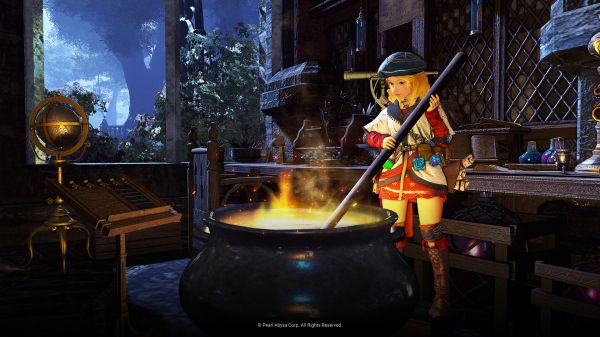
Cooking combines ingredients through utensils placed in a residence and supports food production, market sales, worker meals, buffs, and Imperial Delivery. Recipes often depend on several upstream activities, including farming, gathering, fishing, processing, or marketplace purchasing. A successful cooking operation therefore begins long before the character stands at the utensil. I find satisfaction in seeing stored ingredients become valuable meals through a planned production chain.
Large-scale cooking is menu-heavy and repetitive. Utensils lose durability, ingredients occupy substantial storage, and profitability depends on mastery, contribution points, market prices, and delivery limits. The system rewards organization more than active mechanical skill. It can be deeply engaging for players who enjoy economic planning and completely unappealing to those who want physical cooking interactions.
Alchemy Offers Depth Without Enough Clarity
Alchemy produces elixirs, reagents, oils, crystals, and other items connected with combat and production. Its materials are often harder to acquire consistently than cooking ingredients, creating a more specialized market. I enjoy the feeling of assembling rare components into useful products, especially when the result supports my own combat setup. The profession has a strong thematic identity and meaningful economic connections.
The interface and recipe discovery remain less welcoming than the underlying system deserves. External databases are frequently more practical than learning through the game. Some ingredients have narrow sources or inconsistent market availability, making production difficult to scale. Alchemy rewards dedicated specialists but does little to convince casual players to become specialists.
Fishing Is the Most Famous Way to Progress While Doing Something Else
Fishing can be active or largely automated, allowing a character to continue collecting fish while the player is away. Rods, inventory space, fishing mastery, regional waters, prize catches, and trading routes influence the value of the session. I appreciate how fishing gives the world a quieter social space, with groups of players gathering along shores and docks. It makes the MMO feel inhabited even when many participants are not actively present.
Active fishing and related systems can offer stronger rewards and more engagement, but ordinary automatic fishing becomes routine quickly. The activity is valuable partly because it converts idle time into progress. This creates a strange relationship where the game rewards remaining connected without actively playing. Black Desert’s persistent-world economy makes that useful, though it also encourages unhealthy attention to uptime.
Hunting Provides a Better Bridge Between Combat and Life Skills
Hunting uses matchlocks and specialized encounters to create an activity distinct from ordinary monster grinding. I track or engage animals, manage reload timing, position carefully, and gather materials from the result. Hunting mastery improves income and gives equipment progression to players who want active Life Skill content. The activity feels more physical than processing or cooking because movement and aiming remain important.
Boss hunting and cooperative targets add welcome variety, although the controls can feel less refined than standard class combat. Matchlock handling is deliberately slower, which suits the theme but becomes awkward against fast targets. The rewards and regional routes can be excellent when properly prepared. Hunting is one of the professions I recommend to players who find stationary production too passive.
Horse Training Is Beautiful, Expensive, and Deeply Random
Mounts are central to travel, and horse training expands them into a long-term progression system involving levels, skills, breeding, tiers, coursers, and dream horses. A well-trained mount changes the entire experience because speed, turning, acceleration, and specialized abilities reduce the friction of a large world. Obtaining a dream horse feels significant because it combines utility, prestige, and visual spectacle. Flying or gliding mounts can also change how I understand terrain.
Random skill acquisition and awakening attempts introduce frustration. Training a horse may require coupons, materials, repeated attempts, or marketplace patience. The process can become expensive, and premium items are closely connected with convenience. I love the mounts themselves more than I love every system used to produce them.
Sailing Makes the Ocean a Second Open World
Black Desert’s ocean contains islands, trade routes, sea monsters, ports, bartering chains, ship equipment, naval progression, and distant destinations. Building a serious ship requires substantial materials and preparation, which makes launching one feel like completing a major account project. Sailing changes the pace because movement, wind, currents, cannon positioning, and cargo capacity become more important than class combos. The sea provides one of the game’s strongest examples of an optional system growing into its own lifestyle.
Navigation can also be slow and frustrating. Ships may interact awkwardly with docks, other vessels, and shallow terrain, while remote travel demands significant time. Ocean content has received improvements, but several interfaces and mechanics remain less polished than land combat. I recommend sailing to players attracted by the fantasy itself rather than anyone seeking immediate profit.
Bartering Is Logistics Without Traditional Combat
Bartering involves exchanging goods across islands through increasingly valuable trade stages. Success depends on cargo capacity, route planning, ship efficiency, stock management, and knowledge of exchange chains. I enjoy the calm strategic loop because the ocean becomes a network of commercial decisions rather than empty water. A productive route feels satisfying when every stop contributes toward a larger goal.
The activity requires patience and preparation. Sailing time can be extensive, and mistakes in cargo selection may waste an entire journey. Market-style optimization eventually turns routes into routines. Bartering is excellent for players who enjoy logistics, but it will not convert anyone who already finds long travel tedious.
Workers Create a Background Economy Across the Map
Contribution points allow me to connect nodes, hire workers, purchase lodging, and establish production networks. Workers gather timber, ore, crops, and other materials while I perform separate activities. This creates the feeling that my account operates a distributed economic system rather than one character carrying every resource personally. Planning a network can be satisfying because towns, storage, worker grades, and node connections all influence efficiency.
The interface is complex and visually dated in places. New players may connect nodes without understanding why, hire inappropriate workers, or fill storage with materials that lack an immediate purpose. Optimizing the network often requires spreadsheets or community tools. The system is powerful, but the game provides limited help in deciding what a useful empire should actually produce.
Family Dispatch Gives Alternate Characters More Practical Value
The announced Family Dispatch system allows alternate characters to perform Life Skill activities such as gathering, processing, and fishing to generate income. This is a logical development for a game that encourages large families of characters but often leaves most of them inactive. I like the idea of assigning specialists rather than forcing one main character to manage every profession. Unlockable dispatch slots also create progression without requiring constant manual switching.
The success of the system will depend on efficiency and restrictions. If dispatch is too weak, it becomes another interface visited for small rewards. If it is too strong, active Life Skills may lose value. A balanced version could reduce repetitive labor while preserving the importance of developed characters and equipment.
Instant Swap Could Make the Family System Feel Truly Unified
Black Desert encourages players to create many characters, but switching between them has traditionally involved loading screens, travel concerns, and logistical separation. Instant Swap is intended to allow direct changes between deployed family members through the world or character interface. This could make specialized alts more practical for bosses, Life Skills, PvP, storage, and regional activities. The account would begin feeling like one coordinated family rather than a list of isolated characters.
Restrictions will matter because unrestricted swapping could create balance problems in dangerous areas or competitive situations. The system needs clear rules around combat, transport, inventory, and location. Even with limitations, faster switching would remove one of the oldest pieces of friction in the game. I consider it one of the most promising quality-of-life additions on the roadmap.
Trading Has a Strong Fantasy and a Complicated History
Trading originally emphasized moving goods between connected regions and profiting from distance, prices, and route planning. The fantasy fits the world perfectly because roads, wagons, towns, workers, and production nodes naturally support commerce. I have always liked the idea of building a merchant identity without depending on combat. The practical system has undergone major changes and periods of reduced relevance, making long-term investment difficult to evaluate.
Pearl Abyss has repeatedly adjusted trading in search of a balance between profit, exploitation prevention, and active gameplay. This instability makes me cautious about building an account around it. The world deserves a deep dynamic economy where regional supply and demand respond visibly to players. The current experience contains pieces of that fantasy without always delivering it consistently.
Housing Is Functional, Decorative, and Competitive in Strange Ways
Residences provide spaces for cooking, alchemy, storage furniture, decoration, and personal expression. The furniture catalogue ranges from simple practical objects to elaborate regional sets, event items, trophies, and premium designs. I enjoy creating a home that reflects the character’s identity rather than placing every object according to score. Housing offers a quiet contrast to the constant equipment progression outside.
The ranking system assigns points to furniture and can encourage players to fill rooms with expensive objects rather than design attractive spaces. This turns decoration into a numerical competition and produces houses that resemble crowded warehouses. Premium furniture can also contribute, creating uncomfortable monetization around status. I prefer treating residences as private creative projects and ignoring the leaderboard.
The Character Creator Remains Almost Excessively Powerful
Black Desert’s customization allows detailed changes to facial structure, hair, eyes, skin, body proportions, age presentation, and many smaller features. Community templates make it possible to share appearances, while dye systems and outfits add further identity. I can create a character who looks genuinely distinct rather than selecting from a few preset faces. This is particularly valuable in an MMORPG where the character may remain visible for thousands of hours.
The tool can also produce distorted results, and some controls are difficult to understand without experimentation. Lighting inside the creator does not always match the open world, causing skin, hair, or makeup to look different later. Gender and body options remain tied to class because each class is a specific character archetype rather than a neutral combat kit. This limits freedom even inside one of the industry’s most detailed creators.
Class-Locked Gender Is Still an Unnecessary Restriction
Many combat styles are tied to one gender and body type, requiring a player to accept the entire character package to access the mechanics. Related classes occasionally offer a counterpart, but they are not identical and may use different weapons or abilities. I may enjoy a class mechanically while disliking its presentation, voice, or outfit direction. A game with such extensive visual customization should provide more freedom at the foundational level.
Pearl Abyss designs classes as named archetypes with specific lore and animations, which explains part of the limitation. Creating equivalent models, outfits, voices, and animation sets would require substantial work. The reason is understandable without making the result ideal. Mechanical choice and personal representation should not need to compete so directly.
The Main Story Has Improved but Still Struggles Against the Systems
Black Desert’s narrative covers ancient powers, political conflict, religious institutions, regional history, the Black Spirit, and the player character’s uncertain identity. Later questlines use stronger cinematics, better voice direction, more memorable characters, and clearer regional themes. Land of the Morning Light is especially notable for presenting folklore-inspired stories with a different structure from the traditional western regions. Edania moves toward resolving a major long-running saga involving central figures and religious mythology.
The story remains difficult to follow because it is surrounded by years of revisions, alternate starting routes, optional knowledge, and accelerated progression. Important information may appear inside long conversations while the player is trying to reach the next reward. The Black Spirit frequently interrupts, and quest objectives still rely on travel or simple interactions between major scenes. I respect the lore more than I consistently enjoy its delivery.
Land of the Morning Light Gives the World Its Strongest Cultural Identity
Land of the Morning Light draws from Korean folklore, architecture, landscapes, clothing, music, and traditional stories. Its questlines focus more directly on local tales and boss encounters than the early game’s endless chain of town errands. The region feels visually and narratively distinct, giving Black Desert an identity beyond familiar European fantasy influences. I found several stories more memorable because their conflicts were tied closely to families, villages, spirits, and regional customs.
The structure can still become dialogue-heavy, and travel between story stages occasionally interrupts momentum. Some cultural ideas are simplified for the game’s broader fantasy context. Even so, the region demonstrates what Black Desert can achieve when art, music, story, and boss design support one clear vision. It is one of the most convincing reasons to explore beyond the traditional starting areas.
Edania Pushes the Long-Term Story Toward a Real Conclusion
Edania brings together major religious and mythological forces connected with Elion, Agris, Aal, and the larger history of the world. The region is positioned as an important stage in resolving Black Desert’s first major overarching saga. This gives veteran players a reason to care about old narrative threads that previously seemed capable of continuing indefinitely. New monster zones, bosses, accessories, and quests connect story progression with endgame systems.
The challenge is accessibility. A player arriving through accelerated progression may possess the gear needed to enter modern content without remembering the lore required to understand it. Black Desert needs stronger recaps and a unified adventure log to make years of narrative manageable. A meaningful conclusion works only when players understand which questions are being answered.
The Black Spirit Is Helpful, Annoying, and Impossible to Ignore
The Black Spirit acts as companion, quest provider, progression interface, and mysterious narrative force. Its changing appearance reflects the character’s development, while its dialogue alternates between useful guidance and suspicious enthusiasm. I appreciate having one persistent figure connecting the game’s many regions. The relationship creates continuity even when every local cast eventually changes.
The Spirit also appears constantly across menus, enhancement, quests, and notifications. Repeated animations and dialogue can become irritating when I already understand the requested action. The character is essential to Black Desert’s identity, but familiarity has not always improved its manners. I often feel that the Spirit exists partly to remind me about another system demanding attention.
PvP Can Be Brilliant When Gear and Connection Do Not Decide First
Black Desert’s PvP uses the same action combat as PvE but places much greater importance on protection, crowd control, grabs, movement, accuracy, resistance, and rapid decision-making. A skilled duel can be exhilarating because both players understand the threat behind every approach. Movement creates constant positional pressure, while one successful crowd-control sequence may determine the outcome. Learning another class’s openings and defensive gaps feels like studying a fighting-game matchup.
Gear differences can overwhelm that skill. A stronger player may deal far more damage, survive combos, or ignore pressure that would defeat an equal opponent. Capped modes reduce this problem, but uncapped combat remains deeply connected with account investment. Network latency, frame rate, and visual clarity also influence results in a game where tiny timing windows matter.
Node Wars Create Strategy Beyond Individual Combat
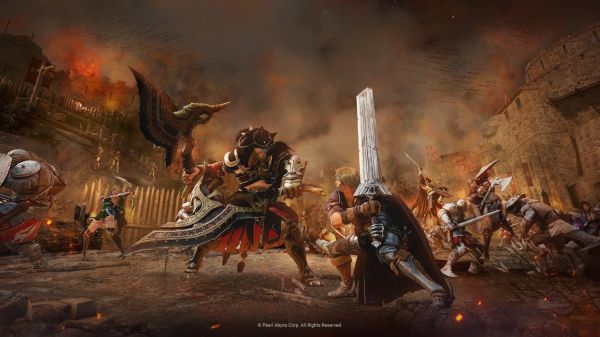
Node Wars allow guilds to compete for territory through organized battles involving forts, defensive structures, command roles, scouting, cannons, elephants, flame towers, and coordinated groups. The mode gives purpose to guild organization because success depends on more than individual dueling skill. Strategy begins before the battle through diplomacy, composition, placement, and preparation. When several groups collide around an objective, Black Desert becomes a genuine large-scale war game.
The experience can become visually chaotic and technically demanding. Effects fill the screen, performance drops, voice communication becomes crowded, and one coordinated push may decide a long preparation period quickly. Balance changes also affect guild compositions significantly, encouraging constant adaptation. Node Wars are among the game’s most distinctive features, but joining them seriously requires commitment far beyond casual participation.
Sieges Deliver Scale and Political Drama
Siege warfare expands territorial conflict around castles and major regions. Guild alliances compete for control, taxes, prestige, and political influence, creating rivalries that can continue across weeks or months. The social preparation is often as important as the battle because alliances, agreements, and betrayals shape the field before combat begins. This player-created politics gives the world a layer no scripted quest can reproduce.
Only a portion of the community experiences siege at its highest level. Gear, attendance, class composition, schedule, and guild expectations create barriers to entry. Large battles also magnify every performance and synchronization weakness. I admire siege as a defining MMORPG feature even when I do not want my entire schedule organized around it.
Arena Content Provides Cleaner Competition
Smaller competitive modes reduce the scale and allow class mechanics to become more visible. Equalized or restricted gear creates a better environment for learning matchups without requiring years of economic progression. I enjoy these modes because defeats are easier to analyze when a castle, twenty guilds, and hundreds of effects are not involved. They also give mechanically skilled players a clearer stage for recognition.
Balance remains difficult across 32 classes, different team compositions, and regional network conditions. Certain kits naturally perform better in coordinated small-group play, while others depend on large battles or specific targets. Competitive seasons and tournaments encourage refinement, but they also expose every imbalance publicly. Pearl Abyss’s planned global championship demonstrates ambition, though stable rules will be essential for credibility.
Open-World PvP No Longer Defines Every Journey
Black Desert historically built much of its reputation around conflict emerging in shared grinding zones. Players could dispute rotations, declare wars, or attack one another under the karma system. This created tension because a valuable location was also a contested social space. Every player encounter carried uncertainty.
Modern protections, private grinding options, Marni’s Realm access, and revised war systems have reduced some of that pressure. I appreciate being able to progress without constant interruption, particularly during limited playtime. The world feels less dangerous as a result, and spontaneous rivalry becomes less common. The game has traded part of its hostile sandbox identity for accessibility and reduced harassment.
Guilds Transform the Game From a Menu Collection Into an MMO
A good guild provides advice, group activities, buffs, boss participation, sailing partners, PvP organization, and simple conversation during repetitive work. Black Desert’s complexity becomes much easier to manage when experienced players can answer questions directly. Guild identity also creates reasons to participate in content I would ignore alone. The world feels significantly more alive when familiar names appear regularly.
Guild quality varies widely. Some communities are relaxed and supportive, while others impose activity quotas, gear expectations, voice requirements, or PvP schedules. Finding the right culture matters more than finding the largest organization. I recommend joining early but leaving quickly when the atmosphere turns progression into employment.
The Central Market Is One of the Game’s Most Important Systems
Most equipment, materials, consumables, outfits, and production goods flow through a centralized marketplace with regulated price ranges. This makes economic activity meaningful because grinders, gatherers, cooks, hunters, sailors, and enhancement specialists depend on one another indirectly. I can purchase materials instead of producing everything personally, then sell the output of my preferred activity. The market turns personal routines into parts of a shared economy.
Price controls reduce extreme manipulation but also create shortages when the maximum price does not match demand. Popular items may have many purchase orders and almost no immediate stock. Premium costumes entering the market can be converted into enhancement materials, connecting real-money purchases with the in-game economy. The system is stable and useful, yet its relationship with monetization remains uncomfortable.
The Pearl Shop Sells Convenience Where the Game Creates Friction
Black Desert has a low initial purchase price and regularly offers free access or heavy discounts. Major regions, classes, and gameplay updates are generally added without traditional expansion fees. The Pearl Shop instead sells outfits, pets, inventory slots, weight capacity, maids, tents, horse items, storage convenience, subscriptions, and many cosmetic or account services. This allows players to access the full world without buying every content release separately.
The problem is that several paid conveniences address limitations deliberately built into the game. Inventory fills quickly, weight affects long grinding sessions, pets collect loot, maids reduce travel, and the premium tent provides valuable remote functions. None is a direct damage upgrade by itself, but together they significantly improve efficiency and comfort. Describing the game as purely cosmetic would be inaccurate.
Pets Are Essential Enough to Feel Like a System Tax
Pets collect dropped loot automatically, provide small bonuses, and improve through higher tiers. Grinding without enough effective pets requires manual looting or accepting reduced income. The game provides several free pets through quests, events, and attendance rewards, which helps new players assemble a functional team. Established accounts can usually progress without purchasing every pet directly.
High-tier optimization still encourages spending or extensive event participation. Loot speed matters in fast zones where enemies disappear faster than pets collect items. A system this essential should be fully integrated into normal progression without monetized uncertainty. Black Desert has improved access, but pets remain one of the clearest examples of convenience becoming practical power.
The Premium Tent Is Difficult to Ignore
The premium campsite provides remote repair, shop access, storage functions, and useful buffs while away from towns. These benefits save substantial travel time during grinding and gathering. Once I became accustomed to using the tent, playing without it felt noticeably less efficient. It is one of the most valuable convenience purchases in the game.
That value is exactly why the system attracts criticism. A premium item solves recurring friction across many activities and remains relevant permanently. Free alternatives exist in more limited forms, but they do not match the full convenience. The tent does not make my class stronger mechanically, yet it makes maintaining strength and efficiency easier enough to influence long sessions.
Value Packs, Kama Blessings, and Old Moon Books Create Subscription Pressure
Several timed premium buffs improve marketplace income, inventory, weight, storage transport, energy recovery, experience, and other account systems. Events frequently provide temporary versions, allowing patient players to maintain some benefits without constant payment. The Central Market also allows certain premium items to enter the economy, depending on supply. I can play without maintaining every buff permanently.
The experience becomes noticeably more convenient when several are active together. This creates a soft subscription structure inside a game that is technically buy-to-play. Managing expiration dates and saving rewards for important periods becomes another planning layer. I prefer one transparent subscription to several overlapping convenience timers.
Outfits Are Beautiful and Commercially Aggressive
Class outfits are often detailed, animated, and carefully designed around each character’s visual identity. Dye channels provide personalization, while regional and seasonal sets give collectors many options. I understand why outfits remain a major source of revenue because the game’s camera, character creator, and combat presentation make appearance unusually important. A favorite outfit can genuinely improve my connection with a class.
Prices are high, and many designs emphasize revealing or impractical styles more than the world’s setting would suggest. Male and female classes also receive uneven categories of clothing. Limited sales and bundles create urgency around cosmetic decisions. The art quality is strong, but the commercial structure encourages emotional attachment to become repeated spending.
Enhancement Monetization Remains the Most Sensitive Issue
Premium outfits can be converted into Cron Stones, which help protect certain enhancement attempts. This creates a direct connection between real-money purchases and high-end progression, even though outfits may also be purchased from the Central Market with in-game silver when available. Players who spend heavily can access more protected attempts or convert purchased cosmetics into progression resources. The regulated market and event rewards soften the effect without removing it.
I do not consider Black Desert straightforward pay-to-win because mechanical skill, time, market knowledge, and guild organization still matter enormously. Spending does purchase meaningful convenience and can accelerate gear progression. The fairest description is that the game sells advantages inside a complex economy rather than selling an instant victory button. Players sensitive to monetized progression should understand this before committing.
Free Rewards Are Extremely Generous and Difficult to Organize
Pearl Abyss regularly distributes pets, outfits, maids, enhancement materials, premium buffs, horses, inventory slots, coupons, and high-value equipment support through events and login rewards. A patient player can build an account containing many paid-style conveniences without purchasing everything directly. Anniversary periods and major presentations are especially generous. Returning after a break often means discovering a large collection of rewards waiting in mail and challenge menus.
The generosity creates clutter. Items arrive through different interfaces, have different expiration rules, and may be valuable only after the player understands advanced progression. I have spent significant time searching item names simply to decide whether something should be opened, stored, or ignored. Black Desert gives away a great deal, but it often delivers generosity as administrative homework.
Inventory Management Is a Game Inside the Game
Characters, towns, warehouses, mounts, ships, maids, and storage systems can all hold different categories of items. Materials accumulate from events, quests, grinding, professions, bosses, and old content faster than a new player can understand them. Some objects are family-wide, some are character-bound, some belong in specialized inventories, and others should be sold immediately. Learning where everything belongs becomes an important account skill.
Search functions and unified interfaces have improved the situation significantly. I can locate items across multiple storages and move resources more conveniently than in earlier versions. The underlying quantity remains enormous because years of content have introduced many currencies and materials. Black Desert needs periodic simplification, not only better tools for navigating complexity.
The User Interface Can Make a Beautiful World Feel Like Accounting Software
The world itself is attractive, but the screen may contain quests, minimaps, skill cooldowns, buffs, chat windows, event notices, item notifications, party information, and multiple shortcuts. Extensive customization allows me to hide or reposition many elements. Once configured carefully, the interface can become surprisingly clean during exploration and combat. The default presentation is much less elegant.
Menu organization has improved, yet features remain scattered across the Black Spirit, main menu, inventory, character windows, challenge rewards, event pages, and external notices. New systems frequently add another icon rather than replacing an old layer. A unified adventure log and Treasure Codex should help with long-term goals. The game’s greatest usability challenge is no longer missing functionality but excessive functionality competing for attention.
The Treasure Grind Is Romantic Until Probability Takes Control
Rare treasure items require special pieces obtained from specific enemies, activities, or regions. Infinite-use potions, navigation tools, maps, compasses, and other rewards provide unique utility and prestige. The search creates personal stories because every player remembers where a rare component finally appeared. Completing one feels more meaningful than purchasing an ordinary upgrade from the market.
Low drop rates can turn the journey into hundreds of hours of repetition. Pity systems and alternative acquisition routes make some treasures more reasonable, but the fundamental structure remains probability-based. A Treasure Codex should improve tracking and explain sources directly. Clear information does not solve bad luck, though it prevents uncertainty from making bad luck worse.
Music and Environmental Sound Carry Much of the World’s Atmosphere
Regional music changes across cities, wilderness, combat zones, deserts, oceans, and culturally distinct areas. The soundtrack often remains understated during travel, allowing hoofbeats, wind, water, birds, and distant activity to define the scene. Major stories and bosses use stronger themes when the game needs emotional emphasis. I enjoy travelling without rushing partly because the audio gives each region space to breathe.
Combat sound is loud, layered, and closely connected with class identity. Heavy attacks feel powerful, firearm classes communicate sharp impact, and magical abilities fill the soundscape with distinctive textures. Large battles can become overwhelming when dozens of abilities overlap. Audio clarity suffers alongside visual clarity, but the overall production remains impressive.
The Remastered Graphics Still Produce Remarkable Views
Black Desert’s Remastered mode offers detailed characters, reflective materials, dynamic weather, strong lighting, large landscapes, and dramatic combat effects. Sunlight moving across armor, rain covering roads, and distant cities appearing through atmospheric haze can still look impressive years after the original release. The character models remain particularly detailed for an MMORPG with this many players and outfits. Photo mode and appearance customization benefit enormously from the visual quality.
The presentation has weaknesses. Remastered lighting can become excessively bright, shadows may flicker, distant objects appear inconsistently, and certain effects overwhelm the image. Older terrain and animations stand beside much newer assets, creating visible differences. Black Desert is often beautiful rather than consistently polished.
DirectX 12, DLSS, and FSR Could Solve Important Performance Problems
Pearl Abyss has announced DirectX 12 support along with NVIDIA DLSS and newer AMD FidelityFX Super Resolution versions. These technologies should improve performance scaling, image reconstruction, and stability across a wider range of modern hardware. Black Desert benefits greatly from high frame rates because combat inputs, animation speed, and large battles feel better when performance is consistent. Technical modernization is essential for a game expected to continue expanding.
Implementation quality will matter more than feature names. Upscaling can introduce ghosting around hair, effects, weapons, and distant objects, while frame-generation technology may increase latency or create visual artifacts. DirectX 12 also needs stable shader handling to avoid replacing one form of stutter with another. I am optimistic because the engine needs this work, but I will judge the results through real combat rather than screenshots.
Performance Can Influence Combat More Than It Should
Black Desert has historically connected animation behavior and practical combat performance with frame rate in ways that concern competitive players. Higher frame rates can make certain classes feel smoother and may affect the reliability of sequences. This encourages players to reduce graphical settings even when their hardware can display the world beautifully. Competitive PvP often looks much less attractive than promotional footage because clarity and responsiveness take priority.
Large battles create the worst compromise. Character effects, models, structures, network data, and rapid movement place pressure on both hardware and connection quality. Optimization modes improve performance by reducing visual detail significantly. The game can support remarkable scale, but players frequently need to sacrifice the appearance that first attracted them.
Network Quality Shapes Every Serious PvP Experience
Fast movement, grabs, invulnerability frames, super armor, frontal guard, and rapid crowd control require strong synchronization. When latency is low, combat feels precise and expressive. When connection quality declines, another player may appear to ignore an attack, move unexpectedly, or complete a sequence before the visual information becomes clear. The difference can make the same matchup feel fair or impossible.
Server region and physical distance therefore matter greatly. Competitive players often develop habits around latency rather than ideal mechanics. Black Desert’s speed pushes online infrastructure harder than slower tab-target combat would. The game remains impressive, but its ambitions expose every weakness in the connection.
Knowledge Is the Real Endgame Resource
Success depends on understanding far more than combat power. I need to know market conditions, class rotations, buff stacking, monster caps, crystals, artifacts, workers, storage, contribution, energy, failstacks, event timing, and which old systems remain relevant. Experienced players progress efficiently because they avoid expensive mistakes and combine activities intelligently. Two accounts with similar playtime can develop very differently depending on knowledge.
This depth supports long-term engagement and strong communities. It also creates a barrier where external guides become nearly mandatory. Information may become outdated after major updates, forcing players to verify dates and patch versions constantly. Black Desert is rewarding to learn, but it asks too often for research outside the game.
The Game Respects Long-Term Commitment More Than Short Sessions
I can complete brief tasks, collect daily rewards, manage workers, deliver Imperial boxes, or spend energy during a short visit. Meaningful account growth still benefits from regular routines and accumulated hours. Grinding, professions, horse training, sailing, guild wars, and enhancement all reward persistence. Black Desert becomes more satisfying as systems begin connecting across months rather than days.
This creates pressure to remain engaged. Events expire, premium buffs run down, daily limits reset, bosses follow schedules, and guild activities happen at fixed times. The game can fit into a routine until the routine begins controlling the player. I enjoy it most when I choose one project and ignore the many systems trying to become additional obligations.
My Biggest Frustrations
Black Desert explains too little while presenting too much. Inventory clutter, overlapping currencies, dense menus, outdated systems, enhancement randomness, and external-guide dependence make the opening unnecessarily hostile. Gear progression can become repetitive, ordinary grinding lacks encounter variety, and PvP balance struggles under the weight of dozens of classes. The game’s technical brilliance is also weakened by visual clutter, latency, and performance compromises during large battles.
Monetization is my deeper concern. Pets, weight, inventory, maids, premium buffs, the campsite, horse convenience, and Cron Stone conversion all connect real spending with efficiency or progression. Free rewards reduce the practical need to purchase everything, but they do not change the design philosophy. Black Desert often creates inconvenience and then places the cleanest solution inside the Pearl Shop.
Who Should Play Black Desert?
I recommend Black Desert to players who enjoy fast action combat, enormous long-term progression systems, detailed character customization, economic planning, professions, guild communities, open-world travel, sailing, horse development, and large-scale PvP. It is particularly suitable for someone who wants one MMO capable of supporting several different lifestyles. Seasonal characters, Olvia Academy, HYPERBOOST, and generous catch-up rewards make the current version far more approachable than the game’s old reputation suggests. A new player can reach meaningful content without repeating every year of historical progression.
I would be more cautious recommending it to anyone uncomfortable with randomized enhancement, monetized convenience, long grinding sessions, complicated interfaces, or progression structured around routine. Players seeking a tightly narrated cooperative campaign will find the questing uneven, while those wanting balanced competitive PvP may become frustrated by gear, class changes, and connection differences. Black Desert requires patience not only to progress but to understand what kind of player it expects me to become. The game offers freedom, but that freedom arrives without much protection from poor decisions.
My Final Verdict
Black Desert remains one of the most ambitious MMORPGs because it refuses to reduce the genre to quests, dungeons, and equipment levels. Its combat is fast and mechanically expressive, the open world has genuine physical continuity, and the roster of classes offers remarkable variety. Life Skills, worker networks, sailing, horse training, guild wars, the Central Market, housing, and regional stories create enough parallel systems to support several completely different careers. Modern catch-up programs and quality-of-life improvements have also made the game less hostile to new and returning players than it was in earlier years.
The same ambition creates exhausting complexity. Enhancement remains psychologically demanding, ordinary progression depends heavily on repetition, PvP balance is unstable, and the interface struggles to contain years of accumulated systems. The Pearl Shop sells more than harmless appearance, while performance and network conditions can affect the combat experience substantially. I rate Black Desert 8.7/10, because it contains some of the best action combat, world design, and economic freedom available in an MMORPG, but enjoying those strengths requires learning when to ignore the enormous number of systems asking for my time.
Pros:
- Engaging real-time combat system that rewards strategic gameplay
- Extensive character customization for a personalized experience
- Dynamic open world offering endless exploration opportunities
- Regular updates and community-driven enhancements
- Cross-platform integration allowing play on various devices
- Stunning visuals with meticulous attention to detail
Cons:
- Complex mechanics may deter casual gamers
- Occasional technical glitches or performance issues
- Steep learning curve for new players









Recent Reviews

Minecraft

Grand Theft Auto V

Toca Boca World

Roblox

Leave a comment
Your comment is awaiting moderation. We save your draft here
0 Comments