Review
My first serious ranked match in Yu-Gi-Oh! Master Duel began with a hand that looked perfectly reasonable to someone who remembered the...




Mastering the Duel: Navigating Nostalgia, Strategy, and Innovation in Yu-Gi-Oh! Master Duel
My first serious ranked match in Yu-Gi-Oh! Master Duel began with a hand that looked perfectly reasonable to someone who remembered the anime more clearly than the modern card game. My opponent went first, activated one card, summoned several monsters through a chain of effects, searched additional cards, placed interruptions on the field, and finished with a board that appeared to contain an answer for everything I could attempt. I finally received control, played one card, watched three responses activate, and understood that modern Yu-Gi-Oh! was not waiting politely for me to recreate a childhood duel. Master Duel introduced me to that reality with excellent presentation, almost no mercy, and just enough free currency to convince me that another deck might solve the problem.
The game is the most polished digital representation of the main Yu-Gi-Oh! card system, but that description carries both praise and warning. It offers an enormous card library, dramatic summon animations, cross-platform progression, detailed deck construction, ranked competition, rotating events, card crafting, and single-player gates explaining various archetypes. It also inherits decades of accumulated rules, complicated card text, explosive opening turns, restrictive boards, and a competitive environment where one missing interaction can decide a duel immediately. Master Duel is easy to download, visually easy to understand, and remarkably difficult to approach properly.
The Basic Rules Are Simple Until Every Card Begins Rewriting Them
At the foundation, each player brings a Main Deck, an optional Extra Deck, and a strategy designed to reduce the opponent’s Life Points or achieve another victory condition. Monsters attack, Spells create immediate or persistent effects, and Traps usually need to be set before activation. Normal, Ritual, Fusion, Synchro, Xyz, Pendulum, and Link Summoning provide different ways to place powerful monsters on the field. These concepts can be taught individually, but the real complexity emerges when one card searches another, activates from the Graveyard, creates a resource while being removed, and starts a sequence involving several summon types.
Every card is a small rules document, and many competitive cards contain several separate effects with conditions, timing restrictions, costs, and limitations. Reading is therefore not secondary to playing; reading is the core defensive mechanic. I frequently understand what my own deck wants to accomplish while remaining uncertain about the exact point where the opponent’s sequence should be interrupted. The game rewards experience because familiar archetypes eventually become recognizable patterns instead of walls of text.
Master Duel Is Fast in Theory and Slow During a Long Opening Turn
Konami presents Master Duel as a fast-paced card game, and individual decisions can indeed happen rapidly once both players know their decks. The problem is that modern combinations may require many searches, summons, material selections, effect confirmations, and chain resolutions before the other player receives meaningful control. A first-turn setup can take several minutes while one participant mostly watches animations and reads unfamiliar cards. The duel may then end quickly because the completed board prevents the second player from establishing anything.
This creates a strange pacing contradiction. Matches can be shorter than those in slower card games, yet they often feel less interactive because activity is distributed unevenly. Hand traps and quick effects allow some responses during the opponent’s turn, but only when I draw the correct card and understand the correct interruption point. A balanced duel with repeated exchanges feels outstanding; a one-sided combination demonstration feels like waiting for a presentation whose final slide says I have lost.
Going First and Going Second Feel Like Different Games
A deck designed to go first usually wants to establish monsters, Traps, floodgates, or layered interruptions before the opponent can develop a board. A going-second deck expects resistance and uses removal, board-clearing cards, powerful summons, or direct pressure to break what has already been built. The opening coin result therefore affects much more than who draws first. It can determine whether my deck performs its preferred plan or must operate through its weakest scenario.
Strong decks usually include enough flexibility to function in either position, but specialization remains important. Cards that are exceptional during the opening turn may become poor draws later, while powerful board breakers can be nearly useless when I am already ahead. Deck construction becomes an exercise in accepting that every defensive answer may reduce consistency elsewhere. I enjoy this strategic tension, although losing several coin results in succession can make ranked play feel predetermined before the cards appear.
Hand Traps Are Necessary and Also Part of the Problem
Cards such as Ash Blossom, Maxx “C,” Infinite Impermanence, Effect Veiler, and other immediate responses allow interaction before a player has established a field. Without them, many modern combinations would proceed without resistance and create even more oppressive openings. Including these cards gives me opportunities to stop a search, limit additional summons, disable an essential monster, or force the opponent into a weaker route. Learning when to use them is one of the most important steps toward understanding competitive Master Duel.
The cost is deck uniformity. Many unrelated strategies reserve a substantial portion of their Main Deck for the same group of widely useful responses and counters. This reduces the number of thematic cards available and makes deck lists look increasingly similar around their central engines. I understand why these staples exist, but I dislike how often the opening hand is judged according to whether it contains the expected answer rather than whether the archetype itself produced an interesting option.
Maxx “C” Shapes Almost Every Competitive Decision
Maxx “C” allows its user to draw cards as the opponent performs Special Summons, creating enormous pressure in a game built around repeated summoning. The affected player must choose between stopping early with a weak board, continuing while giving the opponent a large hand, or attempting an alternative route that limits summons. The card therefore changes the entire turn immediately rather than providing one isolated interaction. Its presence also encourages players to include Ash Blossom, Called by the Grave, Crossout Designator, and other counters.
I find the resulting package exhausting because several deck slots become part of a recurring argument surrounding one card. Drawing Maxx “C” at the correct time can produce a massive advantage, while failing to draw a counter may restrict the entire strategy. The card creates decisions, but it also creates matches where the most important exchange happens before an archetype’s actual plan begins. Master Duel’s separate forbidden and limited list allows Konami to shape its own environment, yet this particular card continues defining that environment more than I would prefer.
The Chain System Makes Interaction Precise Once I Understand It
When effects respond to one another, they form a Chain that resolves in reverse order. This system allows counterplay, protects certain actions through chain order, and creates situations where timing matters as much as card power. Master Duel handles the process automatically, displaying each link and resolving effects clearly. After learning the system, I began seeing duels as sequences of windows rather than simple exchanges of monsters.
The interface occasionally asks whether I want to respond after nearly every action, which can slow play and reveal information about my hand. Response settings help by allowing automatic, active, or disabled confirmation behavior. Managing those settings becomes a competitive technique because leaving responses active can preserve an important timing window, while disabling them can hide that a playable card exists. The game explains basic chains but does not fully teach the psychological information created by its own prompts.
Summoning Methods Give the Extra Deck Enormous Flexibility
Fusion combines specified materials through an appropriate effect, Synchro uses Tuners and levels, Xyz stacks monsters with matching levels, Pendulum creates scales supporting repeated summons, and Link uses materials while caring about arrows and zones. These systems initially feel like separate rule sets, but modern decks frequently combine several of them. The Extra Deck becomes a toolbox containing removal, protection, extension, resource recovery, and finishing options. Choosing fifteen cards can be more difficult than constructing the forty-card Main Deck.
I enjoy the Extra Deck because it rewards planning beyond the opening hand. A monster that appears unnecessary in one duel may provide the exact interaction required in another. Generic Extra Deck cards also allow weaker archetypes to access powerful tools, although they can make final boards look similar across unrelated themes. The tension between archetype identity and universal efficiency appears throughout Master Duel’s design.
Deck Construction Is the Most Rewarding Part of Losing
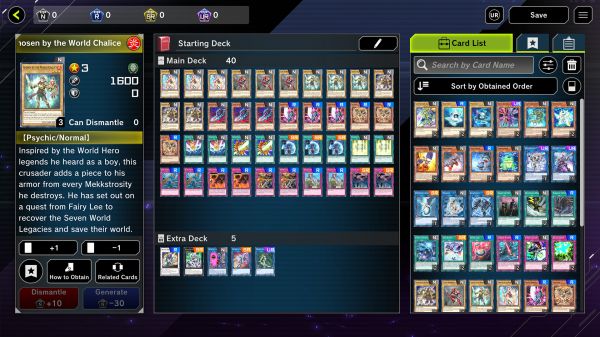
After a defeat, I can return to the editor, examine which cards remained unusable, identify missing answers, and adjust ratios. Removing one card may improve consistency but weaken a specific matchup, while adding another interruption may reduce the chance of drawing the engine. This process turns losses into information because the deck is never completely finished. Even a proven online list needs adjustment for my preferred risk level and current ranked environment.
The editor supports filters for card type, attribute, level, rarity, ownership, text, and several other categories. Public deck lists and Yu-Gi-Oh! Neuron integration provide starting points for unfamiliar archetypes. Copying a successful list is useful, but learning why each card is included matters more than owning the exact forty. Without that understanding, I may follow the first combination correctly and have no idea how to recover after one interruption.
The Card Library Is Impressive and Intimidating
Master Duel contains more than ten thousand cards from the long history of Yu-Gi-Oh!, giving players access to iconic monsters, obscure archetypes, modern competitive engines, and strategies that never appeared prominently in the anime. Searching through this library feels like exploring several generations of design philosophy at once. Old cards may become useful after receiving new support, while forgotten effects occasionally interact with modern mechanics in unexpected ways. The size of the library ensures that experimentation can continue almost indefinitely.
Quantity creates an enormous knowledge barrier. I cannot reasonably memorize every archetype, and the game provides limited assistance in identifying which enemy cards matter most during a live duel. A new player may read every effect and still fail because the crucial interaction depends on a card that has not appeared yet. Master Duel rewards long-term familiarity, but it often teaches through punishment rather than guidance.
Crafting Makes One Competitive Deck Realistically Obtainable
Cards can be dismantled for Craft Points associated with Normal, Rare, Super Rare, and Ultra Rare categories. Creating a card generally costs more material than dismantling one provides, so unused high-rarity cards become partial progress toward something useful. This system is the reason building a specific deck is possible without opening the correct pack repeatedly. I can convert unwanted results into important staples or archetype pieces rather than leaving the entire collection dependent on random chance.
The main limitation is Ultra Rare material. Competitive decks frequently need many UR cards across the Main and Extra Deck, while general staples compete with archetype-specific pieces for the same resource. Dismantling the wrong card can become an expensive mistake if a later deck needs it. Crafting is generous compared with relying entirely on packs, but it does not remove the pressure created by rarity distribution.
Secret Packs Are Clever Until Their Timers Become Irritating
Crafting or obtaining certain high-rarity cards can reveal Secret Packs focused on connected archetypes. Half of each pack usually draws from the featured pool, making targeted construction more practical than opening the general Master Pack. This is an effective system because discovering one central card can lead directly toward the rest of the strategy. It also gives the enormous catalogue a more manageable structure.
Secret Packs generally remain available for a limited period after being revealed, encouraging players to spend Gems before access closes. The pack can usually be unlocked again by crafting an appropriate card, but the timer creates unnecessary urgency. Updated Secret Packs sometimes combine several archetypes, reducing the chance of receiving the exact pieces I need. Targeted packs are helpful, yet they remain randomized products designed to consume currency efficiently.
Selection Packs Keep the Game Current and Create Scarcity
Selection Packs introduce newly added cards, recent support, alternative artwork, and themes connected with the current competitive environment. Their temporary availability concentrates attention and allows players to build newer strategies before those cards move into other distribution systems. I enjoy opening a Selection Pack when several included archetypes interest me because almost every high-rarity result may have future value. The July 2026 releases continued expanding established themes and adding modern support to the available card pool.
The problem appears when only one or two cards matter. Random pulls may produce high-rarity cards from unrelated themes while the desired card remains absent. Crafting eventually solves the shortage, but spending Gems without obtaining the featured piece feels disappointing. Limited availability also pressures returning players who discover that an important Selection Pack has already disappeared.
Structure Decks Are the Safest Purchases for New Players
Structure Decks provide predetermined cards supporting a particular strategy and can usually be purchased several times to obtain additional copies. This gives new players a functional foundation without relying on pack luck. Some structures contain useful staples or archetype cards that would otherwise require significant crafting resources. I recommend beginning with a strong current Structure Deck rather than spending early Gems across several unrelated packs.
Not every Structure Deck is equally competitive or complete. Some need many outside cards before functioning effectively in ranked play, while others provide a much stronger core immediately. The store does not always explain the real additional cost. A player may see an inexpensive deck and discover that its optimal Extra Deck requires a separate collection of Ultra Rares.
Solo Mode Teaches Archetypes Better Than It Teaches Competitive Yu-Gi-Oh!
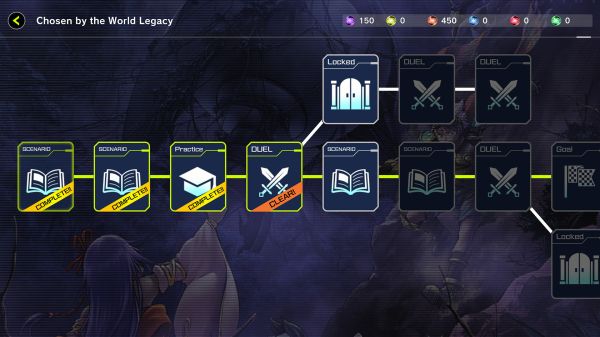
Solo Mode contains gates focused on card lore, summoning tutorials, archetype introductions, and battles using personal or loaner decks. These chapters explain the stories implied by card artwork, giving themes such as World Legacy, Monarchs, Shiranui, and many others a narrative context. I enjoy seeing cards presented as parts of actual worlds rather than isolated competitive tools. The music, background art, and short stories give old archetypes renewed personality.
The loaner decks can be inconsistent and occasionally awkward, making certain gates harder than they need to be. More importantly, defeating artificial intelligence with a themed deck does not prepare a player for the speed and interruption density of ranked competition. Solo Mode explains what cards are designed to do when allowed to function. Ranked play teaches what happens when the opponent refuses to allow any of it.
Duel Strategy Tutorials Need to Go Further
The tutorials explain monster placement, Spell and Trap usage, combat, and the major summoning methods. They are useful for someone who has never played or who last encountered Yu-Gi-Oh! many years ago. Loaner scenarios provide direct practice without requiring card ownership. The presentation is clear and avoids overwhelming the first lesson with every advanced rule.
The game needs stronger lessons about modern interaction. New players should practise identifying an engine card, interrupting a search, breaking a developed board, managing the response toggle, and understanding common hand traps. Tutorials should also demonstrate why one apparently powerful card may be a poor choice because it does not support consistency. Master Duel teaches the official rules, but the community still teaches how the contemporary game is actually played.
Ranked Duels Give Every Decision Immediate Consequences
Ranked play progresses through tiers, with victories moving me upward and repeated defeats slowing or reversing progress at higher levels. The format is primarily best-of-one, so I cannot use a side deck to adapt after seeing the opponent’s strategy. This makes general deck construction, opening consistency, and broad answers exceptionally important. It also increases the influence of the initial coin result and unexpected strategies.
Climbing is satisfying when I feel that better sequencing and matchup knowledge are producing results. It becomes exhausting when several duels are decided by poor hands, difficult pairings, or opponents completing familiar opening sequences without resistance. Best-of-one play keeps sessions efficient, but it removes the adaptation that makes tournament Yu-Gi-Oh! more strategically complete. Ranked Master Duel is its own format rather than a direct digital copy of the physical competitive experience.
Best-of-One Encourages Powerful Surprises and Unpleasant Locks
Without side decking, unusual strategies can win because opponents are not prepared with specialized counters. This gives rogue decks a genuine opportunity and makes the ladder more varied than a small tournament field might be. I enjoy encountering an unfamiliar archetype and attempting to understand its plan during the duel. Those matches provide the strongest sense that the card library contains unexplored possibilities.
The same format makes floodgates and highly polarized matchups more frustrating. A card that almost completely disables my strategy may appear in the opening hand, and I have no second game where I can adjust. Including answers to every possible restriction would damage the deck’s consistency. Master Duel’s forbidden and limited list must therefore control single-game frustration more aggressively than a match-based format would require.
The Forbidden and Limited List Changes the Value of Entire Decks
Konami regularly restricts cards to influence dominant strategies, reduce unhealthy patterns, and encourage a changing competitive environment. A limitation may reduce consistency, remove one powerful route, or force an archetype to replace a generic engine. These updates keep ranked play from remaining static and create reasons to revisit deck construction. Cards affected directly can provide crafting compensation under specific conditions, reducing part of the financial impact.
Balance updates can still make recent investments feel unstable. A player may spend Gems and UR material on a competitive strategy only to see important support restricted later. Necessary balance and collection permanence naturally conflict in every digital card game. I accept changes as part of competitive play, but release timing and pack monetization can make certain restrictions feel commercially convenient.
Festivals Are the Best Reason to Build Strange Decks
Festivals impose special rules such as focusing on Fusion, Synchro, Xyz, Link, one-copy formats, particular attributes, or other deck-building limitations. These events temporarily change card value and encourage players to use collections that may be unsuitable for the normal ladder. Loaner decks provide entry for players without an appropriate strategy, while missions and medal rewards supply Gems and other items. I enjoy Festivals because they make deck construction feel fresh without permanently changing ranked play.
The quality depends heavily on the event restrictions and forbidden list. A theme intended to celebrate one summoning method may become dominated by a small number of decks that exploit the rules more efficiently. Players also use self-defeating strategies when rapid mission completion becomes more valuable than winning, although reward structures have changed to discourage this. Festivals are entertaining experiments, but they need careful curation to avoid becoming narrower than ordinary ranked play.
Duelist Cup Turns the Ladder Into a More Severe Competition
Duelist Cup events use staged progression and ranking to identify high-performing players, often connecting with broader competitive qualification systems. The first phase resembles an intensified ladder where players attempt to reach the required level. Later competition rewards consistency across many duels and places greater pressure on time, concentration, and matchup preparation. These events show how demanding best-of-one competition becomes when every result affects a limited window.
I appreciate having a serious competitive path inside the client, especially when it connects with the World Championship. The format can still reward enormous play volume alongside actual performance, making the experience exhausting for participants seeking the highest ranks. Repeating many high-pressure duels within a short period tests endurance as much as strategic quality. I usually participate for rewards and personal progress rather than attempting to organize my life around the leaderboard.
The World Championship Gives Master Duel Competitive Legitimacy
Master Duel supports qualification routes leading toward the Yu-Gi-Oh! World Championship, where top players represent the digital format at the highest official level. This matters because the game is not merely a casual simulator with an attached ladder. Its unique forbidden list, best-of-one environment, team considerations, and card-release schedule create a separate competitive discipline. Watching leading players navigate unfamiliar boards reveals strategic depth that ordinary ranked matches often hide.
The 2026 qualification campaign includes in-game tournaments, login rewards, and official events connected with the championship in Tokyo. These activities give the wider community a sense of participation even when only a tiny number of players can reach the final stage. Competitive presentation has improved, though spectator tools and replay analysis could still become stronger. A card game this complicated benefits from broadcasts capable of explaining decisions clearly rather than only showing animations.
Casual Mode Is Not Always Casual
Casual Duels remove ranked progression pressure, allowing players to test unfinished decks or unusual strategies. In theory, this should be a place for experimentation without concern about losing a tier. In practice, many players bring fully developed competitive decks because they also want practice or quick games. The absence of ranking consequences does not create an agreement about power level.
A stronger room and matchmaking system could help players communicate expectations. Categories such as beginner, thematic, experimental, competitive practice, or anime-inspired play would reduce mismatched experiences. Private Duel Rooms already provide control for organized groups, but public casual matchmaking remains unpredictable. I may enter with an old character deck and meet someone rehearsing a tournament opening sequence.
Duel Rooms Work Best With Friends Who Agree on Power
Private rooms allow groups to create tables, watch games, and duel under shared conditions. This is the most enjoyable way to play lower-powered or themed decks because everyone can discuss expectations beforehand. Recreating anime rivalries, testing new lists, or organizing a small personal tournament becomes easy. Spectating also turns individual duels into a social activity rather than an isolated queue.
The tools are functional but could support more customization. Expanded tournament brackets, automated round management, additional rule presets, draft-like formats, and stronger spectator controls would make community events easier. Master Duel contains the necessary card engine for many kinds of play, yet official modes use only part of its potential. Friends and community organizers often perform the work the client could automate.
Alternative Artwork Understands the Collector Better Than the Competitor
Limited alternative art cards provide no direct gameplay advantage, but they give famous monsters and staples a different visual identity. A Royal Finish alternative-art card can become a prized account item because it combines rarity, appearance, and temporary availability. Anniversary campaigns use these cards effectively, offering login rewards while placing others inside themed packs. The 2026 Dark Magician celebration demonstrated how strongly nostalgia and collection can reinforce each other.
I appreciate cosmetics that do not change competitive power, but limited artwork creates another form of urgency. A player may spend Gems on a pack containing cards they already own because the image is temporarily different. These items cannot always be crafted directly, leaving random pulls as the only acquisition method. Cosmetic scarcity is less damaging than purchased power, yet it still uses attachment to encourage spending.
Royal Finish Cards Are Beautiful and Almost Impossible to Target
Cards can appear in different visual finishes, with Royal Finish producing an especially elaborate animated surface. Seeing an important Extra Deck monster arrive in Royal Finish makes its summon feel more personal. The effect is purely cosmetic, preserving competitive equality. It also gives duplicate pulls a small possibility of becoming memorable rather than automatically disappointing.
The chances are low, and players cannot normally upgrade a specific card into Royal Finish through a predictable path. This makes a complete matching deck unrealistic without extraordinary luck or spending. I treat Royal cards as fortunate account stories rather than goals. The moment I begin chasing one specific finish, the pack system becomes far less friendly.
Mates, Fields, Protectors, and Summon Animations Give the Table Personality
Cosmetic accessories include small companions called Mates, card protectors, duel fields, Graveyard designs, icons, wallpapers, and other visual options. These elements make the otherwise abstract table feel connected with my preferred monsters or archetypes. Mates react during certain moments, while unique fields change the atmosphere without affecting visibility significantly. The cosmetic store is one of the game’s more reasonable monetization areas because these items have fixed prices and no competitive effect.
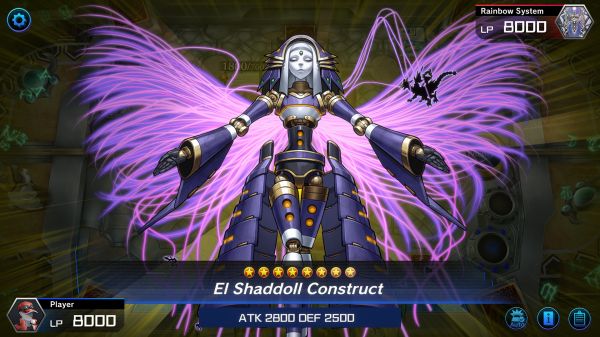
Summon animations give famous monsters a brief entrance when they first appear. The strongest animations communicate weight and importance without delaying the duel excessively. Repeated viewing can become tiring for commonly summoned cards, and more control over animation frequency would be welcome. Overall, the presentation succeeds in making digital cards feel physical and dramatic rather than functioning like plain interface rectangles.
The Soundtrack Reacts to the Duel Better Than I Expected
Master Duel’s music changes as the board develops, moving from controlled opening themes toward more urgent tracks when Life Points decline or important monsters appear. This creates tension even when the players are silently reading card text. Different duel fields can influence the available music, giving cosmetic choices an auditory effect as well as a visual one. The soundtrack is one of the game’s most consistently impressive features.
Card activations, attacks, chains, summons, and damage all receive clear audio feedback. The effects help me understand when the game is waiting for a response or resolving a sequence. Long combination turns produce a repetitive pattern of activation sounds, but the clarity remains useful. Master Duel makes a card table sound dramatic without becoming completely overwhelming.
The Presentation Is Polished Without Slowing Every Action
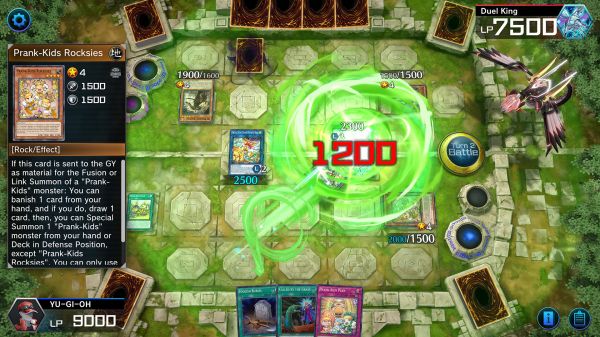
Cards are displayed clearly, important text can be expanded, Graveyards and removed cards are accessible, and chain history provides a record of recent effects. The battlefield uses three-dimensional animations selectively rather than turning every ordinary summon into a cinematic sequence. This balance keeps duels readable while preserving spectacle for famous monsters. At high resolution, card artwork and field effects look excellent.
The interface can still become dense when several continuous effects, materials, counters, and Graveyard conditions exist simultaneously. Mobile screens make detailed reading especially difficult, while controller navigation through long card lists is slower than mouse input. The game automates legal actions accurately, but understanding why an action is unavailable may require careful investigation. Better explanation of restrictions and missed timing would reduce confusion.
Automated Rules Prevent Arguments and Hide Important Lessons
Master Duel handles shuffling, legal targets, effect timing, damage calculation, material requirements, zone placement, and chain resolution automatically. This eliminates the disputes and accidental rule errors common in physical casual play. I can trust the client not to permit an illegal move, which allows attention to remain on strategy. Complex interactions that would require judge knowledge resolve within seconds.
Automation can prevent players from learning why something happened. An effect may fail because a condition changed, a card became an invalid target, an earlier restriction applies, or a timing window has passed. The game often completes the resolution without explaining the relevant rule clearly. A detailed expandable log showing why an effect was unavailable would make the automated system far more educational.
Replays Are Useful but Need Better Analysis Tools
Saved and public replays allow me to examine duels after the pressure has disappeared. I can pause mentally, read cards, identify where the opponent’s engine became vulnerable, and notice alternative actions I missed. Watching high-ranked lists also helps reveal unfamiliar combinations. Replays turn ranked losses into study material instead of leaving them as brief frustration.
The system would benefit from stronger controls, annotations, timeline navigation, hand visibility options for personal matches, and decision bookmarks. A card game built around long chains needs tools that help players isolate one crucial moment. External videos remain more educational because creators can stop and explain every choice. Master Duel provides the raw replay but limited support for interpreting it.
Cross-Platform Progression Makes the Collection Feel Permanent
Master Duel is available across PC, PlayStation, Xbox, Nintendo Switch, iOS, and Android, with account linking allowing progress to move between supported platforms. This means I can build a deck on PC, complete a short Solo gate on a handheld device, and continue ranked play elsewhere without maintaining separate collections. Cross-platform matchmaking also keeps the player population broad. For a collection game expected to last years, this flexibility is essential.
Account linking needs to be handled carefully because beginning a new profile on a platform before transferring data can create confusion. Konami ID management is functional but less elegant than automatic universal login. Once configured, the system works well. I strongly recommend linking before investing significant time or currency on multiple devices.
The PC Version Is the Most Comfortable Place to Read and Build
Mouse input makes deck construction, card searching, effect reading, and menu navigation faster than controller or touch controls. A large monitor also helps when several cards, materials, and active effects occupy the field. Performance is generally stable because the game is not mechanically demanding compared with modern action titles. The current recommended PC requirements are surprisingly substantial for a card game, but ordinary systems capable of meeting the minimum specification should handle standard duels comfortably.
The main disadvantages are the growing installation size and dependence on a constant internet connection. Even Solo Mode requires the online service because collection ownership, rewards, and progression remain server-based. Maintenance periods and connection failures therefore remove access to the whole game. This is common for a free-to-play collection title, but it prevents Master Duel from functioning as a permanent offline card archive.
Mobile Play Is Convenient Until the Battery Begins Complaining
The mobile version provides the complete card pool, account progression, Solo Mode, events, and online competition. Touch input works naturally for selecting cards and reading effects, making short daily tasks convenient. I appreciate being able to adjust decks or complete event missions away from a computer. Cross-save prevents mobile from becoming a reduced secondary account.
Performance varies greatly by device. Long duels, animated fields, frequent network communication, and high graphical settings can produce heat, battery drain, or slower interface response. Reading dense card text on a small screen is also tiring, especially during an unfamiliar opponent’s turn. Mobile is excellent for maintenance and familiar decks, but I prefer a larger display for serious ranked sessions.
The Nintendo Switch Version Values Portability Over Speed
Playing Master Duel on a handheld console suits the turn-based format because no rapid physical input is required. The larger portable screen is easier to read than many phones, and the controls work adequately once I understand the shortcuts. Solo Mode and casual deck testing fit the device especially well. The ability to suspend the console is convenient, although online sessions still depend on the server and duel state.
Menu response and loading can feel slower than on stronger hardware. Card searches, pack openings, and complex animations may reveal the platform’s limitations. This does not make the rules less accurate, but it reduces the smoothness of frequent collection management. I use portable versions for convenience and PC for building or prolonged competitive play.
The Game Is Free-to-Play Friendly When I Focus on a Few Decks
Early Solo rewards, missions, login bonuses, events, promotional campaigns, and ranked progress provide enough Gems to construct at least one strong deck with careful planning. Crafting allows me to create missing staples rather than continuing to open packs indefinitely. Structure Decks provide additional value, and anniversary campaigns distribute useful currency or special cards. A disciplined player can remain competitive without purchasing premium currency.
The experience becomes less friendly when I want many expensive decks simultaneously. Ultra Rare cards accumulate across engines, staples, Extra Deck options, and new support. Opening unrelated packs or dismantling useful cards repeatedly slows future experimentation. Master Duel is generous toward focused competitors and much harsher toward collectors who want every archetype ready immediately.
Gem Pricing Makes Direct Purchases Difficult to Recommend
Paid Gems can be used for the same randomized packs available with earned currency. The direct prices often feel high relative to the number of packs purchased and the uncertain number of useful cards obtained. Special sales improve the calculation, but they do not change the randomness. I find fixed-price Structure Decks, cosmetic bundles, and the Duel Pass easier to evaluate than raw pack spending.
Purchasing Gems can accelerate construction, yet it does not guarantee the desired deck unless enough excess cards are dismantled for crafting. A poor opening session can convert a substantial payment into only part of one Ultra Rare card. The system is not pay-to-win in the simplest sense because free players can build top strategies. It is pay-for-access, variety, and speed inside a format where new cards continually reshape competition.
The Duel Pass Is the Most Predictable Premium Option
The Duel Pass provides rewards as I complete duels and gain grade progress during its active period. The premium version usually returns useful crafting material, Gems, and cosmetics when completed fully. For an active player, this creates clearer value than random packs because the rewards are displayed beforehand. I appreciate products where cost and outcome are visible.
The pass still uses time pressure. Purchasing it creates an incentive to play enough matches before expiration, even when I might prefer a break. Progress is generally manageable for regular players, but someone joining late should check the remaining period carefully. The system rewards normal activity without changing the fact that it wants that activity scheduled around a commercial timer.
Daily Missions Are Generous Enough to Become a Routine
Daily objectives award Gems for actions such as activating cards, summoning monsters, winning duels, or participating in ranked and event modes. Missions can accumulate for several days, reducing the need to log in every single morning. This makes routine income relatively flexible compared with more demanding live-service games. Completing them naturally while playing a familiar deck rarely feels difficult.
The routine can influence deck choice when one strategy completes objectives more efficiently than another. A player may continue using a fast competitive deck instead of experimenting because wins and activations arrive more reliably. Daily systems are most successful when they reward play without determining it. Master Duel generally remains reasonable, but the constant Gem economy never disappears completely from decision-making.
Connection Problems Feel Worse in a Turn-Based Game
Because every action passes through the server, an unstable connection can create pauses, delayed confirmations, or a defeat when the game decides a player has disconnected. The card system itself does not require split-second network response, so these interruptions feel particularly avoidable. A player may spend several minutes developing a close duel only for the connection symbol to become the deciding factor. Mobile networks are naturally more vulnerable.
Most of my matches proceed smoothly under a stable wired connection, and cross-platform interaction is generally reliable. Server maintenance and occasional regional problems still affect access. Reconnection support could be more forgiving when the interruption is brief. A strategic game should be decided by card choices whenever technically possible.
Slow Play and Surrender Create Social Friction Without Communication
Master Duel offers limited direct communication between opponents, which reduces harassment and prevents arguments. The absence of chat also means I cannot distinguish a player thinking carefully from someone deliberately wasting time. Long pauses during every action can make a duel exhausting, especially when the remaining decision appears simple. Turn timers prevent infinite delay but remain generous enough for complicated combinations.
Surrender is immediate and often the rational response when a board has become impossible to break. This keeps the losing player from watching unnecessary actions, though it also means victory screens may appear before the winning deck completes its intended finish. Some missions require specific actions rather than merely winning, making early surrender frustrating for the other participant. The game cannot force players to remain for someone else’s combination display, and I would not want it to try.
The Meta Changes Frequently Enough to Reward Attention
New packs, forbidden-list updates, tournament discoveries, and newly supported archetypes regularly change which decks appear in ranked play. This prevents the environment from becoming completely solved, and it gives deck builders reasons to revisit old cards. A previously secondary engine may become central after one new support card. I enjoy the period after a major update when players are still testing ideas instead of repeating one established list.
Keeping up requires external research because the client does not provide a detailed live metagame report. Public deck lists and Neuron integration help, but matchup guides, tournament results, and community analysis remain important. A returning player may discover that a once-dominant deck is now inefficient or restricted. Master Duel rewards continuous attention, which can become tiring for anyone who wants one deck to remain permanently complete.
Rogue Decks Remain Viable Until Consistency Becomes the Difference
The enormous card library allows many older or less popular archetypes to win ranked matches, particularly in best-of-one play where surprise has value. A familiar player can exploit unusual interactions and punish opponents who use interruptions at the wrong time. I find these victories especially satisfying because they come from understanding a specific deck deeply rather than selecting the most represented strategy. Master Duel provides room for personal identity despite competitive pressure.
The gap appears across many matches rather than one duel. Meta decks usually search more reliably, recover more effectively, and require fewer cards to establish powerful boards. A rogue strategy may produce an excellent opening occasionally while struggling with poor hands or one interruption. Personal familiarity can narrow the gap, but efficiency eventually matters during a long ranked climb.
Anime Decks Need Realistic Expectations
Master Duel includes famous cards associated with Dark Magician, Blue-Eyes White Dragon, Red-Eyes, Elemental HERO, Stardust Dragon, Galaxy-Eyes, and many other anime themes. Building one of these decks can be emotionally rewarding because summon animations and recognizable artwork recreate part of the series’ appeal. Modern support often gives nostalgic archetypes functional combinations far beyond their original versions. Casual rooms, Solo Mode, and lower ranked tiers provide space to enjoy them.
Nostalgia does not guarantee competitive efficiency. Some famous themes require many high-rarity cards while remaining less consistent than modern archetypes. New players can spend most early resources recreating an anime deck and then feel confused when ranked opponents prevent it from acting. I recommend checking a current list and understanding the expected performance before investing heavily in nostalgia.
The Game Celebrates Card Lore Better Than It Celebrates the Anime
Master Duel focuses on the competitive card system and the worlds represented inside card artwork rather than retelling Yugi’s story. Solo gates explore archetypes as independent civilizations, conflicts, legends, machines, spirits, and magical systems. This gives attention to cards that may never receive major animated appearances. I enjoy learning that an archetype I treated as a mechanical engine contains an entire implied narrative.
Players seeking a campaign filled with anime characters, voiced rivalries, and story duels will not find that experience here. Duel Links and older console titles place greater emphasis on recognizable personalities. Master Duel treats the player as a competitor and collector rather than a participant in the television narrative. Its identity is stronger for making that choice, though the title can surprise fans expecting a conventional anime adaptation.
The I:P Masquerena Solo Content Shows Greater Presentation Ambition
Newer Solo additions include more elaborate animation and storytelling than many early gates. The I:P Masquerena content demonstrates that card lore can support visually expressive chapters rather than static text panels alone. Loaner decks connect the story with the archetype’s mechanics, allowing the player to experience the theme directly. This is an encouraging direction for single-player content.
I would like earlier gates to receive similar treatment and important stories to continue across updates. The World Legacy narrative in particular deserves a more unified, cinematic presentation because its cards contain one of Yu-Gi-Oh!’s largest connected stories. Solo Mode could become a major attraction rather than primarily a tutorial and reward source. The existing foundation proves that the card library contains enough narrative material.
The Interface Needs a Better Way to Explain Opponent Threats
During an unfamiliar duel, I often need to inspect several cards in the opponent’s Graveyard, field, removed zone, and Extra Deck summons before selecting one response. Text can be expanded, but the timer continues and every card may reference another named effect. Highlighting active protections, known restrictions, and current once-per-turn usage more clearly would reduce unnecessary confusion. The interface knows these rules internally and could communicate them better.
An optional beginner overlay could identify which visible card is generating a continuous effect or preventing a legal action. Advanced players could disable it, preserving the clean competitive presentation. This would not choose moves for the player; it would explain the state the engine has already calculated. Master Duel’s greatest onboarding problem is not a lack of rules but a lack of contextual explanation.
My Biggest Frustrations
Long opening combinations can leave one player watching for several minutes, while the completed board may prevent meaningful response. Best-of-one ranked play increases the influence of the coin result, polarized matchups, floodgates, and surprise cards that would be easier to manage with side decking. Maxx “C” and its associated counter package occupy too much space across unrelated decks. The game also teaches basic summoning better than it teaches interruption timing, board breaking, and contemporary deck construction.
The economy is fair when I build carefully, but expensive Ultra Rare requirements restrict experimentation. Secret Pack timers, temporary Selection Packs, alternative artwork, Royal Finish randomness, and high paid-Gem prices all create commercial pressure. Mobile performance varies, connection failures can decide completed matches, and the interface rarely explains why a complicated interaction failed. Master Duel contains an excellent rules engine surrounded by systems that occasionally make learning and collecting more stressful than dueling.
Who Should Play Yu-Gi-Oh! Master Duel?
I recommend Master Duel to players who want the main Yu-Gi-Oh! card system in a polished digital format, enjoy complex deck construction, appreciate competitive ranked play, and are willing to study unfamiliar interactions. It is especially strong for existing players who want cross-platform access without maintaining a physical collection. Solo Mode, Structure Decks, crafting, and early Gem rewards provide enough support to begin without payment. Festivals and private rooms also offer alternatives when the normal ranked environment becomes exhausting.
I would be more cautious recommending it to players seeking slow exchanges, a gentle learning curve, an anime-focused campaign, or a card game where every match provides equal interaction. Modern Yu-Gi-Oh! frequently allows long sequences and decisive opening boards, while card text can require substantial concentration. Collectors who want many complete decks will feel stronger financial pressure than focused players. The game is accessible in price but demanding in knowledge, patience, and resource planning.
My Final Verdict
Yu-Gi-Oh! Master Duel is the definitive digital platform for the modern form of Yu-Gi-Oh!, providing accurate automated rules, more than ten thousand cards, strong deck-building tools, cross-platform progression, polished presentation, card crafting, ranked competition, Festivals, official championship qualification, and increasingly ambitious Solo content. Its duels can be strategically exceptional when both players exchange interruptions, rebuild boards, manage resources, and adapt to unexpected lines. The soundtrack, summon animations, table cosmetics, and card artwork make every important action feel larger than moving rectangles across a screen. Focused free players can construct excellent decks, and the crafting system prevents random packs from controlling the entire experience.
The game is also a difficult recommendation for complete newcomers because it exposes them to decades of accumulated design almost immediately. Long first turns, restrictive boards, Maxx “C,” best-of-one volatility, Ultra Rare costs, limited packs, and insufficient advanced tutorials create avoidable frustration. I rate Yu-Gi-Oh! Master Duel 8.5/10. It is capable of producing some of the most satisfying strategic exchanges in any digital card game, but reaching those exchanges requires accepting that sometimes my opponent will spend five minutes constructing an elaborate board only for me to look at my opening hand, recognize reality, and press surrender.
Pros:
- Free-to-play accessibility without being pay-to-win
- High-quality visuals and immersive audio design
- Flexible deck-building with extensive card customization
- Seamless multi-platform compatibility
- Vibrant community and competitive online scene
- Faithful recreation of the classic Yu-Gi-Oh! experience
Cons:
- Occasional server connectivity problems during peak hours
- Interface complexity that could benefit from further modularity
- Performance issues on older hardware during intense duels









Recent Reviews

Minecraft

Grand Theft Auto V

Toca Boca World

Roblox

Leave a comment
Your comment is awaiting moderation. We save your draft here
0 Comments