Review
Jurassic World Evolution gave me the fantasy of building a beautiful dinosaur park and then spent most of its time demonstrating why th...





Jurassic World Evolution: Crafting the Ultimate Prehistoric Park Experience
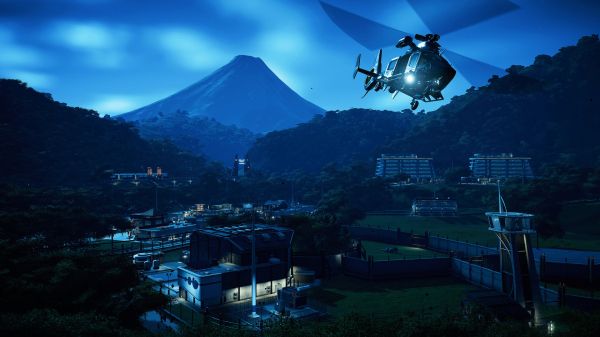
Jurassic World Evolution gave me the fantasy of building a beautiful dinosaur park and then spent most of its time demonstrating why that idea would be an operational nightmare. One moment I was carefully placing viewing galleries beside a peaceful herbivore enclosure, and the next I was dispatching emergency teams because a storm had damaged a fence near several hungry carnivores. The game constantly moves between calm construction, scientific planning, financial management, and sudden disaster control. That contrast captures the Jurassic World atmosphere better than a perfectly peaceful building simulator ever could.
I began with modest expectations because the basic objective sounds familiar: construct attractions, satisfy visitors, earn money, and expand the business. Dinosaurs completely change the emotional meaning of those systems because they are not decorative rides that remain exactly where I place them. They become hungry, uncomfortable, ill, aggressive, lonely, overcrowded, or interested in the weak section of a nearby fence. Every successful park therefore depends on understanding the animals as carefully as the tourists paying to see them.
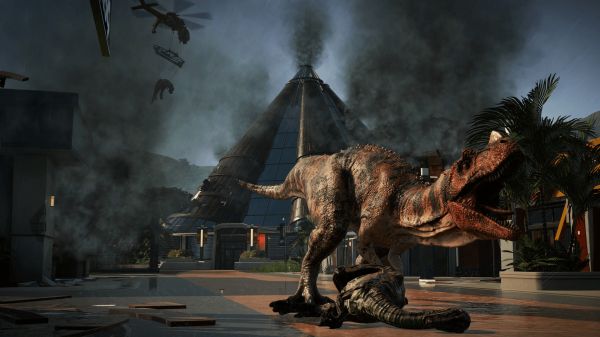
From my perspective as a gamer, Jurassic World Evolution works best when I accept that the park is always one mistake away from becoming a crisis-management game. Efficient roads and profitable restaurants matter, but neither system feels urgent until a Tyrannosaurus escapes during a tropical storm. The game rewards careful preparation while secretly hoping something dramatic will test that preparation. My most memorable parks were not the ones that operated perfectly; they were the ones that nearly collapsed and somehow reopened.
The First Dinosaur Changed the Entire Park
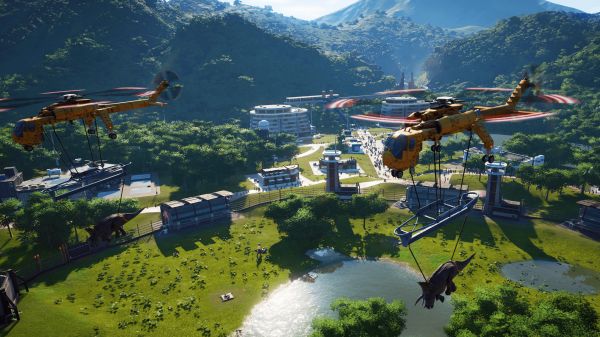
Constructing buildings felt practical, but releasing my first dinosaur felt ceremonial. The incubation animation builds anticipation before the enclosure doors open and the animal walks into the habitat I designed for it. Even a relatively familiar herbivore looks impressive when it appears at full scale beside fences, vehicles, and visitors. That first release makes the park feel like more than a collection of connected management menus.
I immediately began watching the animal instead of completing the next objective. Its movement, calls, feeding behavior, and interaction with the environment made the enclosure feel alive. The game understands that dinosaurs are the main reward and gives their arrival enough visual weight to interrupt efficient play. Every new species briefly becomes the center of my attention, even when the financial department is requesting another urgent decision.
The Campaign Is Structured Around Five Islands
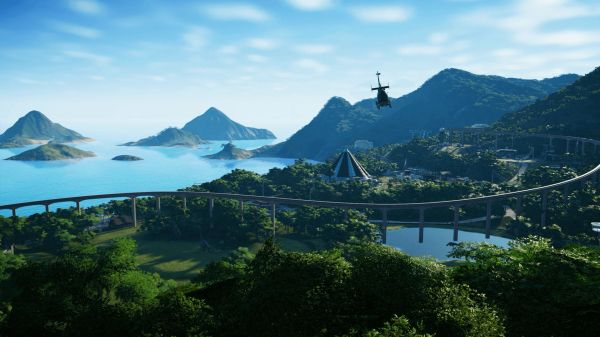
The main campaign moves through the Muertes Archipelago, with each island introducing different terrain, financial conditions, weather risks, and management problems. Progress on one island unlocks research, dinosaurs, buildings, and upgrades that can support development elsewhere. This creates a connected career rather than five completely separate parks. The structure gives me a reason to revisit earlier locations after gaining stronger tools.
I liked how each island emphasizes a different weakness in my management style. One may provide limited building space, another unstable weather, and another financial pressure that makes experimentation dangerous. The differences are not always dramatic enough to transform the entire game, but they prevent every park from following exactly the same opening. Learning to adapt the same core systems to new restrictions became the campaign’s main strategic challenge.
Isla Matanceros Works as a Gentle Introduction
The first island gives enough space and financial flexibility to learn the basic relationship between dinosaurs, guests, power, buildings, and staff. I could make inefficient decisions without immediately destroying the business. This made it a useful place to understand how paths connect facilities and how viewing access affects visitor satisfaction. The island is forgiving, but it still produces enough tropical weather to teach the importance of emergency preparation.
I returned to Matanceros several times after unlocking new species and buildings because it felt like the campaign’s home park. Improving the original layout made progression visible in a way that starting another save could not. The awkward enclosures and poorly planned paths remained evidence of my early mistakes. Expanding around them became part of the park’s history.
Isla Muerta Made Every Purchase Feel Dangerous
Muerta begins under more severe financial pressure, forcing the park to operate carefully before ambitious expansion becomes possible. An expensive dinosaur that fails during incubation can damage the budget significantly. Building too many guest facilities before establishing dependable income can create another slow financial collapse. I had to stop purchasing whatever looked exciting and begin calculating whether the park could support it.
This island taught me that a profitable dinosaur is not automatically the most spectacular species available. Reliable herbivores with manageable social requirements can stabilize the business before large carnivores enter the plan. The park becomes stronger when new exhibits are added according to financial readiness rather than personal enthusiasm. Muerta turned restraint into a genuine management skill.
Limited Space Becomes a Design Puzzle
Several islands restrict construction through narrow land, uneven terrain, or awkward boundaries. Large enclosures, hotels, power stations, research buildings, paths, and guest facilities compete for the same usable areas. This makes park design less about creating an ideal layout and more about fitting essential systems together without blocking future growth. A badly placed facility can affect the entire island long after construction.
I regularly regretted early decisions once the park became crowded. A path that seemed harmless could divide land needed for another enclosure, while one power station might occupy the only convenient space for a hotel. Demolishing and rebuilding remains possible, but it costs money and disrupts operations. Jurassic World Evolution makes empty terrain feel like a valuable resource.
Expeditions Turn Fossils Into Future Attractions
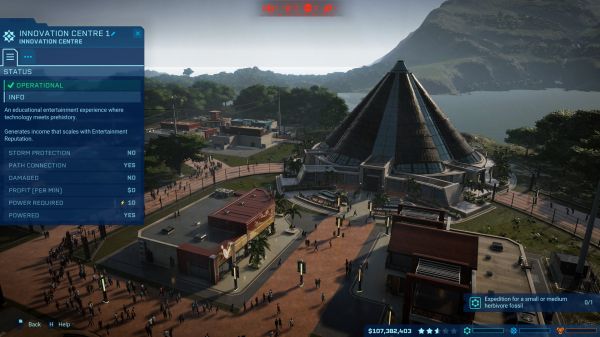
New dinosaurs begin with expedition teams traveling to fossil sites around the world. The collected fossils can contain dinosaur DNA or minerals that may be sold for immediate income. This creates a satisfying loop where scientific exploration supports both long-term species development and short-term financial recovery. Every returning expedition provides a small moment of anticipation.
I often faced a choice between extracting useful DNA and selling valuable minerals to protect the park’s budget. Researching another species feels exciting, but excitement does not pay for emergency repairs. The expedition system connects the global search for prehistoric material with the practical reality of running a tourist attraction. Science and commerce are never completely separate.
Genome Completion Makes Dinosaurs More Reliable
Extracting DNA improves the genome quality of a species, increasing incubation viability and allowing stronger genetic modification. Early versions of a dinosaur may carry a higher chance of failure, which makes every incubation financially risky. Continuing expeditions gradually reduces that uncertainty and opens more customization options. Progress therefore feels scientific rather than represented only by a traditional experience bar.
I enjoyed deciding whether to release a dinosaur with an incomplete genome or wait for greater reliability. A new species can increase park appeal immediately, but a failed incubation wastes time and money. Waiting creates a safer investment while delaying the attraction. The choice gives genome percentages practical meaning.
Genetic Modification Offers Power With Additional Risk
Gene modifications allow dinosaurs to gain altered appearances, stronger ratings, longer lifespans, resistance traits, or other useful characteristics. These changes can make one animal far more valuable to the park. They can also reduce viability and increase the chance that incubation fails. The system turns every highly modified dinosaur into a calculated investment.
I liked creating visually distinct animals because skins make repeated species feel more personal. Statistical modifications are useful, but appearance changes create an immediate difference I can see from the viewing gallery. The strongest genetic combinations may produce excellent ratings while demanding expensive hatchery upgrades. Scientific ambition can become another source of financial danger.
Incubation Failure Is Painfully Effective
A failed dinosaur incubation does not create an exciting disaster or a valuable consolation reward. It simply consumes the investment and leaves the hatchery empty. That quiet financial loss can be more frustrating than an escaped animal because nothing dramatic remains afterward. The game uses this possibility to make every expensive genetic experiment feel uncertain.
I learned to research hatchery upgrades before attempting heavily modified animals repeatedly. Increasing success probability may appear less exciting than unlocking another dinosaur, but it protects the entire production chain. The mechanic rewards infrastructure rather than pure collection. Jurassic World Evolution repeatedly shows that scientific capability matters only when the park can support it reliably.
Every Species Has Social Requirements
Dinosaurs are not satisfied simply because an enclosure contains food and water. Different species have preferred social group sizes, population tolerances, forest coverage, grassland space, and environmental needs. A solitary animal may become stressed without companions, while another species becomes uncomfortable when the enclosure grows crowded. Designing a habitat therefore requires more than measuring its physical size.
I enjoyed learning these requirements through observation and management. A dinosaur’s comfort panel turns behavior into understandable information without making the animal feel completely mechanical. When comfort falls too low, the dinosaur may attack fences and create an emergency. Proper welfare is therefore both an ethical goal and an essential security system.
Herbivore Exhibits Require Careful Population Planning
Large herbivore habitats can contain several compatible species, creating visually impressive mixed exhibits. Guests benefit from the variety, while the animals can share feeders, water, and viewing infrastructure. The challenge comes from balancing different social and population limits inside one enclosure. Adding one additional species can push a sensitive dinosaur beyond its comfort threshold.
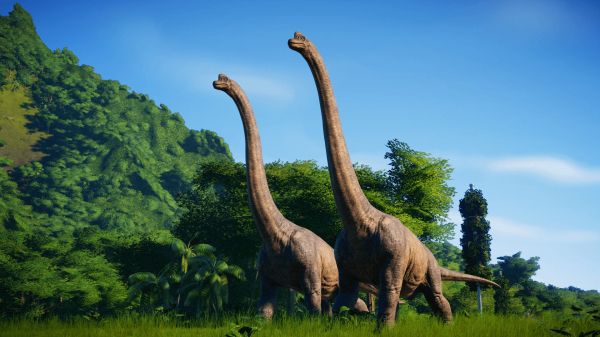
I found mixed habitats more satisfying than keeping every herbivore separately. Seeing hadrosaurs, ceratopsians, armored dinosaurs, and sauropods moving together creates the scale I associate with a Jurassic park. However, the enclosure must be planned around the least tolerant species. One uncomfortable animal can turn an otherwise peaceful habitat into a repair problem.
Carnivores Are Expensive Attractions and Constant Liabilities
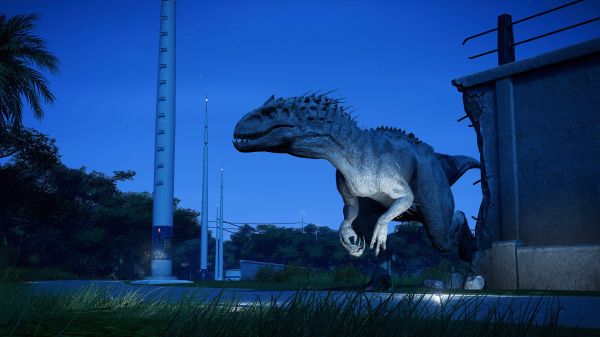
Carnivores usually offer strong appeal because visitors want to see dangerous predators. They also demand stronger fences, reliable feeding, careful social management, and quick emergency response. A carnivore enclosure located too close to busy guest areas can become a public-relations disaster during a storm. The revenue potential always arrives with operational risk.
I enjoyed building carnivore habitats because they immediately changed the atmosphere of the park. Guests gather around viewing areas while the animal patrols its territory or approaches a feeder. The exhibit feels like a major attraction rather than another enclosure. That excitement also makes an escape much more frightening because I know exactly how many visitors are standing nearby.
The Tyrannosaurus Feels Like a Major Park Milestone
Releasing a Tyrannosaurus is one of the campaign’s clearest moments of progression. The animal has enormous visual presence, high guest appeal, and enough strength to make security planning feel serious. I did not want to place it inside a basic fence beside one ordinary viewing gallery. The dinosaur deserved an enclosure designed as the centerpiece of the park.
The expense extends beyond incubation because the habitat needs feeders, protection, visibility, and emergency access. A powerful attraction can justify those costs when the park is prepared. Introducing it too early creates a business built around one unpredictable asset. The Tyrannosaurus represents both achievement and the temptation to expand beyond financial safety.
Velociraptors Create Trouble Through Intelligence and Social Pressure
Raptors require group management and secure containment, making them more complicated than one solitary predator. A group can provide strong appeal, but every additional animal increases food costs and enclosure pressure. When their comfort declines, the threat becomes immediate because weak fences may not remain intact for long. Their reputation makes even a minor alert feel serious.
I liked that raptors encourage planning around redundancy. Strong fencing, nearby ranger access, and an operational response team reduce the chance that one problem becomes a park-wide disaster. Keeping them satisfied is easier than recapturing them among panicking visitors. The animals reward preventative management rather than last-second heroics.
Dinosaurs Can Fight, and That Is Not Always Entertainment
Predator encounters and dominance disputes can create dramatic moments, but they also risk injury or the loss of expensive animals. A fight may increase the appeal of the survivor while removing another important attraction permanently. The spectacle can attract my attention even when the financial consequences are terrible. Jurassic World Evolution understands that watching dinosaurs interact is irresistible.
I rarely designed parks around constant fighting because animal replacement becomes expensive and welfare declines. However, occasional conflicts made the habitats feel less controlled. A stronger dinosaur could establish dominance while another suffered serious wounds. The park may be artificial, but the creatures do not always behave like obedient exhibits.
Diseases Turn the Ranger Team Into Veterinary Support
Dinosaurs can become ill and require diagnosis followed by treatment from a ranger vehicle. Some diseases are simple to manage, while outbreaks inside crowded enclosures can spread quickly. Research improves access to cures and helps prevent a temporary health problem from becoming a major loss. Medical preparedness becomes another reason to invest beyond visitor attractions.
I liked responding personally because driving into the enclosure makes treatment feel active. Large herbivores may ignore the vehicle, while carnivores can make the operation more dangerous. The task becomes especially tense when several animals need medication during poor weather. Veterinary care feels integrated with the park’s physical environment instead of happening through an abstract menu.
The Ranger Jeep Is One of the Best Ways to Experience the Park
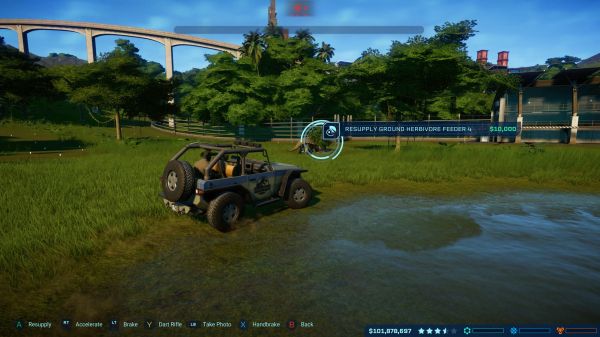
Ranger teams can repair structures, refill feeders, medicate animals, photograph dinosaurs, and perform other practical tasks. I can assign these jobs automatically or take direct control of the vehicle. Driving through an enclosure gives a completely different perspective from the overhead management camera. Dinosaurs that looked manageable from above become enormous when they stand beside the jeep.
I enjoyed manually entering habitats even when automation would have been faster. Photographing several species together provides money and encourages me to observe their behavior closely. Driving beneath a sauropod or past a resting carnivore delivers the physical scale the management view cannot communicate fully. The ranger vehicle connects the strategic game with a more personal park experience.
The ACU Helicopter Turns Escapes Into Active Emergencies
The Asset Containment Unit can tranquilize escaped dinosaurs and transport them back into secure enclosures. Assigning the task is efficient, but manually controlling the helicopter makes the crisis much more engaging. I need to follow the animal, account for its movement, and land accurate tranquilizer shots before additional damage occurs. A large target is not always easy to hit when it is moving between buildings and crowds.
These emergency sequences became some of my favorite moments because the entire park’s design suddenly mattered. Narrow spaces, tree cover, nearby facilities, and evacuation routes affect the response. Successfully sedating a predator moments before it reaches another group of visitors feels far more dramatic than watching an automatic team complete the job. The management systems create the emergency, while direct control lets me participate in resolving it.
Storms Test Every Weak Decision Simultaneously
Tropical storms can damage buildings, disable power, break fences, frighten dinosaurs, and reduce guest safety at the same time. A park operating smoothly during clear weather may reveal several hidden weaknesses under pressure. Emergency shelters, backup power, ranger access, and strong enclosure design suddenly become essential. The event transforms preparation into visible survival.
I learned to pause expansion before storms and check which systems lacked redundancy. One damaged substation could affect several buildings if the electrical network was poorly planned. A broken fence near a stressed predator could demand immediate attention while visitors remained exposed. Storms create the type of overlapping crisis that gives the game its strongest Jurassic World identity.
Emergency Shelters Are Boring Until the Exact Moment They Matter
Shelters do not attract guests, increase dinosaur ratings, or generate visible revenue. They occupy space and require paths, making them easy to ignore during early construction. When a dangerous animal escapes or a storm begins, opening the shelters can protect large numbers of visitors. Their value becomes obvious only after the park is already threatened.
I began placing shelters according to guest density rather than adding them as an afterthought. A distant shelter provides little help when crowds need to travel across half the park. Good coverage reduces casualty risk and protects the park’s rating during emergencies. Jurassic World Evolution makes invisible preparation as important as spectacular exhibits.
Power Management Can Destroy a Park Quietly
Every important facility depends on electricity, including hatcheries, hotels, restaurants, research centers, and security systems. Power stations have limited output, while substations and connections determine which buildings receive it. Expansion can push the network beyond capacity without creating an immediate visual disaster. Systems simply stop functioning until more power becomes available.
I experienced several frustrating moments after constructing an expensive building and realizing the grid could not support it. Adding another station costs money and consumes valuable land, so power needs to be planned before expansion. Upgrades help, but they also increase operating costs and may create another failure point. Electrical infrastructure is unglamorous and completely essential.
Backup Generators Provide Temporary Security at a Price
Generators can protect essential facilities when the main network is unavailable, but they require fuel and do not replace a properly designed grid. I used them near important security or incubation buildings where a short outage could become expensive. They are particularly valuable during storms when damaged systems may take time to repair. Their presence creates another layer of emergency planning.
Relying on them too heavily becomes inefficient because constant refueling consumes attention and money. They work best as insurance rather than permanent infrastructure. I appreciated having a temporary solution when expansion moved faster than the main power network. The game gives me ways to recover from poor planning without making those solutions free.
The Three Divisions Compete for My Attention
Science, Entertainment, and Security provide contracts, research opportunities, reputation rewards, and major missions. Completing work for one division can reduce standing with the others, creating a constant political balance inside the park. Each department offers valuable unlocks, so ignoring one completely can limit long-term development. The system gives ordinary objectives a larger strategic context.
I liked the idea of competing leadership philosophies, even when individual contracts became repetitive. Science focuses on research and dinosaur development, Entertainment prioritizes visitor appeal and profit, while Security emphasizes control and operational strength. The player needs all three despite their rivalry. Running the park becomes partly about managing the ambitions of the people responsible for helping it succeed.
Contracts Give Useful Direction but Repeat Frequently
Contracts may ask me to increase park ratings, release specific dinosaurs, photograph animals, achieve combat statistics, or improve financial performance. They provide money and reputation while encouraging interaction with systems I might otherwise ignore. Early in the campaign, this structure helps identify the next practical objective. Later, repeated versions of familiar tasks become more noticeable.
I accepted contracts selectively once the park became complex. An objective that fits current plans can provide easy additional income, while an inconvenient request may disrupt the entire habitat strategy. Canceling a poor contract is often better than forcing the park to support a temporary requirement. The system rewards understanding which opportunities align with long-term goals.
Sabotage Makes Poor Reputation More Dangerous
Neglecting a division can trigger sabotage that interferes with park operations. Gates may open, power may fail, or another damaging event may occur at an inconvenient time. The idea reinforces that internal management matters alongside dinosaur welfare and guest needs. A park can be threatened by dissatisfied staff as well as prehistoric animals.
The mechanic can occasionally feel artificial because the divisions understand that sabotage may endanger the entire operation. However, it gives reputation consequences beyond losing access to rewards. I became more careful about accepting too many contracts from one department in succession. Political balance becomes another security system.
Guest Needs Are Simple but Important
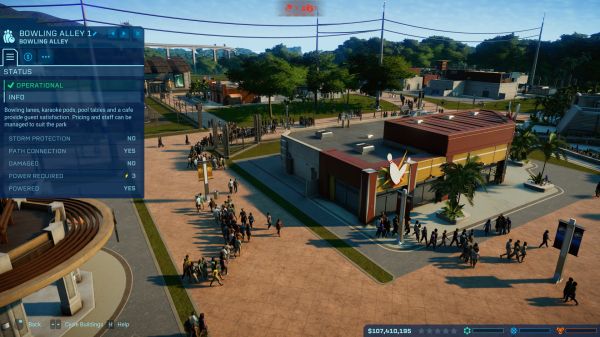
Visitors evaluate dinosaur visibility, food, drinks, shopping, fun, transportation, hotel capacity, and general safety. Their needs are less individually detailed than in more complex theme-park simulators, but they still shape facility placement. A profitable restaurant located away from visitor traffic provides little value. Buildings need to follow where people actually gather.
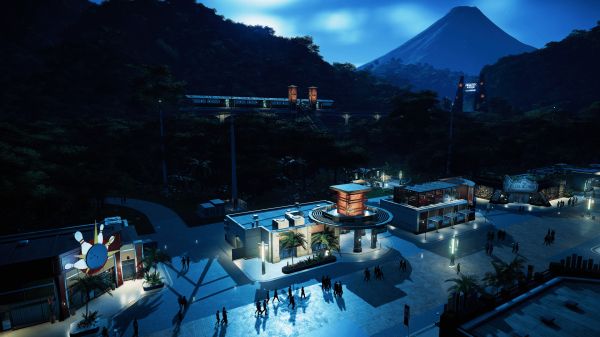
I usually developed guest hubs near major viewing areas rather than spreading facilities evenly across the island. Hotels and transport systems increase the practical range of the park while raising infrastructure demands. The management remains readable because each need has clear coverage and performance information. Guest satisfaction supports the dinosaurs without becoming a separate game large enough to overwhelm them.
Dinosaur Visibility Controls the Value of an Exhibit
An impressive enclosure contributes little when visitors cannot see the animals reliably. Viewing galleries, towers, monorails, and other attractions need to face areas where dinosaurs actually spend time. Feeders and water placement can influence movement, allowing me to draw animals into visible sections. Habitat design therefore combines welfare with controlled presentation.
I enjoyed adjusting an enclosure after noticing that one popular dinosaur remained hidden behind dense forest. Moving a feeder or adding another viewing location could improve satisfaction without changing the species count. The animal is not a stationary ride, so visibility remains uncertain. This makes exhibit planning more dynamic than placing a fixed attraction beside a path.
Hotels Make Population Growth Possible and Complicated
Hotels increase the number of visitors the island can support, which improves potential revenue and park ratings. They also require considerable space, power, path access, and nearby amenities. One hotel can transform a quiet section of the park into a busy guest district. The investment pays off only when the surrounding attractions justify the additional capacity.
I made the mistake of constructing hotels before ensuring the park had enough dinosaur appeal. More capacity does not automatically create more satisfied guests. The building becomes valuable when it supports a developed attraction network. Expansion should follow demand rather than attempt to create it alone.
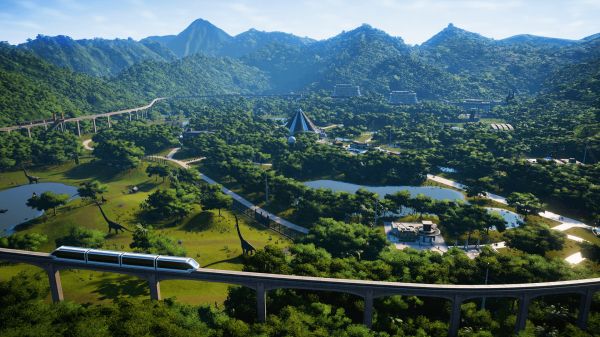
The Monorail Solves Distance and Creates New Design Problems
Large parks need transportation because guests evaluate how easily they can reach important areas. The monorail provides efficient movement and can offer views over enclosures. It also requires tracks, stations, power, and enough space to navigate around existing buildings. Adding it late can reveal how little room remains for large infrastructure.
I learned to reserve potential transport corridors before the park became crowded. A well-planned monorail connects hotels, guest hubs, and major exhibits while improving the visual identity of the park. A poorly planned route becomes an expensive obstacle crossing valuable land. Transportation rewards thinking several stages ahead.
Paths Control More Than Foot Traffic
Every guest facility needs path access, making pathways the skeleton of the park. Their width affects visitor capacity, while their route determines whether buildings can fit efficiently. A simple path decision can divide land needed for expansion or create awkward congestion near one popular attraction. Paths look inexpensive, but their long-term design value is enormous.
I often rebuilt entire sections after understanding how guests moved through them. Curved decorative layouts are attractive but may waste space on restricted islands. Straight efficient routes support better construction while looking more artificial. Jurassic World Evolution constantly asks me to balance park beauty against operational practicality.
Scenery Options Are More Limited Than the Dinosaurs Deserve
The game allows terrain shaping, water placement, forest painting, and some environmental adjustment inside enclosures. These tools are useful for animal comfort and visual variety. However, decorative construction outside habitats remains less flexible than I wanted from a park-building game. Guest areas can begin looking similar across several islands.
I would have enjoyed more control over signs, plants, barriers, plazas, lighting, and themed structures. The dinosaurs provide enormous spectacle, but the spaces connecting their exhibits often lack equivalent personality. This is one area where the management focus limits creative expression. My parks functioned differently without always looking as distinct as I imagined.
Terrain Tools Are Functional but Sometimes Restrictive
Flattening land is essential when large buildings or connected facilities require stable ground. The islands often contain slopes that appear gentle but still prevent construction. Adjusting them can become expensive and may create unnatural terrain around paths or enclosures. The tool solves problems without always producing attractive results.
I learned to work with natural terrain when possible instead of flattening everything. Slopes can separate guest areas and provide enclosure variety if buildings are positioned carefully. Fighting the landscape wastes money and reduces the visual character of the island. Good park planning begins with understanding what the terrain already allows.
Research Creates a Constant Competition for Resources
New buildings, medical treatments, upgrades, genetic options, and operational improvements require research. Research centers cost money and power, while projects consume additional funds and time. Choosing the next technology becomes important because several parts of the park may need improvement simultaneously. Scientific progression is useful only when the economy can support it.
I often delayed attractive genetic research to unlock practical upgrades for power, incubation, or guest facilities. These technologies may not create an immediate spectacle, but they make future expansion safer. The research system rewards infrastructure before ambition. A successful Jurassic park depends on many ordinary improvements supporting one extraordinary attraction.
Building Upgrades Add Useful Specialization
Many facilities include upgrade slots that improve performance, reduce costs, increase capacity, or support specialized functions. Power stations, hatcheries, expedition centers, and other operations can be adjusted according to current needs. This creates meaningful choices without requiring another building for every improvement. A limited slot count prevents one facility from gaining every advantage simultaneously.
I changed upgrades according to the park’s stage. Early financial improvements helped survival, while later capacity and performance bonuses supported expansion. The system is easy to overlook because upgrades are less visible than new construction. Their cumulative effect can determine whether a large park operates smoothly.
Dinosaur Ratings Encourage Variety and Quality
Park appeal depends on the number, diversity, condition, and genetic quality of the dinosaurs. Releasing the same species repeatedly produces diminishing value, encouraging a broader collection. Modified animals and dangerous species can increase ratings significantly. The game pushes me toward building a functioning dinosaur catalogue rather than filling every enclosure with the cheapest herbivore.
I liked that welfare and visibility still matter after the dinosaur is released. A high-rated animal hidden from visitors cannot contribute fully to the park experience. An injured or unhappy dinosaur becomes both a welfare concern and a business problem. Ratings connect scientific creation with habitat management and guest planning.
Dead Dinosaurs Create Emotional and Financial Loss
Dinosaurs have finite lifespans and may also die through illness, combat, starvation, or disaster. Removing the body becomes necessary before it affects the enclosure and park. Replacing an established animal costs money and may require another risky incubation. The loss can also destabilize social groups if the species depended on a specific population size.
I became attached to several dinosaurs simply because they had survived the park’s development from an early stage. Their deaths felt more significant than replacing an ordinary building. The game does not create deep individual personalities, but time and repeated observation produce a relationship naturally. A long-lived animal becomes part of the park’s history.
Named Dinosaurs Make Management More Personal
The ability to rename dinosaurs appears minor, but it changes how I follow them. A named animal is easier to remember after a fight, illness, escape, or successful photograph. I begin associating it with specific events rather than treating it as one unit in a population count. This creates personal stories without requiring a complex narrative system.
I especially enjoyed naming major carnivores and the first members of important species. When one escaped, the alert felt connected to a known troublemaker rather than a generic asset. The game’s systems remain statistical, but names give those statistics identity. Personalization makes loss and success more meaningful.
The Park Rating Provides a Clear Long-Term Objective
Each island asks me to improve dinosaur appeal and facility performance until the park reaches a higher star rating. The objective is easy to understand but requires several systems to function together. More dinosaurs alone cannot solve poor guest satisfaction, while beautiful facilities cannot compensate for weak attractions. The rating becomes a summary of the entire operation.
I liked watching progress increase after completing a major enclosure or solving a transportation problem. Small fluctuations also reveal hidden weaknesses in visibility, capacity, or welfare. Reaching five stars feels like proof that the park has become sustainable rather than merely large. The challenge is maintaining that status when weather and aging animals begin creating new problems.
Financial Success Can Create Its Own Boredom
Early financial pressure makes every decision meaningful, but a mature park can generate enough income to remove much of that tension. Once money stops being a serious limitation, replacing dinosaurs and repairing damage become easier. Expansion turns into a question of available space rather than affordability. The management game gradually loses part of its risk.
I found the middle stage most engaging because the park was profitable without being invulnerable. Large investments still mattered, and one severe disaster could create genuine damage. Later success becomes satisfying but less demanding. Challenge modes or personal restrictions help preserve strategic pressure after the economy stabilizes.
Isla Nublar Offers Freedom With Unlock Restrictions
Isla Nublar serves as the original sandbox environment where financial limits can be removed and creative park construction becomes the priority. The major limitation is that dinosaurs, buildings, and technologies need to be unlocked through campaign progression before becoming available there. This structure encourages players to experience the five main islands instead of entering a complete creative mode immediately. It makes the campaign relevant to long-term sandbox play.
I understood the progression logic but still wished for more immediate freedom after learning the systems. Sandbox mode is where I want to test ambitious layouts without worrying about contracts or budgets. Unlock requirements create purpose while delaying experimentation. Once enough content becomes available, Nublar becomes an enjoyable space for building the park the campaign islands could not accommodate.
Challenge Mode Adds Replayable Pressure
Challenge Mode allows another approach built around selected difficulty, financial progression, and completion time. Starting with limited resources restores the careful decision-making that may disappear from a mature campaign park. The mode encourages efficient planning and provides a reason to use familiar systems under new pressure. It works well after the main islands have taught the fundamentals.
I enjoyed having a more focused objective without narrative missions interrupting the park plan. Difficulty settings change how forgiving the economy and operations feel. Higher challenge demands stronger knowledge of profitable species, infrastructure order, and guest needs. The mode exposes whether my campaign success came from understanding the systems or simply accumulating enough money.
The Voice Cast Strengthens the Jurassic World Identity
Recognizable characters such as Dr. Ian Malcolm, Dr. Henry Wu, Claire Dearing, and Owen Grady provide commentary and mission context. Their voices make the game feel connected directly to the film universe rather than a generic dinosaur simulator carrying a licensed title. Malcolm’s skepticism is especially suitable because every new park plan contains another reason to question whether control is possible. The performances give personality to objectives that might otherwise feel purely mechanical.
Repeated dialogue can become familiar across long sessions, but the connection remains effective. The characters represent different attitudes toward science, security, entertainment, and animal welfare. Their commentary reinforces the same conflicts already present in the management systems. Jurassic World Evolution benefits from letting the franchise’s ideas influence play rather than using them only as decoration.
Jeff Goldblum Makes Failure Feel Philosophically Appropriate
Ian Malcolm’s presence adds humor and warning to the campaign. His observations remind me that the park’s systems are designed around confidence that will eventually be tested. When a dinosaur escapes after I ignored an obvious risk, his skepticism feels deserved rather than irritating. The character acts like the voice of every consequence I hoped would not occur.
I appreciated that the game does not present him as someone opposed to all progress without reason. His caution reflects the fundamental instability of genetically reconstructed animals inside a commercial attraction. The park may achieve five stars, but its success never disproves his concerns permanently. One storm can return the entire operation to chaos.
The Sound Design Gives Dinosaurs Physical Presence
Dinosaur calls are among the most important parts of the presentation. A distant roar can draw my attention across the park before any alert appears. Different species have recognizable sounds that give large enclosures a constant sense of activity. The audio makes the animals feel present even when the camera is focused on management elsewhere.
Vehicle engines, storm effects, guest noise, alarms, and facility sounds create additional layers around the dinosaurs. The park becomes increasingly loud as it expands. During emergencies, those layers combine into controlled confusion. A siren, heavy rain, panicking crowds, and a predator’s call can communicate the crisis more effectively than the interface alone.
The Music Recreates Cinematic Wonder
The soundtrack uses familiar Jurassic musical ideas to make dinosaur releases and scenic park views feel appropriately grand. Quiet exploration can suddenly gain emotional weight when the music rises over a wide enclosure. The themes remind me why the park exists despite every management problem. Seeing dinosaurs alive remains an extraordinary achievement inside the fiction.
I appreciated that the score does not play at maximum intensity constantly. Calm operational periods allow environmental audio to dominate. Major releases and important moments receive stronger musical support. The contrast preserves the sense of wonder instead of exhausting it.
The Dinosaurs Look Excellent at Close Range
Models, skin textures, animation, and scale make the animals convincing enough to support long observation. Large species move with weight, while smaller predators appear faster and more alert. Drinking, feeding, sleeping, fighting, and social movement give habitats visual variety. The game is strongest when I slow down and watch the result of all the management work.
Behavior can become repetitive after many hours because individuals of one species share similar animation patterns. Herding and social complexity are more limited than the visuals initially suggest. Even so, the basic presentation remains impressive. Jurassic World Evolution understands that the dinosaurs must look valuable enough to justify every financial and security problem they create.
Photo Mode Would Have Fit the Game Naturally
The park contains many scenes worth capturing, from storms over carnivore enclosures to peaceful herbivore groups beside water. Camera controls allow close observation, but a more complete photographic tool would strengthen that activity. Filters, time controls, framing options, and hidden interface settings could turn observation into a deeper creative system. The game already provides the subjects and landscapes required.
Ranger photography offers a practical in-game version by rewarding valuable shots. I enjoyed attempting to capture several species or active behaviors in one image. However, its purpose is financial rather than purely artistic. A dedicated mode would give players another reason to appreciate their park after reaching management stability.
The Management Depth Is Accessible but Sometimes Shallow
Jurassic World Evolution explains its major systems clearly enough that I rarely felt lost for long. Dinosaur comfort, guest needs, electricity, profit, and reputation all provide readable information. This accessibility makes the game welcoming to players attracted mainly by the license and animals. It also means some systems become easy to optimize after their basic patterns are understood.
Guest behavior and staff operations are not simulated with the complexity of the deepest management games. Individual visitors do not develop memorable stories, while facilities often function through coverage and profitability calculations. I occasionally wanted stronger management layers beneath the dinosaur spectacle. The game prioritizes cinematic clarity over exhaustive simulation.
Repetition Becomes Visible Across the Campaign
Each island asks me to build familiar facilities, extract DNA, incubate dinosaurs, satisfy guests, and improve ratings. Terrain and financial conditions provide variation, but the early development sequence can still feel repetitive. Contracts also reuse several objective structures across divisions. The campaign is strongest when an island’s specific restriction forces a genuinely different solution.
I reduced fatigue by returning to older parks, pursuing new species, and completing missions rather than developing every island in one uninterrupted sequence. Watching dinosaurs remains enjoyable even when the management process becomes familiar. The game relies heavily on the appeal of its central creatures to support repetition. Fortunately, that appeal is strong enough to carry a large part of the experience.
The Lack of Deeper Herd Behavior Limits Naturalism
Herbivores may share spaces and move around their habitat, but large groups do not always behave like coordinated herds. Animals can appear scattered even when the species description suggests social dependence. Predators also follow relatively readable patterns once their needs are understood. The enclosures feel alive without fully becoming ecosystems.
I wanted more complex territorial, family, hunting, and group behavior. These systems could make observation less predictable and habitat design more meaningful. The existing social statistics provide management rules, but behavior does not always express those rules naturally. The dinosaurs are convincing attractions before they are convincing wild animals.
Guests Rarely Feel Like Individuals
Crowds move along paths, enter facilities, and gather near viewing attractions, creating the visual impression of a working park. Their needs are evaluated collectively through categories rather than through deep individual simulation. This keeps management clear but reduces the human side of the park. Visitors become demand patterns more than memorable people.
I would have enjoyed seeing family groups, specialist dinosaur fans, thrill seekers, and wealthy guests behave differently. Their preferences could influence exhibit design and facility planning more strongly. The current system works efficiently but leaves potential depth unexplored. A park filled with extraordinary animals deserves equally interesting visitor behavior.
Return to Jurassic Park Changes the Entire Atmosphere
The Return to Jurassic Park expansion shifts the visual identity toward the original film era with classic architecture, vehicles, characters, and presentation. This changes more than individual models because the entire park fantasy becomes less corporate and more nostalgic. Building around older facilities creates a distinct atmosphere from the main Jurassic World campaign. The expansion demonstrates how strongly art direction shapes management.
I enjoyed the return of familiar designs and the focus on rebuilding after the original disaster. The classic park feels smaller and more experimental, which suits the franchise’s early sense of wonder. Restrictions between eras can limit mixing content freely, but they preserve thematic consistency. For players attached to the original films, this expansion adds substantial emotional value.
Secrets of Dr. Wu Expands Genetic Experimentation
The Dr. Wu expansion develops the genetic side of the game through additional missions, research, locations, and hybrid possibilities. It supports players who enjoy modifying dinosaurs and pushing the park beyond ordinary species reconstruction. New traits and challenges create another reason to maintain strong science reputation. The content fits naturally because the base game already frames genetic control as both opportunity and danger.
I liked having more complex animals that required careful containment and planning. Hybrids provide strong ratings but can intensify the same welfare and security problems associated with ordinary carnivores. Scientific progress produces attractions while increasing operational risk. That relationship captures the franchise’s recurring warning effectively.
Claire’s Sanctuary Adds a Conservation Perspective
Claire’s Sanctuary focuses more heavily on rescuing dinosaurs and managing their welfare during a crisis. This creates a different motivation from simply increasing park profit and entertainment ratings. The campaign emphasizes medical care, relocation, and maintaining animals through difficult conditions. It gives the management systems a more protective emotional context.
I appreciated the attempt to frame dinosaurs as living creatures rather than products. The main game already rewards welfare, but financial value remains central to most decisions. Claire’s storyline shifts the priority more clearly toward survival. The expansion adds variety by changing why the same tools are being used.
Dinosaur Packs Expand Variety Without Changing the Foundation
Additional dinosaur packs increase the number of species available for exhibits. New body shapes, behaviors, ratings, and habitat requirements can make another park visually distinct. They are most valuable to players who spend significant time in sandbox or challenge modes. The packs add collection options rather than fundamentally new management systems.
I enjoy greater species diversity, but individual packs feel less essential than narrative expansions. A new dinosaur creates excitement during release and contributes another habitat-planning problem. After that, it enters the familiar welfare and guest-rating framework. The value depends largely on how strongly the player enjoys building a complete prehistoric collection.
The Game Runs Best When I Prioritize Stability
Large parks contain many dinosaurs, visitors, buildings, vehicles, weather effects, and background calculations. Performance can decline as the island becomes more crowded, particularly on older hardware. Stable camera movement is important because I spend significant time moving quickly between strategic and close viewing perspectives. I preferred reducing a few visual settings before accepting irregular performance.
The dinosaurs still look convincing below maximum detail because their animation and design carry much of the visual impact. Shadows, vegetation, and environmental effects improve atmosphere but do not define the entire experience. Smooth management feels more valuable than one especially detailed screenshot. Long careers benefit from settings chosen for the mature park rather than the empty starting island.
Mouse and Keyboard Fit the Management Layer Naturally
Mouse control makes selecting buildings, adjusting enclosures, navigating menus, and moving across the island efficient. Keyboard shortcuts help during emergencies when I need ranger, ACU, or shelter controls quickly. The interface generally supports PC management without excessive friction. Direct vehicle control also remains comfortable once aiming and movement are adjusted.
A controller provides a relaxed alternative and works well for watching dinosaurs or driving vehicles. Precise path and building placement still feels easier with a mouse. I preferred switching perspectives according to the activity rather than committing completely to one input style. The game supports both strategic construction and cinematic observation effectively.
The Best Parks Balance Beauty and Emergency Access
A visually attractive enclosure may use forests, water, curved fences, and hidden service routes. During a disease outbreak or damaged fence, ranger vehicles still need practical access. Dense decoration can slow repairs and make feeders harder to reach. Park design therefore needs to consider the crisis version of every habitat.
I began adding gates, wider service areas, and nearby response facilities before they became necessary. These features are less attractive than another viewing tower, but they reduce the cost of future problems. A beautiful park that cannot respond to emergencies is only temporarily successful. Jurassic World Evolution rewards designs that remain functional under pressure.
Redundancy Separates Stable Parks From Fragile Ones
One power station, one ranger team, or one access route may be sufficient during normal operation. A storm can disable several systems at once and reveal how vulnerable that efficiency has become. Backup teams and distributed infrastructure cost more but prevent one failure from spreading across the entire island. The safest park often looks financially inefficient before the emergency begins.
I liked discovering this principle through failure because it gave mature park design another layer. Maximizing short-term profit is not identical to building resilience. The game rewards players who spend money on systems they hope never to need. Security is most valuable when it prevents a memorable disaster.
The Game Makes Me Understand Why These Parks Always Fail
Jurassic World presents dinosaur parks as technological miracles undermined by greed, overconfidence, human conflict, and uncontrollable life. The game lets me experience those pressures through management rather than only watching them in a film. Expansion creates profit but increases complexity. Genetic improvement attracts visitors while making animals more expensive and difficult to replace.
Every decision contains an incentive to accept slightly more risk. A stronger dinosaur could raise the park rating, another hotel could increase visitor numbers, and one fewer security building could free land for profit. The disaster rarely begins with one obviously irrational choice. It grows from several reasonable compromises operating together.
What I Would Improve in the Park
I would expand creative construction with more scenery, architectural themes, signs, plazas, lighting, and terrain options. The current tools create functional parks but limit how different guest areas can look. Deeper visitor simulation would also make facility planning more personal. Guests should respond to species, danger, education, and park layout in more varied ways.
I would then improve dinosaur behavior with stronger herding, territory, hunting, and social relationships. Animals should create stories through interaction rather than mainly through comfort statistics and occasional combat. Better behavior would make observation as deep as management. The dinosaurs already look excellent enough to support a richer simulation.
Why I Continued Rebuilding After Every Disaster
Jurassic World Evolution stayed entertaining because every successful enclosure contains the possibility of becoming a crisis. The same dinosaur that increases visitor numbers can damage a fence, spread disease, fight another animal, or die of old age. The park is never a finished object that I simply admire. It is a collection of living systems requiring constant adjustment.
From my perspective as a gamer, the dinosaurs carry the experience even when the management systems become repetitive. Releasing a new species, watching a predator hunt, driving among sauropods, or responding to an escape provides moments that ordinary theme-park attractions cannot reproduce. Frontier understands the scale and spectacle needed to make prehistoric animals feel valuable. The game continually gives me reasons to move from the strategic camera into a closer view.
The island campaign provides a useful progression structure by unlocking buildings, genomes, upgrades, and research across different management conditions. Some islands create stronger challenges than others, and the repeated construction cycle becomes visible over time. However, returning to earlier parks with new technology gives the career a satisfying sense of continuity. The archipelago feels like one expanding business rather than a series of isolated scenarios.
The strongest management decisions involve prevention. Stable power, strong fences, good welfare, accessible shelters, prepared ranger teams, and balanced division reputation rarely look exciting during construction. Their value appears when the weather changes or one animal becomes uncomfortable. The game makes preparation meaningful by creating emergencies capable of affecting several systems simultaneously.
Financial pressure is equally important during the early and middle campaign. An ambitious dinosaur can consume money through incubation, habitat construction, feeders, security, and replacement costs. The temptation is always to build the exciting attraction before the business is ready. Jurassic World Evolution becomes strategically satisfying when I learn to support spectacle with boring infrastructure.
The game is less successful as a deep guest or ecosystem simulation. Visitors behave mainly as collective needs, while dinosaur relationships remain simpler than the visual presentation suggests. Creative building tools also restrict the appearance of parks compared with more flexible construction games. These limitations become clearer after the campaign objectives are complete and sandbox creativity becomes the main goal.
Even with those weaknesses, the Jurassic license feels meaningfully integrated. Familiar characters, music, architecture, vehicles, and scientific ideas support the management systems rather than existing only as surface decoration. Ian Malcolm’s warnings become especially appropriate after one compromised fence produces a chain of failures. The game understands that the franchise is about wonder and control failing at the same time.
My favorite park was not the one with the highest rating or cleanest layout. It was an overcrowded island where an intense storm disabled power, damaged several buildings, and allowed two predators to escape near a hotel district. I opened every shelter, sent repair teams in opposite directions, manually tranquilized one animal, and restored the electrical network moments before another enclosure failed. The park survived, but the perfect layout I imagined earlier had been replaced by a story.
That is the real appeal of Jurassic World Evolution. I can spend hours creating order through fences, paths, laboratories, feeders, power lines, and financial plans. The dinosaurs and weather then test whether that order was genuine or only temporary. Success feels satisfying because the possibility of failure remains visible behind every viewing gallery.
The game may not provide the deepest park simulation available, but no ordinary management game can reproduce the tension of watching a genetically modified predator test the fence beside a crowded guest area. Jurassic World Evolution turns that tension into a complete operational loop. I build because I want to see the dinosaurs, and I manage carefully because the dinosaurs refuse to behave like buildings.
Pros:
- Rich visuals and realistic animations that bring the prehistoric world to life
- Engaging audio and soundtrack that amplify the overall experience
- High replayability with varied challenges and customizable park layouts
- Robust modding and cheat options that allow creative customization
- Active community and consistent post-launch support offering updates and improvements
- Immersive gameplay that combines strategic park management with dynamic dinosaur interactions
Cons:
- Occasional unpredictability in dinosaur behavior can disrupt strategies
- Potential technical issues during intense gameplay moments that may require troubleshooting
- Steep learning curve for newcomers due to complex management systems








Recent Reviews

Minecraft

Grand Theft Auto V

Toca Boca World

Roblox

Leave a comment
Your comment is awaiting moderation. We save your draft here
0 Comments