
Review
My earliest matches in World of Warships were defined by impatience. I pushed toward the center, exposed the side of my ship, fired at...
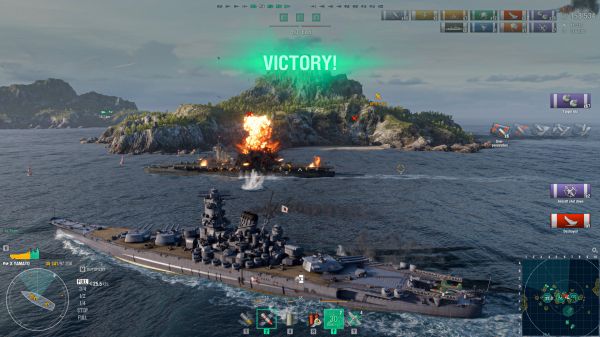
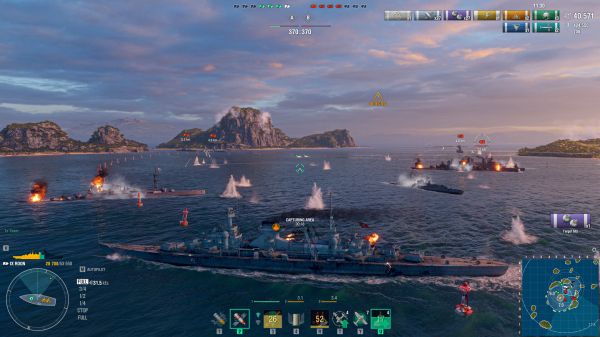
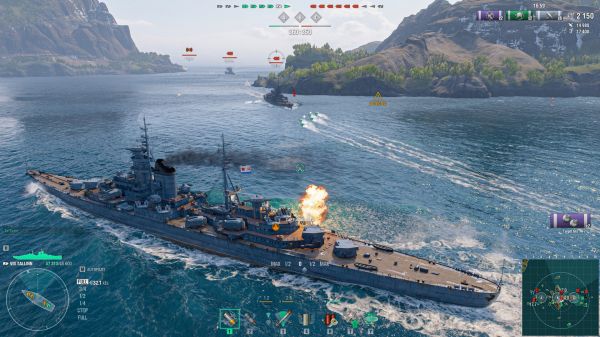


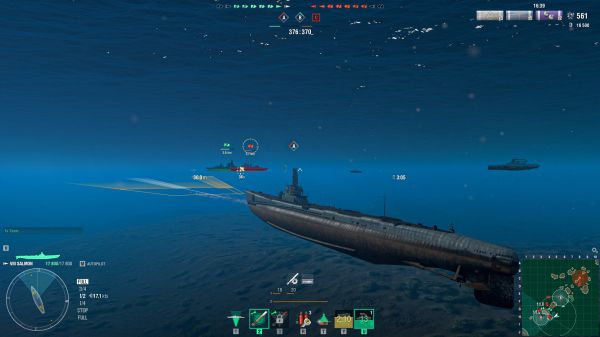

Commanding the Digital Seas: An In-Depth Journey through World of Warships
My earliest matches in World of Warships were defined by impatience. I pushed toward the center, exposed the side of my ship, fired at the first target within range, and wondered why my vessel disappeared before the battle had properly developed. The game looked slow enough to forgive casual decisions, but every mistake remained visible for several uncomfortable seconds as shells travelled toward me. Once I learned to wait for an enemy cruiser to turn broadside and landed a concentrated salvo through its vulnerable armor, I understood that World of Warships is not slow because nothing is happening; it is slow because decisions need time to become consequences.
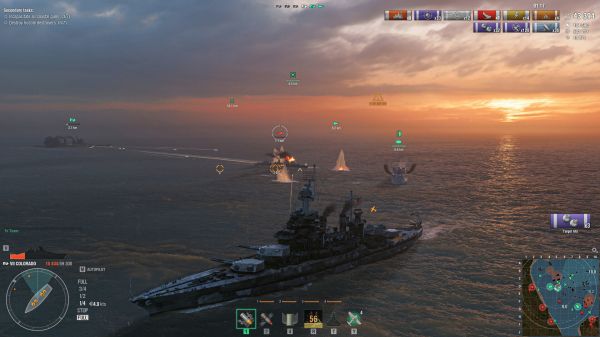
The game transforms naval combat into an accessible tactical action experience rather than a strict historical simulation. I control one warship, manage its movement and weapons, coordinate with teammates, and compete for objectives across large maps filled with islands, open water, weather effects, and carefully measured firing lanes. Shell flight time, concealment, armor angles, ammunition selection, torpedo prediction, aircraft spotting, and consumable timing give every engagement several layers. The fundamentals are easy to recognize, but becoming consistent requires learning information the interface only partially explains.
Every Turn Begins Long Before the Rudder Moves
Ships in World of Warships carry momentum, take time to accelerate, and cannot reverse a poor position instantly. A battleship may need many seconds to change direction, while its guns rotate even more slowly toward a new threat. This means I must anticipate where enemies will appear and which side of my ship needs to face them before the fight begins. A decision that feels harmless near the opening may leave me trapped against an island or exposed to several opponents minutes later.
This delayed relationship between input and result creates the game’s strongest tactical tension. I cannot rely on reflex alone because avoiding incoming fire often requires turning before the enemy launches the salvo. The minimap becomes as important as the central view, showing detected ships, potential routes, objective control, and areas where an unseen destroyer may be waiting. World of Warships rewards players who think ahead, though it can feel cruel when a small navigational error produces a long and unavoidable retreat.
Artillery Is a Prediction System Disguised as a Shooting Mechanic
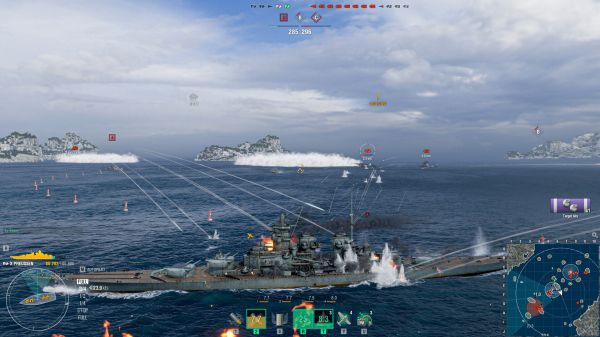
Firing the main battery involves estimating distance, enemy speed, direction, acceleration, and the time shells will spend in the air. The targeting interface provides useful guidance, but I still need to place the aim ahead of a moving vessel and adjust for changes in course. Fast cruisers at long range require substantial lead, while slow battleships present easier targets but may use armor angles to reduce damage. Aiming becomes less about placing the crosshair directly on a ship and more about predicting where that ship will be when the shells arrive.
Dispersion introduces uncertainty because shells do not always land exactly where I aim. A carefully prepared salvo can separate around the target, while a less elegant shot may produce several devastating hits. This randomness prevents artillery from becoming completely mechanical, but it also creates frustration when correct positioning and prediction receive poor results. I accept some dispersion as part of naval gunnery, although extreme outcomes occasionally make success feel detached from execution.
Armor-Piercing Shells Reward Patience and Correct Angles
Armor-piercing ammunition performs best when it can enter vulnerable sections of an enemy ship at a favorable angle. A cruiser exposing its side may receive citadel hits that remove a huge portion of its health, while the same shells can bounce against a sharply angled hull. Shell caliber, penetration, armor thickness, distance, and impact angle all influence the result. This makes ammunition choice and target selection inseparable from aiming.
The system becomes deeply satisfying once armor layouts stop feeling invisible. I begin recognizing which ships can be punished through the side, which possess vulnerable upper armor, and which should not be challenged with AP from my current position. Overpenetration adds another complication, since powerful shells may pass through lightly armored targets without transferring their full damage. A perfect broadside is therefore not always the correct target if my ammunition and caliber are poorly matched.
High-Explosive Ammunition Is Reliable and Sometimes Too Central
High-explosive shells trade raw penetration potential for reliable surface damage, module damage, and a chance to start fires. They are valuable against sharply angled ships, lightly armored targets, and opponents that AP cannot penetrate consistently. Destroyers rely heavily on HE gunfire, while several cruiser lines build their entire identity around repeated fire pressure. Switching to HE can turn an otherwise ineffective position into useful support.
Fire damage is recoverable, which creates decisions around the Damage Control Party consumable. Extinguishing one fire immediately may leave me vulnerable to another fire or flooding seconds later, while waiting preserves the consumable at the cost of health. This interaction rewards patience, but repeated HE attacks can become exhausting for slow ships with limited ability to disengage. A battleship under constant fire may spend several minutes watching its health disappear despite maintaining a sensible armor angle.
Battleships Sell the Fantasy and Punish Overconfidence
Battleships carry enormous guns, thick armor, large health pools, and the ability to punish exposed targets from long distances. Their scale makes every salvo feel significant, especially when several shells strike the protected center of an enemy vessel. They are also slow, visible, vulnerable to fires and torpedoes, and dependent on correct positioning. The class can survive mistakes better than a cruiser, but it cannot always escape after making them.
I enjoy battleships most when supporting a push from a distance that still allows meaningful pressure. Remaining too far away reduces accuracy and leaves teammates without support, while pushing too early exposes the ship to concentrated fire and hidden torpedoes. The class teaches controlled aggression because armor matters only when enemies cannot attack every side simultaneously. A battleship leading at the correct moment can break a defensive position, but one leading alone usually becomes an expensive target.
Cruisers Demand Awareness From Every Direction
Cruisers occupy the flexible center of the roster, ranging from lightly armored gun platforms to heavily protected ships approaching battleship characteristics. They may provide radar, hydroacoustic search, anti-aircraft support, smoke, healing, long-range artillery, rapid reloads, or powerful torpedoes. This variety makes the class difficult to describe through one universal role. Some cruisers control space from behind islands, while others rely on open-water maneuvering or close-range pressure.
The class is unforgiving because many cruisers can lose most of their health after exposing the side to a battleship. Successful play requires monitoring gun directions, concealment, island cover, and the positions of enemy destroyers. I often feel most useful in a cruiser because the consumables can change an objective fight without requiring a direct elimination. I also experience my fastest returns to Port when I forget that flexibility does not mean invulnerability.
Destroyers Carry More Strategic Responsibility Than Their Size Suggests
Destroyers are fast, difficult to detect, and essential for contesting objectives, spotting enemies, launching torpedoes, and controlling the movement of larger vessels. Their low visibility allows them to discover opponents before being detected, giving the entire team information needed for accurate fire. Smoke can protect allies or conceal a firing position, while torpedoes create invisible areas of danger. A skilled destroyer influences the match even without producing the highest damage total.
The class is demanding because one mistake can lead to immediate focus from several enemies. Radar, hydroacoustic search, aircraft, submarines, and opposing destroyers can remove the concealment advantage quickly. Entering an objective without understanding nearby support is one of the easiest ways to disappear early. Destroyer players are frequently expected to capture, scout, screen torpedoes, hunt submarines, and survive simultaneously, which creates more responsibility than the small ship model initially suggests.
Torpedoes Turn Empty Water Into a Threat
Torpedoes travel slowly enough that successful attacks depend on prediction, concealment, and controlling the enemy’s available routes. The aiming indicator estimates where to launch based on the target’s current movement, but firing directly along that line often fails when an experienced player changes speed or direction. Strong attacks cover several possible responses or target ships already committed to a turn. A successful spread feels earned because it was prepared long before the impact.
The most useful torpedoes are not always the ones that hit. A visible spread may force a battleship to turn broadside toward allied guns, leave an objective, or interrupt a push. This area-control function makes destroyers dangerous even when their damage statistics appear modest. Torpedoes can still feel arbitrary to new players because unseen attacks provide limited reaction time, especially when no teammate has screened the approach.
Aircraft Carriers Play a Different Game Above Everyone Else
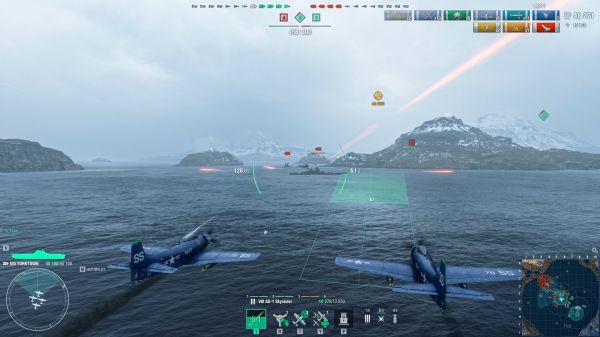
Aircraft carriers control squadrons rather than aiming the ship’s primary guns directly. I launch aircraft, approach targets from the air, avoid anti-aircraft zones, and perform attacks using rockets, bombs, or aerial torpedoes. The carrier hull remains elsewhere on the map, usually depending on automatic navigation and team protection. This creates a strategic perspective unavailable to surface ships, allowing rapid scouting and pressure across distant areas.
The class has always been controversial because aircraft can attack targets that have limited ability to respond directly. Anti-aircraft fire is largely automated, although defensive positioning, sector reinforcement, consumables, and grouping can influence survival. The ongoing aircraft carrier and AA rework attempts to improve clarity and interaction, but the fundamental asymmetry remains. Carrier players enjoy freedom of reach, while surface players often experience the attack as a problem managed through damage reduction rather than direct counterplay.
Spotting From the Air Changes More Than the Carrier’s Own Attack
Aircraft create value by detecting ships for the carrier’s team, especially destroyers attempting to operate through concealment. A target that survives one aircraft strike may still receive heavy artillery fire because the squadron revealed its position. This makes spotting potentially more influential than the direct damage of the attack. Destroyers are particularly sensitive because their survival depends on controlling when they become visible.
Changes to spotting rules have attempted to limit the carrier’s ability to expose every target to the whole team immediately. The balance is difficult because reconnaissance is historically and mechanically central to aircraft. Too much shared spotting makes surface concealment unreliable, while too little reduces carrier teamwork. I prefer systems where aircraft communicate approximate information without turning every detected destroyer into an instant target for the entire enemy fleet.
Submarines Add Suspense and Too Many Separate Rules
Submarines operate at the surface, periscope depth, and deeper water depending on their resources and tactical needs. They use concealment, sonar pings, homing torpedoes, and underwater movement to approach targets from unusual directions. Surface ships respond through depth charges, airstrike weapons, hydroacoustic tools, and careful observation of temporary indicators. The class introduces a vertical layer to maps that were originally designed primarily for surface combat.
I enjoy the tension of hunting a submarine when its approximate position is known and several teammates coordinate their anti-submarine weapons. The experience becomes less satisfying when indicators provide uncertain information and the submarine attacks from a direction I cannot pressure effectively. Each class interacts with submarines differently, creating numerous exceptions that are not explained clearly in the middle of combat. The class is interesting conceptually but remains one of the most divisive additions to the game.
Anti-Submarine Warfare Can Feel Like Attacking a Suspicion
Depth Charge Airstrikes allow many ships to target an area where a submarine may be operating. Successful use depends on reading visual signs, anticipating movement, and estimating whether the submarine changed depth or direction. Direct depth charges require closer positioning and can expose destroyers or cruisers to enemy fire. The uncertainty creates a distinctive form of prediction compared with ordinary artillery.
The feedback is not always strong enough to make a failed attempt educational. I may launch an airstrike at the visible disturbance and receive no clear explanation of how far the submarine moved. Cooldowns then leave me waiting while the underwater threat prepares another attack. Better indicators would risk making submarines too easy to punish, but the current system sometimes feels disconnected from the otherwise readable relationship between action and result.
Concealment Is the Most Important Statistic the Tutorial Barely Explains
Every ship has a detection range influenced by its type, upgrades, commander skills, firing status, weather, and other conditions. Remaining undetected allows me to reposition, disengage, launch surprise attacks, and control when the enemy receives information. Firing the main battery usually expands detection to the weapon range for a limited period, turning one shot into a deliberate exposure. Understanding this mechanic changes the game completely.
New players often focus on gun range and armor because those statistics appear more immediately connected with combat. Concealment determines whether those tools can be used safely in the first place. A cruiser that fires from open water without an escape plan may remain visible to several enemies long after the salvo. Once I began treating visibility as a resource rather than a passive number, my survival improved more than it did through any mechanical aiming adjustment.
Island Cover Creates an Entire Geometry of Safety
Islands block direct fire, break lines of sight, create ambush routes, and allow certain cruisers to fire over terrain while remaining protected. Their placement defines much of each map’s tactical structure. A low island may protect the hull without blocking high shell arcs, while a tall formation can isolate one section of the battlefield completely. Positioning beside terrain is therefore as important as positioning relative to enemy ships.
Collision and firing angles can become awkward near shorelines. A ship may lose speed after touching shallow terrain or discover that a gun turret cannot clear the island from the chosen position. Remaining stationary also creates vulnerability to torpedoes, aircraft, and flanking enemies. Island cover is powerful when it provides temporary protection, but dangerous when it becomes a place I am unwilling or unable to leave.
The Minimap Is a Strategic Instrument, Not Decoration
The minimap displays detected opponents, allied movement, objectives, last known positions, ship directions, weapon ranges, and several customizable information layers. I look at it constantly because the main camera cannot communicate threats developing on the opposite side of the ship. A battleship turning its guns toward me may be visible on the minimap before I notice the model physically. The tool transforms individual awareness into an understanding of the whole battle.
Ignoring the minimap is one of the fastest ways to become isolated. Teams rarely move in a perfectly coordinated formation, and a flank can collapse while I remain focused on one target. By the time the danger appears directly on screen, the escape route may already be closed. World of Warships is often described through aiming and armor, but map awareness decides more matches than spectacular salvos.
Random Battles Produce the Game’s Best and Worst Team Experiences
Random Battles place two teams together with limited communication and no guarantee of coordinated roles. A strong match develops when destroyers scout, cruisers support objectives, battleships create crossfire, and carriers or submarines contribute without abandoning the team’s needs. These matches feel like tactical systems working together, with each class creating opportunities for another. Victory becomes a shared result rather than the product of one damage total.
The opposite experience is common enough to be frustrating. One flank may retreat without pressure, several battleships may remain near the map boundary, or a destroyer may disappear inside an objective before support arrives. Communication tools cannot create teamwork when players disagree about basic intentions. The matchmaker balances ship categories and tiers more reliably than player understanding, so the quality of team play varies dramatically.
Co-op Battles Are Useful but Too Predictable
Co-op Battles place human players against artificial intelligence opponents, providing a lower-pressure environment for learning controls, completing missions, or testing a ship. The enemy tends to advance aggressively, making matches faster and easier to understand than Random Battles. I use the mode when adjusting to unfamiliar guns, torpedo angles, aircraft handling, or submarine controls. It is also convenient for certain combat tasks that do not require competitive opponents.
The artificial intelligence lacks the strategic variety needed for sustained play. Ships often push directly toward objectives, expose themselves, and repeat recognizable behavior. Human teams may eliminate the opposition so quickly that slower vessels struggle to contribute. Co-op is valuable as a training and relaxation mode, but it does not reproduce the concealment games and cautious positioning of competitive battles.
Operations Provide the Best Structured PvE Experience
Operations place teams into scenarios with objectives, enemy waves, escorts, defensive tasks, and changing mission stages. They give ship roles clearer narrative purpose because protecting a convoy or attacking a fortified area creates more context than capturing abstract circles. Team coordination remains useful without the psychological pressure of direct competitive matchmaking. I enjoy Operations when I want substantial combat but do not want every mistake judged by an opposing player.
The quality varies across scenarios, and repeated objectives eventually become predictable. Experienced teams know where enemies appear and can optimize every stage, reducing surprise. Ship eligibility and tier restrictions may also prevent me from using a favorite vessel during a particular rotation. Expanded Operations and new scenarios remain one of the most promising ways to make the game attractive beyond PvP.
Asymmetric Battles Let Powerful Ships Feel Powerful
Asymmetric Battles usually place a smaller team of higher-tier ships against a larger artificial intelligence force. This creates constant target pressure and allows secondary weapons, armor, healing, and sustained damage to matter more than in short Co-op matches. I enjoy the feeling of holding a position against several opponents while teammates cover separate angles. The mode turns high-tier ships into the center of a defensive power fantasy.
Artificial intelligence behavior still limits tactical complexity, but numerical pressure creates enough danger to prevent complete relaxation. Poor positioning can lead to concentrated fire from several directions, especially when the team divides itself. Rewards and availability determine how frequently players return. I would prefer the mode as a regular permanent option rather than something tied heavily to rotation.
Ranked Battles Concentrate Every Balance Problem
Ranked Battles use smaller teams and progression through leagues, increasing the importance of each ship and every mistake. Individual influence is greater because fewer players are available to compensate for a poor decision. Objective control, focus fire, and survival become even more important. A single destroyer advantage can shape the entire match.
The smaller format also magnifies uneven ship strength, matchmaking composition, and saved-star incentives. Players may prioritize personal survival or experience gain when the team needs risk, particularly under systems that protect the top performer from losing progress. Strong premium or special ships can appear repeatedly because competitive players naturally select efficient options. Ranked play provides intensity, but it does not always produce the fairest expression of skill.
Clan Battles Show What Communication Adds to the Game
Clan Battles allow organized teams to select ship compositions, coordinate targets, assign positions, and build strategies around maps and objectives. Voice communication transforms the experience because information about radar, consumables, focus targets, and enemy movement can be shared immediately. Ships that feel average in Random Battles may become essential within a planned composition. The mode reveals the depth hidden beneath public matchmaking.
Serious participation requires schedules, preparation, suitable ships, trained commanders, and willingness to follow team decisions. Balance changes can invalidate established compositions, forcing clans to adapt frequently. The competitive environment may also become repetitive when a small group of ships dominates selection. I admire Clan Battles as the game’s strategic peak, though they demand a commitment many casual players cannot maintain.
Brawls Turn Restricted Rules Into Quick Experiments
Brawls use smaller teams, limited ship types, selected tiers, and unusual formats to create concentrated battles. A three-versus-three match feels completely different from standard Random Battles because concealment and one elimination have immediate strategic consequences. Restrictions encourage me to use ships that remain inactive in Port during ordinary play. The shorter duration also suits sessions where I want direct combat without a full-length match.
Some formats produce severe matchup problems because one team composition counters another before meaningful play begins. Matchmaking may not always find equivalent ship roles within a limited population. The mode works best as a temporary experiment rather than the foundation of progression. Its variety remains valuable because the main battle structure benefits from occasional disruption.
The Tech Tree Creates a Clear Goal and a Long Grind
Researchable ship lines begin at low tiers and progress toward increasingly specialized high-tier vessels. Experience earned on one ship unlocks modules and the next vessel, while Credits purchase the researched equipment. This structure encourages learning because each tier introduces additional tools, stronger opponents, and more punishing mistakes. Reaching the final ship in a line feels meaningful because it represents many battles and an understanding of the line’s identity.
Progression can become repetitive in ships that do not suit my preferred style. Stock configurations may have weaker range, hulls, guns, or mobility until enough experience is earned for upgrades. Free Experience allows modules to be skipped, but it is also valuable for special content and Research Bureau resets. The system constantly asks whether immediate comfort is worth consuming a scarce account resource.
Higher Tiers Do Not Automatically Produce Better Matches
Tier X ships have powerful weapons, specialized consumables, strong commanders, and access to the complete tactical structure of the game. They also face accurate long-range fire, severe punishment for positioning mistakes, aircraft, submarines, radar, and opponents with years of experience. Matches can become cautious because every player understands how quickly exposed ships disappear. The power is impressive, but the freedom to experiment becomes smaller.
Mid-tier battles often feel more open because ships have fewer extreme tools and players take greater risks. Historical vessels are also concentrated across several middle tiers, giving these matches strong visual appeal. I enjoy high tiers for strategic intensity and middle tiers for variety. Progression should expand options rather than convince players that only the final tier is legitimate.
Commanders Add Useful Specialization and Another Grind
Commanders earn experience and unlock skills improving concealment, survivability, guns, torpedoes, aircraft, submarines, consumables, and other characteristics. Different ship types use separate skill categories, allowing builds suited to their intended role. A well-developed commander can make a noticeable difference without replacing the importance of positioning. Unique commanders may also include enhanced skills, talents, voice lines, and historical presentation.
Training high-level commanders takes substantial time, particularly across a large fleet. Moving one between researchable ships may require retraining, while premium ships provide more flexibility. This makes premium vessels useful for both income and commander development. Skill resets occasionally become necessary after balance changes, and free reset periods help prevent older decisions from becoming permanent punishment.
Upgrades and Signals Create More Preparation Than the Port Initially Reveals
Ships can equip upgrades affecting guns, survivability, concealment, rudder response, aircraft, torpedoes, consumables, and other systems. Signals provide additional bonuses and are consumed during battles. Selecting these elements allows two copies of the same vessel to support slightly different priorities. A destroyer may emphasize torpedo reload, while another setup improves guns or maneuverability.
Signals introduce recurring economic cost, especially during competitive or high-tier play. Using the strongest preparation in every match can become expensive, while entering without useful signals may feel unnecessarily weak. The game has adjusted signal distribution and purchasing several times, but the system remains another layer between owning a ship and fielding it efficiently. Preparation matters, though Port management can begin feeling like maintenance rather than strategy.
The Credit Economy Becomes Harsh at High Tiers
Battles reward Credits based on performance, objectives, damage, spotting, defense, and other contributions. Service costs increase at higher tiers, which means a poor battle can produce limited profit or even a negative result without economic bonuses. This discourages passive play and prevents top-tier ships from becoming completely free to operate. It also gives lower-tier and premium vessels continuing economic purpose.
The system can feel punitive because a player learning a difficult high-tier ship may lose money while already struggling. Premium Account time, permanent economic bonuses, expendable boosters, and premium ships improve income substantially. The economy therefore connects progression pressure directly with monetization. Free players can remain sustainable, but they need more careful resource management and may spend more time earning Credits outside the ships they actually want to play.
Premium Ships Offer Variety and Unequal Value
Premium ships usually earn additional Credits, train commanders more conveniently, and introduce unusual play styles without requiring a full tech-tree line. Many represent famous historical vessels or experimental designs that attract collectors independently of performance. I enjoy premiums most when they offer a different tactical interpretation without directly replacing a researchable ship. A distinctive vessel can remain entertaining for years even after the competitive environment changes.
Prices can be high, especially for upper-tier ships, and not every purchase receives equal value. Some vessels are difficult to use, dependent on experienced commanders, or poorly suited to current matchmaking. Others become extremely popular because their combination of tools is unusually efficient. Buying a high-tier premium also allows inexperienced players to enter demanding matches before learning the fundamentals, which weakens the experience for everyone involved.
Premium Account Time Changes Progression More Than Any Cosmetic
Premium Account improves experience and Credit income, reducing the number of battles required to research ships, train commanders, and maintain high-tier play. It does not improve the ship’s combat statistics directly, so it does not provide an immediate tactical advantage inside one match. Across many weeks, however, it accelerates nearly every progression system. The difference becomes especially visible when researching several lines or funding expensive purchases.
Temporary Premium time is distributed through events, containers, campaigns, and promotions, allowing free players to benefit occasionally. Regular players may feel that maintaining it is the most efficient way to respect their own time. This creates a subscription-like pressure inside a technically free game. I prefer the transparency of Premium Account to random containers, although the base progression is clearly designed with its existence in mind.
The Battle Pass Keeps Rewards Moving and the Interface Busy
Modern Battle Pass systems provide progression levels containing resources, containers, boosters, commanders, cosmetic items, and occasionally ships. The free path gives regular players additional rewards, while premium paths accelerate value or offer exclusive content. Missions create a predictable reason to play across an update. I appreciate knowing which rewards are available instead of depending entirely on random drops.
The 2026 redesign introduces branching choices, allowing players to select a route through different rewards. This is more engaging than one identical linear track because account needs vary widely. Limited duration still creates pressure to complete enough stages before the update ends. Battle Pass progress becomes another schedule layered over Dockyards, campaigns, missions, Ranked seasons, and temporary events.
Dockyards Turn One Ship Into a Long Checklist
Dockyard events divide the construction of a featured ship into phases completed through missions and purchased starter packs. Watching the vessel develop visually provides a satisfying sense of progress. The missions encourage varied activities across ship classes and game modes. Dedicated players can reduce the final cost substantially through regular participation.
Most Dockyards still require the purchase of some phases with Doubloons, meaning the ship is rarely a purely free reward. The mission workload can become intense, particularly when objectives demand large amounts of damage, ribbons, experience, or repeated class-specific play. Purchasing starter packs early creates pressure to finish because failing to complete the event wastes part of the investment. The system is more transparent than random acquisition, but it uses commitment and limited time aggressively.
Random Containers Are the Monetization System I Trust Least
Containers may provide ships, Premium time, economic bonuses, resources, cosmetics, or other items according to published probabilities. Free containers from events can be enjoyable because any rare result feels like an unexpected bonus. Paid containers are more difficult to justify because the desired reward may have a very small chance of appearing. Receiving several low-value results after spending real money can make the entire event feel exploitative.
Pity mechanics and disclosed probabilities improve transparency without changing the underlying behavior. The system encourages players to chase one item through repeated uncertain purchases. Random bundles in the Armory create a similar pressure by revealing one offer at a time while hiding how far away the desired item may be. I prefer direct ship prices, fixed resource exchanges, and clearly defined passes where the cost and outcome are known.
The Armory Is Useful and Overloaded
The Armory contains ships, commanders, containers, upgrades, signals, economic items, and temporary offers purchased through Coal, Steel, Research Points, Doubloons, event tokens, and other resources. This gives dedicated players several long-term acquisition paths beyond direct payment. Coal accumulates gradually through normal activity, while Steel rewards competitive modes and Research Points support players willing to reset completed lines. These currencies provide meaningful account goals.
The number of temporary tokens and event categories creates confusion. Each update may introduce another resource with a specific shop, expiration date, and conversion rule. Items appear in sequential bundles, random bundles, featured pages, and separate categories that require careful comparison. The Armory can reward patience, but it also feels designed to make several economies compete for attention simultaneously.
The Research Bureau Rewards Veterans by Asking Them to Repeat Progression
After meeting the required conditions, players can reset completed tech-tree lines and research them again to earn Research Points. These points purchase unique ships, upgrades, and other rare items. The system gives veteran players a reason to revisit lower tiers and makes accumulated Free Experience valuable. Replaying a favorite line can be enjoyable when the ships remain distinctive.
Resetting progress is still an artificial extension of an already long grind. Players may use Free Experience to skip most of the repeated journey, turning the system into a resource conversion rather than meaningful replay. Exclusive ships create strong pressure because collectors and competitive players may consider them essential. The Bureau provides a long-term goal, but it asks veterans to dismantle completed work before rewarding them.
Steel Ships Connect Competitive Participation With Permanent Power
Steel is earned mainly through Ranked Battles, Clan Battles, and selected events, then exchanged for rare ships and upgrades. This rewards players who participate consistently in competitive modes. Steel ships often have unusual mechanics, strong reputations, or historical significance that makes them desirable. Obtaining one feels prestigious because the resource accumulates slowly.
The exclusivity can divide the community when a highly effective ship is unavailable to players who do not enjoy organized competition. Steel can appear in smaller quantities elsewhere, but the primary path remains demanding. I support rewards for competitive dedication as long as they provide variety rather than overwhelming superiority. The line becomes uncomfortable when exclusivity and strength reinforce each other.
Historical Presentation Is Detailed Even When Gameplay Is Fictional
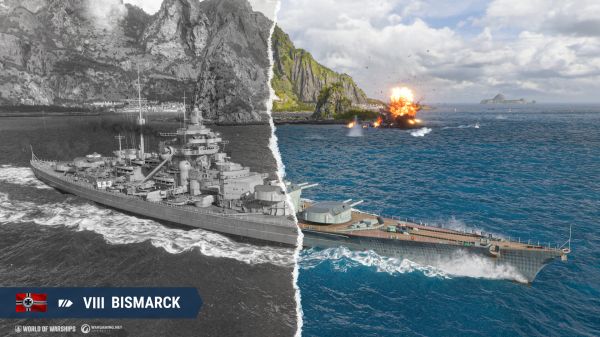
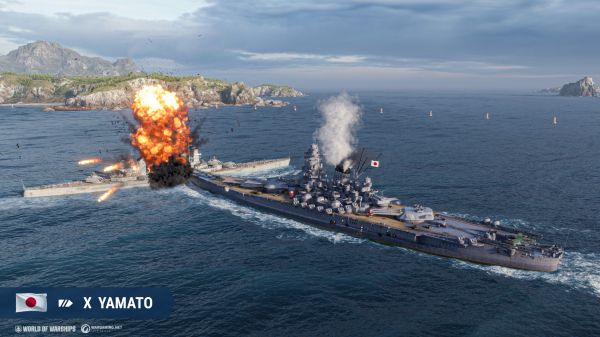
Ship models contain impressive deck detail, weapon arrangements, superstructures, camouflage patterns, aircraft equipment, and national characteristics. Famous vessels such as Yamato, Bismarck, Iowa, Hood, and many others are recognizable immediately. Port descriptions, official articles, museum collaborations, and the revised Wiki provide historical context beyond the battles. The game functions partly as an accessible visual catalogue of naval engineering.
Gameplay statistics are adjusted for balance rather than historical accuracy. Ships fight at compressed distances, reload faster, use simplified damage systems, and operate alongside designs that never left blueprints. National lines also exaggerate characteristics to create distinct identities. I view World of Warships as a tactical game inspired by naval history, not a recreation of authentic fleet combat.
Paper Ships Expand the Roster and Weaken the Museum Feeling
The number of real historical vessels is limited, particularly at the highest tiers where the game requires complete lines across many nations. Wargaming therefore uses proposals, preliminary designs, modified concepts, and original interpretations to fill progression gaps. Some are based on credible historical documentation and provide interesting examples of alternative engineering paths. They also allow the developers to create mechanics not supported by surviving ships.
The balance has shifted far enough that top-tier battles can contain many ships that never existed physically. This reduces the emotional connection for players attracted primarily by famous naval history. Fictional designs are not inherently bad, but they need clear documentation and visual restraint. I prefer when the game presents them honestly as design studies rather than allowing every concept to appear equally historical.
The Visual Design Makes Slow Ships Feel Enormous
Water reflections, waves, smoke, shell tracers, fires, aircraft, weather, and detailed ship models create impressive naval scenes. The camera can move close enough to appreciate deck details or far enough to manage tactical positioning. Ships lean during turns, guns rotate independently, and secondary weapons create constant movement around close engagements. The visual scale sells the power of vessels whose actual speed would otherwise feel modest.
Destruction is more limited than the presentation suggests. Ships show fires, flooding, damaged modules, and surface effects, but their structures do not deform comprehensively during combat. A vessel remains visually recognizable until it sinks through one of several animations. Greater dynamic damage could improve immersion, though it would create substantial performance and modeling challenges across hundreds of ships.
Shell Impacts Provide Excellent Feedback When the Rules Are Understood
Hits produce ribbons identifying penetration, ricochet, overpenetration, shatter, citadel damage, fire, flooding, and module effects. These indicators allow me to interpret why a salvo succeeded or failed. Adjusting aim based on that information becomes an important learning process. A group of shatters suggests stronger armor or the wrong target area, while overpenetrations indicate shells passing through a lightly protected section.
The system still assumes knowledge of terminology and hidden armor relationships. New players may see several ribbons without understanding what should change during the next salvo. Detailed post-battle analysis showing shell paths and impact zones would make the feedback much more educational. The game records enough information to teach better than it currently does.
Sound Gives Every Gun Caliber a Personality
Main batteries produce deep reports matched with recoil, muzzle smoke, and long shell travel. Battleship guns feel different from rapid cruiser artillery, while destroyer weapons create a faster and lighter rhythm. Torpedo warnings, aircraft engines, sonar sounds, fires, and incoming shell cues provide essential tactical information. A strong audio setup improves performance as well as atmosphere.
Repeated voice lines and battle notifications can become tiring during long sessions. Commanders with unique voices add personality, though collaboration characters may clash with the historical presentation. Audio settings allow substantial customization, which is important in a game where every player has a different tolerance for announcements. The fundamental combat sound remains one of the production’s strongest qualities.
Performance Is Strong for the Detail on Screen
World of Warships runs on relatively modest PC hardware while rendering large maps, detailed vessels, water, weather, aircraft, and several players simultaneously. The pace reduces the need for extremely high frame rates compared with fast infantry shooters, though smooth performance still improves aiming and camera control. Graphics options scale effectively, and the game remains visually readable on lower settings. Installation size has grown as the roster and assets expanded, but it remains manageable compared with many modern online games.
Port interfaces can feel heavier than battles because animated backgrounds, ship previews, Armory pages, and event panels load several systems at once. Updates occasionally introduce performance problems or interface delays that require later fixes. Network stability matters because a short disconnection may leave the ship moving without control. The core battle engine is generally reliable, which is essential for a game built around long matches and delayed decisions.
The Interface Communicates Combat Better Than Progression
During battles, aiming indicators, consumable timers, health, minimap information, detection warnings, and weapon status are arranged clearly. Customization options allow the minimap and alternative interface modes to reveal more detailed information. Once configured, the battle display provides nearly everything required for tactical decisions. ModStation and approved community modifications can improve visibility further without changing the underlying rules.
Port is far more crowded. Ship modules, commanders, campaigns, missions, Battle Passes, Dockyards, containers, the Armory, clans, events, collections, economic bonuses, and notifications compete for attention. A returning player may spend a long time clearing markers before understanding which activity matters. World of Warships has accumulated many good systems without finding one elegant way to present them together.
New Player Protection Helps Briefly and Then Ends Abruptly
Early account levels unlock features gradually, preventing a completely new player from seeing every menu at once. Low-tier ships have simpler weapons and face less complicated mechanics, which makes basic movement and aiming easier to learn. Co-op Battles provide a safe place to practise without direct competitive pressure. This foundation is sensible and accessible.
The difficulty increases sharply once matchmaking introduces experienced players, aircraft carriers, submarines, radar, advanced commanders, and more specialized ships. A player may understand firing controls without understanding concealment, armor angles, crossfires, or objective timing. Premium ships allow the learning curve to be skipped numerically without being skipped intellectually. Better scenario-based tutorials would help bridge the gap before higher-tier Random Battles.
The Game Needs a Tactical Academy, Not Only Basic Instructions
A proper academy could teach aiming against accelerating targets, angling armor, using concealment, creating crossfires, positioning around islands, dodging torpedoes, and responding to aircraft or submarines. Controlled exercises would allow repeated practice without damaging team results. Post-scenario feedback could explain whether I turned too late or exposed too much side. These lessons would improve match quality for everyone.
Community videos currently perform most of this educational work. Experienced creators explain armor models, hidden statistics, ship roles, and map positions in far greater detail than the client. External learning is common in complex games, but World of Warships depends on it too heavily. The mechanics are excellent enough to deserve better official teaching.
The Community Can Be Helpful Until a Match Goes Wrong
Clan communities, forums, guides, streams, and community tools provide extensive knowledge for players willing to ask questions. Many veterans enjoy helping newcomers select lines, understand builds, and correct common mistakes. Divisions also make Random Battles more social and coordinated. Playing with two reliable teammates gives the match a stable tactical center even when the rest of the team remains unpredictable.
Battle chat can become hostile when players blame destroyers, carriers, submarines, matchmaking, or anyone who selected a different route. Because ships move slowly, a mistake remains visible long enough for several people to comment on it. The reporting system helps limit extreme behavior, while disabling chat remains an option. I prefer communication focused on targets and objectives rather than posthumous tactical lectures from someone already watching the battle.
Divisions Improve Coordination but Can Magnify Matchmaking Advantages
A Division allows friends to enter battles together, coordinate consumables, focus fire, and create complementary ship combinations. A destroyer can provide spotting while a cruiser supplies radar or anti-aircraft support and a battleship punishes exposed targets. This cooperation captures the game’s intended class relationships far more consistently than solo matchmaking. It also makes losses easier to enjoy because conversation continues after a poor result.
Highly coordinated Divisions can influence Random Battles strongly, particularly when using ships with complementary mechanics. Matchmaking attempts to account for grouped players, but skill and preparation remain difficult to measure. A veteran Division facing an inexperienced team can create a one-sided match quickly. The social feature is essential, although its power demonstrates how dependent the game is on communication.
Steam Access Is Convenient but Account Rules Require Attention
The Steam version provides achievements, store integration, automatic updates, and easy access for new players. Accounts created through Steam are supported within that ecosystem, but existing Wargaming accounts cannot always be transferred or linked in the way players expect. Anyone with an established account should verify the supported login path before installing a different client. Creating progress twice is an avoidable frustration.
The standalone client offers direct access to Wargaming’s own infrastructure and promotions, while Steam provides familiar platform convenience. Gameplay and server environments remain broadly connected according to region. The choice matters more for account management and purchases than combat. I recommend deciding before spending money or building a large collection.
Cross-Platform Expectations Need Careful Distinction
World of Warships on PC is separate from World of Warships: Legends on consoles. Legends uses different progression, maps, ship statistics, interface design, and content structure. It is not simply the PC client placed on a controller. Progress and purchases do not transfer as though both products were one shared account.
This distinction can confuse players because the branding and ship roster overlap heavily. Mobile products create another related but separate ecosystem. Anyone choosing a platform should evaluate that version independently rather than expecting feature parity. My review concerns the long-running PC game, whose scale and progression are distinct from its console counterpart.
Frequent Updates Keep the Game Alive and Difficult to Follow
Updates arrive on a regular cycle with new ships, early-access branches, balance adjustments, events, temporary currencies, maps, Battle Passes, collaborations, and mechanical changes. This keeps the Port active and gives long-term players continual goals. The 2026 cycle has included European battleships, historical campaigns, U.S. anniversary content, decals, Pan-American ships, and continuing carrier and anti-aircraft revisions. Few online games of this age receive such consistent development.
The pace creates fatigue. A returning player may face several new lines, altered commanders, changed carriers, unfamiliar currencies, and ships that entered or left availability. Early-access events also transform normal tech-tree additions into multi-stage progression campaigns before the ships become researchable. I appreciate active support, but the game sometimes behaves as though every month needs a new commercial framework.
Collaborations Add Personality and Break Historical Coherence
World of Warships has collaborated with anime properties, films, franchises, museums, and other brands. These events add commanders, voice lines, camouflages, ships, containers, and themed cosmetics. Fans may enjoy seeing a favorite character represented aboard a vessel, while museums and historical partnerships can provide genuinely educational content. The variety helps the game reach audiences beyond traditional naval enthusiasts.
Bright animated camouflage and fictional commanders can look strange beside carefully modeled historical ships. Visual filters allow some decorative categories to be hidden, which helps preserve a preferred atmosphere. Monetization around collaboration containers can also be expensive. I support optional personality as long as players retain control over what appears in their own battles.
My Biggest Frustrations
World of Warships explains its deepest mechanics poorly, making concealment, armor, shell behavior, positioning, and class responsibility harder to learn than necessary. Match quality varies dramatically because Random Battles depend on teams that may have no shared plan. Aircraft carriers and submarines create asymmetric interactions that often feel less direct than surface combat, while high-tier matches can become cautious and punishing. Dispersion and matchmaking sometimes reduce the connection between good decisions and satisfying results.
The monetization is my larger concern. Premium ships, Premium Account time, Battle Passes, Dockyards, temporary tokens, sequential bundles, random bundles, containers, event currencies, and high-tier economic pressure create too many overlapping commercial systems. Free progression is entirely possible, but the game repeatedly places faster or more convenient routes near paid options. Direct purchases are easier to evaluate, while randomized containers and limited sequences remain difficult to defend.
Who Should Play World of Warships?
I recommend World of Warships to players who enjoy naval history, deliberate tactical combat, long-range prediction, class-based teamwork, ship collecting, and progression that can last for years. Battleships provide heavy artillery and armor management, cruisers offer flexible support, destroyers control concealment and objectives, while carriers and submarines provide more specialized experiences. Co-op Battles and Operations support players who prefer PvE, while Ranked, Brawls, Clan Battles, and Random Battles provide increasing competitive intensity. The game can be enjoyed without payment when progression is approached patiently.
I would be more cautious recommending it to players who dislike random dispersion, slow vehicles, team dependence, complex armor rules, or live-service stores filled with temporary offers. Anyone seeking a realistic naval simulator will find the compressed maps, arcade statistics, and fictional ships too loose. New players should also resist purchasing a high-tier premium before learning concealment, positioning, and ammunition choice at lower tiers. World of Warships rewards patience in battle and expects even more patience outside it.
My Final Verdict
World of Warships remains one of the most distinctive competitive games available because no other major title combines detailed historical vessels, accessible naval controls, long-range artillery prediction, concealment, armor angling, torpedoes, objectives, aircraft, and underwater threats on this scale. Its best battles develop gradually, with early positioning creating crossfires and objective advantages that become visible much later. Landing a carefully predicted salvo or launching torpedoes into an enemy’s only safe route remains deeply satisfying. The ship models, audio, map design, PvE scenarios, competitive modes, and enormous roster provide remarkable long-term variety.
The experience is weakened by poor onboarding, inconsistent public teamwork, difficult carrier and submarine balance, cautious high-tier play, crowded Port interfaces, and monetization that uses almost every available live-service technique. Random containers, limited offers, economic pressure, and costly premium ships make the surrounding business less elegant than the combat. I rate World of Warships 8.4/10. I continue returning because one correctly timed turn and one accurate salvo can make an entire fifteen-minute battle feel worthwhile, even when the next match reminds me that eleven teammates are also making their own plans.








Recent Reviews

Minecraft

Grand Theft Auto V

Toca Boca World

Roblox

Leave a comment
Your comment is awaiting moderation. We save your draft here
0 Comments