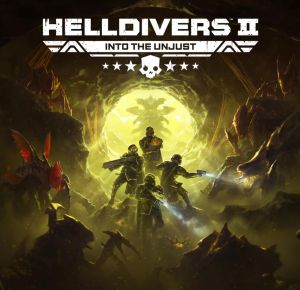
Review
HELLDIVERS 2 made me feel like an elite soldier for approximately thirty seconds. I landed dramatically, raised my weapon, and immediat...


HELLDIVERS 2: A Tactical Odyssey of Cooperative Mastery
HELLDIVERS 2 made me feel like an elite soldier for approximately thirty seconds. I landed dramatically, raised my weapon, and immediately watched an orbital strike erase the position my squad had just spent several minutes defending. Nobody had betrayed us, the mission had not secretly changed, and the enemy had not performed a brilliant tactical maneuver. One teammate had simply entered the wrong stratagem code while running away from a swarm, which perfectly introduced the combination of military spectacle, panic, and accidental comedy that defines the entire game.
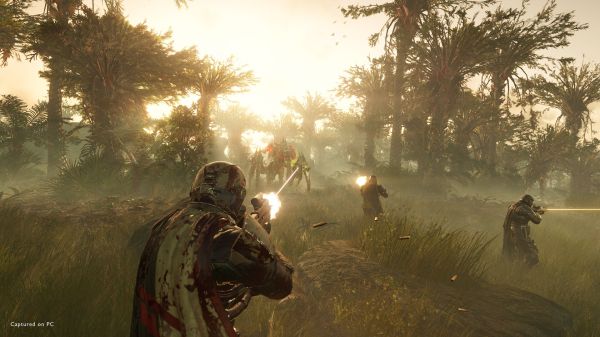
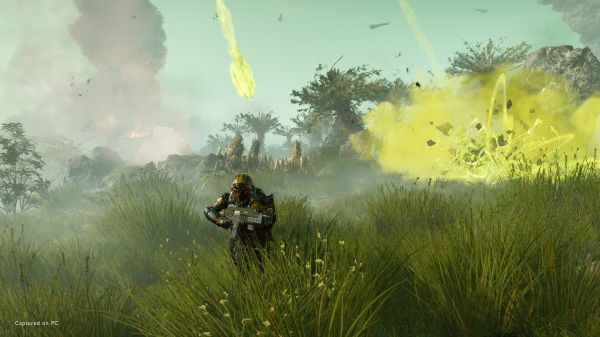
This is a cooperative third-person shooter where four heavily armed soldiers are given extraordinary firepower and only a limited ability to use it responsibly. Missions involve objectives, enemy bases, samples, optional locations, extraction points, and constantly escalating pressure from hostile factions. The controls are responsive enough to support deliberate combat, but explosions, friendly fire, environmental hazards, and human mistakes ensure that even a strong plan can collapse in seconds. HELLDIVERS 2 becomes memorable because the game allows failure to remain both painful and genuinely funny.
The Satire Gives Every Mission a Distinctive Personality
HELLDIVERS 2 presents Super Earth as a glorious democratic civilization whose citizens are encouraged to celebrate freedom, military service, and unquestioning obedience. Every announcement, armor description, mission briefing, and propaganda message describes destruction as an act of public service. The soldiers shout patriotic lines while calling down weapons capable of transforming an entire area into a crater. The humor works because the game never breaks character or pauses to explain that the government may not be entirely honest.
I enjoy how the satire influences the smallest interactions. Reinforcing a fallen teammate is treated like the delivery of another disposable hero rather than the return of the same valuable individual. A mission can end with several soldiers lost, most of the ammunition spent, and half the landscape burning, yet the official result still praises the operation as a magnificent demonstration of freedom. The language constantly turns chaos into institutional success.
The comedy would become tiring if it existed only in dialogue. Instead, the mechanics support the joke by giving ordinary soldiers access to weapons far beyond their ability to control safely. Super Earth does not trust the squad with careful strategic command, but it happily allows us to summon artillery beside our own position. The gap between propaganda and reality becomes visible every time a heroic operation turns into four people shouting directions while running away from their own airstrike.
Dropping From Orbit Still Creates a Perfect Opening
Every deployment begins with the squad entering individual Hellpods and launching toward the selected mission area. The descent lasts only a short time, but it creates enough anticipation to make the landing feel important. I can guide the pod slightly, attempt to choose a safe position, and occasionally discover that the supposedly empty ground contains enemies or an inconvenient structure. A confident landing can become immediate panic before the character has even collected a support weapon.
The arrival is also part of the combat system because the pod itself can damage large enemies or destroy certain objects. Guiding it toward a useful target produces a wonderful moment of improvised aggression. Missing that target may place me far from the squad or directly inside a hostile group. Even deployment contains the same balance between tactical intention and chaotic consequence found throughout the rest of the game.
Reinforcements repeat the process whenever another Helldiver is sent into the mission. The surviving squad member throws a beacon, and the returning player must use limited steering to avoid landing on allies or hazards. Teammates frequently mark a large enemy and expect the pod to become a weapon. This transforms respawning from an interruption into another opportunity to contribute, although success depends heavily on visibility and communication.
Stratagems Are the Heart of the Combat
Stratagems allow me to request weapons, defensive equipment, vehicles, turrets, supply pods, orbital attacks, and aircraft support from the Super Destroyer above the planet. Activating one requires entering a directional command while the battle continues around me. The process is simple in a quiet area and surprisingly difficult when enemies are approaching from several directions. Remembering the sequence under pressure becomes a genuine mechanical skill.
I appreciate that the command system prevents powerful support from functioning like ordinary abilities attached to one button. Calling an orbital attack demands attention, movement, and a moment of vulnerability. Entering one incorrect direction cancels the sequence and forces me to begin again. This creates tension without relying on an artificial casting bar.
The equipment also gives squads enormous freedom to define their approach. One player may bring anti-armor weapons, another can specialize in defensive turrets, while others provide ammunition, aerial support, or crowd control. The best loadouts complement one another instead of placing the same popular tools in every slot. Mission type, enemy faction, terrain, and difficulty all influence which combination feels sensible.
Friendly Fire Is More Than a Comedic Feature
Every bullet, explosive, turret, vehicle, and orbital weapon can harm teammates. This makes positioning essential because firing through an ally is rarely safe and retreating across someone’s line of fire can end badly. A weapon that clears large groups effectively also creates a dangerous zone the squad must recognize. The game trusts players to manage consequences instead of protecting them from one another automatically.
Friendly fire creates comedy, but it also gives combat stronger physical logic. Explosions do not distinguish between patriotic soldiers and hostile creatures, while automated defenses cannot always interpret a teammate moving unexpectedly across their view. The battlefield feels dangerous because the squad’s own firepower remains part of the environment. Safety comes from coordination rather than from invisible restrictions.
I rarely became angry when a genuine accident happened during a difficult retreat. The situation was often too chaotic for anyone to control perfectly, and recovering together could become more entertaining than a clean victory. Deliberate disruption is naturally different and can ruin public matchmaking. Strong social and reporting tools remain important because the same freedom that creates memorable mistakes can also support unpleasant behavior.
The Terminids Turn Open Ground Into a Moving Wall
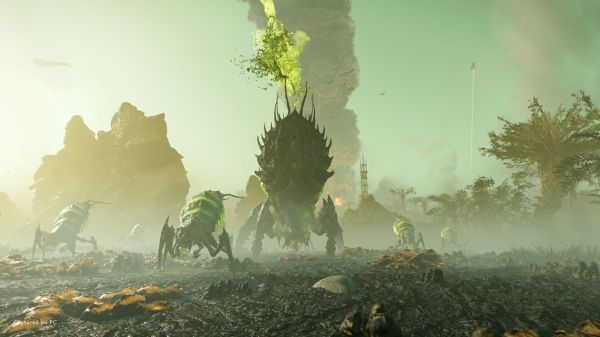
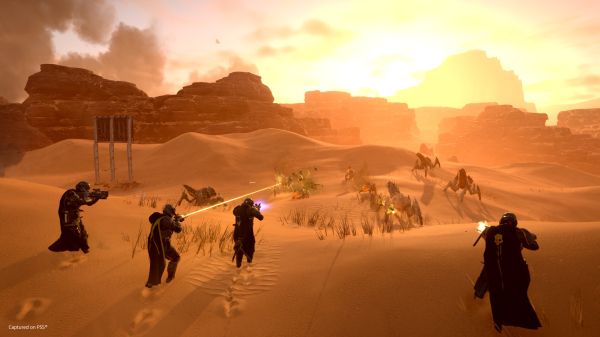
Terminid missions are defined by pressure, movement, and the constant threat of being surrounded. Smaller creatures advance rapidly, larger forms disrupt defensive positions, and heavily protected enemies demand suitable equipment. A squad standing confidently in one location can suddenly find every escape route occupied. The faction rewards awareness because looking only toward the largest threat allows smaller attackers to reach vulnerable positions.
I enjoy fighting Terminids most when the squad maintains a moving formation. One player controls the nearest group, another watches for heavier targets, and someone keeps the retreat path usable. Remaining stationary for too long usually allows the battlefield to become crowded beyond control. The faction encourages aggressive movement without turning the game into a mindless sprint.
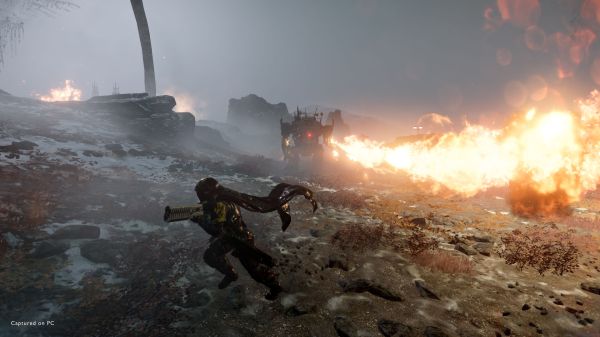
The creatures also make area weapons feel spectacular. Fire, gas, turrets, explosives, and orbital attacks can reshape an approaching swarm when placed correctly. Using them too late may trap the squad behind the same dangerous effects. The best moments occur when a desperate defensive line holds just long enough for an objective or extraction sequence to finish.
The Automatons Demand Cover and Target Priority
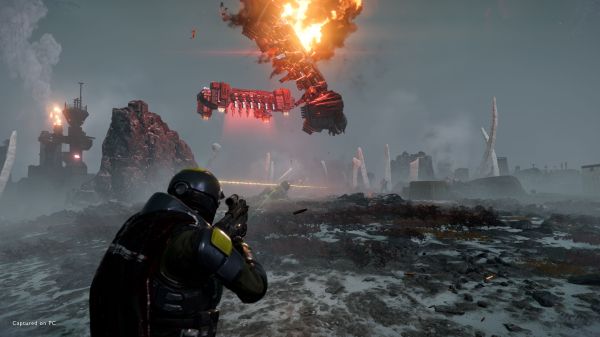
Automaton combat feels different because incoming fire can arrive from a considerable distance. Troopers, armored units, artillery, aircraft, walkers, and defensive structures create overlapping threats that punish exposed movement. Cover becomes more valuable, but remaining behind one object can be dangerous when rockets or heavy weapons begin targeting the position. The faction rewards careful advances rather than constant close-range aggression.
Target priority becomes especially important because certain units support or amplify the surrounding force. Ignoring a distant launcher or reinforcement signal can allow the situation to grow far beyond the squad’s available resources. Destroying the correct structure may provide more value than firing at the nearest soldier. Automaton missions feel tactical because the battlefield contains systems that must be dismantled in a sensible order.
I often use smoke, shields, precision strikes, and long-range support more frequently against machines. A loadout designed for Terminid swarms may struggle when armor and distant fire dominate the encounter. This faction difference is one of the game’s greatest strengths. Changing the enemy changes how I move, select equipment, and interpret terrain rather than merely changing visual models.
The Illuminate Add Confusion and Psychological Pressure
The Illuminate introduce another combat rhythm through shields, advanced technology, unusual movement, and effects that interfere with ordinary battlefield awareness. Their presence can make a familiar mission feel less predictable because they challenge both positioning and target selection. Individual enemies may appear manageable until their abilities overlap with reinforcements and environmental pressure. The faction often feels organized in ways that contrast with the Terminids’ physical aggression.
I enjoy how their visual design changes the atmosphere. Energy effects, alien architecture, strange units, and more controlled formations create a different science-fiction tone from the industrial Automatons. Missions feel less like resisting a conventional army and more like responding to an enemy whose technology is not fully understood. This difference helps the Galactic War avoid becoming one repeated conflict with interchangeable opponents.
They can also create greater visual confusion. Shields, projectiles, explosions, weather, and squad effects may overlap until important information becomes difficult to read. The challenge works best when unusual abilities remain understandable after observation. Confusion should come from tactical complexity rather than from losing essential silhouettes inside excessive effects.
Cyberstan Gives the Automaton War a Stronger Identity
The industrial environments of Cyberstan offer a valuable contrast to the more open planetary regions. Factory cities, fortified structures, machinery, walls, and urban hazards give the Automaton conflict a sense of entering the enemy’s home territory. The environments feel constructed for production and defense rather than scattered across an empty landscape. This supports the larger narrative of attacking the source of an organized war machine.
Urban layouts change how stratagems and weapons function. Narrow routes can concentrate enemies, buildings interrupt lines of fire, and large attacks may become harder to place without affecting the squad. Close encounters are more common, yet distant machinery and fortified positions still demand precision. The environment forces me to reconsider loadouts that worked comfortably across open ground.
The Cyborg presence also connects the sequel more clearly with the earlier Galactic War. Returning enemies and propaganda machines give longtime players recognizable history while remaining understandable to newcomers. The faction conflict feels less static when older threats evolve and reappear. HELLDIVERS 2 benefits when the Galactic War changes the physical places and enemies encountered rather than only moving percentage bars across the map.
Mission Objectives Keep Combat Focused
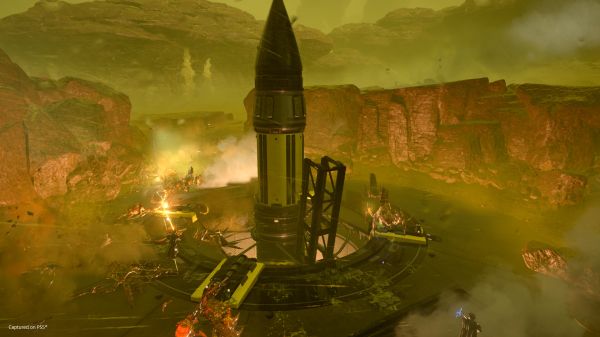
Operations contain objectives involving terminals, equipment deployment, destruction, evacuation, defense, resource recovery, and other military tasks. These activities give the squad a reason to enter hostile areas rather than simply clearing enemies until a timer ends. Many objectives require several steps performed while the battlefield remains active. One player may operate a terminal while the others create enough space for the interaction to continue.
The strongest objectives force the squad to move and divide attention. Activating equipment in one location may create a new task elsewhere, while a defensive sequence can require preparation before the enemy arrives. Optional objectives and enemy bases provide additional rewards but consume time and ammunition. The squad must decide how much of the map can be completed before the mission becomes too dangerous.
Repetition eventually appears because familiar procedures return across different planets. Terminal sequences, transport actions, and defensive phases can lose novelty after many operations. Enemy composition, terrain, weather, and player mistakes provide most of the variation. The live-service structure needs new objective types regularly because mechanical diversity matters more than another visual backdrop.
The Galactic War Makes Ordinary Matches Feel Connected
Every completed operation contributes to a broader conflict involving planets, factions, community objectives, and changing strategic priorities. My individual contribution may be extremely small, but the shared progress gives routine missions a larger context. Players gather around planets selected by major directives, creating sudden shifts in where the community is active. The war map becomes a social planning space rather than a simple mission list.
The concept is strongest when the result produces visible consequences. Winning or losing a campaign should affect available planets, enemy pressure, rewards, equipment, and future events. When the outcome changes only a percentage or short message, the illusion of a responsive war weakens. Multi-week campaigns and clearer tracking provide a better structure for understanding why the community is fighting in one region.
I enjoy following the larger narrative even when I cannot play every stage. Community discussions, tactical disagreements, and unexpected results make the conflict feel shared beyond one squad. The system can also create frustration when players focus on personal rewards instead of the official objective. That tension is appropriate for a fictional government attempting to direct millions of independent soldiers through propaganda.
The Super Destroyer Is a Compact but Effective Home Base
Between missions, each player returns to a personal Super Destroyer containing mission terminals, equipment menus, progression systems, and visual upgrades. The space is small enough to navigate quickly while still communicating the scale of the fleet outside. Other ships can be seen through the windows, launching pods and firing support toward the planet. This creates the impression that every squad operates inside a much larger military operation.
Ship modules provide long-term improvements to stratagem categories and support equipment. Unlocking them requires samples recovered during missions, giving exploration and successful extraction continued value. The upgrades are useful without changing the character into a permanent super-soldier. Power remains connected to better military support rather than traditional personal statistics.
The interior can eventually feel limited because most interactions happen at a small number of stations. Additional customization, trophies, campaign history, and squad spaces could make the ship feel more personal. The Control Center and campaign archive are useful steps because they give the vessel another practical purpose. A persistent war benefits from a home base that visibly remembers participation.
Samples Make Exploration Worth the Risk
Samples are scattered across mission areas and recovered only if someone carrying them reaches extraction successfully. This creates a shared risk because one player’s collection benefits the entire squad after the mission. A fallen soldier drops the samples, allowing another teammate to retrieve them. Their value therefore becomes attached to location and survival rather than to the person who found them first.
I like how the system encourages squads to explore points of interest and revisit dangerous areas. A player may fall near a large enemy group, creating a decision about whether recovering the samples is worth the additional risk. On higher difficulties, rare materials can turn the final extraction into a genuinely stressful sequence. The squad may have completed every formal objective and still care deeply about one container lying outside the defensive perimeter.
Progression becomes slower once expensive ship modules require large quantities of several sample types. Repeated collection can feel like a grind, especially when technical problems or disconnections remove rewards after a successful mission. The system works because it is connected to exploration and survival. It becomes tiring when the required numbers grow faster than the variety of activities used to earn them.
Weapons Feel Distinct Without Every Option Being Equally Useful
Primary weapons include assault rifles, shotguns, energy weapons, marksman rifles, explosive tools, and more specialized designs. Differences in recoil, ammunition, handling, penetration, range, and damage make them feel suited to particular roles. A weapon that performs wonderfully against light Terminids may be frustrating against protected machines. Understanding the enemy is often more important than selecting the item with the most impressive menu statistics.
The shooting itself feels physical and slightly unstable in a way that suits an overwhelmed soldier. Recoil must be controlled, stance affects accuracy, and rapid movement reduces precision. First-person aiming is available for more careful shots, while third-person control supports wider battlefield awareness. Switching between them becomes natural once the pressure increases.
Balance updates have repeatedly changed which equipment feels efficient. This keeps the arsenal evolving but can frustrate players who invested time learning one favorite weapon. Adjustments work best when weaker options gain useful identities rather than when popular tools simply become less satisfying. A cooperative game benefits from allowing players to feel powerful as long as the enemies and mission structure still demand teamwork.
Support Weapons Create Strong Battlefield Roles
Support weapons arrive through stratagems and include machine guns, launchers, anti-armor tools, energy systems, and other heavy equipment. Carrying one can define my responsibility during the mission. A squadmate with anti-armor equipment should not waste every shot on small targets, while a machine-gun user can protect that specialist from approaching groups. Roles form naturally through equipment rather than through permanent classes.
Some support weapons require backpacks, careful ammunition management, or assisted reloading. These limitations give them weight and encourage cooperation. A powerful launcher may perform slowly alone but become much faster when another player helps with ammunition. The mechanic is excellent in organized squads, although public players do not always recognize or accept the supporting role.
Losing a support weapon creates immediate vulnerability because the replacement stratagem may still be unavailable. Recovering it from a dangerous area can become a mission inside the mission. I have watched squads spend several reinforcements trying to reclaim one launcher that was supposedly essential. Sometimes the correct tactical decision is admitting that the equipment belongs to the enemy now and continuing without it.
Turrets Are Powerful Allies With Terrible Judgment
Sentries can defend objectives, control approaches, and reduce pressure during extraction. Their automated targeting makes them useful when the squad cannot watch every direction. Positioning determines whether they become excellent support or an immediate threat to everyone nearby. A turret placed behind the squad may fire through every soldier while tracking one distant enemy.
I learned to place sentries on elevated or separated positions whenever possible. Clear lines of fire reduce accidental damage and give the weapon more time to engage approaching targets. Terrain, enemy direction, and squad movement should all influence placement. Throwing one into the center of a chaotic fight usually creates another problem rather than solving the existing one.
Recent durability improvements make sentries more dependable when medium attacks reach them. They still should not be treated as permanent fortifications because heavy enemies can remove them quickly. Their greatest value comes from creating temporary control during an objective. Like most stratagems, they reward preparation and punish panic.
Vehicles Add Power Without Removing Vulnerability
Exosuits, reconnaissance vehicles, and heavier battlefield equipment change the rhythm of a mission immediately. They offer mobility, armor, ammunition, or firepower beyond what one soldier normally carries. Entering an Exosuit creates a brief sense of dominance as smaller enemies become manageable. That confidence usually disappears when heavier attacks, terrain, or poor positioning begin damaging critical components.
I appreciate that vehicles remain vulnerable enough to require squad support. An Exosuit can control one direction while teammates protect its sides and remove threats suited to damaging armor. Vehicles are not replacements for coordinated infantry. They are temporary tools that amplify a plan already being executed well.
Handling can become awkward around rocks, slopes, narrow roads, and destructible objects. The physics occasionally produce movements that feel more comedic than tactical. These problems are easier to forgive in casual sessions than during a difficult campaign where the vehicle represented a major part of the loadout. Continued health and control improvements help, but terrain interaction remains important.
Reloading and Ammunition Create Constant Pressure
Weapons have distinct reload processes, magazine sizes, and ammunition limits. Reloading too early can discard the remaining rounds in certain weapons, making careless habits expensive. Heavy support equipment may require long animations or complete stationary commitment. The battlefield rarely pauses politely while these processes finish.
I enjoy how reloading becomes a tactical decision rather than a background animation. Creating distance, finding cover, and communicating that I am temporarily unable to fire all matter. More responsive reload interruption and continuation reduce unnecessary frustration without removing commitment. The game should punish poor timing, not unclear control behavior.
Supply management also creates squad tension. Ammunition pods serve everyone, yet one player can consume more than a fair share. Certain backpacks and equipment improve independence, but they occupy valuable loadout space. A squad that communicates supply needs performs much more consistently than four people silently collecting whatever appears first.
Difficulty Changes the Nature of the Mission
Lower difficulties provide space to learn objectives, stratagem commands, enemy behavior, and weapon handling. Higher levels increase enemy density, armor, reinforcement frequency, tactical pressure, and the number of simultaneous problems. The change is not limited to enemies surviving more damage. Entire battlefield situations become harder to control because threats overlap more aggressively.
I found the middle difficulties ideal for casual sessions with unfamiliar teammates. They provide enough pressure for mistakes to matter without requiring perfectly optimized loadouts. The highest levels are most enjoyable with a coordinated group willing to communicate and adjust. Entering them only for larger rewards can create a miserable experience when the squad lacks the required preparation.
The game remains entertaining even during unsuccessful high-level operations because retreating under overwhelming pressure creates memorable scenes. Failure becomes frustrating only when caused by technical instability or interactions that do not feel readable. A difficult enemy can be learned. A mission that breaks or disconnects near extraction provides no useful lesson.
Extraction Creates the Strongest Final Minutes
Completing the objective does not end the mission because the squad must still reach an extraction zone and survive until the shuttle arrives. Enemies approach from multiple directions, ammunition runs low, stratagems enter cooldown, and dropped samples become increasingly difficult to recover. A controlled operation can become chaotic during this final defense. The extraction timer turns every remaining resource into an immediate decision.
The best teams prepare before activating the beacon. Sentries are positioned, support weapons are recovered, ammunition is requested, and escape routes are identified. Public squads often trigger extraction while teammates remain far away or while no defensive equipment is ready. This creates urgency that could have been avoided through ten seconds of communication.
Boarding the shuttle produces a final source of comedy because the mission is not completely safe until everyone is inside. Players may return for samples, attempt one last attack, or accidentally place an explosive beside the entrance. The desire to create a dramatic ending frequently produces unnecessary disaster. HELLDIVERS 2 understands that players will risk a successful mission for a moment that looks heroic.
Public Matchmaking Can Produce Great Teams Without Conversation
Some of my best squads formed with complete strangers who barely spoke. Players marked objectives, shared supplies, adjusted routes, and recognized one another’s equipment roles through behavior alone. The communication wheel and map markers provide enough information for basic cooperation. A team can develop trust quickly when everyone demonstrates awareness.
Other public groups feel like four separate missions happening on the same planet. One player runs toward the primary objective, another searches every location, and someone repeatedly attacks patrols that could have been avoided. The squad becomes stretched across the map until reinforcements and support equipment are scattered in different areas. Individual skill cannot always repair a complete lack of shared direction.
The unpredictability is part of the appeal. I never know whether the next squad will become efficient, silent professionals or a traveling disaster responsible for more explosions than the enemy. Both outcomes can be entertaining when nobody behaves maliciously. The game gives strangers enough shared pressure that cooperation often emerges naturally.
Playing With Friends Reveals the Full Cooperative Design
A regular group can coordinate stratagems, divide support roles, and select equipment according to the faction and objective. Voice communication makes warnings faster and allows players to plan around cooldowns. Someone can announce an orbital strike before throwing it, which dramatically improves survival. The game’s systems become clearer when the squad understands why every tool was selected.
Friend groups also create more elaborate mistakes. Confidence encourages risky plans, unnecessary heroics, and experiments with equipment that should probably remain on the ship. A serious mission can turn into an argument about who parked the vehicle on the extraction beacon. The comedy becomes stronger because everyone recognizes the person responsible.
I enjoy how the game supports both organized and improvised cooperation. A disciplined squad can execute objectives efficiently, while a casual group can still create memorable stories through failure. The mechanics reward skill without requiring every session to become competitive. HELLDIVERS 2 remains a cooperative game where losing control can be as entertaining as perfect performance.
Warbonds Provide Permanent Reward Tracks
Warbonds contain weapons, armor, cosmetics, boosters, emotes, and other unlocks purchased through medals earned during play. Unlike many seasonal passes, they generally remain available after release, reducing the pressure to finish everything before a deadline. This allows me to choose which collection matches my preferred equipment or appearance. Progress still requires time, but it does not depend entirely on a short seasonal window.
Unlocking a Warbond requires Super Credits, which can be purchased or found through gameplay. The ability to earn premium currency inside missions makes the model more flexible than a completely paid store. The required amount can still feel substantial, especially for players who prefer higher difficulties or direct objective completion instead of searching every location. The system rewards regular exploration as much as combat success.
Equipment balance affects the perceived value of each Warbond. A collection containing a particularly effective weapon may feel more important than one focused mainly on style. Cooperative balance reduces some competitive pressure, but access to useful tools still matters. The healthiest Warbonds provide interesting alternatives rather than obvious upgrades over free equipment.
Armor Encourages Builds Without Creating Traditional Classes
Armor changes protection, stamina behavior, movement, and passive abilities. Light sets support mobility, heavy equipment provides greater durability, and medium armor offers a balance between them. Passives can improve grenades, stims, weapon handling, explosive resistance, or other tactical functions. Choosing armor therefore affects both survival and role.
I prefer matching armor to the mission rather than wearing one favorite set permanently. Defensive operations may reward greater durability, while large open maps make mobility especially valuable. A loadout built around grenades benefits from related passives, while vehicle or support specialists may prefer other effects. The system is simple enough to understand without becoming meaningless.
Cosmetic variety has grown significantly through Warbonds and the rotating store. Some designs fit the military satire perfectly, while crossover or highly stylized sets can move the visual identity in a different direction. HELLDIVERS 2 works best when soldiers still resemble expendable troops rather than invincible heroes. Even elaborate armor should preserve the sense that the person inside it may disappear seconds after landing.
Planetary Hazards Prevent Terrain From Being Decorative
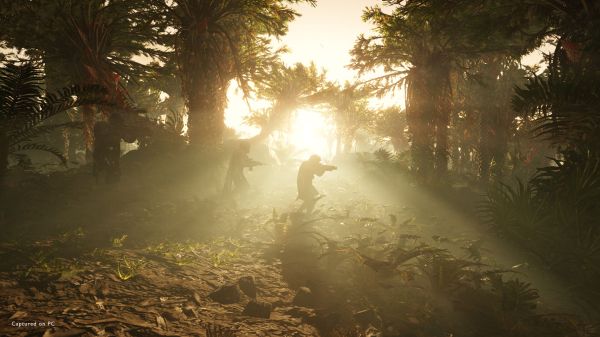
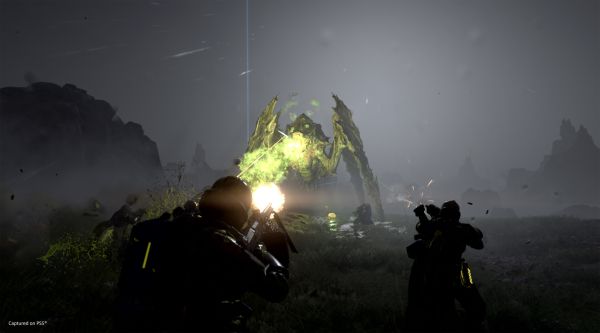
Weather and environmental conditions can reduce visibility, affect movement, interfere with weapons, damage players, or force the squad to change direction. Firestorms, tremors, fog, extreme temperatures, and other effects give planets practical differences beyond color and vegetation. A route that looks safe on the map may become dangerous after conditions change. The environment participates in the mission rather than remaining a static background.
I enjoy hazards that can be read and avoided through attention. Seeing an approaching firestorm or receiving a warning allows the squad to adapt. Sudden damage without clear information feels less fair, especially when it removes expensive equipment or samples. Environmental danger should create tactical movement rather than random punishment.
Weather also affects enemy detection and combat distance. Intense conditions may reduce visibility for both sides, allowing closer approaches or making distant threats harder to identify. This interaction improves replay value because familiar locations can demand different behavior. The best planets possess a mechanical identity as strong as their visual theme.
The Physics Produce Stories No Script Could Plan
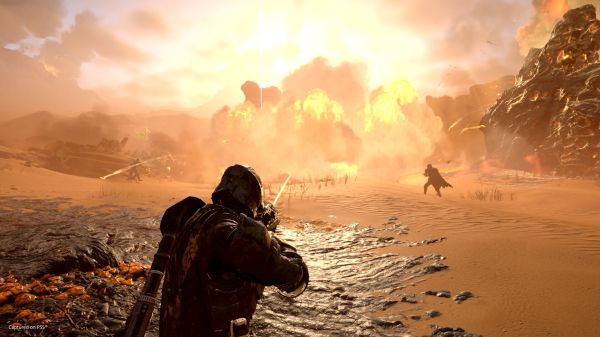
Explosions throw bodies, equipment, debris, and enemies across the battlefield. A soldier can survive the initial impact only to land in a hazard or beneath another attack. Vehicles react unpredictably to terrain, while large enemy bodies can block routes or create temporary cover. The simulation continually generates outcomes that feel physical even when they are absurd.
Ragdoll effects become excessive during certain encounters. Repeated impacts can remove control for long periods, leaving the player unable to stand before another attack arrives. This creates frustration because the result no longer feels connected to a tactical decision after the first mistake. Some loss of control supports the spectacle, but extended helplessness weakens interaction.
I would not want the physics removed or made completely safe. They are responsible for many of the game’s funniest and most memorable moments. The ideal balance allows dramatic consequences while giving players a reasonable opportunity to recover. HELLDIVERS 2 needs disorder, but that disorder should still leave room for response.
Technical Instability Has Been the Game’s Most Persistent Enemy
Crashes, disconnections, matchmaking problems, broken objectives, unusual enemy behavior, and performance changes have affected the experience throughout its development. These problems are especially painful near the end of a long operation. Losing rewards or squad progress because the game stops functioning feels completely different from being defeated during combat. One provides a story, while the other simply removes time.
The complexity of the simulation helps explain why updates can create unexpected problems. Large enemy groups, destruction, vehicles, stratagems, cross-platform networking, weather, and physics all interact constantly. Understanding the difficulty does not make instability acceptable, but it shows why every major content addition requires careful testing. Public beta environments and clearer patch communication are valuable steps.
The game can feel excellent when it runs reliably. Combat is responsive, missions flow naturally, and the squad remains together across an entire operation. Technical trust allows me to enjoy the chaos because I know the systems rather than the software caused it. Stability should remain more important than releasing another weapon or cosmetic collection.
Balance Changes Have Sometimes Fought the Power Fantasy
HELLDIVERS 2 is designed around overwhelming enemies with excessive military support, yet the game must still preserve difficulty and equipment variety. When one weapon or stratagem becomes extremely efficient, it can reduce meaningful choice. Adjusting that option may improve balance while also making players feel that their favorite tool has been weakened in a cooperative game. Arrowhead has repeatedly had to navigate this conflict.
I prefer balance changes that strengthen neglected equipment and sharpen role identity. A weapon can be powerful against one enemy type without becoming the best solution for every mission. Weakening popular equipment should happen only when it removes the need for teamwork or tactical consideration. Power itself is not the problem because feeling powerful is central to the fantasy.
Communication matters almost as much as the numerical change. Players respond better when the purpose of an adjustment is clear and the result matches the explanation. Contradictory changes create distrust, especially when a supposed improvement is neutralized by stronger enemy damage or armor. A live cooperative game needs players to understand the direction of development.
The Community Turns Updates Into Shared Events
Major campaigns, surprise enemy movements, new factions, memes, propaganda, and unexpected mission results produce discussions beyond the game itself. Players debate which planet deserves support, celebrate victories, and blame one another for strategic failures. This community theater extends the satire because everyone begins speaking in the language of Super Earth. The war becomes partly a social performance.
Developer-controlled narrative decisions also influence the direction of the conflict. This creates opportunities for dramatic events but raises questions about how much player action truly changes the result. The system works best when the community can recognize how its choices affected the next stage. Completely predetermined outcomes reduce participation to filling bars before the story continues.
I enjoy the uncertainty because the game can introduce a new threat without waiting for a conventional expansion. Logging in after an absence may reveal that the frontline has changed significantly. The challenge is making returning players understand what happened without requiring hours of external research. Campaign archives and improved summaries help preserve the history of the war.
The Highest Difficulty Is a Test of Discipline, Not Only Aim
Mechanical accuracy remains useful, but survival at the highest levels depends more heavily on route selection, engagement control, stratagem timing, and squad movement. Fighting every patrol consumes resources and creates reinforcements that may make the actual objective far harder. A disciplined group knows when to remain quiet, move around a threat, or abandon an optional location. Courage without judgment becomes another form of waste.
Loadout balance is also essential. Four players bringing the same anti-group equipment may struggle against heavy armor, while excessive anti-armor specialization leaves smaller enemies free to overwhelm the squad. Defensive and support tools become more valuable because raw damage cannot solve every overlapping problem. The mission tests whether the squad prepared for a range of situations.
I find these difficulties satisfying when playing with people who accept retreat as a tactical decision. Public groups sometimes interpret every enemy as a challenge that must be answered immediately. The resulting battle attracts more reinforcements until the original objective is forgotten. HELLDIVERS 2 rewards soldiers who understand that managed democracy does not require defeating every creature personally.
The Best Missions Feel Like Unplanned War Films
A successful operation can begin with a clean landing, develop into controlled objective work, and then collapse after one patrol discovers the squad. Ammunition disappears, support weapons are lost, and the team becomes separated while attempting to recover samples. A vehicle may arrive at exactly the right moment or be destroyed before anyone enters it. These events form a narrative without formal cutscenes.
The final extraction often provides the emotional climax. One player holds the terminal, another protects the samples, and the remaining soldiers attempt to keep an escape route open. Someone inevitably performs one unnecessary heroic action after the shuttle arrives. Whether that action succeeds or destroys the entire squad determines which version of the story everyone remembers.
This improvisational storytelling explains why repetition does not immediately become boring. The mission objectives may be familiar, but human behavior, enemy composition, weather, physics, and equipment choices combine differently. A perfectly efficient operation is satisfying once. A chaotic operation that somehow succeeds becomes a story repeated for weeks.
A Cooperative Shooter That Makes Failure Part of the Entertainment
HELLDIVERS 2 succeeds because its shooting, stratagems, friendly fire, physics, objectives, and shared campaign all reinforce cooperation. I need teammates not only because there are many enemies, but because equipment roles, ammunition, defensive timing, and battlefield awareness are easier to manage together. The squad becomes powerful through coordination while remaining vulnerable to its own mistakes. This creates a form of teamwork that feels physical rather than abstract.
The factions provide meaningfully different battles, from aggressive Terminid swarms to heavily armed Automatons and technologically unusual Illuminate forces. New environments such as Cyberstan’s industrial cities demonstrate how strongly terrain can influence the same core mechanics. Vehicles, Warbonds, weapons, campaigns, and evolving objectives continue expanding the available approaches. The foundation is flexible enough to support years of additional conflict.
Technical problems, inconsistent balance decisions, progression repetition, and visual overload remain serious weaknesses. A mission can lose its excitement when a broken objective prevents completion or a disconnection removes the squad near extraction. New content cannot compensate for instability, and powerful equipment should remain enjoyable rather than becoming trapped in constant numerical correction. The game’s future depends on Arrowhead improving the foundation while extending the war.
I continue returning because no other cooperative shooter turns military incompetence into such convincing heroism. A squad can begin as organized professionals, become a collection of burning soldiers running in different directions, and somehow complete the objective with one reinforcement remaining. The official report will naturally describe the operation as flawless. Everyone who survived will know the truth, and that difference between propaganda and experience is exactly where HELLDIVERS 2 becomes unforgettable.
Pros:
- Dynamic mission design offers varied strategic challenges
- Immersive visuals and detailed sound design enhance the experience
- Flexible support for mods and community-driven improvements
- Seamless cross-platform compatibility with easy installation
- High replay value through unpredictable mission outcomes
- Engaging cooperative gameplay that emphasizes teamwork
Cons:
- A steep learning curve for players new to tactical shooters
- Dependence on a stable internet connection can hinder co-op sessions
- Occasional technical glitches on older hardware









Recent Reviews

Minecraft

Grand Theft Auto V

Toca Boca World

Roblox

Leave a comment
Your comment is awaiting moderation. We save your draft here
0 Comments