
Review
Grand Theft Auto IV felt immediately different from the louder and more exaggerated crime games I had played before it. Liberty City is...
Grand Theft Auto IV: A Journey Through Liberty City's Enduring Legacy
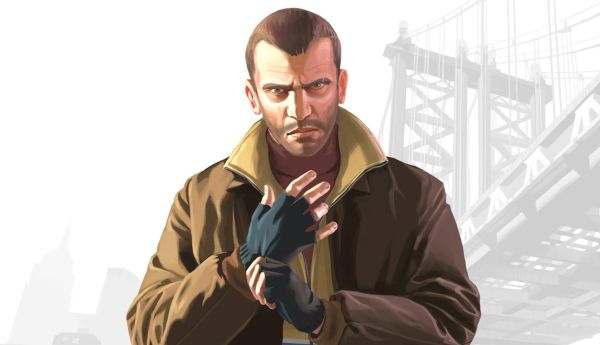
Grand Theft Auto IV felt immediately different from the louder and more exaggerated crime games I had played before it. Liberty City is still filled with absurd radio conversations, reckless drivers, strange pedestrians, and missions that can collapse into complete chaos, but the world carries a heavier emotional atmosphere. Niko Bellic does not arrive as an unstoppable criminal celebrity. He arrives as an immigrant carrying old trauma, unrealistic expectations, and the hope that a new country might allow him to become someone else.
I returned to the game expecting its driving, mission structure, and visual presentation to feel noticeably dated. Some parts certainly do, especially the heavy vehicle handling, frequent travel, restrictive checkpoints, and interface decisions inherited from an earlier generation. However, the physicality of the city, the strength of the writing, and the uncomfortable humanity of Niko’s story still give the game an identity that many newer open worlds struggle to match. Grand Theft Auto IV is not always pleasant to play, but it is unusually convincing as a place where bad decisions accumulate.
From my perspective as a gamer, this is the Grand Theft Auto title that treats criminal ambition with the least romantic confidence. Money provides temporary freedom, weapons provide temporary control, and new contacts provide temporary opportunities. None of them erase the past or make Niko emotionally secure. The game repeatedly gives me larger rewards while asking why success continues to feel so empty.
Liberty City Did Not Welcome Me
The opening establishes Liberty City as a promise constructed from stories rather than reality. Roman has described wealth, apartments, women, and an exciting American life, but Niko quickly discovers debt, a small business, a modest home, and dangerous people waiting for payment. This disappointment gives the city an immediate personal meaning. Niko is not simply exploring a large map; he is confronting the difference between migration mythology and daily survival.
I appreciated that the game allows the city to feel impressive and hostile at the same time. Tall buildings, bright advertisements, busy streets, and crowded districts suggest opportunity everywhere. Yet Niko remains socially and financially vulnerable, especially during the early hours. Liberty City is full of doors, but most of them belong to people who expect something in return.
Niko Bellic Is the Center of the Experience
Niko is one of Rockstar’s strongest protagonists because his intelligence and self-awareness do not protect him from repeating destructive behavior. He understands that the people around him are manipulative, that violence creates new problems, and that money rarely justifies the consequences. He still accepts dangerous work because he needs income, connections, and information about the person he came to find. His contradictions make him more believable than a character who either celebrates everything or pretends to remain innocent.
I liked how Niko’s humor remains dry and defensive rather than constantly theatrical. He often recognizes the absurdity of a situation before the player does, yet he rarely has enough power to avoid participating. Conversations reveal someone capable of warmth, loyalty, cruelty, regret, and emotional distance. The game never reduces him to one clean moral category.
Roman Brings Warmth and Exhaustion in Equal Measure
Roman is optimistic, unreliable, generous, selfish, funny, and deeply frustrating. His dreams create the original image of Liberty City that draws Niko across the ocean, but his actual life depends on gambling, excuses, and constant improvisation. He creates several of the problems Niko must solve while also providing the closest thing the protagonist has to family. Their relationship feels genuine because affection and resentment remain present at the same time.
I occasionally became irritated by Roman’s calls and requests, especially when I was traveling toward another mission. However, that irritation also supports his character because he behaves like a real relative who assumes availability. Roman wants companionship, protection, and confirmation that his life is not collapsing. The game makes him inconvenient because relationships are inconvenient.
The Story Is About Revenge, but Not in a Simple Way
Niko enters Liberty City searching for someone connected to a betrayal from his past. This objective gives the narrative direction, but the game spends much more time examining what years of obsession have done to him. Revenge becomes a structure that keeps him moving rather than a guaranteed source of closure. The closer he gets to an answer, the less convincing that answer seems as a solution.
I enjoyed how the story allows Niko to question his own motivation without abandoning it immediately. He knows that locating one person cannot restore the dead or return his earlier life. Still, refusing to continue would mean accepting that years of anger produced nothing. Grand Theft Auto IV understands that revenge can survive long after belief in its usefulness has disappeared.
The American Dream Is Treated Like a Sales Pitch
Almost every major character wants a version of success shaped by wealth, influence, status, security, or recognition. Criminals describe themselves as businesspeople, politicians talk like performers, and desperate workers imitate the language of entrepreneurs. Liberty City encourages everyone to market themselves before they understand what they are selling. The satire remains effective because it is built into ordinary conversations rather than isolated jokes.
Niko sees through much of this language, but he still participates in the economy behind it. He takes contracts, purchases clothing, changes apartments, and moves between increasingly powerful contacts. The player experiences material progress even while the story undermines its emotional value. I became wealthier without feeling that Niko had become freer.
The City Feels Dense Rather Than Enormous
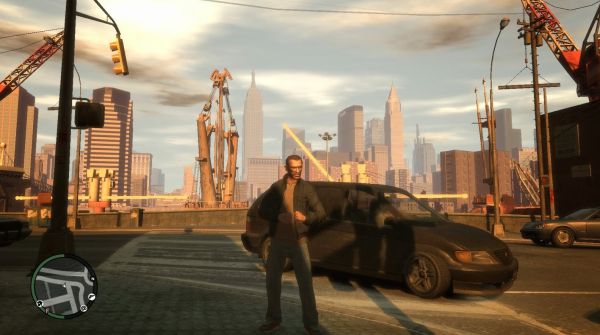
Liberty City is smaller than many modern open worlds, yet its districts feel packed with visual and social information. Storefronts, apartment blocks, elevated tracks, bridges, alleys, parks, industrial sites, and crowded intersections create distinct neighborhoods. I could often recognize a location through architecture and street shape rather than checking the map. This density makes travel feel like movement through a city instead of crossing empty space between activities.
The map also benefits from gradual access. New islands open as the story progresses, making expansion feel connected to Niko’s social and criminal rise. The city becomes larger at the same time that his contacts become more influential. Geographic access and narrative progress support each other naturally.
Algonquin Creates the Strongest Urban Spectacle
Algonquin represents the glamorous commercial image of Liberty City through towers, billboards, nightlife, expensive neighborhoods, and constant traffic. Driving into it after spending time in poorer districts creates a clear shift in scale. The area feels like the version of the city Roman wanted Niko to imagine. It is impressive enough to explain the dream and cold enough to expose the cost.
I enjoyed the concentration of activity because almost every street contains something visually distinctive. Construction zones, theaters, parks, luxury towers, and narrow side streets exist close together. The district looks wealthy without becoming clean or peaceful. Grand Theft Auto IV presents prosperity as another form of pressure.
Broker Feels Like the Real Beginning of Niko’s Life
Broker has a more personal atmosphere because it contains Roman’s business, early apartments, local contacts, and many of the relationships that shape the first act. Its streets feel crowded, worn, and familiar rather than prestigious. Returning later reminded me how limited Niko’s world once appeared. The district becomes emotionally important because the story begins there before ambition expands.
I liked the mixture of immigrant communities, small businesses, residential blocks, and industrial edges. Broker feels less like a tourist image and more like a place where people are trying to establish themselves. The environment supports the themes of migration and unstable opportunity. Niko’s first impression of America is not a monument but a neighborhood struggling to function.
Alderney Feels Tired in a Deliberate Way
Alderney offers industrial zones, highways, older neighborhoods, and a visual identity that feels more exhausted than central Liberty City. The district suits later criminal contacts because it appears separated from the polished image sold elsewhere. Warehouses, docks, construction areas, and aging infrastructure create practical spaces for darker missions. It feels like a region where business happens away from public attention.
I appreciated how the environment becomes less glamorous as the criminal network becomes more serious. Greater power does not lead Niko into a cleaner world. It leads him toward people with more resources and fewer illusions. Alderney reflects that progression through its physical atmosphere.
Driving Has Weight That Demands Patience
Vehicles lean, slide, brake slowly, and react strongly to speed, road conditions, and collisions. The handling initially felt heavy because I was accustomed to more immediate arcade control. After adjusting, I began appreciating how every vehicle possessed a different relationship with the road. A large sedan, compact car, motorcycle, and sports vehicle required noticeably different judgment.
The system makes high-speed travel exciting because momentum matters. Entering a corner too quickly cannot always be corrected through one sharp input. I need to brake earlier, manage the vehicle’s weight, and understand how much space the road provides. The driving creates physical consequence even during ordinary transportation.
Motorcycles Are Fast and Unforgiving
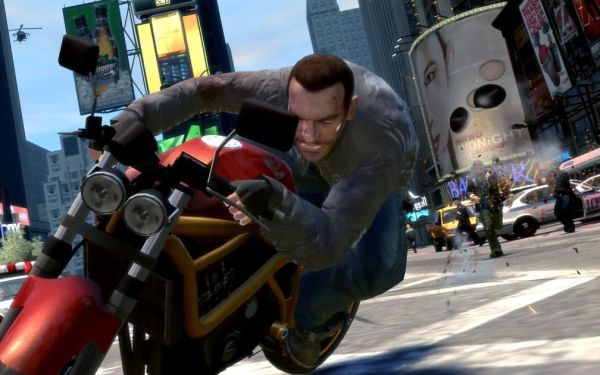
Motorcycles provide quick movement through traffic but expose the rider to every poor decision. A minor collision that a car would absorb can send Niko across the street and completely disrupt the journey. The handling requires smooth steering and careful speed management, especially on uneven roads. I used bikes when I wanted efficiency and accepted that one mistake could cost more time than the shortcut saved.
The risk also makes motorcycle chases memorable. Moving between cars at speed feels dangerous because the game’s physics do not protect me from the consequences. Winning a pursuit depends on control rather than only acceleration. The vehicle turns traffic into part of the challenge.
Car Damage Gives Chases a Physical Story
Vehicles visibly deform through impacts, losing body panels, damaging windows, and developing performance problems. A chase may begin with a clean car and end with a smoking machine struggling to steer correctly. This progression makes every collision feel connected to the final outcome. The vehicle carries evidence of the journey rather than resetting after each impact.
I enjoyed escaping in a damaged car because survival felt improvised. The vehicle might pull toward one side, lose speed, or threaten to stop before reaching safety. Replacing it becomes a practical decision rather than only a cosmetic preference. Grand Theft Auto IV uses physical damage to create stories during travel.
The Physics Make Ordinary Accidents Memorable
Characters respond dynamically to impacts, vehicles react to uneven surfaces, and objects move with enough unpredictability to make repeated situations feel different. A minor traffic collision can create a chain of blocked cars, angry drivers, and police attention. Pedestrians stumble, recover, argue, and interact with the environment in ways that make the street feel reactive. The system produces comedy without needing a written joke.
These physics can also create frustration during missions where one unexpected impact disrupts a carefully planned route. I occasionally failed because a vehicle behaved differently than expected after contacting traffic or scenery. However, complete predictability would weaken the city’s sense of life. Liberty City feels dangerous partly because the simulation is never completely controlled.
Gunfights Are Clumsy, Heavy, and Effective
The shooting system relies strongly on cover, target lock, recoil, and positional awareness. Niko does not move like a modern competitive shooter character, which makes firefights feel slower and more physical. Taking cover behind cars, walls, and building interiors is usually safer than remaining mobile in the open. The system can feel awkward, but that awkwardness prevents violence from becoming completely effortless.
I liked how enemies react to hits and use surrounding spaces during larger encounters. A warehouse or apartment building becomes a tactical environment where doors, corners, stairways, and windows matter. The strongest missions allow me to move carefully through these spaces rather than standing in one position. Combat works best when the level design supports deliberate progression.
Cover Is Useful Until It Selects the Wrong Surface
The cover mechanic gives Niko protection and allows controlled aiming, but it can become unreliable near complex geometry. He may attach to an unintended wall, remain exposed at an awkward angle, or refuse to move as smoothly as expected between positions. These problems are more visible now because later games refined similar systems significantly. Grand Theft Auto IV sometimes demands patience with controls that do not interpret my intention perfectly.
I adapted by approaching cover more carefully and avoiding crowded surfaces during intense fights. The system performs better when the environment provides clean walls and clear angles. Fighting against the controls is never enjoyable, but the slower pace gives enough time to recover in many situations. The combat remains functional without feeling modern.
Melee Combat Is Rough but Surprisingly Physical
Fistfights use dodging, counters, and basic attacks to create small close-range encounters. The system is not deep enough to support an entire game, but it gives street confrontations more weight than simple repeated punching. Characters stumble, react to the environment, and occasionally turn a minor argument into a chaotic group fight. The physical animation makes these moments more entertaining than their mechanical complexity suggests.
I enjoyed melee most during spontaneous encounters rather than scripted missions requiring perfect control. A fight outside a bar or beside a parked car can produce unpredictable reactions. The system becomes less satisfying against several opponents because targeting and spacing grow awkward. It works as part of the wider city simulation rather than a major progression path.
Police Attention Feels Like Escaping Geography
The wanted system focuses on leaving the search area instead of simply hiding for a fixed period. Police presence appears across the map, creating a circle that moves according to the last known location. Escaping requires choosing streets carefully and avoiding new officers who would renew the search. This makes knowledge of the city mechanically useful.
I enjoyed the tension of crossing one final street while patrol cars searched nearby. Changing vehicles and using side roads can create enough distance to escape without requiring a long chase. Higher wanted levels become more chaotic as the search area fills with stronger resistance. The system gives pursuit a clear spatial logic.
The Mobile Phone Makes the Social World Portable
Niko’s phone is used for missions, messages, activities, emergency services, and maintaining relationships. It allows the story to contact the player naturally while reinforcing that Niko is building a social network across the city. The device also creates interruptions at inconvenient times, which makes it feel surprisingly realistic. People call because they want something, not because I have reached the perfect moment for another task.
I appreciated how the phone reduces dependence on returning to specific mission markers for every interaction. Contacts become accessible from anywhere once relationships are established. The system also supports player choice because I can accept, delay, or ignore certain invitations. Liberty City remains connected even while I am moving through it.
Friendships Require Time, Not Just Mission Completion
Characters can invite Niko to restaurants, bars, shows, bowling, and other activities. Spending time with them develops relationships and may unlock practical benefits. This creates a social layer beyond the main campaign, but it also demands attention that can feel inconvenient during a long play session. The game treats friendship partly as maintenance.
I found the system most enjoyable when I cared about the character rather than the reward. Conversations during travel and activities reveal opinions, history, and personality that missions may not show. Repeating the same activity eventually becomes tiresome, but the dialogue keeps some outings worthwhile. Relationships feel optional mechanically and important emotionally.
Little Jacob Became One of My Favorite Companions
Little Jacob is calm, loyal, observant, and far more dependable than many of the criminals surrounding Niko. His conversations reveal a practical worldview without constant attempts to manipulate the protagonist. The friendship grows through missions and optional activities, making his support feel earned. He becomes one of the few people whose presence reduces tension rather than creating another problem.
I enjoyed the contrast between his relaxed manner and the dangerous situations around him. Jacob rarely needs to dominate a scene to remain memorable. His loyalty has greater impact because Liberty City contains so many conditional relationships. Niko’s trust in him feels reasonable rather than narratively convenient.
Brucie Is Exhausting and Perfectly Suited to the City
Brucie presents himself through fitness obsession, wealth, confidence, and constant performance. His exaggerated masculinity is ridiculous, but the writing occasionally reveals insecurity beneath the noise. He needs every room to confirm the identity he has constructed. Liberty City rewards that kind of self-marketing even when everyone nearby recognizes the desperation.
I found him irritating in a way that remained entertaining because the game understands his excess. He creates missions and conversations that feel completely different from Niko’s darker relationships. Brucie is not emotionally subtle, but he is thematically accurate. He treats life as advertising because silence might expose uncertainty.
Packie Connects Crime With Family Decline
Packie McReary belongs to a family whose criminal history has become more burden than legacy. His relatives remain tied together through loyalty, resentment, religion, addiction, and memories of greater influence. Missions involving the McRearys show crime as a family structure that cannot provide stability. Success and dysfunction exist together inside the same home.
I liked Packie because he understands the limitations of his environment without completely escaping them. His friendship with Niko develops through shared work and a similar comfort with dark humor. The McReary storyline also gives Liberty City another social history beyond immigrant ambition. Criminal identity appears inherited even when nobody benefits from the inheritance.
Dimitri Represents Manipulation Without Loyalty
Dimitri is dangerous because he presents himself as calm, rational, and more reasonable than the unstable people around him. He understands how to appear cooperative while protecting only his own interests. Niko recognizes many warning signs but remains connected through circumstances and incomplete information. The betrayal works because it follows the logic of a relationship that was never truly equal.
I appreciated having an antagonist whose power comes from calculation rather than constant spectacle. Dimitri survives by allowing other people to expose themselves first. His presence continues influencing the story even when he is not physically nearby. He represents the type of criminal success Niko could achieve by abandoning every remaining loyalty.
Vlad Makes the Early Game Feel Personal
Vlad is a relatively small criminal figure, but his control over Roman’s debt gives him immediate power over Niko’s daily life. He behaves arrogantly because the local environment allows him to treat vulnerable people as property. The conflict with him makes the early story intimate before larger organizations enter. Niko’s anger feels connected to humiliation rather than abstract ambition.
I liked how this storyline establishes the pattern of escalation. Solving one personal problem attracts attention from more dangerous people. Niko gains temporary control while moving deeper into a system he hoped to avoid. Liberty City turns every solution into another introduction.
Missions Often Begin With Conversation and End in Chaos
Grand Theft Auto IV missions frequently start with detailed scenes where characters explain relationships, debts, rivalries, or personal complaints. The objective then develops into driving, pursuit, combat, escape, or another confrontation. This contrast allows the writing to carry emotional context into mechanical action. I usually understood why Niko was there even when the mission structure itself felt familiar.
The repetition becomes noticeable across a long campaign because many objectives rely on traveling, confronting targets, and returning. The writing and locations provide most of the variation. Strong characters can make an ordinary task memorable, while weaker contacts expose the formula more clearly. The game’s narrative quality often carries mission design that has aged unevenly.
Long Drives Can Strengthen Atmosphere and Waste Time
Many missions require traveling substantial distances before the main action begins. These drives allow conversations to develop and give the city geographic meaning. They also become frustrating after failure because the entire route may need to be repeated. The absence of more generous checkpoints makes some missions feel unnecessarily punishing.
I enjoyed the first journey when characters discussed the objective or revealed personal information. Repeating the same drive after one late mistake removed most of that value. Modern mission design would likely preserve the story while reducing repetition. Grand Theft Auto IV occasionally confuses consequence with inconvenience.
Mission Checkpoints Show the Game’s Age Clearly
Failure near the end of a mission can send Niko back far enough to repeat driving, preparation, and earlier combat. This increases tension but also discourages experimentation because one small error may cost significant time. I became more cautious in ways that were not always tactically interesting. The system is especially harsh during long multi-stage missions.
Phone-based retry options reduce some travel, but they do not solve every structural problem. I often wished the game saved progress after major transitions. The story and atmosphere remain strong enough to motivate another attempt, yet patience becomes a required resource. This is one of the clearest areas where later Rockstar games feel more considerate.
The Bank Job Remains a Campaign Highlight
The major robbery involving the McReary crew delivers the scale, tension, and momentum I wanted from a criminal action game. It combines planning, character conflict, public chaos, a large police response, and a long escape through several environments. The mission feels important because the story has established the personalities participating in it. Success changes the financial situation without solving the emotional problems surrounding the crew.
I enjoyed how the sequence escalates rather than beginning at maximum intensity. The robbery initially follows a plan before pressure gradually removes control. Each stage creates another problem that must be solved while the city reacts. The mission demonstrates how effective Grand Theft Auto IV can be when narrative and action receive equal attention.
Choice Appears Rarely but Carries Weight
The game includes several decisions that affect characters, rewards, and later outcomes. These choices are not constant enough to transform the campaign into a branching role-playing game. Their limited number makes them more noticeable because the story usually moves according to fixed events. I had to evaluate relationships and values rather than select a general morality color.
The strongest choices feel uncomfortable because each option sacrifices something meaningful. Niko’s past, loyalty, financial interest, and desire for peace rarely point toward the same answer. The game does not promise that a morally appealing decision produces a painless result. Choice becomes another way of showing that control is limited.
The Final Decision Is Intentionally Unfair
The late campaign forces Niko to choose between paths shaped by money, revenge, loyalty, and the hope of ending conflict. Neither direction provides the clean resolution he wants. The consequences target relationships that have become emotionally important across the entire game. Success arrives beside loss rather than replacing it.
I respect the intention because it supports the story’s rejection of easy criminal fantasy. However, the outcome can feel designed to punish the player regardless of reasoning. This creates emotional impact and also reduces the sense that careful judgment matters. Grand Theft Auto IV values tragedy more than reassurance.
The Radio Stations Build a Complete Cultural Landscape
Liberty City’s radio includes music, talk shows, advertisements, news, and satire covering different communities and social identities. Switching stations changes the emotional tone of driving immediately. A quiet night journey can become reflective, energetic, absurd, or hostile depending on the selected channel. The radio makes travel part of the world’s cultural experience.
I often remained inside a parked vehicle because a conversation or song had not finished. News reports can respond to story events, making the city appear aware of Niko’s actions without naming him directly. Advertisements reveal the same obsession with status and consumption seen in the narrative. The radio is not background decoration; it is one of the game’s main writing systems.
Talk Radio Delivers Some of the Sharpest Satire
The talk stations parody political panic, commercial self-help, social prejudice, conspiracy thinking, and media performance. Callers and hosts often reveal more about Liberty City than mission characters do. The humor can be crude, repetitive, or extremely direct, but it reflects a culture where everyone is trying to sell certainty. The programs sound ridiculous because the world around them is already exaggerated.
I appreciated listening during long drives because the satire gave travel another purpose. Some jokes have aged differently than others, and a few depend heavily on the period in which the game was released. Even so, the broader criticism of media outrage and personal branding remains recognizable. Liberty City talks constantly because silence would interfere with advertising.
The Soundtrack Gives Night Driving a Unique Mood
Grand Theft Auto IV has a colder and more reflective atmosphere than many games in the series, and the music can intensify that feeling. Driving across a bridge at night while city lights reflect on the road creates a mood rarely associated with open-world crime games. The soundtrack allows moments of loneliness between loud missions. Niko often feels emotionally separated from the city even while surrounded by traffic.
I enjoyed these unplanned journeys more than several formal activities. The combination of weather, vehicle noise, radio, and distant skyline creates a powerful sense of place. Liberty City is not beautiful in a comforting way. It is beautiful because it appears indifferent.
Weather Changes the City’s Emotional Temperature
Rain, fog, gray daylight, and nighttime lighting make the streets feel heavier and more physical. Wet roads reflect signs and headlights, while low visibility changes how quickly traffic can be read. The city rarely presents itself as permanently sunny or welcoming. Its climate supports the emotional pressure of Niko’s story.
I found rainy drives especially memorable because the vehicle physics become even more noticeable. Braking and turning feel less secure, while the streets gain visual depth. Weather is not a major strategic system, but it changes the experience of familiar routes. Liberty City feels different according to when and how I cross it.
The Visual Style Favors Grit Over Clean Beauty
Character models, textures, lighting, and animation now reveal the game’s age, especially when displayed at modern resolutions. Yet the restrained color palette and dense urban design remain artistically coherent. Buildings look worn, interiors feel cramped, and streets carry enough visual clutter to appear inhabited. The technical limitations sometimes reinforce the atmosphere rather than destroying it.
I prefer this rough visual identity to a cleaner remaster that might remove the original mood. Liberty City should not look like a polished tourist advertisement. It needs dirt, haze, concrete, damaged vehicles, and awkward apartment interiors. The world remains convincing because its imperfections belong to the story.
Character Animation Gives Conversations Physical Personality
Cutscenes use body movement, facial reactions, pacing, and small gestures to distinguish characters. Roman’s restless enthusiasm looks different from Niko’s guarded posture, while Brucie occupies space with exaggerated confidence. These performances help long dialogue scenes remain engaging even when the animation technology is visibly older. The characters feel directed rather than merely positioned.
I especially noticed how Niko often appears emotionally removed from the person speaking to him. He listens, evaluates, and responds with minimal movement while other characters perform around him. This contrast supports his role as an outsider. He is physically present and psychologically elsewhere.
Interiors Feel Small, Specific, and Memorable
Apartments, bars, offices, restaurants, warehouses, and clubs provide a strong sense of social class and personality. Roman’s early apartment communicates his real financial condition immediately. Wealthier homes may contain more space without becoming emotionally comfortable. Criminal offices often look temporary, guarded, or designed to impress visitors.
I appreciated how interiors reflect the people using them rather than serving only as mission arenas. Objects, lighting, and layout contribute to characterization before dialogue begins. The game does not allow entry into every building, but accessible locations often feel specific. Limited access supports detail better than a huge number of empty interiors would.
Internet Cafés Preserve a Strange Digital Time Capsule
Niko can access fictional websites through computers, revealing social networks, advertisements, dating services, news, and absurd businesses. The internet reflects the same cultural anxieties and commercial language heard on the radio. It also captures an earlier stage of online life before smartphones completely replaced public computer access. The system now feels historical in ways the developers probably did not intend.
I enjoyed reading sites because they expand jokes and character details beyond missions. Some pages connect directly to activities, while others exist only to make Liberty City feel culturally complete. The internet is less convenient than modern in-game phone systems, but that inconvenience fits the period. It preserves a city entering digital life without fully understanding what it will become.
Dating Adds Character Detail but Limited Mechanical Depth
Niko can meet women through the story and online services, then arrange activities that influence the relationship. These interactions provide different dialogue, preferences, and occasional benefits. The system contributes to the idea that Niko is attempting to build a life outside criminal work. It rarely develops enough to compete with the main relationships, but it gives the player another personal routine.
I found dating more interesting as a character experiment than a progression system. Niko can present different versions of himself depending on clothing, vehicle choice, and conversation. The relationships reveal how difficult ordinary intimacy is for someone hiding so much history. Liberty City offers connection without making honesty easy.
Clothing Customization Is Restrained but Thematically Suitable
Niko can purchase clothing from several stores, changing his presentation without turning the game into an enormous fashion catalogue. Early outfits reflect his limited finances, while later stores offer more formal and expensive options. Clothing can influence specific interactions and gives visible evidence of financial progress. The selection is smaller than in some other entries, but it suits Niko’s practical personality.
I rarely imagined him spending hours constructing elaborate outfits. A jacket, shoes, and trousers were enough to change how he appeared in a mission or social activity. The limited system keeps customization connected to character rather than allowing complete reinvention. Niko remains recognizable regardless of what he wears.
Money Becomes Less Important Than the Story Suggests
Early financial pressure gives missions urgency because Niko and Roman genuinely need stability. Later, the player can accumulate more money than the available purchases meaningfully require. Weapons, clothing, food, and activities do not create a deep enough economy to absorb major earnings. The narrative continues treating money as motivation after the mechanics have reduced its importance.
I would have enjoyed more properties, businesses, vehicle ownership, or investment systems. These options could have made criminal income feel connected to long-term choices. Instead, money becomes a score confirming progress rather than an active management resource. The story critiques wealth effectively while the gameplay underuses it.
Vehicles Are Temporary, Which Changes Attachment
Cars are easy to acquire and easy to lose, so the game does not encourage collecting them in the same way as a dedicated driving title. Parking spaces near safehouses provide limited persistence, but one accident or mission can remove a favorite vehicle quickly. This makes transportation practical rather than personal. I usually chose whatever suited the immediate journey.
The lack of deep ownership fits Niko’s unstable life, although it limits long-term progression. He uses the city’s resources without fully belonging to them. A valuable car may survive one evening and disappear by morning. Liberty City encourages consumption without permanence.
Safehouses Reflect Progress Without Creating Safety
New apartments provide save points, parking, clothing access, and a visible change in living conditions. Moving from Roman’s early home to better locations suggests that Niko is advancing materially. The spaces become larger and more comfortable without solving the threats following him. A better apartment changes the view, not the past.
I liked how safehouses mark different stages of the campaign. Returning to one immediately recalls the relationships and missions connected to that period. They function as emotional checkpoints as much as practical locations. Niko gains places to stay without gaining a true home.
Bowling Is More Important as a Meme Than a Mechanic
Bowling is one of several social activities and became especially memorable because of Roman’s frequent invitations. The minigame is simple and does not support extensive mastery. Its importance comes from character association rather than mechanical depth. An ordinary leisure activity becomes part of the game’s cultural identity.
I occasionally accepted the invitation because spending time with Roman created more dialogue and relationship value. Other times the request arrived during a completely inappropriate mission plan. That tension explains why the feature remains memorable. Bowling represents the normal life Roman wants Niko to share and the inconvenient life Niko is constantly postponing.
Comedy Exists Beside Genuine Sadness
Grand Theft Auto IV can move from ridiculous advertising and eccentric criminals into conversations about war, betrayal, addiction, and family loss. The humor prevents the story from becoming emotionally flat, while the darker material gives the jokes a sharper context. Liberty City is absurd because people need distraction from how difficult it is to live there. Comedy often functions as defense rather than relief.
I appreciated how Niko can be funny without becoming disconnected from his trauma. His sarcasm reveals intelligence and exhaustion at the same time. Other characters use humor to perform confidence or avoid responsibility. The game’s tone works because laughter and sadness are allowed to occupy the same scene.
The Story Understands Immigration Without Making It One Experience
Niko and Roman share history and family connection but respond differently to migration. Roman reinvents America through optimism, exaggeration, and selective denial. Niko arrives with suspicion and quickly recognizes exploitation beneath the promise. Other immigrant characters create additional perspectives shaped by work, crime, community, and ambition.
I liked that the city does not treat newcomers as one unified group. People carry different languages, values, traumas, and strategies for survival. Liberty City absorbs them while encouraging each person to compete for limited power. The game’s fictional city feels multicultural without pretending multicultural life is automatically harmonious.
War Trauma Shapes Niko’s Entire Moral World
Niko’s past is not used only as a dramatic biography. It explains his comfort with violence, distrust of loyalty, emotional distance, and obsession with betrayal. He has already seen institutions collapse and people justify terrible actions through survival. Liberty City offers a new setting without removing the habits formed earlier.
I appreciated that the game does not present his criminal ability as effortless coolness. Niko is capable because he has experienced conditions that damaged him permanently. His competence is connected to loss rather than fantasy. Every successful violent mission carries an uncomfortable implication about what made success possible.
The PC Version Can Require Patience
Grand Theft Auto IV’s PC history has included performance problems, inconsistent frame pacing, launcher changes, and settings that do not always behave as expected. Modern hardware can provide high performance, but the game’s engine may still respond strangely at excessive frame rates or particular configurations. I prioritize stability because physics, driving, and cutscenes depend heavily on consistent timing. Maximum output is not always the most reliable target.
The Complete Edition simplifies access to the base game and expansions, but community fixes can still improve convenience and presentation. I prefer testing the original installation first before adding several modifications at once. The game remains playable, yet it does not always feel like a modern native PC release. Technical preparation can influence the first impression significantly.
High Frame Rates Can Change More Than Smoothness
Older engines sometimes connect animations, physics, or timing to performance in ways that modern players do not expect. Running Grand Theft Auto IV at a very high frame rate can produce unusual behavior during certain sequences. A stable cap may therefore create a more consistent experience than allowing unlimited output. This is especially relevant during driving and scripted moments.
I accepted a moderate target because visual smoothness mattered less than predictable controls. The game’s atmosphere does not depend on extreme responsiveness. Consistency supports vehicle weight, animation, and camera motion more effectively. Grand Theft Auto IV benefits from being treated according to its original technical assumptions.
Mouse Aiming Improves Gunplay Significantly
Mouse control makes manual targeting faster and more precise, particularly during distant firefights. The cover system remains awkward at times, but accurate aiming reduces dependence on target lock. Driving with keyboard input is less comfortable because digital steering does not match the weight of the vehicles perfectly. The PC version creates a clear difference between its strongest input methods.
I preferred switching to a controller for extended driving and using mouse and keyboard when combat precision mattered. The game does not support seamless mixed play in every setup equally, but both approaches have advantages. Analog steering makes vehicles easier to manage, while a mouse makes gunfights cleaner. The ideal input depends on the current activity.
The Complete Edition Includes Two Excellent Expansions
The Lost and Damned and The Ballad of Gay Tony tell separate stories inside the same city, with events occasionally intersecting Niko’s campaign. Each expansion changes the tone, protagonist, activities, vehicles, weapons, and social environment. Playing them after the main story makes Liberty City feel larger because familiar events gain new perspectives. The complete package becomes a collection of connected criminal lives rather than one isolated narrative.
I appreciate how the expansions reuse the city without feeling like simple additional missions for Niko. New protagonists have different relationships with violence, loyalty, wealth, and ambition. Their stories reveal parts of Liberty City that Niko only passes through briefly. The shared timeline turns the city into the true central character.
The Lost and Damned Makes Brotherhood Feel Like a Burden
Johnny Klebitz belongs to a motorcycle club held together by loyalty, habit, resentment, and a leader whose return destabilizes everything. The story examines what happens when group identity continues after its original purpose has disappeared. Johnny understands the danger but cannot separate himself from people he considers family. Brotherhood becomes both protection and captivity.
I enjoyed the rougher atmosphere and focus on motorcycles, club politics, and declining loyalty. The expansion is shorter and mechanically less polished than the base campaign, but its thematic clarity is strong. Johnny’s tragedy comes from recognizing the problem without possessing the emotional freedom to leave. Liberty City offers another version of loyalty that consumes the person trying to preserve it.
The Ballad of Gay Tony Brings Back Color and Excess
Luis Lopez moves through nightclubs, wealthy clients, celebrity culture, and missions designed with greater spectacle. The expansion is brighter, faster, and more exaggerated than Niko’s campaign while remaining connected to the same cynical city. Luis balances loyalty to Tony with the practical demands of keeping their business alive. The result feels like a bridge between Grand Theft Auto IV’s seriousness and the larger action style of later entries.
I enjoyed the increased variety because the missions use more unusual vehicles, environments, and set pieces. Nightclub management gives the story a social center distinct from apartments and criminal offices. Tony’s instability creates problems, but the relationship contains genuine affection beneath constant frustration. The expansion proves that Liberty City can support a louder story without losing its character.
Three Protagonists Reveal Three Versions of Loyalty
Niko protects family while struggling with revenge, Johnny protects a brotherhood that repeatedly betrays itself, and Luis protects a friendship tied to a failing business. Each man is capable of recognizing manipulation but remains emotionally connected to the person or group causing trouble. Loyalty gives them purpose and creates their greatest vulnerabilities. The shared city becomes a test of which relationships can survive pressure.
I appreciated how the stories overlap without forcing constant direct interaction. One event may appear differently depending on the protagonist’s knowledge and priorities. The expansions make the original campaign feel like one perspective inside a larger criminal ecosystem. Liberty City continues moving beyond whichever character I currently control.
Open-World Activities Are Numerous but Uneven
The city contains races, vigilante work, dating, friendship activities, bowling, darts, pool, shows, restaurants, bars, internet use, and random encounters. These systems create variety and support the sense that Niko has a life between missions. Their mechanical depth varies considerably, and several become repetitive after the novelty disappears. The value often comes from dialogue and atmosphere rather than mastery.
I enjoyed random encounters most because they connected small personal stories to familiar streets. Meeting someone again later can reveal how their situation has changed. These moments make the city feel populated by lives that continue outside the main narrative. Liberty City becomes more convincing when ordinary people remember previous interactions.
Random Characters Add Small Human Stories
Blue markers introduce people who may need help, company, transportation, or protection. Their missions are shorter and less cinematic than the main campaign, but they provide another view of the city’s social damage. Some characters return after earlier appearances, making the encounter feel connected to time. Niko often helps people even when the reward is limited.
I liked these stories because they reveal his capacity for sympathy outside major relationships. He may remain sarcastic, but he does not treat every vulnerable person as an opportunity. The missions also allow quieter storytelling without requiring another large criminal organization. Small encounters give Liberty City emotional texture.
The World Is Interactive Without Being Completely Open
Niko can enter selected shops, restaurants, bars, clubs, safehouses, and mission interiors, but many buildings remain inaccessible. The city compensates through density, traffic, pedestrians, physics, and carefully designed accessible locations. I rarely felt that every locked door needed to open because the streets already contained enough activity. The illusion depends on meaningful interaction rather than total access.
Modern open worlds may offer larger interior counts, yet they do not always create stronger atmosphere. Grand Theft Auto IV chooses specific spaces that support characters and activities. This focus keeps locations memorable. A smaller number of detailed interiors can communicate more than many anonymous rooms.
The City Reacts Through News Rather Than Permanent Transformation
Story events can appear on television, radio, and fictional websites, showing how public media interprets what occurred. This gives Niko’s actions cultural visibility without making every street change permanently. The city absorbs violence into another report and continues operating. Liberty City feels experienced at turning disaster into content.
I appreciated this reaction because it supports the satire. Major events are simplified, politicized, or commercialized almost immediately. Niko may understand the personal cost while the public receives a headline. The gap between experience and media representation becomes another form of isolation.
Grand Theft Auto IV Is Intentionally Less Empowering
Niko becomes wealthier and more connected, but he never feels completely dominant over Liberty City. Vehicles remain fragile, police remain dangerous, mission failures remain costly, and relationships remain unstable. The city does not transform into a playground where every system exists only to celebrate the player. It continues resisting control.
I found this approach more emotionally engaging and occasionally less convenient. Modern open worlds often prioritize constant freedom and frictionless entertainment. Grand Theft Auto IV asks me to tolerate weight, delay, and consequence. The experience can be slower, but the victories feel less disposable.
What I Would Modernize Without Changing the Mood
I would improve mission checkpoints, cover selection, climbing responsiveness, and vehicle recovery before changing the writing or physical tone. Repeating long journeys after late failure adds frustration without strengthening the themes. Cleaner combat controls would allow the deliberate pacing to remain while reducing accidental errors. Technical stability across modern systems would also make the game easier to recommend.
I would expand the economy with meaningful vehicle ownership, property investment, and business activity. More ways to use money could reinforce the story’s criticism of material success by allowing the player to pursue it actively. I would preserve the heavy driving, dense city, and limited fast convenience because they support Liberty City’s physical presence. Modernization should remove unnecessary friction without making the world weightless.
Why Liberty City Stayed With Me
Grand Theft Auto IV remained memorable because it builds a criminal open world around disappointment rather than pure fantasy. Niko reaches America and gains access to money, apartments, weapons, vehicles, and increasingly powerful contacts. None of these rewards provide the emotional transformation promised by the dream. The game allows progress to feel real and insufficient at the same time.
From my perspective as a gamer, Niko is the main reason the campaign still works. His intelligence, restraint, humor, violence, regret, and loyalty create a protagonist who cannot be reduced to one role. He knows that many of his actions are wrong, but awareness does not automatically provide another way to survive. The story respects the difference between understanding a cycle and escaping it.
Liberty City supports that character through density, weather, architecture, traffic, radio, and constant social performance. The city feels full of people trying to become wealthier, safer, more respected, or less visible. Every district offers a different version of the same competition. Niko is an outsider, but the people born there do not appear much more secure.
The driving physics and vehicle damage remain among the game’s strongest mechanical features. Cars have enough weight to make every pursuit feel physical, while collisions create consequences that continue through the rest of the journey. The handling demands adjustment and may frustrate players expecting immediate arcade control. Once understood, it gives transportation a character modern open worlds often smooth away.
Gunplay and cover have aged less gracefully. Fights can feel heavy in an effective way, but targeting, movement, and surface selection occasionally create unnecessary difficulty. Mission checkpoints make these weaknesses worse by forcing repeated travel after failure. The game asks for patience that is not always rewarded mechanically.
The writing usually provides that reward. Roman, Little Jacob, Packie, Brucie, Dimitri, and the wider cast represent different ways of surviving, performing, exploiting, or believing in the city. Their relationships with Niko develop through missions and optional time spent together. Even annoying calls contribute to the sense that he belongs to a network of people rather than a sequence of objective markers.
The Complete Edition strengthens the experience through two expansions that reinterpret Liberty City from different social positions. Johnny’s fading motorcycle brotherhood and Luis’s nightclub world reveal conflicts that Niko sees only partially. Together, the three stories create a richer portrait of loyalty and ambition. The city becomes more convincing because no protagonist understands all of it.
My strongest memories are not limited to major missions. I remember driving across a wet bridge at night while the radio played, listening to Niko and Roman argue inside a damaged car, and escaping police through streets I had gradually learned by shape. These moments emerged between objectives and gave the game emotional rhythm. Liberty City became familiar without becoming comforting.
Grand Theft Auto IV can feel restrictive compared with newer entries. It offers fewer customization systems, less extravagant wealth, heavier movement, and a campaign that repeatedly slows the player through travel and conversation. Those choices also create its unique identity. The game is not interested only in what crime allows Niko to acquire; it is interested in what the process removes.
By the end, I did not feel that Niko had conquered Liberty City. He had survived several of its criminal networks, protected some relationships, damaged others, and learned that closure cannot be purchased or demanded reliably. The city remained crowded, indifferent, and ready to absorb another person’s ambition. Grand Theft Auto IV stayed with me because it understands that reaching a new world does not guarantee becoming a new person.
Pros:
- Expansive open-world design with detailed urban environments
- Robust mod support that enhances replayability
- Rich character development with memorable protagonists
- Strategically balanced gameplay mixing structured missions and free exploration
- Dynamic multiplayer mode offering varied player interactions
- Immersive narrative and engaging storyline
Cons:
- Performance issues on some older or unoptimized hardware
- Overuse of mods and cheats can disrupt intended game balance
- Graphical limitations compared to contemporary titles









Recent Reviews

Minecraft
Grand Theft Auto V

Toca Boca World

Roblox

Leave a comment
Your comment is awaiting moderation. We save your draft here
0 Comments