Review
Blacksmith Master gave me a much broader responsibility than its title initially suggested. I expected to stand beside an anvil, shape...
Forging a Legacy: An Expert Gamer’s Journey in Blacksmith Master
Blacksmith Master gave me a much broader responsibility than its title initially suggested. I expected to stand beside an anvil, shape glowing metal, and gradually become known for producing impressive swords. Instead, I found myself managing miners, woodcutters, smelters, smiths, storage rooms, sales counters, transport routes, wages, production priorities, and the increasingly complicated layout of a growing medieval business. The actual hammering remains important, but the game is really about designing a production system capable of functioning without my constant intervention.
That difference makes Blacksmith Master more of a workshop management game than a detailed first-person crafting simulator. I supervise the entire process from extracting raw materials to placing finished products in front of customers, and every stage can create a bottleneck. A missing piece of wood can delay tool production, a shortage of ingots can leave several employees idle, and one badly placed storage shelf can add unnecessary walking to every order. The pleasure comes from watching these separate activities gradually form one efficient operation.
The Workshop Begins as a Collection of Unfinished Ideas
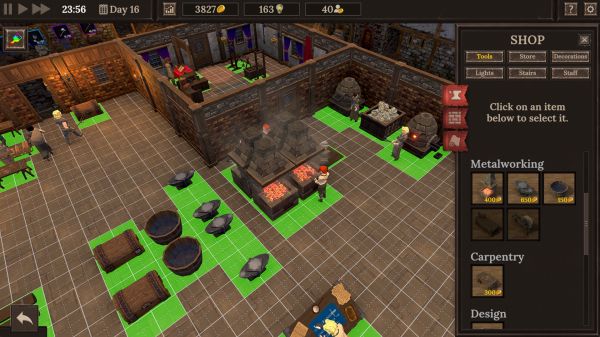
My first workshop looked functional only because I had not yet unlocked enough systems to expose its weaknesses. I placed stations wherever space remained, kept raw materials near the entrance, and assumed workers would find efficient routes on their own. The arrangement handled a small number of products reasonably well, but every new recipe added another journey across the building. What had appeared to be a flexible layout quickly became a maze of employees carrying materials between unrelated corners.
This early confusion is one of the game’s better teaching tools because layout mistakes produce visible consequences. Workers spend more time walking, production stations remain empty, finished products accumulate in inconvenient areas, and customers wait while the correct item is still moving through the workshop. I did not need a large warning window to explain that the design was inefficient. Watching one employee repeatedly cross the entire floor with a single resource made the problem obvious.
Rebuilding is therefore a natural part of progression rather than an admission that the first design failed. As new floors, stations, products, and employees become available, older arrangements no longer support the size of the business. I began grouping related work together and separating raw-material storage from finished-product display areas. The workshop slowly changed from a random room containing equipment into a deliberately planned production facility.
Mining Creates the Foundation of Every Product
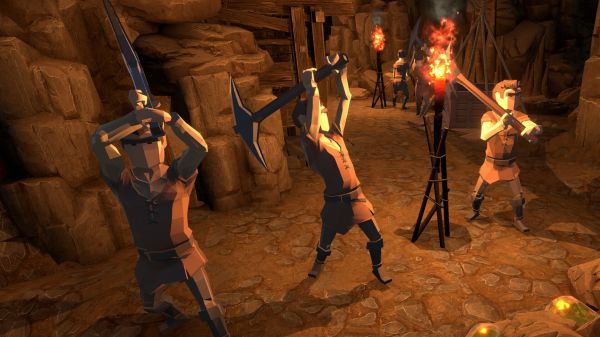
Metalwork cannot begin until the workshop has a stable supply of ore. Miners require employment, tools, suitable facilities, and enough support to keep extraction moving consistently. Their output determines how much material can enter the smelting process, so a weak mining operation eventually affects every blacksmith waiting farther along the chain. Expanding production without expanding extraction simply creates more empty workstations.
I enjoyed how the game makes raw materials feel connected to actual labor. Ore does not arrive as an automatic daily number after purchasing one abstract upgrade. Workers travel, perform tasks, return with resources, and depend on equipment that must also be produced or maintained. This creates a circular economy where the workshop often manufactures the tools required to support its own expansion.
The mining system becomes more interesting when different materials are needed for increasingly specialized products. Producing a large supply of basic metal may keep ordinary tools available, but valuable orders can require rarer resources. I must decide whether to dedicate workers to reliable common production or redirect part of the operation toward less predictable but more profitable materials. The correct choice depends on current orders, storage capacity, and the amount of money available for expansion.
Woodcutters Are Just as Important as the Smiths
Wood may appear secondary in a game centered on metal, yet it supports a surprising number of production steps. Handles, fuel, structural improvements, tools, and workshop development all depend on a consistent supply. A shortage can stop products that already have enough metal waiting nearby. The game repeatedly reminded me that a sword is not created by iron alone.
Woodcutters therefore deserve the same planning attention as miners. Their camps need workers, equipment, and efficient transport back toward the workshop. Expanding one resource operation while ignoring the other creates an imbalance that is difficult to solve through additional smiths. Production chains operate according to their weakest input, not according to the number of available crafting stations.
I found this relationship satisfying because it prevents the business from becoming a single-resource economy. Every new product must be considered as a combination of extraction, processing, transport, and labor requirements. A profitable order may look attractive until I realize that completing it will consume most of the wood needed for tools and construction. Materials gain strategic value because they compete across several parts of the business.
Smelting Turns Raw Supply Into Usable Production
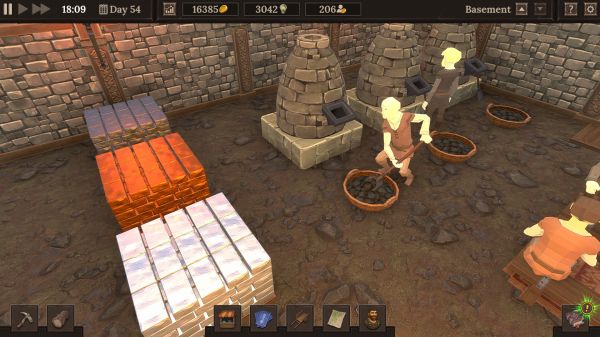
Ore has no value to the smithy until it passes through the smelting process. Furnaces require workers, fuel, storage, and enough space for materials to arrive and finished ingots to leave. If the smelting area is too far from ore storage, employees spend unnecessary time transporting heavy inputs. If ingot storage is poorly positioned, the same delay appears again before forging can begin.
This stage taught me to think of the workshop as a sequence rather than a collection of attractive stations. Raw resources should enter from one side, move through processing, reach crafting areas, and continue toward storage or sales without repeatedly crossing the same space. Every unnecessary turn represents time that several employees may repeat throughout the day. Efficient design becomes a practical form of profit.
Smelting capacity must also match extraction and crafting demand. Too few furnaces create a queue of ore, while too many produce ingots faster than the smiths can use them. Excess production may fill storage and prevent workers from completing other tasks. The most efficient operation is not the one containing the largest number of stations, but the one where each stage supports the next at a similar pace.
Forging Is Satisfying Because Preparation Happens Before the Hammer
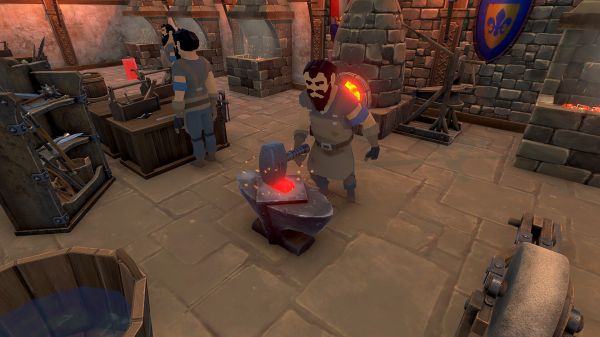
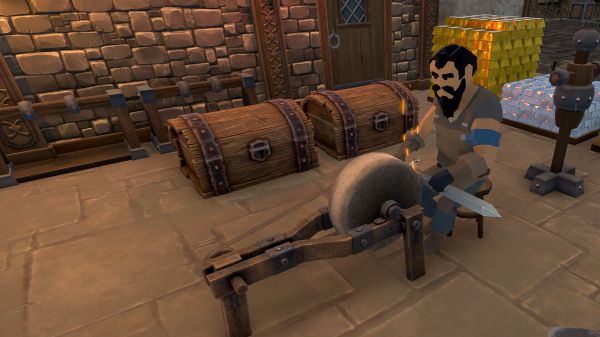
The forging process represents the visible center of the workshop, but successful smithing depends on everything prepared earlier. A worker needs the correct metal, suitable tools, available space, and a product assignment that matches current priorities. When these conditions align, the process looks smooth and purposeful. When one requirement is missing, the anvil becomes an expensive object waiting for another department to solve the problem.
I liked watching workers heat materials, move between stations, and gradually turn ingots into recognizable objects. The animations are not designed as a highly technical reconstruction of historical metalworking, but they communicate enough physical effort to make production feel tangible. Finished goods appear because somebody transported, heated, shaped, and processed the materials. This is more satisfying than watching a progress bar fill inside a menu.
The crafting loop becomes less engaging when I produce the same basic item repeatedly for routine orders. Once the optimal layout and staffing are established, familiar products require limited thought. Variety comes from unlocking new categories and balancing several orders rather than from mastering a complex manual minigame. Players expecting complete personal control over every hammer strike may find the management focus lighter than anticipated.
The Product Range Gives the Workshop a Broader Identity
Blacksmith Master is not limited to dramatic weapons and decorative armor. The workshop produces axes, tools, cooking utensils, household goods, jewelry, and practical objects required by different parts of the kingdom. This variety makes the business feel like an essential local industry rather than a fantasy shop serving only adventurers. Ordinary products may generate less excitement, but they provide reliable income and create believable demand.
I enjoyed deciding which part of the market to prioritize. Weapons can provide attractive profits and visual appeal, while tools may be easier to produce consistently with existing resources. Jewelry introduces another relationship between valuable materials, specialized workers, and customer expectations. Each product category changes the balance of raw inputs and workshop space.
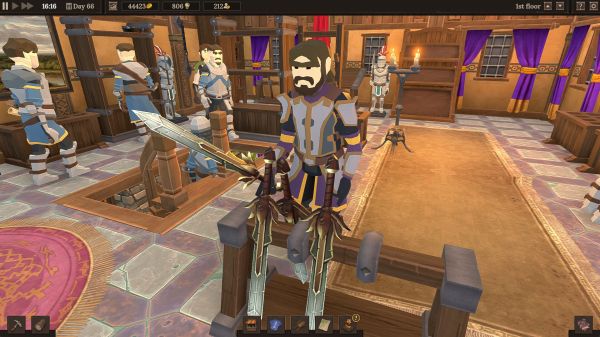
The variety also improves the visual character of the sales area. Racks and displays gradually fill with items that communicate the workshop’s growth. A basic collection of tools gives way to a broader inventory containing refined equipment and decorative goods. The business begins looking successful before the financial statistics confirm it.
Designing Products Creates a Sense of Ownership
Product design allows the workshop to move beyond producing one fixed version of every item. Different components, materials, and visual choices can be combined into goods that reflect available resources and the target market. This makes a finished object feel more connected to my decisions. I am not simply unlocking another sword; I am deciding what kind of sword the workshop is prepared to manufacture.
The system is approachable enough that experimentation does not require deep knowledge of metallurgy. I can compare options, examine requirements, and create a product suited to the current production chain. More elaborate designs naturally demand better materials and greater labor investment. The question becomes whether the expected value justifies that additional complexity.
I would like even stronger customer preferences tied to design. Different regions, professions, social groups, and merchants could value particular materials or decorative styles. That would turn product creation into market research rather than a simple process of improving quality. The existing system provides a promising foundation because it gives the workshop’s output a personal identity.
Merchant Orders Give Production a Clear Direction
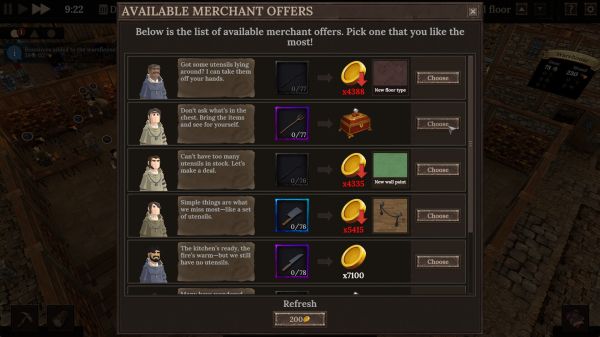
Orders from different parts of the kingdom provide structured goals beyond placing goods in the shop and waiting for customers. They specify products, quantities, and requirements, giving the production chain a temporary priority. Completing them can unlock privileges, new capabilities, or useful rewards. These contracts make expansion feel connected to the wider economy rather than to an isolated workshop score.
I found orders most interesting when they forced me to adjust the existing workflow. A request may require products that use the same material needed by regular customers, creating a choice between guaranteed contract progress and immediate sales. Large orders can occupy several workers for a considerable period. Accepting one without checking resource reserves can weaken the entire shop.
The system becomes more repetitive when orders ask mainly for larger quantities of familiar objects. Increasing numbers create pressure without necessarily introducing new decisions. More unusual conditions, urgent deadlines, regional preferences, or consequences for incomplete contracts could make each request feel more distinct. Even in its current state, the order system gives long production sessions a useful purpose.
The Sales Floor Is Where Production Becomes Profit
Finished products have little business value until customers can find and purchase them. The sales area therefore needs enough display space, suitable organization, and a reliable flow of goods from storage. A beautifully arranged workshop can still struggle financially if its products remain hidden behind the production chain. Manufacturing and retail must develop together.
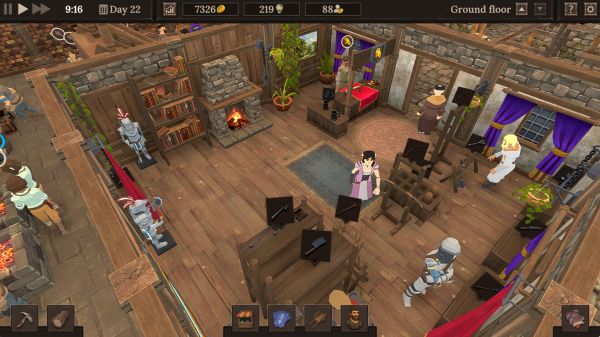
I enjoyed placing weapons, tools, and other goods on displays because the results of earlier labor became visible. Customers walking through the shop create a direct connection between production and revenue. I can observe which categories disappear quickly and which remain untouched. This information helps determine what the workshop should produce next.
Customer behavior could offer more depth because purchasing decisions often remain predictable. Different budgets, professions, quality expectations, and reactions to presentation would make retail management more strategic. A wealthy visitor should not evaluate a decorative item in the same way as a farmer searching for a reliable tool. Stronger customer identity would give product design and shop organization greater importance.
Prices Need to Reflect Both Labor and Opportunity
Setting a profitable price involves more than comparing the cost of raw material with the final sale. Every product also consumes worker time, station capacity, storage, fuel, transport, and space that could have supported another item. A high-value object may still be inefficient if it blocks several faster products. The game becomes more interesting when I evaluate profit through the entire chain.
I learned not to assume that expensive goods were automatically the best choice. Basic tools can provide reliable turnover because customers purchase them frequently and the workshop can produce them efficiently. Specialized items may offer a larger individual return but require rarer materials and longer production. Maintaining both types creates financial stability while leaving room for valuable opportunities.
The economic interface generally makes results understandable, although I would appreciate deeper historical reports. Being able to compare production time, material cost, sales frequency, and final margin across several days would improve planning. A management game becomes more satisfying when the data explains why one strategy succeeded. The current economy is readable but could reveal more of the relationships already being simulated.
Workers Are the Most Important Resource in the Building
Every station depends on a worker arriving, understanding the assigned task, and having access to the required materials. Hiring additional staff increases capacity but also raises wages and creates more demand for space, equipment, and organization. One new employee can improve production or simply add another person walking through an inefficient layout. Expansion therefore needs to solve a specific bottleneck.
I began paying more attention to individual skills as the workshop grew. A talented smith should not spend most of the day transporting basic materials, while less specialized employees can handle support work. Training allows the staff to become more effective over time. This gives long-serving workers value beyond their immediate wage.
Staff management becomes more demanding when several departments compete for limited labor. Moving one employee toward smelting may reduce the supply of finished products, while assigning more people to sales can leave production unsupported. There is rarely one arrangement that remains perfect after every new order or expansion. The workforce needs to change along with the business.
Specialization Makes Employees Feel More Valuable
Workers can develop strengths connected to different roles, which encourages me to avoid treating everyone as interchangeable. A skilled miner improves extraction, an experienced smelter supports material flow, and a strong blacksmith increases the value of the most visible production stage. Assigning people according to their abilities creates noticeable efficiency. The workshop begins feeling like a team of specialists rather than a collection of animated production bonuses.
This specialization also creates vulnerability. When one important worker is unavailable or assigned poorly, an entire chain can slow down. Training a replacement takes time, while overreliance on one expert limits flexibility. A larger business therefore benefits from maintaining some overlap between employee skills.
I would like stronger personal traits and relationships to make staffing decisions more memorable. Workers could prefer certain roles, respond differently to wages, develop rivalries, or request improved conditions. The current system gives them useful economic identity without much personality. Deeper human behavior could turn staffing from optimization into actual management.
Staff Scheduling Can Solve Problems or Create New Ones
Work schedules influence when stations operate and how consistently materials move through the building. Extending hours may increase output but also affect labor needs and the rhythm of the workshop. Poor scheduling can leave one department producing materials while the next stage remains inactive. The result is storage congestion instead of useful progress.
I found it helpful to think about production in waves. Extraction and smelting should prepare enough material before smiths begin large orders, while sales areas need inventory available when customers arrive. Perfect synchronization is difficult, but reducing long periods of idle time produces a visible improvement. Scheduling gives me another method of solving bottlenecks without immediately purchasing more stations.
The interface needs to remain clear because managing many employees individually can become administrative work. Recent improvements to staff management are therefore important for the game’s development. Automation and group controls should reduce repetitive adjustments without removing strategic choice. The ideal system lets me define priorities while workers handle ordinary details independently.
Transport Time Quietly Controls the Entire Economy
A worker carrying one object across the workshop may not appear important, but that journey is repeated hundreds of times. Long routes reduce production even when every station and employee is technically available. Storage placement therefore becomes one of the strongest tools for improving efficiency. A small change can save more time than an expensive upgrade.
I began placing intermediate storage beside the departments that used it most. Ore remained near smelting, ingots moved toward forging, and finished goods received a separate path toward sales. This reduced unnecessary traffic through central areas. Workers stopped competing for the same narrow route and spent more time performing their primary jobs.
The game communicates this system visually rather than through complex transport statistics. Watching workers is often the best way to discover a problem. I appreciate that observation matters because it makes the workshop feel like a place rather than a diagram. More optional overlays showing travel volume would still help players manage very large operations.
Multiple Floors Expand Possibility and Complicate Movement
Building upward provides additional room when the original workshop becomes crowded. New floors can separate production, storage, sales, and specialized crafting into clearer zones. This makes the business look more impressive and allows different departments to develop distinct visual identities. Expansion feels physical because I can see the workshop growing above its original limits.
Vertical design introduces another transport problem. Workers need to carry materials between floors, and poorly placed stairs can become major bottlenecks. A department located above its main supplier may lose more time than the additional space saves. The building should be organized according to product flow rather than aesthetic symmetry alone.
I enjoyed experimenting with one floor focused on raw processing and another dedicated to refined production or retail. The arrangement looked logical, but it required enough storage at each stage to prevent constant movement. Vertical expansion rewards planning because changing the entire structure later can be expensive and disruptive. It gives the late game a different design challenge from the simple opening room.
Decorations Provide Relief From Pure Efficiency
The workshop can be personalized with furniture, banners, rugs, walls, displays, and other decorative elements. These additions help transform an industrial space into a business that reflects the player’s taste. I appreciated having reasons to think about appearance after spending so much time optimizing worker routes. A successful workshop should look like more than a warehouse filled with furnaces.
Decoration is most enjoyable when it does not interfere with movement. A large object placed in the wrong position can create delays or narrow an important route. This forces me to combine visual design with practical planning. The best rooms feel attractive because the decorative choices support the function rather than fight it.
Stronger customer and worker responses to decoration would make the system more meaningful. Comfortable conditions could improve morale, while an impressive sales floor might attract wealthier customers. The game already provides visual customization, but deeper mechanical connections would make aesthetic investment feel like part of the business. I still enjoyed decorating simply because the workshop became more personal.
The Mastery Tree Provides a Clear Sense of Long-Term Growth
Progression unlocks new production possibilities, improvements, and capabilities through a broader mastery structure. This gives me goals beyond earning enough money for another station. Each unlock can alter which products are available or how efficiently existing systems operate. The workshop’s identity changes gradually as the range of possible work expands.
I enjoyed planning toward upgrades that supported the current strategy. Improving basic production may be more useful than unlocking a specialized item before the workshop has enough material to produce it consistently. The tree encourages looking ahead because one attractive ability may depend on several earlier investments. Progress becomes a choice between immediate efficiency and future variety.
The balance could benefit from more difficult decisions between mutually exclusive or strongly differentiated paths. If every important upgrade is eventually available, the tree becomes a timeline rather than a build system. Specializing in military equipment, domestic tools, luxury goods, or large contracts could give different workshops stronger identities. The current progression is satisfying but generally encourages expansion across all areas.
Tool Production Creates a Useful Internal Economy
The workshop often needs to produce equipment for its own workers before focusing entirely on external customers. Miners, woodcutters, and smiths depend on suitable tools, making production partly self-sustaining. This creates an interesting choice because an item can be sold for immediate money or used to improve future output. Investment becomes visible through the equipment carried by employees.
I like that expansion consumes actual manufactured goods rather than abstract upgrade points alone. A stronger mining operation may require tools produced by the same chain it will later support. The workshop grows by using its own expertise. This gives basic products continuing value after more impressive designs are unlocked.
The internal demand can become difficult to track when many workers require equipment. Clearer notifications and automatic replacement priorities would reduce micromanagement. I want to decide how much of production supports the workforce without manually checking every person constantly. The concept is excellent because it connects employees directly to the crafting system.
Inventory Management Becomes a Serious Midgame Challenge
Storage initially seems generous because the workshop produces only a small number of materials and products. As the range expands, ore, wood, ingots, components, tools, weapons, armor, jewelry, and completed orders begin competing for space. One overproduced item can fill a storage area and prevent another department from completing its work. Inventory becomes a planning problem rather than a passive collection.
Setting production limits helps prevent unlimited accumulation. A station should stop when enough of one component exists and resume only after the supply declines. This keeps workers available for more urgent tasks and protects storage capacity. The system becomes satisfying once the workshop begins regulating itself according to sensible limits.
I occasionally struggled to identify why one material was occupying so much space. Better category summaries and warnings would help reveal overproduction earlier. The interface provides the necessary controls, but large workshops generate enough information that manual inspection becomes slow. Management depth is valuable when the game also provides tools capable of handling it.
Bottlenecks Are More Interesting Than Financial Failure
The most engaging problems rarely came from running out of money completely. They came from having money, workers, and stations while still being unable to complete an order efficiently. One missing component could stop several departments, and the true cause might be located far earlier in the production chain. Solving these bottlenecks felt like repairing a machine.
I would follow workers, inspect storage, check material limits, and compare station output until the problem became clear. Sometimes the solution required another furnace, but often it required moving storage or changing one priority. The game rewards understanding before expansion. Building more equipment without diagnosing the issue can make the workshop even less efficient.
This investigative quality gives Blacksmith Master its strongest strategic depth. The systems are individually simple, yet their relationships create complicated outcomes. A workshop that looks busy may be producing very little useful value. Efficiency is measured by finished goods reaching customers, not by the number of animations occurring inside the building.
The Game Is Relaxing Because Failure Develops Gradually
Blacksmith Master does not constantly attack the business with disasters or severe countdowns. Problems usually emerge through poor planning, inefficient layout, material shortages, or excessive expansion. This gives me time to observe the situation and attempt a solution. The pressure is present without becoming exhausting.
I appreciate this pace because workshop design benefits from experimentation. Moving stations, changing priorities, and adjusting staff can be tested over several production cycles. A mistake rarely destroys the entire business immediately. Recovery remains possible as long as I understand what went wrong.
Players seeking dramatic medieval crises may find the experience too quiet. The game focuses on optimization and growth rather than war, politics, or personal survival. Its tension comes from watching an order remain unfinished while the required material sits in the wrong storage room. That modest scale is exactly what makes the simulation comfortable to play for long sessions.
The Lack of Strong External Events Limits Variety
The workshop mostly operates according to internal systems and predictable demand. Merchant orders and unlocks create goals, but the wider kingdom rarely feels capable of surprising the business. Material shortages, regional conflicts, festivals, changing fashions, or unusual customers could create stronger variation. These events would force me to adapt a stable production chain rather than continue refining one permanent solution.
A military conflict might increase demand for weapons and armor while reducing access to one resource. A strong harvest could create more orders for tools and cooking equipment, while a royal celebration might increase the value of decorative goods. These changes would give the product range a more strategic purpose. The workshop would feel connected to a kingdom whose needs evolve over time.
Random events should remain controlled enough that they do not destroy the relaxed management tone. The goal would be creating temporary priorities rather than arbitrary punishment. Blacksmith Master already has the production depth required to support such variation. A more active external economy could make the same systems remain interesting much longer.
The Medieval Atmosphere Is Pleasant Rather Than Harsh
The visual style presents medieval craft through warm interiors, glowing furnaces, wooden structures, organized displays, and workers moving between stations. It creates a comfortable interpretation of workshop life without focusing heavily on smoke, injury, poverty, or dangerous working conditions. The result is inviting and readable. I can spend a long time observing the workshop without the presentation becoming oppressive.
Lighting does much of the atmospheric work. Furnace glow and warm interior colors make production areas feel active, while decorative elements soften the industrial appearance. Finished products look attractive enough to make displays satisfying. The game is not technically extravagant, but its art direction supports the relaxed management loop.
Greater environmental variation would help larger workshops feel more visually distinct. Different regional architecture, weather, workshop themes, and surrounding settlements could create stronger identity between campaigns. The existing presentation remains consistent, though familiar rooms can begin blending together after many hours. Visual growth should ideally change more than the number of stations inside the building.
Animations Make the Production Chain Easy to Read
Workers physically move between storage, furnaces, anvils, crafting stations, and sales areas. This allows me to understand the workshop without keeping every menu open. A stationary employee signals that something is missing, while crowded paths reveal layout problems. The simulation communicates through movement.
The individual animations are simple but effective. Workers carry goods, perform specialized tasks, and turn raw materials into visible products. I can identify which stage is active by watching the station. This makes optimization more satisfying because improvements are visible immediately in the rhythm of the room.
Repetition naturally becomes noticeable when the same process continues for long periods. More animation variation could make experienced workers appear increasingly skilled or efficient. The game does not need elaborate cinematic crafting, but small differences would give long-term staff development a stronger physical presence. The current animations prioritize clarity, which is the correct foundation.
The Soundscape Supports a Busy Workshop
Hammering, furnace activity, footsteps, tools, customer movement, and environmental ambience combine into a convincing production space. I can often recognize whether the workshop is operating efficiently by listening to its general rhythm. A quiet department may indicate missing materials or workers. The audio gives life to systems that would otherwise appear purely numerical.
The repeated hammer sounds can become tiring during extended sessions, especially in a large workshop containing several smiths. More variation in impact, station sound, and room ambience would reduce repetition. Different materials and products could also produce distinctive audio feedback. Sound offers an opportunity to make specialization feel physical.
The music generally remains restrained enough to support the calm tone. It does not compete with the workshop’s functional sounds or create unnecessary urgency. I often preferred hearing the business operate rather than focusing on the soundtrack. Blacksmith Master is strongest when the sound of work becomes its own background music.
The Interface Handles Complexity but Needs Further Refinement
Managing construction, workers, priorities, production, orders, storage, sales, and upgrades requires a substantial amount of information. The interface makes most systems accessible, but larger workshops expose how often I need to open several panels to understand one problem. A stalled product may require checking the worker, station, input storage, output storage, and current priority. The investigation can become more administrative than analytical.
Production summaries and stronger filters would help identify patterns quickly. I want to know which items are profitable, which stations remain idle, which workers spend excessive time walking, and which materials are repeatedly unavailable. This information already exists inside the simulation. Presenting it more clearly would support the player’s role as manager.
Automation should also become stronger as the workshop expands. Early manual control helps teach each process, but repeating the same adjustments across many stations becomes tiring. Saved production rules, department groups, and staff templates could reduce unnecessary work. Management progression should include better tools for managing, not only more objects requiring attention.
Early Access Is Visible in the Uneven Depth
Blacksmith Master already provides a coherent central loop involving extraction, processing, staffing, crafting, selling, ordering, and expansion. These systems can support an enjoyable workshop for many hours. The game understands what it wants to simulate and does not need to replace its foundation. Future development mainly needs to deepen variation, improve information, and make large operations easier to control.
Some features feel more complete than others. Production flow and layout planning are immediately engaging, while customer behavior, external market changes, worker personality, and long-term campaign variety remain lighter. Technical issues and pathfinding irregularities can also appear when the building becomes crowded. These weaknesses are understandable in Early Access but directly affect the systems the game relies upon most.
The absence of a fixed full-release date means players should evaluate the current version rather than purchasing only for promised features. There is already enough content for management fans who enjoy refining layouts and watching production chains develop. Players expecting a finished historical simulation with deep social and economic events may prefer to follow future updates. The foundation is promising precisely because its missing depth can be added without changing the central idea.
The Best Moments Come From Watching the Workshop Run Without Me
Early in the campaign, I personally solve nearly every shortage by changing assignments or placing another station. Later, the most satisfying moment arrives when materials enter, move through several departments, become finished products, and reach customers without requiring immediate intervention. The workshop begins operating according to the rules I designed. That temporary independence feels like the real reward for careful management.
It never remains perfect forever. A new product, order, employee, or floor changes the balance and reveals another weakness. The system that worked for basic tools may fail when jewelry or complex armor enters production. Growth creates a new puzzle rather than ending the old one.
This cycle keeps expansion meaningful. I am not increasing production simply to watch a larger number appear. Every improvement changes worker movement, material demand, storage pressure, and customer supply. The workshop becomes a visible record of lessons learned through earlier mistakes.
Blacksmith Master Understands That Craft Is Also Organization
The game’s most interesting idea is that mastering blacksmithing requires more than personal skill at an anvil. A successful smithy depends on miners, woodcutters, transport, furnaces, tools, trained employees, reliable storage, customer access, and sensible financial decisions. The master is not necessarily the person performing every task. The master is the person who understands how all of them connect.
This focus may disappoint players searching for a highly detailed manual forging simulation. Hammering and crafting are represented through managed processes rather than through a demanding physical minigame. I rarely feel that I personally shaped each object through precise input. I do feel responsible for creating the conditions that allowed the object to exist.
That managerial perspective gives the game more long-term potential than one repeated crafting activity would provide. New materials, product categories, worker systems, trade events, and building options can expand the workshop without abandoning the existing loop. The challenge is ensuring that every addition creates a new decision. More content will matter only when it changes how I organize the business.
A Promising Workshop Simulator With a Strong Production Core
Blacksmith Master succeeds most clearly as a relaxed production-chain and workshop-layout game. Extracting resources, processing ore, supplying smiths, arranging storage, fulfilling orders, and selling finished products form a satisfying economic sequence. Worker movement makes inefficiency visible, while free building design allows every workshop to develop differently. Watching an awkward early room become a coordinated multi-floor business provides a convincing sense of progress.
The current version still needs greater variety outside the production chain. Customers could have stronger identities, workers could feel more personal, and the kingdom could influence prices and demand through dynamic events. Large workshops also require better summaries and stronger automation to prevent management from becoming repetitive menu work. These areas limit how long one successful layout remains interesting.
I enjoyed the game most when I approached each expansion as an engineering problem. Another furnace was useful only if mining could support it, another smith mattered only if ingots reached the anvil, and another display helped only if customers wanted the available goods. Every department depended on decisions made somewhere else. The game turns medieval craft into a network of relationships rather than one isolated action.
Blacksmith Master does not yet feel like the complete version of its excellent idea, but the existing foundation is already engaging. It captures the pleasure of watching raw resources enter one side of a workshop and emerge as valuable goods through organized labor. The hammer may be the symbol of the business, yet storage shelves, worker routes, production limits, and well-timed orders determine whether that hammer ever has useful work to perform. When every station finally operates in rhythm, the satisfaction comes not from forging one perfect sword but from building a workshop capable of producing the next hundred without falling apart.
Pros:
- Intuitive control system that mimics real-life forging actions
- Stunning visuals and detailed audio that enhance the immersive atmosphere
- Rewarding progression system with unlockable recipes and tools
- Extensive customization and mod support that bolsters creativity
- Cross-platform availability ensuring access on PC, Mac, and Android
- Immersive crafting simulation experience that captures the art of blacksmithing
Cons:
- Some technical glitches on lower-end devices
- Limited variety of crafting materials in the early game stage
- Occasionally steep learning curve for newcomers









Recent Reviews

Minecraft

Grand Theft Auto V

Toca Boca World

Roblox

Leave a comment
Your comment is awaiting moderation. We save your draft here
0 Comments