
Review
THRONE AND LIBERTY made its strongest first impression before I had fully understood its equipment systems, currencies, guild politics,...





Throne and Liberty: A Regal Odyssey of Strategy, Storytelling, and Immersive Adventure
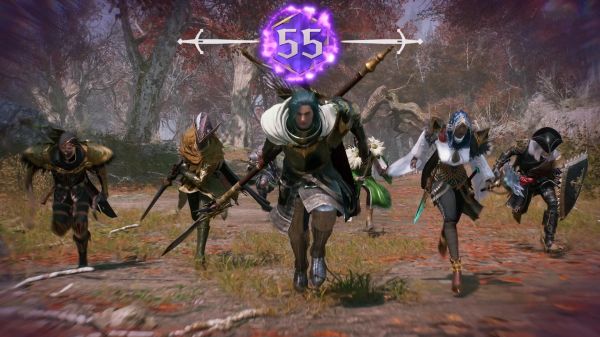
THRONE AND LIBERTY made its strongest first impression before I had fully understood its equipment systems, currencies, guild politics, or daily progression routines. The world of Solisium stretches across enormous fields, coastal settlements, ruined fortresses, forests, deserts, and cities that feel designed to hold far more than one adventuring party. Large creatures move through the sky, public events draw players toward the same locations, and distant castles suggest conflicts much larger than the personal story presented during the opening hours. The game immediately communicates scale, even when the activities inside that scale are sometimes more traditional than the scenery suggests.
This is an MMORPG that frequently looks more ambitious than it feels during ordinary questing. The presentation promises a living fantasy war, while many early objectives still involve speaking with characters, traveling toward marked areas, defeating groups of enemies, and interacting with highlighted objects. The familiarity is not automatically a weakness because the movement is fast and progression arrives regularly. The problem is that the game’s most distinctive identity appears later, once guild competition, world bosses, large battles, specialized builds, and economic decisions begin replacing the guided introductory path.
Solisium Is the Game’s Most Convincing Achievement
The world is attractive not only because of its visual detail but because locations connect without feeling like isolated multiplayer arenas. I can leave a city, move across farmland, enter a forest, climb toward a ruin, and continue into a dangerous open zone without repeatedly passing through obvious loading transitions. This continuity gives travel a physical meaning that many modern online games weaken through excessive teleportation. Even when I use faster travel options, I still understand how the regions fit together.
The landscape benefits from large landmarks that remain visible from a considerable distance. Towers, castles, mountains, floating creatures, and major settlements help me orient myself without constantly depending on the map. Weather and time changes can alter the mood of familiar areas, while certain conditions influence access, enemy behavior, or event structure. The world is therefore not completely static, although the practical effect of these changes varies depending on the activity.
I often enjoyed traveling even when the destination involved a routine objective. Transforming into an animal for land, water, or aerial movement gives ordinary traversal a playful quality and removes the need for a conventional permanent mount. The transition is immediate enough that it becomes part of natural movement rather than a separate system. It may not provide deep mechanical complexity, but it gives THRONE AND LIBERTY a recognizable visual identity that remains charming after the novelty has faded.
The Morph System Makes Movement Feel Effortless
Instead of summoning one horse and using it for every journey, my character changes form according to the environment. A land morph supports faster movement across roads and fields, an aquatic form handles deeper water, and a flying transformation allows controlled gliding from elevated positions. This system makes the character feel connected to the world rather than seated on top of a separate vehicle. It also creates smooth transitions between exploration, climbing, swimming, and combat preparation.
The flying form is especially useful because verticality matters in several regions. Leaping from cliffs, towers, or city walls can shorten a journey and reveal routes that are difficult to notice from ground level. The glide is not unrestricted flight, so height and momentum still influence how far I can travel. That limitation preserves the importance of terrain while giving me enough freedom to enjoy crossing it.
Movement is not always as clean as the animation suggests. Landing near narrow platforms, moving through crowded spaces, or transforming around uneven geometry can produce awkward corrections. Large battles also fill the screen with characters and effects, reducing the elegance of traversal. Even with those problems, returning to a slower conventional mount system would make the world feel less distinctive.
Weapon Combinations Replace Traditional Classes
THRONE AND LIBERTY does not permanently assign my character to one fixed class. My active abilities and practical role are largely determined by the two weapon types I equip, allowing combinations that support tanking, healing, ranged damage, melee pressure, control, or hybrid play. This flexibility initially feels liberating because one character can explore several identities without restarting the entire story. It also creates a complicated progression system where changing direction after heavy investment can become expensive.
The strongest combinations usually have an understandable relationship. A defensive weapon paired with another close-range option can create a durable frontline build, while magical weapons may combine damage, support, and crowd control. Ranged choices offer safer positioning but often require careful attention to movement and protection during group combat. More experimental combinations can work, although not every pairing receives equal support from gear, skill interactions, or the expectations of organized groups.
I appreciate being able to build around preferred weapons rather than selecting a class name before understanding the combat. The system encourages experimentation during the opening period, when upgrades remain relatively manageable. Later progression creates stronger pressure to specialize because traits, mastery, equipment, runes, and other supporting systems reward commitment. The game offers flexibility, but it does not always make long-term flexibility inexpensive.
Combat Sits Between Classic Tab Targeting and Modern Action
The combat uses targeting, cooldown-based abilities, positioning, defensive reactions, and weapon switching rather than fully manual action controls. I select a target, maintain range, trigger skills, and respond to marked attacks with blocks, movement, or other defensive actions. The system is faster and more active than a completely traditional tab-target MMO, but it does not provide the physical freedom of a dedicated action RPG. Its success depends heavily on whether the selected weapon combination produces a satisfying rhythm.
Early combat can feel shallow because enemies disappear before a complete rotation becomes necessary. Basic quests rarely demand careful resource management or deep cooperation, allowing me to repeat efficient skills without studying every interaction. Dungeons, bosses, PvP, and more difficult group activities reveal the system more clearly. Positioning, timing, control resistance, defensive cooldowns, and team composition begin to matter once mistakes can no longer be erased by raw damage.
The optional action-style control scheme makes movement feel more immediate, although the underlying mechanics remain target-driven. Camera behavior, target selection, and ability range can still reveal the traditional structure beneath the presentation. I eventually stopped expecting the game to become a pure action MMO and began appreciating the clarity of its cooldown-based combat. The best encounters combine readable mechanics with enough movement to prevent rotations from becoming completely static.
Blocking Gives Boss Attacks a More Active Rhythm
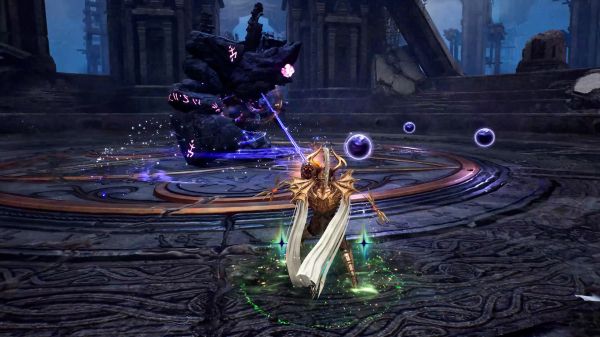
Defensive timing is one of the most useful additions to the combat system. Certain enemy attacks provide a clear warning, allowing me to block or use a defensive movement at the correct moment. Success reduces damage and may activate additional benefits depending on the weapon or build. This creates a direct reaction test inside a system otherwise dominated by targeting and cooldown management.
The mechanic works especially well during bosses because it gives every player a personal responsibility. A healer cannot completely compensate for repeated failures when several party members ignore predictable attacks. Learning the animation and timing makes later attempts feel more controlled. The encounter becomes easier because the group has improved rather than because one player acquired a dramatically stronger item.
Latency and visual congestion can weaken the system during larger fights. Effects from allies, enemies, weather, and environmental mechanics may hide the animation I am expected to read. A defensive input that feels correctly timed can also produce an unexpected result under unstable network conditions. The mechanic is still valuable because it gives combat a layer of active participation that many traditional MMO rotations lack.
Skill Development Provides Depth and Too Many Upgrade Layers
Active and passive abilities can be improved, specialized, and arranged according to the role I want to perform. Skill conversion and specialization allow familiar abilities to change range, damage type, area, utility, or interaction with other effects. This gives one weapon combination more than one practical setup. A build designed for dungeon bosses may differ significantly from one intended for large-scale guild combat.
The amount of control is satisfying once I understand it, but the interface presents several overlapping progression concepts. Skill levels, weapon mastery, equipment traits, runes, artifacts, and other systems all contribute to power. New players may see many red notification symbols and upgrade opportunities without understanding which investments remain valuable for months. The game communicates how to increase numbers more clearly than it communicates which increases are strategically wise.
I spent resources inefficiently during my first character because nearly every upgrade appeared useful. Later, I learned that saving materials and planning around a coherent build produced much better results. This knowledge creates meaningful optimization for experienced players, but it also makes mistakes feel expensive. A more forgiving respecialization structure would encourage the experimentation promised by the weapon system.
The Story Exists Mainly to Move Me Through the World
The central narrative provides political conflict, supernatural threats, regional characters, and a reason to travel across Solisium. Cutscenes are attractively staged, voice performances are generally competent, and the main quests move at a comfortable pace. However, I rarely felt emotionally attached to the larger conflict because characters often appear briefly before the next objective moves the story elsewhere. The narrative functions effectively as a guided tour without becoming the primary reason I continued playing.
Some regional storylines are more memorable because they connect directly to a strong location or unusual creature. Smaller moments involving settlements, local dangers, and environmental history can communicate more personality than the grand political material. The world contains enough visual imagination to support a stronger narrative identity. The writing does not always match the confidence of the environmental design.
I appreciated that the main story unlocks useful systems and experience at a steady rate. It rarely traps me inside long sequences where multiplayer activities become inaccessible. The campaign understands that many players want to reach dungeons, guild content, and build development quickly. This efficient progression supports the MMO structure even when it makes the narrative feel less substantial.
Exploration Codex Objectives Add Structure but Also Repetition
Regional objectives encourage me to investigate landmarks, defeat specific enemies, participate in local events, and complete smaller activities beyond the central quest. These tasks provide experience, materials, and reasons to revisit areas that would otherwise become irrelevant after the story moves forward. They also help teach the location of events, resources, and public activities. Completion-focused players receive a clear checklist for each region.
The objectives vary in quality. Some introduce mechanics or lead toward interesting locations, while others ask for repeated interactions that feel included mainly to extend regional completion. Waiting for a particular event or condition can interrupt progress if its timing does not match my schedule. The system works best when it rewards natural exploration rather than requiring me to monitor a calendar for one missing task.
I enjoy using the codex as a secondary goal rather than attempting complete regional perfection immediately. Returning later with improved movement and knowledge makes unfinished tasks easier. The rewards remain useful enough to justify attention without making complete completion mandatory. This flexible relationship is important because THRONE AND LIBERTY already contains many daily and weekly demands.
Public Events Make the World Feel Temporarily Crowded
Scheduled events draw large groups toward one area for collection, combat, escort, competition, or other shared objectives. A previously quiet field can suddenly fill with players transforming, attacking enemies, and racing toward the same goals. This creates the impression of a world following an active timetable rather than waiting entirely for my arrival. The visual spectacle is often more memorable than the mechanics themselves.
Peaceful events provide cooperative or indirectly competitive activities without full player combat. Conflict versions allow guilds and individuals to fight while pursuing the same objective, changing positioning and alliance behavior significantly. The same location can therefore support different emotional experiences depending on the event rules. A familiar route becomes dangerous when hostile players can control it.
The scheduling system can also make the game feel like an appointment calendar. Missing an event may mean waiting for another rotation, and several desirable activities can compete for the same period. I enjoy the sense of a living schedule when playing freely, but it becomes tiring when progression depends on attending specific windows. The game is strongest when events offer opportunities rather than obligations.
World Bosses Deliver Scale but Not Always Readability
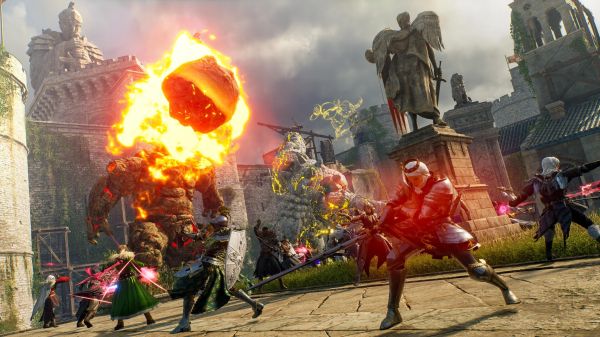
Large public bosses attract enough players to create an impressive scene. Dozens of characters surround an enormous target, abilities fill the arena, and the health bar represents a shared server objective. These encounters communicate the scale that THRONE AND LIBERTY promises better than routine quests. Seeing a huge enemy emerge in an open region remains exciting even after I understand the reward structure.
The practical combat can become visually chaotic. Effects overlap, character models block important animations, and performance may decline when the area reaches high population. My personal contribution can feel difficult to measure because the boss is receiving damage from every direction. Mechanics are more satisfying when the encounter divides players into clear responsibilities rather than relying mainly on mass participation.
Loot distribution has historically been one of the most sensitive parts of this content because rare rewards influence both personal progression and guild economies. A player may participate successfully without receiving anything memorable, while another benefits from favorable distribution rules or organizational control. The excitement of rare drops supports long-term interest but can also make the event feel unrewarding. Consistent secondary progression helps soften that uncertainty.
Cooperative Dungeons Reveal the Better Side of the Combat
Six-player dungeons provide clearer mechanics, defined roles, and encounters where individual performance matters. Bosses require movement, defensive timing, target priority, and cooperation rather than simply overwhelming them with a public crowd. These activities helped me understand how my build contributed to a team. A weapon combination that felt effective during solo quests could reveal serious weaknesses inside a structured party.
The strongest dungeon bosses introduce mechanics gradually and punish mistakes clearly enough that improvement feels possible. One failed attempt teaches positioning, another reveals the correct target, and a later run becomes smooth because the group shares the solution. This progression creates the cooperative satisfaction expected from a good MMO. Random groups can still become hostile when players expect complete knowledge from everyone immediately.
Matchmaking makes entry convenient but cannot guarantee patience or balanced experience. Some players arrive with optimized gear and want a rapid run, while others are learning the encounter for the first time. The difference can create frustration even when everyone possesses enough power to succeed. Clear role expectations and accessible practice options improve the experience, but community attitude remains an important factor.
Dimensional Trials Give PvE Players a Serious Progression Path
Higher-difficulty dungeon systems extend familiar encounters through stronger enemies, modifiers, stricter mechanics, and competitive completion goals. They provide a reason to refine equipment and group coordination beyond ordinary dungeon clears. The progression resembles challenge modes found in other modern MMORPGs, where success depends on both character power and execution. This gives dedicated PvE groups a repeatable objective with measurable improvement.
The system can become repetitive when the same environment is revisited mainly with larger numbers or altered restrictions. The best modifiers change movement, target priority, and team composition rather than simply increasing enemy health. A challenge should require a new approach, not only a longer version of the previous one. THRONE AND LIBERTY sometimes achieves this balance and sometimes relies too heavily on numerical pressure.
I appreciate having difficult group content that does not depend on large guild warfare. It allows a smaller group of friends to pursue meaningful goals on its own schedule. Rankings and timed performance naturally encourage optimized builds, which can reduce experimentation at the highest level. The mode remains valuable because it gives PvE-focused players a long-term destination beyond collecting equipment for its own sake.
Large-Scale PvP Is the Game’s Defining Spectacle
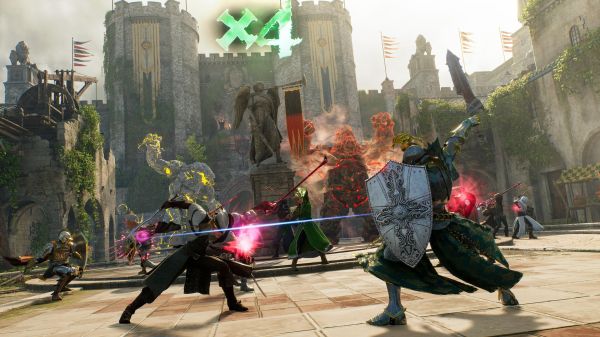
THRONE AND LIBERTY becomes a different game when hundreds of players gather around a contested objective. Guilds establish formations, ranged groups attack from protected positions, tanks control narrow routes, and coordinated parties attempt to disrupt healers or strategic targets. The battlefield is less about isolated duels and more about movement, communication, and the ability to maintain organization inside visual chaos. No ordinary quest communicates the game’s identity as strongly as a successful large-scale conflict.
My individual actions can feel simultaneously important and insignificant. One well-timed control ability may help the group secure a position, yet I can also disappear within seconds after being targeted by an organized enemy party. Survival depends heavily on staying connected to the group and understanding when the frontline is moving. Players approaching the battle as a collection of personal duels usually become easy targets.
The scale creates technical and readability problems. Character effects, nameplates, guild indicators, damage numbers, siege objects, and environmental structures compete for attention. Performance settings must often be adjusted specifically for these encounters. Even with those limitations, the sense of participating in an actual server conflict provides something smaller competitive modes cannot reproduce.
Guilds Are Not Optional for Experiencing the Full Game
A solo player can follow the story, explore, complete contracts, use matchmaking, and participate in public activities. However, the deeper identity of THRONE AND LIBERTY is tied to guild organization. Guild bosses, contracts, wars, territory objectives, alliances, and castle sieges all assume that players will join a larger social structure. Remaining completely independent means avoiding many of the activities where the game is most ambitious.
A good guild transforms the experience. Experienced members explain builds, organize dungeon groups, share information about events, and provide access to coordinated PvP that public matchmaking cannot reproduce. The game begins feeling like a persistent community rather than a sequence of personal progression menus. Even routine tasks gain context when they contribute to a shared objective.
A poor guild can create the opposite experience. Leadership may control rewards unfairly, demand attendance, prioritize a small internal group, or treat the game like employment. Competitive guilds naturally require organization, but the boundary between teamwork and obligation can disappear quickly. Choosing the right community is almost as important as choosing the right weapons.
Castle Sieges Create Politics Beyond the Battlefield
Castle control represents one of the highest expressions of guild power. Alliances must prepare, organize roles, understand routes, protect objectives, and respond to rival groups whose plans extend beyond the immediate fight. The battle is influenced by diplomacy before the first attack begins. Agreements, rivalries, betrayal, and server reputation can matter as much as raw combat power.
This political layer gives the game a persistent social history. A guild that wins control becomes visible to the wider server, while defeated alliances adjust membership and strategy for the next opportunity. Players remember leadership decisions, distribution controversies, and unexpected alliances. The world feels more alive when ownership and influence change through community action.
The system also concentrates power. Dominant alliances may control access, rewards, and competitive momentum in ways smaller guilds struggle to challenge. Server balance can deteriorate when the strongest groups cooperate rather than compete. Mechanics designed to encourage shifting alliances and wider participation are essential for preventing one political structure from becoming permanent.
Small-Scale PvP Is Easier to Read but Less Unique
Arenas and battlegrounds provide clearer competitive environments where individual builds and mechanical decisions are easier to evaluate. Fewer players mean I can identify threats, track cooldowns, and understand why a fight was won or lost. Team composition remains important, but one successful play has a more visible effect. These modes are useful for learning PvP without immediately entering a siege.
The balance problems become more obvious at this scale. Certain weapon combinations can dominate specific roles, and coordinated control may remove a player before they can respond. Gear differences are also more visible because there is less battlefield chaos to hide them. Competitive matchmaking must consider both player skill and progression, which is difficult in a game where equipment matters substantially.
I enjoy these modes as practice and focused competition, although they do not provide the same identity as large guild warfare. Many MMORPGs offer arena combat, while fewer support convincing battles involving server politics and territorial goals. THRONE AND LIBERTY should continue improving small-scale balance without allowing that format to determine every change made to the broader game.
Gear Progression Is Deep, Satisfying, and Frequently Exhausting
Equipment is not defined only by one item level. Traits, upgrades, set relationships, runes, accessories, and additional systems influence how effectively a build performs. Finding the correct base item may be only the beginning of the investment required to make it competitive. This depth provides long-term goals and allows careful players to improve through planning rather than luck alone.
The complexity also creates fear of making an expensive mistake. Resources used on one item may be difficult to recover, while a later update can change which combination is preferred. Transferring or inheriting progress reduces some losses but introduces additional costs and rules. The game’s own developers have acknowledged that certain progression expenses and daily expectations became too demanding, illustrating how easily depth can become pressure.
I enjoy planning upgrades when every step creates a noticeable benefit. The process becomes less satisfying when I repeat activities mainly to acquire one currency required by another system. Too many intermediate materials make the equipment feel like a collection of administrative tasks rather than a powerful object. The best future updates will simplify friction without removing meaningful build decisions.
The Auction House Connects Players Through Real Economic Pressure
The marketplace allows valuable items, traits, materials, and other goods to move between players. Prices respond to supply, demand, updates, new content, and the behavior of large guilds. Learning the market can become a separate form of progression because a well-timed sale may provide more value than another hour of ordinary farming. The economy gives rare drops importance even when they do not fit my personal build.
The premium-currency relationship makes the marketplace controversial. Players can acquire currency through transactions and use it to purchase progression-related goods offered by others. This does not guarantee combat skill, but it can reduce the time required to assemble expensive equipment. The distinction between paying for convenience and paying for power becomes difficult to maintain when gear strongly influences PvP.
I found the system more acceptable when I treated the market as an exchange between players rather than a direct equipment store. Valuable drops allow non-paying players to participate and build currency through gameplay. However, players with large budgets still possess more flexibility and can react to market opportunities immediately. Competitive trust depends on progression remaining achievable without feeling designed to create spending pressure.
Daily Limits Prevent Endless Farming and Create a Schedule
Many activities use contracts, tokens, attempts, or other forms of limited access. These restrictions prevent one player from farming the most valuable content continuously and encourage movement between different systems. They also make short sessions productive because I can complete a limited set of meaningful tasks without competing against someone playing all day. The structure supports controlled progression in theory.
In practice, several limits can combine into a long list of obligations. Missing a day may feel like wasting resources, while completing everything can require more time than intended. The game begins deciding the order of my evening through expiring opportunities and accumulating tokens. Developers have recognized that required daily playtime became too aggressive, which reflects a wider live-service problem rather than one isolated feature.
I enjoy daily structure when it offers choices. I should be able to focus on dungeons, PvP, exploration, or guild goals without feeling that every other system has been neglected. The game becomes tiring when efficient progression requires touching all of them. Flexibility is especially important for an MMO competing with work, family, and other games for long-term attention.
Contracts Provide Reliable Progress but Little Excitement
Contracts offer repeatable objectives involving enemies, resources, locations, and public activities. They provide materials, experience, currency, and a predictable reason to visit different regions. The system is useful because I can select tasks that overlap and complete several goals during one trip. It gives ordinary play a clear economic purpose.
The repetition becomes obvious quickly. Defeating another group of familiar enemies or interacting with another resource does not create a memorable experience simply because the reward remains useful. Contracts are maintenance content rather than adventures. They work best as a background system completed naturally while pursuing another objective.
I would prefer more contracts connected to dynamic choices, unusual enemy combinations, or temporary regional conditions. The system does not need elaborate storytelling, but variation would make daily completion less mechanical. Reliable progression is necessary in an MMO, yet reliability should not require complete predictability.
Open-World Dungeons Create Excellent Risk and Atmosphere
Large underground or enclosed regions contain dense enemy groups, valuable drops, multiple floors, and enough space for several parties to operate simultaneously. These areas feel more dangerous than ordinary fields because routes are narrower and retreat can become difficult. Resource systems may limit how long I can continue earning the best rewards, adding pressure to use time efficiently. The shared environment also means other players can affect enemy availability and safety.
During peaceful conditions, these dungeons support cooperative farming and spontaneous group formation. During conflict periods, the same passages can become dangerous PvP zones where stronger guilds control entrances or valuable rooms. This transformation gives the location two distinct identities. A familiar farming route can become hostile without changing its physical structure.
I enjoy the atmosphere because entering deeper levels feels like an expedition rather than a short instanced run. Supplies, party durability, and exit routes matter over a longer period. The repetition of enemy farming eventually appears, but the shared world preserves some unpredictability. These dungeons are one of the better examples of THRONE AND LIBERTY combining classic MMO ideas with modern presentation.
The Visual Design Often Compensates for Familiar Quest Structure
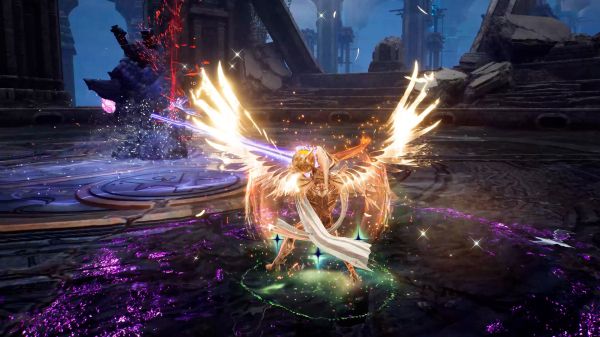
THRONE AND LIBERTY is capable of producing striking scenes with enormous creatures, detailed armor, dramatic weather, populated cities, and wide landscapes. Character abilities create bright elemental effects without completely abandoning the grounded materials of weapons and armor. Major bosses possess enough scale to dominate the screen. The production values make routine activities easier to enjoy because the surrounding world remains attractive.
Character customization provides a good range of facial, body, hair, and appearance options, although armor progression eventually defines most of the visible identity. Cosmetic outfits allow stronger personalization but are naturally connected to the premium economy. Some designs fit the fantasy world well, while others move toward the increasingly elaborate style common in long-running online games. Visual coherence may become harder to preserve as more seasonal cosmetics arrive.
Animation quality varies according to activity. Movement and transformation are generally smooth, while crowded combat can produce abrupt transitions and characters sliding between targets. Cutscenes look polished but sometimes lack emotional weight because the writing remains functional. The game is visually impressive from a distance and occasionally less convincing when examined closely.
Sound Gives Large Battles Necessary Weight
Weapons, spells, monsters, environmental effects, and music create a strong sense of scale. World bosses sound physically imposing, and crowded battles produce a dense mixture of impacts and magical effects. The soundtrack supports exploration without dominating it, while major encounters use more dramatic themes. Audio helps the world feel larger than the immediate camera view.
Clarity becomes a challenge during guild warfare. Important ability cues may disappear beneath dozens of simultaneous sounds, and voice communication must compete with the game’s own battle noise. Reducing certain effects can improve competitive awareness while weakening spectacle. Large-scale games always struggle to preserve both excitement and information.
I value the quieter environmental audio most during exploration. Wind, water, distant creatures, settlement activity, and changes in weather give locations personality before combat begins. These details encourage me to experience the world rather than teleport between menus. They also make the sudden arrival of a public battle feel more dramatic.
Performance Is Impressive Until the Population Becomes the Feature
The game handles an attractive open world and substantial player counts surprisingly well under normal conditions. Cities remain populated, public events can gather large groups, and transitions across the world are usually smooth. On capable hardware, the visual quality and draw distance make exploration particularly impressive. Optimization is one of the reasons the scale feels believable.
Castle sieges and major guild conflicts create a much harsher test. Frame delivery can become unstable, characters may appear with reduced detail, and effects need to be limited for practical play. Network conditions add another layer because delayed skills or defensive reactions can decide an encounter immediately. Competitive players often prioritize clarity and responsiveness over the presentation shown in promotional footage.
The available settings help, but configuring them for ordinary exploration and mass PvP can feel like preparing two different games. A visual preset specifically designed around large conflicts would make adjustment easier. The game deserves credit for attempting battles of this scale at all. Their technical imperfections remain significant because they occur during the content that most clearly defines the experience.
The Interface Contains More Information Than Elegance
THRONE AND LIBERTY needs to display abilities, equipment, traits, currencies, events, schedules, party information, guild systems, contracts, maps, notifications, shops, and progression menus. The result is functional but crowded. Important systems are available, yet navigating them can require several layers and repeated confirmation. The interface reflects the amount of content without always helping me understand which content deserves immediate attention.
Notification markers create unnecessary pressure because nearly every menu contains something to claim, inspect, or upgrade. Clearing them can become a routine unrelated to meaningful decision-making. I often wanted one centralized summary of available rewards, expiring resources, and important events. The current structure spreads attention across too many separate screens.
Combat customization is more successful because ability placement, targeting preferences, and control options provide useful flexibility. Players can adjust the experience for keyboard and mouse or controller, although the density of commands remains easier to manage on PC. Controller support makes the game accessible on consoles without completely hiding its MMO complexity. Continued interface refinement is essential as additional systems are added.
Controller Support Is Better Than the Number of Systems Suggests
Playing a large MMORPG with a controller can become uncomfortable when dozens of abilities and menus compete for limited buttons. THRONE AND LIBERTY uses combinations, radial access, target controls, and contextual actions to make the structure manageable. Basic combat, movement, and exploration feel natural enough that console players are not obviously receiving a reduced version. The learning curve is still substantial.
Target selection can become difficult in crowded fights. Choosing the correct enemy, ally, or environmental object may require more cycling than the situation allows. Large-scale PvP exposes this limitation because dozens of valid targets occupy the same area. Custom settings and practice improve control, but keyboard and mouse retain advantages in rapid interface navigation.
I appreciate that the game does not treat controller support as an afterthought. Menus remain readable from a distance, abilities can be organized logically, and morph movement feels especially comfortable. Cross-platform availability helps maintain a larger community. Competitive balance between input methods will continue requiring attention, particularly in modes where targeting speed matters.
Free-to-Play Access Is Generous Until Optimization Becomes the Goal
The entire world, story, public content, dungeons, guild systems, and major competitive activities can be entered without purchasing the game. This makes the initial value extremely strong because I can explore for many hours before deciding whether the progression structure deserves further commitment. The visual production and content volume are substantial for a free entry point. Players interested mainly in casual exploration and ordinary PvE can experience a great deal without spending.
The pressure becomes stronger when competitive optimization matters. Battle passes, premium currency, marketplace access, cosmetic packages, and progression conveniences surround the core game. None of these replaces understanding the combat or participating in organized guild activity. They can still reduce friction and accelerate access to valuable equipment or resources.
I am most comfortable with the model when purchases support appearance or provide predictable account value. Randomized pressure and indirect power create greater concern because the game’s central identity includes competitive territory and guild warfare. A free-to-play MMO needs revenue, but players must believe that time and skill remain respected. THRONE AND LIBERTY approaches that balance without resolving every doubt.
The New-Player Experience Is Fast but Overloaded
The main quest raises levels quickly and introduces systems in a controlled order. New abilities, weapons, morphs, dungeons, contracts, guilds, events, and equipment upgrades appear regularly. This pace prevents the opening from feeling empty. It also means that one tutorial window is often replaced by another before I have fully understood the previous system.
Returning players face an even larger information problem after significant updates. New regions, equipment tiers, currencies, events, and catch-up systems may all appear simultaneously. The game wants to bring them toward current content quickly, but acceleration can make the underlying progression harder to understand. Strong catch-up design should simplify the path rather than add another temporary layer.
Community guides become extremely useful, particularly for weapon combinations and investment priorities. External knowledge helps avoid expensive mistakes, but essential decisions should not require studying a separate spreadsheet. The game is approachable at the level of movement and combat. It becomes much less approachable when the question changes from what can be upgraded to what should be upgraded.
The Endgame Is a Collection of Competing Priorities
Reaching the endgame does not produce one obvious activity. Dungeons, trials, raids, contracts, open-world farming, world bosses, guild events, PvP, battlegrounds, equipment development, and economic management all compete for time. This variety allows different players to define their own priorities. It also creates a risk that efficient progression becomes a checklist covering nearly every system.
I enjoyed the endgame most after accepting that complete efficiency was unnecessary. Focusing on one build, a few preferred activities, and guild commitments made the game feel more manageable. Attempting every daily and weekly opportunity quickly turned leisure into administration. The game contains enough content to support choice, but reward structures sometimes make choice feel like loss.
Developers adjusting daily expectations is therefore encouraging. A sustainable MMO should allow players to miss activities without believing that competitive relevance has disappeared. Long-term loyalty grows when returning feels easy. It weakens when a short absence creates a wall of unfinished obligations.
The Frozen Regions Expand the World but Repeat Old Progression Tensions
New areas provide colder landscapes, additional enemies, equipment paths, field activities, and large encounters. The environmental change gives exploration a renewed sense of discovery after many hours in earlier regions. New content also provides a natural point for returning players and guilds to reorganize. Expansion is essential for an MMO whose world is one of its strongest qualities.
The initial structure of new progression can introduce excessive repetition, high costs, and participation requirements. When one reward must be processed through another repeated activity, the system begins feeling layered for the sake of extending playtime. The developers’ willingness to remove redundant steps and reduce group-entry barriers is a positive response. The underlying issue is that new expansions frequently add complexity faster than old complexity is removed.
I prefer expansions that introduce different decisions rather than another vertical ladder using unfamiliar currencies. New regions should change routes, enemy behavior, group composition, and build possibilities. A higher equipment number provides motivation temporarily. A genuinely different activity gives the world longer value.
THRONE AND LIBERTY Is Better With a Clear Personal Goal
The game contains enough systems that wandering without a plan can become overwhelming. I might spend an evening claiming rewards, checking equipment, reviewing events, and moving between activities without feeling that one meaningful objective was completed. Setting a clear goal changes the experience. Improving one skill, finishing one dungeon tier, preparing for one guild event, or acquiring one item gives every smaller activity context.
This approach also helps control spending and resource use. Materials remain easier to manage when I know which build and content type they support. The weapon system promises broad flexibility, but practical progression rewards disciplined focus. A personal plan protects me from reacting to every notification and market opportunity.
The same principle applies to social play. A casual player, dungeon specialist, trader, arena competitor, and siege participant may all judge the game differently. THRONE AND LIBERTY does not provide one equally polished path for everyone. It provides a large collection of paths whose value depends on whether the player finds a community and objective matching them.
A Spectacular Guild MMO Surrounded by Familiar Live-Service Pressure
THRONE AND LIBERTY is at its best when Solisium fills with other players pursuing the same dangerous objective. A castle siege, guild conflict, public boss, crowded dungeon entrance, or large field event communicates the scale promised by the visual presentation. Weapon combinations provide flexible character identities, morphs make movement enjoyable, and cooperative bosses reveal more combat depth than the early quests suggest. The game understands how to make an online world appear populated and politically active.
Its weaknesses come from the systems built around that world. Progression contains too many materials and interconnected upgrades, daily activities can become obligations, and changing builds after major investment remains uncomfortable. Competitive power is influenced by equipment, organization, market access, and time commitment alongside mechanical skill. Players who remain outside guild structures may also miss the content that most clearly separates the game from other MMORPGs.
I continue enjoying it when I ignore complete efficiency and focus on the experiences that suit its strengths. Exploring a new region, learning a dungeon, developing one weapon combination, and joining a coordinated guild battle create clear reasons to return. The experience becomes less appealing when the evening is consumed by currencies, claim screens, repeated contracts, and anxiety about falling behind. THRONE AND LIBERTY contains a remarkable multiplayer world, but it often asks players to manage too much machinery before reaching it.
For someone looking for a completely solo fantasy adventure or a relaxed MMO without competitive pressure, the game may feel beautiful but unnecessarily demanding. For a player willing to join a guild, study a build, accept long-term progression, and participate in large organized battles, it can deliver a sense of scale few contemporary online games attempt. THRONE AND LIBERTY does not reinvent the MMORPG, yet it gives the genre an impressive stage. Its future depends on whether the developers can keep that stage exciting while reducing the amount of routine work required for players to stand on it.
Pros:
- Dynamic and engaging combat system
- Robust customization options for characters and gameplay
- Stunning visuals and detailed audio design
- Accessible on multiple platforms including PC, Mac, Android, and unblocked environments
- Active and evolving community enhancing the overall experience
- Immersive narrative and intricate world-building
Cons:
- Potential performance issues on lower-end devices
- Complex systems may lead to imbalance if mods or cheats are misused
- Steep learning curve that might overwhelm beginners






Recent Reviews

Minecraft

Grand Theft Auto V

Toca Boca World

Roblox

Leave a comment
Your comment is awaiting moderation. We save your draft here
0 Comments