Review
Dead by Daylight has one of those multiplayer concepts that sounds almost too simple to support thousands of hours. Four survivors ente...
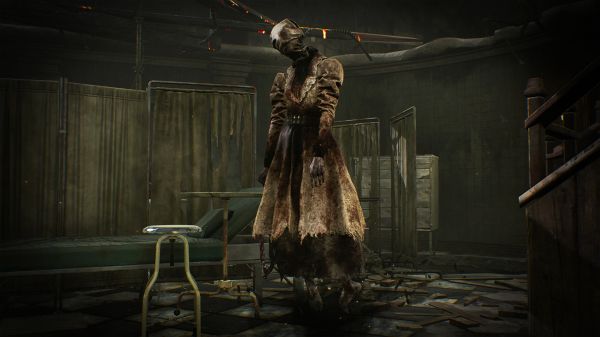
Dead by Daylight: A Thrilling Odyssey of Strategy, Suspense, and Survival
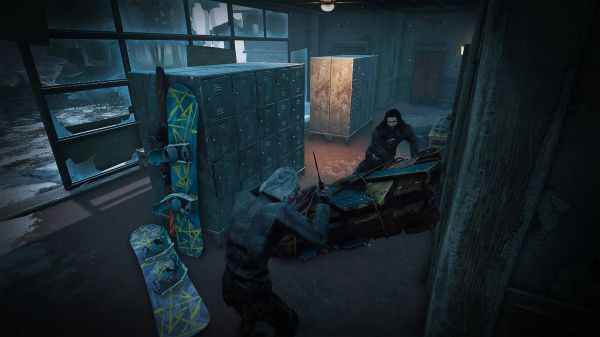
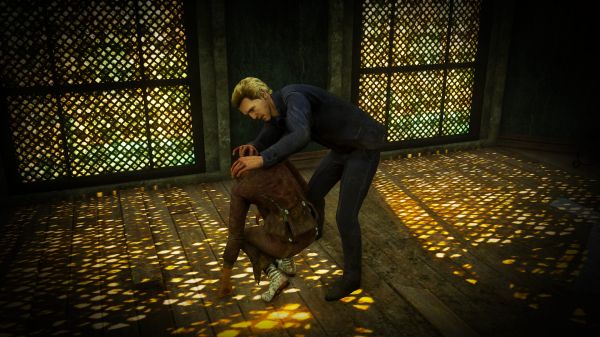
Dead by Daylight has one of those multiplayer concepts that sounds almost too simple to support thousands of hours. Four survivors enter a hostile trial, repair generators, avoid a supernatural hunter, rescue one another, and attempt to escape before the match collapses around them. The opposing player patrols the map, follows tracks and sounds, interrupts repairs, and tries to control enough territory to prevent the group from completing its objectives. That basic structure has remained recognizable for years, but the enormous collection of characters, perks, powers, maps, items, and player strategies has transformed it into something far more complicated than the original premise suggests.
I still find the opening minutes of a match unusually effective because nobody possesses complete information. As a survivor, I may begin beside a useful generator or in an exposed area where the first patrol will find me quickly. As the hunter, I need to identify where the survivors have spawned, which objectives are easiest to protect, and whether the opposing team appears organized. Every match becomes a contest over information before it becomes a contest over mechanical skill.
The Four-Against-One Format Creates Natural Drama
Most competitive games attempt to give both teams similar resources and objectives, but Dead by Daylight is deliberately uneven. The hunter possesses greater direct power, while the four survivors gain strength through numbers, distributed pressure, and the ability to complete several tasks at once. Neither side plays the same game, even though both participate in the same trial. This asymmetry creates tension because one player must think about the entire map while the group can divide responsibilities across it.
The structure also makes every mistake feel different depending on the role. A survivor who remains too long in a dangerous area may create a lengthy chase that protects teammates, while a poorly chosen route can end almost immediately. The hunter may commit too much time to one elusive target and allow several generators to be completed elsewhere. Success rarely depends on winning every interaction because the larger match continues while two players are focused on one chase.
I enjoy this imbalance because it creates stories without requiring scripted events. One survivor may distract the hunter during the final generator, another may perform a risky rescue, and a third may open an exit while the team struggles to regroup. The opposing player experiences the same sequence as a rapid loss of map pressure and a final attempt to recover control. Both perspectives produce a coherent narrative even when the players disagree completely about what happened.
Playing Survivor Is Mostly About Managing Time
Survivor gameplay appears to revolve around repairing generators, but the real resource is time. Every second spent healing, hiding, searching a chest, cleansing a totem, or moving toward another objective has an opportunity cost. Some of these actions are necessary, while others feel safe but contribute little to escaping. Strong teams understand that survival does not mean avoiding all danger; it means using the available time more effectively than the hunter can interrupt it.
I improved when I stopped treating every heartbeat as a command to hide. Leaving a generator too early may protect me temporarily, but it also allows the hunter to create pressure without committing to a chase. Sometimes remaining visible and forcing the opponent to approach is more useful than quietly abandoning progress. The correct response depends on nearby cover, teammate positions, hook states, and how much of the match remains.
Solo matchmaking makes these calculations harder because I cannot always know what the other survivors are doing. One person may be repairing efficiently while another searches the edge of the map for an item, and a third may be waiting for a rescue opportunity that has not appeared. Interface information has improved communication, but it cannot fully replace a coordinated group discussing objectives and danger. The role remains accessible, yet efficient survivor play requires much more awareness than holding one repair input.
Generator Repair Is Intentionally Simple
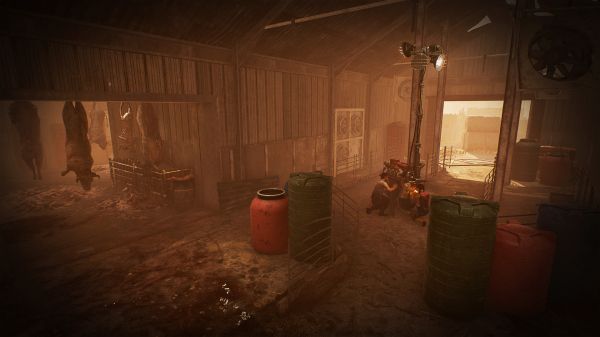
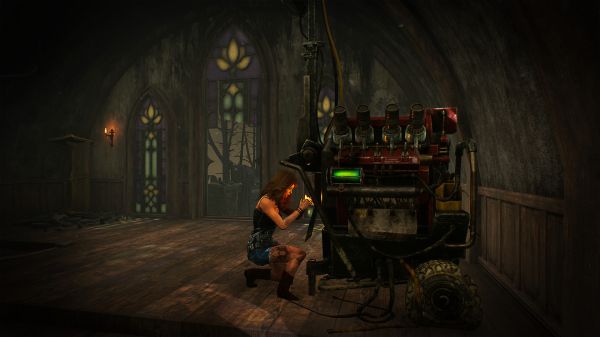
Repairing a generator is mechanically limited because the surrounding situation provides the real challenge. I hold the interaction, respond to skill checks, watch nearby routes, listen for the terror radius, and decide whether progress is worth the growing risk. The activity itself would become repetitive if separated from the larger match. Inside the trial, it functions as a commitment that makes every approaching sound meaningful.
Skill checks add enough attention to prevent complete passivity without turning repair into a demanding mechanical test. Missing one creates noise, loses progress, and may reveal the location to the hunter. Hitting the stronger timing zone offers a small advantage, although chasing perfect results can create unnecessary failures. The best repair decisions are usually strategic rather than reflexive.
The generator system also gives the hunter a readable set of priorities. Some objectives are isolated and difficult to defend, while others form a compact group that can be patrolled efficiently. Survivors can accidentally create a dangerous final arrangement by completing the easiest generators first. This turns objective selection into map strategy, even though public teams do not always recognize the problem until the final phase becomes extremely difficult.
The Chase Is Where Dead by Daylight Becomes a Mechanical Game
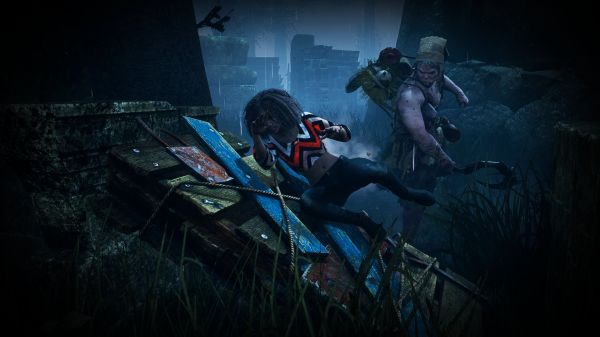
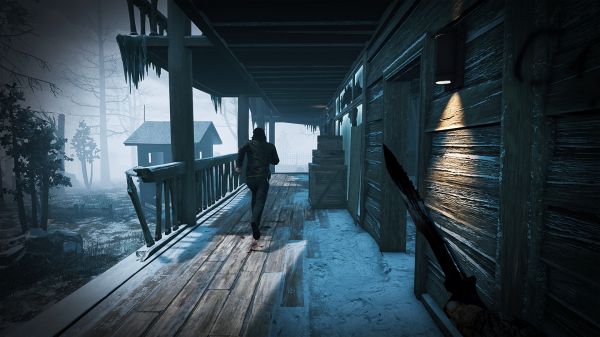
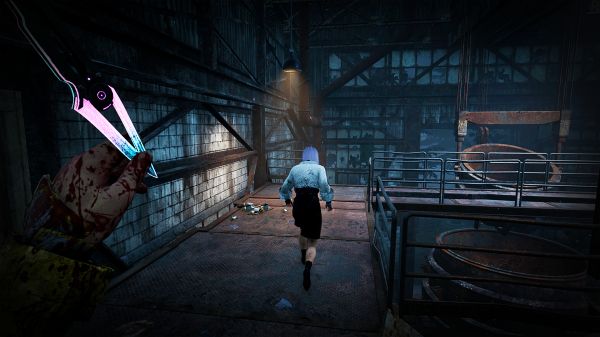
A chase transforms the experience from quiet information gathering into a rapid test of movement, prediction, and map knowledge. Survivors use windows, pallets, walls, elevation, and line-of-sight breaks to delay capture, while the hunter attempts to shorten routes and anticipate the next decision. The same structure can produce completely different outcomes depending on how both players understand it. A strong environmental loop may protect an experienced survivor for a long time but provide almost no value to someone who runs through it without a plan.
I find the mind games more interesting than raw movement speed. A survivor can pretend to use a window and suddenly reverse direction, while the hunter can hide visual information by changing camera movement or approaching from an unexpected side. These small decisions last only seconds, yet they influence the wider match because every extended chase gives the remaining team more time. Mechanical mastery becomes valuable because it creates strategic pressure elsewhere.
The system can also feel inconsistent when latency, collision, animation, or unclear hit ranges affect the result. A strike may appear to connect from farther away than expected, or a vault may complete visually before the game registers the survivor as safe. These moments are especially frustrating because a chase depends on precise spacing. Dead by Daylight often feels excellent when both players trust the interaction and noticeably weaker when the technical result contradicts the visual one.
Pallets Are Resources, Not Permanent Safety
Pallets allow survivors to create temporary distance or interrupt a pursuit, but every use removes a future defensive option from the map. Dropping one immediately may save health while weakening the area for later teammates. Waiting too long can preserve the resource but result in an avoidable hit. The decision is simple enough to understand and difficult enough to remain meaningful after many hours.
Experienced players evaluate pallets according to location, nearby structures, and the stage of the match. A strong central pallet may deserve greater protection than one positioned beside a safe window. The hunter also decides whether destroying it is worth losing additional time. This small interaction reflects the entire game because both sides continuously exchange local advantage for wider pressure.
Public teams often consume these resources without considering who will need them later. By the final generators, one side of the map may contain almost no reliable defense. The hunter can then guide chases toward that weakened area and gain much faster downs. Dead by Daylight rewards memory because the changing condition of the map matters as much as its original layout.
Windows Turn Map Knowledge Into Survival
Windows provide reusable movement options, but their value depends on angle, distance, and the route taken before reaching them. A survivor approaching correctly can perform a faster vault, while poor alignment produces a slower animation that gives the hunter more time. Repeated use may also block the opening temporarily, preventing one powerful location from being exploited forever. The mechanic encourages movement through connected structures rather than circling one object indefinitely.
Learning window locations changes the way each map feels. A building that originally seemed confusing gradually becomes a collection of routes, visual breaks, and emergency options. Strong hunters understand the same geometry and approach it from directions that reduce the survivor’s advantage. The chase becomes a conversation between two people who know the building and are waiting for the other to reveal a plan.
Procedural variations make complete memorization less reliable. Familiar structures may appear in different positions, and the surrounding pallets or terrain can change between matches. This creates enough unpredictability to keep experienced players attentive. The system is not fully procedural, but it prevents every trial from becoming one fixed sequence of rehearsed routes.
Playing the Hunter Is a Constant Battle Against the Clock
The hunter appears powerful because survivors cannot win a direct confrontation, but the role operates under continuous time pressure. Four opponents can repair separate generators, heal, rescue, and reposition while I interact with only part of the team. Spending too long searching an empty area may be more damaging than losing a short chase. The role requires aggression, but uncontrolled aggression can allow the match to escape before I recognize it.
I enjoy the strategic demand of deciding when to abandon a pursuit. Continuing may eventually secure a capture, yet the remaining survivors could complete multiple objectives during that time. Leaving preserves map pressure but allows the injured player to recover and return later. The correct decision depends on the strength of the area, the target’s condition, generator progress, and the unique power being used.
This role can feel mentally exhausting because every sound and visual clue suggests several possible responses. A failed skill check may reveal one survivor while another is already approaching a rescue. An injured character may be nearby, but protecting a nearly completed generator could be more important. Strong play comes from prioritization rather than simply following the first movement seen.
Each Hunter Power Changes the Rules of the Chase
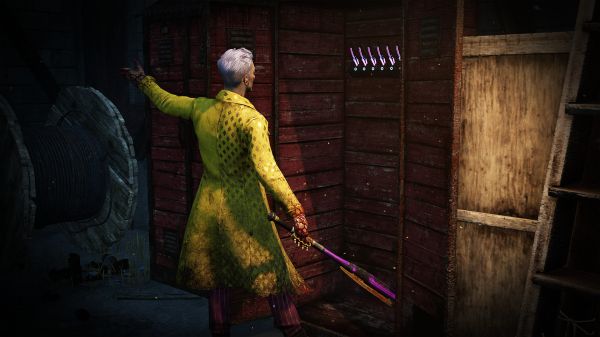
The large roster remains one of Dead by Daylight’s greatest strengths because every hunter approaches movement and pressure differently. Some close distance rapidly, others place traps, attack from range, travel across the map, manipulate visibility, or force survivors to interact with additional objectives. Learning a new character can make familiar maps feel different because previously safe routes may become dangerous. The role offers substantial variety without changing the core generator-and-rescue structure.
This variety also creates an enormous learning burden for survivors. Recognizing the opposing character is only the beginning because add-ons, perks, and player style can change how the power is used. A correct strategy against one build may become ineffective against another. Longtime players benefit from accumulated knowledge that new players cannot realistically obtain through a short tutorial.
I appreciate characters whose powers create clear interactions for both sides. The hunter gains a tactical advantage, while survivors receive understandable methods of responding or reducing its strength. Problems appear when feedback is unclear or when one power creates situations that feel almost unavoidable without specific knowledge. Balance is most satisfying when a strong ability forces adaptation rather than removing meaningful decisions.
The Survivor Roster Is Mechanically Less Distinct
Survivors share the same basic movement and objectives, so their individual identity comes primarily from appearance, voice, story, and teachable perks. This makes selecting a favorite character largely a matter of personal attachment rather than one fixed gameplay function. I can place an unlocked perk on many different survivors and eventually build them toward similar roles. The freedom is useful, though it makes the roster mechanically flatter than the collection of hunters.
The advantage is that I am not permanently locked into one ability package because I enjoy a particular character design. Progression allows builds focused on repair, healing, information, chases, rescue, stealth, or personal survival. The same survivor can change roles between matches according to the team and current objective. Build flexibility provides variety even when the character model itself offers no exclusive power.
The downside is that new survivors can feel like perk deliveries rather than entirely new playstyles. Their visual and narrative identity may be excellent, but the gameplay impact eventually spreads across the whole roster. Behaviour has maintained interest through a mixture of original creations and recognizable licensed figures. The collection is culturally impressive, even when mechanical differences remain tied to perks rather than bodies.
Perks Create Freedom and Endless Balance Problems
Perks allow both sides to build around preferred strategies. Survivors can emphasize information, healing, repair speed, recovery, chase endurance, or protection, while hunters can improve tracking, generator control, pursuit, stealth, and interactions with hooks. Combining four perks creates enough flexibility for experimentation. It also encourages players to search for combinations that reduce the weaknesses of one character or amplify a specific power.
The system becomes difficult to balance because every new perk enters a network containing years of earlier additions. A modest effect may become oppressive when combined with another ability, while a nerf aimed at competitive teams may make the perk nearly useless for ordinary players. Meta builds form naturally because the game creates strong incentives to use reliable information and objective control. Variety exists, but high-level play often narrows it toward a smaller group of trusted options.
I enjoy experimenting most when an unusual build changes my decisions without making the match completely dependent on surprise. A stealth setup may help me approach differently, while an information build can encourage better map awareness. The healthiest perks create opportunities rather than guaranteeing outcomes. Dead by Daylight remains interesting because the build system continually produces new interactions, even though those interactions also create many of its balance controversies.
The Bloodweb Is Better Than It Once Was but Still Repetitive
Progression provides perks, items, add-ons, and offerings through the Bloodweb. The system communicates the game’s dark identity effectively, but purchasing large numbers of nodes becomes administrative work after many hours. Automation and quality-of-life improvements reduce the number of individual inputs required. The underlying process still asks players to spend currency repeatedly across a large roster.
Prestige allows character perks to become available more broadly, making long-term collection easier than the older progression structure. This is essential because the roster has expanded far beyond what a purely character-by-character grind could comfortably support. New players still face a significant amount of work before they can reproduce many established builds. The difference between understanding a useful combination and owning all required perks can be substantial.
I would prefer progression to focus more on meaningful choices and less on repeated purchasing. Selecting a development direction or preparing saved loadouts could feel more engaging than filling another web with items I may never use. The current system supports long-term play, but it often feels designed to consume time rather than reveal mastery. Dead by Daylight’s match depth is stronger than the interface used to unlock it.
Items and Add-Ons Add Another Layer of Risk
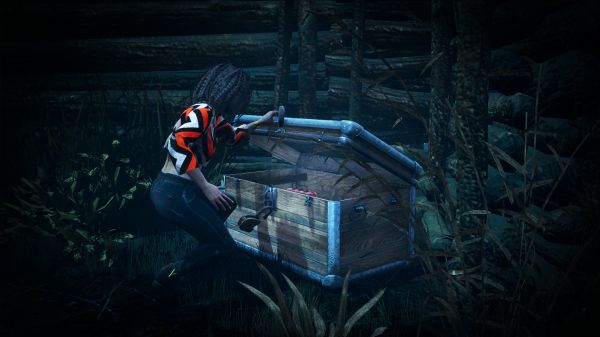
Survivors can carry tools, medical equipment, maps, keys, and other items that improve particular actions or provide additional information. Stronger items can influence a match significantly, but losing the trial may also mean losing the equipment. This creates a lighter version of extraction-game tension around valuable inventory. I often save powerful items for coordinated sessions and then realize I have accumulated more than I will realistically use.
Hunter add-ons modify powers by changing timing, range, secondary effects, or available strategies. Some produce subtle improvements, while others alter the way survivors must respond. This gives one character multiple practical configurations and helps prevent complete predictability. The balance becomes harder to read because players must understand both the base power and its possible variations.
Offerings influence maps, points, hooks, visibility, and other trial conditions. Their effect ranges from minor preference to a meaningful strategic choice. Entering a match after several unusual offerings can create immediate uncertainty about what the opposing side planned. These systems make preparation relevant, though they also add more information for new players to learn.
Solo Queue Can Feel Like Four Separate Games
Playing survivor without a coordinated group is the most inconsistent part of my experience. One teammate may repair continuously, another may perform excellent rescues, and the remaining players may hide until the match becomes almost impossible. Everyone possesses only partial information and may interpret the correct strategy differently. The result can feel less like teamwork and more like four individual survival plans happening near one another.
Interface indicators have improved the situation by revealing whether teammates are repairing, healing, being pursued, or performing other important actions. This information allows better decisions without introducing unrestricted voice communication. I can recognize when a rescue is already being handled or when the rest of the group is occupied. The system cannot communicate every tactical detail, but it reduces avoidable duplication.
The emotional difficulty comes from depending on strangers after investing time in a match. A teammate may leave me on a hook, bring the hunter directly toward an objective, or abandon the group during the final phase. I also make decisions that may appear equally unreasonable from their perspective. Solo queue reflects the horror theme effectively because isolation and uncertainty exist even inside a four-person team.
Playing With Friends Changes the Balance Dramatically
A coordinated group can share the hunter’s location, generator progress, available resources, planned rescues, and dangerous areas. This information removes much of the uncertainty built into the survivor role. Teams can distribute themselves efficiently and avoid sending several people toward the same task. Communication transforms survival from improvisation into organized pressure.
This creates a serious balance challenge because the same hunter may face a silent group of strangers in one match and an experienced voice-connected team in the next. Mechanics strong enough to challenge coordination can feel overwhelming against ordinary solo players. Systems balanced around weaker teams may collapse when every survivor shares information. Dead by Daylight has spent years attempting to serve both experiences inside one matchmaking environment.
I find group play more consistently enjoyable because mistakes become part of a shared story rather than unexplained behavior. Friends can warn one another, laugh about failed rescues, and deliberately attempt risky plans. The horror naturally becomes less intense when everyone is talking, but the teamwork becomes much deeper. The game functions as both a tense solo experience and a social party game, even though those identities frequently demand different balance decisions.
Camping and Tunneling Expose the Difference Between Winning and Fun
The hunter can sometimes gain an advantage by remaining near a captured survivor or repeatedly focusing on one person after rescue. These strategies may be tactically understandable, especially when objectives are progressing quickly. They can also remove one player from meaningful participation far earlier than expected. The debate persists because efficient competition and enjoyable match flow do not always point toward the same behavior.
Behaviour has added systems and perks intended to discourage the most extreme versions of these strategies. The results reduce certain situations without removing the underlying incentive completely. A hunter under severe time pressure may still decide that reducing the team to three survivors is the most reliable path. Survivors naturally experience that choice as personal even when it is strategically impersonal.
I prefer matches where pressure moves across the entire group and several chases develop before anyone leaves the trial. Those matches allow more players to demonstrate skill and create stronger final phases. I also understand why a hunter refuses to follow an unwritten rule that makes victory harder. The game’s design must solve these tensions mechanically because community etiquette can never remain consistent.
Skill-Based Matchmaking Produces Unclear Expectations
Matchmaking attempts to create opponents with comparable results, but visible character level and actual skill do not always align. A player may possess thousands of hours and experiment with a new role, while another may have strong mechanics but limited knowledge of one map. Group composition, selected character, perks, and current goals all influence performance. One hidden rating cannot describe every part of that variation perfectly.
Matches can therefore feel dramatically different from one session to the next. I may face opponents who make every chase difficult and immediately understand the strongest map routes, followed by a team that struggles with basic objectives. These differences keep the experience unpredictable but can reduce the sense of gradual competitive progression. Clearer ranked structures might help serious players while potentially increasing queue times and dividing the community.
The game also contains many participants who are completing challenges, experimenting with builds, or simply playing socially. Their immediate objective may not be identical to winning efficiently. Matchmaking cannot identify motivation, so one trial may contain players approaching it as competition, practice, or entertainment. This variety is part of Dead by Daylight’s personality and one source of its frustration.
The Maps Are Atmospheric but Uneven
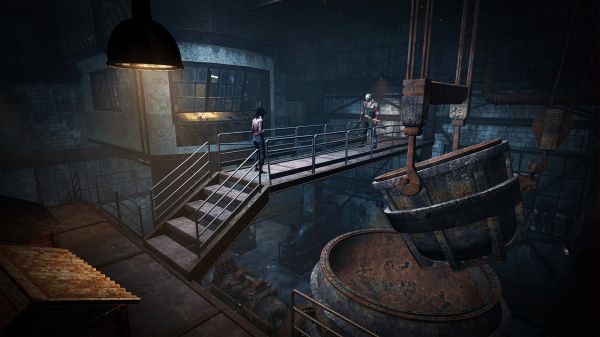
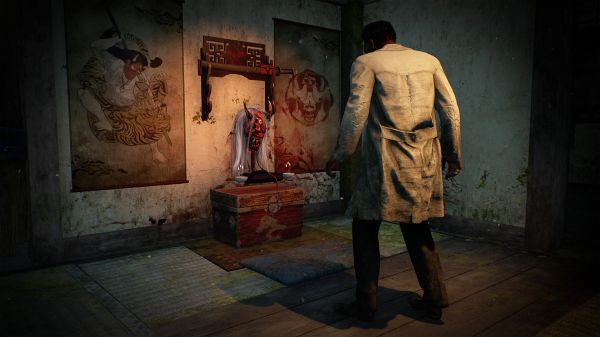
Dead by Daylight contains a large collection of realms covering forests, farms, hospitals, schools, laboratories, streets, temples, industrial areas, and other horror environments. The strongest maps combine recognizable visual identity with readable movement and meaningful strategic choices. I can understand where I am, predict how players may rotate, and use structures without every area feeling identical. Licensed environments are particularly effective when they capture the mood of their source without becoming confusing museums.
Balance varies significantly because map size, generator distribution, pallet strength, sightlines, elevation, and central structures affect each role differently. One environment may give survivors long connected routes, while another allows the hunter to patrol objectives efficiently. Random generation adds further variation, so the same realm can produce a manageable arrangement or a particularly difficult one. Map offerings become powerful because experienced players know which environments support their planned strategy.
Visual updates have improved many older locations, but clarity sometimes suffers when detailed vegetation, darkness, effects, and environmental clutter overlap. Horror atmosphere benefits from uncertainty, yet competitive movement requires readable obstacles and boundaries. The best maps create fear through sound and layout rather than hiding essential geometry. The weaker ones force me to fight the environment before I can respond to the opposing player.
Licensed Chapters Became the Game’s Cultural Engine
Dead by Daylight has grown into a meeting place for horror franchises that would rarely share one traditional game. Recognizable film, television, and gaming characters appear beside Behaviour’s original creations, allowing players to create combinations that resemble an impossible crossover collection. These collaborations attract new audiences and continually refresh public interest. The game’s longevity is closely connected to its ability to combine original material with licensed horror icons.
Licenses work best when the character’s power translates a familiar fantasy into Dead by Daylight’s established rules. A famous figure should feel recognizable without becoming mechanically disconnected from generators, hooks, chases, and rescues. Survivors need meaningful methods of responding, while fans should still recognize the source identity. This balancing act is difficult, but successful chapters create some of the roster’s most memorable experiences.
The commercial structure surrounding licenses can make the complete collection expensive. The base game provides substantial content, but owning every character and cosmetic requires a much larger investment. Older perks may also become desirable for competitive builds, encouraging purchases motivated by mechanics rather than affection for the franchise. The game remains playable without collecting everything, though its store continually displays how much exists outside the starting package.
Original Characters Give Behaviour More Creative Freedom
Original hunters are not restricted by external visual approval or established film rules, allowing the designers to build powers directly around the game. These characters can explore folklore, science fiction, body horror, psychological fear, and historical themes without needing to reproduce one known scene. Their stories also expand the Entity’s realm beyond a simple warehouse of licensed villains. Some of the most mechanically interesting powers come from this freedom.
Original survivors receive broader backgrounds and relationships that can be developed through archives, cosmetics, and future chapters. Their personalities may not be communicated strongly during ordinary matches because gameplay remains mechanically shared. Lore provides additional identity for players willing to read and complete related challenges. The game contains far more narrative material than the basic trial structure initially suggests.
I appreciate the mixture because licenses attract attention while original material prevents the game from becoming dependent on other companies’ characters. Behaviour can experiment, revisit its own themes, and create content on a schedule less restricted by external rights. The resulting universe is inconsistent but surprisingly rich. Dead by Daylight became larger than one horror crossover because it developed its own mythology alongside the famous guests.
The Archives Add Objectives and Lore but Encourage Awkward Play
Archive challenges provide currency, cosmetics, story entries, and reasons to experiment with different characters or mechanics. They can help players leave familiar builds and learn parts of the game they normally ignore. A challenge involving healing, chases, hooks, totems, or a particular power creates a short-term personal objective inside the larger match. This supports long-term engagement without requiring a completely separate mode.
The problem is that challenge progress may conflict with the team’s immediate needs. A survivor searching for one specific interaction might ignore a safer generator, while a hunter pursuing an unusual requirement may play less efficiently. Other players cannot always know why the behavior appears strange. The match becomes a shared competition containing several private objectives.
Challenges work best when normal, useful play advances them naturally. Requiring excessive repetition or highly specific conditions can turn a trial into a farming exercise. The archive stories and cosmetic rewards provide meaningful motivation, but the tasks should support the central match rather than distort it. Dead by Daylight already produces enough unusual behavior without additional incentives to ignore obvious objectives.
Events Make Familiar Trials Feel Temporarily Different
Seasonal events add visual changes, special objectives, currencies, cosmetics, and modified interactions. They give the community a shared reason to return and allow the normally dark environments to adopt playful or celebratory elements. The strongest events create additional decisions inside the match without making the standard objective irrelevant. Temporary mechanics can refresh familiar maps because both sides must learn how the new resource affects pressure.
Events sometimes become another collection of tasks layered over the existing grind. If the most efficient way to earn rewards conflicts with ordinary play, matches can become less satisfying for people focused on the central competition. Cosmetic rewards also vary in quality and may require substantial repetition. The atmosphere is welcome, but event structure matters more than decoration.
I enjoy the sense of community during major anniversaries because players encounter new menus, altered trials, and shared rewards simultaneously. The game feels less static and more like a live horror festival. Behaviour’s continued support is a major reason Dead by Daylight has remained prominent while several asymmetrical competitors lost momentum.
Temporary Modes Reveal How Flexible the Formula Can Be
Alternate modes and modifiers demonstrate that the generator-and-chase foundation can support more than one standard ruleset. Changes to visibility, team size, available perks, or match structure alter familiar decisions without requiring entirely new controls. These experiments provide relief for players tired of the competitive meta. They also allow Behaviour to test ideas before considering whether any part belongs in the permanent game.
The excitement depends on novelty, so temporary modes can become repetitive if they remain unchanged for too long. Balance may also be less refined than in the standard trial, especially when the mode dramatically changes player numbers or power availability. I approach these events as experiments rather than perfectly competitive environments. Their roughness is easier to accept when the goal is variety.
I would like the game to preserve more successful alternatives permanently through a rotating playlist or custom options. A title with such a large roster benefits from giving players multiple ways to use it. The standard mode should remain central, but it no longer needs to carry every type of session alone. Dead by Daylight has enough mechanical history to become a broader horror platform without abandoning its original identity.
The Visual Age of the Game Is Increasingly Noticeable
Dead by Daylight has received extensive graphical updates, yet different parts of the game still reflect different periods of development. Newer character models, effects, and maps can appear far more detailed than older assets. Animation quality also varies, particularly around facial expression, object interaction, and unusual power transitions. The overall style remains coherent enough during matches, but the decade of accumulated content is visible.
Lighting is crucial because the game must create atmosphere while preserving competitive information. Some areas achieve an excellent balance with readable silhouettes, strong color identity, and threatening shadows. Others become muddy or overly dark depending on display settings and cosmetics. Visual concealment can be a strategic element, but it should not depend entirely on hardware or brightness calibration.
The game’s current presentation is functional rather than technically extraordinary. Character designs and licensed environments provide stronger identity than raw graphical detail. Behaviour has kept the game accessible across several platforms, which naturally limits how aggressively the technology can change. Continued updates will need to modernize older content without damaging performance or map readability.
Sound Is Essential to Both Roles
The hunter listens for footsteps, breathing, injured sounds, generator repairs, disturbed wildlife, failed skill checks, and environmental interactions. Survivors listen for the terror radius, power cues, movement, attacks, and changes in chase music. Audio is not decorative because it communicates information that the camera cannot always provide. A good headset can influence decision-making more than a visual setting.
The directional quality is usually effective, though vertical spaces and overlapping environmental sounds can create confusion. Determining whether movement is above, below, or behind a wall may take several seconds. Some character sounds are also easier to hear than others, creating small competitive differences tied to roster selection. Behaviour has adjusted many of these issues over time, but perfect consistency remains difficult across so much content.
Music gives each chase urgency and helps distinguish certain hunters. Unique themes can communicate identity before the character is visible. The transition from quiet ambience to pursuit remains one of the game’s most successful emotional tools. Even after many matches, the sudden escalation still produces a physical response when I realize the hunter has selected me.
Technical Problems Hurt Because Matches Demand Precision
Latency, disconnections, matchmaking delays, animation bugs, and unusual interactions can damage a trial quickly. A small timing difference affects pallet stuns, vaults, attacks, and rescues. Players often disagree about what occurred because their local view did not match the server result. These conflicts feel personal even when they arise from technical conditions.
The game has improved significantly from several earlier versions, but new chapters and major updates can introduce additional bugs. A roster containing many unique powers creates countless interactions that must function across maps, perks, items, and platforms. Fixing one problem may reveal another in an unexpected combination. The complexity partly explains the instability without making it less frustrating.
I judge technical issues more harshly in ranked-feeling multiplayer because one interaction can determine the entire match. A lost chase or failed rescue may remove a player before another opportunity appears. Dead by Daylight’s tension depends on trust that visible decisions will produce consistent outcomes. Every technical contradiction weakens that trust.
The Community Is Passionate, Creative, and Frequently Exhausted
Dead by Daylight inspires extensive guides, tournaments, fan art, lore analysis, challenge runs, balance discussions, and streaming content. The asymmetry creates multiple communities inside one game because survivor specialists and hunter specialists experience balance differently. A change celebrated by one group may be interpreted as a serious loss by another. This tension fuels engagement while making consensus nearly impossible.
Post-match chat and social interactions can become unpleasant when players interpret strategy as disrespect. The game contains many unwritten expectations about chases, rescues, hooks, perks, items, and how aggressively either side should pursue victory. These expectations differ between regions, skill levels, and individual players. Behaviour cannot design around every social rule because many of them contradict one another.
I enjoy the community most when players treat strange matches as shared entertainment rather than moral conflict. Creative builds, unusual saves, respectful competition, and memorable chases demonstrate why the game has survived so long. Frustration is understandable because matches can feel unfair, but personal hostility rarely improves the next trial. The healthiest approach is recognizing that the opposing role is played by another person making decisions under different pressure.
New Players Face an Enormous Wall of Knowledge
The tutorial explains generators, chases, hooks, rescues, and basic powers, but modern Dead by Daylight contains far more information than those lessons can cover. A new survivor may encounter dozens of hunters whose powers require different responses. A new hunter must learn maps, loops, perks, item effects, survivor habits, and generator management at the same time. Early matches can therefore feel confusing rather than frightening.
Unlocking a competitive selection of perks adds another barrier. The game provides useful starting options, but many popular builds depend on characters outside the initial roster or on extensive progression. Players may understand why they lost and still lack access to the tool they want to test. Free rotations, clearer recommendations, and stronger practice options could reduce this gap.
The community produces excellent educational resources, though an external video should not be required to understand every common interaction. An expanded training mode allowing players to test powers, perks, maps, and chase structures would be extremely valuable. The game’s depth should invite learning rather than make confusion part of the initiation. Dead by Daylight retains players through complexity, but that same complexity can prevent others from reaching the enjoyable stage.
The Game Is Frightening Differently After Hundreds of Hours
Early fear comes from not knowing where the hunter is or what a particular power can do. Experience gradually replaces that fear with prediction, and the game becomes more tactical. I recognize chase music, map structures, perk possibilities, and likely patrol routes. The horror does not disappear completely, but it changes from supernatural uncertainty into the pressure of being understood by another player.
An experienced hunter is frightening because they anticipate the route before I commit to it. A strong survivor is intimidating because they remain calm and force me to question every movement. The opponent becomes the source of horror rather than the character model. This transition explains why the game can remain compelling after its jump scares and visual surprises become familiar.
Occasional stealth-focused matches still recover the original atmosphere. A hunter without an obvious terror radius can make an ordinary generator feel unsafe again. Environmental darkness, unexpected movement, and incomplete information briefly restore the feeling of being new. Dead by Daylight works best when tactical knowledge and genuine uncertainty remain present at the same time.
Victory Is Less Clear Than the End Screen Suggests
Survivors may evaluate success through escaping, protecting teammates, completing objectives, earning points, or creating a long chase. The hunter may care about sacrifices, hook stages, pressure, challenge progress, or improving with a difficult power. The official result cannot capture every personal goal. One player may consider a match successful while another on the same team views it as a complete failure.
This ambiguity can reduce frustration when I use it constructively. A survivor who does not escape may still have protected enough time for others to leave. A hunter who loses several survivors may still have played difficult chases well and learned better map control. The problem appears when the game’s progression, matchmaking, and community expectations use different definitions of performance.
I prefer evaluating matches according to decisions rather than the final count alone. Did I recognize when to leave a chase, protect the correct generator, perform a safe rescue, or avoid wasting a strong pallet? These questions create a more useful path toward improvement. Dead by Daylight is too asymmetrical and situational for one result screen to explain everything that mattered.
Monetization Reflects the Size of the Live Service
The game sells chapters, individual characters, premium currency, licensed cosmetics, original outfits, seasonal passes, and additional collections. Some content can be earned through play, while licensed material generally requires direct purchase. The scale of the store reflects years of development and partnerships. It can also make the complete experience appear extremely expensive to a new player.
Cosmetics do not usually provide direct mechanical power, but visibility differences can create minor practical effects. Darker clothing may blend into some environments more effectively than bright outfits. Character purchases matter more because they provide powers or perks that affect build options. The line between optional collection and mechanical access is therefore not completely clean.
I can enjoy the game without owning everything, and purchasing one preferred chapter can provide many hours of use. The pressure appears when a useful perk, appealing character, or limited cosmetic is spread across several separate purchases. Dead by Daylight benefits from its enormous roster while asking players to navigate the commercial structure required to maintain it. The value depends heavily on whether someone wants one main character or a complete collection.
Dead by Daylight Has Outlived Most of Its Direct Competitors
Several asymmetrical horror games have entered the market with recognizable licenses, strong launches, or interesting variations, but few have maintained the same long-term presence. Dead by Daylight benefits from flexible original lore, a large roster, frequent collaborations, and a core format that can absorb new content without rebuilding the entire game. Behaviour’s developers have described that continuing adaptability and community involvement as central to its longevity.
The size of the existing audience also creates a powerful advantage. New chapters arrive inside an established economy, content ecosystem, and streaming community. Players may complain about balance or technical problems while continuing to return because no competitor offers exactly the same collection of characters and accumulated knowledge. The game has become both a multiplayer title and an ongoing horror archive.
Longevity introduces its own burden. Every new addition must coexist with years of older systems, and every major redesign risks alienating players who have built habits around the existing version. Dead by Daylight cannot easily become a clean sequel without leaving behind its enormous content library. Its greatest strength and most persistent difficulty are now the same thing: the game has accumulated too much history to change simply.
The Best Matches Feel Impossible to Reproduce
My favorite trials are rarely the ones where one side wins easily. They contain several shifts in pressure, unexpected rescues, narrow escapes, risky decisions, and one final sequence where every remaining resource matters. A survivor may return for a teammate instead of leaving safely, while the hunter abandons one objective to predict that rescue. The resulting ending feels created by the players rather than selected from a script.
These matches justify the repetitive ones because the basic systems can combine in so many ways. Map layout, perks, powers, items, player personalities, and small mistakes create a situation that will never occur identically again. Even familiar strategies can collapse after one unusual decision. The game remains alive because human unpredictability prevents complete mastery.
Not every match reaches that level. Some end through early disconnection, severe skill differences, one-sided map pressure, or a strategy that removes meaningful interaction. The contrast can be exhausting, but it also makes an excellent trial feel genuinely special. Dead by Daylight repeatedly asks me to tolerate inconsistency for the possibility of one unforgettable chase.
A Remarkable Multiplayer Horror Game Buried Beneath Its Own History
Dead by Daylight remains one of the most distinctive multiplayer games I have played because its asymmetry creates tension that ordinary team shooters cannot reproduce. Survivor gameplay turns time, information, and cooperation into resources, while the hunter role demands map control, prediction, and constant prioritization. The chase system provides mechanical depth through simple environmental tools, and the enormous roster continually changes how those chases begin. The concept is strong enough that its basic trial remains compelling after almost a decade of expansion.
The same age has made the game intimidating and inconsistent. New players face a huge amount of character knowledge, perk progression, map learning, and commercial content. Technical issues can damage precise interactions, matchmaking creates uneven trials, and balance changes must account for solo survivors, coordinated groups, casual hunters, and competitive specialists simultaneously. No update can satisfy every audience because they are effectively playing different versions of the same game.
I return because Dead by Daylight produces emotional situations that are difficult to manufacture elsewhere. Hearing a nearby generator stop, realizing the hunter has changed targets, deciding whether to attempt one final rescue, or watching the exit timer approach its end creates immediate tension without requiring a cinematic sequence. Even familiar maps become unpredictable when the opposing player understands them differently.
Dead by Daylight is no longer only a horror game about four survivors escaping one hunter. It is a live platform containing years of mechanical experiments, licensed celebrations, community arguments, personal rivalries, and improvised stories. Some of that history makes the experience cumbersome, expensive, and difficult to balance. It also gives every trial the possibility of combining ten years of content into a match that could not have existed anywhere else.
Pros:
- Unique asymmetrical multiplayer design that keeps each match engaging
- Robust customization options with mods to tailor gameplay
- Strategic depth that rewards both teamwork and individual skill
- Accessible across multiple platforms including PC, consoles, and emulators
- Intuitive and streamlined installation process for quick setup
- Highly immersive gameplay experience with a dark, atmospheric setting
Cons:
- High tension and constant adrenaline may be overwhelming for some players
- Occasional balance issues between the hunter and survivors can affect gameplay fairness
- Steep learning curve for newcomers to adapt to the game mechanics







Recent Reviews

Minecraft

Grand Theft Auto V

Toca Boca World

Roblox

Leave a comment
Your comment is awaiting moderation. We save your draft here
0 Comments